Accessories

Best Running Sunglasses of 2026

Running sunglasses come with a built-in contradiction: a bigger lens blocks more sun and wind, but it also gives you more plastic to fog up and more frame to slide down a sweaty nose. The featherweight pairs you forget you're wearing feel like they'll snap in a gym bag. I've spent entire tempo runs shoving a pair back up my face, and I've squinted through fogged lenses at stoplights because I couldn't be bothered to take them off. What you actually want is coverage without the weight, and grip that holds once you start sweating.

Over the past six months, my team and I ran in 14 pairs, from budget picks to premium shields. Here's what a first-time buyer rarely hears: nose pads and temple grips are built to get tackier as they get wet, so a pair that creeps on a dry walk will be worse by mile five. Tint gets all the attention, but fit and lens clarity do far more for a run. The picks below cover bright exposed roads, shaded greenway loops, and the coffee stop afterward.

#1

goodr Mach G

Top Pick
goodr Mach G

Casual run-to-coffee

Our Score 9.2/10
Check Price

Worth Noting

  • Less side coverage than a full wrap
  • Frame coating can peel over time
Fit
No-slip
Lens
Polarized
Frame
Lightweight
Style
Aviator-inspired
Read the full review

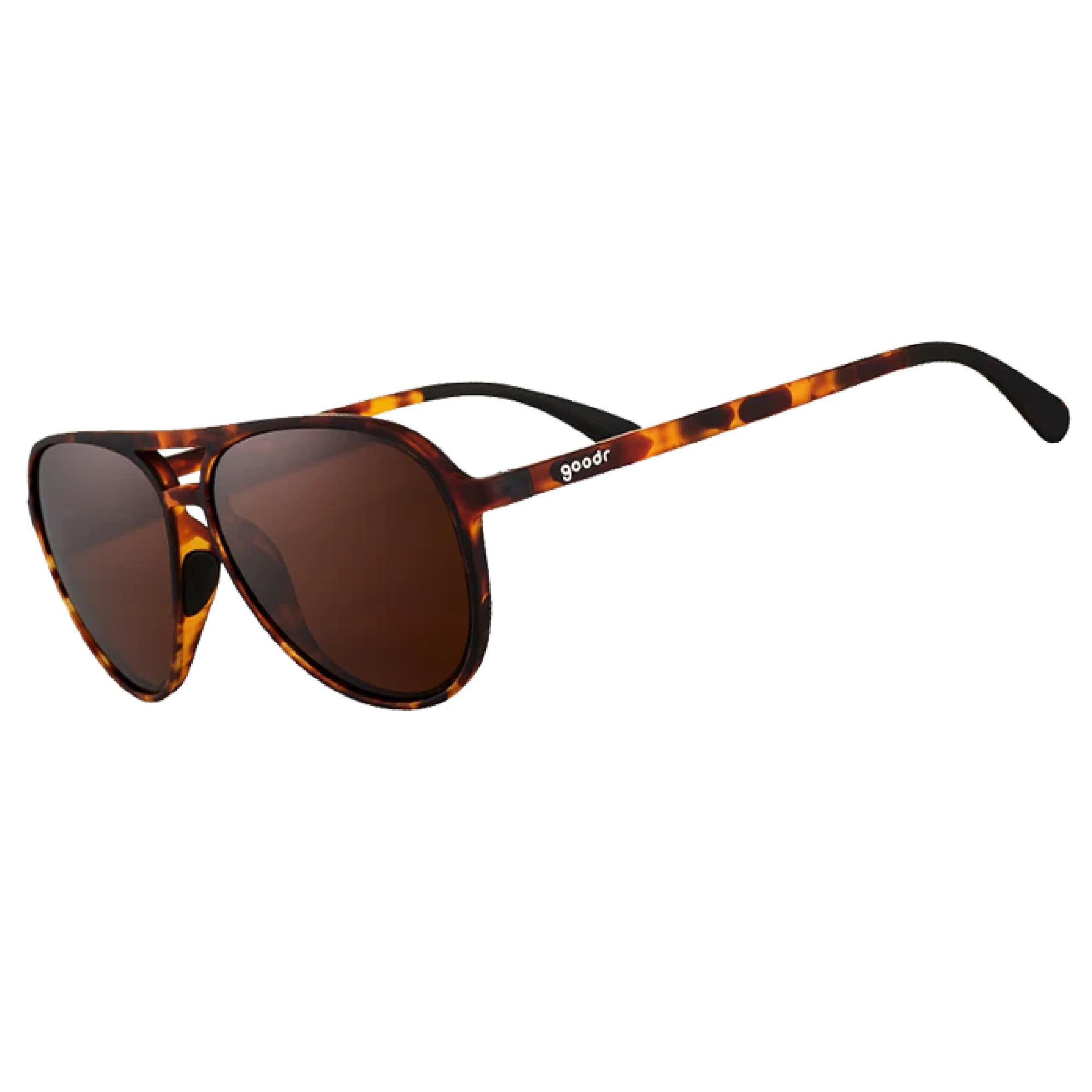
The Mach G is the goodr pair for someone who likes the OG's grip but wants a less sporty shape. Its aviator-inspired frame has more presence than the OG's rounded profile, and the more substantial build makes it feel less like a disposable pair. We were pleasantly surprised by how little that extra substance interfered with a run.

Comfort is still the headline. The Mach G stays put without clamping, and the lens is polarized and clear enough for bright pavement. The aviator shape also makes it the one in this group we are happiest wearing with everyday clothes after a run. It looks less like performance gear and more like a pair you chose on purpose.

The catch is coverage. A fuller wrap blocks more side light and wind, and the Mach G's flatter aviator profile leaves more of the edges of your vision exposed. We still recommend it for road running and everyday wear, especially if you value the casual look, but trail runners who want a shield-like feel should stay with the OG or the Tifosi. For everyone else, the trade is easy to accept.

Bottom line: We treat the Mach G as the goodr step-up: a casual aviator shape, a sturdier feel, and still-light comfort for runners who do not need a full wrap.

#2

goodr OG

goodr OG

Everyday road running

Our Score 9.0/10
Check Price

Worth Noting

  • Lens coating can scratch or peel
Fit
No-slip
Lens
Polarized
Colors
Multiple
Department
Unisex adult
Read the full review

A sweat-soaked run is the honest test for running sunglasses, and the goodr OG is the pair that made that test boring. The frame sits close without pinching, the temples grip without a tightening ritual, and the whole thing is light enough that we stopped adjusting it once we were moving. That no-slip fit is the main reason it earns our top recommendation: you can run, sweat, and forget about them.

The lens story is equally straightforward. Polarized lenses cut glare from bright pavement and low sun, and the coverage is wide enough for road running without feeling like a visor. We also like that the OG comes in enough colors that you can pick a pair you actually want to wear to the coffee shop afterward. It is not a technical-looking shield, and that is part of the appeal.

The trade-off is the coating. The OG's lenses are the part we handle most carefully, because the scratch-resistant layer can peel or mark with rough cleaning and repeated stuffing into a bag. Use the pouch, rinse grit off before wiping, and accept that this is a replaceable pair rather than a buy-it-for-a-decade one. For most runners, that is a fair exchange for the fit and comfort.

Bottom line: For most runners, the goodr OG is the pair we recommend first: no-fuss grip, a barely-there feel, and reliable glare control.

#3

Foliful 3-Pack

Foliful 3-Pack

Budget backup pairs

Our Score 9.0/10
Check Price

Worth Noting

  • Only one case and cloth for three pairs
  • Frames feel stiffer than our top picks
Lens
Polarized, UV protection
Pack
3 pairs
Frame
Polycarbonate wrap
Includes
Hard case, pouch, cloth
Read the full review

A three-pack changes the way you treat running sunglasses. The Foliful set is not the pair you baby; it is the pair you leave in the car, stuff in a gym bag, and hand to a friend who forgot theirs. That usefulness is the whole point, and it is why this multipack earns a runner-up spot.

We liked the wrap shape more than we expected. It sits close to the face, covers the sides of the eyes, and stays put well enough for steady runs and gym work. The polarized lenses cut glare, and the three colorways make it easy to keep one pair for bright days and one for overcast ones. For a budget set, the optics are better than the price suggests.

The catch is the accessories. The set comes with one hard case, one pouch, and one cleaning cloth for three pairs, so two of them end up loose in a bag unless you add your own sleeves. The frames also feel stiffer than the goodr or Lamicall, which matters more on long runs than short ones. We still recommend the set for backups, travel, and anyone who loses sunglasses regularly; it is not the one pair we build a rotation around.

Bottom line: We like the Foliful set as a budget backup plan: three polarized wraps let you stash a pair everywhere without worrying about loss.

#4

Lamicall 24g

Lamicall 24g

Hard-to-fit runners

Our Score 8.8/10
Check Price

Worth Noting

Fit
3-level nose pads, adjustable temples
Lens
TAC polarized, UV400
Weight
0.85 oz
Warranty
2 years
Read the full review

The 24-gram figure is the first thing you see in the Lamicall's specs, but the adjustable nose bridge is what makes it useful. Three nose-pad positions and adjustable temples let you move the frame up, down, and slightly wider without bending anything. Runners who usually fight a pair that sits crooked or slides forward get the most from that setup.

We appreciated that flexibility on longer efforts, when a fixed nose piece can start to feel like a pebble on the bridge. The TR90 frame flexes without feeling floppy, the semi-rimless lens keeps the field of view open, and the polarized TAC lens handles glare without turning the road into a muddy gray. It is the most adjustable fit in this group, and that is why we rank it just behind the top pick.

The 24-gram build is genuinely light, though the sporty shape is not the most subtle off the run. The two-year warranty is a real differentiator here; running sunglasses get dropped, sat on, and stuffed into bags, and that coverage makes the Lamicall easier to live with. For a hard-to-fit face, it is the first pair we hand over.

Bottom line: Hard-to-fit runners should start with the Lamicall, which we like for its adjustable nose bridge, light build, and two-year warranty.

#5

Tifosi Intense

Tifosi Intense

Hot, humid runs

Our Score 8.8/10
Check Price

Worth Noting

  • Tint runs dark for low-light runs
Use
Running, golf, pickleball
Lens
Vented
Frame
Half-frame
Nosepiece
Adjustable
Read the full review

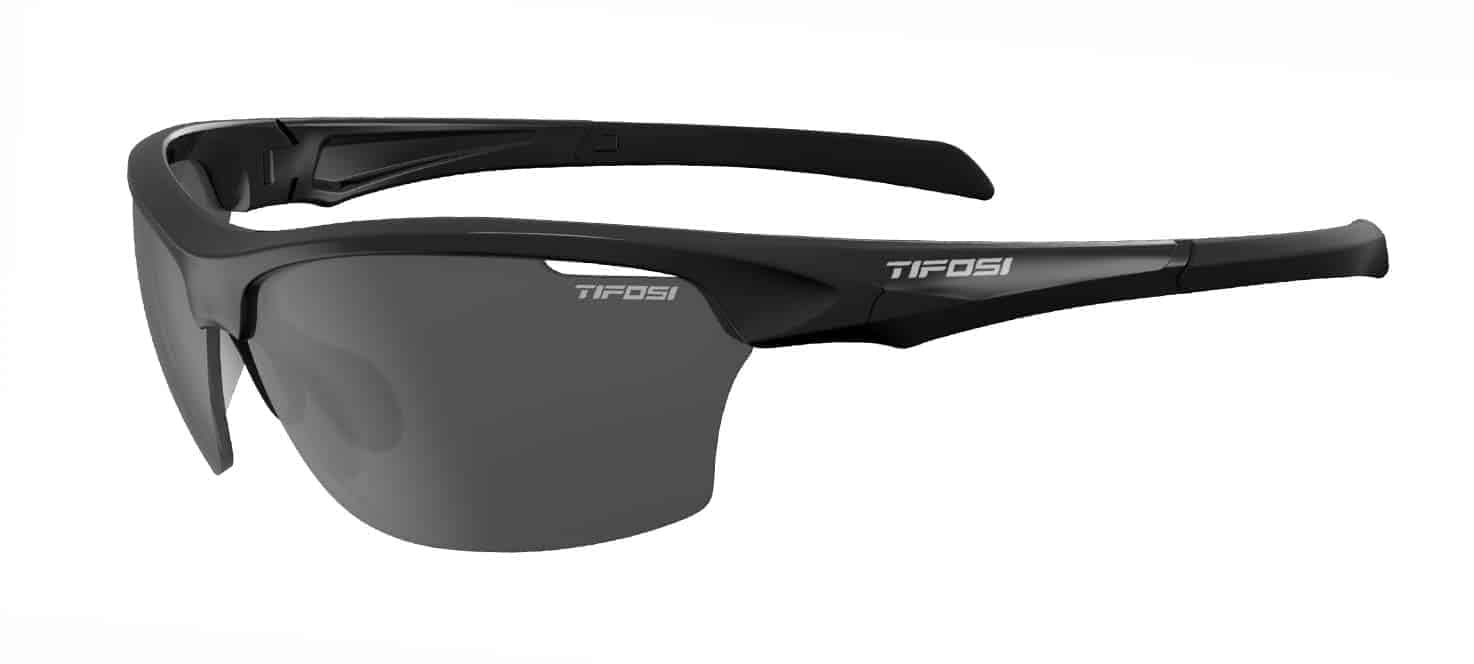
A fogged lens ruins a run faster than almost anything else, and the Tifosi Intense is built around that problem. The half-frame design leaves the lens open at the bottom, and the venting at the top lets humid air escape instead of condensing on the inside. On a steamy morning, that is the difference between a clear view and a stop-and-wipe cycle.

We reached for the Intense when the weather was muggy rather than merely bright. The lens is clear, the tint reduces glare without flattening detail, and the adjustable nose piece helps the frame sit close without pressing on the bridge. It is the most ventilation-focused pair here, and the secure half-frame fit keeps it from bouncing when you pick up the pace.

The look is unapologetically sporty, and the tint runs dark for low-light or shaded runs. That is a fair trade for bright, humid conditions. We treat the Tifosi as the specialist in this set rather than the everyday default, and that is exactly why it earns a place.

Bottom line: The Tifosi Intense is our pick for hot, humid runs where fogging and glare compete; vented lenses and a snug half-frame keep the view clear.

#6

JULI MJ8001

JULI MJ8001

Featherweight open view

Our Score 8.8/10
Check Price

Worth Noting

  • Fit varies and can run small or long
  • Fragile bridge and lens mounts
Use
Running, fishing, driving
Lens
Polarized
Frame
TR90 rimless
Style
Sport wrap
Read the full review

The JULI's rimless TR90 frame gives it a featherweight feel that is obvious the moment you pick it up. There is almost no frame around the lens, so the field of view feels open, and the lens gives it a look that reads more expensive than the rest of the budget field. It is the only rimless design in this group.

On the run, that lightness is the draw. The frame distributes weight evenly, the lens is clear and evenly polarized, and the temples do not press into the side of the head. We found it comfortable for steady road running, and the open view is genuinely pleasant on bright days.

Fit is the dividing line. This is a try-before-you-commit shape, and the return window matters more than usual because the rimless frame can sit too small or too long depending on your head. Durability is the other question mark: the bridge and lens mounts are the stress points, and a short drop can be the end of them.

We still see the JULI as a useful specialist for runners who want an open, featherweight view and do not mind babying a pair. It is not the default we hand to every runner; the goodr OG and Lamicall are safer bets for daily abuse. But if the rimless look is what gets you out the door, this is the pair in this set that delivers it.

Bottom line: The JULI is a featherweight specialist for runners who want a rimless feel, though we flag fit and frame longevity as the risks.

#7

FAGUMA Sports

FAGUMA Sports

Cheap spare pair

Our Score 8.8/10
Check Price

Worth Noting

  • Frame and hinges feel fragile
Fit
Secure wrap
Lens
Polarized, UV400
Style
Sport
Department
Men
Read the full review

A cheap pair has a real job in a runner's rotation: the one that lives in the car, goes in the gym bag, and does not ruin the day if it gets scratched. The FAGUMA fills that role well. It is light, the wrap sits close without pinching, and the UV400 polarized lens cuts glare on bright pavement. It is not the pair we build a whole season around, but it is a useful one to have around.

We kept the FAGUMA in the bag for short road runs and errands, where its light weight and secure fit mattered more than fancy lens coatings. The frame stays in place without much fuss, the lens is dark enough for midday sun, and the modest cost makes it easy to replace. For a runner who loses or scratches sunglasses often, that is a sensible trade.

The frame is the weak point. It feels less substantial than the goodr or Lamicall, and the hinges and bridge are where that shows up first; a drop or a tight stuff-sack can end its run. Treat the FAGUMA as a spare or a short-run pair, not the only pair you own. That is a narrow role, but it is a genuinely useful one.

Bottom line: We keep the FAGUMA in the budget conversation for a cheap, light running pair, but its frame durability makes it a spare rather than a sole pair.

How We Tested 14 Pairs of Running Sunglasses

We started with every pair we could find that was actually marketed for running, then filtered on the specs that matter: lens category and UV400 rating, listed weight, frame material, and whether the nose piece and temple tips were rubberized. Anything without a stated UV rating came out, as did frames with a fixed nose bridge and no size options. That left 14 pairs spanning roughly $25 to $250 — wide enough to see whether the expensive ones do something the cheap ones don't.

Each pair went through the same rotation: an early solo road loop before work, a track session, a long humid Saturday run, a rainy trail outing, and the drive to the trailhead afterward. On the first run we counted how many times we had to push the frame back up, then repeated a session with sunscreen on the nose and temples to see whether it crept once things got slippery. Every pair was weighed on a kitchen scale out of the box and then worn for a two-hour run to check for pressure behind the ears or a hot spot on the bridge.

For sun protection we wore each pair into low morning glare and again at midday, noting how much the lens dimmed the road and whether wind or grit got around the edges on descents. To judge scratch resistance and durability, we dropped each pair lens-first onto pavement from waist height, wiped them with a sweaty shirt, flexed the temples, and carried them loose in a bag with keys for a week before checking for marks. We also wore the finalists off the run — grocery store, lunch, the school pickup line — to see how they looked and whether the lens quality and hardware justified the price.

How to Choose Running Sunglasses

Fit Comes Before Everything

Running sunglasses fail at the temples and nose bridge, not on the spec sheet. A pair that sits close without pinching, grips when you sweat, and does not need a mid-run push is worth more than a fancy lens. Look for adjustable nose pads or temples if your face is hard to fit; the Lamicall's three-position bridge is the clearest example here. Otherwise, check that the frame wraps slightly behind the ears and stays put when you look down. You should be able to shake your head gently without the glasses shifting.

Choose Your Coverage

Wrap frames block side light, wind, and flying grit, which matters on open roads and windy trails. A fuller wrap also keeps sweat from running into the corners of your eyes. Aviator and rimless shapes trade some of that protection for a more open view and easier off-run wear. The goodr Mach G is the casual option in this set; the JULI is the open-view specialist. If you run exposed roads at dawn or beside traffic, lean toward the wrap.

Match the Lens to Your Light

Polarization cuts glare from pavement, water, and car hoods, and it is the feature we prioritize after fit. A dark tint can be too much at dusk or under tree cover, while a lighter contrast lens can help on trails. Ventilation matters as much as tint in humid weather: the Tifosi Intense's vented half-frame is the pair here that addresses fogging most directly. Check for stated UV protection, not just a dark lens.

Spend for the Build You Will Live With

Every pair here is light; the difference is what happens after a season of drops, bag storage, and lens cleaning. Coatings are the first thing to go, and hinges and bridges are the first hard parts to fail. A warranty helps, as the Lamicall's two-year coverage shows. Otherwise, decide whether you want one pair to last or a cheap pair you can replace without regret, and buy the case you will actually use.

Frequently Asked Questions

Final Verdict

For most runners, the goodr OG is the pair to buy first. It has the most reliable no-slip fit in this group, stays light enough to forget, and handles glare without asking you to think about it. If you have a hard-to-fit face, the Lamicall's adjustable nose bridge and temples are the better answer; if you run hot and fog every lens, the Tifosi Intense is the specialist. Start with the OG unless one of those conditions describes you.