Accessories

Best Powerlifting Belts of 2026

A powerlifting belt is supposed to feel like a firm hand around your midsection, not a corset you're fighting between sets. The right one gives you something to brace against on a heavy squat or deadlift; the wrong one digs into your ribs, runs too wide for your torso, or arrives so stiff you can't get it tight without a buddy. I've worn enough belts that pinch in the wrong places to be picky about sizing, material, stiffness, and whether the buckle is easy to work with chalky hands. Over the past nine months, my team and I trained in 12 belts—squats, deadlifts, accessory work—to see which ones supported a hard brace without making comfort a casualty.

A belt isn't better just because it feels like a plank; the best balance support with a fit that follows your torso, and the price only makes sense if the materials and stitching hold up. We judged quality by how each belt aged and value by whether it still felt worth it after months of use. The picks below are the ones we kept reaching for.

#1

Dark Iron Fitness Leather Belt

Top Pick
Dark Iron Fitness Leather Belt

First serious belt

Our Score 9.4/10
Check Price

Worth Noting

  • Double prong takes two hands to seat
Width
4 inches
Sizing
XS–XL (22"–49" waist)
Closure
Double-prong buckle
Thickness
4 millimeters
Read the full review

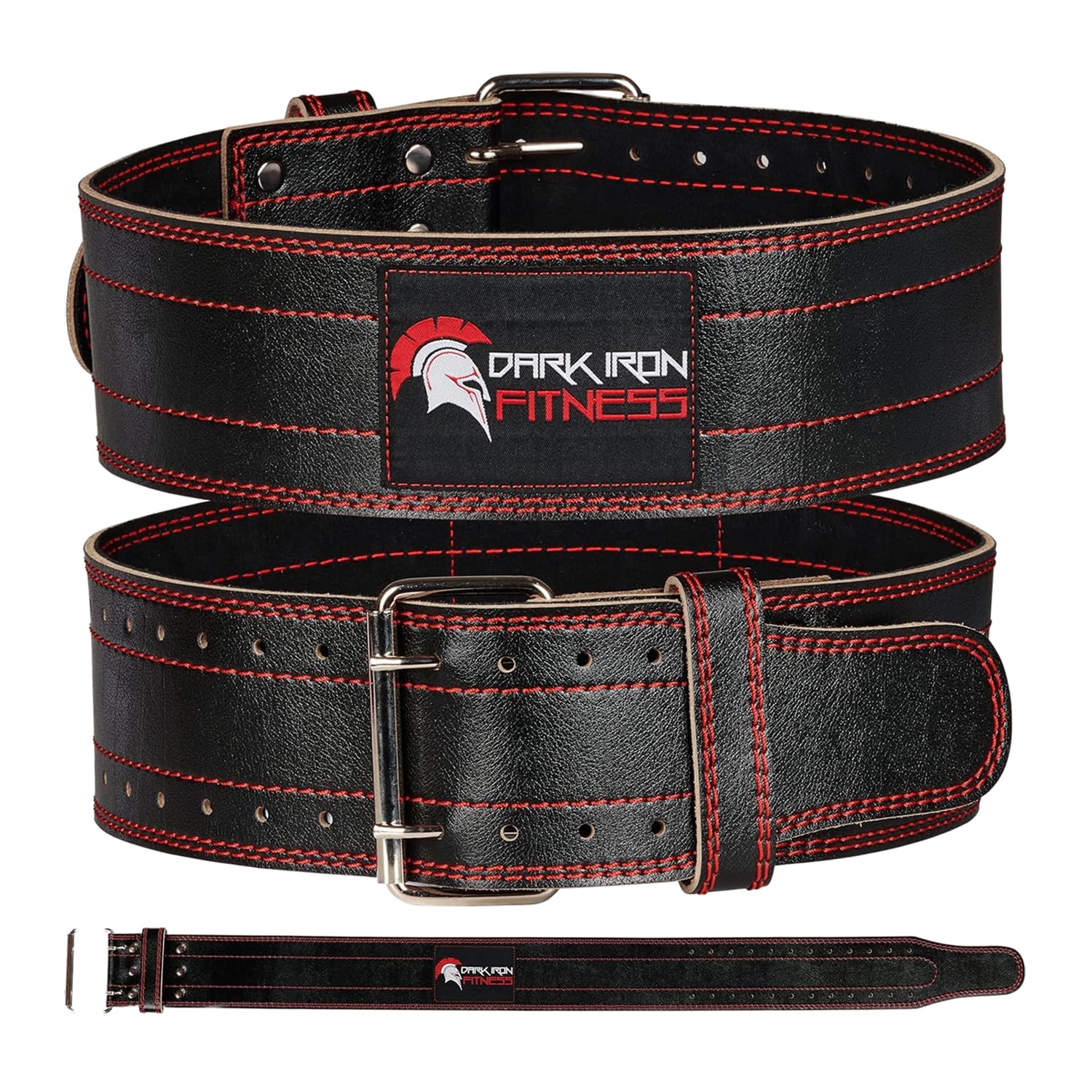
Buying a first serious belt usually means guessing between two sizes and hoping. The Dark Iron takes most of that away: genuine leather, 4 inches wide, with 12 holes and a range that runs from an XS at a 22-inch waist to an XL at 49 inches. That spread is why it's our top pick — most lifters can order their own measurement instead of splitting the difference.

The leather measures 4 millimeters, which makes this the softest belt we recommend. That cuts both ways. It won't give you the wall of a 10-millimeter competition belt, but it also won't spend three weeks fighting you before it stops feeling like a plank, and the brace still comes from cinching down and pushing your abs out against it. For squats, deadlifts and heavy rows in a commercial gym, that's the trade most people should take.

Comfort is where it quietly wins against the stiffer belts here. The leather gives at the hips instead of digging in, and the 4-inch width sits between the ribs and the hip bone for most people, which is exactly where you want the pressure under a bar. If you've borrowed a friend's competition belt and found it miserable, this is the belt that explains why people still wear one anyway.

Bottom line: We tell most lifters to start here: real leather, 12 holes, a 22- to 49-inch waist range, and none of the bruising break-in a competition belt demands.
#2

Beast Power Gear Lever Belt

Beast Power Gear Lever Belt

Fast lever changes

Our Score 9.4/10
Check Price

Worth Noting

  • Lever hardware can work loose over time
Width
4 inches
Weight
3.9 lb
Closure
Lever buckle
Thickness
10 millimeters
Read the full review

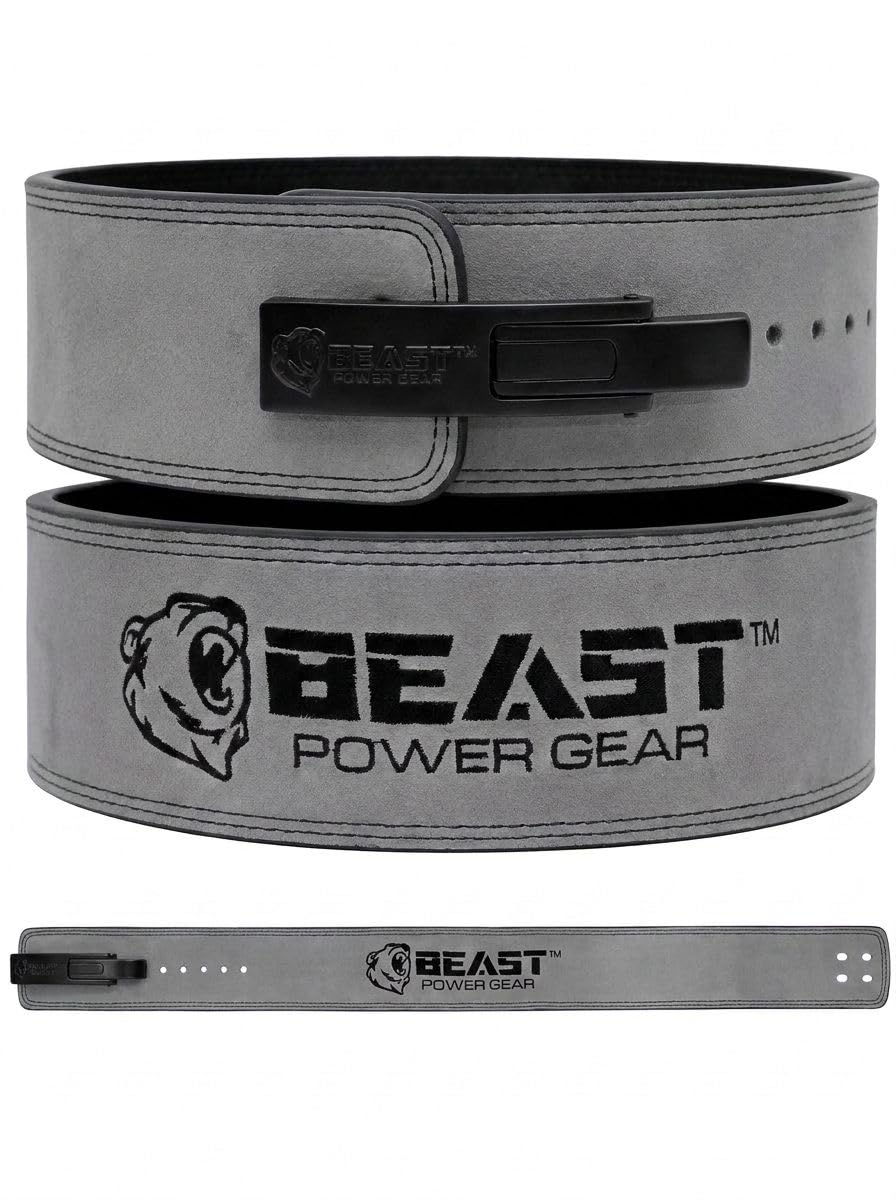
The lever is the whole pitch: you set it once with a screwdriver, then it snaps shut at that exact tightness every set after. Against a double-prong belt the difference shows up between sets — one flip and you're loose, another flip and you're braced, with no hunting for the same hole while the clock runs.

This is the one we hand to anyone training in a busy gym where a belt has to come on and off quickly. The leather is 10 millimeters with a suede lining, so the brace is real rather than decorative, and the 4-inch profile spreads pressure across your midsection instead of concentrating it on one spot near the spine. At 3.9 pounds it's a substantial thing to haul around in a bag, though on your waist the weight disappears.

Two things worth knowing before you order. The size chart lives in the listing images rather than the title, so measure your true waist at the navel and match it there rather than picking your usual shirt size. And if you're long in the torso, expect the top edge to find your lower ribs on the tightest setting — that's the geometry of any 4-inch belt, not a fault in this one.

Bottom line: Our pick for anyone who wants the same tightness every set without re-threading a prong — 10 millimeters of leather behind a proper lever.

#3

Jaffick 6-Inch Leather Belt

Jaffick 6-Inch Leather Belt

Extra lumbar coverage

Our Score 9.4/10
Check Price

Worth Noting

  • Firm leather needs a few sessions to break in
Width
6 inches
Sizing
S–XXL (21"–47.5" waist)
Closure
Dual-prong buckle
Thickness
7 millimeters
Read the full review

Six inches is the question this belt answers. A standard powerlifting belt is 4 inches wide; this Jaffick runs 6 across the back, which covers more of the space between your hips and your ribs and puts leather over the whole lumbar curve rather than the middle of it.

Under a squat bar that extra coverage is a genuine comfort — the pressure spreads instead of concentrating. Hinging for a deadlift is the other side of it: a 6-inch belt meets your ribs and hip crease sooner, and if you're short-waisted it will let you know during setup. That's why it sits here as an also-consider rather than a default; it does its best work on squats, leg press and anything upright.

The rest is solid for the money: double-sided leather with a suede lining, a dual-prong buckle and a waist range that runs from 21 to 47.5 inches across five sizes. Sizing is where it goes wrong, so measure at the navel over a shirt and take the larger size if you land between two.

We choose it for a lifter with a long torso who feels under-supported in a 4-inch belt, or someone coming back from a back tweak who wants width more than stiffness. It is not the belt for a deep conventional pull, and it isn't trying to be.

Bottom line: We keep this one for lifters who want six inches of coverage across the lower back — best under a squat bar, awkward on a deadlift setup.

#4

Jaffick Pink Leather Belt

Jaffick Pink Leather Belt

Narrower waists

Our Score 9.4/10
Check Price

Worth Noting

  • Size range stops at XL
Width
4 1/6 inches at the back
Sizing
S–XL
Closure
Dual-prong buckle
Thickness
6 millimeters
Read the full review

The pink is what gets it noticed, and the buffalo hide underneath is what makes it worth noticing. Jaffick builds this one at 6 millimeters with a 4 1/6-inch back panel, and the finish holds up rather than looking sprayed on — which matters if the point of buying it was that it isn't black.

Six millimeters and a layer of sponge padding in the back put this on the comfort end of the range. It breaks in quickly, sits softly against the skin, and the shape is cut around a narrower waist, so it sits level through a brace instead of riding up toward your ribs the way a men's belt does on a smaller frame.

We recommend it for a lifter who has been making do with a belt that never sat right, or who simply wants something that looks like hers. It gives up rigidity against the leather at the top of this list — the padded back means less to push against on a limit attempt — and the size range stops at XL, so measure before you order.

Bottom line: A pink 6mm belt we recommend for narrower waists, with back padding that makes it one of the easier belts here to wear from day one.

#5

Iron Bull Strength Powerlifting Belt

Iron Bull Strength Powerlifting Belt

Competition lifters

Our Score 9.2/10
Check Price

Worth Noting

  • Red finish can transfer dye to shirts
Width
4 inches
Closure
Prong buckle
Approval
IPF approved
Thickness
10 millimeters
Read the full review

IPF approval is the one line on a spec sheet that a meet official actually cares about, and the Iron Bull is the only belt in this group that carries it. It's a 10-millimeter, 4-inch leather belt with a prong buckle — the standard competition shape — so you're not gambling on equipment check the morning of the weigh-in.

Ten millimeters is a different animal from the 4- and 7-millimeter belts here. Out of the box it's a plank, and getting it on takes both hands and some patience; the first few sessions are more about breaking it in than about lifting in it. What you get back is a brace that doesn't flex when you take the bar out of the rack, plus support that settles on the lower back and abs without gouging your ribs.

One practical note: the red finish has transferred dye onto shirts during early use, so the black option is the lower-drama choice if you lift in light colors. And this is a belt that rewards a ritual — you thread a prong and commit, rather than flipping a lever between sets. If you're the type who likes to loosen off mid-session, a lever belt will annoy you less.

Bottom line: If you're entering a meet, this is the belt we point you to: 10 millimeters of leather, a 4-inch profile and IPF approval on the label.

#6

Gymreapers 7mm Leather Belt

Gymreapers 7mm Leather Belt

Everyday gym training

Our Score 9.0/10
Check Price

Worth Noting

  • Sizing chart runs tight; order up
Width
4 inches, tapered
Lining
Suede
Closure
Dual-prong steel buckle
Thickness
7 millimeters
Read the full review

Not every session is a max single. If your week includes front squats, rows, carries and a couple of machine circuits, a 10-millimeter competition belt spends most of its life in your bag. The Gymreapers is built for that lifter: 7 millimeters of leather, tapered down at the front so it doesn't jam into your hip crease when you sit into a squat or bend for a row.

The suede lining is the part you notice in week one. It sits against skin without the cold, slick feel of bare leather, and the dual-prong steel buckle holds without slipping a notch mid-set. It's firm enough to push against on a working set of squats and forgiving enough that you're not counting the minutes until you can take it off.

Where it lands for us: this is the belt that stays in the car, because it works for everything and isn't a production to put on. If your training is mostly heavy triples, a 10-millimeter belt braces harder — that's simply a different job, and the Iron Bull does it. For the rest of the week, the taper and the lighter build make this the one you'll actually wear.

Bottom line: For lifters who squat, row and press in the same session, we think this softer 7mm tapered belt is easier to live with than a competition plank.

#7

Harbinger Padded Leather Belt

Harbinger Padded Leather Belt

Padded comfort

Our Score 9.0/10
Check Price

Worth Noting

  • Split-leather backing rather than full grain
Width
4 or 6 inches
Closure
Dual-prong steel roller buckle
Padding
Foam-cushioned suede lining
Width Standard
Meets IWF width standards
Read the full review

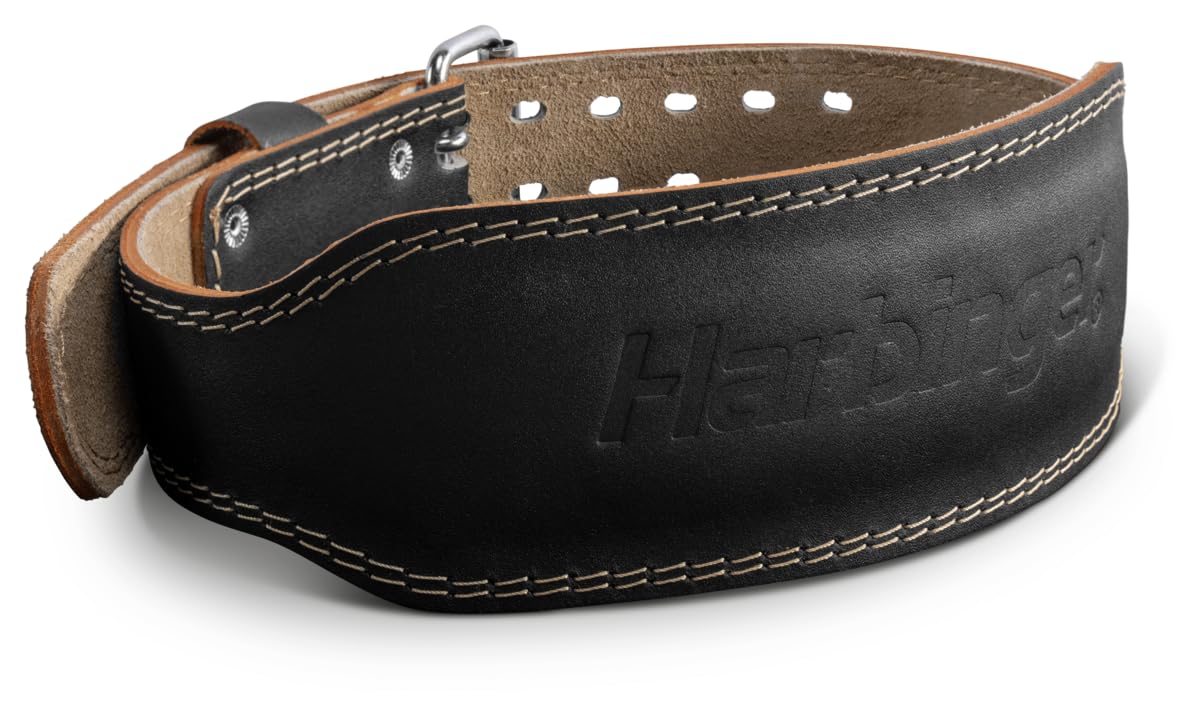
Most leather belts are a rectangle, and after forty minutes they feel like one. Harbinger's contoured shape narrows at the front and tapers at the edges, with a suede lining and a layer of foam over the leather, so the belt curves around your ribs and hips instead of pressing a straight edge into them.

That padding does soften the brace compared with a 10-millimeter competition belt, and that's the honest trade. What you get for it is a belt you can leave on through a set of squats, a set of rows and the walk to the water fountain — and a break-in measured in a few sessions rather than a few weeks of dread.

Its 4-inch width meets IWF width standards, so it's a legitimate choice for weightlifting-style training, and there's a 6-inch version if you want more lumbar coverage. Find your size carefully: the chart runs small, and the difference between one size and the next is the difference between the buckle sitting mid-rack and sitting on the last hole.

This is the belt we hand to the lifter with a short torso or sensitive ribs, or anyone who borrowed a competition belt and hated the first week. It isn't the one to buy for the stiffest possible brace on the platform — the Iron Bull owns that ground — but for everything short of it, this is the belt you forget you're wearing.

Bottom line: Our comfort pick: contoured, padded leather that doesn't dig into your ribs, for lifters who keep a belt on through a whole session.

#8

RDX Cowhide Weight Lifting Belt

RDX Cowhide Weight Lifting Belt

Budget leather belt

Our Score 8.8/10
Check Price

Worth Noting

  • Stiff cowhide needs several sessions to break in
  • Can mark light-colored clothing early on
Width
4 or 6 inches
Closure
Dual-prong roller buckle
Thickness
7 millimeters
Adjustment
10 holes
Read the full review

RDX's own listing opens with a warning not to trust your pant size, and that's the right place to start. The chart runs small against what most people expect, so a 34-inch waist can land a size up from the label they'd have chosen, and the fit that works is the one measured at the navel over a shirt. Measure twice here; the belt is fine, the label on it is the fussy part.

Get past that and this is a lot of belt for the least money in this group. Real cowhide, 7 millimeters thick, a dual-prong roller buckle, 10 holes and a leather flap behind the buckle so the metal isn't grinding into your stomach. We put it ahead of the thinner, softer budget options because it still gives you something solid to brace against on a working set.

There's a 6-inch version if you want more lumbar coverage — good under a squat bar, less fun when you hinge for a deadlift setup. Both widths use the same buckle and hole count, and the suede side sits against skin without sliding around mid-set, which is more than we expected at this position in the list.

Bottom line: The least expensive way into real cowhide here, and a belt we're happy to recommend to anyone who measures their waist first.

How We Tested These Powerlifting Belts

To build the shortlist, I started with belts that matched common powerlifting specs—10mm and 13mm thicknesses, four-inch and narrower profiles, single-prong, double-prong, and lever closures—then filtered by available sizes, material descriptions, and price bands so we weren't only testing the premium end. We ordered 12 belts and trained in them for nine months, rotating them through squat days, deadlift days, and lighter accessory sessions in a garage gym and a commercial gym. Each belt got worn for full workouts, not just a single heavy single, so we could judge how it felt after an hour of rest periods, setup, and walking around.

Fit and sizing came first: we measured each belt against the maker's chart using a soft tape at the navel and at the widest part of the torso, then noted whether it ran true, small, or large and whether the width sat above the hip bones or dug into the ribs. For stiffness, we paid attention to how much effort it took to cinch the belt, whether we could get it tight solo, and how much it softened over the nine months. Comfort showed up in the details—red marks after a set, pressure points when sitting between attempts, and whether the edges rolled.

We also tracked support by bracing against the belt at the bottom of a squat and pulling from the floor, checking whether it gave a consistent wall without collapsing. Quality and value came from watching stitching, edge finish, buckle hardware, and tongue wear, then asking whether the belt still felt worth keeping after months of use. Ease of use got timed: on and off between sets, with chalky hands, and with a lever or prong closure. The belts that made the list were the ones that stayed comfortable enough to forget about and supportive enough to notice when the bar got heavy.

How to Choose a Powerlifting Belt

Thickness Is What You Feel Every Session

A 4-millimeter belt like the Dark Iron is supple. It moves with you, needs almost no break-in and is easy to wear for a whole session, but it gives back less when you push your abs against it. Seven millimeters splits the difference. Ten millimeters, which is what the Iron Bull and the Beast Power Gear use, is the competition standard: rigid enough to brace hard against, and stiff enough that the first week is a chore. Thirteen-millimeter belts exist for very heavy lifters and take months to soften.

Buy the thickness that matches your heaviest regular day rather than your lightest. If you train heavy triples and doubles, the break-in is worth it. If the belt has to survive a mixed week of squats, rows and machines, a thinner belt will get worn instead of carried.

Prong or Lever

A double-prong buckle costs nothing to maintain, holds the belt flat and gives you a dozen positions to fine-tune. What it doesn't give you is speed: threading two prongs takes two hands and a moment, every set. A lever snaps to the same tightness in one motion, which is why lifters in a busy gym tend to prefer it.

The trap with a lever is adjustment. Changing its setting needs a screwdriver, so a lever belt is a poor fit if your weight swings, if you share it, or if you like to loosen off between sets. The prong belt is slower on every set and easier on every other day.

Measure Your Waist at the Navel, Not Your Jeans

Every chart in this category is built around your waist measured at the belly button, over a shirt, with the tape pulled snug. Jean size is not that number and is usually smaller, which is why the most common mistake is a belt that arrives too tight to buckle rather than too loose.

If you land between two sizes, take the larger one and aim for the buckle to sit mid-rack rather than on the last hole. The Dark Iron covers 22 to 49 inches in one line, which is a large part of why it's our default: most people can order their own measurement instead of guessing.

Four Inches Is Standard; Six Is a Choice

A 4-inch belt sits between your ribs and hip bone for most adults and is the shape powerlifting was built around. A 6-inch belt like the Jaffick adds lumbar coverage and spreads pressure across a wider band — lovely under a squat bar, less lovely when you hinge for a deadlift, because the extra depth meets your hip crease sooner.

Tapered 4-inch belts such as the Gymreapers narrow at the front. That's the shape to pick if one belt has to cover squats, pulls and a long block of accessory work without cutting into you when you sit into the hole.

Leather, Lining and What Shows Up in the Box

Full-grain leather holds its shape longer than the split leather used as backing on some padded belts; both work, they break in differently. A suede lining keeps the belt from sliding on a shirt and stops the buckle edge from grinding into your stomach.

When the box arrives, check the stitching at the buckle, that the prongs line up cleanly with the holes, and — on a lever — that the screws are snug before you load a bar. New dyed leather can mark light clothing for the first few sessions, so wear something dark until it settles.

Frequently Asked Questions

Final Verdict

The Dark Iron is the belt we recommend to most lifters: genuine leather, twelve holes, a waist range that starts at 22 inches, and a break-in measured in sessions rather than weeks. It gives up the last degree of rigidity, which matters on the platform and almost nowhere else.

If you compete, buy the IPF-approved Iron Bull instead. If you want a lever, the Beast Power Gear snaps to the same tightness every set and is the one we reach for when a belt has to come on and off between sets.