Accessories

Best Rucking Backpacks of 2026

I spent my first year of rucking with a weight plate wrapped in a beach towel and stuffed into an old daypack. It worked, in the sense that I was walking with weight on my back — but the plate slid low, the seams complained, and by mile three my shoulders were doing all the work. A purpose-built rucking backpack fixes that: a plate sleeve that pins the load high and flat against your spine, a harness wide enough to spread weight across your shoulders and hips, and enough room left over for a water bottle, a layer, and your keys.

Over the past eight months, my team and I have put a dozen of these packs through that same routine, from stripped-down 20-liter models to 45-liter bags that swallow a plate and a change of clothes. The thing that surprised me most is how little the liter count tells you. What separates a pack you keep from one you retire is whether the plate stays put when you jog across a crosswalk, and whether the stitching, zippers, and straps survive a year of being loaded heavier than the label suggests. The ones below did.

#1

Falko Tactical 50L Rucksack

Top Pick
Falko Tactical 50L Rucksack

Heavy loads

Our Score 9.4/10
Check Price

Worth Noting

  • Priciest pack in this group
Capacity
50 liters
Dimensions
11 x 14 x 21 inches
Empty Weight
3.7 lb
Read the full review

The Falko is the pack in this set we trust with the heaviest loads. It's the most convincing build here: the construction holds up under tight packing, the shell resists scuffs, and at 3.7 pounds empty it carries that structure without turning into a frame pack. Fifty liters holds a three-day load, and the pocket layout — a deep main bay, a front pouch, two side pockets — separates gear without a dozen fiddly compartments.

Depth is the thing to understand before you buy. Fifty liters across an 11-by-14-by-21-inch body leaves a plate room to slide away from your spine, and a plate that sits low and far from your back pulls you backward on every step. Load it high against the back panel, fill the space underneath with soft gear, and cinch the side straps, and the same bag behaves like a pack half its size.

The main zipper is the part that ages first if you stuff the bag past its compression straps, so close it before you cinch down rather than after. That's the premium question in one line: you're paying for a shell that takes abuse, not for better hardware. If your rucking happens on pavement and gym floors, the CVLIFE covers that ground for less money.

Bottom line: The sturdiest materials and stitching in this group, in a 50-liter body that handles real backcountry weight, as long as you pack a plate high.

#2

LHI 45L Tactical Backpack

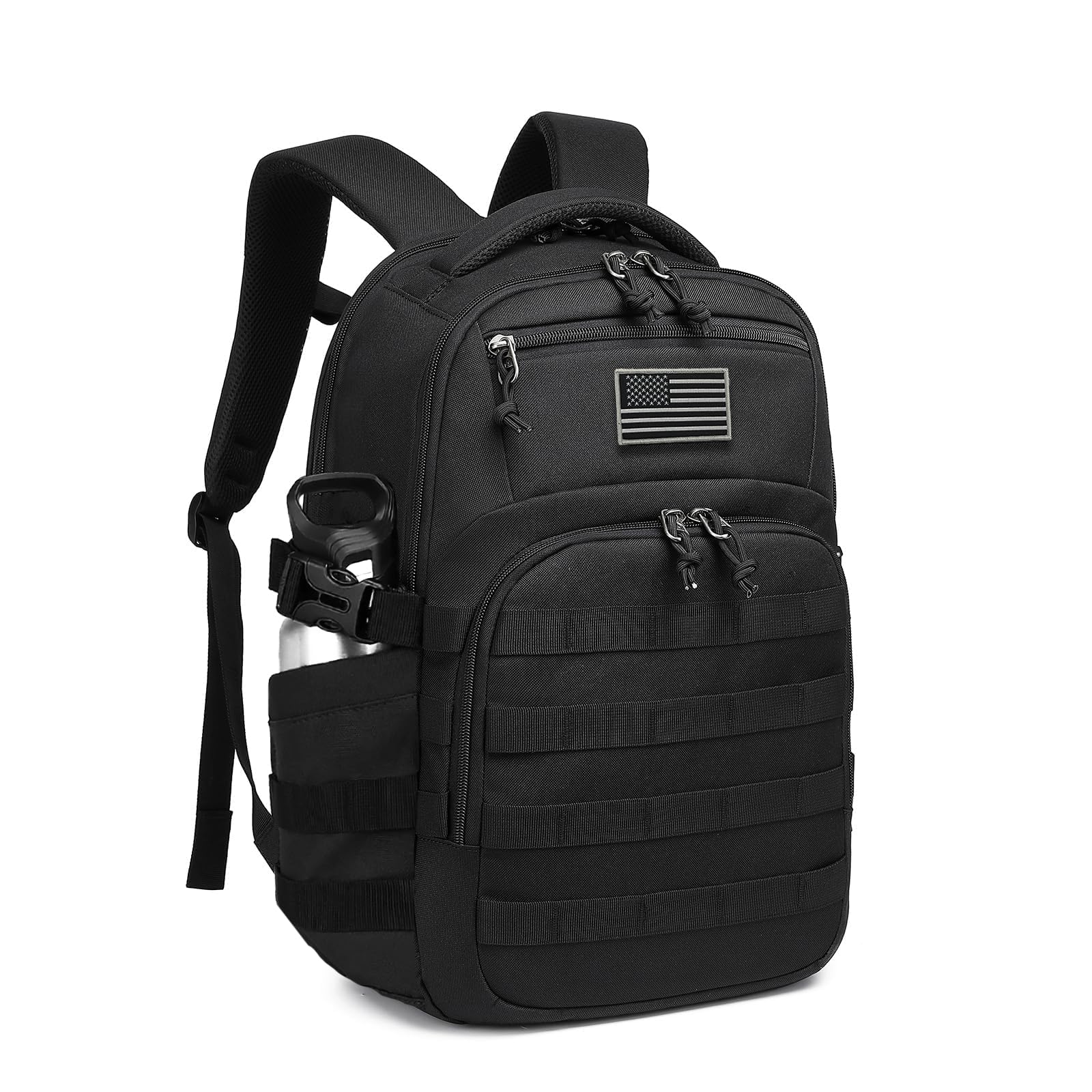
LHI 45L Tactical Backpack

First ruck pack

Our Score 9.4/10
Check Price

Worth Noting

  • Water-repellent only, not waterproof
Pockets
7
Capacity
45 liters
Dimensions
12"D x 12"W x 20"H
Empty Weight
2.87 lb
Read the full review

If you're not certain yet that rucking will stick, buy this one. Forty-five liters of 900 oxford nylon, double-stitched at the seams, with a hydration bladder sleeve, two side bottle holders, MOLLE webbing across the outside and seven pockets inside and out — for the money, it covers everything a first ruck needs.

What earns it a place rather than a shrug is the load compression. Straps on the sides and front pull a part-filled 45 liters down against your back, which is the difference between a pack that feels like a ruck and one that sloshes with every step. The ventilated mesh back panel and padded shoulder straps handle the ordinary work, and 1.3 kilograms is light enough that you're not carrying the bag as well as the weight.

It doubles as a work bag without complaint: a padded sleeve that takes a 17-inch laptop, bottle pockets sized for a 750-milliliter bottle, and a shape that doesn't announce itself in an office. For a pack that has to cover gym, commute and ruck, that flexibility is most of the value.

Bottom line: A 45-liter, 900-denier pack with load compression, hydration routing and seven pockets for less than most of this set — the sensible first ruck.

#3

QT&QY 45L Tactical Backpack

QT&QY 45L Tactical Backpack

Commuting and rucks

Our Score 9.4/10
Check Price

Worth Noting

  • Main zipper can pull free when overstuffed
  • No hip belt for heavier loads
Capacity
45 liters
Dimensions
11.6"D x 13.2"W x 18"H
Compartments
5
Empty Weight
3 lb
Read the full review

Five compartments is a lot of addresses for one bag, and it's what separates this QT&QY from the simpler 45s here: two front pockets for small gear, two large bays with built-in zip and mesh pockets, and a padded sleeve that swallows a 17-inch laptop. A plate, a laptop and a change of clothes stop competing for the same space.

The 900-denier polyester shell is double-stitched at the stress points, and 3 pounds empty is light for the volume. Waterproofing is claimed at the shell level; zips and seams are where any pack lets water in, so a liner is cheap insurance for a wet commute.

In use it's the pack that crosses over most easily. The laptop sleeve is padded, the front pockets take a phone, keys and a charger, and the main bay still swallows a plate and a change of clothes. There's enough padding on the back panel to make a loaded walk tolerable.

For a pack that spends weekdays at a desk and weekends on a greenway with weight in it, this is the one in the group we point people to. It isn't the burliest shell here, but the organization is what you notice every single day.

Bottom line: Five compartments, a padded sleeve for a 17-inch laptop and 900-denier fabric make this the 45-liter pack that works as hard on a commute as on a ruck.

#4

REEBOW GEAR 40L Tactical Backpack

REEBOW GEAR 40L Tactical Backpack

Light walking rucks

Our Score 9.4/10
Check Price

Worth Noting

  • Zippers are the first thing to fail
  • Shoulder-strap anchors can give way
Capacity
40 liters
Dimensions
11"D x 13"W x 20"H
Compartments
3
Empty Weight
2.8 lb
Read the full review

Forty liters, 2.8 pounds, MOLLE webbing across the front and sides, a hydration sleeve and three main compartments: the Reebow delivers the tactical layout at the low end of this group's price range. It's the pack we hand someone who wants to try rucking without committing much, and for a walking ruck around 20 pounds it does the job.

The layout is genuinely useful. A bladder hangs in its own sleeve with the hose routed over the shoulder, side and front compression straps pull a half-loaded pack tight, and the ventilated mesh back panel keeps the load off your spine. The shell is a high-density polyester with a water-resistant finish, and the 13-by-20-by-11-inch body fits a plate, a shell and a day of food without a fight.

None of that changes what it is: a light, roomy pack at the bottom of the range. For a first ruck, a gym-and-range bag, or something that lives behind a truck seat, that's plenty, and the money you save buys a plate. Just don't expect it to be the last pack you buy.

Bottom line: A light 40-liter MOLLE pack at the bottom of this group's price range — enough for moderate walking rucks, not for a heavy weekly progression.

#5

Wotony 25L Tactical Backpack

Wotony 25L Tactical Backpack

Light day loads

Our Score 9.4/10
Check Price

Worth Noting

  • Shallow 7.5-inch depth limits bulky gear
Pockets
6
Capacity
27 liters
Dimensions
7.5"D x 11.5"W x 18.5"H
Empty Weight
1.43 lb
Read the full review

Not every ruck is a march. If yours is a weighted walk at lunch, a commute with a plate in it, or a pack that has to slide under an airplane seat, this is the one: 27 liters, about 1.4 pounds, and shallow enough to fit where a 50-liter pack won't.

900-denier fabric rated waterproof, a MOLLE panel across the front, six pockets and a padded sleeve that takes a 17-inch laptop — the build belongs to the same family as the bigger packs here, just scaled down. The shoulder straps are contoured and padded rather than flat webbing, which is what you want once there's real weight in the bag.

The 7.5-inch depth is the number that decides whether it suits you. A plate, a shell and a water bottle fit; a fleece, a laptop and a lunch start to fight. As a light-load pack that travels well and looks like nothing at a train station, we rate it highly. As the only pack you own for rucking, we don't.

Bottom line: A light 27-liter pack for weighted walks, commutes and under-seat travel — not the one to build a heavy rucking progression around.

#6

CVLIFE 60L Tactical Rucksack

CVLIFE 60L Tactical Rucksack

Heavy ruck marches

Our Score 9.2/10
Check Price

Worth Noting

  • Strap tensioners can creep under heavy loads
  • Heaviest of our picks at 3.9 pounds empty
Capacity
60 liters
Dimensions
13"D x 20"W x 20.5"H
Compartments
7
Empty Weight
3.9 lb
Read the full review

Strap the CVLIFE on with a plate inside and the first thing you notice is where the weight lands: on your hips, not your collarbones. That's the cinching waist belt doing its job, and it's why this is the pack we recommend first to anyone building a rucking habit. A sternum strap keeps the shoulder straps from spreading outward, and dual compression straps on both sides let you lock the load against the back panel before you set off.

Sixty liters is more pack than a plate and a water bottle need, and that's the point. The front pouch and two side pouches detach completely, so the same bag runs stripped as a bare ruck for a fast loop and comes back to full capacity for a 72-hour kit or a week of travel. That modularity is what earns it the top spot over the simpler 45- and 50-liter packs here, which do one job each.

Dual-density ventilated mesh on the shoulder straps and a padded back panel keep it tolerable in heat, seven compartments give a plate, a bladder and a change of clothes their own space, and the harness adjusts across a wide range of torso lengths, which is useful if two people in a household share one pack. The rain cover stows in its own pocket rather than rattling loose in the main bay. The place to slow down is the main zipper: close it deliberately rather than hauling on a stuffed bag.

Refinement is where it gives ground: plastic buckles, long strap tails, and a waist belt that's webbing rather than a molded hip belt. None of that changes the load, and for a pack that swallows a weekend as easily as a plate, we're happy to make the trade. If your rucks are always the same 30 pounds with nothing else in the bag, the Mardingtop below is lighter and simpler.

Bottom line: Our default pick: a cinching waist belt, sternum strap and dual compression straps take the load off your shoulders, and 60 liters strips down small when the ruck is short.

#7

Mardingtop 28L Tactical Backpack

Mardingtop 28L Tactical Backpack

Plate rucking

Our Score 9.2/10
Check Price

Worth Noting

  • Not water resistant, so plan on a liner
Capacity
28 liters
Hydration
Fits a 2-liter bladder
Dimensions
8.7"D x 10.8"W x 17.3"H
Empty Weight
2.1 lb
Read the full review

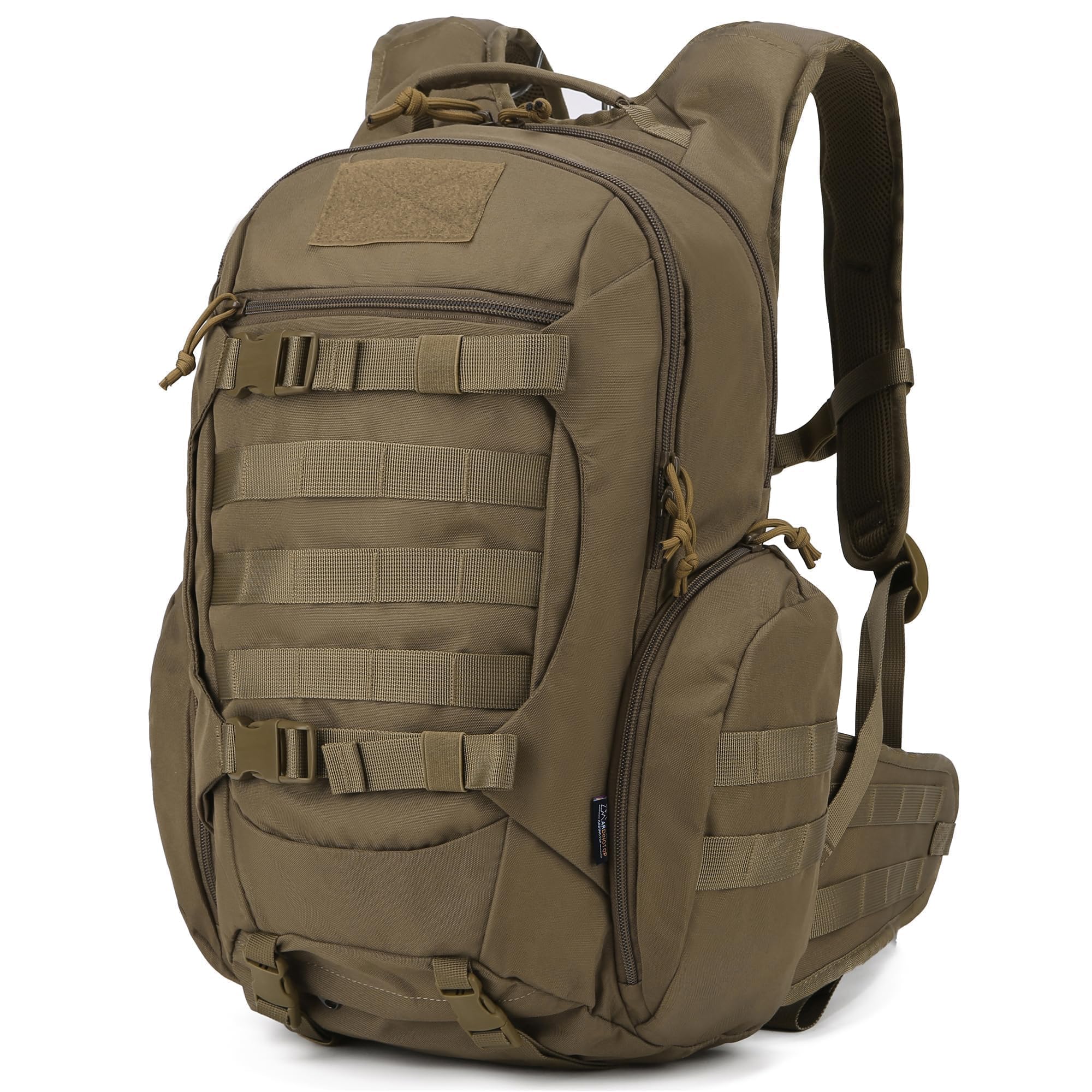
Twenty-eight liters is the smallest capacity among our picks, and it's exactly why this one gets carried: at 2.1 pounds empty the pack adds almost nothing to the load you're training with. A 20- or 30-pound plate sits against the back panel, a 2-liter bladder drops into its own sleeve with the hose routed over the shoulder, and there's still room for a shell and a snack. Nothing about it invites you to add weight you didn't plan on.

Two harness details matter more than the MOLLE panel. The waist belt is stitched in and slides behind the back padding on days you'd rather carry the pack as an ordinary daypack, and a chest strap keeps the shoulder straps tracking instead of spreading. YKK buckles and zippers are named in the specification, and the 600D polyester shell is the weight of fabric that survives being dragged through brush. Hardware is what fails first on a budget pack, so seeing the brand called out is worth something.

The honest boundary is capacity: 28 liters runs out fast once you're packing for an overnight rather than a march, and the tuck-away belt means this is a pack you bring for the walk, not the trip. As a training pack, though, it's the one in this set we reach for when the goal is the ruck itself rather than the scenery.

Bottom line: For pure ruck training — a plate, a bladder, a shell — this is the lightest pack here with a real waist belt, plus YKK hardware.

#8

kookoomia 50L Tactical Backpack

kookoomia 50L Tactical Backpack

Maximum volume

Our Score 9.0/10
Check Price

Worth Noting

  • Shoulder-strap stitching can fail under load
Pockets
7
Capacity
50 liters
Dimensions
12.6"D x 12.9"W x 21.6"H
Empty Weight
3.1 lb
Read the full review

At 21.6 inches tall, this is the longest pack in the group, tall enough that the top of the load sits above your shoulders and the bottom rides near your belt line. That's a useful shape for a heavy carry if you pack it right, and an awkward one if you don't.

Fifty liters, seven pockets, a water-resistant shell, reinforced grab handles and compression straps down the sides: the specification is generous for the money, and the pocket placement is sensible, with bottle pockets you can reach without taking the pack off, a lid pocket for keys and phone, and a main bay that opens wide. There's enough MOLLE to hang extra pouches when a ruck turns into a gear haul.

A tall, narrow body means you pack it vertically, heaviest items high against the back panel. Done that way it carries well; stuffed loosely, the length swings. The 3.1 pounds are the cost of the structure, and that's reasonable for 50 liters.

The role it fills is volume on a budget: travel, range trips, a 25-pound walk with a plate and a change of clothes. For a weekly heavy ruck we point you at the CVLIFE or the Falko, whose harnesses are built for that kind of weight.

Bottom line: Fifty liters and seven pockets for a moderate price, best used as a volume hauler at moderate weight rather than a weekly heavy ruck.

How We Tested Rucking Backpacks

We started with roughly 40 packs sold for rucking or weighted training and cut the list by reading spec sheets: plate sleeve dimensions and whether they fit standard 20- and 30-pound plates, harness and hip belt construction, stated capacity, and price against what actually comes in the box. Twelve made the cut, and we've used them for eight months.

Each pack went on the same rotation — weekday morning pavement rucks, a steep hill loop on weekends, one commute by train, one muddy trail day, and a few loaded up for overnight travel. On day one I marked every strap adjuster and buckle with a dab of paint, then checked after each long ruck whether the webbing had crept, the sternum strap had slipped, or the hip belt had loosened under load. I also noted where each pack sat on my back at mile one versus mile five, since a plate that rides low by the end is a plate sleeve that isn't doing its job.

For capacity, we packed a plate plus a fixed kit list — 15 pounds of layers, water, shoes, and a laptop — and noted what had to be left behind. Zippers got the roughest treatment: we overstuffed the main compartment, zipped around tight corners, and deliberately ran a loaded zipper over grit to see if coils separated or sliders skipped. Durability came down to observation over time — abrasion on the base panel after being set down on pavement, fraying at strap anchors, seams that started to grin under load. Finally, we weighed price against what you get: plates, hip belts, and rain covers are often sold separately, and a cheap pack that needs three add-ons isn't the value it looks like.

How to Choose a Rucking Backpack

Start With the Harness, Not the Pocket Count

Under about 20 pounds, almost any well-made backpack will do, because the load is light enough for padded shoulder straps to carry it. Above 25 pounds, the weight needs a path to your hips: a padded waist belt that sits on the hip bones, a sternum strap to stop the shoulder straps spreading, and compression straps that pull the bag against your back.

That single difference explains most of the spread in this guide. The CVLIFE and the Mardingtop have a real belt; the cheaper 45s here are shoulder-only. If you plan to add plates, buy the belt first and the pockets second.

Match Capacity to the Ruck You Actually Do

A plate, a bladder and a shell fit in 25 to 30 liters, which is why the small packs here make sense for training and little else. Forty-five to 50 liters covers a three-day load or a ruck that doubles as a work bag. Sixty liters earns its place only when the pack also travels or hauls kit, because empty volume is weight that swings.

If you buy bigger than you need, choose a pack with side compression straps and use them every time. A half-empty 60 cinched down carries better than a stuffed 40.

Load Placement Decides How It Carries

A plate or sandbag belongs high and flat against the back panel, between the shoulder blades, with soft gear below it to stop it sliding toward your waist. This is where deep packs work against you: a foot of depth gives a plate room to drift away from your spine, and every inch of distance becomes a backward pull on the straps.

Test it before a long walk. Load the pack, tighten everything, and check whether the weight lands on your hips or drags your shoulders back.

Fabric, Stitching and Zippers Under Load

Denier counts describe abrasion resistance, not seam strength. A 900-denier shell resists scuffs, but the load hangs from the stitching where the shoulder straps meet the body, so double stitching at those anchors matters more than the fabric number on the tag.

Zippers are the other weak point at this price, and a stuffed main compartment is what kills them, so pack to the compression straps rather than beyond. Water resistance is a finish rather than a guarantee; a pack liner costs little and keeps a plate dry.

Frequently Asked Questions

Final Verdict

The CVLIFE is the pack we tell most people to buy. A waist belt, sternum strap and compression points on both sides put the load on your hips, and 60 liters that strips down to a bare ruck covers training, hiking and travel without buying twice.

If your rucking is plate-only and you want the lightest thing here with a real belt, the Mardingtop is the better fit. If you'll pay for the sturdiest shell in the group and you'll pack the plate high against the back panel, the Falko earns its premium.