Yoga & Mobility

Best Stretching Machines of 2026

A stretching machine makes a bold promise: sit down, grab the handlebar, and let the seat and levers ease your hamstrings, hips, and lower back into a range you can't reach on your own. The catch is that a wobbly one shifts under you the second you lean into a stretch, and a stiff one leaves you sore in all the wrong places. Living with these things for months taught me the difference comes down to three unglamorous details: how planted the frame feels under load, whether the seat actually adjusts to your height, and how much floor space it eats when you're not using it.

Over the past six months, my team and I have run 10 stretching machines through daily use — sliding-seat designs, pivoting-seat models, and split machines with numbered angle settings. The good ones turned a 10-minute session into something I looked forward to instead of a chore I kept postponing. Value had less to do with the price tag than with how many adjustments a machine offers and whether those settings stay put once you find them.

Here's what nobody tells a first-time buyer: a machine set up for my frame was almost unusable for a tester five inches taller until we reset the seat and lever range, so seat height and adjustability matter far more than the count of stretch positions printed on the box. The picks below are the ones that earned a permanent spot in my living room instead of the garage.

#1

Nitrofit Limber Pro

Top Pick
Nitrofit Limber Pro

Shared home use

Our Score 9.2/10
Check Price

Worth Noting

  • Assembly can take patience and alignment
  • Seat may rock slightly on the rail
Seat Fit
5'0" to 6'5"
Warranty
2 years frame / 1 year pads
Dimensions
50.5 x 22.4 x 38.5 inches
Item Weight
56 lb
Read the full review

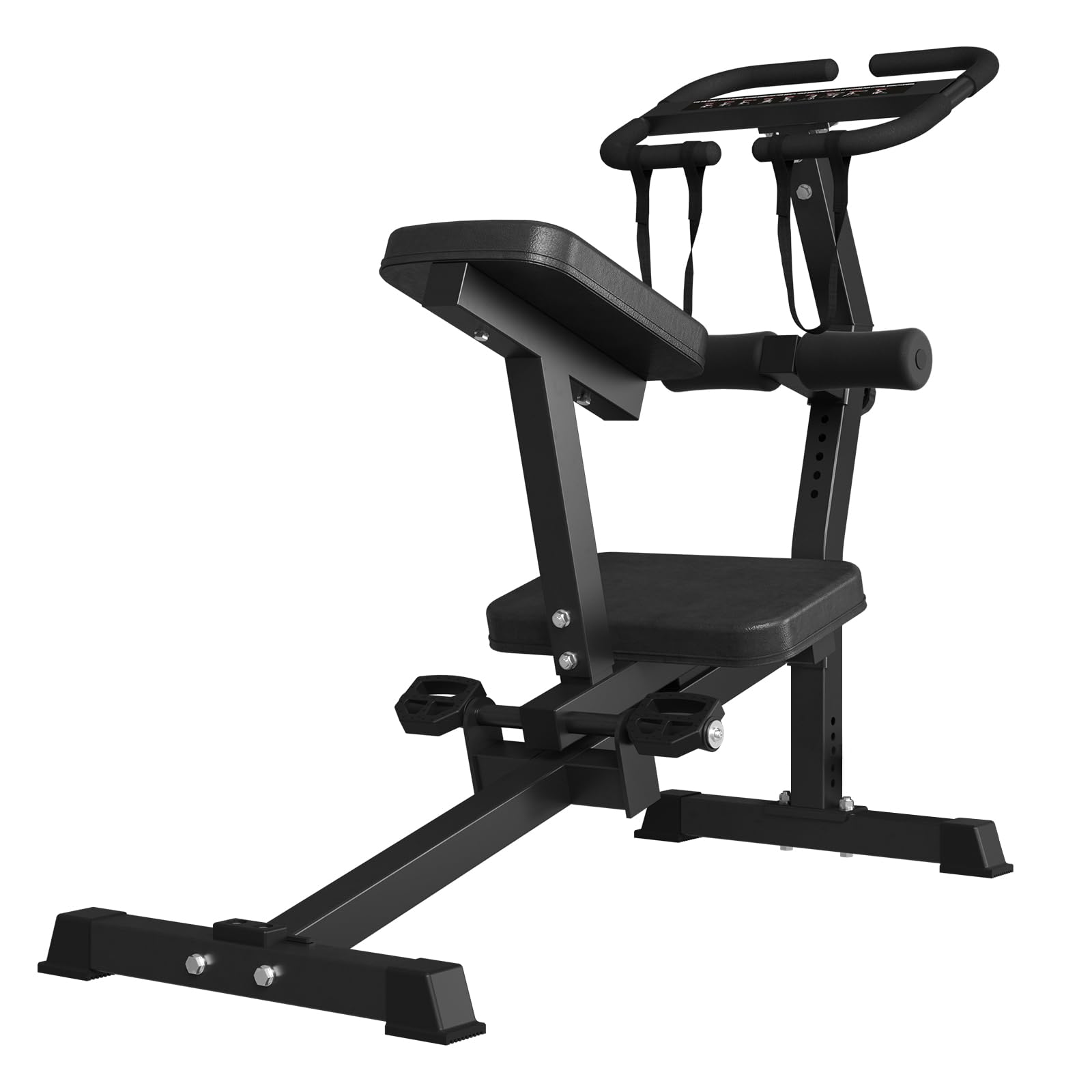
The adjustable seat is the reason the Limber Pro is our top pick. It slides to fit users from 5'0" to 6'5", so one machine can serve a teenager, a tall parent, and a shorter partner without folding a towel behind anyone's back. Most full-body machines here ask you to fit the machine; this one adjusts to you, and that is the difference we care about most.

The rest of the build supports that role. The steel frame is heavy at 56 pounds, and the wide seat and back cushions are sized for longer sessions rather than a quick toe touch. The removable calf board is a small thing we appreciate: it adds a lower-leg stretch without turning the machine into a single-purpose calf tool.

Transport wheels help with the weight, but this is still a machine that wants a permanent corner. The frame is built for long sessions, not for folding away after every use. We like the removable calf board and the multi-grip handlebar for the same reason: they make the machine useful for more than one kind of stretch, so it earns the floor space.

The Limber Pro is not the cheapest way to stretch at home, and it does not try to be. It is the one we recommend when the machine has to fit more than one body and stay stable while they use it. That is a narrower brief than all-purpose, but it is the brief most households actually have. The calf board and transport wheels are the details that make it livable, but the seat range is the reason it wins.

Bottom line: The Limber Pro is our top pick for a shared home: the seat fits 5'0" to 6'5", the frame feels planted, and the calf board adds useful range.
#2

TotalStretch TS100

TotalStretch TS100

Shared gyms

Our Score 9.2/10
Check Price

Worth Noting

  • Heavy at 24.09 kg
Handlebar
Multiple grip positions
Transport
Single wheel
Item Weight
53.1 lb
User Capacity
300 lb
Read the full review

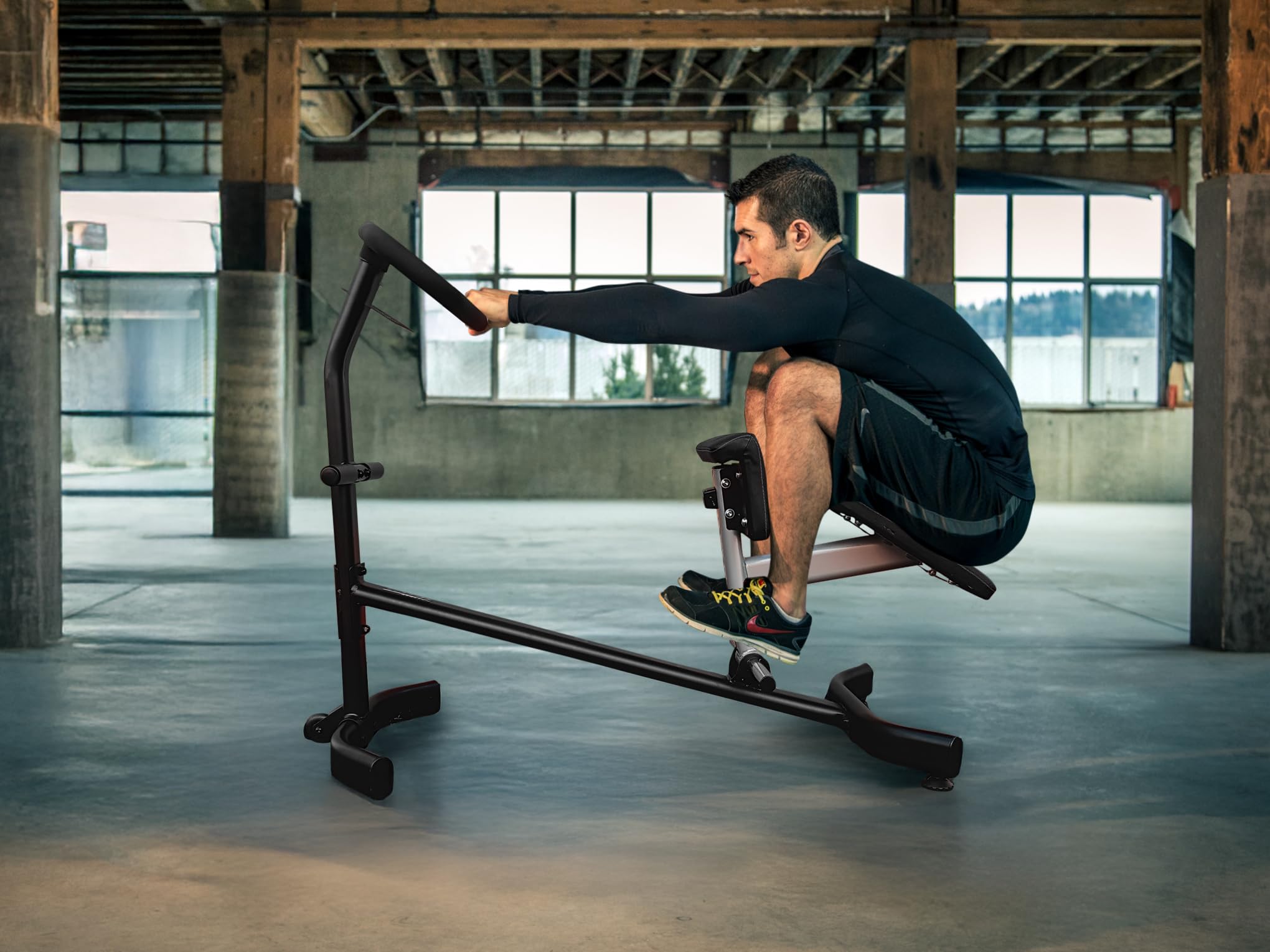
The TotalStretch TS100 is built for the buyer who wants a full-body machine without a lot of adjustment ceremony. The 300-pound user capacity and steel-and-aluminum frame put it in shared-gym territory, and the simple handlebar and foot rest cover seated and standing stretches.

What we appreciate is the no-nonsense layout. The ErgoStretch handlebar gives you several grip positions for different muscle groups, and the foot rest stabilizes the leg during seated hamstring work. A single transport wheel is a smart touch on a machine this heavy; you can steer it out of the way without lifting the whole frame.

The TS100 does not publish a user-height range, so fit is the one thing to verify before ordering. It is also a permanent piece of equipment rather than a compact apartment machine. Those are trade-offs we accept for the commercial feel, but they matter if you are buying for a small room or a very tall or short user.

If your gym needs one machine that several people can use without a lot of fiddling, the TS100 is a strong alternative to the Limber Pro. If you need a stated fit range or a smaller footprint, choose one of the other full-body picks.

Bottom line: The TotalStretch TS100 is our heavy-duty full-body pick: 300-pound capacity, a simple handlebar, and a transport wheel for shared spaces.

#3

Sunny Full Body Stretch Machine

Sunny Full Body Stretch Machine

Small spaces

Our Score 9.0/10
Check Price

Worth Noting

  • Compact frame is tight for taller users
Dimensions
42.1 x 18.9 x 34.9 inches
Item Weight
29.7 lb
Seat Travel
24+ inches
Weight Capacity
265 lb
Read the full review

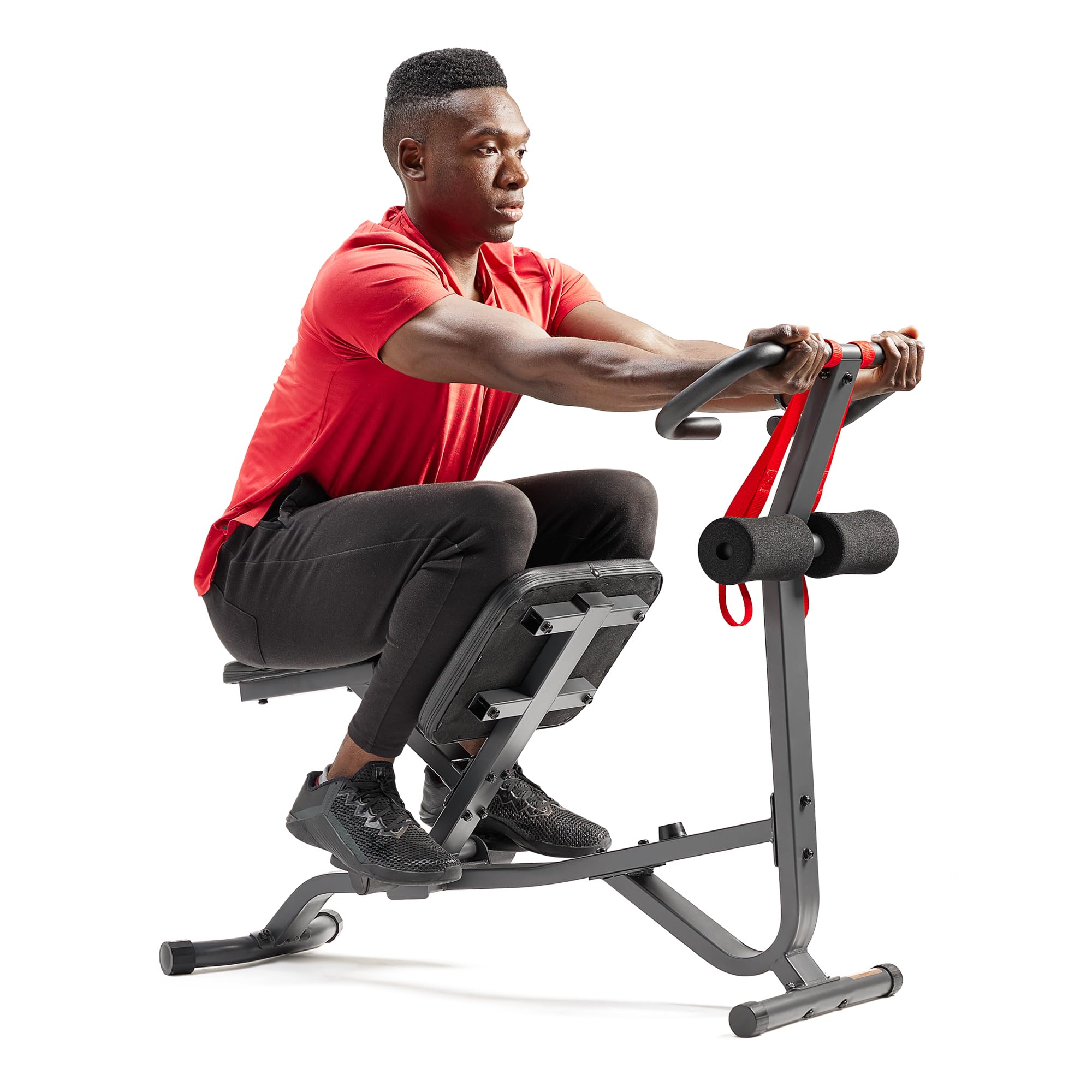
The Sunny is the full-body machine we point to when floor space and budget both matter. At 42.1 inches long and 29.7 pounds, it is compact enough to live in a spare room or beside a sofa, and it still gives you a pivoting seat, a padded back, and a multi-grip handlebar.

The pivoting seat is the feature we like most. It gives you more than 24 inches of travel, so you can start shallow and let the hips carry you deeper instead of hauling on the handlebar. The foam leg rollers and dual safety straps make that controlled entry easier, and the printed guide on the column is a nice reminder when you do not want to pull up a video.

The trade-off is size in the other sense: the frame is compact, and taller users may feel folded into certain positions. If you are tall, the Limber Pro is the safer fit. For a shorter user or a small apartment, the Sunny delivers the full-body basics without asking for a dedicated gym.

Bottom line: The Sunny is our value full-body pick: a pivoting seat, light frame, and compact footprint make it easy to fit into a small home.

#4

IdealStretch Original

IdealStretch Original

Hamstring routines

Our Score 9.0/10
Check Price

Worth Noting

  • Runs short for very tall users
Material
Alloy steel
Dimensions
16 x 8 x 7 inches
Item Weight
2.3 lb
User Capacity
220 lb
Read the full review

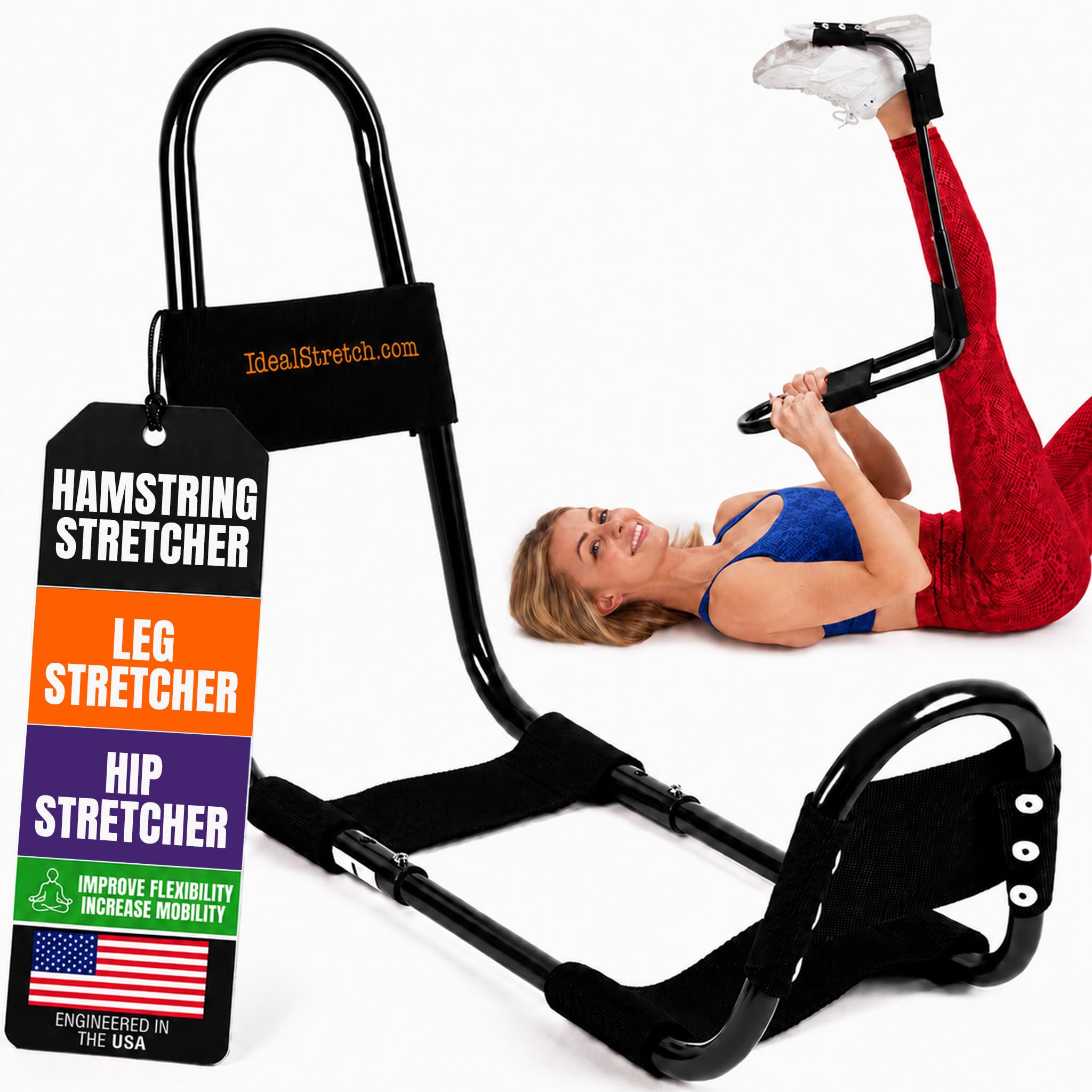
The IdealStretch is not a full-body machine, and that is the point. It is a 2.3-pound floor device that holds one leg in a hamstring, hip, or calf stretch, with a push-button adjustment and a steel frame. At 16 by 8 by 7 inches, it tucks under a bed or into a closet when you are done.

We recommend it for the buyer who wants a controlled hamstring stretch without a piece of furniture in the room. The device keeps the leg in a straight line so you can relax into the stretch instead of holding the leg up with a strap. That makes it useful for post-workout work, physical therapy routines, and anyone who finds floor stretching awkward.

The limitation is length: very tall users may find the fully extended position short of what they need, and this is not a machine for full-body back work. For everyone else, it is the least expensive way into guided stretching here, and the small footprint makes it easy to keep in the routine.

Bottom line: The IdealStretch is our budget pick for hamstrings and hips: it holds the leg in position, stores in a closet, and costs far less than a full machine.

#5

TDH Leg Stretcher

TDH Leg Stretcher

Split training

Our Score 9.0/10
Check Price

Worth Noting

  • Leg pads run short for taller users
Frame
1.5 mm reinforced steel
Control
Handwheel
Split Angle
0° to 210°
User Capacity
300 lb
Read the full review

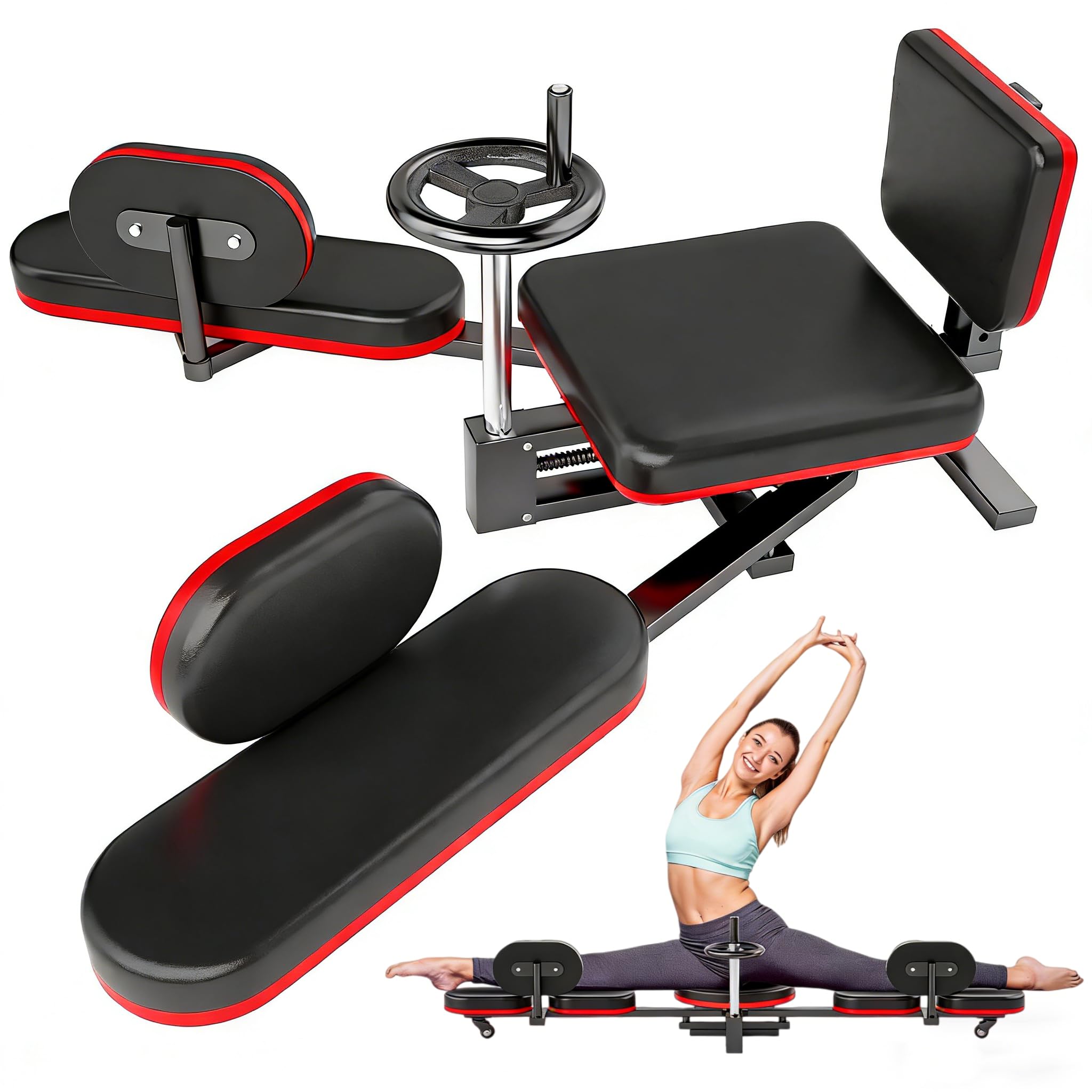
The TDH is the split machine we recommend when the goal is a deeper, more measurable split. Its handwheel takes the leg from 0° to 210°, and that extra range over the 180° machines matters if you are working toward an oversplit for dance, gymnastics, or martial arts. The motion is controlled rather than a sudden push, which is the whole reason to use a machine instead of a partner.

The 300-pound capacity and 1.5 mm reinforced steel frame give it a planted feel, and the dual calf pads and wide seat keep the pressure off the joints better than a bare bar. The leg pads run short for taller users, so check the fit if you are long-legged. For everyone else, this is the lower-body specialist we point to when flexibility has a specific target.

Bottom line: The TDH is our split-training pick: 210° of handwheel-controlled range and a 300-pound frame make it a focused tool for dancers, gymnasts, and martial artists.

#6

MERACH Split Machine

MERACH Split Machine

Budget splits

Our Score 9.0/10
Check Price

Worth Noting

  • 180° range stops short of oversplit work
Item Weight
10.8 lb
Split Angle
180°
Length Range
27.5 to 36.2 inches
User Capacity
300 lb
Read the full review

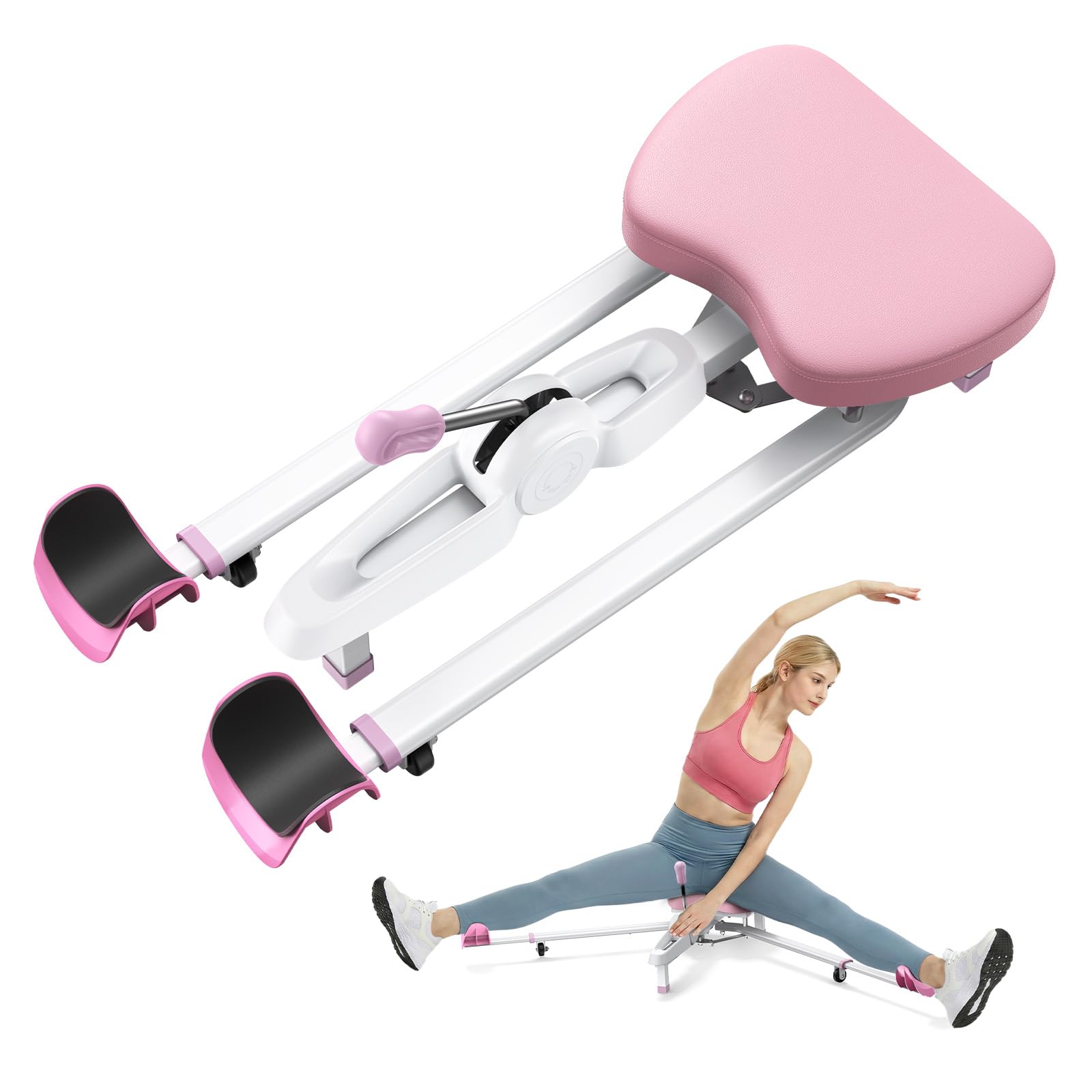
The MERACH is the split machine for a small apartment and a smaller budget. It measures 27.36 inches long and weighs 10.8 pounds, so it slides under a bed or stands in a closet corner, yet it opens to a 180° split when you are ready to use it.

The one-hand handbrake is the feature that makes it beginner-friendly. You can add angle gradually and stop exactly where you want, rather than holding a stretch and hoping the mechanism stays put. Six hidden locking holes adjust the length from 27.5 to 36.2 inches, which is enough for a range of users but worth checking against your leg length.

The 300-pound capacity and extra-wide seat cushion give it more support than the compact frame suggests. We also like that the pads are thick enough to take pressure off the hips during longer holds. It is not a commercial-feeling machine, and the plastic-and-steel build is clearly built to a price, but it does the job for home split training.

The 180° range is the main limitation: it is plenty for a flat split, but not for the deeper oversplit work the TDH can reach. For a first split machine, a small room, or a teenager, the MERACH is the one we point to.

Bottom line: The MERACH is our budget split machine: compact, easy to control with one hand, and rated to 300 pounds, with a 180° range that covers a flat split.

#7

seanleecore Split Machine

seanleecore Split Machine

Beginner splits

Our Score 8.8/10
Check Price

Worth Noting

  • No knee support
  • Seat may feel narrow for wider users
Material
Stainless steel and TPE
Warranty
365 days
Item Weight
12.7 lb
User Capacity
300 lb
Read the full review

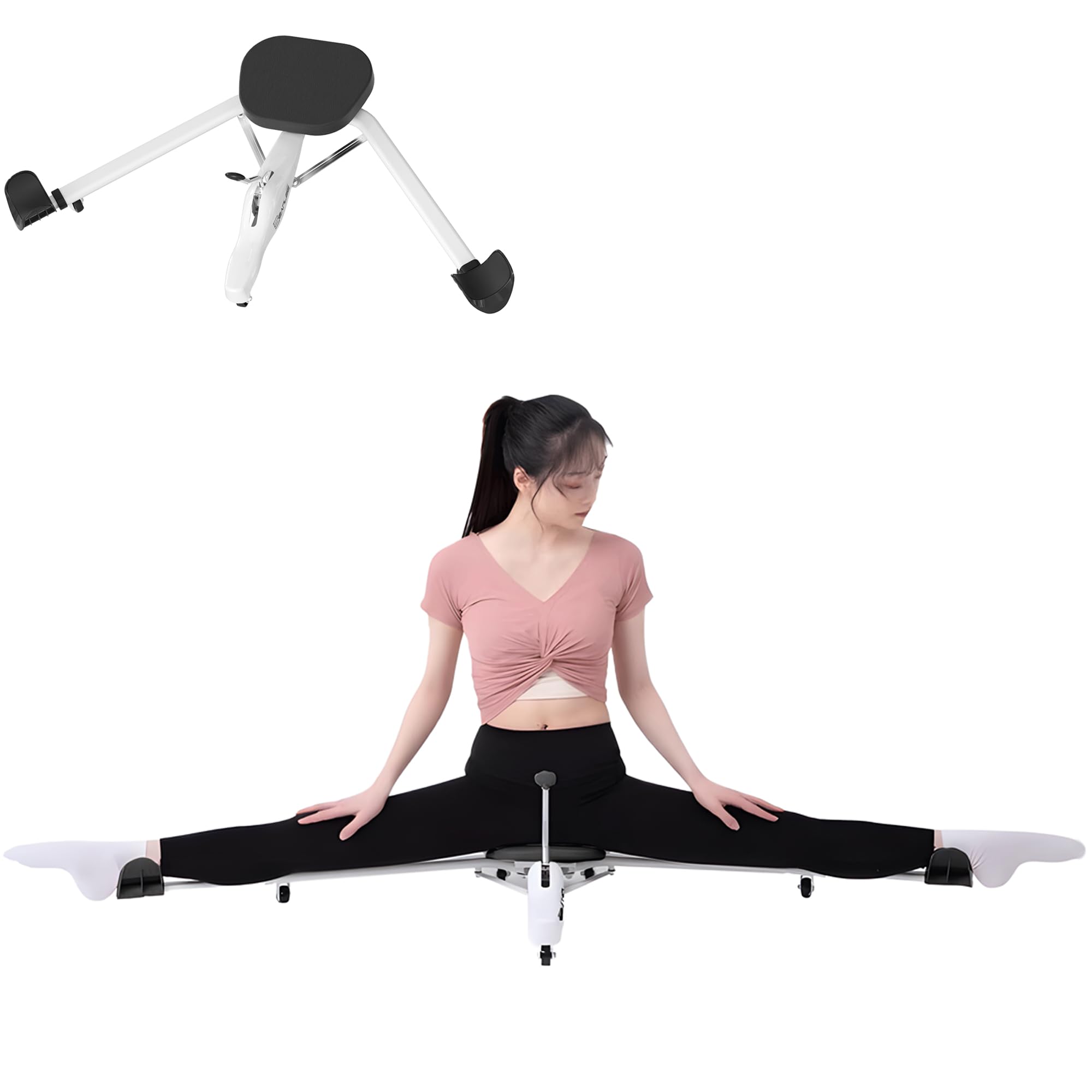
The seanleecore is the split machine we hand to someone who has never used one. The gear-driven crank gives you a smooth, controlled stretch instead of a ratchet that jumps between positions, and the machine adjusts for different leg lengths without a toolbox.

At 5.78 kg, it is light enough to move out of the way, but the 300-pound capacity and stainless-steel frame keep it from feeling like a toy. The adjustable handle and leg-length settings make it easy to settle in, and the assembly is simple enough that you can be stretching the same day.

The catch is support: there is no knee pad, so longer sessions can leave the knees bearing more of the position than you want. The seat may also feel narrow for wider users. Neither issue rules it out for a first split machine, but they are the reasons the TDH is the better choice for deeper, longer sessions.

Bottom line: The seanleecore is our beginner-friendly split machine: the gear-driven crank is easy to control, assembly is simple, and it adjusts for different leg lengths.

#8

GMWD Stretch Machine

GMWD Stretch Machine

Budget full-body

Our Score 8.4/10
Check Price

Worth Noting

  • High seat can make back stretches awkward
  • Assembly can be confusing
Warranty
12 months
Dimensions
55.1 x 19.7 x 41.3 inches
Item Weight
62 lb
Stretch Guide
9 illustrated stretches
Read the full review

The GMWD starts with a warning flag: the seat sits high. For some back stretches, that high seat turns a relaxed seated position into a kneel, and it can hit the back when you use the lower handlebar. If your main goal is gentle back decompression, the Limber Pro or TS100 is the safer fit.

The rest of the package is aimed at budget-minded full-body stretching. The frame is 55.1 inches long, the machine weighs 62 pounds, and it includes a nine-stretch illustrated guide, padded seat and knee rests, multi-grip handles, and dual safety straps. The auto-adjusting foot pedal is a useful touch for leg work.

Assembly is not the strong point. The hardware and instructions can be confusing enough that you may need to sort the steps before you start, and the 62-pound frame is not easy to move once built. Those are the costs of the lower price.

We include the GMWD as an also-consider because it covers a lot of the full-body checklist for less money, but it does not serve every body or every back stretch. If you are tall through the torso, or you want a machine that disappears into a corner, look at the Sunny instead.

Bottom line: The GMWD is a budget full-body alternative with a useful stretch guide and padded supports, but the high seat makes it a better fit for leg and hip work than back work.

How We Tested the Best Stretching Machines

We started by gathering every stretching machine we could find from established home-fitness brands, then narrowed the field using spec sheets: weight capacity, range of seat and lever adjustment, footprint, and whether the frame was steel or something thinner. We cut anything with vague assembly instructions or a footprint too wide for a normal living room, which left us with 10 machines to test over six months.

Testing happened where these machines actually live — living rooms, a spare bedroom, and a garage gym — in the morning before work, after runs, and in the evening in front of the TV. Two testers five inches apart in height used every machine, which let us see how quickly the seat moved between us and whether the settings held once we locked them in.

We noted whether the frame rocked when we leaned into a deep hamstring stretch and whether the handlebar flexed under a hard pull. We timed how long each machine took to go from folded to first stretch, and counted the seconds of fiddling required to change an angle setting mid-session. Every session we logged which muscle groups we could genuinely feel stretching and which positions felt like busywork, and we ran a seated reach test at the start, midpoint, and end of the six months to see whether the work translated into range.

On the quality side, we checked pads for flattening after a month of daily use and wiped each machine down the way a normal household would. Finally, we set what each machine cost against how many positions were actually useful, since a long feature list means little if you only ever use two of them.

How to Choose a Stretching Machine

Start With the Stretch, Not the Machine

Full-body machines use a seat, handlebar, and often a foot rest to support hamstring, hip, calf, and back stretches. They are the better choice if you want one station for general mobility or back decompression. Split machines isolate the legs and hips for middle splits, dance, gymnastics, and martial arts. A split machine is the wrong tool for upper-back work, and a full-body machine is overkill if your only goal is a deeper side split.

Make Fit the First Specification

We put a stated height range ahead of an extra grip position. The Limber Pro fits users from 5'0" to 6'5", while the Sunny is compact and favors shorter users; that difference matters more than the paint color. Split machines adjust by leg length instead, but the pads can still run short for long legs. Check the seat-to-handlebar reach and the maximum extension before you buy, especially if more than one person will use the machine.

Match Stability to the Body Using It

A heavier frame is not automatically better, but it does buy forgiveness when you shift your weight or pull against a handle. Check the stated user capacity: the Sunny is rated to 265 pounds, the IdealStretch to 220, and the TotalStretch to 300. A machine with transport wheels is easier to move, but it still needs a level floor and enough clearance to get on and off. Measure the footprint, not just the wall space.

Choose a Control You Can Ease Into

Handwheels and handbrakes let you add a few degrees at a time, which is what makes a machine safer than a partner pushing on your leg. The TDH reaches 210°, the MERACH stops at 180°, and most flat splits need less than the maximum. We prefer a control that holds its position while you relax; a mechanism that jumps or slips defeats the purpose. Deeper is not better if you are bracing against the machine.

Budget for Assembly and Floor Space

Full-body machines arrive in more pieces than split machines, and the difference shows up on assembly day. The Limber Pro and GMWD both ask for patience with hardware and alignment, while the split machines here are closer to unpack-and-stretch. Leave room for the machine's length plus space to sit down and stand up. A compact machine that stays assembled is more useful than a premium one you avoid setting up.

Frequently Asked Questions

Final Verdict

Most people should start with the Nitrofit Limber Pro. The adjustable seat is the feature that separates it from the rest: it fits users from 5'0" to 6'5", the heavy frame stays planted, and the removable calf board adds useful range. It costs more than the Sunny, but it is the better buy if more than one person will use it or if you are taller than the Sunny comfortably fits.

If the budget or the room is tighter, the Sunny is the full-body alternative we recommend, and the IdealStretch is the better choice for a simple hamstring routine. For splits, start with the seanleecore if you want the easiest control, the TDH if you need the full 210° range, or the MERACH if space and cost are the priority.