Yoga & Mobility

Best Pilates Reformers of 2026

A reformer is a big promise for a piece of home equipment: it should feel sturdy enough to trust with deep leg presses, glide smoothly enough that the carriage doesn't fight you, and fit into a room without becoming a permanent obstacle. The real hesitation is rarely the idea of reformer Pilates—it's whether a home model will arrive as a box of parts, creak under load, or need two people to move. What a good one fixes is the gap between studio sessions: adjustable springs, a stable frame, and a workout that still feels effective when you're alone in your living room.

I've used studio reformers for years, and over the past eight months my team and I assembled and lived with six home reformers. We paid attention to adjustability, weight and mobility, noise, and durability, plus the less glamorous question of whether each one was worth the money after the newness wore off. A quiet carriage and build quality beat a long feature list every time; the picks below are the ones that earned their floor space.

#1

LeisureKing Oak Reformer

Top Pick
LeisureKing Oak Reformer

Most home studios

Our Score 9.6/10
Check Price

Worth Noting

  • 143 pounds, so it stays where you build it
Frame
Solid oak, mortise-and-tenon
Footprint
91.2"D x 24.06"W x 25.59"H
Folded Size
25.98 x 15.0 in
Weight Capacity
440 lb
Read the full review

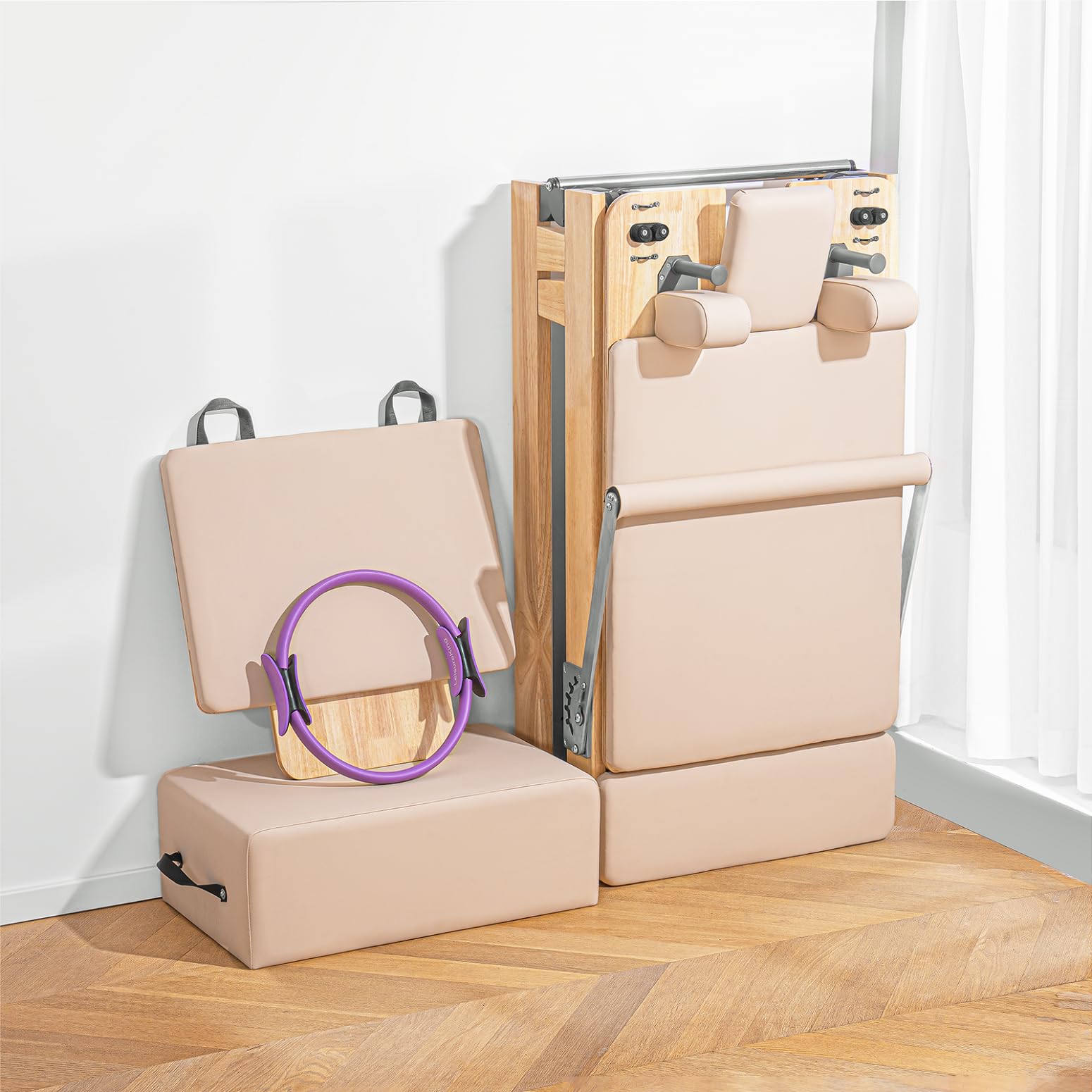
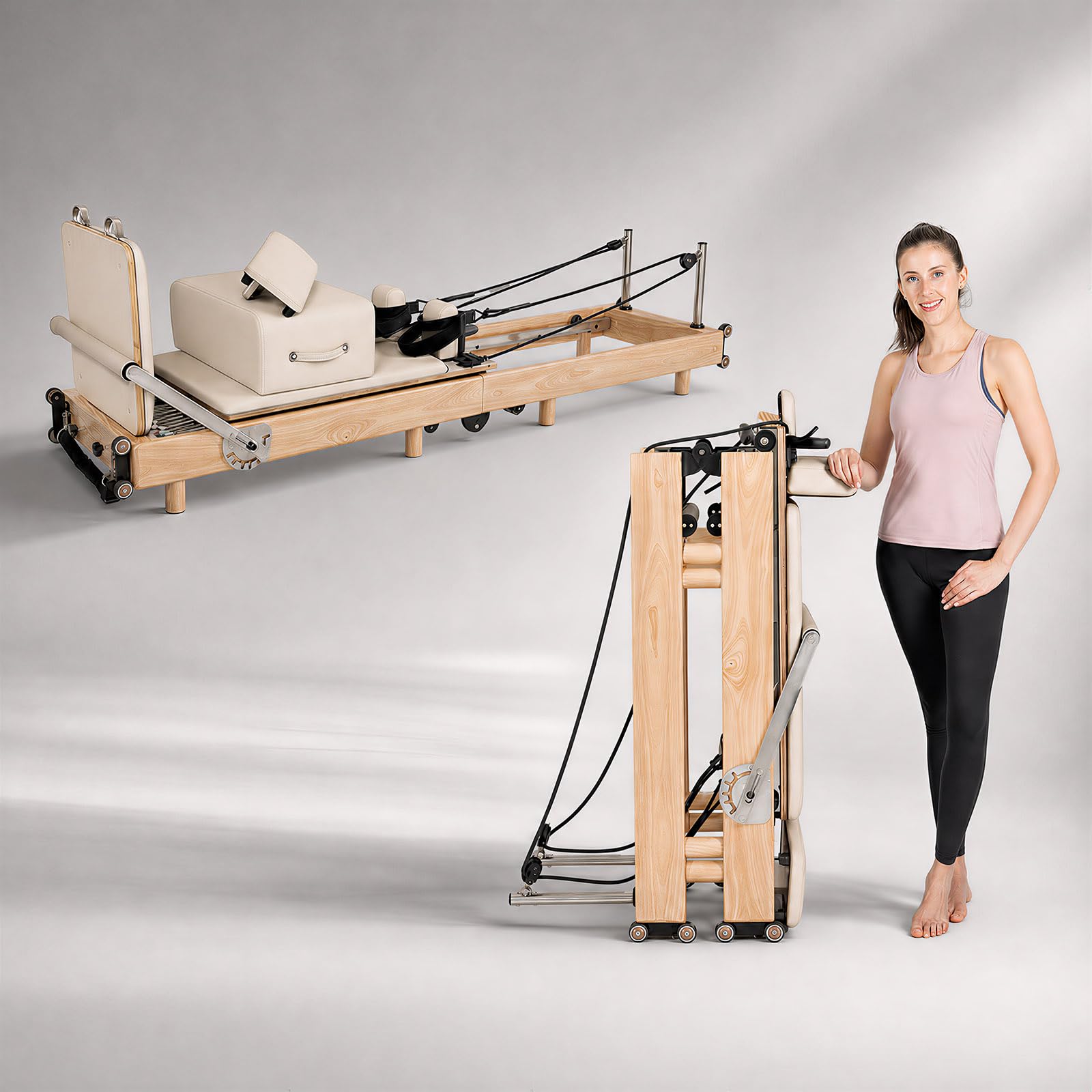
The frame arrives already built, packed in two wooden crates, and finishing the job means bolting on the shoulder blocks, handles, risers, and ropes. Four steps, and you can be on the carriage the evening you unbox it. Assembly is where home equipment usually stalls, with half-built machines living under a sheet, and this one skips that stage almost entirely.

What we appreciate most is how little it asks of the room. The carriage runs on aluminum rails with none of the squeak or knock that creeps into cheaper frames, and the oak is joined with mortise-and-tenon work, so nothing shifts when you push hard through footwork. At 91 inches it is a full studio-length deck, yet it folds down to roughly 26 by 15 inches, small enough to stand in a closet corner. The five springs cover a stated 18.5 to 234 pounds of tension, a wider spread than most home machines offer: light enough for rehab-style work, heavy enough that a strong advanced user will not run out of resistance.

The accessory set is the real thing too: a sitting box, a jump board, and a foot strap, the pieces most people end up buying one at a time. What stayed with us after a few sessions was the silence at the end of the return, which is the sound that separates a home reformer from a studio one. The beige oak and aluminum look like furniture rather than gym equipment, and in a room you actually sit in, that counts for more than it sounds.

Bottom line: This is the home reformer we recommend to most people: it arrives nearly assembled, runs quiet on aluminum rails, and folds small enough to keep in a spare room.
#2

Dpiolrcag Foldable Reformer

Dpiolrcag Foldable Reformer

Tight budgets

Our Score 9.4/10
Check Price

Worth Noting

  • 250-pound weight limit, the lowest here
  • Arm straps run long for shorter users
Assembly
90% pre-assembled
Resistance
4 springs plus 5 cords
Item Weight
70 lb
Weight Capacity
250 lb
Read the full review

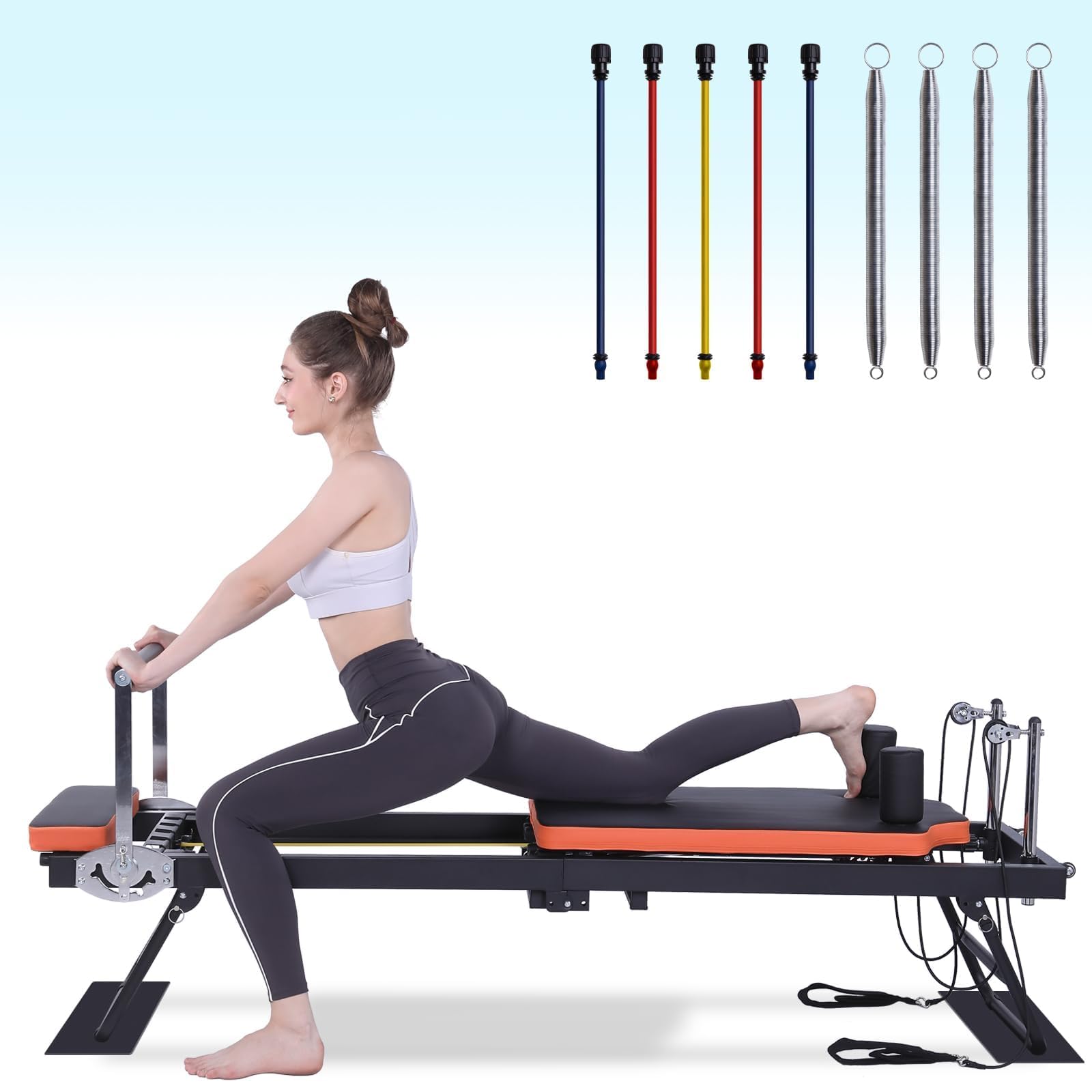
This is the least expensive machine in this guide, and it does not pretend otherwise: 70 pounds of alloy steel, a 74.6-inch deck, and a folding frame that tucks into a corner. For the money you get four springs at 22 pounds each plus five cords running 15 to 27 pounds, giving five resistance levels, which is more adjustment than several machines here that cost more.

What we noticed is how little it asks of you to get going. Ninety percent arrives assembled, the parts you do attach are few, and the whole thing folds and rolls. The deck runs 74.6 inches, which is comfortable for a shorter user and cramped for anyone well above average height; if you are tall, the PAETA PR07 is the better spend.

The trade-offs are honest ones. Four springs and five cords give you light, medium, and firm, but the 250-pound weight limit is the lowest here, so heavier users should look elsewhere in this guide. The arm straps run long even at their shortest setting, which leaves slack at the start of a pull, and the warranty is three months, the shortest in this set. What you get in return is a machine that folds, rolls, and costs a fraction of the wooden ones, and for a lot of people that is the difference between practicing and not.

Bottom line: Our budget pick: the least expensive machine here, folding, and mostly assembled, though the 250-pound limit and short deck suit smaller users.

#3

nexace NX901 Reformer

nexace NX901 Reformer

Wooden-studio look

Our Score 9.4/10
Check Price

Worth Noting

  • 150 pounds, the heaviest machine here
  • Rail and deck height suit shorter users
Springs
6 resistance springs
Included
Box, jump board, foot strap, platform extender
Item Weight
150 lb
Weight Capacity
400 lb
Read the full review

Eight oak legs, traditional joinery, and a low deck: the NX901 is the closest thing here to a piece of furniture, and it is built to be looked at. The wood is solid oak rather than a veneer over steel, the frame is rated to 400 pounds, and the low height makes mounting easy and advanced work feel less exposed than it does on a tall platform.

Six springs, plus a box, a taller jump board, a foot strap, and a padded platform extender. The full accessory set matters, because buying those pieces one at a time adds up fast. It ships in two wooden crates and takes about 45 minutes with a drill rather than the hand tools in the box; the instructions are illustrated step by step, which is more than most flat-pack furniture manages.

At 150 pounds it is the heaviest machine here, so it is a fixed installation that happens to fold rather than something you put away weekly. The rail and deck height suit shorter users, and taller ones should look at the PAETA PR07 instead. What we like is that none of the money went into styling alone: the carriage runs smooth and quiet, the springs and ropes are conventional, and the jump board sits taller than most, which makes it a better target for standing work.

Bottom line: Six springs, an eight-leg oak frame, and a box and jump board included: we like it for anyone who wants a studio-looking machine that folds away.

#4

PAETA PR07 Wooden Reformer

PAETA PR07 Wooden Reformer

Taller, heavier users

Our Score 9.0/10
Check Price

Worth Noting

  • 92-inch footprint needs a dedicated wall
  • 140 pounds, so folding takes two people
Frame
Solid oak
Footprint
92"D x 26"W x 8"H
Item Weight
140 lb
Weight Capacity
500 lb
Read the full review

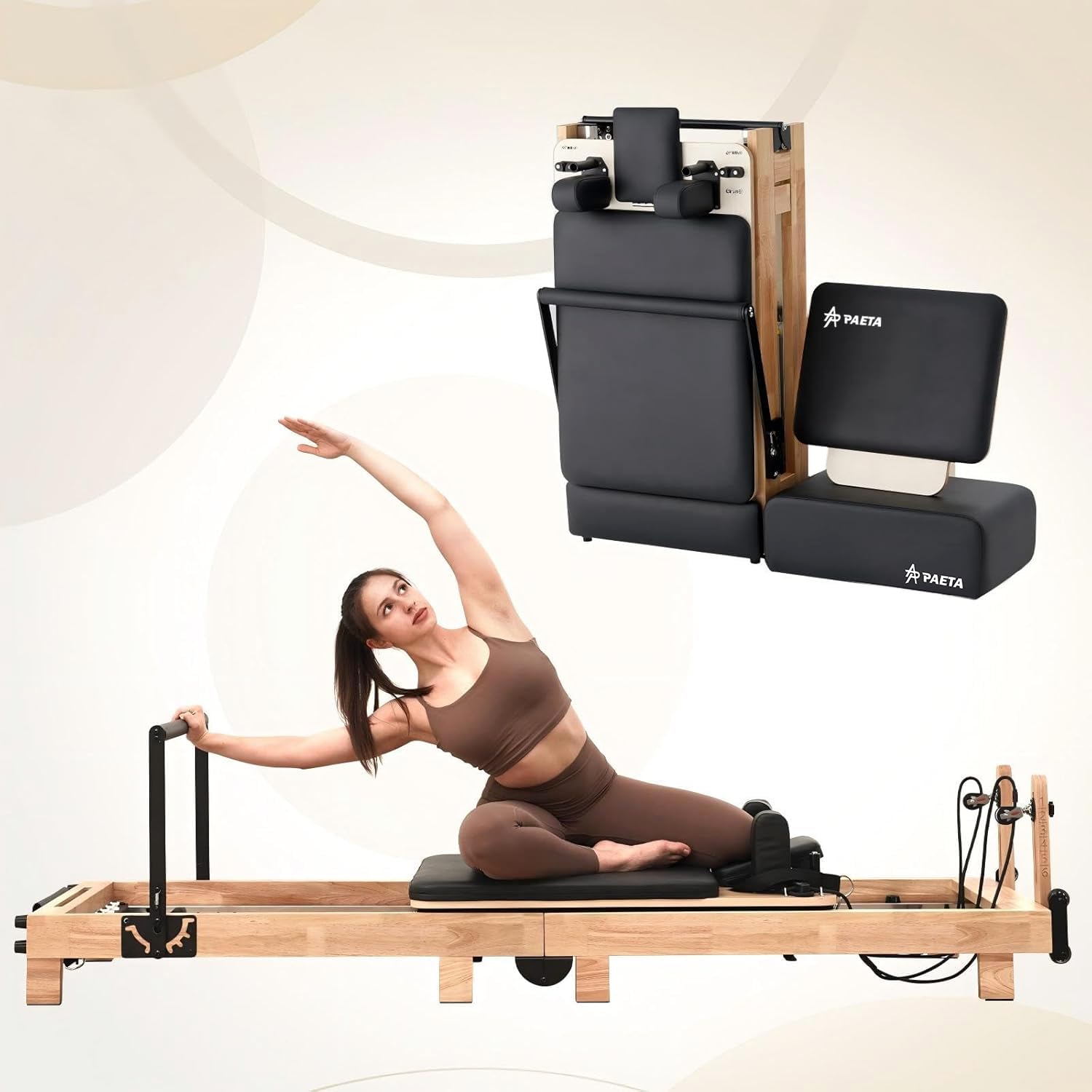
Ninety-two inches of deck and a 500-pound weight limit make this the longest wooden machine in this guide, and the size is the argument. A longer rail means the carriage travels further before it runs out, so taller users get the range a 75-inch machine cuts short. The platform is 26 inches wide, and both the headrest and the shoulder pads adjust for different bodies.

It also arrives as a package rather than a bare frame. The sitting box matters more than it sounds, since it is what unlocks short-box and long-box work, and machines at this price often leave it out; a jump board comes with it as well. We think the deck length is the specification worth paying for, and the box and board are what make the price feel reasonable on top of it.

Where it gives ground is the upkeep. A squeak can develop at the frame bolts after a few months, and the fix is a wrench and ten minutes before the noise gets into your head. Assembly runs about an hour and the instructions hold up. The oak is warm-toned and substantial in a way the steel machines are not, and it holds still when you push hard through a set.

Bottom line: For taller or heavier users, this is the machine we point to: a 92-inch oak deck, a 500-pound limit, and a box and jump board included.

#5

AeroPilates 701 Premier

AeroPilates 701 Premier

Cardio intervals

Our Score 9.0/10
Check Price

Worth Noting

  • Pulley and strap hardware feels less durable
  • 20-inch deck is narrower than the wooden machines
Extras
Two workout DVDs
Footprint
86.25"D x 20"W x 14"H
Resistance
4 heavy-duty springs
Weight Capacity
300 lb
Read the full review

A rebounder at the foot of the carriage is the reason to look at this one. Instead of pressing out against springs, you bounce, with feet through the straps or flat on the mat, and the machine does cardio as well as strength work. None of the other picks here give you that, and for anyone who gets bored on a carriage it is the feature that keeps the machine in use.

The rest is a solid home machine: an alloy steel frame, four heavy-duty springs, a deck 86.25 inches long and 20 inches wide, and a folding frame on wheels so it can go against a wall between sessions. Two workout DVDs come in the box; the production is dated, but following a session start to finish beats guessing at spring settings for your first month.

Two things to know. The pulleys and straps are where the machine shows its price: the frame is the sturdy part, and the hardware around the ropes is the part that feels least durable. And at 20 inches the deck is narrower than the oak reformers here, which you notice in side-lying work. For us the rebounder is what makes it the machine to reach for on a low-motivation day, and that is worth more than a wider deck.

Bottom line: If you want cardio with your Pilates, this is the one: a rebounder for bouncing intervals, four springs, and a foldable frame on wheels.

#6

Merrithew At Home SPX

Merrithew At Home SPX

Studio-brand buyers

Our Score 8.8/10
Check Price

Worth Noting

  • 250-pound weight limit at the highest price here
  • Rope length adjusts only slightly
Springs
5 (4 x 100%, 1 x 50%)
Included
Box, straps, pole, extender, spring covers
Footprint
96.5"D x 26"W x 10"H
Weight Capacity
250 lb
Read the full review

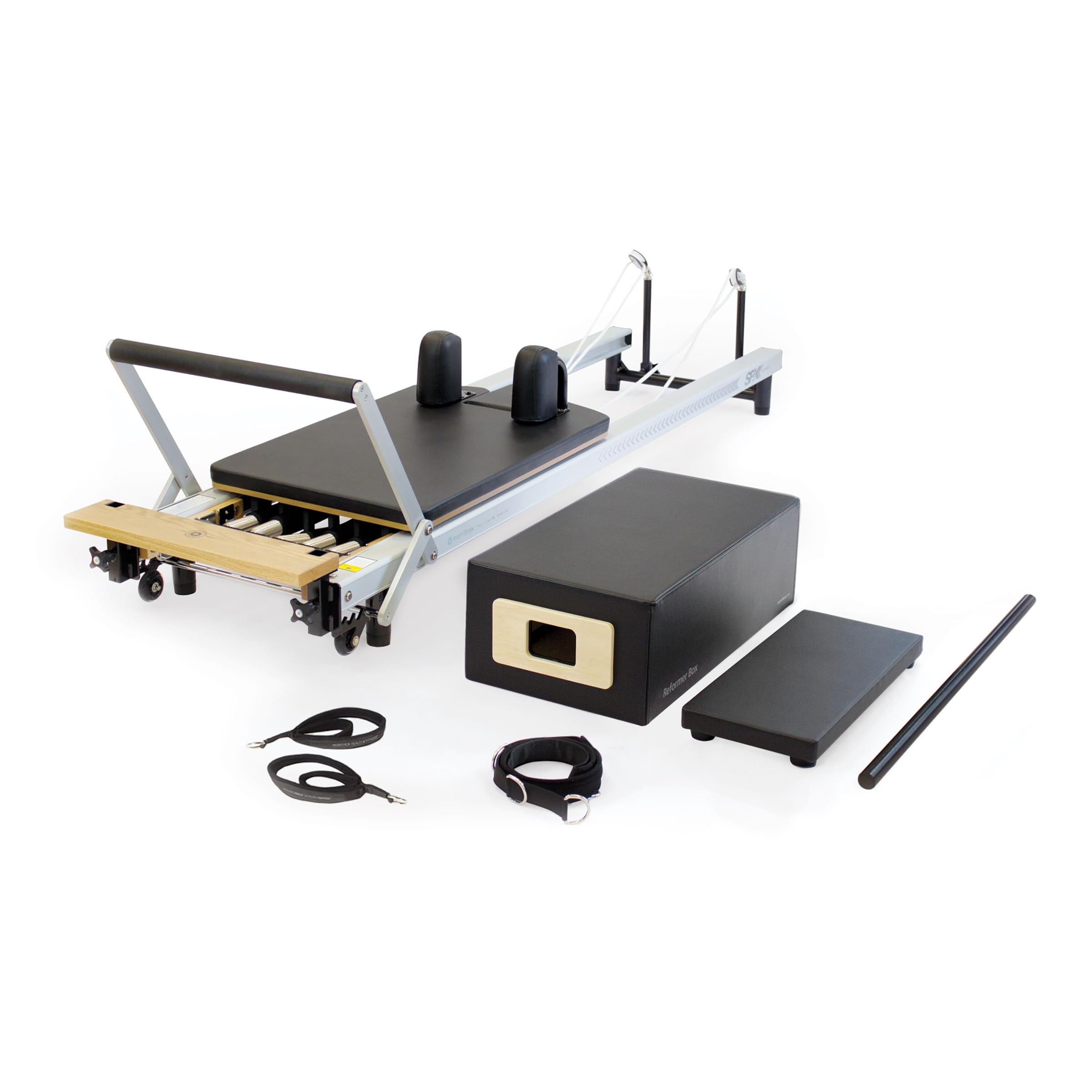
The spring set tells you what this machine is: four full-tension springs and one at 50 percent, the traditional studio arrangement, with neoprene covers to keep them quiet. Add the box and foot strap, the padded platform extender, the metal roll-up pole, and the double-loop straps, and you have the kit a studio hands a new client, not a starter package with the useful pieces sold separately.

At 96.5 inches it is the longest machine in this guide, and the aluminum rails and high-density foam padding carry the feel of the commercial reformers Merrithew builds. The upholstery is wipe-clean vinyl, which sounds mundane until you are doing footwork in bare feet five days a week.

Whether the premium is worth it depends on what you want from it. The rope system is the weak link: the straps adjust only slightly, so a short user and a tall one sharing the machine will both compromise. The 250-pound weight limit is the lowest here, tied with our budget pick, and at 115 pounds it is not a machine you move between rooms. Long term, the carriage is the part we keep an eye on. What you are paying for is the platform, the full accessory kit, and the maker's name, and for a buyer who wants the machine to behave like the studio they learned in, that is a fair trade.

Bottom line: The one to buy if you want a recognized studio maker's platform and a full accessory kit, and you can live with a 250-pound limit.

#7

PAETA 86" Foldable Reformer

PAETA 86" Foldable Reformer

Small apartments

Our Score 8.8/10
Check Price

Worth Noting

  • Fixed headrest gives no neck support
  • Rail is short for taller users
Footprint
86"D x 23"W x 10"H
Resistance
Springs plus resistance cords
Item Weight
80 lb
Weight Capacity
400 lb
Read the full review

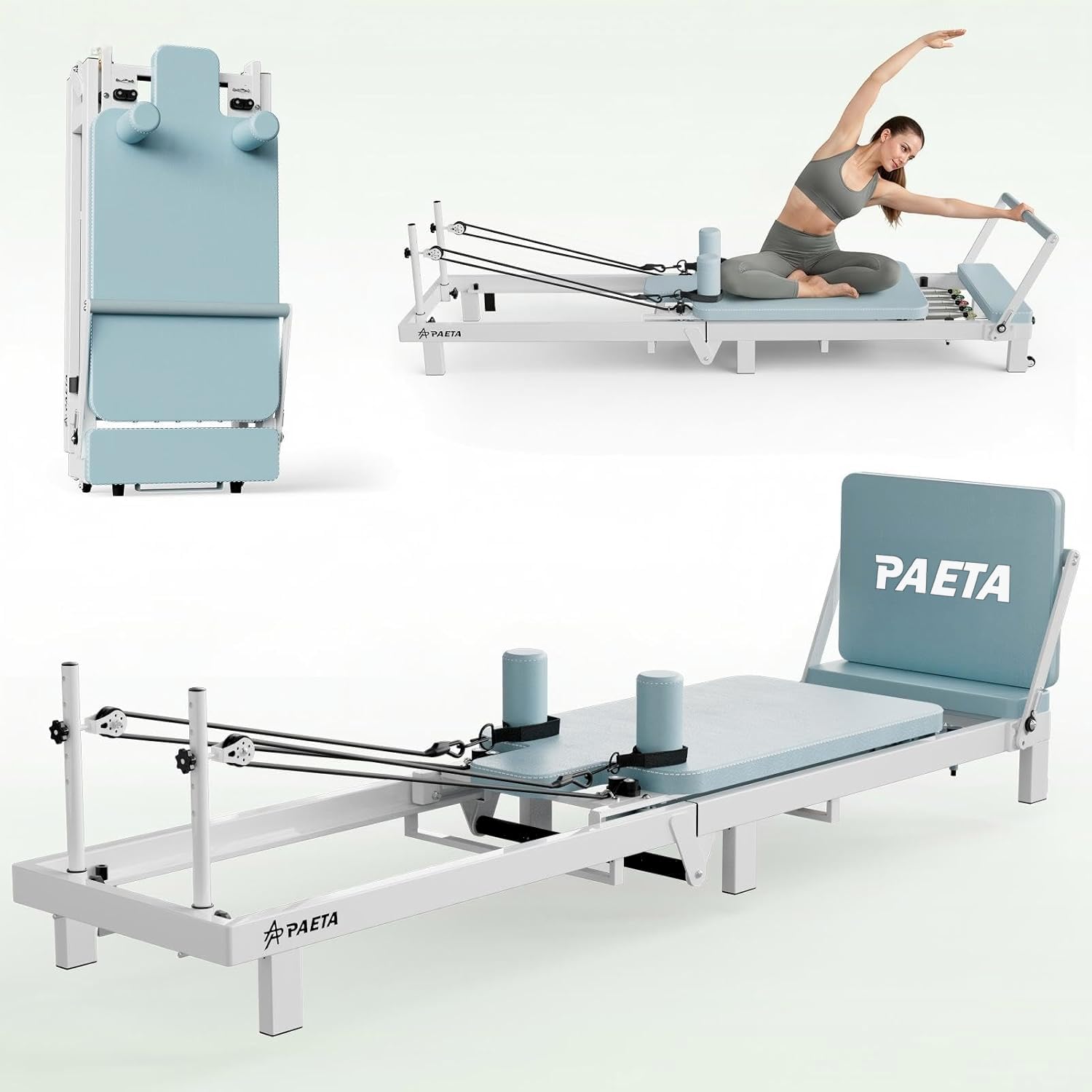
Eighty-six inches of deck, a folding frame, and wheels, and if your bed sits on risers the folded machine slides underneath it. That is the pitch, and it is a good one for anyone whose reformer has to disappear between sessions. At 80 pounds it is light enough for one person to move, which none of the wooden machines here can claim.

Two resistance systems come with it: springs for the carriage work and cords you can add as you get stronger, which is a friendlier progression than swapping springs mid-program. The frame is reinforced carbon steel rated to 400 pounds, the shoulder rests adjust for different body widths, and about 90 percent of it arrives assembled.

Two things to check against your own body. The headrest is fixed and soft, so long sessions leave your neck without much support, and the rail is on the short side for a tall user. Neither is a dealbreaker at this price; both are reasons to be honest about your height before you order.

Where it lands for us: it is the machine for a renter, a small apartment, or a room that has to do two jobs. It gives up the solidity of oak and a headrest you can angle; what it keeps is a real 86-inch glide and resistance you can grow into, for a lot less than the oak machines.

Bottom line: The folding option we recommend for small rooms: 80 pounds, wheels, and a folded profile that slides under a bed.

How We Tested Home Pilates Reformers

We started by researching the home reformer market and narrowing the shortlist by footprint, available spring resistance, adjustable parts, claimed user weight capacity, and what came included at each price point. Then we brought in six reformers and spent eight months using them in the spaces people actually have: a spare-room corner, a living room cleared for morning sessions, and a shared home gym where two people alternated workouts. We assembled each one ourselves, timing the process solo where possible and noting whether the instructions matched the parts, whether the frame lined up without forcing, and whether a second person was truly necessary.

In daily use, we ran through footwork, bridging, side-lying series, and long stretch to judge effectiveness, changing spring settings and footbar or shoulder-rest positions to see how quickly and clearly each reformer adjusted. We noted whether the carriage glided evenly, whether the straps tracked straight, and whether springs engaged without a jolt; early-morning sessions made wheel rumble and frame creaks obvious. We also moved each reformer for cleaning, noted how much its weight mattered in practice, and checked whether wheels or a folding mechanism made storage realistic for one person.

Sturdiness and durability got the slow test: we watched for frame wobble during faster movements, inspected upholstery seams and straps for wear, and listened for new noises after months of use. To judge value, we compared what each reformer included against what it asked you to assemble, adjust, store, and live with—because a smooth, quiet machine that fits your room is worth more than extra features that never get used.

How to Choose a Pilates Reformer

Start With the Floor, Not the Springs

These machines run from about 75 inches to 96.5 inches long and 20 to 26 inches wide, and length is what decides whether a reformer fits your room. Measure the wall you have in mind and leave room at the foot end to mount and to let the carriage travel.

Treat folding as storage, not a daily feature: a folded footprint you never use is not a benefit, and the lightest machine here, at 70 pounds, is the one you can fold without help. And compact in a reformer listing means it fits a room, not a closet, so check the folded depth alongside the length.

Springs, Cords, and How Resistance Builds

A studio reformer runs on steel springs, and that is why a class movement feels the way it does: the resistance stays even through the range. Elastic cords are cheaper and lighter, and they get heavier the further you stretch them, so the end of a push feels different from the start.

Several home machines now give you both, including the Dpiolrcag and the PAETA 86-inch folder. If you have taken classes and want the same feel, buy springs. If you are starting from scratch, a dual system lets you add tension as you get stronger without buying new parts.

Weight Capacity, Frame, and Fitting a Tall Body

Stated limits here run from 250 to 500 pounds, and that number is a hard ceiling rather than a suggestion. The oak frames are rated between 400 and 500 pounds; the steel machines land at 300 to 400. Frame material matters less than how planted the machine feels, which is why weight is a feature: a 150-pound oak machine does not walk across the floor mid-set.

If you are tall, rail length matters more than anything else on the spec sheet. A 74.6-inch deck pinches a long stride, while 92 inches or more is roughly where taller users stop noticing the machine underneath them.

Assembly, Delivery, and Living With It

Most of these arrive 80 to 90 percent built, and the gap between a ten-minute finish and an hour with a drill is worth knowing before delivery day. The oak machines ship in two crates, and a 100-plus-pound crate on a doorstep is a two-person job.

Once it is up, build it where it lives. At 70 to 150 pounds a reformer is furniture, not equipment you drag out of a cupboard, and every machine here that gets used regularly stays set up.

What Is Worth Having in the Box

A sitting box and a jump board are the two accessories that broaden a reformer beyond footwork and rowing, and bought separately they add real money. The LeisureKing, the PAETA PR07, and the nexace include both, while the AeroPilates substitutes a rebounder for the jump board.

Our advice is to count the accessories before you compare price. A slightly dearer machine that arrives with a box included is often the cheaper purchase once you have priced the extras.

Frequently Asked Questions

Final Verdict

Buy the LeisureKing if you want one machine that does the studio job at home: it arrives nearly built, runs quiet, and folds small enough for a spare room. If you are tall or heavier, the PAETA PR07's 92-inch deck and 500-pound capacity are worth the extra footprint.

And if the machine has to disappear between sessions, the PAETA 86-inch folder is the one built for that, at the cost of a shorter rail and a fixed headrest.