Strength & Weights

Best Wrist and Forearm Exercisers of 2026

A wrist and forearm exerciser should make your hands and elbows feel better, not worse. That sounds obvious until you try one that's too stiff, too small, or impossible to adjust, and the thing meant to relieve your elbow is why you're icing it. After a climbing season left my forearms cranky, I spent four months putting 16 exercisers through desk work, gym warmups, and the endless jars and grocery bags of daily life.

The ones worth keeping adjust without wobbling, grip your hand without digging in, and let you add tension gradually enough that your elbow doesn't flare. A cheap unit that creaks or slips is no bargain, so construction and value matter more to me than a long feature list. I looked for tools that felt solid, held their setting through a session, and fit different wrist sizes without pinching. The picks below are the ones that passed that test.

#1

FitBeast Wrist Roller

Top Pick
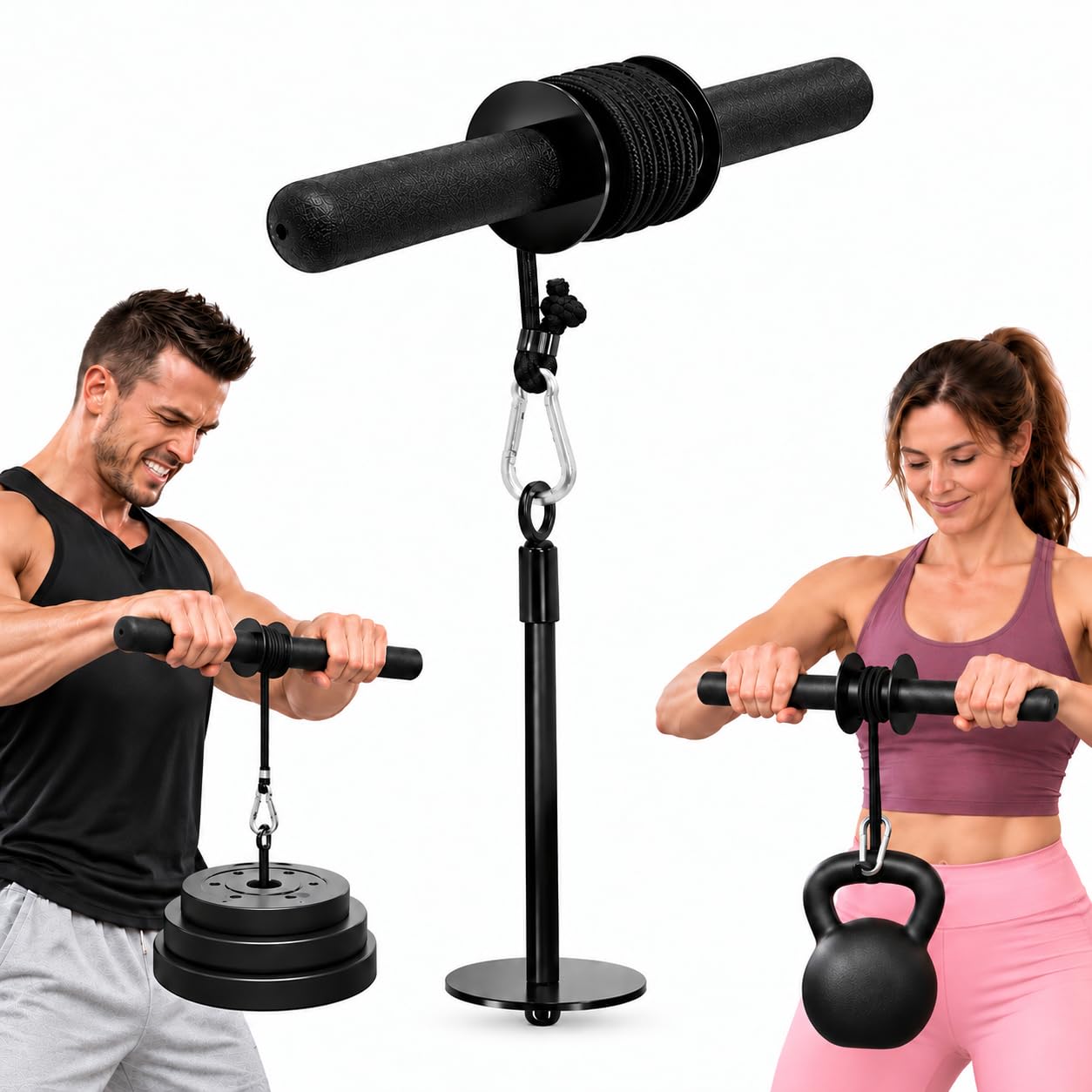
FitBeast Wrist Roller

Loaded forearm work

Our Score 9.6/10
Check Price

Worth Noting

  • Thick handles are a stretch for small hands
Handle
25% thicker
Max Load
240 lb
Extension Strap
20.4 in
Read the full review

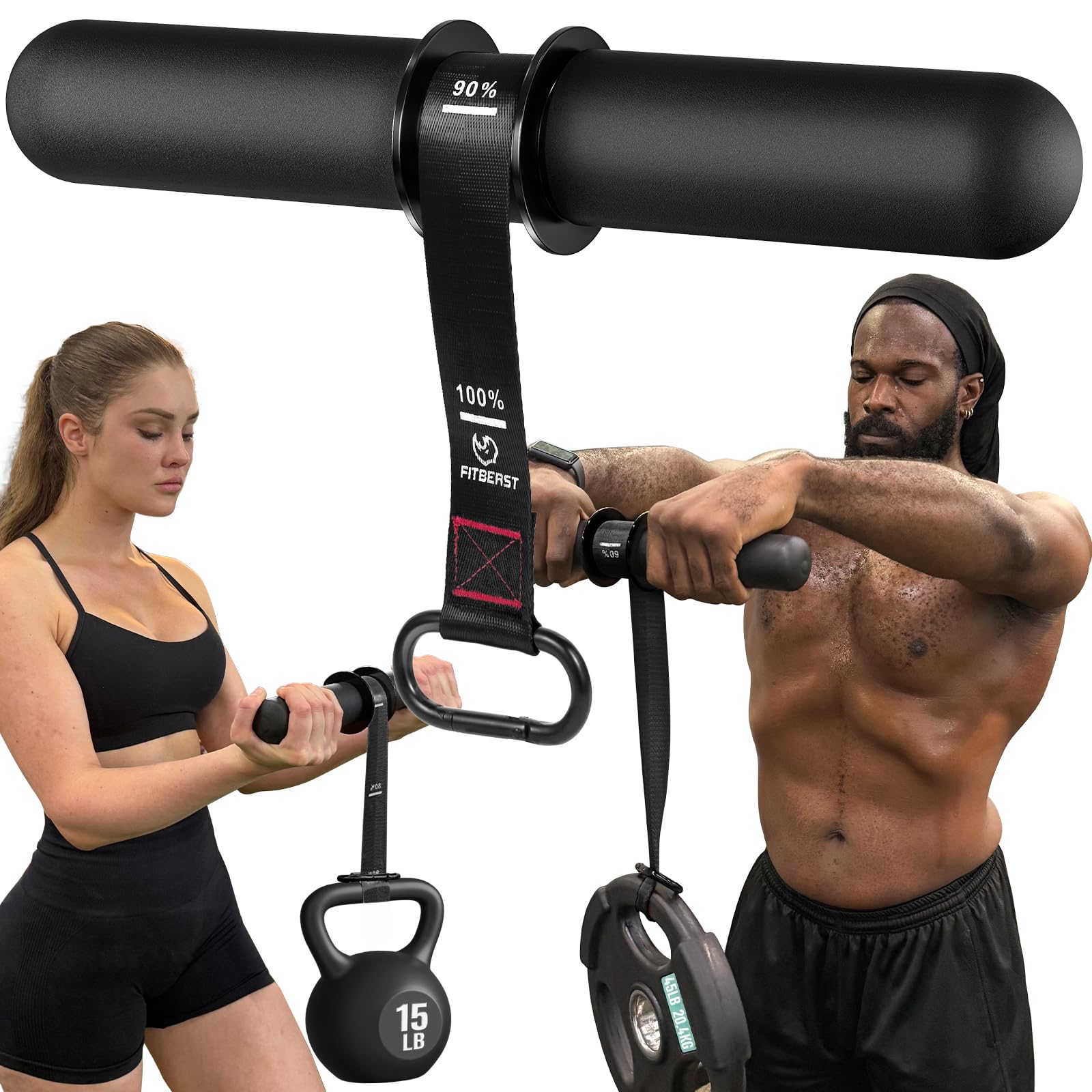
There is no weight in the box, and that is the first thing to settle before you order. The FitBeast is a bar, a strap, and a carabiner: you hook a dumbbell, a kettlebell, or a plate to the end and wind it up. If you do not own any of those, start somewhere else.

Given a weight, it is the most direct forearm tool here. You roll the handle up and let it down under control, which loads the wrist through flexion and extension, and the lowering is where most of the work happens. The handles are 25% thicker than a standard roller, so every rep adds a little grip demand; on the first set we felt it in the fingers before the forearms.

The number that matters long term is the 240-pound strap rating. That is well past what most home lifters hang on a roller, which means the strap will not be the thing that decides when you are done. A 20.4-inch extension strap is in the box for setups that need a longer drop, like a kettlebell or a taller frame.

It is a home-gym piece rather than a gym-bag one: it wants a spot next to the dumbbells and a couple of feet of clear space to wind without clipping your shins. That is the trade for a tool that stays useful once the weight gets serious.

Bottom line: The most direct forearm work in this guide: hook a dumbbell on, wind it up slowly, and add weight as you get stronger.
#2

GD IRON GRIP

GD IRON GRIP

Heavy grip training

Our Score 9.6/10
Check Price

Worth Noting

  • Premium price for a hand gripper
  • Over a pound, so it stays home
Handle Width
3 positions
Resistance Range
26-181 lb
Resistance Levels
12
Read the full review

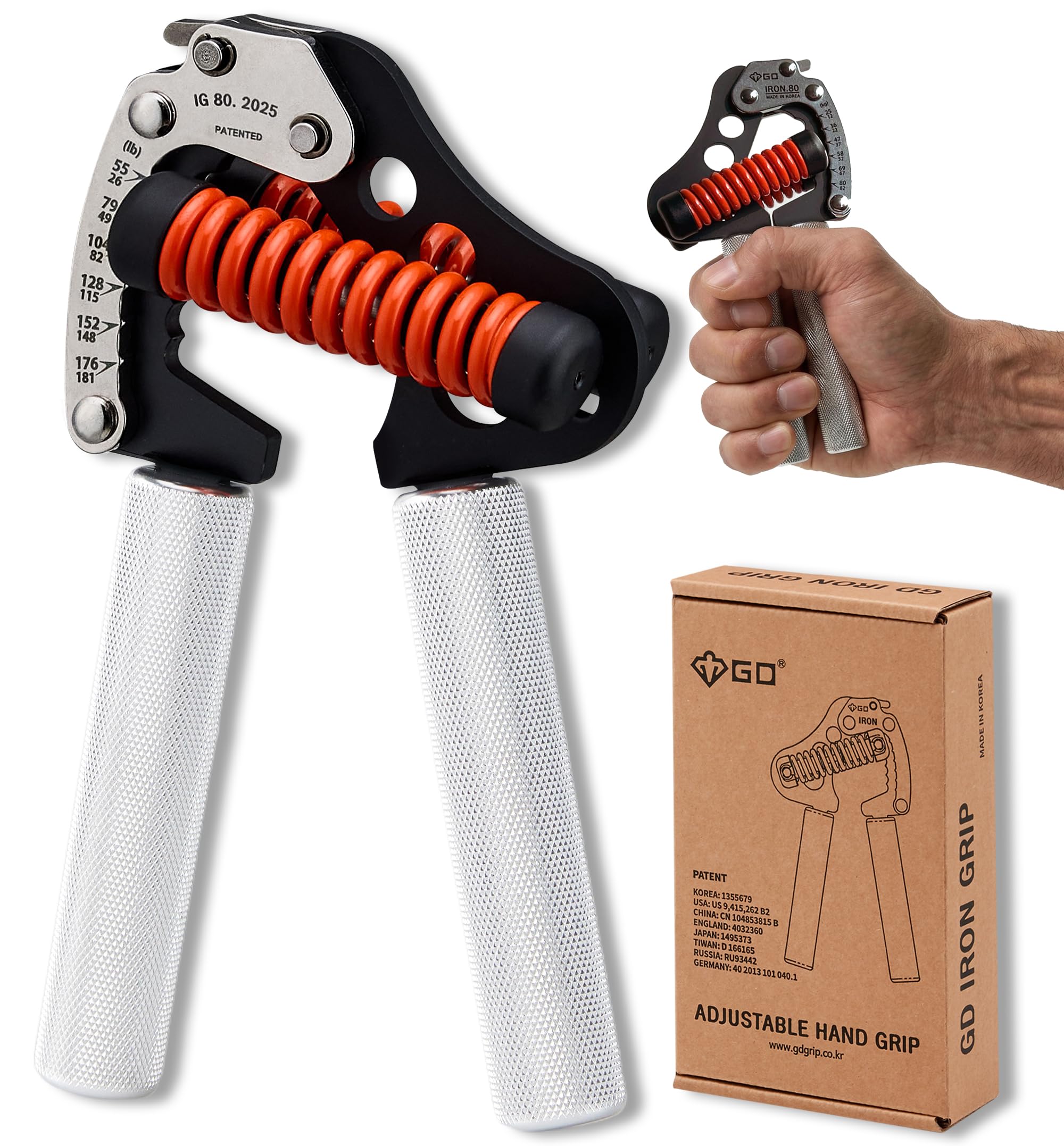
You can feel where the money went the moment you pick it up: a steel frame, aluminum handles with a precision knurl, and a compression spring that moves without a squeak. That is a different object from the plastic-bodied grippers most people start on, and it explains a price that sits well above everything else here.

The range is the argument. Twelve levels run from 26 to 181 pounds, and the jumps between them are small enough to keep a progression going for months instead of weeks. We did not expect to care about the three-position handle width until we found that a narrower setting is easier on the thumb when you are chasing a top-end single.

The knurling is the one thing to plan for. It is sharp enough to leave marks after a hard session, and a wrap of athletic tape or a pair of light gloves settles it in under a minute. In exchange you get a grip that does not slip when your hands are warm, which matters more the heavier you go.

Quiet operation is a smaller bonus than it sounds, since there is no rattle to announce it from the next room, but this is a training tool rather than a fidget. The top settings are a serious ask, and the gripper rewards someone who already knows what a hard grip session feels like.

Bottom line: The one we reach for when grip is a real training goal: an all-metal frame, a silent spring, and a wider resistance spread than anything else here.

#3

THERABAND FlexBar

THERABAND FlexBar

Rehab and beginners

Our Score 9.4/10
Check Price

Worth Noting

  • Fixed resistance; moving up means another bar
Length
12 in
Resistance
10 lb
Resistance Levels
6, 10, 15, 25 lb
Read the full review

Ten pounds is the whole story of the Red bar. That is how much resistance it takes to bend into a U, and it is the lightest of four THERABAND bars, at 6, 10, 15, and 25 pounds, which puts this one in the range where a wrist or an elbow is still deciding whether it is ready to work. At 12 inches long it is about the length of a ruler.

You either bend it and hold, or twist one end while the other stays put, and the slow twist is what has kept this bar in physical therapy rooms for decades. It loads the forearm through a movement a sore elbow tends to tolerate rather than the crush that aggravates it. We start sessions with it before anything heavier, and on bad weeks it is the whole session.

What it is not is a loaded tool. You cannot hang plates on it, the resistance tops out where the rubber does, and it will not build the kind of forearm a roller will. That is fine by us: the bar lives in a bag, the roller lives in the garage, and they do different jobs.

One piece of technique worth knowing before you start. The twist is the exercise that matters, and it should be slow, held at the end range for a few seconds, not pumped out like a curl. Do that and the bar feels like considerably more than a rubber stick.

Bottom line: One inexpensive rubber bar that works a sore elbow and a weak grip with no setup, no weights, and no charging, this is the one we hand people first.

#4

FitBeast Flex Bar Set

FitBeast Flex Bar Set

Full rehab progression

Our Score 9.4/10
Check Price

Worth Noting

  • Bars can hold a bend instead of springing back
  • Grippy surface turns tacky in warm hands
Weight
2.25 lb
Bars Included
4
Resistance Range
6 to 25 lb
Read the full review

Where the THERABAND bar makes you choose a color, this set hands you all four, at 6, 10, 15, and 25 pounds, in one box, color-coded, with an exercise guide.

For anyone working through an elbow or wrist recovery, that is the better buy. You will almost certainly move up at least one level, and having the next bar already in the drawer is what keeps a routine from stalling on a shopping decision. The 25-pound bar is a genuinely harder piece of rubber, so the top of the set reaches into real training rather than stopping at maintenance.

What the box does not tell you is which bar to use when. The light end does the daily work; the heavy end belongs in the last few minutes, when the tendon is warm and you can hold a slower twist. In practice most people spend far longer on the two lightest bars than they expect to.

The honest boundary is storage and need. Four bars take more drawer space than one, and if your elbow is already calm and you only want maintenance work, a single light bar covers it.

Bottom line: The set we suggest when the whole progression matters: four bars from 6 to 25 pounds in one box, so a rehab arc never stalls waiting on a second order.

#5

NIYIKOW Grip Trainer

NIYIKOW Grip Trainer

Budget daily gripper

Our Score 9.2/10
Check Price

Worth Noting

  • Resistance markings are hard to read
Size
6.1 x 3.93 in
Weight
4.94 oz
Resistance Range
22-132 lb
Read the full review

Springs are what decide whether a cheap gripper is a bargain. In this price band the spring is where money was saved, and it is the part that lets go, usually when the dial has been turned toward the top of the range and the plastic body is taking the load. That is the honest frame for the NIYIKOW: a capable gripper with a known weak spot at its ceiling.

Below that ceiling it does the job. The dial covers the full range in small steps, which is what keeps a progression going, and at 140 grams and about 6 by 4 inches it disappears into a car door pocket or a desk drawer.

It is the pick for a hand that is losing strength, whether after surgery, after an illness, or after twenty years of typing, because the bottom of the range is light enough to start on and the top is heavy enough to matter later. Turn it down, work in the lower half, and save the top end for short efforts where the spring is not loaded for long.

What it will not do is move your wrist through a range. A gripper is a crush, and forearm work is a by-product; if a tendon is the problem, we point people to a flex bar instead.

Bottom line: The budget gripper we keep recommending: a dial from 22 to 132 pounds, light enough to live in a car door, cheap enough to try without much thought.

#6

Yes4All Wrist Roller

Yes4All Wrist Roller

Cheap plate-based rolling

Our Score 9.2/10
Check Price

Worth Noting

  • 100 lb ceiling caps heavier training
Rope
52.85 in nylon
Max Load
100 lb
Plate Fit
Standard 1-inch plates
Read the full review

If you already own standard 1-inch plates, this is the least expensive route to real forearm work. The bar takes the plates on a pin, the 52.85-inch nylon rope winds around the handle, and you roll the weight up and lower it down. That is the entire product, and that is the appeal.

We like it for exactly that reason. There is nothing to charge, nothing to adjust, and no learning curve beyond keeping your elbows still and your tempo slow. The 100-pound maximum is the number to check against your own strength: it covers most home lifters, and it is why the FitBeast roller above exists for anyone who expects to go heavier.

The factory plastic handle covers are the weak point. They work loose and turn slippery once your hands are warm, and the fix is to pull them off and use the bare bar, which is doing the work anyway. Budget for that rather than being annoyed by it.

Bottom line: The cheapest way into wrist rolling: a steel bar and a nylon rope with a 100-pound ceiling that suits most home lifters.

#7

roygra 8-Piece Kit

roygra 8-Piece Kit

Hand therapy variety

Our Score 9.0/10
Check Price

Worth Noting

  • Balls and stretchers run small for large hands
Ball Size
2.15 x 1.63 in
Ring Diameter
2.75 in
Pieces Included
8: 3 balls, 2 rings, 3 stretchers
Read the full review

Eight pieces arrive in a drawstring bag: three squeeze balls about two inches across, two grip rings, three finger stretchers, and an instruction sheet. Nothing here builds a crushing grip the way a gripper does, and that is not what it is for.

Most hand gear only works the closing muscles. The stretchers take the other direction, looping over the fingers so you open the hand against resistance, and that is the half of hand training most people skip. The rings give you a splayed-finger squeeze, and the balls are the easiest entry point for a hand that is stiff rather than weak.

Firmness is the thing to judge before buying for a sore hand. Even the lightest ball is a real squeeze, and the stretchers need a hand that can already open against some resistance, so this is a rebuilding kit rather than something for the first week after an injury.

Where it earns a place is in a drawer, not a gym bag: post-injury hand work, older users keeping fingers mobile, anyone who wants a handful of light tools for very little money. We keep the stretchers by the desk and the balls in a bag, which is roughly how a kit like this is meant to be used, spread around rather than saved for a session.

Bottom line: A cheap assortment we like for hand therapy and finger dexterity rather than heavy loading, with the finger stretchers as the reason to buy.

How We Tested Wrist and Forearm Exercisers

We started by pulling together a shortlist from physical therapy recommendations, gym bags, and highly reviewed models across price points, then narrowed it by construction, adjustability, and whether the size range could plausibly fit both small wrists and larger forearms. I tested 16 units over four months, not in one sitting but in the places these tools actually get used: at my desk between meetings, before gym sessions, during evening TV, and on the days when opening a jar felt like a negotiation.

For each unit, I noted whether the grip stayed put once my hands got sweaty and whether the texture felt comfortable or abrasive after a few sets. I changed resistance mid-session to see if the mechanism slipped or required two hands, and I paid attention to firmness: too hard and my elbow did the work, too soft and there was no feedback at all. I also checked size and flexibility by using each with a relaxed wrist and a flexed one, watching for pinching or a range of motion that felt forced.

Durability came from repeat use rather than a spec sheet: I looked for fraying straps, stretched bands, loose hinges, and foam that flattened after a week. To judge effectiveness and value, I tracked whether my forearm felt worked rather than battered, whether the tension stayed consistent from session one to session twenty, and whether the build justified keeping it in the drawer. The units that survived that routine are the ones below.

How to Choose a Wrist and Forearm Exerciser

Start with the job, not the resistance number

Four formats cover almost everything. A hand gripper trains the closing muscles, the ones that hold a barbell or a heavy suitcase, and it does that in a few square inches. A flex bar works the forearm through a twist, which is the movement a grumpy elbow tolerates best. A wrist roller loads the wrist through flexion and extension and comes closest to direct forearm training. Silicone balls, rings, and finger stretchers are for dexterity and light rehabilitation rather than loading.

Choose one, not three. If the goal is a stronger grip for lifting or climbing, a gripper is the direct route. If the goal is an elbow that complains when you lift a coffee cup, buy the bar first and add load later. If forearm size is the point, the roller is the tool that lets you add weight in small steps instead of waiting for the next color.

Read the resistance range carefully

Adjustable grippers here run from about 22 pounds at the bottom to 132 at the top, with one metal model reaching 181. Flex bars start much lower, at 6 pounds. The bottom of the range matters more than the top: you need a setting you can close ten times on day one, and most people overestimate where that is.

Progression is the other half of the decision. A dial you can turn in small steps keeps you moving, while a fixed bar means buying the next one. On any gripper, the top of the range is also where the mechanism is under the most strain, so treat the ceiling as a place to visit rather than live. Short, heavy singles are kinder to a spring than grinding reps at maximum.

Fit your hands before you fit your goals

Handle width and surface decide whether you will actually use the thing. Knurled aluminum bites and grips, and it also marks a soft palm, so plan on tape or light gloves. A width-adjustable gripper suits a household with different hand sizes. Rollers with deliberately thicker handles add grip demand, which is welcome in large hands and awkward in small ones.

Silicone kits are the exception to most of this: they run small and firm almost across the board, so treat the lightest ball or ring as a test rather than a starting point. If your hand is smaller than average, spend the extra on an adjustable gripper instead of a thick-handled roller.

Check the load rating and the part that wears

Every format has one part that gives first. On an inexpensive gripper it is the spring, and it tends to go when the dial sits near the top of its range. On a roller it is the rope or strap and the handle covers, which is why a 100-pound rating suits most home lifters while a 240-pound strap leaves years of headroom. On a rubber bar it is the material taking a set after a hard twisting session.

Match the rating to the weight you will really hang on it, not the weight you aspire to. A roller with a 100-pound ceiling covers the 10-to-40-pound range most people train in, and only becomes a limit if you are already strong enough to load it past that.

Frequently Asked Questions

Final Verdict

The THERABAND FlexBar is the one we point most people to. It costs about as little as anything here, needs no weights or setup, and the slow twist gives a sore elbow and a weak forearm the same work without asking for a gym membership.

Buy the roller instead if forearm strength is the goal rather than recovery: the FitBeast takes any dumbbell you own and keeps giving as you add weight. One is a daily habit; the other is a training tool.