Strength & Weights

Best Trap Bars of 2026

A trap bar puts your hands beside your hips instead of out in front, which takes some of the ache out of deadlifts and makes heavy carries feel less like a negotiation with your lower back. The right one is a sturdy, versatile frame that loads cleanly, assembles without drama, and looks tidy enough to leave out—while the wrong one rattles, chips, rusts, or takes up more floor space than your gym can spare.

I’ve lifted with trap bars that felt like welded sculpture and others that flexed before the plates did. Over eight months, my team and I tested 10 trap bars in home gyms and shared garage setups, judging weight, durability, finish, and value by how they actually loaded, moved, and held up after sweaty sessions—not by how they looked on a product page. The bars that earned a permanent spot are below.

#1

Bells of Steel Open Hex Trap Bar

Top Pick
Bells of Steel Open Hex Trap Bar

Open-frame training

Our Score 9.6/10
Check Price

Worth Noting

  • Premium price for a home-gym bar
Frame
Open hex
Loading
Built-in jacks
Bar Weight
47 lb
Weight Capacity
700 lb
Read the full review

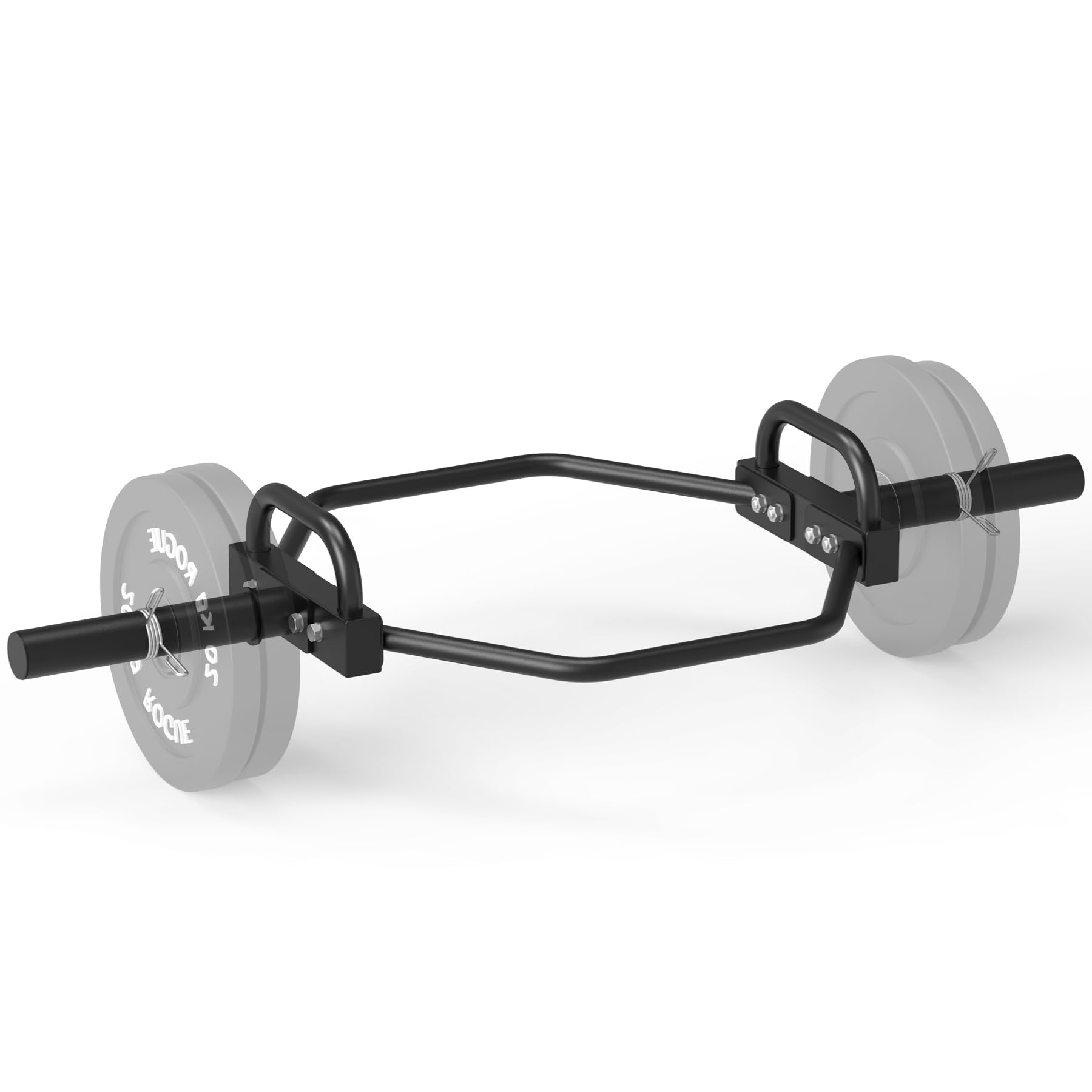
An open frame is the reason to look at the Bells of Steel bar. The missing front section lets you step in from the side and opens up split squats, lunges, and carries that a closed hex bar makes awkward. The built-in jacks are the other practical win: the bar rests on its loading feet, so you can slide plates on without wrestling the frame off the floor. That is the kind of detail you notice every session, not just on paper.

At 47 pounds, this is a substantial bar before you add a single plate. We felt that weight as stability once we were set, but it also makes the first lift feel heavier than a 22-pound budget bar. We think the heft is worth it for a serious home gym: the 700-pound rating, rotating sleeves, and no-assembly setup make it feel like a piece of commercial equipment. The knurling is aggressive enough to hold without feeling sharp.

The open frame is the feature you cannot add later, and the loading jacks are the one you will use every session. The bar is longer than the Titan and takes more floor space, so measure your platform before you commit. It is more bar than a beginner needs, and the 47-pound starting weight is a real consideration if you are not yet pulling bodyweight. The loading feet also keep the sleeves off the concrete, which saves your plates and your floor.

Bottom line: Choose the Bells of Steel if you want an open-frame trap bar with loading jacks and a 700-pound ceiling; it is the premium pick for a serious home gym.

#2

Titan Fitness Olympic Hex Trap Bar

Titan Fitness Olympic Hex Trap Bar

All-around home gym

Our Score 9.4/10
Check Price

Worth Noting

  • Chrome can rust in damp storage
Bar Weight
44 lb
Handle Height
Two positions
Sleeve Length
9.75 in
Weight Capacity
500 lb
Read the full review

The two handle heights are what kept the Titan at the top of our list. Flip the bar and you get a high or low pull without hunting for blocks; both grips are 25mm medium diamond knurling. In our deadlift sessions, that meant we could set up tall for a first rep and drop to the lower grip when we wanted more range. The 500-pound rating and 44-pound bar weight put it in the sweet spot for a home gym that is past the beginner stage but not ready to spend open-frame money. The 56 x 22.75-inch footprint is manageable, and the 9.75-inch sleeves leave room for plates without forcing your hands out wide.

We liked the chrome finish for plate glide. The build felt solid, and the welds on our sample were clean. The knurling is medium rather than aggressive, so it holds without tearing up your hands during high-volume shrugs or carries. The bar is also easy to wipe down between sessions, which matters if you train in a garage.

Compared with the Sunny, the Titan's extra capacity and flip-for-height handles justify the step up for anyone pulling regularly. Compared with the Bells of Steel, it gives up the open frame and loading jacks but takes up less floor space and costs less. That balance is why it is our default: it handles deadlifts, shrugs, carries, and squats without asking you to build the rest of the gym around it.

Bottom line: We think the Titan is the trap bar most home lifters should buy first: dual handle heights, a 500-pound rating, and a manageable footprint at a midrange price.

#3

Sunny Health & Fitness Olympic Hex Bar

Sunny Health & Fitness Olympic Hex Bar

First home setup

Our Score 9.4/10
Check Price

Worth Noting

  • 400-lb capacity limits heavy pulls
Handles
360° swivel
Bar Weight
22 lb
Sleeve Length
11.5 in
Weight Capacity
400 lb
Read the full review

A 22-pound bar is the first thing you notice about the Sunny, and it is the reason we point to it for a first home trap bar. It is light enough to move around and to learn the setup, and the 360-degree swivel handles let your wrists rotate naturally instead of locking into one angle. The bar is built for steady beginner and intermediate work, and the swivel handles make it feel more forgiving than a fixed-grip bar.

We appreciated the 11.5-inch sleeves because they leave room for plates and collars without crowding your hands. The diamond knurling felt secure without being aggressive enough to tear up soft hands. The bar is 57.5 inches long and 26 inches wide, so it takes up a bit more floor than the shortest bars here, but the width gives you room to step in. Assembly is straightforward, and the included weight clips are handy.

If your training is mostly bodyweight and light plates, the Sunny has enough bar for years of work. The swivel handles are the part we miss when we go back to a fixed-grip bar. It is also the easiest bar here to hand to someone who has never used a trap bar before.

Bottom line: The Sunny is our budget pick for a first home trap bar: light enough to handle, with swivel handles and a 400-pound ceiling for beginner and intermediate work.

#4

XMark Tri-Grip Trap Bar

XMark Tri-Grip Trap Bar

Grip variety

Our Score 9.4/10
Check Price

Worth Noting

  • No published weight capacity
Plate Storage
Elevated
Grip Diameters
30/38/45 mm
Overall Length
69.25 in
Plate Compatibility
2 in
Read the full review

Three knurled revolving handles at 30mm, 38mm, and 45mm make the XMark the most grip-focused bar here. You can pick the diameter that fits your hand and change it as your grip work progresses. That is a genuinely useful feature for anyone who finds a standard 25mm handle too thin or too punishing on the fingers. The rotating handles also let your wrists move naturally during pulls.

The bar is long: 69.25 inches overall, with a 26-inch shaft. That extra length makes it more of a fixed station in a garage gym than a bar you tuck into a corner. The elevated plate storage is a smart detail because it lets you load and unload without dropping the bar to the floor, and the rubber feet protect the frame. Assembly took some time, but the result felt sturdy once everything was tightened.

The elevated plate storage and rubber feet make it a workhorse for grip work. The rotating handles are not for everyone: a fixed handle gives a more locked-in feel. We liked having the three diameters on one bar, especially for shrugs and carries where hand fatigue shows up fast.

If you have hand or wrist issues and want to experiment with grip diameter, it is worth a look. For heavy pulling, the Titan is the safer call. The XMark is a specialized bar, and it earns its place on grip variety rather than raw load.

Bottom line: The XMark is the grip-variety pick: three rotating handle diameters and elevated plate storage for lifters who want to train hand position.

#5

GYMAX Folding Olympic Trap Bar

GYMAX Folding Olympic Trap Bar

Small storage space

Our Score 9.2/10
Check Price

Worth Noting

  • Folding mechanism needs regular checking
  • 10-inch grip spacing may feel narrow
Handles
Folding, dual grip
Bar Weight
35 lb
Overall Length
56 in
Weight Capacity
800 lb
Read the full review

Folding handles are the reason to look at the GYMAX when the gym shares space with a car. They let the bar stand closer to a wall, and the 35-pound bar weight is manageable to move. The 800-pound rating is the highest in this group, which is a strange kind of reassurance for a folding bar, but the steel frame and chrome finish felt substantial in our hands. The dual knurled grips give you a high or low option without flipping the whole bar.

The 56 x 24.5-inch footprint is about the same as the Titan's, so the folding benefit is mostly in storage, not in the lift. The included snap springs are handy for quick changes, though we still prefer proper collars for heavy work. The chrome looks good, and the bar is easy to wipe down after a session.

For a home gym with limited storage, the GYMAX solves a real problem without asking you to drop to a 400-pound bar. It is not the bar we choose for maximum-load deadlifts, but if your workout space doubles as a parking spot, that trade is worth it.

Bottom line: The GYMAX is our space-saving pick: folding handles, an 800-pound rating, and a 35-pound frame that tucks away in a small garage gym.

#6

PROIRON Olympic Trap Bar

PROIRON Olympic Trap Bar

Plate clearance

Our Score 9.0/10
Check Price

Worth Noting

  • No collars included with the bar
Bar Weight
22.5 lb
Sleeve Length
30 cm
Weight Capacity
551.2 lb
Plate Compatibility
2 in
Read the full review

Thirty-centimeter loadable sleeves and four gap rings are the details that make the PROIRON easier to live with. That extra sleeve length gives you room to stack plates and still keep your hands clear, and the gap rings let you set the plates exactly where you want them. At 10.2 kg, about 22.5 pounds, the bar is light enough to move around, and the 250kg capacity is a useful step up from a 400-pound beginner bar without jumping to premium money.

The 5mm steel and matte finish feel purposeful, and the knurled handles give you a secure grip for deadlifts, shrugs, and farmer's walks. We liked the 56-inch length because it fits a normal garage-gym footprint. Assembly is simple, and the bolts snugged down without drama. The real advantage is the loading room: if plate clearance is your main frustration, the PROIRON solves it cleanly.

This is the bar for someone who wants longer sleeves and a lighter starting weight without paying premium prices. It does not have the Titan's dual handle heights or the Bells' open frame, but those are features you give up for the loading room, not flaws in the lift.

Bottom line: The PROIRON is an affordable choice for easy plate loading: long 30cm sleeves, a 250kg rating, and a light 10.2kg frame for home gyms.

#7

CAP Olympic Combo Hex Bar

CAP Olympic Combo Hex Bar

Heavy-capacity value

Our Score 8.8/10
Check Price

Worth Noting

  • Black finish chips around the sleeves
  • 9-inch sleeves limit thick bumper plates
Bar Weight
52 lb
Sleeve Length
9 in
Weight Capacity
750 lb
Interior Opening
25 in
Read the full review

The 750-pound rating is the reason this CAP bar stands out at its price. That is a lot of ceiling for a bar that costs less than most midrange trap bars, and the 25-inch interior opening gives you room to step in without feeling boxed. The raised handles shorten the pull, which is useful for deadlifts and shrugs, and the 25mm knurled grips felt secure in our hands. At 52 pounds, it also has enough heft to feel planted before plates go on.

The bar is heavier than the budget bars here, which is fine once you are set but makes it more of a fixed station than a bar you move around. Assembly is simple, and the raised handle position is the detail we appreciated most for shrugs and carries. The 25-inch opening also gives you room to wear flat shoes and set your stance.

For a garage gym that wants a high-capacity bar, the CAP is a strong value. It is heavier and more capable than the Sunny, but it gives up the Titan's flip-for-height handles. We put it in the high-capacity value slot rather than the top slot because the handle design is less flexible for changing your pull height.

Bottom line: The CAP is our high-capacity value pick: a 750-pound bar with raised handles and a roomy opening for a garage gym.

#8

PONE FIRST Hex Trap Bar

PONE FIRST Hex Trap Bar

Tiny home gyms

Our Score 8.8/10
Check Price

Worth Noting

  • Short bar may feel cramped for tall lifters
Bar Weight
14.5 lb
Sleeve Length
10 in
Overall Length
48.4 in
Weight Capacity
400 lb
Read the full review

At 14.5 pounds, the PONE FIRST is the lightest bar in this group by a wide margin. That makes it easy to move, easy to store, and less intimidating for a beginner or anyone coming back to lifting. The 48.4-inch length is also the shortest here, so it fits in a small apartment gym where a 56-inch bar would feel like furniture. The 400-pound rating is the trade: it is a beginner and light-plate bar, not a heavy deadlift bar.

The raised handle is 7 inches wide and 3.4 inches high, and the 10-inch sleeves accept standard 2-inch Olympic plates. We liked the black electrophoretic coating for grip and corrosion resistance, and the bar assembled quickly. The frame is narrow enough to step into, and the simple design keeps the bar easy to store. There are no rotating handles or open frame here, so you are giving up features as well as weight capacity.

The sturdiness is the thing to watch. Inspect the welds and hardware, and use collars even when the plates feel snug. It rewards careful setup.

What makes it worth a place here is the size, not the capacity. If you need a trap bar that lives under a bed or in a closet, the PONE is the one that disappears into a closet. If you have space for a full-size bar and plan to load it, the Sunny or Titan is the better buy.

Bottom line: The PONE FIRST is the ultralight, small-space pick: a 14.5-pound bar with a 400-pound rating for beginner deadlifts and light home workouts.

How We Tested the Best Trap Bars

We started by pulling together every trap bar we could find that was actually available, then narrowed the field by reading specs and owner feedback on handle height, loading clearance, bar weight, and footprint. From that shortlist, we tested 10 bars over eight months, rotating them through a garage gym, a basement corner, and a shared garage bay so they saw rubber mats, concrete, and the occasional damp morning. We assembled any that arrived in pieces, weighed each bar ourselves, and noted how easy it was to move, store upright, and load with bumper plates and iron plates.

Every bar went through the same sessions: deadlifts, carries, shrugs, and squats, plus loading and unloading until we stopped thinking about it. We watched for flex under heavy pulls, checked welds and hardware for movement, and paid attention to whether the handles chewed up our hands or let us keep a neutral grip. We also tested versatility by switching between high and low handles where available and using each bar for carries and rows, not just deadlifts.

Finish got its own scrutiny. We wiped sweaty hands on the bars, left them in the garage, and inspected the sleeves, welds, and paint for chips and rust over the months. We compared what each bar delivered against what it asked you to spend, and we weighed appearance and size against the reality of a home gym—because a handsome bar that is too long for your rack or too heavy to move is not a good value. The bars below are the ones that held up, loaded cleanly, and stayed pleasant to use.

How to Choose a Trap Bar

Capacity Is a Ceiling, Not a Target

A 400-pound bar is plenty for a beginner working with light plates, while a 700- or 750-pound rating gives a stronger lifter room to grow. The useful question is not just the max but the bar's own weight and sleeve length: a 44- to 52-pound bar feels more planted but is harder to move, and short sleeves fill up fast with thick bumper plates. Buy for the load you will actually pull in the next year, then leave a margin. Do not treat the rating as an invitation to max out every session.

Handle Height and Grip Shape Matter More Than You Think

Trap bars come with fixed handles, dual-height handles, swivel handles, or even three grip diameters. Dual-height bars like the Titan let you choose a higher start for deadlifts or a lower one for more range; swivel handles on the Sunny reduce wrist lock; the XMark's three diameters suit lifters who want to vary grip diameter. Medium knurling is the safer default for high-volume work, while aggressive knurling can tear calluses. If your wrists complain on straight-bar pulls, a rotating handle is worth trying, but check that the rotation does not feel loose.

Closed, Open, and Folding Frames

A closed hex frame is the classic shape and gives you a secure step-in. An open frame, like the Bells of Steel, removes the front section so you can do split squats, lunges, and carries without the bar getting in the way. Folding designs, like the GYMAX, help with storage but add a mechanism to inspect. Measure the overall length before you buy: most bars here run 56 to 59 inches, while the XMark stretches to 69.25 inches. A trap bar is a floor-space commitment, so decide where it will live before you decide which one.

Sleeves, Collars, and the Finish

Check that the sleeves accept standard 2-inch Olympic plates, then look at sleeve length. Long sleeves leave room for more plates and keep your hands clear; short sleeves can crowd thick bumpers. Use real collars even if the bar includes clips, and budget for them if none are included. Finish is the last thing to inspect: painted bars can chip around the sleeves, and chrome can rust in a damp garage. A bar that lives in a humid space benefits from a wipe-down and a dry storage spot.

Frequently Asked Questions

Final Verdict

The Titan is the trap bar we recommend first for a home gym. It gives you two handle heights, a 500-pound ceiling, and a 44-pound bar that feels stable without being a pain to move. If you want an open frame and loading jacks, the Bells of Steel is the premium upgrade; if you are buying your first bar on a budget, the Sunny is the lighter, cheaper start. The Titan sits in the middle and covers the widest range of training.