Strength & Weights

Best Push Up Bars of 2026

Push-up bars are supposed to take pressure off your wrists, not trade one ache for another. The right pair lifts your hands off the floor, keeps your wrists closer to neutral, and gives you a grip that doesn’t slide when your palms get sweaty. Over four months, we put 16 pairs through daily push-up sets at home and in a garage gym, watching for the wobble, hot spots, and finish wear that separate a solid pair from a frustrating one. What they fix is simple: less wrist extension, a more secure hand position, and a base stable enough that you can focus on the rep instead of the equipment.

The surprise is how much the small details matter. A bar that spins freely can feel easier on the joints, but only if the rotation is controlled; a textured grip helps until it starts chewing into your palms. You’ll also want to check handle thickness, base footprint, and whether adjustable models lock down without rocking. We kept all of that in mind as we narrowed the field, and the picks below are the ones that held up.

#1

Perfect Pushup Elite

Top Pick
Perfect Pushup Elite

Everyday home press

Our Score 9.4/10
Check Price

Worth Noting

  • Grip rubber can tear with heavy use
Handle Type
Rotating, ball bearings
Item Weight
1.8 lb
Base Diameter
8 in
Weight Capacity
400 lb
Read the full review

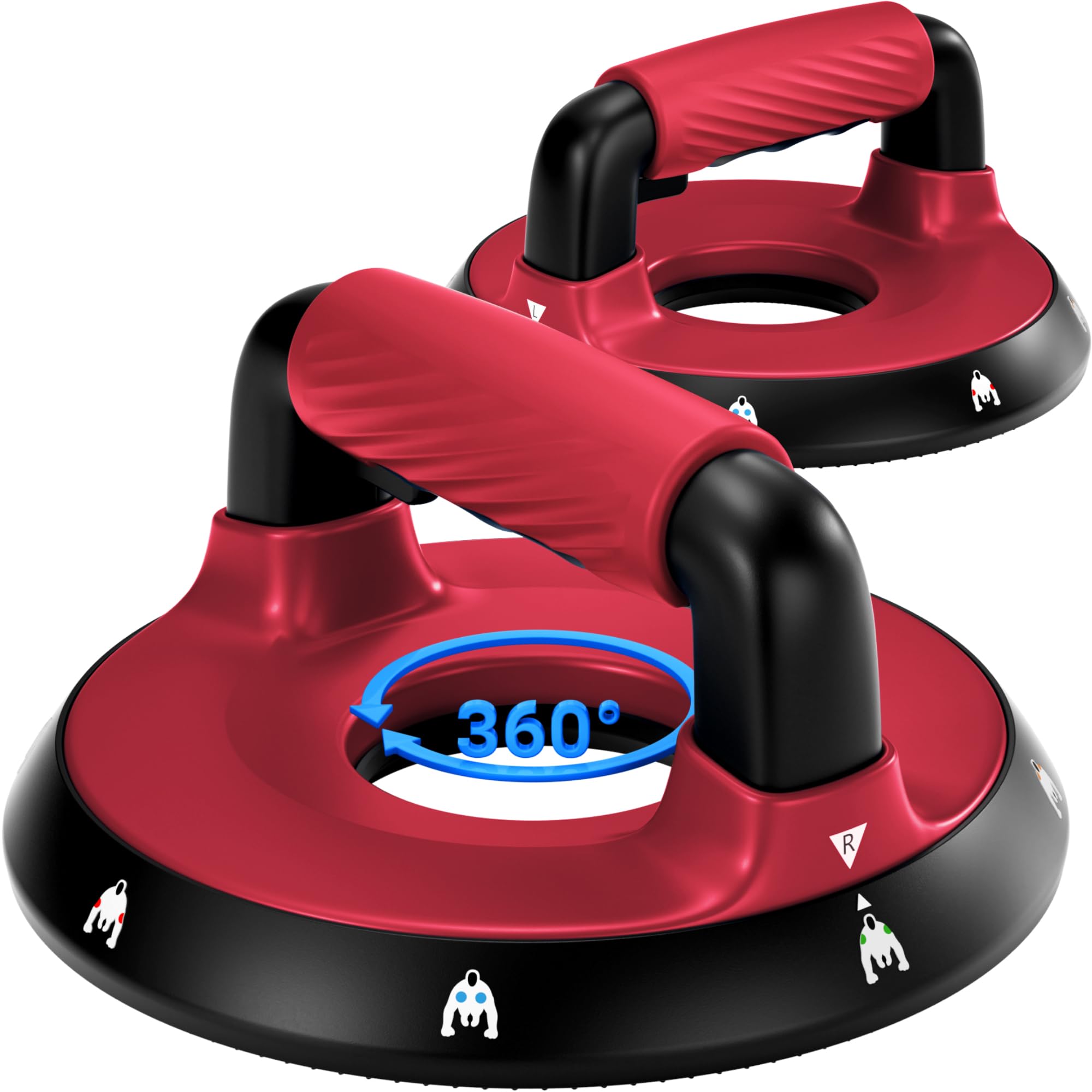
The handles rotate on steel ball bearings, and that single decision changes the exercise: as you lower, your hands turn with the movement instead of locking in place, so the wrist and shoulder are not fighting each other at the bottom. With the grips sitting 6.2 inches off the floor — the tallest pair here — the chest also travels lower than it does on the fixed stands.

The base earns its keep too. Each handle sits on an 8-inch disc with textured treads, and it stayed planted on hardwood, tile and low-pile carpet through full sets. At 1.8 pounds for the pair and rated to 400 pounds, it is light enough to shift around and strong enough to wear a weight vest with, and it arrives assembled.

Rotation is a taste, and not everyone shares ours. A free-spinning handle can feel loose if you are used to pressing off a fixed bar, and there is no lock to stop it. On the days we wanted a dead-still grip, we reached for a fixed pair instead.

What keeps us coming back is the combination: the deepest bottom position in this group, a base that does not skate, and a handle that takes pressure off the wrist. That is the whole case for spending more than the plastic stands cost.

Bottom line: For home push-ups this is the pair we hand over: the handles rotate through the rep, the 8-inch base stays put, and the 6.2-inch stance gives you the deepest press here.

#2

Kipika Push Up Bar Stands

Kipika Push Up Bar Stands

Heavy lifters

Our Score 9.4/10
Check Price

Worth Noting

  • Fixed handle offers a single grip angle
Base Pad
5 1/2 x 7 9/10 in
Handle Type
Fixed, angled
Handle Diameter
1 3/5 in
Weight Capacity
1000 lb
Read the full review

Flip one over and most of the underside is rubber: a pad measuring 5 1/2 by 7 9/10 inches that covers nearly the whole base. That is why we rate the Kipika pair the most planted of the fixed stands here — on polished concrete, tile and a dusty garage floor, it did not budge.

The handles are soft plastic, 1 3/5 inches across, with a slight angle that brings the wrist closer to neutral than a flat bar does. We liked that more than we expected to over long sets; the pressure moves off the heel of the palm. The 1000-pound stated capacity is the highest here, which matters if you press in a weight vest or you are simply a big person who has felt a cheap stand flex.

The trade is choice. The handle is fixed, so changing grips means turning the whole stand, and there is no rotation to bring the forearm into the rep. It is the pair we leave out on the floor between sessions, and for straight push-up work we do not miss the spin.

Bottom line: We point heavier lifters and anyone who dislikes a spinning handle to the Kipika: a near-full-width rubber pad, angled grips and the highest rated capacity here.

#3

airogym Wood Push-Up Stands

airogym Wood Push-Up Stands

Calisthenics practice

Our Score 9.4/10
Check Price

Worth Noting

  • Less depth than the taller pairs
Size
11.8 x 5.3 x 3.9 in
Material
Solid pine
Bar Diameter
1.57 in
Weight Capacity
500 lb
Read the full review

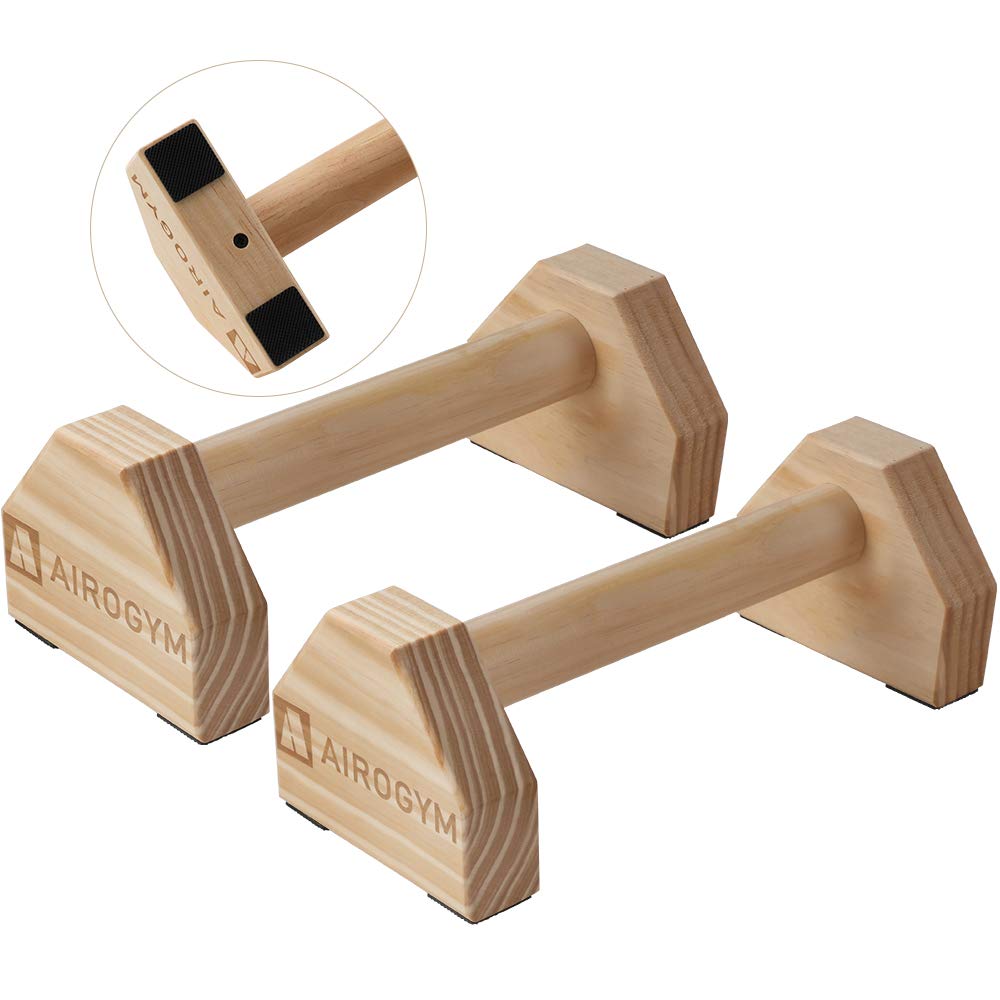
Solid pine, sanded smooth, with a 1.57-inch diameter that fills the hand without digging into the palm. There is no foam sleeve or tape to compress, peel or turn slippery, and after a run of sweaty sessions the grip felt exactly as it did on day one.

At 3.9 inches tall they sit lower than every other pair here, and that changes the exercise rather than the quality. You get a small, stable lift off the floor — enough to straighten the wrist and clear the knuckles — not the deep stretch a 6-inch stand gives you.

The base is flat and non-slip, rated to 500 pounds, and on tile and carpet alike it stayed where we put it. Wood does not love grit, so wipe the feet before you set them down indoors.

This is the pair we keep coming back to for handstand drills, planks and slow tempo work, where the feel of wood beats plastic under the hand. If you want maximum depth, buy taller; if you want a natural grip on a low, honest stand, these are the ones.

Bottom line: We like these for calisthenics and handstand practice: a sanded pine grip, a low 3.9-inch stance and 500 pounds of stated capacity, with depth as the trade.

#4

SELEWARE Push Up Bars

SELEWARE Push Up Bars

Slick floors

Our Score 9.4/10
Check Price

Worth Noting

  • Fixed handle, no rotating option
Height
4 in
Handle Type
Fixed, soft rubber
Item Weight
1.94 lb
Weight Capacity
500 lb
Read the full review

Ignore the handstand and L-sit lines in the listing: at 4 inches tall, these are push-up stands, and that is fine. What we like is how they are finished — soft rubber handles rather than bare plastic or thin foam, with a slight angle that lines the wrist up under the forearm.

The base mats are the practical part. They are wider than the feet on most stands here, they do not leave marks on hardwood, and the pair held on tile and carpet through full sets. Rated to 500 pounds and weighing 880 grams, they are planted without being a nuisance to shift.

There is no rotation and only one grip angle, so if you want to work different hand positions mid-session, look at the rotating picks. For daily push-ups in a living room with a floor worth protecting, these are the quiet, comfortable choice.

Bottom line: Soft rubber handles and wide anti-slip mats make the SELEWARE pair the kindest on hands and floors — just do not buy them expecting handstand work.

#5

Perfect Fitness Pushup Stands

Perfect Fitness Pushup Stands

Travel and storage

Our Score 9.2/10
Check Price

Worth Noting

  • 120 kg rating is the lowest here
  • Thin padding under the palms
Storage
Stackable
Handle Type
Fixed, padded
Item Weight
7.2 oz
Weight Capacity
264.6 lb
Read the full review

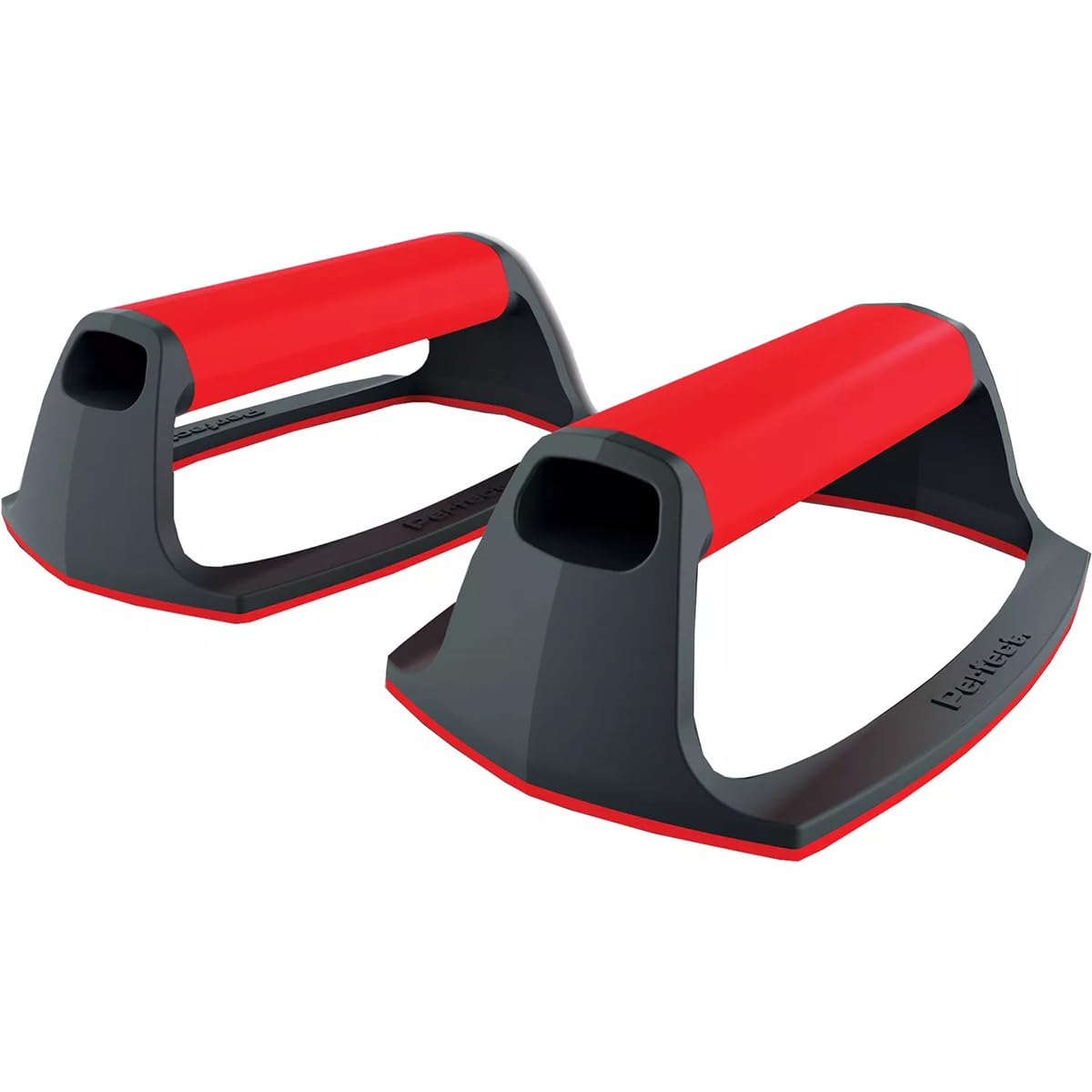
Storage is the reason these stay in our rotation. The two handles nest on top of each other, so a pair collapses into roughly the space of one, and the set weighs 7.2 ounces — light enough to drop in a backpack and forget until the next hotel room or lunch break.

On the floor they behave like a well-sorted basic stand: a 360-degree platform with a non-skid underside, handles that hold the wrist neutral, and 5 inches of height that take the bend out of your hands. We used them for planks and mountain climbers as much as push-ups, which is where a light pair earns its place.

The small footprint is the catch: on deep carpet there is less margin, so put a mat or a hard surface underneath and they behave. For a pair that lives in a bag rather than on the floor, that is an easy trade.

Bottom line: Buy these if your bars travel: the pair nests into one stack and weighs 7.2 ounces, though the 120 kg rating makes it the lightest-duty pick we recommend.

#6

READAEER Push Up Bars

READAEER Push Up Bars

Budget first set

Our Score 9.2/10
Check Price

Worth Noting

  • Thin padding under the palms
Size
8.7 x 5.5 x 4.7 in
Material
Plastic
Handle Type
Fixed, angled
Item Weight
1.1 lb
Read the full review

Two plastic stands, a slight backward tilt, and a press-fit assembly that needs no tools: the READAEER pair is the least expensive thing in this guide, and it does the one job that matters. The angle takes the crank off the wrist, which is usually the whole reason for buying bars.

The build is where the savings show. The plastic has some give under load and the pair weighs barely more than a pound, so we keep these for lighter users and second locations rather than as the main set. Press north of two hundred pounds and one of the sturdier pairs here is the safer buy.

None of that makes them a bad purchase — it makes them a cheap, honest one. A teenager starting out, a desk-side set for work breaks, or a spare pair to leave at a partner's place: for the smallest outlay here, they will do the job.

Bottom line: The least expensive pair here that we are happy to recommend: the angled grip spares your wrists, as long as you are not pressing heavy.

#7

READAEER Rotating Push Up Bars

READAEER Rotating Push Up Bars

Adjustable angles

Our Score 9.0/10
Check Price

Worth Noting

  • Hard plastic handles
  • Locks only at preset positions
Handle Type
Rotating, lockable
Item Weight
2.34 lb
Base Diameter
8.2 in
Weight Capacity
400 lb
Read the full review

A button on the handle lets you set the grip angle and lock it there, which is a different proposition from a free-spinning handle. You choose the position before the set, press up, and the handle holds its line.

The rest is competent: an 8.2-inch rubber base that stayed put on tile, a 400-pound rating, and a plastic body light enough to shift out of the way. We found the handles hard rather than soft — closer to bare plastic than the rubber on the SELEWARE pair — and that is the difference you feel late in a set. The button also wants a deliberate press, so changing angle mid-set is not realistic.

Set it before you start and it behaves. As a first rotating pair, or for someone who wants lockable angles rather than free spin, it is a sensible stop; if smooth rotation is the point, the Perfect Pushup's bearings are the better engineering.

Bottom line: Worth it if you want rotation you can lock: set the angle, press, and the handle holds — just expect hard grips and a fiddly button.

#8

5BILLION Push Up Bars

5BILLION Push Up Bars

Packable spare

Our Score 9.0/10
Check Price

Worth Noting

  • Lightly padded grips
Size
8.7 x 5.5 x 5 in
Material
PVC
Handle Type
Fixed
Weight Capacity
330 lb
Read the full review

Four PVC tubes push together into an I-shaped stand, and the joint is where these feel their price. Assembled, they are steady enough for a normal set; over time a push-fit connection can work loose, so we reseat each one before training rather than trusting them cold.

Portability is the payoff. The pair breaks down flat enough for a gym bag or a suitcase and weighs little enough that you stop thinking about it, and the I-shaped frame keeps the wrist neutral rather than cranked back.

Treat them as a second pair — a travel set, a spare at the office, or a first set for someone still building up — and they are good value. They are not the pair we hand to a heavy presser; the Kipika or the Perfect Pushup will feel more secure under that load.

Bottom line: Packable PVC bars for light duty: fine as a travel spare or a first set for a younger lifter, not the pair for a heavy presser.

How We Tested 16 Pairs of Push-Up Bars

We started by pulling together more than 50 push-up bar options from sporting goods stores, online retailers, and brands we already knew, then filtered by material, handle size, base shape, adjustability, and price. That left us with 16 pairs, which we used for four months in living rooms and a garage gym. Each pair got the same routine: morning push-up sets on carpet and concrete, sweaty-palm checks mid-set, and a close look at welds, seams, and coating before the first rep.

Grip came first. I did sets with dry hands, then with sweaty hands, and noted whether the handles felt locked in or started to slip; I also paid attention to whether texture was comfortable or abrasive after 20 reps. For wrist comfort, I checked the angle of my hands at the bottom of each push-up and whether the bar height let my wrists stay closer to neutral, then noted any pressure points or numbness. Push-up performance was about the whole set: did the base stay planted, did the bars roll or pivot in a controlled way, and did I have to reset my hands between reps?

Durability and adjustability got a slower look. We dropped bars from waist height onto a rubber mat, checked for play in rotating handles, and inspected welds and coating after repeated use. On adjustable models, we changed height settings and pushed hard through the base to see if anything rocked or slipped. By the end, we had a clear sense of which designs felt solid, which grips stayed comfortable, and which rotation actually helped rather than made the set feel unstable.

How to Choose Push Up Bars

Fixed or rotating handles

Rotating handles let your hands turn as you lower, which is why they appeal to anyone whose wrists complain during floor push-ups. The trade is feel: a free-spinning handle can seem loose, and some rotating designs lock only at preset angles rather than anywhere you like. If wrist comfort is the reason you are shopping, go rotating; if you want one less variable and a more planted press, fixed bars do the same job for less money. The Kipika and SELEWARE pairs are our fixed picks, the Perfect Pushup Elite our rotating one.

What the handle is made of

Foam is comfortable when new and compresses first. Rubber holds its shape but adds a little weight. Bare plastic turns slick once your hands sweat. Sanded wood stays grippy when dry and dislikes grit. Diameter matters as much as material: most handles here run between 1.5 and 1.6 inches, and if your palms are wide, picture a 1 3/5-inch grip in your hand before you order. None of these is a dealbreaker; all of them change how a long set feels.

Height and how deep you press

The pairs here sit between 3.9 and 6.2 inches off the floor, and that range decides how far your chest travels. Taller bars give a deeper press and more stretch at the bottom; shorter ones feel closer to a floor push-up. Deeper is not automatically better — if your shoulders complain at full depth, a lower bar is the kinder choice, and even a 3.9-inch wooden pair takes the bend out of the wrist.

The base, the floor and the rating

Look at what actually touches the ground. Full-footprint rubber pads hold on tile and polished concrete; four small feet on a light plastic body will drift, especially over dust. Read weight ratings literally, but remember that no rating stops a light bar sliding — test a single rep on your own floor before a full set. If you press in a weight vest or you are a big lifter, buy capacity you will not be testing the edge of.

Storage and travel

If the bars live in a drawer, nesting matters more than anything else here: the Perfect Fitness pair collapses into one lump at 7.2 ounces. If they stay out on the floor, a heavier fixed pair with a big pad is nicer to use daily. Either way, keep grit out of the pads and off wooden feet; a cloth bag saves the finish.

Frequently Asked Questions

Final Verdict

Our default is the Perfect Pushup Elite. The rotating handles take strain out of the wrist, the 8-inch base stays put on every floor we tried, and the taller stance gives the deepest press in this group.

If you know you want a fixed grip, the Kipika pair is more planted and rated far higher. If the bars live in a bag, the Perfect Fitness stands are the ones to pack. Choose by how you train and the decision stops being difficult.