Strength & Weights

Best Steel Maces of 2026

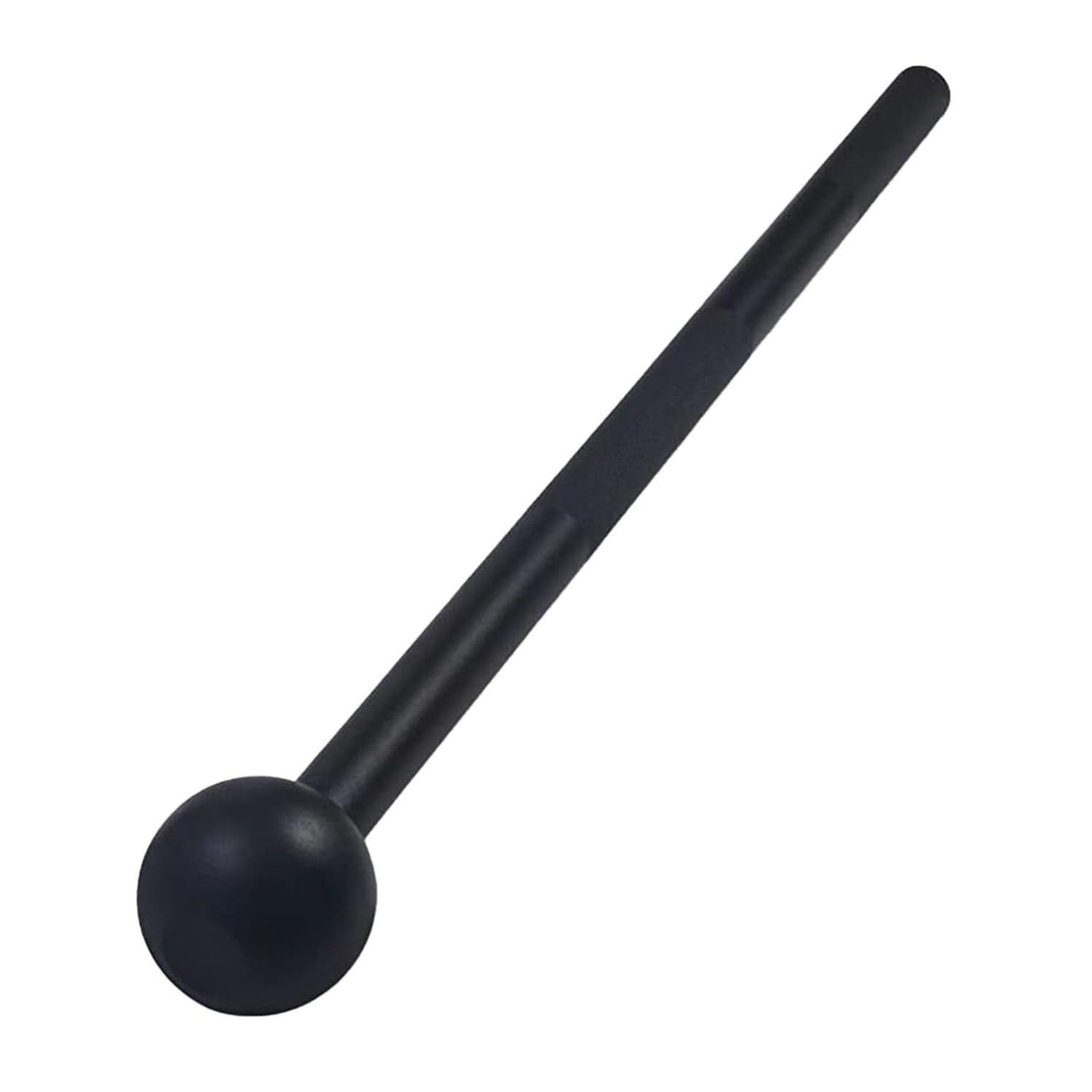
A steel mace is a lever first and a weight second, which is why the flaws that matter never show up on the spec sheet. A head that isn't properly welded or pinned starts rattling within a month, a handle that goes slick the moment your hands sweat turns every 360 into a grip drill, and a listed weight that's off by a pound or two changes the swing more than the number suggests. Get those things right and one mace covers rotational strength, shoulder stability, and grip work that a dumbbell simply can't reach.

I've been swinging maces in a garage gym for years, and over the past six months my team and I put 12 of them through steady weekly use. The surprise was how little price predicted anything: an inexpensive mace with a properly pinned head outlasted a nicer-looking one held together with a set screw. Value in this category comes down to whether you'll still be swinging the thing two years from now, and the picks below are the ones we'd bet on.

#1

Wolf Strength Macebell

Top Pick
Wolf Strength Macebell

10-lb step-up

Our Score 9.6/10
Check Price

Worth Noting

  • Premium price for a single fixed weight
Finish
Matte black powder coat
Weight
10 lb
Overall Length
40.5 in
Handle Diameter
1.5 in
Read the full review

A stripe of color just below the head tells you which mace you have picked up without tipping it over. That sounds like a gimmick until you own three of them, and it is the kind of detail that suggests someone at Wolf actually trains with the things rather than just importing them.

The build backs it up: a single piece of steel, a knurled handle measuring 1.5 inches across, and a steel end cap welded to the shaft instead of the plastic plug you find on cheaper maces. At 40.5 inches it is one of the two longest here, so the head has a long way to travel and the pendulum feel is pronounced even at 10 pounds.

The knurling is the friendly kind, with enough bite to hold a swing and not so much that it files your palms during halos. That balance is harder to strike than it sounds, and it is the difference between a mace you pick up for ten minutes and one you keep going back to for thirty.

What tipped it for us is the finish work all the way down the shaft rather than just on the head, which is where cheaper maces economize. The bundled e-book is the other surprise: 40-plus exercises and a how-to guide, delivered by a QR code, is a more useful inclusion for a beginner than another pound of steel would be.

Bottom line: The step up we recommend after a 7-pounder: 10 pounds on a 40-inch shaft, with the best finish and the friendliest knurling here.

#2

POWER GUIDANCE Steel Mace

POWER GUIDANCE Steel Mace

Low-ceiling spaces

Our Score 9.6/10
Check Price

Worth Noting

  • Knurling sits mid-handle, narrowing your grip
Handle
Knurled center section
Weight
7 lb
Construction
Welded steel head
Overall Length
30.12 in
Read the full review

The head here is welded to the stem rather than slid over it and set with epoxy, and the cap at the butt end is steel rather than plastic. We checked both joints specifically, because they are the two places a cheap mace fails first, and this one is steel on steel at both.

At just over 30 inches it is the shortest mace in the group, and that is the trade you are making: less of the long pendulum sweep that makes a 40-inch club feel like a weapon, and a much better chance it fits under a basement ceiling without rearranging the session. For a small training space, that swap is worth making.

It is a 7-pounder and priced like one, with a knurled center section and a straightforward matte finish. Seven pounds is also a forgiving place to learn the 360, since the head stays in your peripheral vision the whole way around instead of disappearing behind your shoulder and surprising you on the way down.

Bottom line: The budget pick for a tight room: a welded 7-pounder that is the shortest mace here and will not find your ceiling.

#3

Retrospec Revolve Steel Macebell

Retrospec Revolve Steel Macebell

Indoor rotational training

Our Score 9.4/10
Check Price

Worth Noting

  • Compact 32-inch shaft trims the swing arc
Weight
7 lb
Overall Length
32 in
Weight Options
5 to 30 lb
Handle Diameter
1.1 in
Read the full review

Thirty-two inches is compact for a mace, and that is exactly why this one became our default: it is the steel mace we can swing in a spare room without the head hunting for a light fixture. Seven pounds does not sound like much until you are braking a swing at the top of a 360, where the load sits a long way from your hands and your shoulders do the arguing. It is also the pick here with the longest record of use behind it, and the quality complaints are close to nonexistent.

The handle measures 1.1 inches, the slimmest in this group, and the knurling comes in two bands rather than running the full length. Both choices suit smaller hands and anyone who chokes up: there is smooth steel to slide onto for halos and slow shield casts, and the bands land where a two-handed grip naturally sits. Nothing about the handle asks you to wear gloves.

Retrospec sells the Revolve from 5 through 30 pounds, so the handle and finish stay familiar as you move up the ladder, and the 7-pounder costs less than most of the maces here. That is the right combination for a first mace: you can learn the 10-to-2 and the 360 on a weight that will not wreck your shoulders in week one, then keep it as the warm-up tool when the 15 arrives.

The head is welded to the stem rather than slid over it and set with epoxy, and at this price that is the detail we care about most. A mace gets dropped, leaned, and occasionally clipped against a tire, and those are impacts a glued joint was never designed for. It is a small thing you will never see in a product photo and will be glad of in year three.

Bottom line: Buy this one if you want the most sensible first steel mace: a slim knurled handle, two grip bands, and a 32-inch shaft that behaves in a small room.

#4

Philosophy Gym Steel Mace Bell

Philosophy Gym Steel Mace Bell

Two-handed swings

Our Score 9.4/10
Check Price

Worth Noting

  • Matte coating chips at the head
Weight
7 lb
Grip Zones
Two 8 in knurled areas
Overall Length
37 in
Handle Diameter
1.3 in
Read the full review

Thirty-seven inches of bar and two 8-inch knurled zones: that is the case for this one. It runs five inches longer than the Retrospec and it is about the least expensive way here to get a full-length shaft, which matters if you like to slide both hands along between swings instead of locking them in one spot.

The handle measures 1.3 inches, noticeably thicker than the Revolve's 1.1, and that is most of the difference in the hand. If your hands are large or you grip hard, this one fills them better. The head is welded to the shaft and finished in a matte black coating that looks sharper than the price suggests.

Where it lands for us is as the two-handed option on a budget, and as a long warm-up club for someone who already owns a heavier mace. Seven pounds on a 37-inch lever is not a strength tool, and it is not meant to be; the length does more for shoulder mobility and rotation than another five pounds of head weight would.

Bottom line: Choose this for two-handed work on a budget: 37 inches of shaft and two long knurled zones give both hands somewhere to go.

#5

Apollo Athletics Macebell

Apollo Athletics Macebell

Heavy weight range

Our Score 9.4/10
Check Price

Worth Noting

  • Costs more than the budget maces without extra features
Weight
10 lb
Construction
All steel
Shaft Length
36 in
Weight Options
10 to 40 lb
Read the full review

Most of the maces here stop at 30 pounds. Apollo runs this line from 10 all the way to 40, which makes it the one to look at if you are already strong and intend to keep going for a few years rather than a few months.

The shaft is 36 inches across the whole range, so the feel stays consistent as you move up and your technique transfers instead of being relearned at every weight. That matters more than it sounds: a 30-inch mace and a 41-inch mace ask different things of your trunk at the same poundage, and switching between them mid-progression is how people develop bad habits.

Construction is all steel and plain black, with nothing decorative about it. What you are buying is the ladder: a tool you can stay with from your first 360 to a 40-pound swing, which is more than most of the inexpensive maces here can promise.

Our take is that this is a good mace that is hard to get excited about, and the reason to choose it is the weights stacked behind it. If a 25 or a 30 is in your future, start the line now rather than buying three maces on the way; the pattern you learn on the 10 is the one you will use at 40.

Bottom line: Buy this line if you already know you want the heavy end: the same 36-inch shaft runs from 10 pounds to 40.

#6

Yes4All Steel Mace Bell

Yes4All Steel Mace Bell

Sweaty-hand grip

Our Score 9.2/10
Check Price

Worth Noting

  • Paint chips and scuffs on the head
Grip
Diamond-knurled
Weight
7 lb
Weight Options
5 to 30 lb
Read the full review

Diamond knurling is the argument for this one. With sweaty hands the Yes4All keeps its position where a smoother handle starts to rotate, and that matters more on a mace than on a dumbbell: the entire point is to let the head travel past your body, and a grip that slips turns a controlled 360 into a save.

Same 7 pounds as the Retrospec, but it feels like more tool in the hand, with a diamond pattern that covers most of the handle and gives you something to push against on the way through a swing. We found the texture bites hardest on high-rep halos, before calluses catch up, so chalk up or keep a pair of gloves nearby for the first few weeks. The pattern stops short of the very end of the shaft, which gives you one smooth spot to slide onto when you want it.

The range runs from 5 to 30 pounds, wide enough that the same knurling carries you from your first session to a serious swing. Balance is the other thing worth knowing: the head is set centrally enough that 360s feel controlled rather than top-heavy, so the mace goes where you point it instead of dragging you around the circle.

Bottom line: Our pick if your hands sweat: the diamond knurling holds a swing that a smoother handle loses, and the 5-to-30-pound ladder grows with you.

#7

Zwwkkll Adjustable Macebell

Zwwkkll Adjustable Macebell

One-mace progression

Our Score 9.2/10
Check Price

Worth Noting

  • Tops out at 22 pounds
  • Three-month warranty on threaded joints
Handle
Knurled steel
Warranty
3 months
Weight Range
6.6 to 22 lb
Configuration
8-in-1 threaded sections
Read the full review

An adjustable mace is a compromise by definition, since a head that threads on can work loose in a way a welded one cannot. This is the adjustable we are comfortable recommending, and the machining is why: the sections screw together tightly, the fit is clean, and the joints do not announce themselves halfway through a set.

You get 6.6 to 22 pounds across eight sections, plus a shaft you can shorten or lengthen depending on the drill. Because the load stacks at the far end, the top setting feels heavier than 22 pounds of dumbbell, which is the whole point of a mace and something an adjustable version exaggerates.

The one habit it asks for is a twist check before each session. Five seconds per joint is the difference between a training tool and a projectile, and it is the price of admission for any threaded mace. Past that it behaves like a fixed one: the knurled handle does not care how many sections are loaded onto it.

Where it earns its place is in a small apartment or on the road. Eight weights on one shaft means you are not storing four maces in a closet, and the sections break down small enough to go in a duffel bag, which no 40-inch welded mace will ever do.

Bottom line: Buy this if one mace has to cover a whole progression: the sections lock down tight, and 22 pounds at the end of a lever is plenty.

#8

Body Sport Steel Mace

Body Sport Steel Mace

Heavier two-handed work

Our Score 9.2/10
Check Price

Worth Noting

  • Long 41-inch shaft needs overhead room
Grip
Knurled, matte powder coat
Weight
15 lb
Head Diameter
5 in
Overall Length
41.3 in
Read the full review

Fifteen pounds on a 41.3-inch shaft is where a mace stops being a mobility toy. The head is 5 inches across at this weight, and the knurled handle under a matte powder coat gives you something solid to hold when the pendulum starts pulling you off balance.

We think the 15 is the sweet spot in this line. Ten pounds on a 41-inch shaft is a long lever with a light head, and 20 is a genuine commitment, so 15 is heavy enough that a set of 10-to-2s counts as conditioning and still light enough that you can stop the swing exactly where you want it. There is nothing adjustable here and nothing to charge: just steel, a welded head, and a handle that does not need chalk.

One quirk of the range is worth knowing before you order. The 7-pound version of this mace is 31 inches while everything from 10 pounds up runs past 41, so the light model is a different tool rather than simply a lighter one. The line also stops at 20 pounds, so if a 25 or a 30 is already in your head, the Yes4All or the Apollo is the better ladder to climb.

Bottom line: For a lifter moving past 10 pounds, this 15 on a 41-inch shaft turns mace work into conditioning rather than warm-up.

How We Picked and Tested Steel Maces

We started with roughly 40 maces sold stateside, then filtered out anything that didn't list a weight tolerance, anything with a head that threaded onto the handle, and anything offered in only one size. That left 12 maces across the common weights, which we swung three mornings a week for six months in a garage gym, a driveway, and a basement with ceilings low enough to force short, careful swings.

Every mace went onto a shipping scale before its first session, and we logged how far the real weight drifted from the stamped weight. We measured handle diameter with calipers, then swung each one bare-handed, chalked, and with sweaty hands after a set of push-ups, noting exactly where the coating turned slippery. For construction, we checked how the head was attached — full weld, through-pin, or set screw — and re-inspected the joint every few weeks for wobble, rattles, and hairline cracks.

Durability testing was unglamorous: we dropped each mace head-first onto concrete from waist height, dragged them across pavement, and left the scuffed ones outdoors overnight to see how quickly rust took hold. Each one also ran the same circuit of 360s, 10-to-2s, grave diggers, and offset squats, where we noted whether the balance point felt natural or fought the movement. At the end we weighed what the money actually buys — a one-piece build, a finish that survives chalk and concrete, and a stamp that tells the truth.

How to Choose a Steel Mace

Weight: Start Lower Than You Think

All the load sits at the end of a lever, which is why a 7-pounder can wreck your shoulders in a way a 25-pound dumbbell cannot. Swinging a mace means accelerating the head away from you and then braking it, and your grip and trunk do the braking. Start at 5 to 10 pounds unless you already train overhead, and treat the first month as technique practice.

If you are unsure where to begin, an adjustable mace settles it. Otherwise buy the light end of a line you can add to later; nearly every mace here runs from 5 or 7 pounds up to 25 or 30, so the next size is a familiar purchase rather than a new brand.

Shaft Length and Ceiling Height

Length changes the feel more than weight does. Two 7-pound maces here sit at 30 and 32 inches, while the 10-pound and heavier picks run past 40, and that extra foot turns a compact tool into a pendulum that takes the head well above your shoulders at the top of a 360.

Before you buy, stand where you plan to train and swing a broom handle with one hand. Nothing is more common than a mace that arrives and immediately hits a light fixture, and a 40-inch shaft wants close to four feet of clear space above your raised hand. A basement, garage, or driveway suits the long maces; a spare bedroom suits the short ones.

Grip: Diameter and Knurling

Handle diameter runs from about 1.1 inches to 1.5 inches across these picks, and the right size is the one your hand closes around without a gap. Smaller hands do better with the 1.1-inch Retrospec; bigger hands and heavier weights want the 1.3 to 1.5-inch handles on the Philosophy Gym and Wolf.

Knurling coverage matters just as much. Diamond pattern over most of the shaft is the answer for sweaty hands, while two knurled bands with smooth steel between them let you choke up for halos without dragging your palm across sharp texture. Aggressive knurling plus chalk can chew soft palms, so keep a glove handy until calluses arrive.

Welded Heads, Steel Caps, and Finish

The joint where the head meets the shaft is the part that fails on cheap maces. A welded head is stronger than a head that slides over the stem and is held with epoxy, and a steel end cap at the butt of the handle will outlast the plastic plugs some maces use. Ask what the cap is made of before you buy.

Treat the finish as a wear item. Powder coats and matte paints chip when you clip a tire or the floor, and that is normal on a tool built to be swung; check the steel underneath and the knurling, not the paint.

Fixed or Adjustable

An adjustable mace trades a welded joint for threaded sections that screw together, which buys you a whole progression in one shaft and costs you a check before every session. If you have a closet rather than a garage, or you genuinely do not know whether you will stay at 10 pounds, that trade is worth it.

If you already know the weight you want, a fixed mace is simpler and usually better finished. Look at the warranty on threaded models specifically; the joints are where the money goes, and short coverage tells you something about how the maker views them.

Frequently Asked Questions

Final Verdict

Buy the Retrospec Revolve. It is the mace we point almost everyone to: a 7-pound head on a 32-inch shaft, a slim knurled handle that suits smaller hands, and a welded head that will take the abuse a glued joint will not. It also costs less than most of the maces here, which matters when you are still deciding whether mace training is for you.

If you want a longer shaft for two-handed work, the Philosophy Gym gives you five more inches for about the same money. If one tool has to cover a whole progression, the Zwwkkll adjustable is the one we recommend. And if the heavy end is where you are headed, the Apollo line runs to 40 pounds on the same shaft.