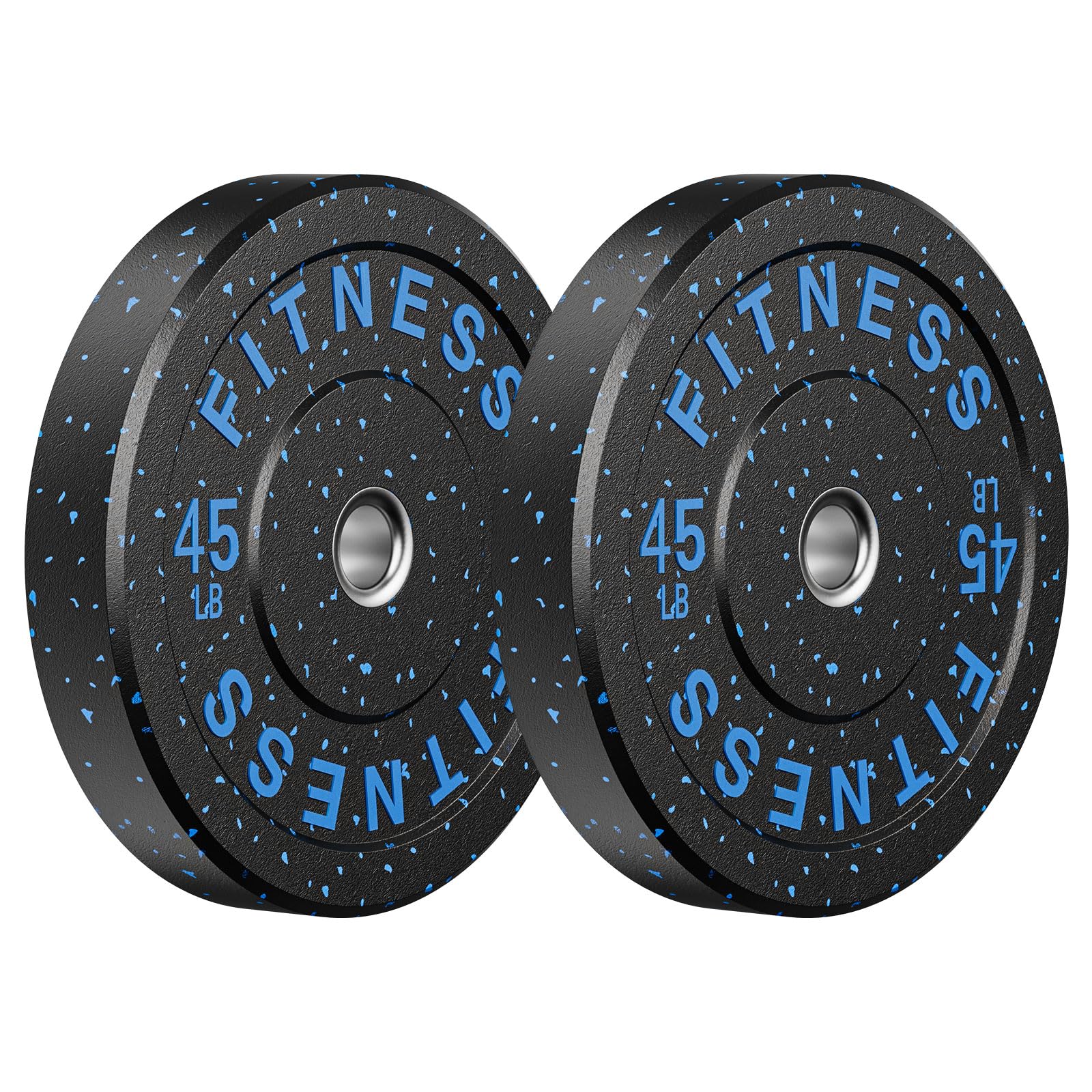
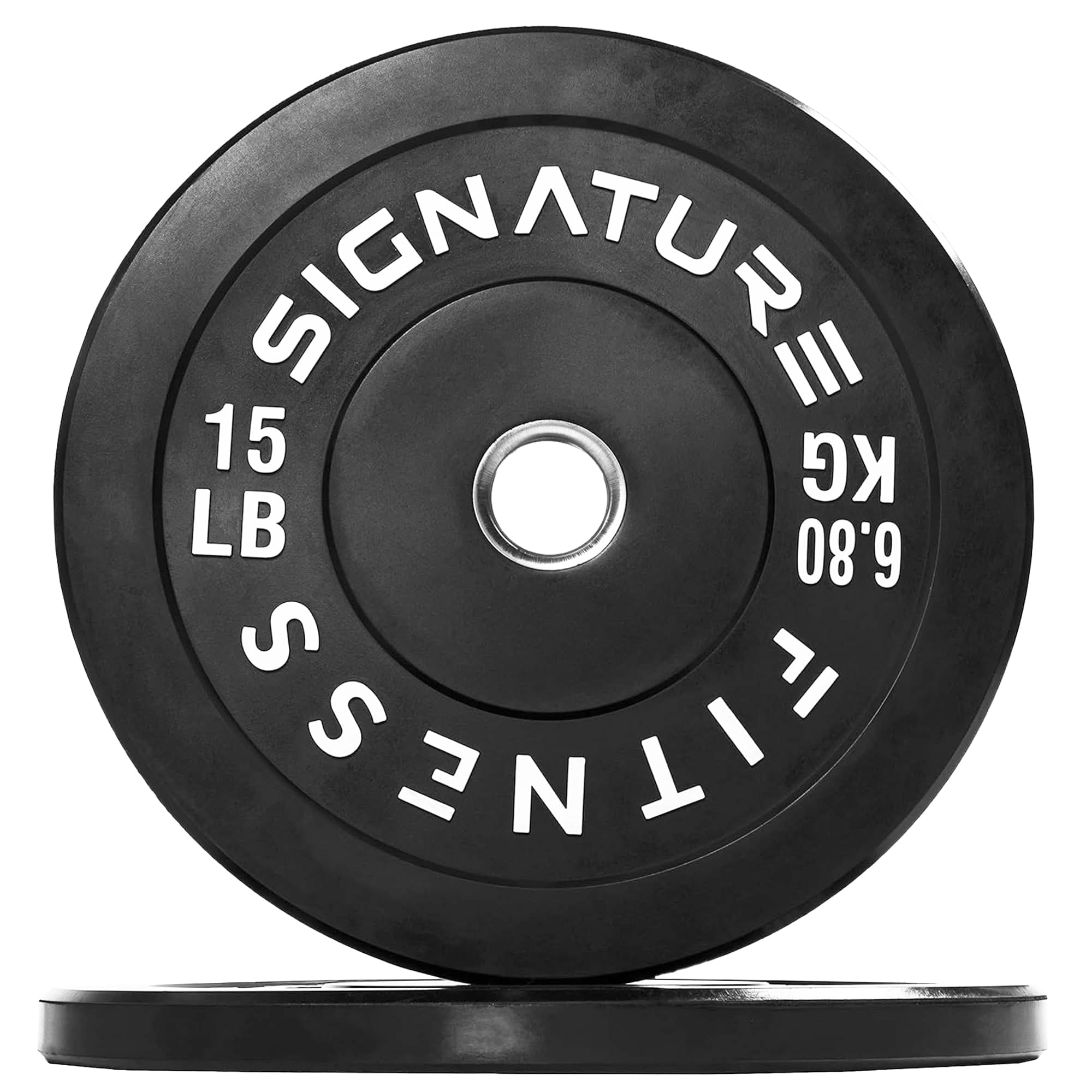
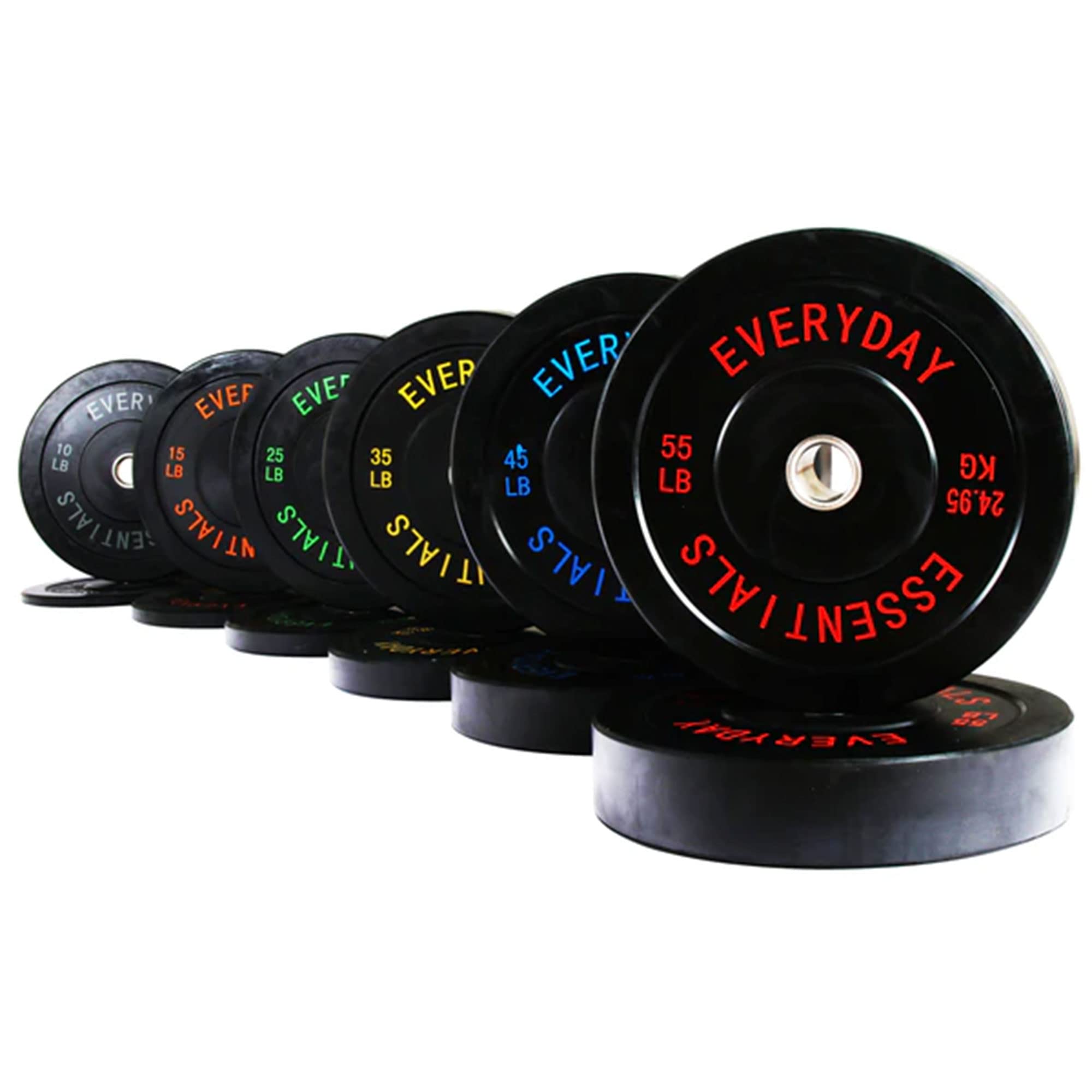
Strength & Weights

Best Bumper Plates of 2026

Bumper plates are the one piece of gym equipment that's supposed to take a beating. Drop them from overhead and they should absorb the impact, protect your bar and floor, and keep your neighbors from filing a noise complaint. The trouble is that not every set earns that trust: some bounce like a Super Ball, some smell like a tire fire for weeks, and some are marked 45 pounds but weigh closer to 43. For a home gym, that matters—you're the one loading the bar, storing the plates, and living with the smell.

Over the past eight months, I've rotated eight sets of bumper plates through my garage gym, paying attention to how they hold up to daily deadlifts, cleans, and the occasional failed lift. We checked weight accuracy on a calibrated scale, felt for greasy manufacturing residue, and noted which plates stayed put on the bar and which wandered. None of them are perfect, but a few are clearly worth the money—and the best ones make you forget you're lifting on rubber at all.

#1

Zoomster 190 lb Set

Top Pick
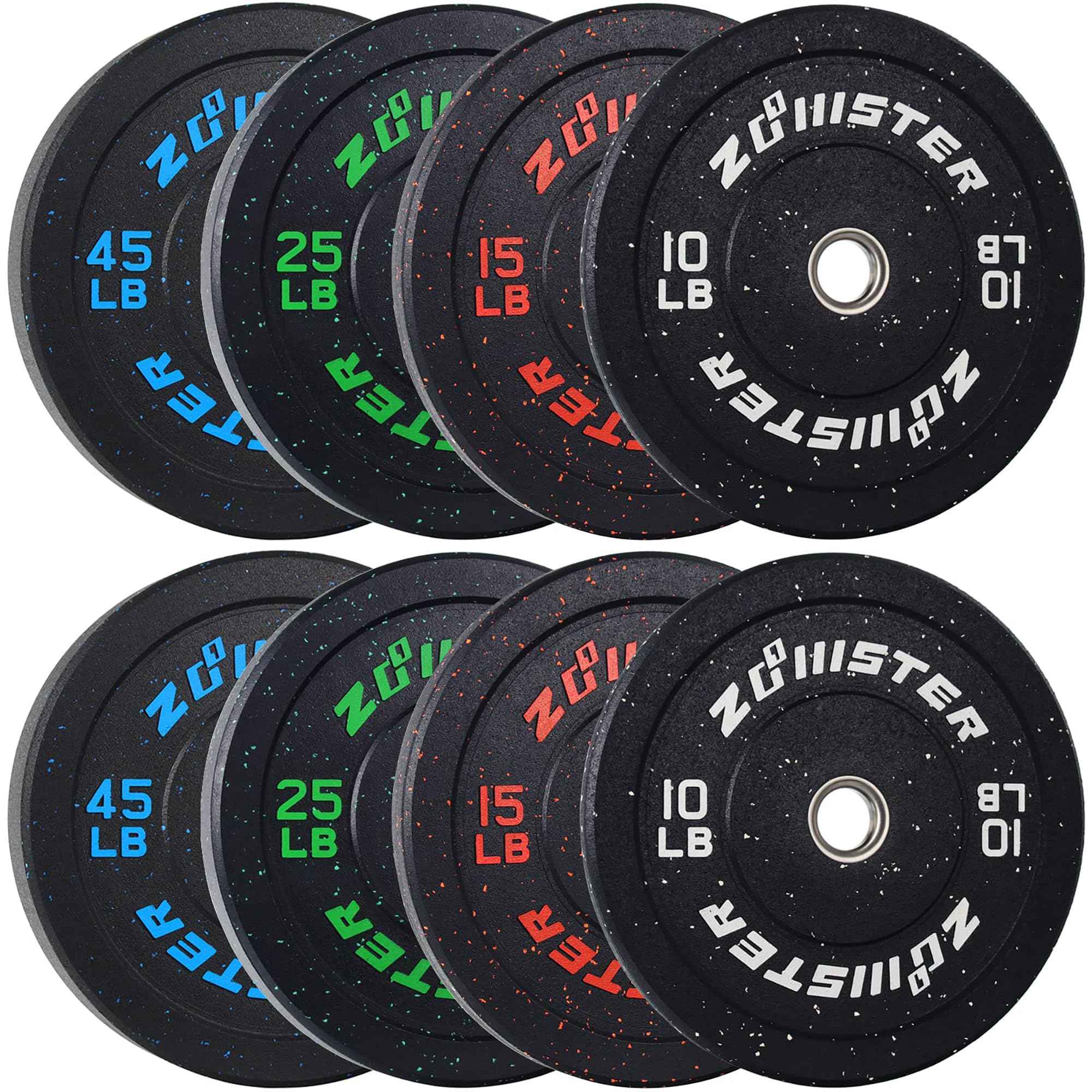
Zoomster 190 lb Set

Full home gym

Our Score 9.4/10
Check Price

Worth Noting

  • Live bounce kicks the bar back up
Bounce
Controlled high rebound
Rubber
Noise-reducing
Set Weight
190 lb (8 plates)
Center Hole
2 in
Read the full review

A 190-pound set is the decision most home gyms actually face, and it's a bigger one than a single plate: enough rubber to load a real squat, in one order, without buying four pairs separately and hoping they match. This is the set we point people to. Eight plates, 190 pounds, and dense rubber that takes the sting out of a dropped bar.

What settled it for us is how little there is to complain about. Every plate loads cleanly on a standard 2-inch sleeve, the markings read from standing height, and the edges have stayed intact instead of going chalky where the rubber meets the floor. The failures that turn up in this category — a hub that spins free, a plate that won't sit flat, a weight that drifts off its stamp — haven't shown up here. That's a dull thing to say about a product, and it's the highest compliment we can pay something you're going to throw at the ground.

The bounce is the one design choice worth thinking about. Zoomster builds these to rebound, which means a dropped bar comes back up rather than thudding dead. In a garage with a car parked a few feet away, that's movement you have to manage. If you lift in tight quarters or above someone else's ceiling, a dead-bounce plate like the Iron Crush pair is the better call.

Two housekeeping notes. Plates arrive with a light manufacturing film that a dry rag just pushes around — warm water and dish soap takes it off in one pass, and doing it outside saves your sink. And the rubber smell varies from set to set: ours settled inside a week, but a closed garage in summer will hold onto it longer than an open one.

Bottom line: We recommend this set to anyone furnishing a home gym in one order: it's the most complete, least fussy package here, provided a lively bounce doesn't bother you.

#2

Iron Crush 15 lb Pair

Iron Crush 15 lb Pair

Quiet apartment lifts

Our Score 9.4/10
Check Price

Worth Noting

  • Costs more per pound than the sets here
Bounce
Low, dead bounce
Insert
Stainless steel
Diameter
450 mm (IWF)
Pair Weight
15 lb
Read the full review

Drop a bar loaded with the Iron Crush plates and the room doesn't answer back. That's the design brief: virgin rubber with a dead, low bounce, stainless steel inserts, and a plate that stays where it lands instead of kicking the bar back at you.

The 450 mm diameter is the spec most shoppers skip, and it's the one that decides whether a set works. Bumper plates only protect your floor and your bar if every plate on the sleeve is the same size — mix a 450 with something smaller and the bar sits crooked, with all the impact landing on the big plate. These are built to the IWF number, so they line up with the rest of this group and with anything else of the same standard.

We were also impressed by the fit. The insert is snug on a 2-inch sleeve, snug in the useful way: the plate doesn't rattle or slide when you're setting up a pull, and it comes off without a fight. The finish is clean and the edges are tidy, which isn't a given on rubber at this level.

The trade-off is that you're paying a premium per pound for a light pair. Fifteen pounds a side is a useful addition to a bar that's already loaded, and it isn't a set on its own. Buy it as the quiet pair you add to the plates you own, not as the foundation.

Bottom line: We point anyone lifting above a downstairs neighbor to this pair: dead bounce, quiet drops and a snug fit are worth paying more per pound for.

#3

AMGYM 190 lb Set

AMGYM 190 lb Set

Heavy drops

Our Score 9.4/10
Check Price

Worth Noting

  • Rubber odor can be strong and slow to clear
Insert
Rust-resistant steel
Rubber
Recycled, textured
Diameter
17.5 in
Set Contents
2x10, 2x15, 2x25, 2x45 lb
Read the full review

Ten thousand drops is the number printed across the AMGYM listing, and it's a manufacturer's test figure rather than something we counted. What we can say is that the build behind the claim is visible: thick recycled rubber, a coarse textured face, and a rust-resistant steel insert sitting flush in the hub.

The shape of the set is right for a garage gym. Two 10s, two 15s, two 25s and two 45s is 190 pounds and enough combinations to warm up, work and fail on a squat without moving plates between sets. Every plate is 17.5 inches across, so the bar sits level whichever combination you load, and the color coding saves squinting at the floor mid-set.

The texture is the detail we appreciated more than expected. A smooth bumper with sweaty hands is a nuisance to carry, and the grain gives you something to hold when you're walking two 45s back to the rack. It also means these never look brand new for long — chalk and dust settle into the surface.

One thing to check on arrival is weight. Plates land close to their stamped number but not always exactly on it, which is fine for training and mildly irritating if you log every session. A quick pass on a scale before the first workout tells you what you're actually lifting.

Bottom line: We like this set for training that involves dropping from overhead: thick rubber, a grippy face and a full range of pairs for the money.

#4

Papababe 45 lb Pair

Papababe 45 lb Pair

Adding 45s

Our Score 9.4/10
Check Price

Worth Noting

  • High bounce moves the bar on hard drops
Bounce
High bounce
Rubber
Crumb rubber, flecked
Surface
Rough, grainy
Pair Weight
45 lb
Read the full review

Most home gyms don't need another pair of 10s. They need another pair of 45s, and this is the pair we point to for that job: crumb rubber with a genuinely coarse, grainy surface, a high-bounce formulation, and colored flecks running through the black so a 45 reads as a 45 from across the room.

High bounce is a choice, not a defect, and it's what separates these from a dead-bounce plate like the Iron Crush pair. The rubber returns energy, so a dropped bar comes back up instead of settling into the floor. On a hard surface that's more movement to control, and if your lifting space is tight, know that going in. For deadlifts in a garage with room behind the bar, it's manageable.

The grain is the part we didn't expect to care about. Smooth bumpers get slick fast in a warm garage, and this surface gives your fingers something to bite when you're picking a 45 up off the floor. It also collects chalk and dust, so they won't stay pretty.

Two 45s adds 90 pounds to a bar that already has plates on it, which is the cheapest way to jump from a working weight to a real one without rebuying a set you already own.

Bottom line: We recommend this pair to lifters who already own plates and want 90 more pounds on the bar without buying a set they don't need.

#5

HANDBODE 70 lb Set

HANDBODE 70 lb Set

Budget starters

Our Score 9.4/10
Check Price

Worth Noting

  • Only 20 lb or 50 lb increments
Bounce
Low bounce
Rubber
High-density natural
Diameter
450 mm (17.7 in)
Set Contents
2x10 lb, 2x25 lb
Read the full review

Seventy pounds of rubber sounds like a starter set until you do the arithmetic. Two 10s and two 25s means you can add 20 pounds to the bar or 50, with nothing in between — so the jump from a warm-up to a working set is a big one. Whether that's a problem depends on where you are in your training, and it's the first thing to weigh here.

What you get for the money is better than the set size suggests. Every plate is 450 mm, the IWF diameter, so these sit level with the 45s you'll add later and with anything else built to the same number. Bounce is low, which is what you want in a spare room or a garage under a bedroom: a dropped bar thuds and stays put instead of kicking away.

The rubber is a high-density natural stock with color-coded stripes on the edges, and it looks better in person than a budget set has any right to. Plates we loaded sat flat on the sleeve with no wobble, and the markings are readable without picking the plate up. That last part matters more than it sounds when you're mid-session and breathing hard.

Where this earns its place is as a first purchase or a second set for a corner of the garage — something to buy before you know how strong you'll get, or to keep for the friend who trains with you. It isn't the set you'll still be loading for a heavy deadlift.

Bottom line: We recommend this set to a new lifter who wants proper 450 mm bumpers for the least money and can live with a big jump between loads.

#6

Fitvids 15 lb Pair

Fitvids 15 lb Pair

Light pairs

Our Score 9.4/10
Check Price

Worth Noting

  • Sold only in pairs
Bounce
Low bounce
Rubber
Virgin rubber
Center Hole
2 in
Pair Weight
15 lb
Read the full review

A pair of 15-pound bumpers at a bargain price is the kind of listing you check twice, and the reason it's cheap is worth knowing: these are built from virgin rubber rather than recycled crumb, which is the same approach Iron Crush takes at a much higher cost per pound.

The case for a light pair is stronger than it looks. Fifteen pounds a side is the difference between a 95-pound press and a 125-pound one, and having that jump available without hanging small change plates on the bar is worth something in a home gym.

Virgin rubber is also why the low-odor claim holds up as well as it does. Recycled crumb is cheaper and works fine, but it's the material behind most of the rubber smell in this category; virgin stock starts closer to neutral. Bounce is on the low side too, which suits a plate this light.

What we can't promise is how a 15 holds up after a year of drops. The thin plates are the ones that bend first, and 15 pounds doesn't leave much rubber to work with. If these will live on a bar for pressing and rowing more than on the floor, that matters less.

Bottom line: We like this pair for anyone who needs 15s and wants to spend as little as possible; it's a plate to add, not a set to build on.

#7

Synergee 10 lb Pair

Synergee 10 lb Pair

Technique work

Our Score 9.2/10
Check Price

Worth Noting

  • Insert can separate from the rubber
Bounce
Low bounce
Diameter
17.5 in
Thickness
1 in
Pair Weight
10 lb
Read the full review

Ten pounds is a plate you buy for a reason: teaching a clean to someone new, adding a small jump to a press, or giving a beginner something loadable. Synergee's 10-pound pair is 17.5 inches across — full size — and an inch thick, so it sits at the same height as a 45 while staying light enough to move with one hand.

Low bounce is what we noticed first. On a plate this light, a lively rubber is a liability: a bouncy 10 ends up under a rack or against a wall rather than where you dropped it. These come down and stay down, which is the whole point of a light bumper.

Build quality is decent. The 2-inch collar slides onto an Olympic sleeve cleanly, and the rubber has a firm, dense feel rather than the spongy texture of cheap crumb plates. At 17.5 inches they line up with the rest of a set, so your bar height doesn't change when you swap them in.

Ten pounds doesn't go far, and the price per pound here is high — you're paying for the full-size diameter more than for the rubber. That's the right trade if you're teaching technique or bridging a gap between jumps. If you want volume, a set is cheaper.

Bottom line: We recommend this pair to anyone who needs a full-size 10 for technique work or a small jump, and can accept paying more per pound for it.

#8

CAP 45 lb Plate

CAP 45 lb Plate

Cheap 45s

Our Score 9.0/10
Check Price

Worth Noting

  • Rubber odor can linger for weeks
Hub
Steel floating hub
Bounce
Medium
Center Hole
2 in
Plate Weight
45 lb (single)
Read the full review

Two things arrive when you open a box of CAP bumper plates: the lowest price per pound in this group, and a film of oil that has to come off before the plate touches your bar. The value is real. So is the cleanup, and it's about fifteen minutes with a rag.

What makes these worth recommending is that they're sold as singles. If you already own 25s and need another pair of 45s, you buy two plates instead of a set that duplicates what's on your rack. The steel floating hub is the other detail that matters: the sleeve sits in the rubber rather than being bonded to it, which is the part that fails first on cheaper construction.

Medium bounce is the third thing to like. These aren't dead, but they settle quickly instead of trampolining, and the stamped weight came close enough that a couple of ounces either way won't change a training block. Color-coded markers make them easy to grab off a rack without reading.

The oil is a release film from manufacturing, not a defect, and warm water with dish soap lifts it where a dry cloth just smears it around. Do that outside on a sunny afternoon and let them air before they go on the bar.

Bottom line: We recommend the CAP plates to anyone building a set one plate at a time on a tight budget; they ask for a wash before the first session and nothing after that.

#9

BalanceFrom 12-Plate Set

BalanceFrom 12-Plate Set

One-order gym

Our Score 9.0/10
Check Price

Worth Noting

  • Edges can chip under heavy use
  • Hubs can bend out of true
Insert
Stainless steel
Markings
Pounds and kilograms
Set Contents
12 plates, 10 to 55 lb pairs
Read the full review

Twelve plates, from 10s to 55s, in a single order. No other set here goes past 45, and the 55 is the plate that changes what a bar can do: it gets you to heavy loads with fewer plates per side and less fiddling between sets.

That range is why this earns a place despite the price. A full spread in pairs, from 10 to 55 pounds, covers a beginner's first year and an experienced lifter's heavy day without another purchase, and the stainless hub inserts plus dual pound-and-kilogram markings are the kind of detail you notice every session rather than once.

The reservations are real at this money. The rubber can chip at the edges under regular dropping, and a bent hub is the failure to watch for — once the insert is out of true, the plate won't sit straight on the sleeve and you'll feel it on the first rep. On a rubber floor with a rack to store them, that's a risk worth taking; on bare concrete, less so.

The rubber smell arrives with the plates and takes a week or two to settle. Set them up in the garage with the door open before you bring them anywhere near the house.

Bottom line: We recommend this set to someone furnishing a whole gym at once, especially if the 55s matter, as long as they're dropping onto rubber rather than concrete.

How We Tested Bumper Plates in a Home Gym

We started by pulling together the bumper plates that show up most often in home gym forums and retail listings, then narrowed the list by plate diameter, collar width, claimed weight tolerances, and price per pound. We ended up with eight sets and used them for eight months in a garage gym, where they were loaded onto the same bar for deadlifts, cleans, front squats, and overhead drops several times a week.

Each plate went on a calibrated scale out of the box, and we recorded the difference between the stamped number and the real one. We also handled them straight out of the packaging to see whether they left an oily film on our hands and how easy they were to pick up and slide onto the sleeve, then left a few in the same closed room to see how long the rubber smell lingered. On the bar, we watched for side-to-side wobble during warm-up sets and checked whether the plates stayed put during repeated drops.

Durability testing was less scientific and more honest: we dropped them. We noted scuffs, dings, and insert separation after missed lifts and high-rep sets, then stacked them in a corner and checked whether the edges deformed under their own weight. We also factored in appearance after a few months of chalk and floor grit, and whether the set still felt like a good value once the novelty wore off.

How to Choose Bumper Plates

Diameter comes before weight

Every bumper plate on a bar should be the same diameter, and the standard is 450 mm, or about 17.5 inches. Mix a full-size plate with a smaller one and the bar sits crooked, with the largest plate taking the entire impact — which is how edges chip and hubs bend.

Check the number before you add a pair to a set you already own. The Iron Crush pair is built to 450 mm, the HANDBODE set to 450 mm, and the AMGYM set to 17.5 inches. The usual trap is a cheap plate sold as a bumper that is actually a small-diameter rubber plate; it will drop, but it won't share the load.

Decide how much bounce you want

Bounce is the trade-off nobody explains at the checkout. A dense, dead-bounce plate absorbs the drop and stays put; a high-bounce plate returns energy and sends the bar back up off the floor. Neither is better in the abstract.

Dead bounce is easier to live with in a small garage, a spare room, or anywhere above a neighbor — the Iron Crush pair and the HANDBODE set sit at that quiet end. High bounce is a preference, and it's what the Papababe and Zoomster plates deliver. If your lifting space is tight, know which one you're buying before the first dropped rep.

Buy the jumps, not the pile

Sets are sold by total weight, but what you lift is the increments. A 190-pound set with pairs of 10s, 15s, 25s and 45s gives you steps of 20, 30, 50, 70 and 90 pounds. The 70-pound set of 10s and 25s gives you 20 or 50 and nothing between.

Write down the working weights you actually use and check the set can reach them without a weird gap. If you already own plates, singles make more sense than another set, which is exactly why the CAP 45 is sold one at a time.

Know what rubber you're buying

Virgin rubber and recycled crumb both hold up; the difference is what arrives in the box. Crumb is cheaper and is the material most often behind a tire smell that hangs on for a week or two, while virgin stock starts closer to neutral. The Fitvids and Iron Crush pairs are virgin rubber; the AMGYM and Papababe plates are recycled.

Almost every plate ships with a light manufacturing film, so plan on a wipe-down with warm water and dish soap before the first session, and give new plates a few days somewhere ventilated before they move indoors.

The 10-pound plate problem

The thin plates are the ones that fail. A 10 or a 15 has less rubber around the hub, so it flexes more on impact, and a bar loaded only with light plates puts the whole drop through the weakest part of the set.

Load light plates alongside heavier ones so they share the sleeve and the impact, and don't make a habit of dropping a bar that carries nothing but 10s. It's also why a cheap set's 10s are the first thing to look at when the box arrives.

Frequently Asked Questions

Final Verdict

Buy the Zoomster set. It's the most complete package here that doesn't ask you to give something up: eight plates, 190 pounds, quiet rubber, and no recurring failure worth planning around.

If your rack already has plates on it, the CAP 45s are the cheapest weight per pound in this group and the Papababe pair is the simplest way to add 90 pounds. And if your bar comes down above someone else's ceiling, the extra you pay for the Iron Crush pair buys silence.