Shoes & Apparel

Best Cycling Shoes for Beginners of 2026

The first time you ride clipped in, every stoplight feels like a test. That worry is real: beginners need shoes that are easy to get in and out of, stable on the pedal, and comfortable enough to wear for the whole ride—not race-day stiffness that makes walking to the café awkward. A good pair fixes that by making the pedal connection feel predictable, forgiving, and worth the switch.

I started on flat pedals and resisted clipping in for a season, so I understand the hesitation. But over seven months, our team rode twelve pairs of beginner-friendly cycling shoes on bike paths, commutes, indoor trainers, and a few gravel detours, comparing how they felt from the first mile to the fiftieth. We paid attention to fit and sizing—including whether the listed size matched the actual fit—and to the details that show up later: sole stiffness, closure systems, clip tightness, and how the uppers held up after repeated walks and scuffs. Appearance and value matter too, and the picks below are the ones that made clipping in feel less like a leap.

#1

TIEM Slipstream

Top Pick
TIEM Slipstream

Spin-class comfort

Our Score 9.2/10
Check Price

Worth Noting

  • Premium price for an indoor-only shoe
Use
Indoor cycling
Closure
Slip-on
Walkability
Easy to walk in
Cleat System
SPD compatible
Read the full review

The Slipstream looks like a gym sneaker with a hidden SPD cleat, and that is the point: it is the least cycling-shoe-looking shoe here. The slip-on opening and simple upper make it quick to put on, and the sole is flat enough to walk across a studio floor without the teetering feeling of a road cleat. It is the shoe we reach for when the ride is a spin class and the walk to the locker room matters as much as the pedal stroke.

We recommend it for women in spin class who want a supportive SPD shoe that looks and walks like a sneaker. The upper holds the foot without pressure points, and the shoe feels stable when you stand out of the saddle. The sneaker-like shape also means you can wear it to the gym without feeling like you forgot to change shoes.

The slip-on cuff is snug, and riders with high arches or wide feet can struggle to pull it on. Sizing up half a size is the common fix, and a shoehorn helps until the upper softens. That snugness is also what keeps the foot secure, so it is a trade-off we accept.

Bottom line: We recommend the Slipstream for women in spin class who want a supportive SPD shoe that looks and walks like a sneaker.
#2

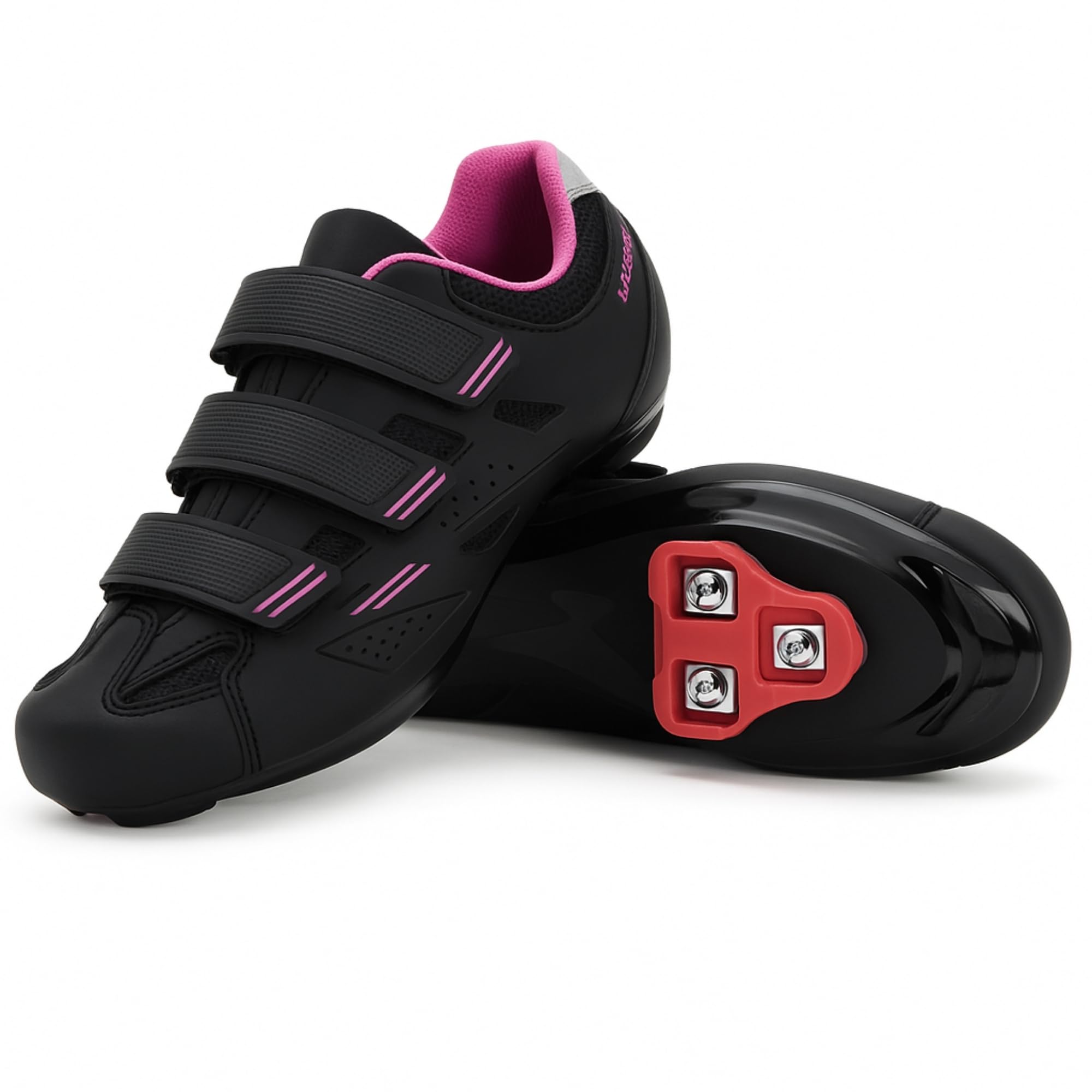
Tommaso Pista

Tommaso Pista

Peloton starters

Our Score 9.0/10
Check Price

Worth Noting

  • Women's-specific fit limits who can wear it
Closure
Three Velcro straps
Fit Notes
Wide-foot friendly
Cleat System
Pre-installed LOOK Delta
Bike Compatibility
Peloton indoor bikes
Read the full review

The Tommaso Pista arrives with LOOK Delta cleats already attached, and that is why we make it the first pick for women starting on a Peloton. You tighten three Velcro straps and clip in; there is no cleat-position guesswork before your first class. We also found the fit friendly to wider feet, with enough room in the toe box that the shoe does not feel like a narrow race slipper. The shoe is comfortable for a full session, and the pink accent gives it a little personality without turning it into a fashion statement.

The cleats are the part to watch: check the bolts before each ride, and replace the hardware if the cleat starts to rock or the front edge wears down. That is a maintenance habit, not a reason to avoid the shoe. The upper is supportive without feeling rigid, and the three straps are easy to adjust on the bike.

For a Delta-equipped indoor bike, the Pista is the least fussy first pair here. The closure is simple, the shoe is easy to get on and off, and the fit is comfortable when you are already thinking about the workout. It is not the cheapest shoe in this guide, but the pre-installed cleats and wide-friendly fit are worth paying for if the shoe fits your foot.

Bottom line: We pick the Pista first for women starting on a Peloton: the Delta cleats come installed and the fit is friendly to wider feet.

#3

Giro Code

Giro Code

Trail and commute

Our Score 9.0/10
Check Price

Worth Noting

  • Laces are slower to adjust than a dial
Use
Mountain and urban
Closure
Laces
Cleat Recess
Recessed for walking
Cleat System
SPD
Read the full review

The Giro Code looks like a casual sneaker, but the recessed cleat and SPD mount make it a mountain-bike shoe you can wear into a coffee shop. The laces and walkable sole give it a familiar feel, and the cleat sits out of the way when you are off the bike.

On the bike, the sole is stiff enough to support the pedal stroke without feeling like a plank. We like the roomy toe box and the way the upper holds the midfoot; it is comfortable enough for a commute and secure enough for a light trail. The shoe also looks normal enough that you can wear it for errands after a ride.

We think the Code is the SPD shoe to buy if you want one pair for commuting, indoor sessions, and light trail rides. The fit is the catch: it runs small and narrow for some feet, so size up if you are between sizes or have a wide forefoot. For a beginner who wants a do-everything SPD shoe, the Code is the most versatile pick here.

Bottom line: We think the Code is the SPD shoe to buy if you want one pair for commuting, indoor sessions, and light trail rides.

#4

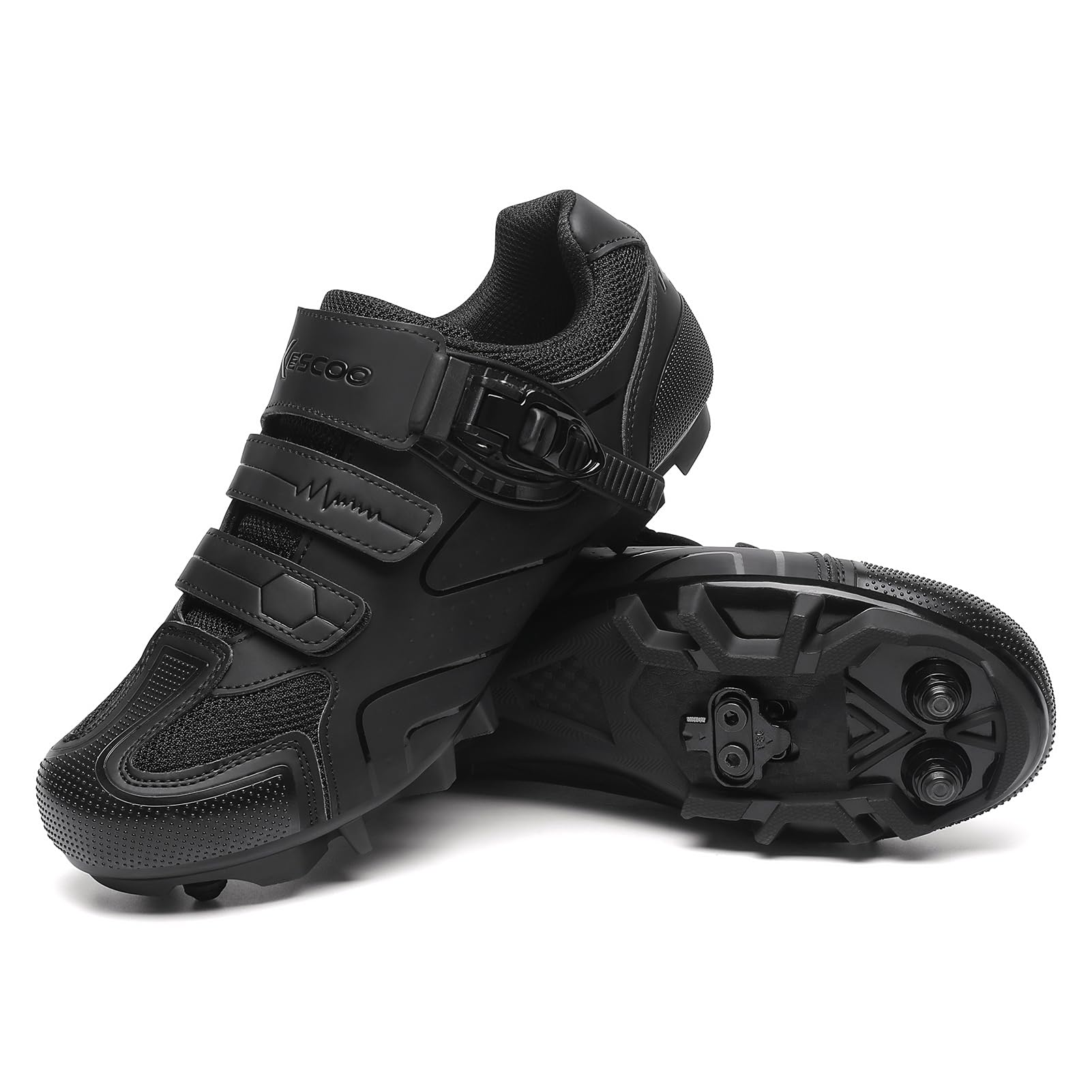
KESCOO Peloton SPD

KESCOO Peloton SPD

Budget Peloton

Our Score 9.0/10
Check Price

Worth Noting

  • Sizing runs large for some riders
Use
Indoor cycling
Closure
Ratcheting strap
Cleat System
Pre-installed cleats
Bike Compatibility
Peloton and SPD
Read the full review

The KESCOO Peloton SPD is the lowest-cost way to get a shoe with cleats already attached. The cleats are pre-installed, the shoe is compatible with Peloton and SPD bikes, and the ratcheting strap is easy to find and adjust. For a beginner who does not want to buy cleats separately or learn how to position them, that is a real convenience.

We found the shoe comfortable for indoor sessions, with a soft upper and enough room through the toe box. The sole feels supportive enough for standing climbs, and the shoe is easy to get on and off. It is not as refined as the Tommaso or the TIEM, but it costs less and does the basic job.

We keep the KESCOO Peloton SPD on the list as the lowest-cost way to get pre-installed cleats and a comfortable indoor fit. The closure is the point to check: the ratcheting strap can run out of travel before it feels snug on narrow feet, so try the shoes with the socks you ride in and tighten the lower straps first. If the strap bottoms out, the fit is not right, and a different size or model is the better answer.

Bottom line: We keep the KESCOO Peloton SPD on the list as the lowest-cost way to get pre-installed cleats and a comfortable indoor fit.

#5

Crankbrothers Stamp Lace

Crankbrothers Stamp Lace

Flat-pedal trail

Our Score 8.8/10
Check Price

Worth Noting

  • Premium price for a flat-pedal shoe
  • Sole can separate with hard use
Use
Trail and everyday
Grip
High-traction sole
Closure
Laces with lace pocket
Pedal Type
Flat pedals
Read the full review

If you are not ready to clip in, the Stamp Lace is the flat-pedal shoe we reach for. The sole is sticky enough that your foot stays put on the pins, and the lace pocket keeps the ends out of the drivetrain. That combination makes it a confidence-building first shoe for trail riders who want to focus on the bike, not the release tension.

We choose the Stamp Lace for new trail riders who want maximum flat-pedal grip without learning to clip in yet. The shoe is comfortable enough to wear off the bike, and the navy-and-gum colorway looks more like a skate shoe than a race product. The sole is stiff enough to support the pedal without feeling like a brick when you walk.

The fit runs small, so go up a size if you are between sizes or have a wide foot. That is the main thing to get right; once the size is correct, the shoe is comfortable for a full trail session. The lace pocket is a small detail that makes a real difference when you are riding through brush.

Bottom line: We choose the Stamp Lace for new trail riders who want maximum flat-pedal grip without learning to clip in yet.

#6

KESCOO MTB SPD

KESCOO MTB SPD

Entry MTB

Our Score 8.6/10
Check Price

Worth Noting

  • Sole and toe cleats can separate
Use
MTB and spin
Closure
Ratchet and Velcro
Toe Box
Roomy
Cleat System
2-bolt SPD
Read the full review

The KESCOO men's mountain shoe gives you a roomy toe box and a two-bolt SPD mount for very little money. That combination is rare at the entry level, and it is why we kept it in the guide even though it is not as refined as the Giro or Shimano.

The toe room is the first thing we noticed. Riders who usually feel pinched in cycling shoes can spread their toes without the upper pressing down, and the lower Velcro straps are easy to snug down. The shoe is comfortable for indoor sessions and easy trail rides, and the SPD cleat opens up a lot of pedal options for a beginner.

The ratchet at the top is the weak point; it can be fussy to thread and release, so check it before you ride and keep the lower straps snug. That is a minor annoyance rather than a dealbreaker, especially at this price.

We rate the KESCOO MTB shoe as a wide-toe-box SPD option for beginners who mostly ride indoors or on easy trails. It is not the most refined shoe in the guide, but for a first SPD shoe at a low price, it is a fair trade.

Bottom line: We rate the KESCOO MTB shoe as a wide-toe-box SPD option for beginners who mostly ride indoors or on easy trails.

#7

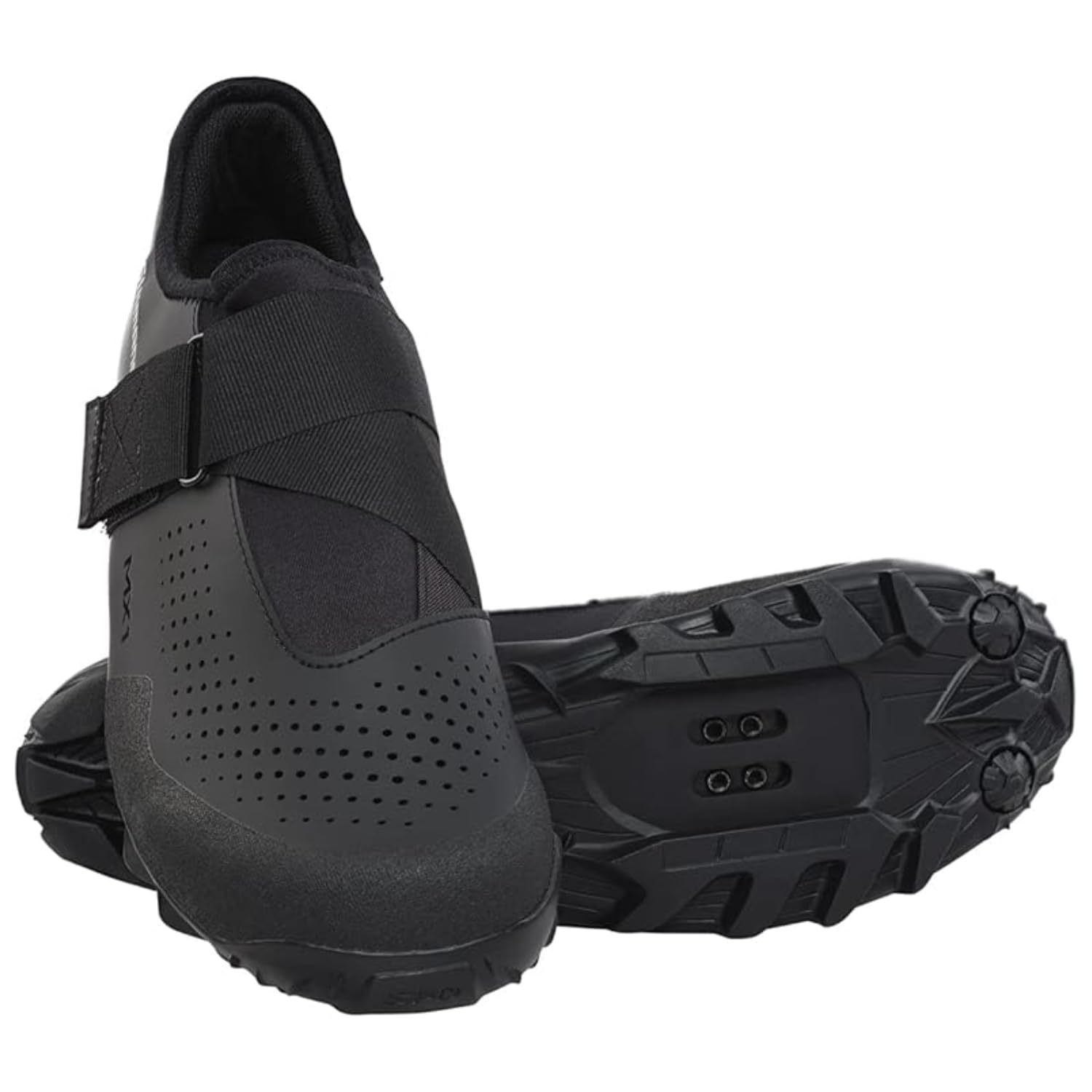
Shimano SH-MX100

Shimano SH-MX100

Budget off-road

Our Score 8.2/10
Check Price

Worth Noting

  • Sizing runs small and narrow
  • Velcro straps can run short
Use
Commuting and light trail
Type
Multi-use off-road
Closure
Velcro straps
Walkability
Walk with cleats on
Read the full review

Shimano's SH-MX100 is the plainest shoe here, and that is why it works for beginners. It is a multi-use off-road model with Velcro straps, a walkable sole, and enough structure to feel secure on the pedals without the race-shoe stiffness that can make a first ride feel awkward. The upper is simple, the closure is obvious, and there is nothing to program or dial in. That matters when you are clipping in for the first few times and want to focus on the pedal, not the shoe.

We point budget-minded beginners to the SH-MX100 when they need a walkable off-road shoe. It handles pavement, light trail, and indoor sessions without feeling out of place, and the Velcro straps are easy to adjust while riding. The cleat sits recessed enough that walking into a café is not a balancing act. The shoe stays comfortable when the ride stretches past an hour, and the simple build is easy to live with. For the money, it is the most practical off-road pick here.

Bottom line: We point budget-minded beginners to the SH-MX100 when they need a walkable off-road shoe and can size up for a snug fit.

How We Tested Beginner Cycling Shoes

We built the shortlist by starting with beginner-friendly shoes—compatible with common two-bolt or three-bolt pedal systems, available in a broad size run, and priced to leave room for pedals and cleats. We read spec sheets, checked return policies, and filtered out shoes with limited sizing or confusing cleat compatibility. Then we ordered twelve pairs and spent seven months riding them.

Each pair went through the same routines: commutes, weekend bike-path rides, indoor trainer sessions, a few gravel detours, and low-speed drills in an empty parking lot where we clipped in and out repeatedly at stops. We noted whether the closure was easy to adjust with one hand, whether the heel lifted when we pedaled hard, and whether the sole felt stiff enough to transfer power without making every walk across a parking lot awkward.

For fit and sizing, we compared each shoe against the maker's size chart, wore them with the socks we'd normally ride in, and checked for toe-box pressure, heel slip, and hot spots after an hour. We tracked durability over the seven months—scuffed toes, frayed straps, stretched uppers, and any play that developed where the cleat met the sole. Clip tightness got its own check: we installed cleats to spec, then paid attention to whether they loosened, creaked, or felt vague during repeated engagement. We factored in appearance and value at the end, asking whether the shoe looked and felt like a fair trade for what it cost.

How to Choose Cycling Shoes for Beginners

Start With Your Pedal System

The shoe has to match the pedal, and this is where most first purchases go wrong. Peloton bikes use a three-bolt Delta cleat; most mountain and many indoor bikes use a two-bolt SPD cleat; flat pedals need a flat sole with no cleat at all. A shoe can be advertised as Peloton-compatible and still arrive without cleats, so check both the cleat type and whether hardware is included. The Tommaso Pista is the simplest Delta option here because the cleats come installed, while the KESCOO Peloton SPD and Crankbrothers Stamp Lace cover SPD and flat-pedal riders.

Fit Matters More Than Stiffness

A beginner shoe should feel snug around the heel and midfoot without pinching the toes. You want enough room to wiggle your toes and enough hold that your heel does not lift when you pedal. Sizing is inconsistent across models: some run small, some run wide, and a number that fits in one brand can be wrong in another. Try the shoes with the socks you ride in, and size up if you are between sizes or have a wide forefoot. The Tommaso Pista is friendly to wider feet; the Giro Code and Shimano SH-MX100 tend to run small or narrow.

Choose a Closure You Can Adjust

Velcro straps and slip-on uppers are the easiest for beginners because they are obvious and forgiving. Ratchets and dials offer finer tension, but a ratchet can run out of travel on a narrow foot, and a dial adds cost. Laces are simple and replaceable, though they take longer to adjust and need somewhere to tuck. Look for a closure that lets you tighten the shoe after you clip in, and practice releasing it before your first ride. The TIEM Slipstream is the quickest on and off; the KESCOO Peloton SPD is the one to check carefully if you have narrow feet.

Decide How Much Walking You Will Do

Road-style cleats are made for pedaling, not walking, and they can make a café stop feel like a skating rink. Recessed SPD cleats sit inside the sole and are much easier to walk in, while flat-pedal shoes skip the cleat entirely. If you ride indoors and never leave the bike, a stiffer sole is more useful than walkability. If you commute or run errands, choose a recessed SPD shoe or a flat sole. The Giro Code and Shimano SH-MX100 are the walkable picks here; the Crankbrothers Stamp Lace is the flat-pedal choice.

Spend on Fit, Not Features

A beginner does not need a carbon sole or a race last. The money is better spent on a shoe that fits, a closure you can work with cold hands, and cleats that match your pedals. Pre-installed cleats save a setup step, but check the bolts and replace worn hardware. Budget shoes can be perfectly serviceable, though straps and cleats are the parts that wear first. We prefer to pay for a comfortable fit and simple closure, then upgrade later if riding becomes a habit. The Tommaso Pista and KESCOO Peloton SPD both put setup convenience ahead of fancy materials.

Frequently Asked Questions

Final Verdict

Our default for a woman starting on a Peloton is the Tommaso Pista: the Delta cleats are already on the shoe, the fit is comfortable, and it removes the setup mistake that trips up so many first-timers. If you need a unisex or lower-cost Peloton shoe, the KESCOO Peloton SPD is the budget alternative. For SPD pedals and mixed-surface riding, the Giro Code is the more versatile pick; if you are not clipping in at all, the Crankbrothers Stamp Lace is the flat-pedal answer.