Shoes & Apparel

Best Cross-Training Shoes of 2026

Cross training shoes are a compromise by design. They need a stable base for heavy lifts, enough cushioning for jump rope and box jumps, and a flexible forefoot for sprints and burpees — and most pairs lean too far in one direction. What you actually want is a shoe that disappears on your foot: no pressure points, no arch digging, no break-in period, but still locked-in when you cut sideways. I've spent the past eight months rotating through a dozen pairs, and the differences were obvious within the first workout.

Comfort and fit matter more than any spec sheet. A few pairs felt great standing still but turned into slip-on slippers mid-lunge; others had arch support so aggressive it bruised my instep. I also paid attention to how they looked with joggers and shorts, but appearance never outweighed a sloppy fit or a stiff sole. After months of use, the winners were the ones that still felt snug and supportive after 30 sessions, not just the first one. The picks below are the pairs that earned their price.

#1

Nike Air Max Alpha Trainer 6

Top Pick
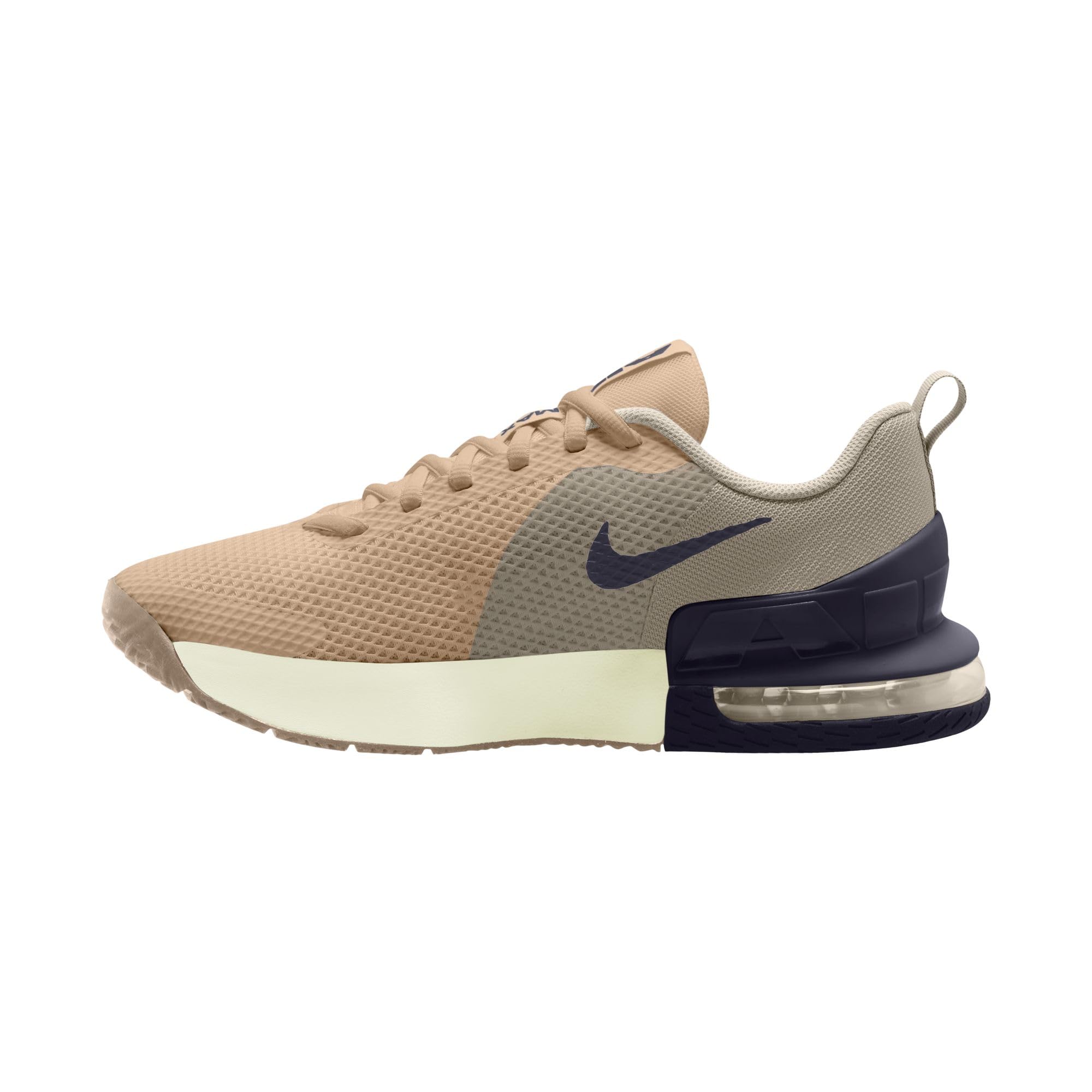
Nike Air Max Alpha Trainer 6

Mixed gym sessions

Our Score 9.2/10
Check Price

Worth Noting

  • Sole can start to lift at the toe
Type
Workout / cross-training
Model
Air Max Alpha Trainer 6
Department
Men's
Read the full review

A level, firm platform is the reason the Air Max Alpha Trainer 6 takes the top spot. Press into the forefoot and there is some give, but the shoe does not tip you forward the way a running midsole does, and the heel sits down inside the shoe rather than on top of a tall stack of foam. Under a loaded bar, that is the difference between feeling planted and feeling like you are balancing.

We rate it as the best balance of stability and comfort in this set. It is composed under a barbell, supportive at the heel during sled pushes and conditioning intervals, and comfortable enough to keep on for the walk home. There is arch under the midfoot without it being aggressive, so it does not fight a flat foot. In a category full of shoes that are really running shoes with a gym-friendly name, that flat base is the whole point.

Fit is the thing to get right. The Alpha runs short and narrow enough that most people should go up half a size, and if your forefoot is wide, the 608 V5 is the friendlier shape — the Nike's heel and midfoot are snug by design. What keeps it at the top for us is how little it asks between sets: no rocking, no squirming, no retying laces.

Bottom line: Our default for mixed gym work: stable under a bar, supportive through conditioning, comfortable between stations. Order a half size up.

#2

Under Armour Charged Commit 4

Under Armour Charged Commit 4

Heavy lifting days

Our Score 9.2/10
Check Price

Worth Noting

Type
Gym trainer
Model
Charged Commit Trainer 4
Department
Men's
Read the full review

Compared with our top pick, the Charged Commit Trainer 4 barely flexes at all, and for squats, deadlifts and split squats that is the trade we want. The midsole is rigid, the heel is held firmly, and the shoe feels like a small platform under the foot rather than a cushion around it. It is the pair we point to when the barbell is the reason you are in the building.

Sizing is honest, which is rarer in this group than it should be. It runs true, the toe box is roomy, and the wide sizes are genuinely wide rather than a token tweak; if you have a broad forefoot, this is the easier fit of the four. We also like that it costs less than our top pick without feeling like a step down in build — the upper and heel counter are plain but solid.

The same rigidity is the catch. Jump rope, court sprints and anything with a lot of forefoot push-off feel clunky, and the shoe does not roll through a stride at all. Sessions that are barbell-first with a short conditioning finisher will not mind; sessions built around agility and change of direction should look at the Alpha Trainer instead.

Bottom line: Firm, wide, and honestly sized — our pick when lifting is the main event, and the stiffness is a feature rather than a flaw.

#3

New Balance 608 V5

New Balance 608 V5

All-day wide comfort

Our Score 9.2/10
Check Price

Worth Noting

  • Soles can separate with heavy use
Type
Cross trainer
Model
608 V5
Department
Men's
Read the full review

Wide feet get a real option here. The 608 V5 is built on a roomy last with extra-wide sizing, and the arch support is the kind you notice at hour eight of a shift rather than in the first ten steps. It is the traditional cross-trainer of the group — soft upper, supportive footbed, no interest in being fast. It also looks tidier than a gym shoe has any right to, which is part of why it works as an everyday pair.

We think it is the best value here for anyone who stands, walks and lifts in the same shoes: machines, light dumbbells, a long day on hard floors. It is also the pair to reach for when a foot is sore, because nothing about it is aggressive. Agility work is not its job, though — the upper is soft and the shoe is happiest going in straight lines.

Two practical notes. The laces arrive absurdly long, so double-knot them or trim the ends. And the toe box is shallow for its size, which is where the sizing splits: if you are between sizes or have a high instep, go up half a size rather than assuming your usual.

Bottom line: For wide feet and long days on hard floors, the 608 V5 is our pick: roomy, supportive, the cheapest of the four, and good for light gym work too.

#4

PUMA Alexion

PUMA Alexion

Light gym, everyday

Our Score 9.0/10
Check Price

Worth Noting

  • Narrow toe box runs small
  • Soft insole flattens with wear
Type
Cross trainer
Model
Alexion
Product Dimensions
12.3 x 5 x 9.5 inches; 13 ounces
Read the full review

The Alexion is the softest, easiest shoe here to wear for a long day, and the one we trust least under a loaded bar. That is not a knock on the comfort — the cushioning is genuinely plush, the upper is light, and the shoe looks sharp enough to wear out of the gym. It is simply built to feel good rather than to hold you still, with plenty of foam under the heel and very little structure around the midfoot.

We like it best as a light-training and everyday shoe: machines, dumbbell circuits, the walk afterward. For that it is lovely — light on the foot, soft under the heel, and quiet in the way padded shoes tend to be. Puma's fit runs narrow, though, so if your forefoot is broad or your arch needs real support, size up or start with the 608.

Puma lists thirteen ounces for a single shoe, and it wears light for that number. It is also the best-looking of the four, which matters when the pair doubles as your everyday sneaker. Ours spent more time by the door than in the gym bag, and that is the honest summary of what it is for.

Bottom line: A soft, good-looking trainer for light gym work and long days on your feet — we like it everywhere except under a heavy bar.

How We Tested the Best Cross Training Shoes

To build the shortlist, I started with a spreadsheet of cross training shoes from brands with a solid reputation and a few newer names, then filtered by price, available sizes and widths, and whether the shoe was actually designed for mixed-modal training rather than just running or lifting. I read through hundreds of customer reviews, paid attention to repeated complaints about arch support and durability, and narrowed it to 12 pairs. Over eight months, I wore each pair at least three times a week.

Testing happened where the shoes actually live: on the gym floor, in a crowded HIIT class, and on the turf for sled pushes and lateral shuffles. On lifting days I checked stability under squats and deadlifts; on conditioning days I watched for heel slip during burpees and box jumps. I also ran short intervals on a treadmill and outside to see if the cushioning held up. After each session I logged comfort, fit, and arch support, noting whether my toes had room to splay, whether the heel stayed locked, and whether the arch felt supportive or intrusive. I started with my usual running shoe size and noted when a half-size up or wide width made a difference.

Every two weeks I inspected the outsole for wear, the seams for fraying, and the midsole for compression. I listened for squeaks on rubber floors and loud heel claps during jump rope, and I bent each shoe at the ball of the foot to judge stiffness — a pair that felt like a plank during lunges got marked down. I also wore each pair with joggers and shorts to see how they looked outside the gym, and compared what I paid against how they performed after 30 sessions. The result is a list of shoes that held up, fit well, and didn't punish my feet for mixing up my workouts.

How to Choose Cross-Training Shoes

Stability starts with the platform

A thick, soft midsole absorbs impact as your foot rolls forward, which is why running shoes feel good on a treadmill and vague under a barbell — the foam compresses unevenly and your ankle starts hunting for balance. A firmer, level sole keeps your heel down and sends force into the floor. Press your thumb into the heel and set the shoe on a hard floor: if it rocks now, it will rock under you.

Match the shoe to your week, not to one workout. Barbell-first training points to the Charged Commit, mixed sessions with conditioning suit the Alpha Trainer, and light gym work plus long days suit the softer Alexion.

Fit and width: get this right first

Your running-shoe size does not transfer. These run shorter and narrower than most running models, and the Nike and the Alexion are the tightest of the group through the toe. Measure late in the day, leave a thumb's width at the end, and go up half a size when you are between sizes.

Width is a separate measurement from length, and a stated wide or extra-wide size is a different last, not just a roomier upper. If you need width, the 608 V5 and the Charged Commit offer it properly, and both fit true in length.

Where gym shoes wear out first

The insole usually goes before the outsole. Foam under the heel compresses, the footbed flattens and the shoe feels dead while the tread still looks new. A fresh insole is the least expensive fix in shoe ownership and the first thing to try when a pair stops feeling supportive.

After that, watch the toe crease and the bond line where the upper meets the sole — separation there is the failure to look for in this group. Dry shoes out after sweaty sessions, and rotate two pairs if you train most days.

What everyday comfort costs you

Soft uppers and thick insoles are lovely for standing and walking and poor for lateral stability, because the foot moves inside the shoe instead of with it. If you want one pair for the gym and everything else, accept more give and keep the change-of-direction work moderate.

If you play court sports or cut hard, buy the firmer shoe and wear something else the rest of the day. It is the clearest either-or in this category, and the one most people get wrong.

Frequently Asked Questions

Final Verdict

Most people should start with the Nike Air Max Alpha Trainer 6. It is the only shoe here that feels composed under a bar and still comfortable twenty minutes into a conditioning block, and the half-size-up fit is the one thing to sort out before you order.

If lifting is the whole point, the Charged Commit Trainer 4 is firmer and easier to fit wide. If you are on your feet all day and only lift lightly, the 608 V5 is the kinder, cheaper pair.