Shoes & Apparel

Best Compression Arm Sleeves of 2026

The trouble with most compression arm sleeves is that they either squeeze too hard or slide down the moment you sweat. A good pair should feel like a second skin—cooling, protective, and supportive without leaving marks. I've worn them on bike commutes and long yard-work afternoons, and the difference comes down to fabric breathability, grip, and seam placement. The right pair fixes all that quietly, so you forget you're wearing them.

In four months, we tested 15 pairs on runs, rides, and hikes, washing each repeatedly. We tried the recommended size, noted bunching or pinching, and watched for sagging after a dozen washes. Cooling varied: some fabrics turned clammy, others stayed dry. Sun protection ranged from solid to questionable. The picks below are the ones that stayed put, held their shape, and felt worth the money—for recovery or just shade.

#1

Nxtrnd Compression Arm Sleeve

Top Pick
Nxtrnd Compression Arm Sleeve

Court and field

Our Score 9.4/10
Check Price

Worth Noting

  • Sold as a single pair
Pack
1 pair
Sizes
Adult and youth
Fabric
Breathable mesh
Top Cuff
Silicone-lined grip
Read the full review

Every sleeve here has the same failure mode: the top band loses its grip and the whole thing bunches at the elbow. The Nxtrnd is the one that fixed it, with a silicone lining inside the cuff that holds the sleeve exactly where you put it. We wore it through throwing and diving without touching it once, and that alone puts it near the top of this set for sport.

The construction backs the cuff up. The knit is a breathable mesh, it comes back to shape after a wash rather than going slack, and the hems have held. Stretch that does not give out is what keeps a grip working — a sleeve that has relaxed at the top is one you will be adjusting all afternoon.

It comes as a single pair, so kitting out a season costs more than the multi-packs here, and there is no UV claim on it at all. Neither matters if you are buying for a court or a field rather than a trail. Sizes run from youth to adult, which covers most of a team and most of a family.

Bottom line: For court and field sport, this is the one we hand over: a silicone cuff that stays put and a knit that keeps its shape.

#2

Mizuno Arm Sleeves

Mizuno Arm Sleeves

Volleyball

Our Score 9.2/10
Check Price

Worth Noting

  • Tight at the wrist on smaller arms
  • Holes can develop with heavy use
Sizing
One size
Weight
3 oz
Padding
Unpadded
Read the full review

Volleyball is hard on forearms in two specific ways: a driven ball stings through a pass, and a dive leaves floor burns. The Mizuno is thin and unpadded on purpose — enough fabric to take the edge off both, little enough that your platform still feels like your arm rather than a cushion. That is the trade most passers want.

The wrist is the tight spot. It is one size, and on a smaller player it grips hard enough to notice, though it eases with wear. Length runs long, so a young player grows into a pair rather than out of it, and the knit can develop holes with heavy use, which is worth knowing if someone plays club and school ball in the same season.

It is the most expensive sleeve in this guide, and you are paying for the cut rather than the material — reasonable once you are on court twice a week. White washes clean and stays white, which is not true of every pale sleeve here, and the fabric is soft enough that nobody thinks about it mid-match.

Bottom line: Volleyball players should start here: thin, unpadded and long enough to protect a forearm through a full match.

#3

New Balance Compression Sleeves

New Balance Compression Sleeves

Cool-weather riding

Our Score 9.2/10
Check Price

Worth Noting

  • Runs big and long
  • Light compression despite the name
Sizing
S/M and L/XL
Warmth
Light
Weight
2 oz
Read the full review

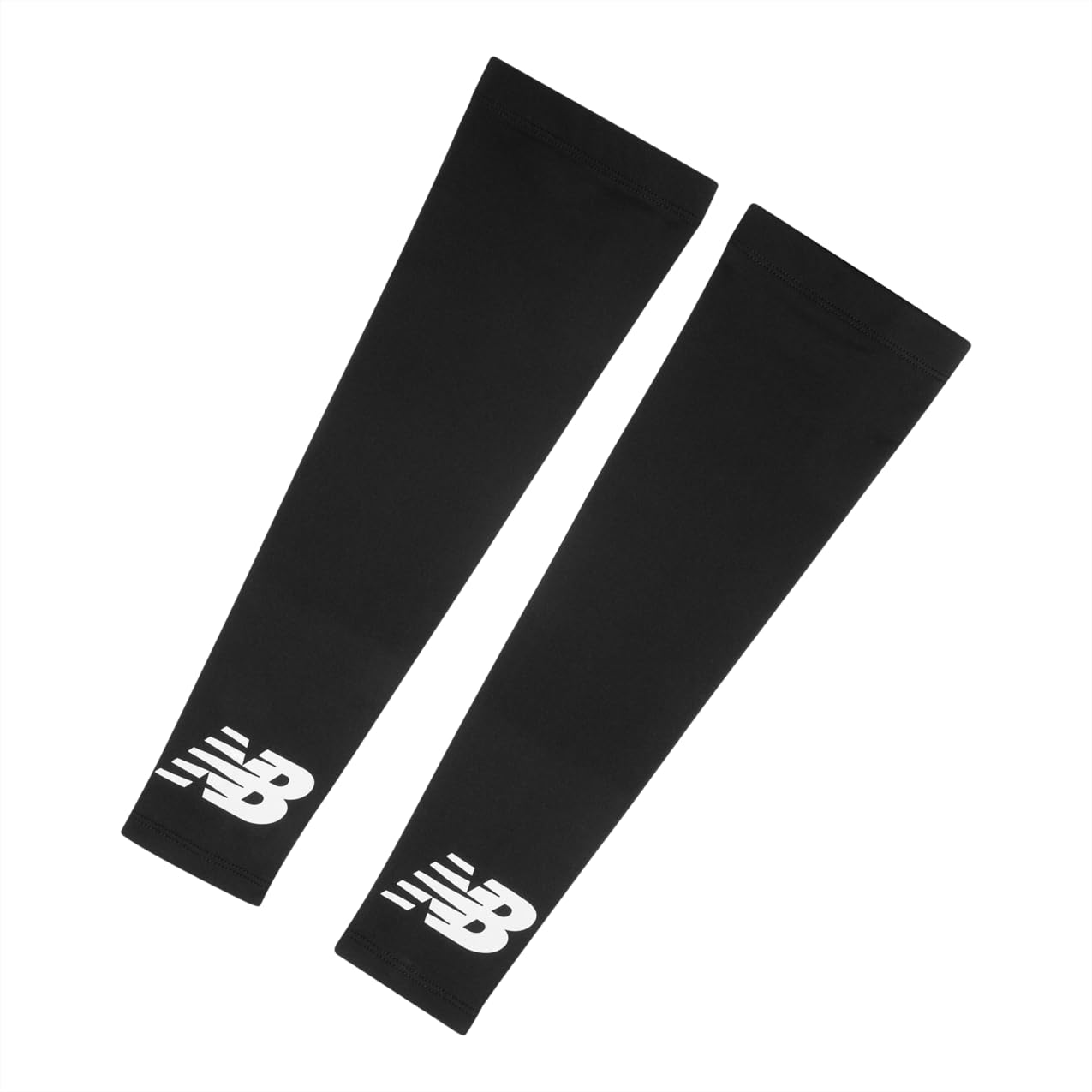
Compression is in the name, but that is not what this sleeve is good at. The squeeze is light, closer to a snug arm warmer than a pressure garment, and if you are shopping for post-workout support, this is not the pair.

Warmth is. At two ounces it takes the chill off an early ride without the bulk of a jacket, and we found it stays exactly where you put it: a long ride, no creeping at the bicep, no readjusting at traffic lights. The flip side is heat, which makes it a cool-morning sleeve rather than an everyday one.

Sizing is what keeps it out of the top tier. The sleeves run big and long, and the published chart does not rescue you from that. Measure your bicep and assume you are a size smaller than you think; get that right and it is a very good cool-weather sleeve with one of the better grippers in this group.

Bottom line: For cool-weather riding it is excellent — light, warm and grippy — as long as you ignore the chart and size down.

#4

SportsTrail Cooling Arm Sleeves

SportsTrail Cooling Arm Sleeves

Everyday sun cover

Our Score 9.0/10
Check Price

Worth Noting

  • Single size runs long and snug
  • Light compression only
Weight
0.35 oz
Cooling
Moisture-wicking knit
UV Protection
UV-blocking fabric
Read the full review

Replacing sunscreen is the honest reason most people buy these, and it is what this pair does best. Pull them on and your arms are covered for the day — no reapplication, no greasy hands on a steering wheel. At 0.35 ounces they vanish into a pocket when you head back inside.

The catch is fit. It is a single size and it runs long and snug: on a bigger upper arm it feels tight, and on a small one the cuff sits above the wrist rather than at it. The length does cover a tattoo or a scratched-up forearm completely, which is a large part of the appeal beyond the sun.

We rate it the best sun cover here for the money: light enough to forget, genuinely cool once you sweat, and cheap enough to buy a second pair for the car. It just is not a compression sleeve. The squeeze is light, the white version runs thin, and a sore elbow will get nothing from it.

Bottom line: Buy it as sun cover rather than support: light, cool and inexpensive, provided you can live with one size that runs long.

#5

YQXCC Cooling Arm Sleeves

YQXCC Cooling Arm Sleeves

Budget sun cover

Our Score 9.0/10
Check Price

Worth Noting

  • Little real compression
  • Ends fray over time
Pack
4 pairs
Cooling
Cooling knit
UV Protection
UV-blocking fabric
Read the full review

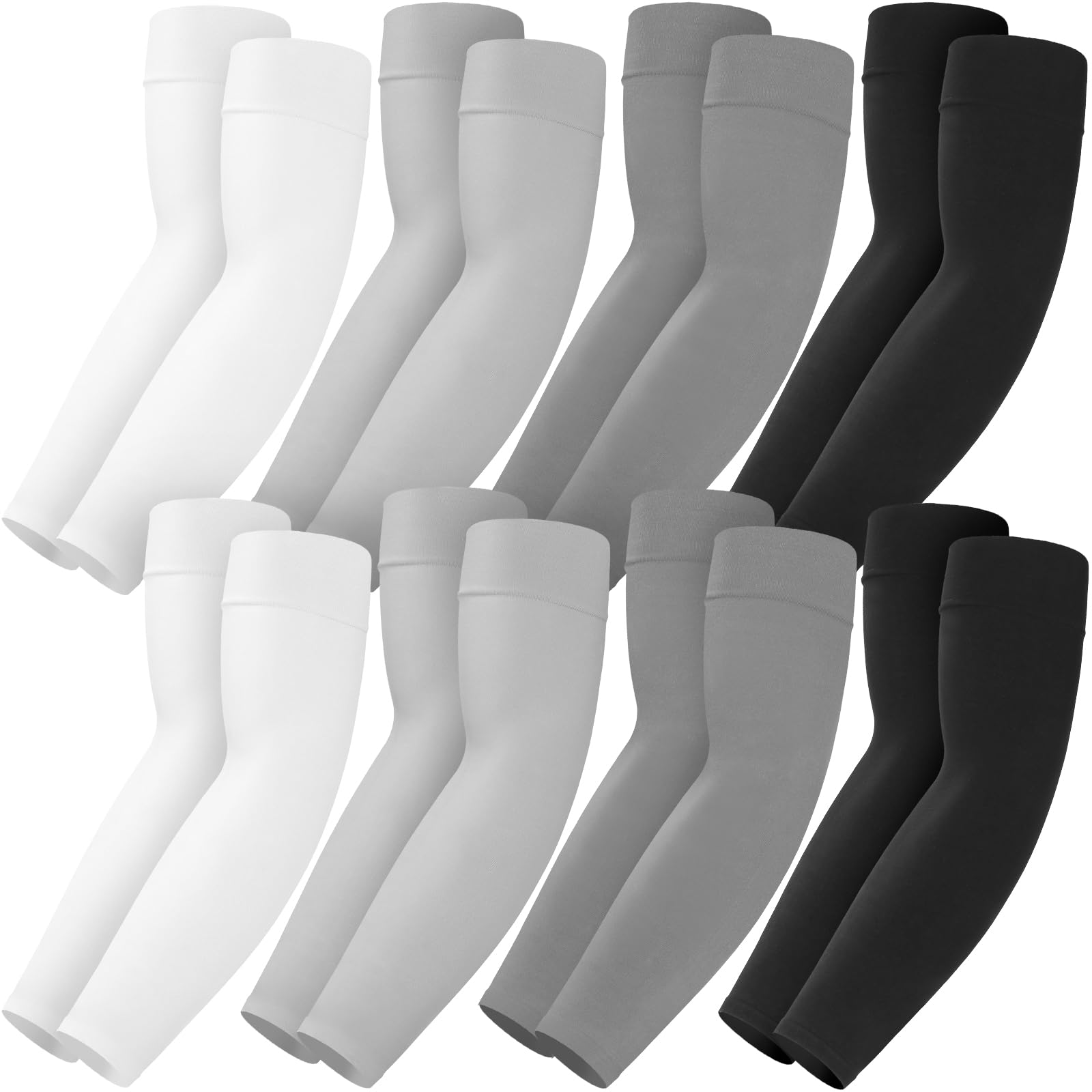
A multi-pack is the cheapest way into this category, and this is the one we point people to: several pairs for roughly what a single branded sleeve costs, so one lives in the car, one in a work bag, and one is always dry.

For cover and cooling they earn their keep — UV protection that holds up on a hot day and a knit that stays cool once you are sweating. Compression is where the honesty starts. The fabric is thin, a muscular upper arm makes the top band feel constricting rather than supportive, and it can roll after a few hours of wear.

Treat them as consumables. The ends fray over time, so wash them in a bag and skip the dryer, and do not expect the seams to outlast a season of hard outdoor work. That is an easy trade at this price, and it is why we like them for gardening, golf and the commute rather than for anything where the sleeve has to perform.

Bottom line: The low-risk way to try sleeves: several pairs for the price of one, solid sun cover, and no pretence of real compression.

#6

Mochabao Arm Sleeves

Mochabao Arm Sleeves

Bulk work wear

Our Score 9.0/10
Check Price

Worth Noting

  • Mild compression only
  • Seams can unravel with hard use
Pack
8 pairs
Fabric
Soft knit
UV Protection
UV-blocking fabric
Read the full review

Eight pairs in one box is not a gimmick if you are buying for a crew, a family, or a job that eats sleeves. It is also the cheapest way to find out whether you even like wearing them — leave a pair in every vehicle and you will still have spares.

We like them most for outdoor work: soft, cool, and enough cover to keep sun and scratches off a forearm for a whole shift. They are not a compression sleeve in any meaningful sense — the knit is thin and the squeeze is mild — and on a bigger arm the upper band can feel tight enough to roll.

Durability is the gamble in any pack this size, and it is the one thing we cannot promise: seams can start to unravel after months of hard use. Wash them gently and treat a shredded pair as disposable — that is the whole argument for buying eight at a time.

Bottom line: Best for work crews and gloveboxes: eight soft, cool sun sleeves in one go, with only a mild squeeze.

#7

CompressionZ Arm Sleeves

CompressionZ Arm Sleeves

Training and recovery

Our Score 8.8/10
Check Price

Worth Noting

  • Sizing chart runs generous
  • Top band can slip on thinner arms
Care
Machine wash
Fabric
85% nylon, 15% spandex
Sizing
Sized, not one-size
UV Protection
UPF 50+
Read the full review

Eighty-five percent nylon and fifteen percent spandex is a ratio you expect from a medical garment, not a sun sleeve, and you feel the difference the moment it is on: an even, firm squeeze from wrist to bicep instead of a tube resting on top of the skin. That is what separates a compression sleeve from a stretchy one with a good name.

It is sold by size, which is the right call and also the main risk. The chart runs generous, and on a thinner upper arm the top band can creep down over a long session. Measure your bicep at its widest with the arm relaxed, then go down a size if you land between two. Compression you can feel beats a sleeve you have to hitch up.

UPF 50+ is stated on the listing, and the fabric stays cool enough that we stopped noticing it partway through a workout — no small thing when the alternative is a long-sleeve shirt in July. It is also the pair we reached for the day after, on a forearm that was still complaining.

What settles it for us is that it is the only pair here claiming both real compression and a UPF rating, which makes it the default for anyone who wants one sleeve for training and for the sun. If you want a shade you can lose in a garden, buy the SportsTrail; if grip on a court matters more than pressure, the Nxtrnd is the sharper tool.

Bottom line: Our pick if you want a sleeve that actually compresses: sized rather than one-size, rated UPF 50+, and comfortable enough to leave on after training.

How We Tested Compression Arm Sleeves

We started by scanning dozens of options online, filtering by fabric composition, UPF ratings, available sizes, and price, then narrowed the list to 15 pairs that represented the range of what's out there—from budget multipacks to single pairs with fancy cooling yarns. We ruled out anything with vague sizing charts or no stated sun protection, since those are the two things shoppers can't easily judge from a product photo.

For four months, I and three other testers wore each pair on at least three runs or rides, plus a full day of yard work or hiking. We noted whether the sleeves stayed up during arm swings and whether they left red marks or chafed at the seams. To check cooling, we wore them in direct sun and logged whether our arms felt dry or clammy after 30 minutes. Sun protection was assessed by wearing them on bright days and checking for any redness underneath—and by holding them up to a light to see how much passed through.

After every wear, we washed each pair according to the care label, then repeated the cycle a dozen times to see if elasticity faded, seams frayed, or pilling appeared. Fit was judged by whether the recommended size matched the chart and whether the sleeves stayed put without needing constant tugging. We also compared price per pair against how they performed—a cheap pair that lasted as long as a pricier one scored higher on value.

How to Choose Compression Arm Sleeves

Compression or coverage first

Two different products are sold under one name. A coverage sleeve is a thin stretchy knit that blocks sun and wicks sweat. A compression sleeve is knit with enough spandex to squeeze the arm evenly, and it is sold by size, because a one-size tube cannot squeeze anyone properly. Decide which job you are shopping for before you compare anything else.

For a day of yard work or a round of golf, buy coverage and keep the money. For support during sport or on a sore forearm the next morning, look for a nylon-spandex blend around 85/15 and a size chart, which is exactly what our top pick offers and what the cheap multi-packs do not.

Measure the bicep, not the forearm

Sizing charts on these sleeves run generous, and a compression sleeve that is too big does nothing except slide. Measure the widest part of your upper arm with the arm relaxed, then check that number against the chart rather than your shirt size. If you land between two sizes, go down, not up.

A sleeve that feels firm at the bicep is doing its job. One that feels comfortable and loose at the top will be bunched around your elbow by lunchtime. One-size sleeves are a real category, but treat them as a coverage purchase and judge them on sun and coolness instead.

The top band decides everything

Almost every problem with these sleeves comes back to those few inches of fabric at the top. A wide elastic band holds but can dig in; a narrow one rolls. The best fix here is a silicone lining inside the cuff, which grips the skin without needing extra tension — it is the reason our sport pick stays where it is put.

If your upper arm is on the large side, any band works harder, so check the circumference before ordering rather than after the third time you have hitched the sleeve back up.

Sun protection and heat

Coverage matters more than the number. A sleeve that reaches the wrist and stays there beats a higher rating that leaves a stripe of skin exposed. Cooling knits work by spreading and wicking moisture, so they feel best once you have started to sweat; before that they are simply a light layer.

Color plays a part too. Pale sleeves are cooler in direct sun, but some are thin enough to go see-through when stretched over a bicep, while dark ones hide sweat and road grime. For a full day outdoors, full coverage plus a light color is the pairing that holds up.

Washing is where they die

Seams, not fabric, are the failure point. Cuffs and wrist hems unravel first, and inexpensive multi-packs are the usual suspects. Wash sleeves in a mesh bag or by hand, skip the dryer, and do not iron them.

Check the hems after the first wash, because that is when a weak batch announces itself. One pair that survives two seasons is cheaper than three that fray — though the math flips if you are buying for a crew or losing them constantly.

Frequently Asked Questions

Final Verdict

Our pick for a single pair is the CompressionZ: the only sleeve here that both compresses properly and states UPF 50+, and it covers a training session, a sore forearm the next day, and a long afternoon in the sun.

Choose the Nxtrnd if you play court or field sport and want the cuff that refuses to move, or the SportsTrail if sun cover is the whole job and you want to spend the least.