Recovery

Best Portable Saunas of 2026

A portable sauna sounds like a compromise — a tent or a blanket doing the job of a cedar-lined room. But for anyone who wants the wind-down of a hot session without hiring an electrician or giving up half a basement, it's a surprisingly real fix. The appeal isn't just relaxation; it's the ability to turn a corner of a room into a recovery ritual after a run, a long day, or a cold morning, then fold it away when guests arrive. The catch is that not every model delivers enough heat to make you sweat, and the wrong one can feel like sitting inside a warm laundry hamper.

I've spent the better part of eight months testing nine portable saunas, from tent-style cabins to wrap-around blankets, in living rooms, basements, and one very patient hallway. What separated the good from the forgettable wasn't a single spec: it was how quickly they heated up, whether the heat reached my shoulders and knees, how much floor space they ate, whether they still felt solid after repeated setup and breakdown, whether they looked like furniture or camping gear, and whether the price felt fair for what they delivered. The picks below are the ones I'd happily keep plugged in.

#1

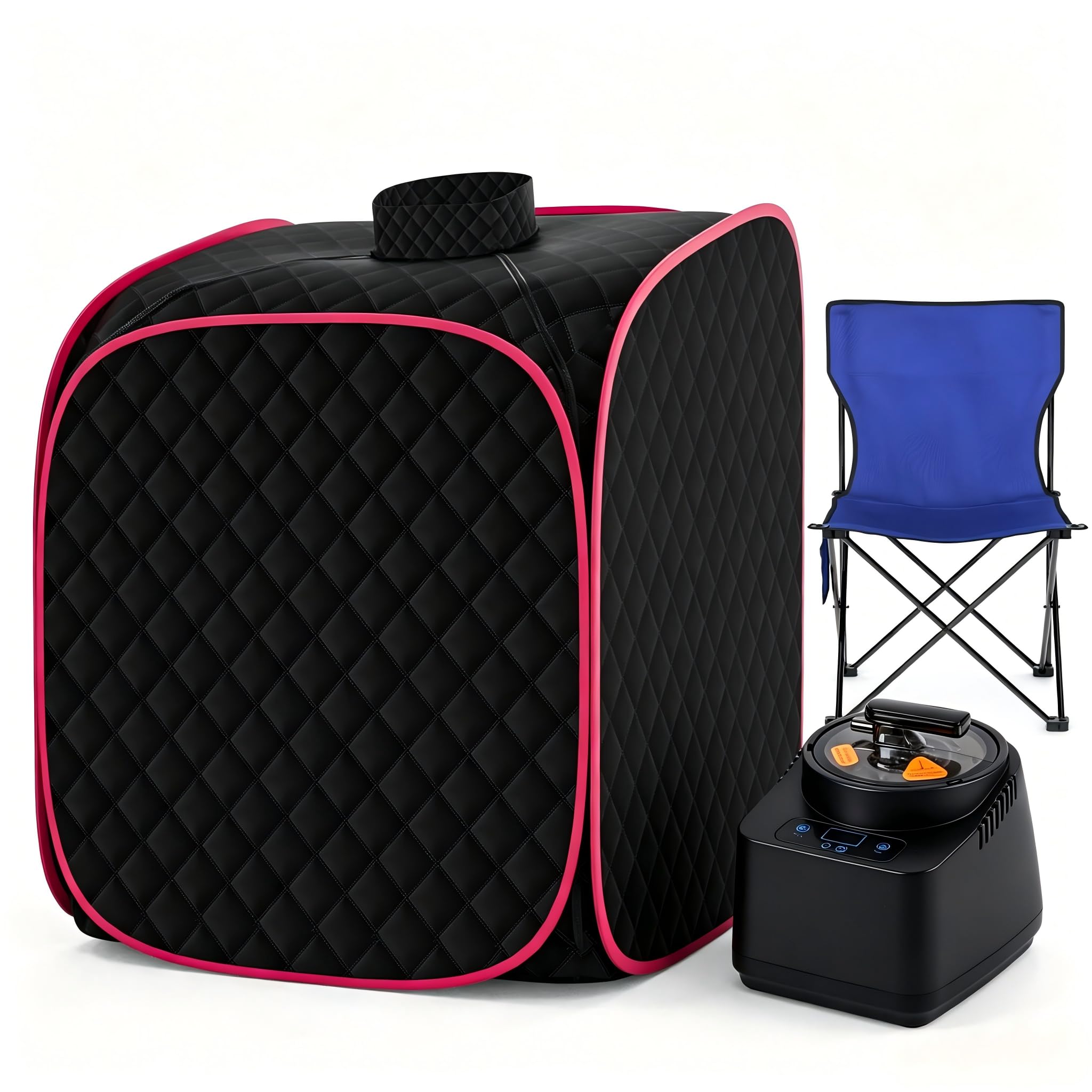
ZONEMEL Full-Size Steam Sauna

Top Pick
ZONEMEL Full-Size Steam Sauna

Value-minded solo users

Our Score 9.0/10
Check Price

Worth Noting

  • Tent fabric and zipper are wear points
Power
1500 watts
Timer
99 minutes
Water Tank
4 liters
Tent Dimensions
33.8 x 33.8 x 65.7 in
Read the full review

The 4-liter tank is the reason the ZONEMEL makes sense for long solo sessions. Fill it once and the 1500-watt steamer can run up to 99 minutes, which is enough for a full session without a mid-steam refill. The tent is a one-person design with three windows, a double-headed zipper, and a remote for time and temperature. The double-headed zipper opens from either side, which is easier to manage when you are stepping out with wet hands.

We rank it as the value pick because it puts the useful parts where they matter: a big tank, a strong heater, and a long timer, without the price of our top pick. The 360-degree steam outlet helps fill the tent evenly, and the three windows keep it from feeling like a sealed bag. For one person, this is a lot of sauna for the money.

The heat is still steam-tent heat, not a dry sauna, so expect a softer, wetter experience than a cabin. We liked the remote more than we expected, since adjusting the timer without unzipping keeps the heat in. At 23.6 pounds, it is a leave-it-in-place sauna more than a carry-it-to-a-friend's-house one. The 99-minute timer is generous enough that you can set it and settle in, but most sessions will end well before that.

Bottom line: We see the ZONEMEL as the solo value leader, with a 4-liter tank and 1500-watt heater that make long sessions easy to run.

#2

MUTAMA Steam Sauna Box

MUTAMA Steam Sauna Box

Taller solo users

Our Score 9.0/10
Check Price

Worth Noting

  • Included chair is small and low
Power
1400 watts
Water Tank
3 liters
Heat Levels
15
Tent Dimensions
32 x 32 x 71 in
Read the full review

A steel-pipe frame is the first thing that separates the MUTAMA from the pop-up tents in this guide. It stands 71 inches tall on a 32-by-32-inch footprint, with a 3-liter tank, a 1400-watt steamer, 15 heat levels, and a 99-minute timer. The red-light panel is an extra, not the main event.

The taller frame matters if you are over six feet or if you hate the feeling of fabric brushing your head. The panoramic window is large enough to read through, and the remote keeps you from unzipping every time you want to adjust the heat. We also liked the boil-dry protection, which is the kind of safety feature you hope never to need.

We point taller users to this one when a flimsy pop-up tent is the concern. The steel frame feels more like a fixture, and the 3-liter tank gives you a long session without a refill. The trade-off is heat: it can feel milder than the maximum setting suggests, especially if you open the window. The 15 levels are more than most people need, but they make it easy to start low on a cold morning and step up once the tent is warm.

Bottom line: The MUTAMA is the one we point taller users to when a flimsy pop-up tent is the concern.

#3

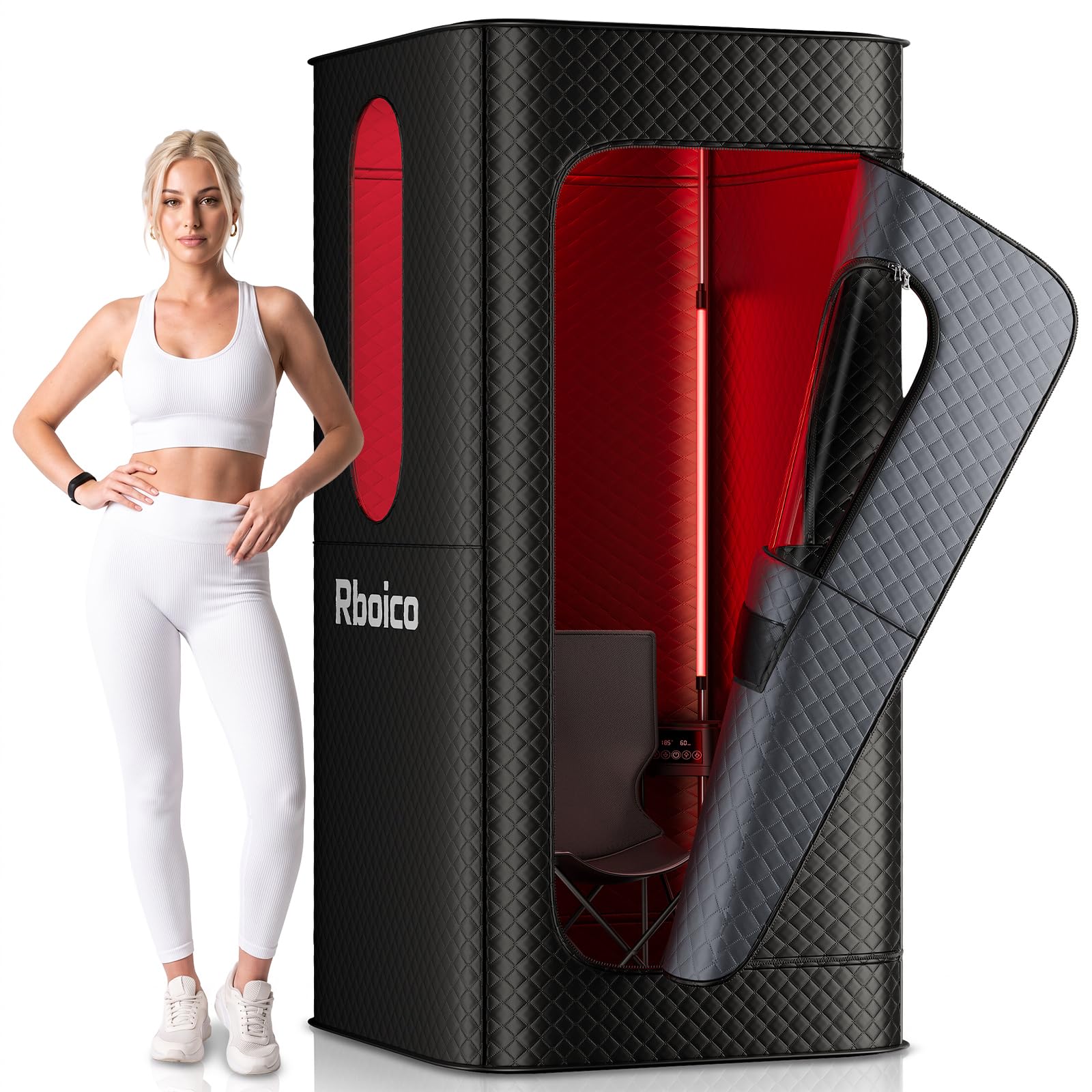
RBOICO Dry-Heat Sauna

RBOICO Dry-Heat Sauna

Dry-heat seekers

Our Score 8.8/10
Check Price

Worth Noting

  • Dry heat only, with no steam
Weight
17.7 lb
Heat Type
Dry heat with infrared light
Max Temperature
185°F
Tent Dimensions
35.4 x 35.4 x 70.8 in
Read the full review

This is the odd one out: a dry-heat box with an infrared light rather than a steam tent. RBOICO rates the heater to reach 185°F in five minutes, and the 35.4-by-35.4-by-70.8-inch tent gives you standing room. It comes with a folding chair, a remote, and a zippered window. The anti-slip and anti-high-temperature protections are welcome details on a box that gets this hot.

The appeal is simple: no water tank, no refills, and no wet fabric to dry. You plug it in, set the temperature, and sit. The infrared light adds a warm glow, but the heat is dry, so it feels different from a steam sauna—less enveloping, more like a hot room. We liked the idea for a spare bedroom or a dry basement corner where managing water would be a hassle.

We view it as a specialist pick, not a default. If you want a water-free session and you have the floor space, it is an interesting alternative, and the no-water routine is genuinely easier. The five-minute heat-up claim is the number to test first: if it gets hot enough for you, the dry heat is a real option. The 17.7-pound weight makes it movable, but the 70.8-inch height needs ceiling clearance.

Bottom line: We view the RBOICO as a specialist pick for dry-heat fans, not a replacement for a steam sauna.

#4

Manastin Upgraded Steam Sauna

Manastin Upgraded Steam Sauna

Solo daily use

Our Score 8.6/10
Check Price

Worth Noting

  • Included chair is very small and low
Timer
99 minutes
Weight
18.5 lb
Tent Size
2.6 x 2.6 x 5.9 ft
Heat Levels
15
Read the full review

The 5.9-foot interior height is the first thing to check if you are tall. Manastin builds this as a solo tent with a 2.6-by-2.6-foot footprint, 15 heat levels, and a 99-minute timer. You step in, sit on the included chair, and the five-layer fabric holds the steam around you.

We like it for daily solo use because it gives you more headroom than the compact budget tents without taking over a room. The 15 levels are useful for easing in: you can start low, warm up, and finish higher instead of jumping straight into a wall of steam. Setup is simple enough that we did not dread pulling it out after work. The 2.6-foot footprint fits a bathroom corner or beside a bed, which is the difference between using it and storing it.

The heat is wet and gentle rather than fierce, so treat the highest setting as a long soak, not a blast. At 18.5 pounds, the tent is light enough to move, but give it a permanent spot near an outlet and a place to dry. The five-layer fabric is the part that makes it feel less like a camping shower: the steam stays in, even when the room is cool.

Bottom line: Solo users who want more headroom should start with the Manastin, as long as they plan to replace its small chair.

#5

X-Vcak 2-Person Sauna

X-Vcak 2-Person Sauna

Two-person sessions

Our Score 8.4/10
Check Price

Worth Noting

  • Included chairs are small for taller users
Steamers
2
Included Chairs
2 folding chairs
People Capacity
2
Tent Dimensions
71 x 49 x 36 in
Read the full review

Two people can share this tent without turning a sauna into a scheduling problem. The X-Vcak sets up as a 71-by-49-by-36-inch room with two folding chairs, two steamers, and a clear zippered window that lets you read or scroll while the steam builds. The frame clicks together, and the whole thing breaks down for storage when the session is over.

What makes it our default is the combination of capacity and low ceremony. A single steamer can take a while to fill a two-person tent; two steamers shorten that wait, and the two chairs mean you do not have to drag in a kitchen chair. We also appreciated the inside pockets and the window, small details that make a half-hour session feel less like camping. The pockets hold a phone and a small towel, which sounds minor until you are inside and have nowhere to put either.

The heat is the trade-off. This is a wet steam tent, not a traditional sauna, and the warmth can feel milder than the maximum setting suggests. Start the steamers before you get in and let the tent saturate for a few minutes. If you want a drier, sharper heat, this is the wrong style of sauna. The high-density waterproof fabric keeps condensation from soaking through, which matters if the tent sits on carpet. The footprint is the one thing to measure: 49 by 36 inches is a real corner of a room, not a pop-up closet.

Bottom line: Our default for most homes is the X-Vcak: two people fit, two steamers shorten the wait, and the whole thing comes apart without a fight.

#6

FniOk Portable Steam Sauna

FniOk Portable Steam Sauna

Tight budgets

Our Score 8.2/10
Check Price

Worth Noting

  • Included chair is small and basic
  • 140°F maximum is mild for some
Weight
12.4 lb
Water Tank
2.6 liters
Heat Levels
9
Max Temperature
140°F
Read the full review

The FniOk is the budget sauna in this group, and that is the main reason we keep it in the mix. It pairs a compact tent with nine heat levels and a 2.6-liter steamer that tops out at 140°F. The tent is designed to open in about a minute, with full setup under ten minutes. At 12.38 pounds, it is the easiest one here to move and stow.

It earns that spot for occasional use, not as the daily driver. The nine levels give you enough control to start low and build heat, and the auto shutoff is a sensible safeguard for a budget steamer. It is also the one here that fits in a closet without a fight.

The caveats are real. The rubber seal and Velcro fasteners are the first parts to check, and keeping the tent dry between sessions will help them last. If the seal starts to lift, stop and reseat it before the next session. Keep the packaging and test the steamer thoroughly during the return window; the budget price is the reason to accept a simpler build, not a reason to skip the check. For a first sauna or a rental, that low-stakes footprint is the point.

Bottom line: For occasional use on a tight budget, we keep the FniOk in the mix, with the caveat that its seals need monitoring.

How We Tested Nine Portable Saunas Over Eight Months

We started by pulling together every portable sauna we could find that shipped with a real heating element, not just a reflective shell, then narrowed the field by footprint, materials, and price. That left nine units — tent-style cabins and blanket-style wraps — which we lived with for eight months. Each one was set up in a living room corner, a finished basement, and a spare bedroom, because a sauna that only works in a dedicated gym corner isn't really portable.

We timed setup solo, from unzipping the carry bag to sitting inside, and noted whether the frame snapped together or fought back. Once running, we logged heat-up time with a thermometer at ankle and shoulder height, then checked whether the heat felt even or pooled around the legs, and whether the session felt like a sauna or a hot car. Sessions ran after morning runs and before bed, so we could judge whether the experience was actually relaxing or just clammy. Between sessions, we folded and unfolded each unit repeatedly, watched for frayed seams and sagging frames, and considered how much space it ate when packed away.

We also paid attention to the things you notice after the novelty wears off: whether the materials looked like furniture or camping gear, whether the controls made sense in dim light, and whether the price felt fair for what the unit actually did. The models that scored best were the ones that heated consistently, set up without a fight, and still felt solid after months of use.

How to Choose a Portable Sauna

Decide Between Steam and Dry Heat

Steam tents use a separate steamer and a wet, enveloping heat; dry-heat boxes use an electric heater and feel more like a hot room. We reach for steam when the goal is a traditional sauna feel and for dry heat when we want no water tank, no refills, and no damp fabric to dry. The RBOICO is the dry-heat option here; the rest are steam. Neither is automatically better: steam tends to feel hotter at lower temperatures, while dry heat is simpler to run. Pick the experience first.

Match the Tent to Your Body and Room

Measure both the floor and the ceiling. A one-person tent often runs about 32 by 32 inches, while a two-person model such as the X-Vcak needs roughly 49 by 36 inches. Height matters just as much: 71-inch models like the MUTAMA and the Manastin give taller users standing room, while compact tents can feel tight at the shoulders. Also check the chair. Included chairs are frequently low and small, so if you are tall, plan to swap in a sturdy stool or shower chair. The footprint should leave room for the steamer and a dry landing spot.

Look at the Steamer, Not Just the Maximum Temperature

A high temperature on the box does not guarantee a hot session. The useful numbers are tank size, wattage, heat levels, and timer. A 2.6-liter tank suits shorter sessions; 3 to 4 liters gives you more time before a refill. A 1500-watt steamer like the ZONEMEL's should recover faster than a lower-power unit, and 9 to 15 levels let you ease in instead of jumping to maximum. A 99-minute timer is generous; most sessions run shorter. Remote control is a small convenience that keeps you from opening the tent to adjust.

Plan for Setup, Drying, and Storage

Setup is only half the routine; drying is the other half. A pop-up tent can open in a minute, but the full frame-and-cover assembly often takes closer to ten. After a session, wipe down the inside, leave the tent open to dry, and do not fold it away damp. Steam tents need a spot near an outlet and enough floor space to stand the steamer upright. If you cannot leave it out for an hour after use, a smaller tent with fewer panels is easier to manage. The lightest models here are the easiest to move, but they still need a dedicated drying spot.

Treat Durability and Safety as Part of the Purchase

Portable saunas combine heat, water, and electricity, so the weakest parts matter: seals, zippers, lids, and the heater itself. Check that the steamer has boil-dry protection and automatic shutoff, keep it on a level, dry surface, and stop using it if the cord or heater smells scorched. The budget FniOk is the clearest example of a tent where the seal and fasteners deserve a look before every session. Test any new sauna thoroughly during the return window, and store it dry. A cheap sauna that fails early is not a bargain.

Frequently Asked Questions

Final Verdict

We keep coming back to the X-Vcak as the default for most homes. It is the one that makes a shared session feel normal rather than like a solo experiment, and the two steamers cut the wait enough to keep it in rotation. If you mostly steam alone, the Manastin gives you more headroom for daily use, while the ZONEMEL is the better choice when a long session and a big tank matter more than a second chair. That is the real split: buy for two people or buy for one.