Nutrition & Supplements

Best Vegan Protein Powder of 2026

Plant protein has a reputation it mostly earned: gritty in a shaker, beany in a smoothie, and sweet enough that you check the label twice. The better ones have quietly fixed most of that, and the gap between a powder you tolerate and one you reach for on purpose is wider than it has ever been. What you're buying is convenience, and convenience has to taste good enough that you'll actually repeat it tomorrow morning.

I've been stirring plant powders into breakfast for years, and my patience for chalky ones ran out somewhere around the third muddy-tasting tub. Over the past four months, our team shook, blended, and baked with 15 vegan protein powders to find the ones worth keeping. Here's what first-time buyers tend to miss: the protein source printed on the front of the tub matters less than the blend and the grind, since a lone pea protein tastes like peas no matter how much sweetener goes in, while a pea-and-rice blend smooths that edge right off. The ones that earned a permanent spot on my counter are below, sorted by the job they do best.

#1

Sprout Living Pumpkin Seed Protein

Top Pick
Sprout Living Pumpkin Seed Protein

Single-ingredient diets

Our Score 9.2/10
Check Price

Worth Noting

  • Specialty price for a single-ingredient powder
  • Gritty unless you blend it
Ingredients
Organic pumpkin seed
Certifications
USDA Organic
Protein Per Serving
0.71 oz
Read the full review

The ingredient list is one line long: cold-pressed organic pumpkin seeds. Nothing else — no gums, no stevia, no natural flavoring. Twenty grams of protein a scoop with all nine essential amino acids, plus the magnesium, zinc and iron that come with the seed rather than from a fortification blend.

It tastes like what it is, in the best way: mild, slightly nutty, unsweetened. In a smoothie with coconut milk and berries it reads as body rather than flavor, which is exactly what an unsweetened powder should do. Mixed in a blender it goes smooth; a shaker bottle leaves a little grit behind.

The one place it will disappoint is a glass of plain water. There is no sweetness and no cocoa to carry it, so it wants fruit, milk or a banana alongside. If you are looking for a shake you can drink neat, buy a flavored bag instead.

What it is actually for is narrower and more useful: anyone who reacts badly to pea and rice blends, anyone who wants no sweetener of any kind, and anyone who has given up on plant powders tasting like chalk. For that shopper, the one-line ingredient list makes the case on its own.

Bottom line: A specialist pick we keep for sensitive stomachs: one ingredient, 20 grams of complete protein and a nutty flavor that needs no masking.
#2

EarthChimp Vegan Protein

EarthChimp Vegan Protein

Everyday shakes

Our Score 9.0/10
Check Price

Worth Noting

  • Costs more per pound than the budget picks
Probiotics
1 billion CFU
Added Sugars
0 g
Serving Size
1.23 oz
Protein Per Serving
0.71 oz
Read the full review

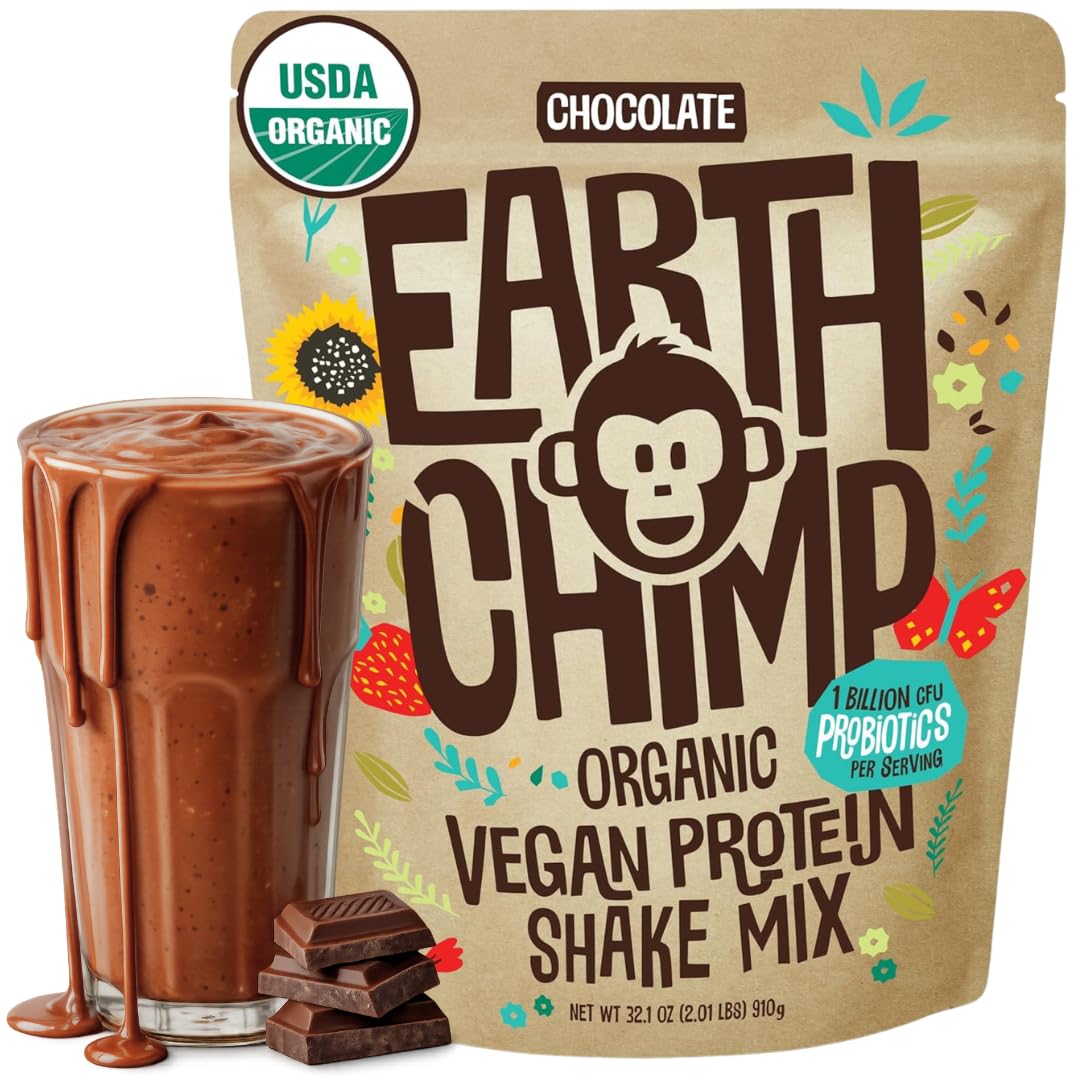
Most plant powders give themselves away at the third sip. EarthChimp is the one we kept drinking without checking the clock, and the reason sits in the recipe: no stevia, no erythritol, no sugar alcohols, just a little monk fruit and organic cocoa.

The numbers are respectable rather than spectacular — 20 grams of protein and 120 calories per 35-gram scoop, zero added sugar, all nine essential amino acids. What makes them matter is the company they keep. Four grams of fiber and a billion CFU of probiotics per serving are the difference between a shake that sits well and one you regret on the drive to work, and across this set it is the powder whose taste and texture both come out ahead rather than splitting the room.

It mixes with a few shakes in a shaker bottle, no blender required. Water gives a thinner, cocoa-forward drink; oat milk makes it thick and close to dessert. The chocolate tastes like chocolate rather than like chocolate-flavored sweetener, which sounds like a low bar until you have tried the alternatives.

One practical catch: the 35-gram scoop is generous, so a two-pound bag goes down faster than the label weight suggests. Drink a shake most mornings and you will be reordering more often than you are with the Orgain bags — the trade for a bigger serving and a shorter ingredient list.

Bottom line: Our default pick: the one powder here whose taste, texture and digestion all lean the right way, sweetened with monk fruit instead of stevia.

#3

Orgain Organic Protein (Chocolate)

Orgain Organic Protein (Chocolate)

Budget daily shakes

Our Score 9.0/10
Check Price

Worth Noting

  • Sweet, stevia-forward flavor
Sugars
0 g
Certifications
USDA Organic
Protein Sources
Pea, brown rice, chia
Protein Per Serving
0.74 oz
Read the full review

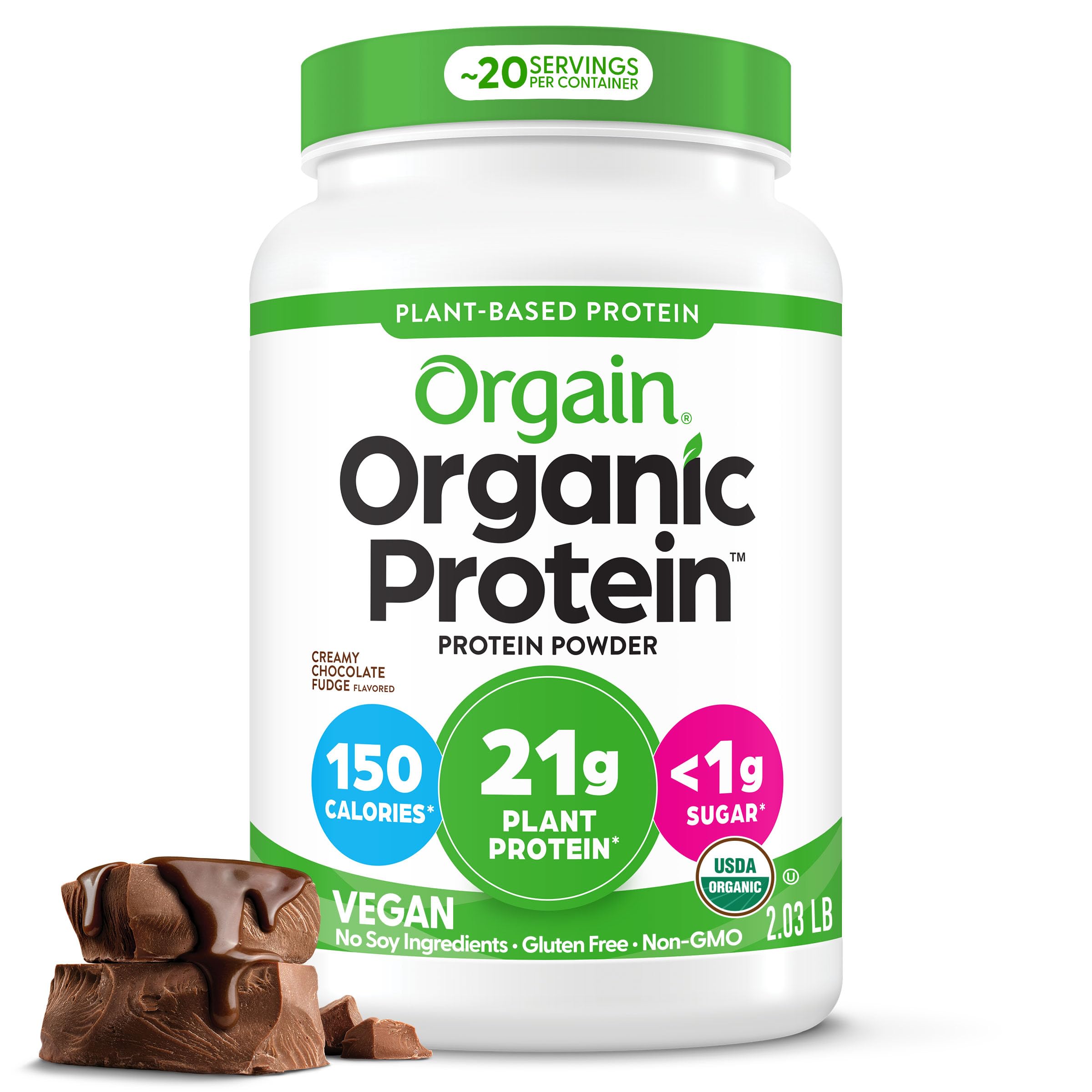
The arithmetic is why this bag is in the roundup. Two pounds of USDA Organic, plant-based protein at the lowest per-pound price of any flavored powder here, with 21 grams a serving from peas, brown rice and chia, zero sugar, and no erythritol or soy.

Blended with almond milk and a banana it makes a genuinely good chocolate shake, and it dissolves cleanly enough in a shaker with milk for a rushed morning. Water is where it sours: shaken alone it thins out and finishes gritty, so treat milk as part of the recipe rather than an upgrade. Note that every value claim here is relative to this set, not a claim about value everywhere.

Against the other flavored picks it is the blunter drink — less cocoa depth, a texture that wants a blender — and it is also the one we reach for when the goal is simply getting 21 grams into a busy day. If you want the better third sip and can pay for it, EarthChimp is the upgrade.

Bottom line: The value buy — the least expensive flavored powder here per pound, with 21 grams of protein and a chocolate that hides in a smoothie.

#4

Sunwarrior Warrior Blend

Sunwarrior Warrior Blend

Sensitive stomachs

Our Score 9.0/10
Check Price

Worth Noting

  • Only 17 servings per tub
Flavor
Vanilla
Servings
17
Protein Sources
Multi-source plant blend
Read the full review

Bloating is the quiet dealbreaker with plant protein, and it is where this tub separates itself. Digestion comes out as one of the strongest pictures in this group, and the complaints that do surface are about grit rather than a heavy stomach — a distinction that matters if you have abandoned a powder after a week of feeling swollen.

The vanilla is genuinely pleasant: mild, not cloying, with no chalky hit at the front of the sip. It shakes into almond milk in seconds and holds up with a banana and ice. Sunwarrior builds it as a multi-source plant blend rather than a single isolate, which is how plant powders close the amino acid gap with whey, and it drinks like a complete protein rather than a thin one.

The tub is the small print. Seventeen servings is fewer than the two-pound bags give you, so it empties quickly and the cost per pound runs high among these picks. As a daily habit that adds up; as the powder you keep for the mornings your stomach needs a break, it is easy to justify.

Bottom line: We point to this one when other plant powders leave you bloated: gentle digestion, clean mixing and a vanilla that isn't cloying.

#5

Vega Protein + Supergreens

Vega Protein + Supergreens

Protein plus greens

Our Score 9.0/10
Check Price

Worth Noting

  • Sweeter than the other picks, with a long finish
Greens
Spinach, kale, alfalfa, broccoli
Servings
25
Added Sugar
0 g
Protein Per Serving
0.71 oz
Read the full review

Vega's pitch is simple: 20 grams of plant protein with spinach, kale, alfalfa and broccoli folded in, zero added sugar, 25 servings to the tub. It is a protein powder doing a greens powder's job at the same time — real convenience if you would otherwise buy both, an unnecessary premium if you would not.

Mixing is a strong point. It dissolves in almond milk or water without the gluey thickness that makes some plant shakes a chore, and the chocolate tastes like chocolate rather than chocolate covering something green. What it does not do is taste neutral: this is a sweeter shake than the Sunwarrior vanilla, with a longer finish that lingers after the glass is empty.

Where we land is that the greens are a bonus rather than a serving of vegetables, and that the reason to buy this is the single scoop, not the four vegetables in it. If greens are not the point, EarthChimp makes the better chocolate and Orgain makes the cheaper one.

Bottom line: The pick for anyone who wants greens in the same scoop as their protein, without a vegetable taste coming along for the ride.

#6

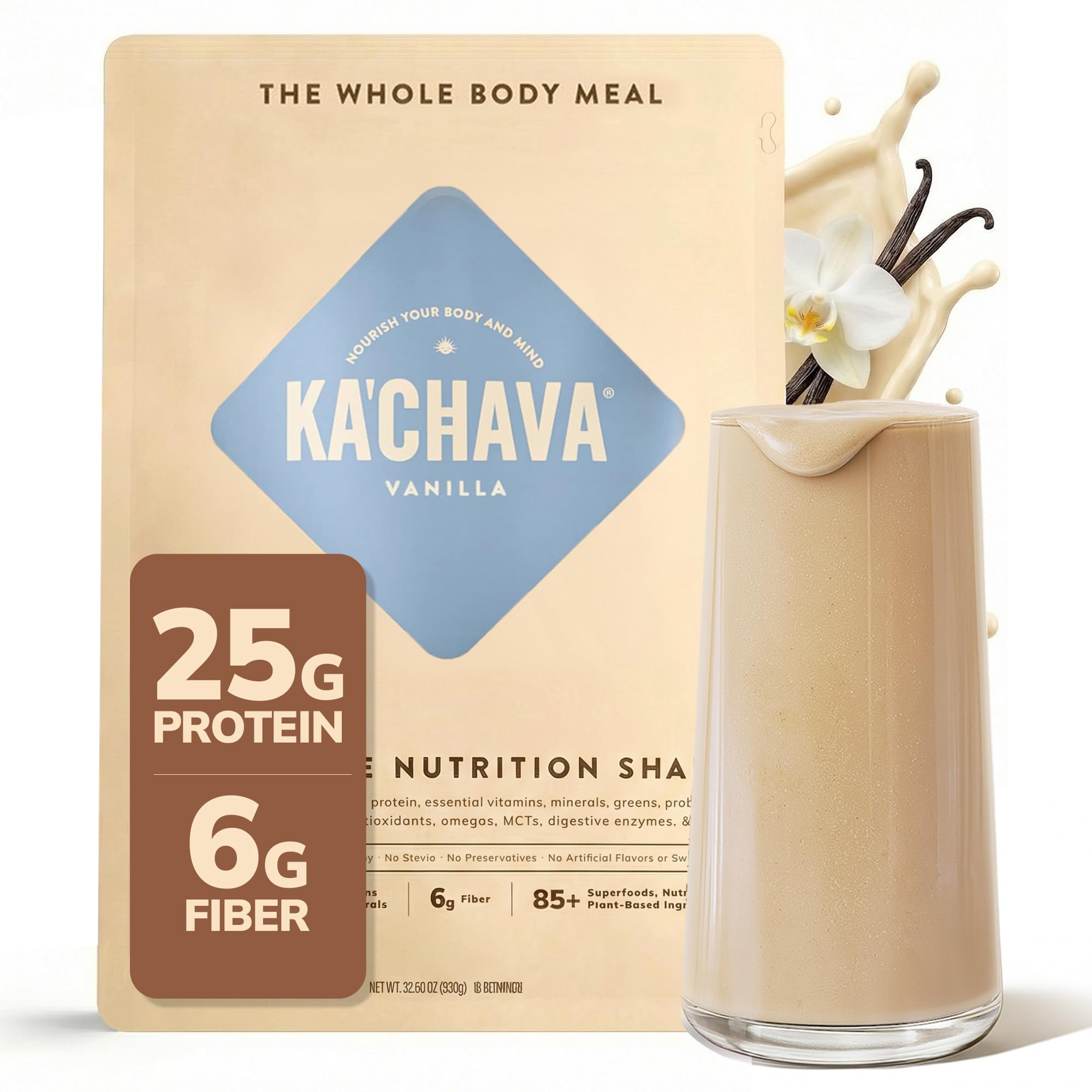
Ka'Chava Meal Shake

Ka'Chava Meal Shake

Meal replacement

Our Score 8.8/10
Check Price

Worth Noting

  • Sweet for some palates
Servings
15
Free From
Whey, gluten, soy, dairy
Superfoods
85+
Protein Sources
Pea and sacha inchi
Read the full review

Ka'Chava is not really competing with the shaker-bottle crowd. A scoop carries pea protein and sacha inchi alongside more than 85 superfoods, greens, MCTs, adaptogens, probiotics and digestive enzymes. It is built to be a meal in a glass, and fifteen servings to a bag says the same thing.

What we appreciate is how completely it commits to that job. Mixed with plain water it is thick and creamy, closer to a milkshake than the watery drinks most powders produce, and it holds — this is the pick here for a morning you would otherwise skip eating. Frozen fruit and ice turn it into a proper smoothie without thinning out the nutrition.

Cost is the whole argument against it. Per serving it is the most expensive powder on this page, and if you already eat well, much of what is in that scoop duplicates dinner. Buy it because breakfast is the meal you skip, not because the label lists more ingredients than the others.

Bottom line: Buy it if a shake has to stand in for breakfast — superfoods, probiotics and enzymes in a scoop that actually holds you until lunch.

#7

Anthony's Premium Pea Protein

Anthony's Premium Pea Protein

Cooking and baking

Our Score 8.8/10
Check Price

Worth Noting

  • Clumps in a shaker; needs a blender
  • No scoop, and the bag closure is flimsy
Flavor
Unflavored
Bag Size
2 lb
Protein Source
Pea isolate
Read the full review

Unflavored is the whole product, and it is why we keep a bag of this in the cupboard. Two pounds of pea protein isolate with nothing added — no sweetener, no flavoring, no gums — batch tested and gluten free. It disappears into oatmeal, pancake batter, soup and a fruit smoothie without announcing itself.

Blended with a banana and milk, the faint pea note disappears and what is left is body, not flavor. That is the trick with an isolate: it is an ingredient, not a drink. Packaged badly, mind you — there is no scoop in the bag and the zip closure gives up after a few weeks, so plan to decant it into a jar.

Single-source pea is narrower on amino acids than the blends here, so treat this as the powder you build a meal around rather than the shake you drink alone after training. That is a narrow brief, and this bag fills it better than anything else on this page.

Bottom line: Buy it for what it leaves out: no flavor, no sweetener, and the lowest cost per pound here for adding protein to real food.

#8

Orgain 30g High Protein

Orgain 30g High Protein

Higher protein needs

Our Score 8.8/10
Check Price

Worth Noting

  • Two large scoops per serving
  • Chalky and thick when shaken with water
Sugars
0.04 oz
Prebiotic Fiber
0.14 oz
Protein Per Serving
1.06 oz
Calories Per Serving
200
Read the full review

Thirty grams of protein is the headline, and the fine print is the serving. This one delivers it in a 200-calorie scoop set with 4 grams of prebiotic fiber, 1 gram of sugar, and a stated nine-plus grams of essential amino acids plus BCAAs — the closest thing here to a single-shake answer for a high daily target.

Be ready to add liquid. This is a thick shake, and with water alone the texture turns chalky before you reach the bottom of the glass. Milk, more water or a blender fixes most of it, and the vanilla lands sweet enough that you will not need to add anything else.

The formula has changed over time, so a bag you liked a couple of years ago is not necessarily the bag you get now — worth knowing before you commit to a large order. Where it earns its place is the target rather than the taste: if you need 30 grams in one glass without stacking two products, this does it with organic ingredients.

If you are drinking for pleasure or habit rather than hitting a number, the 21-gram Orgain is cheaper and easier to get down, and Vega's greens version covers a different job entirely. This bag is for the days the macro count decides.

Bottom line: The high-protein option — 30 grams a serving with prebiotic fiber, for lifters chasing a number rather than a flavor.

How We Tested 15 Vegan Protein Powders

We started with the ingredient panels on more than 50 vegan powders sold in grocery aisles, big-box stores, and direct-to-consumer sites, then cut anything that wasn't clearly labeled vegan, leaned on a protein source we couldn't pin down, or cost more per gram of protein than a scoop of the cheap stuff plus a glass of soy milk. That left 15 tubs, ranging from single-source pea to four-way blends with added enzymes.

Every powder got the same first test: eight ounces of cold water in a shaker bottle, ten seconds of shaking, then five minutes on the counter to see whether it clumped, foamed up, or separated. We tasted each one plain, with nothing to hide behind, and noted how sweet it was, whether the sweetener lingered, and whether the finish was beany, earthy, or clean. Then we blended each into a frozen banana smoothie and stirred one into overnight oats to see if it turned gluey by morning.

For four months, whoever was on shift drank a shake a day from a different tub each week and logged bloating, gas, and how we felt an hour later, since plant proteins vary wildly there depending on fiber and whether the base is an isolate or a concentrate. We weighed every scoop on a kitchen scale against the serving size on the label, because a "serving" that's really half a scoop throws off the value math, then calculated cost per gram of protein. We also noted how each one was actually sold: a single tub you can grab off a shelf versus a subscription-only bag that ships in six-week increments.

How to Choose the Right Vegan Protein Powder

Read the scoop, not just the protein number

Thirty grams of protein sounds better than twenty until you check how much powder it takes to get there. Some formulas reach a high number with two scoops, which empties the bag twice as fast and doubles the calories per shake. Twenty to twenty-five grams from a single 30-to-35-gram scoop is the sweet spot for most people; a two-scoop serving earns its place only if you are actively chasing a daily protein target.

Divide the bag's gram weight by the scoop size before you compare prices. Cost per pound means very little if one tub gives you 15 servings and another gives you 30, which is exactly how a mid-priced bag ends up costing more per shake than a premium one.

Check whether the protein is complete

Plant proteins are uneven. Pea runs low on methionine, rice runs low on lysine, and neither covers the full amino acid spread on its own. That is why most of the good powders blend two or three sources — pea with brown rice and chia, for instance — and say so plainly with all nine essential amino acids on the label.

A single-source isolate such as straight pea or pumpkin seed is still useful, but buy it as a protein booster for meals rather than as your only post-workout shake. If the label never mentions the amino profile, the source list is your next best clue.

Sweeteners decide whether you finish the bag

Stevia and sugar alcohols like erythritol are the usual reason a plant powder tastes sweet in a way people describe as chemical, and erythritol in particular can sit badly with a sensitive gut. Monk fruit reads cleaner to most palates, and some powders lean on dates or use no sweetener at all.

If you already know stevia is not for you, buy a monk-fruit-sweetened bag or an unflavored one and add your own banana or maple syrup. Check the sugar line too, because no added sugar and unsweetened are not the same claim.

Texture is where plant powders give themselves away

The test is what happens at the bottom of the glass. Rice-heavy blends and single-source isolates settle into grit, while formulas built on chia or gums stay suspended but can turn gluey and thick. Neither is a dealbreaker if you know which one you are buying.

Shaker bottles flatter smooth powders and expose coarse ones. If you plan to shake rather than blend, favor powders that mix clean in milk and use milk rather than water — and expect an unflavored isolate to need a blender every time.

What else is in the scoop, and whether to pay for it

Superfoods, greens, probiotics and digestive enzymes push the price up, and the honest question is whether you already eat those things. A greens-and-protein powder earns its premium if you would otherwise buy both; a meal-replacement formula with 80-plus ingredients earns it if the alternative is skipping breakfast.

If you cook with protein powder — oats, pancakes, soups — buy unflavored and spend the difference on actual food. Organic and third-party certifications are worth a small premium when they matter to you, because they are the claims most likely to be verified rather than simply printed.

Frequently Asked Questions

Final Verdict

EarthChimp is the bag we point most people to. It is the one powder here where taste, texture and digestion all lean the right way, and monk fruit instead of stevia means no aftertaste at seven in the morning. If cost per pound decides it, Orgain's chocolate does the job for less, provided you blend it with milk rather than water.

And if the shake is standing in for a meal rather than supplementing one, Ka'Chava is the only pick here built for that job.