Nutrition & Supplements

Best Supplements for Men of 2026

Most men's supplements ask you to swallow a pill the size of a small eraser and hope for the best. The good ones earn a spot on the counter; the rest end up in a drawer. A formula worth taking should close a real gap in your diet — energy, recovery, or a safety net for days when meals go sideways — without making the routine a chore. Over the past six months, my team and I have put 16 formulas through their paces, from capsules to powders, and the pattern is clear.

Some pills were so large I could feel them going down, while others swallowed fine but left two of us bloated by mid-morning. A few powders mixed clean and tasted like nothing; others clumped into a gritty paste, and one fish oil kept repeating on us through lunch. The priciest bottle rarely won — value came down to cost per serving, and a couple of stimulant-heavy blends made me jittery enough to skip them. The picks below are the ones that survived the full six months.

#1

Sports Research Vegan D3 + K2

Top Pick
Sports Research Vegan D3 + K2

Low vitamin D

Our Score 9.6/10
Check Price

Worth Noting

  • 5,000 IU is a high daily dose to stack
Count
60
Serving
1 softgel daily
D3 Per Softgel
125 mcg (5000 IU)
K2 (MK-7) Per Softgel
100 mcg
Read the full review

We reach for this when a blood test comes back low on vitamin D, not as a daily extra on top of a multivitamin. Five thousand IU in one softgel is several times what a men's multi provides, and the 100 mcg of K2 rides along for the calcium and bone side of the equation.

Small is the part we appreciated most. These are plantgels — lichen-sourced D3, chickpea-derived K2 — and they go down with a mouthful of water and no aftertaste. Open the bottle and you'll smell coconut from the MCT oil base; you won't taste it.

It's Vegan Certified and Non-GMO Project Verified, which is more paperwork than most D bottles carry, and the formula skips carrageenan, gluten and soy. Sixty softgels is two months, so it's a bottle you'll reorder rather than one that lasts a year.

Bottom line: We point anyone whose bloodwork came back low on vitamin D here — a 5,000 IU dose in a softgel small enough that you forget you took it.
#2

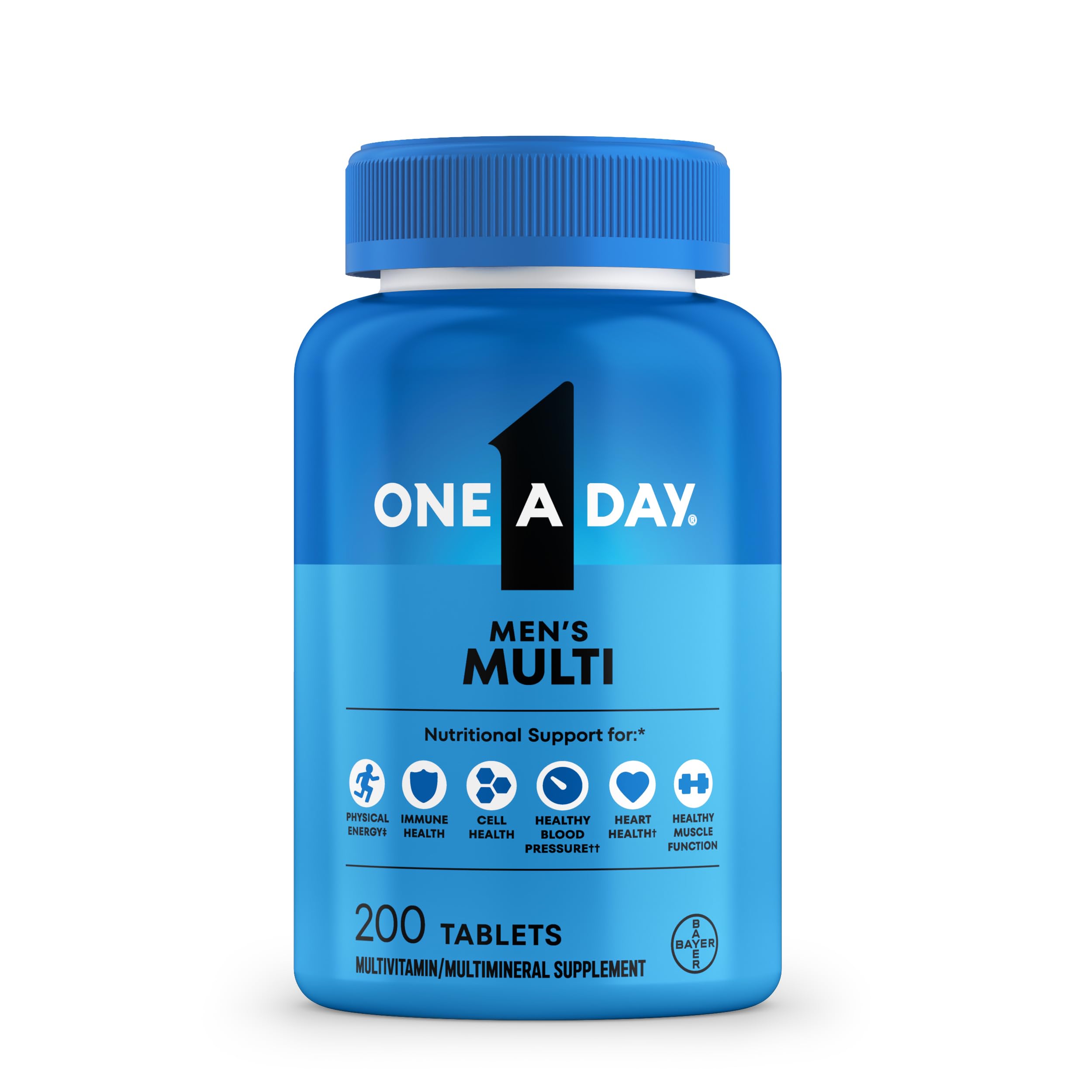
One A Day Men's Multivitamin

One A Day Men's Multivitamin

Daily nutritional baseline

Our Score 9.4/10
Check Price

Worth Noting

  • Large tablet takes some commitment
Count
200 tablets
Serving
1 tablet daily with food
Free From
9 major US food allergens
Nutrients
19 essential nutrients
Read the full review

Nineteen nutrients in one tablet is the entire pitch, and for most guys it's the right one. The formula covers the usual suspects — vitamins A, C, D and E, the B group, zinc, magnesium — in a tablet you swallow with breakfast rather than four bottles you have to remember to open.

What we noticed first was how little it asks. No powder, no second capsule, no timing rule beyond taking it with food. We kept the bottle beside the coffee maker and it disappeared into the morning instead of becoming a project, which is the whole game with a daily supplement.

That routine-friendliness is why it's our top pick. For a search this broad, the most useful answer is the supplement that covers the most ground for the most people, and a men's multivitamin does that in a way no single-nutrient bottle can. Everything else on this list is a specialist; this is the baseline.

Follow the label and take it with food — the stomach complaints attached to this one cluster around empty mornings, and breakfast solves it. Two hundred tablets is most of a year of habit, which is the other half of the recommendation: nothing here is easier to keep doing.

Bottom line: For the guy who wants one bottle and no decisions, this is what we hand him: 19 nutrients, one tablet with breakfast, and the lowest cost per day on this list.

#3

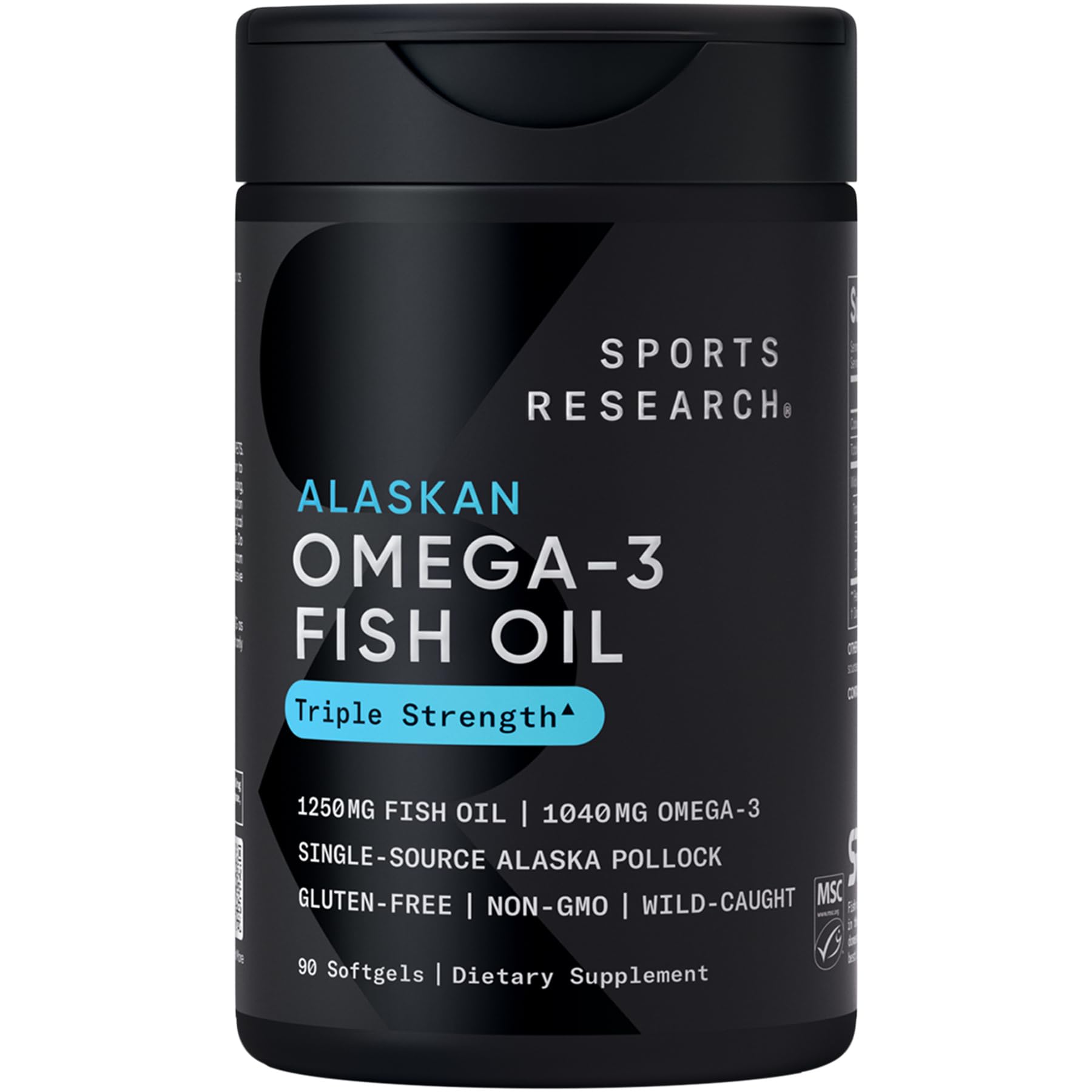
Sports Research Omega-3 Fish Oil

Sports Research Omega-3 Fish Oil

One-a-day omega-3

Our Score 9.4/10
Check Price

Worth Noting

  • Premium price per serving
Count
90 softgels
Source
Wild Alaska Pollock
Omega-3 Per Softgel
minimum 1040 mg
Fish Oil Per Softgel
1250 mg
Read the full review

One softgel carries 1,250 mg of wild Alaska pollock oil and a minimum of 1,040 mg of omega-3 — roughly three times the omega-3 in the budget bottle's serving, in a single capsule. That concentration is the number worth knowing, because it's what makes one a day enough.

The other number is the one you don't notice. There's no fishy aftertaste and no fishy burp an hour later; the oil goes through a ten-step molecular distillation, and whatever else that does, the capsule behaves itself going down and afterward. That's the difference between a bottle you finish and one you abandon.

It's sourced from wild-caught Alaska pollock under a Marine Stewardship Council program, Non-GMO tested, gluten-free and hexane-free, and it's pescatarian-friendly, which is an odd thing to be able to claim about fish oil.

This is the fish oil we come back to. One capsule a day for three months is a habit that survives a busy week, and nothing else here makes omega-3 that easy to keep up with — which is the only thing that matters with something you're meant to take forever.

Bottom line: One softgel, 1,040 mg of omega-3, and no fishy repeat: this is the fish oil we keep coming back to.

#4

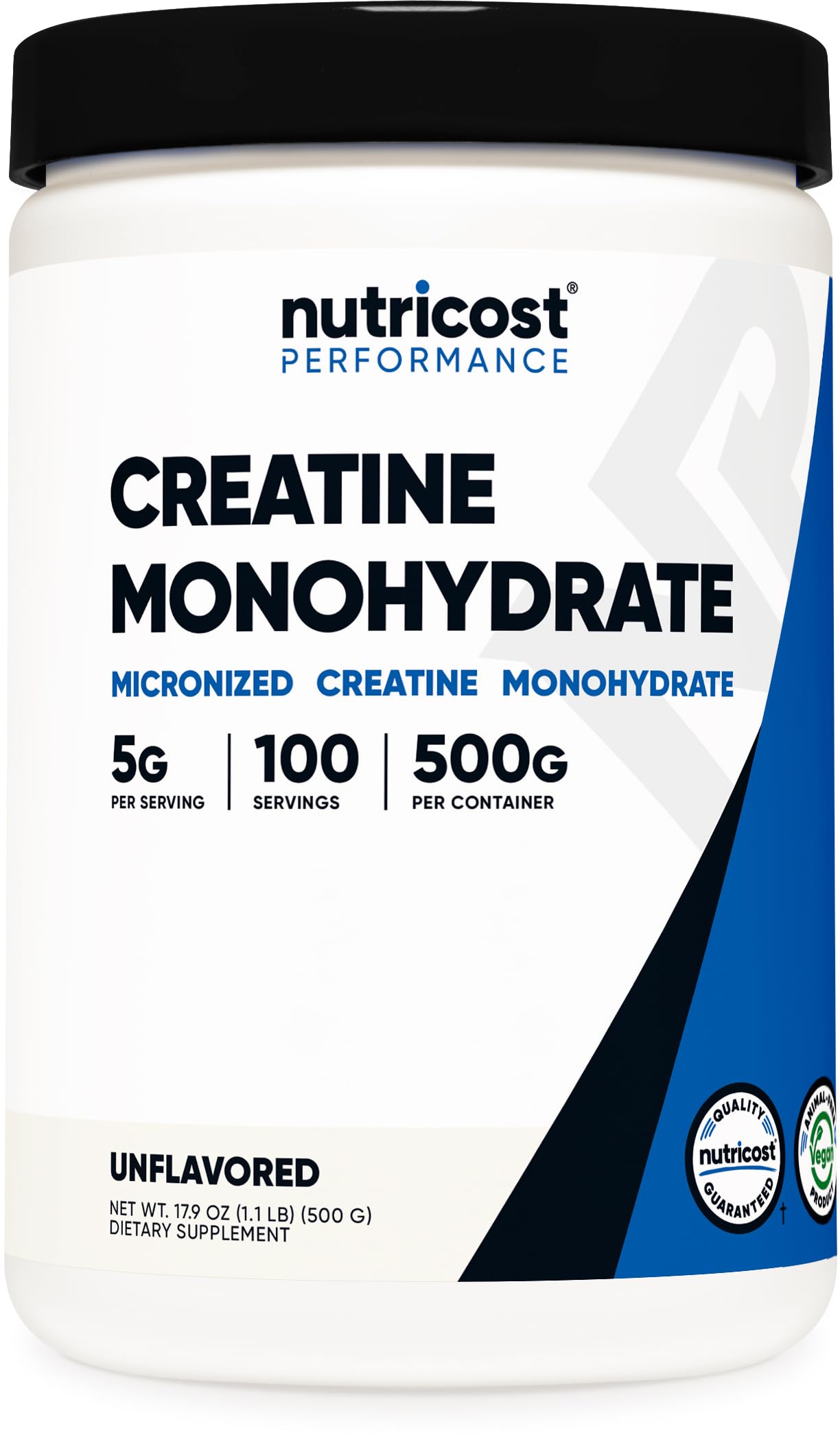
Nutricost Creatine Monohydrate

Nutricost Creatine Monohydrate

Strength training

Our Score 9.4/10
Check Price

Worth Noting

  • Leaves grit at the bottom of a glass
Form
Micronized monohydrate powder
Servings
100
Total Per Container
1.1 lb
Creatine Per Serving
0.18 oz
Read the full review

Five grams a scoop, 100 scoops a tub, and nothing else in the powder. Creatine monohydrate is the most-studied thing in the gym bag, and Nutricost sells it in the plainest possible form — micronized so it disperses more readily than the coarse stuff.

That plainness is the recommendation. We don't want a flavored blend or a proprietary matrix; we want five grams of monohydrate that goes into a shaker and costs little per workout, and this delivers both. A hundred servings is about three months at the standard daily dose.

The tub is plain and the scoop is included, which sounds like nothing until you've owned a creatine that leaves you weighing five grams on a kitchen scale. It's Non-GMO and gluten-free, and there's no flavor to get sick of by week three.

Bottom line: Five grams of creatine and nothing else in the tub — we haven't found a cheaper way to do it than this bottle.

#5

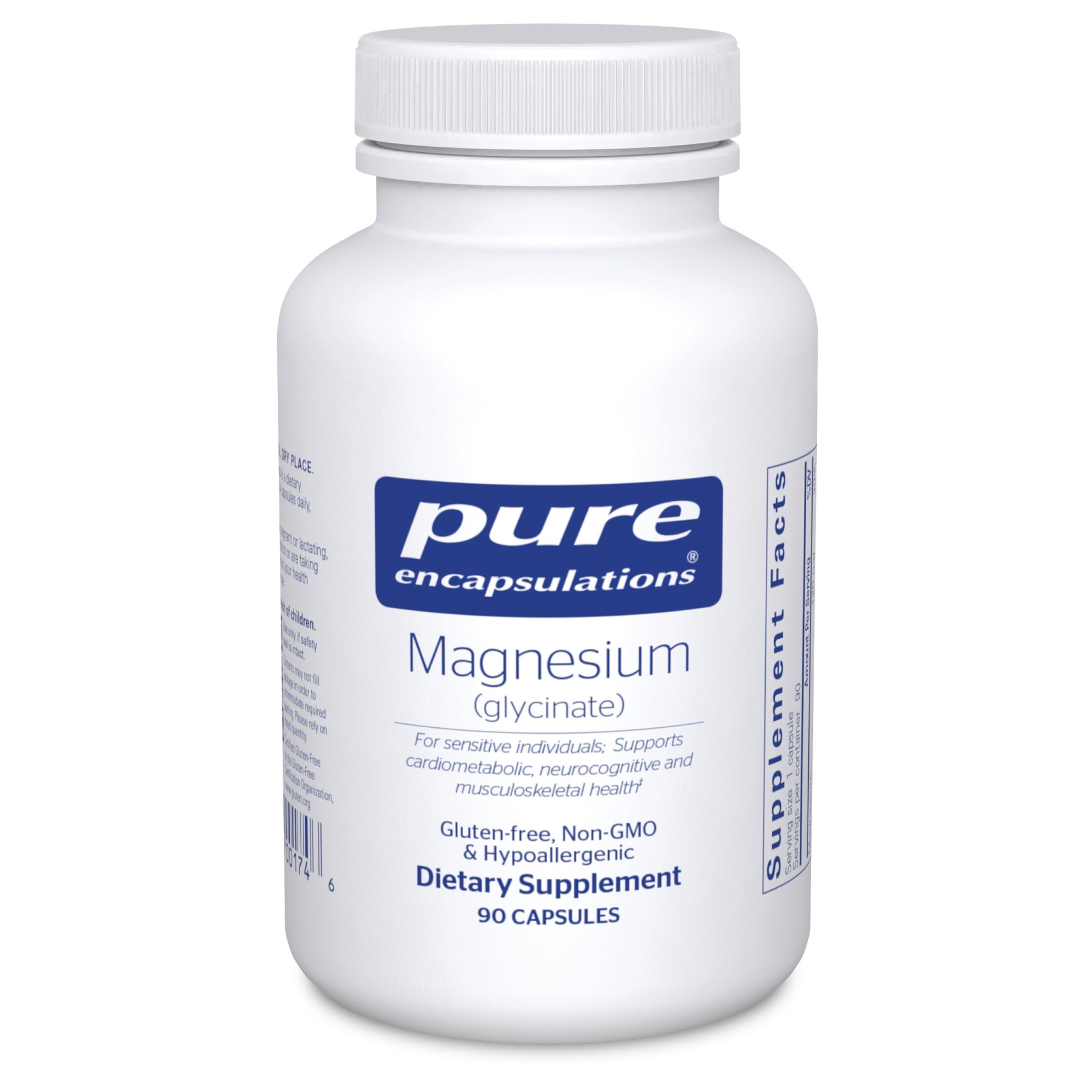
Pure Encapsulations Magnesium Glycinate

Pure Encapsulations Magnesium Glycinate

Sleep and relaxation

Our Score 9.4/10
Check Price

Worth Noting

  • Premium price for 90 capsules
Form
Magnesium glycinate capsule
Count
90 capsules
Free From
Common allergens, artificial ingredients, GMOs
Read the full review

Magnesium glycinate is the form people switch to when the cheap oxide tablets send them running for the bathroom. Pure Encapsulations sells it as a small capsule with the filler stripped out — no common allergens, no artificial ingredients, no GMOs.

We take ours before bed, and the effect for us was a looser, calmer feeling rather than drowsiness, with no grogginess the next morning. If sleep is the reason you're buying magnesium, this is the pick on this list.

The capsules are easy to swallow, which matters more here than with most supplements because you're taking one every night. Gentle isn't the same as guaranteed, though — glycinate can still upset a sensitive stomach, so start with one capsule rather than two and give it a week.

Ninety capsules is three months at one a night, and the capsule is small enough that the habit sticks — which is the only way any of this works.

Bottom line: We take ours at night, and we suggest this to anyone who wants magnesium without the digestive drama the big tablets can bring.

#6

Nature's Bounty Fish Oil 1200 mg

Nature's Bounty Fish Oil 1200 mg

Budget omega-3

Our Score 9.4/10
Check Price

Worth Noting

  • Large softgels are hard to swallow
Count
200 softgels
Omega-3 Per Serving
360 mg
Fish Oil Per Serving
1200 mg
Read the full review

This is the cheapest way to take omega-3 every day, and it's the bottle we point people to when cost is what has kept them from taking fish oil at all. Two hundred softgels, 1,200 mg of fish oil and 360 mg of omega-3 per serving, purified to remove mercury.

Fish oil has a reputation for repeating on you. Take this one with a meal rather than on an empty stomach and the fishy burp mostly stays away; open the bottle and you may catch a whiff, but it doesn't carry into the swallow.

What you give up against the Sports Research bottle is concentration. Per serving this delivers 360 mg of omega-3 against 1,040 mg, so each dose is smaller even though the softgels are larger — the value is in the bottle, not in the capsule.

For a household that already takes fish oil and doesn't flinch at the size, that arithmetic is the whole argument, and the bottle will still be on the shelf in six months. It's the least glamorous thing on this list and the one most likely to become a habit by accident.

Bottom line: This is the bottle for someone who wants omega-3 every day and cares more about the price of the bottle than the size of the pill.

#7

Qunol Ultra CoQ10 100 mg

Qunol Ultra CoQ10 100 mg

Heart health

Our Score 9.4/10
Check Price

Worth Noting

  • Large softgels
Form
Water- and fat-soluble softgel
Count
120 softgels
CoQ10 Per Softgel
100 mg
Read the full review

CoQ10 is the supplement people start looking at after a statin prescription, and Qunol is the name that comes up first. The pitch is absorption: this is a water- and fat-soluble formulation the label says absorbs about three times better than plain CoQ10 powder, so 100 mg here is meant to do the work of more.

Absorption claims are hard to check from the outside, and we won't pretend otherwise. What we can tell you is that one a day is simple to keep up and 120 softgels is four months.

We keep this on the list for one reader in particular: someone whose doctor has raised CoQ10, usually alongside statin therapy, who wants a mainstream bottle that's easy to find and easy to stick with. It isn't something we suggest adding speculatively — the reason to buy it is a conversation you've already had.

The softgels can arrive fused into a lump if the package sat in heat, so open the bottle the day it lands and buy it from a store in the middle of summer if you can. That's shipping rather than the formula, and it's the one thing to check before deciding a bottle is spoiled.

Bottom line: We keep this one in mind for anyone whose doctor has raised CoQ10, usually alongside a statin — one softgel a day, four months a bottle.

#8

Nature Made Vitamin B12 1000 mcg

Nature Made Vitamin B12 1000 mcg

Low B12

Our Score 9.4/10
Check Price

Worth Noting

  • Softgels can clump in warm storage
Count
150 softgels
Supply
150 days
B12 Per Softgel
1000 mcg
Read the full review

B12 is the one on this list that is genuinely about energy: it's needed for red blood cell formation and for turning food into fuel, which is why the bottle talks about fatigue. One thousand micrograms per softgel, one a day, with water and a meal.

The softgels are small and go down easily, which is the practical difference from the chalky B12 tablets sold in drugstores. We took ours in the morning with breakfast and never noticed an aftertaste.

One hundred fifty softgels is a 150-day supply at one a day, so a bottle runs about five months — longer than most people's resolve lasts. That's a good problem to have with something you'll reorder anyway.

If a blood test pointed at B12, or you eat very little meat, this is the small, inexpensive softgel we're happy to recommend for the long haul. If your levels are fine, it won't do anything for your energy that a good night's sleep wouldn't.

Bottom line: If a blood test pointed at B12, this is a small, inexpensive softgel we're happy to recommend for the long haul.

#9

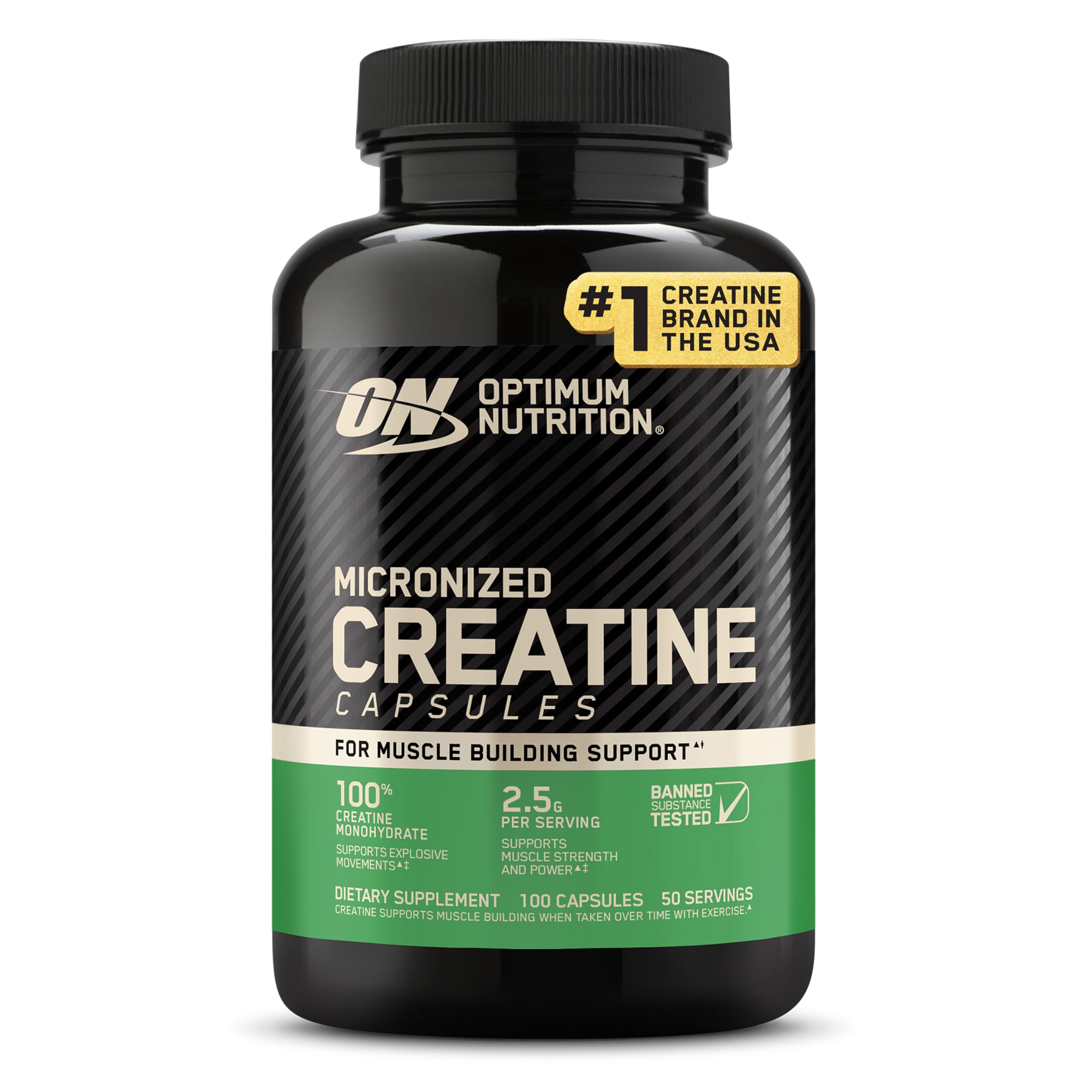
Optimum Nutrition Creatine Capsules

Optimum Nutrition Creatine Capsules

Training on the go

Our Score 9.4/10
Check Price

Worth Noting

  • Four large capsules for a full dose
Count
100 capsules
Serving
2 capsules
Creatine Per Serving
0.09 oz
Read the full review

No scoop, no shaker, no grit at the bottom of a glass. Two capsules carry 2.5 grams of creatine monohydrate, and you swallow them with whatever you're already drinking.

Do the math before you compare this to a tub. The powder picks here dose at 5 grams, so matching that means four capsules, and the 100-count bottle is 25 days at that rate rather than fifty. That's the trade for convenience, and it's worth knowing going in.

The convenience is real, though. We keep a bottle in a gym bag — nothing leaks, nothing needs rinsing, and there's no chance of a scoop of white powder going everywhere in a suitcase. If you train away from home, or you've bought tubs of creatine and finished none of them, this is the format that solves it.

Optimum puts the same Informed Choice banned-substance testing behind the capsules as its powder, which matters if you're tested for sport and is more assurance than most capsule brands offer.

We reach for these when the tub stays home. Per gram they cost more than the Nutricost powder, and if you train in one place with a shaker you should buy that instead — but for everyone else, this is the version that actually gets taken.

Bottom line: No scoop, no grit, no shaker to rinse — these are the creatine capsules we hand anyone who won't touch powder.

#10

Physician's Choice Probiotics 60 Billion

Physician's Choice Probiotics 60 Billion

Gut health

Our Score 9.2/10
Check Price

Worth Noting

  • Premium price for a twelve-week bottle
CFU
60 billion
Count
84 capsules
Supply
12 weeks
Strains
10
Read the full review

Sixty billion CFU across ten strains, plus organic prebiotics, in a bottle the label calls a twelve-week supply. That's the highest CFU count here and the longest single bottle, which makes it a reasonable place to start if you've never taken a probiotic.

Ten strains is more variety than most drugstore bottles bother with, and the prebiotic fiber is there to feed them. The capsules are shelf-stable and acid-resistant, so there's no refrigeration — we kept ours in a kitchen cabinet and it was fine.

Gut stuff is slow. What we noticed over the first few weeks was less bloating after meals rather than any dramatic change, which is the shape of what you should expect: regularity, not a jolt.

It's third-party tested for purity and potency and made in the USA, which is the thing to look for in a category where the label is often all you have to go on.

For a first probiotic, or one you plan to stay on, this is the bottle we trust most here. The one caution is the dose: 60 billion CFU is a lot to start with, and a stretch of gas or loose stools in the first fortnight is a known adjustment rather than a fault. Start with one capsule and give it time.

Bottom line: For a first probiotic, or one you plan to stay on, this is the bottle we trust most here — ten strains and twelve weeks in one purchase.

How We Tested Men's Supplements

We started with a shortlist of 40-plus formulas from reputable retailers, then narrowed it by third-party testing, ingredient forms, and dose transparency — if a label hid behind a proprietary blend or listed a dose far below what the research supports, it didn't make the cut. That left 16 products: capsules, powders, and a couple of liquids, from budget bottles to spendier ones. We tested each for six months, rotating them into our own routines rather than a lab bench. Every tester kept a simple log: time of day, what they took it with, and how they felt by lunch.

Testing happened where supplements actually live: on the kitchen counter next to the coffee maker, in a gym bag, and in a dopp kit on weekend trips. We took capsules with breakfast, on an empty stomach, and after workouts; we mixed powders in shaker bottles and stirred them into oatmeal. At each stage, we noted how many pills we had to swallow per serving and whether they went down easily or felt like a lump in the throat. We checked whether capsules dissolved in a glass of water within a reasonable window, and whether powders clumped at the bottom of the shaker or left a chalky film.

Gut tolerance got its own check: we logged any bloating, cramping, or changes in digestion within a few hours of taking each formula, and we paid attention to aftertaste and burps — fish oil was the usual culprit. Side effects were tracked the same way, from jitteriness to headaches to sleep disruption. For effectiveness, we looked for patterns across the group: steadier energy through the afternoon, less soreness after workouts, or no difference at all. We also noted whether a powder was truly tasteless or needed to be hidden in a smoothie, and we calculated cost per serving and how long a bottle actually lasted.

How to Choose Supplements for Men

Start with the gap, not the hype

Most guys searching this are choosing between one bottle that covers everything and one that targets a specific problem. If you take nothing at all, a men's multivitamin is the sensible first purchase — it's the only format that fills several gaps at once, and it does it in a single tablet with breakfast.

A single-nutrient bottle earns its place when something specific is missing: a vitamin D result, a B12 result, a training goal, a sleep problem. Buying a specialist without knowing which gap you're filling is how supplement drawers fill up with bottles that expired half full.

Do the serving math

Front-of-bottle claims are per serving, not per capsule, and that distinction decides what a bottle really costs you. A softgel delivering 1,040 mg of omega-3 in one capsule and a softgel that takes three to reach the same place are not the same purchase, whatever the shelf price.

Divide the count by the serving size to get days of supply, then compare that with the dose you're after. The Optimum Nutrition capsules here are a good example: two capsules carry 2.5 grams, so matching a 5-gram powder serving takes four of them.

Pick the form you'll keep taking

Powder, capsule, softgel, tablet — the differences that matter are how many you swallow at once and whether you need water and a shaker to do it. Capsules and softgels suit a bag or a desk drawer; powder suits a kitchen and an established routine.

Big softgels are the most common practical complaint in this category, and no dose is worth a bottle you avoid. If you've abandoned powders before, buy the capsules and accept that you're paying more per gram for the format.

Take it with food, and start small

Stomach upset is the most common reason people quit a supplement, and it usually traces back to two things: an empty stomach and a starting dose that's too high. The multivitamin here asks for food on the label, and the probiotic and the magnesium both go down easier started at one capsule rather than a full serving.

Give anything new a couple of weeks before you judge it. If a supplement makes you feel actively worse rather than neutral, stop taking it and mention it to your doctor rather than pushing through.

Look for a named quality program

'Lab tested' on the front of a bottle means little on its own. What's worth paying for is a program you can look up: Non-GMO Project Verified, Vegan Certified, Informed Choice for banned-substance testing, or a stated third-party potency test.

Sports Research and Optimum Nutrition each carry one, and so does Physician's Choice. A certification won't tell you whether a supplement suits you, but it does tell you the bottle contains what the label claims, which is the floor you want before spending months on it.

Frequently Asked Questions

Final Verdict

Start with One A Day. It's the one bottle that covers the daily basics, it delivers the most ground for the least money here, and it asks nothing of you beyond a tablet with breakfast. Add to it only when you know what you're adding: the Sports Research D3 + K2 if bloodwork came back low, Nutricost's creatine if you're training for strength, Pure Encapsulations' magnesium if sleep is the problem.

The bottle you finish beats the one with the better label, and every pick here was chosen with that in mind.