Nutrition & Supplements

Best Protein Powder for Sensitive Stomachs of 2026

A protein shake should be the simplest part of your routine: scoop, shake, drink. But if your stomach has ever staged a protest twenty minutes later—bloating, cramping, a sudden need to leave the room—you know the wrong powder can turn a good habit into a gamble. The culprit is often not protein itself but what rides along with it: lactose in a cheap whey concentrate, sugar alcohols, or a thickener your gut doesn't recognize. The right formula delivers the protein without the aftermath and still mixes smooth enough to drink daily.

Over ten weeks, I put 14 powders through my normal routine—morning smoothies, post-workout shaker bottles, and an unflavored scoop stirred into oatmeal—and noted how each one sat afterward. I also watched for clumps at the bottom of the bottle, chalky or slimy texture, and whether the cost per serving made sense. The best option for a sensitive stomach isn't the most expensive or the most 'clean'—it's the one whose protein source and add-ins agree with you, scoop after scoop. Here's what I'd keep in my cupboard.

#1

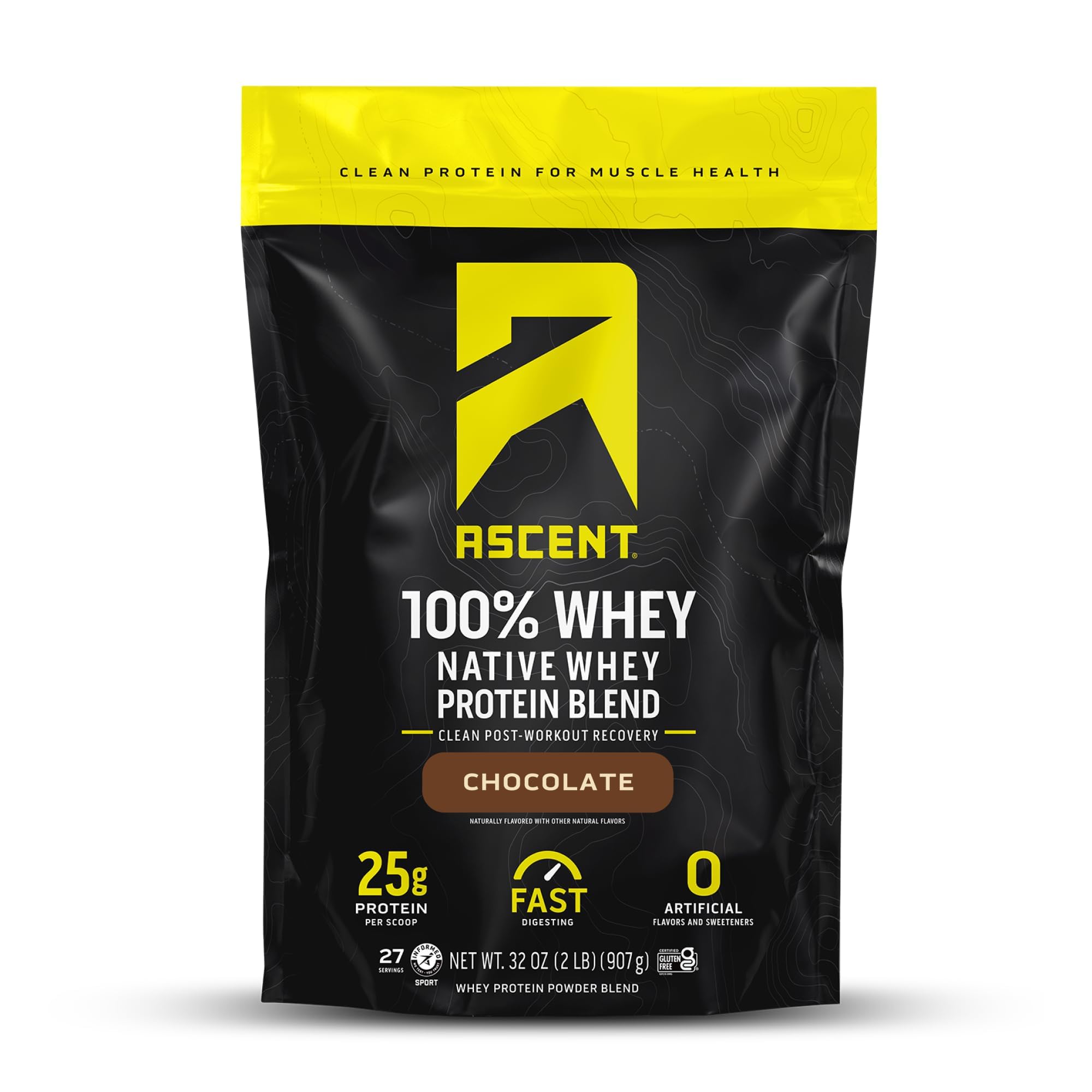
Ascent Whey Isolate

Top Pick
Ascent Whey Isolate

Clean-label shakes

Our Score 9.2/10
Check Price

Worth Noting

  • Stevia aftertaste in the chocolate
BCAAs
0.19 oz
Sweetener
Stevia
Protein Type
Native whey isolate
Protein Per Serving
0.88 oz
Read the full review

The ingredient list on the chocolate bag is short enough to read in one breath: whey protein isolate, cocoa, stevia, and a handful of recognizable extras. No artificial flavors, no artificial sweeteners, no maltodextrin filler — and it's Informed Choice certified, which matters if you're subject to testing or you just want to know exactly what's in the scoop.

A short list is only worth paying for if the powder performs, and this one does. It dissolves in water and in milk without clumping, the texture stays thin rather than milkshake-thick, and the chocolate reads as cocoa rather than candy. Of the whey options here, this is the one we reach for when we don't want dessert at nine in the morning.

Two things to know before you commit. The stevia is present, and if you're someone who tastes it, you'll taste it here too. The packaging is a flat, collapsible pouch rather than a tub, which we ended up preferring — it wedges into a crowded cabinet and packs down in a gym bag without claiming a shoebox of space.

Bottom line: Buy it if you want the shortest ingredient list on a whey that still mixes clean; we think it's the cleanest-label option here that doesn't punish you in the bottle.
#2

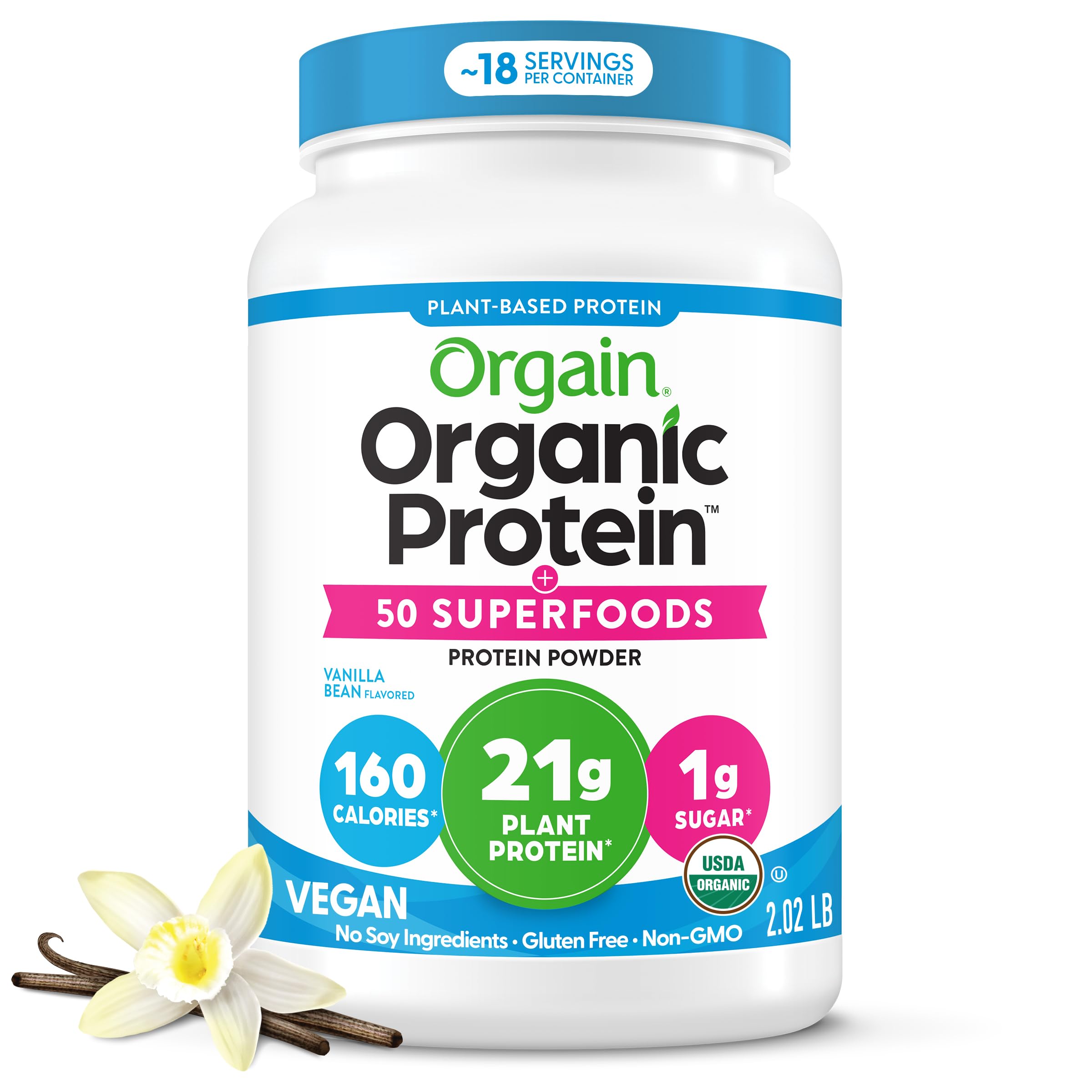
Orgain Organic Protein + Superfoods

Orgain Organic Protein + Superfoods

Budget plant-based

Our Score 9.2/10
Check Price

Worth Noting

  • Sweet, stevia-forward vanilla
Superfoods
50 organic
Certification
USDA Organic
Protein Blend
Organic pea, brown rice, and chia
Protein Per Serving
0.74 oz
Read the full review

Organic plant protein usually carries a premium, so this one's position in the set is simple: it's the least expensive route to an organic, plant-based scoop here, and it doesn't ask you to give up much to get there.

What's in it: 21g of protein from organic pea, brown rice, and chia, 1g of sugar, and 50 organic superfoods that read like a salad bar in powder form. It loosens into almond milk with a fork and disappears into a smoothie without drama — the one we keep around when we want something greener than a straight shake.

Texture is the compromise. In a shaker alone it stays sandy no matter how long you rattle it, and a blender is what turns it into something drinkable rather than merely tolerable. That's a twenty-second fix if you already own one and a genuine annoyance if you don't.

Whether it suits you comes down to pea protein. Plenty of people digest it without a flicker; plenty don't, and this is the plant pick here most likely to catch you out. If you already know peas bloat you, the extra money for Warrior Blend is well spent. If you don't, start with one scoop in the morning rather than a double after training, and give it three days before you judge it.

Bottom line: We keep it as the budget route into organic plant protein, with the caveat that pea-based formulas don't suit every sensitive stomach.

#3

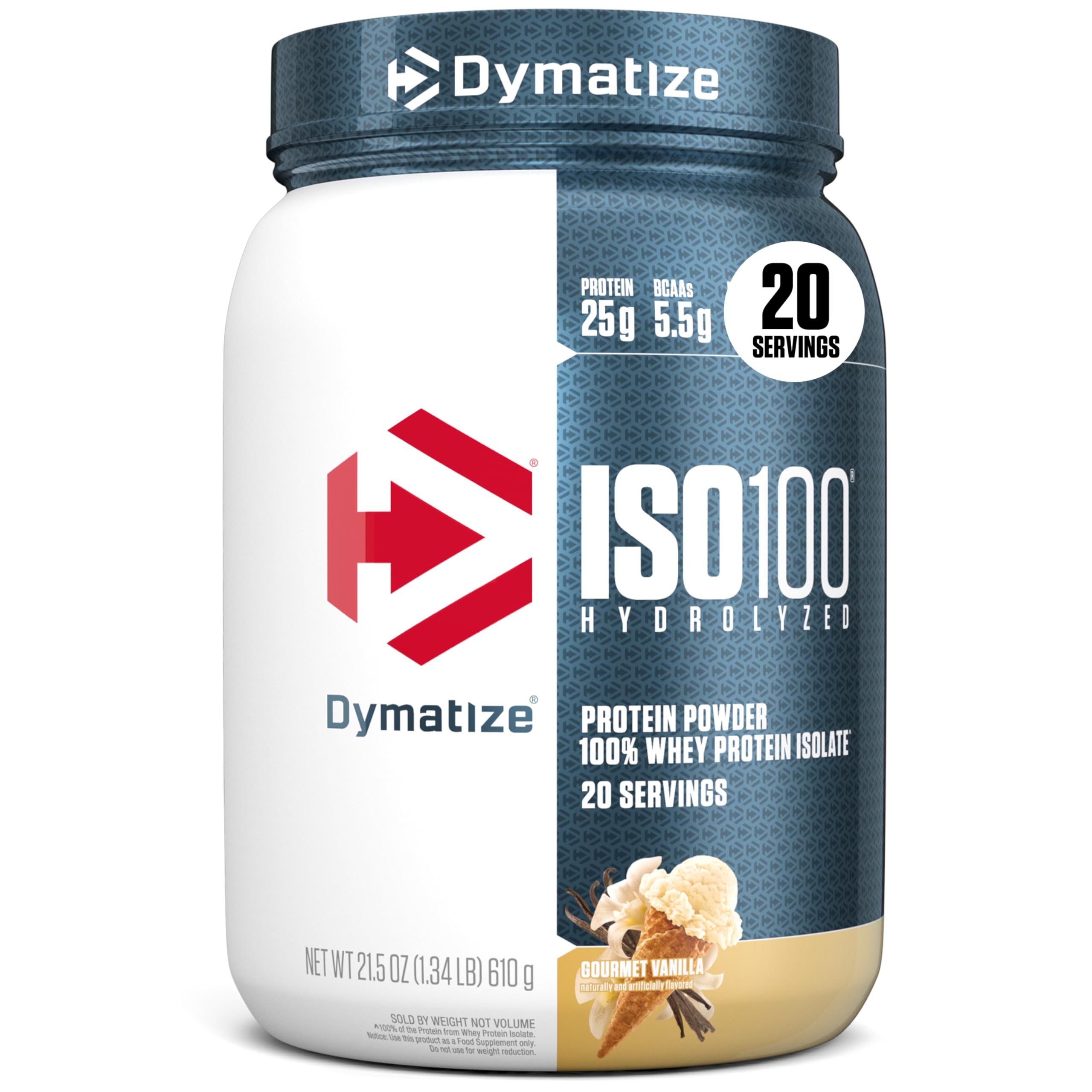
Dymatize ISO100

Dymatize ISO100

Sensitive-stomach whey

Our Score 9.0/10
Check Price

Worth Noting

  • Tubs arrive part-filled for the serving count
BCAAs
0.18 oz
Sugar
0.04 oz
Protein Type
Hydrolyzed whey isolate
Protein Per Serving
0.88 oz
Read the full review

Most people who blame protein powder for a sour stomach are blaming the wrong thing. It's usually the lactose and fat left in a concentrate rather than the protein itself, which is why ISO100 is the one we hand to friends who thought they were finished with whey. It's a hydrolyzed whey isolate — the protein is broken into smaller peptides, then filtered — so it clears the stomach quickly and carries almost none of the milk sugar.

In the bottle it's almost suspiciously easy: a few shakes in plain water and the powder is gone, no raft of foam on top, no grit in the last mouthful. We drank it after training on days when a heavier shake would have sat there for hours, and it never did. The numbers are sensible too — 25g of protein, 5g of BCAAs, 1g of sugar — so nothing in the formula is working against a gut that's already unhappy.

Get the vanilla. It tastes like soft-serve, sweet enough that plain water doesn't feel like a punishment, and it vanishes behind a banana and a handful of spinach. Where it stops being the right answer is a diagnosed milk allergy rather than a sensitivity: hydrolyzed or not, this is dairy, and Warrior Blend is the one to switch to.

Bottom line: We recommend it as the default for anyone who wants to keep whey in their diet: hydrolyzed isolate, 25g a scoop, and the easiest landing of the whey picks here.

#4

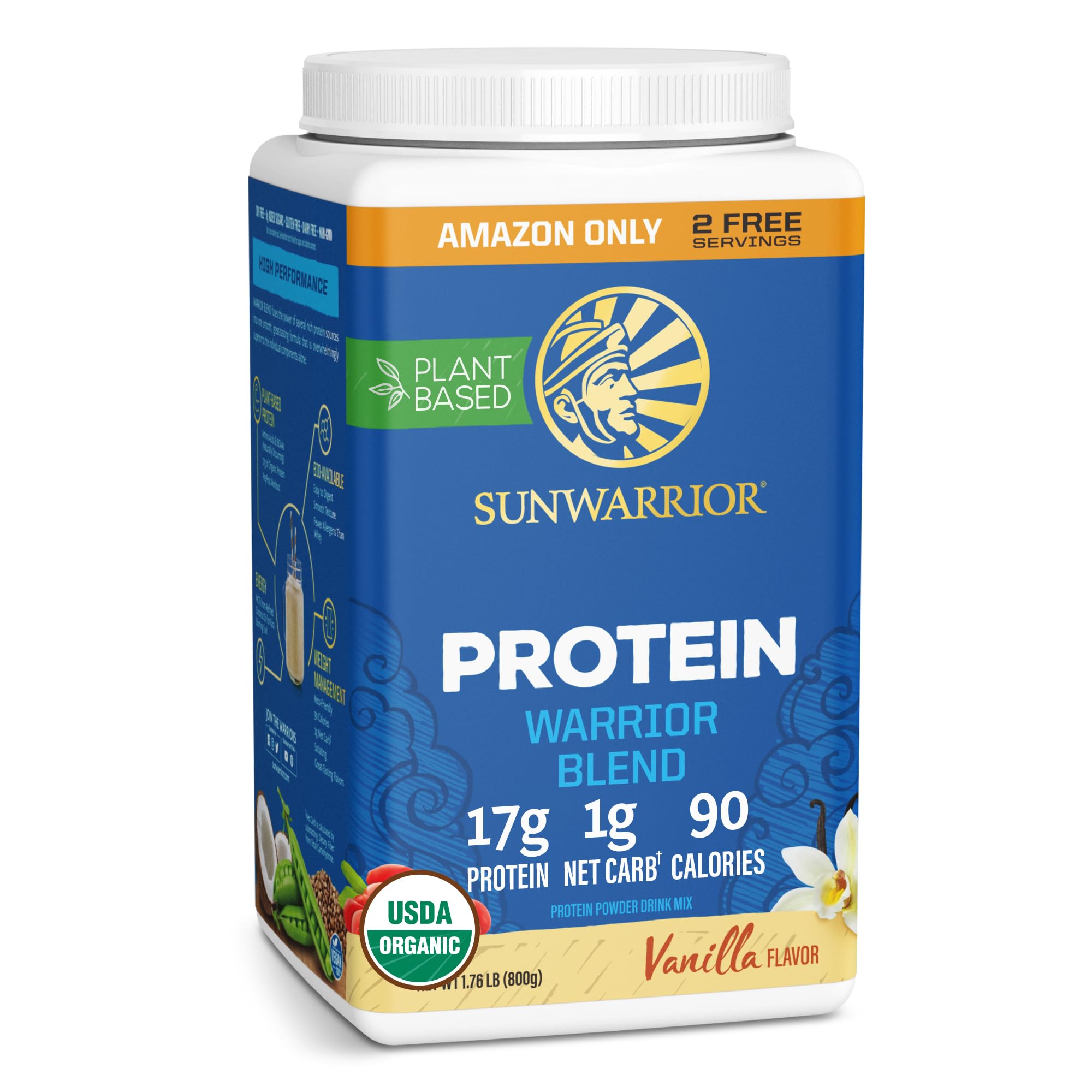
Sunwarrior Warrior Blend

Sunwarrior Warrior Blend

Dairy-free diets

Our Score 9.0/10
Check Price

Worth Noting

  • Sweet vanilla can overwhelm light mix-ins
Flavor
Vanilla
Servings
32
Protein Type
Organic plant-based blend
Formulated Without
Synthetics and fillers
Read the full review

Plant protein is where most sensitive stomachs end up once whey stops agreeing with them, and it's usually a disappointing move — gritty, beany, or both. Warrior Blend is the exception in this set: organic plant sources, nothing synthetic or filler-ish in the bag, and of the plant options here it's the one that sits easiest.

The vanilla is genuinely pleasant — no chalky aftertaste — and it disappears into almond milk or a banana smoothie in about ten seconds. A shaker on its own leaves faint flecks in the last inch; twenty seconds in a blender fixes it completely, and that's how we make it now.

The amino acid profile is close enough to whey that switching over isn't a nutritional downgrade, and the powder behaves in overnight oats as well as it does in liquid. If you've bounced off plant powders before because of the texture, start here rather than with a pea-only formula that needs three minutes of blending to be drinkable.

Bottom line: Our plant pick, and the one we point dairy-free drinkers to first — it blends smoothly and, unlike most plant powders, doesn't charge a comfort penalty.

#5

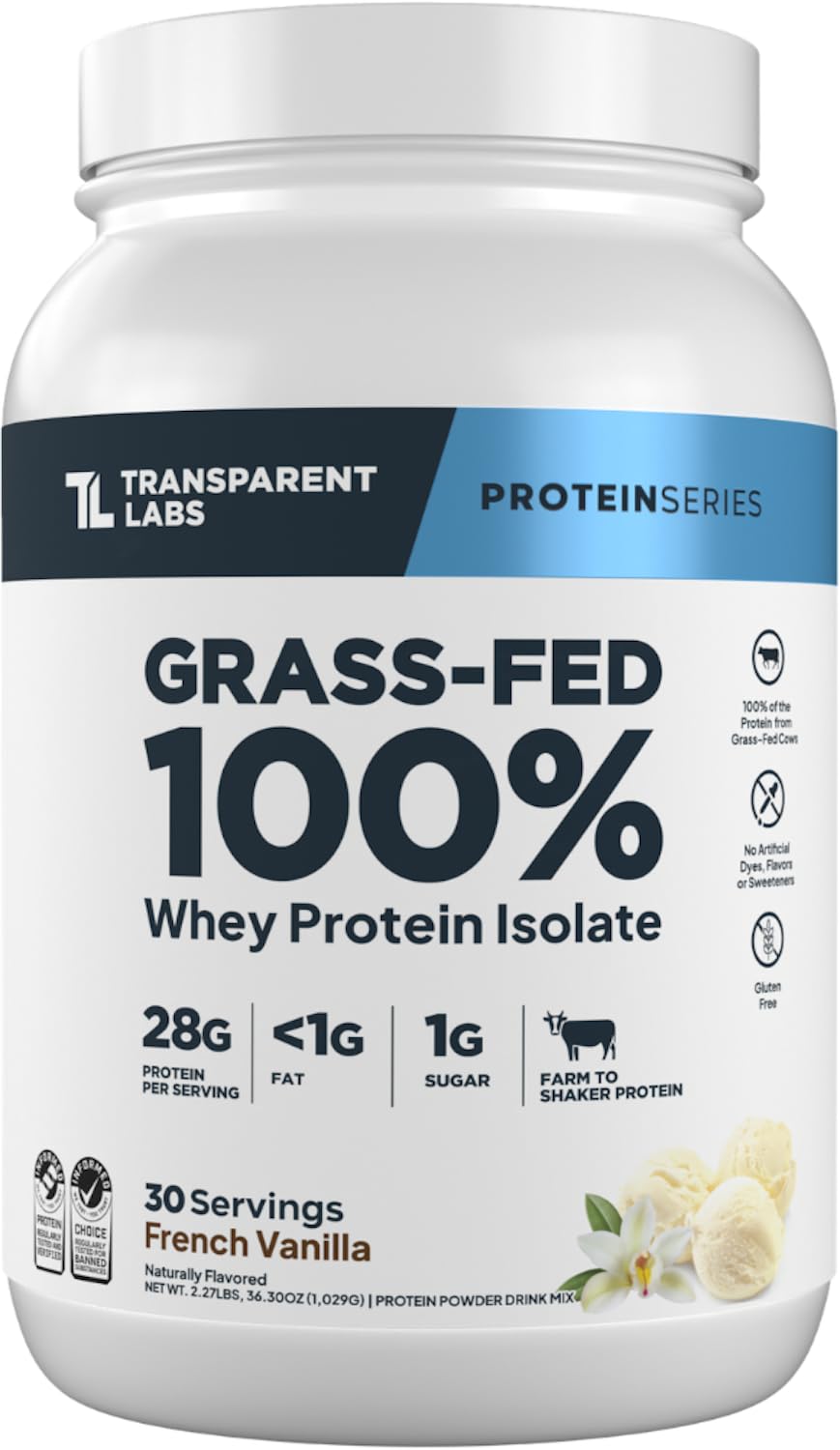
Transparent Labs Grass-Fed Whey

Transparent Labs Grass-Fed Whey

High protein intake

Our Score 9.0/10
Check Price

Worth Noting

  • Premium price for a 30-serving tub
Servings
30
Sweeteners
None artificial
Protein Type
Grass-fed whey isolate
Protein Per Serving
0.99 oz
Read the full review

Twenty-eight grams of protein per scoop is the highest of anything here, and that's the whole case for this one. If you're chasing a daily target on two or three shakes, the extra three grams over a standard 25g isolate adds up across a week, and it comes from a grass-fed whey isolate with no artificial sweeteners, dyes, or preservatives.

It goes down easily for something this concentrated. Isolate filtration leaves little lactose behind, and the scoop doesn't sit heavy the way a concentrate does. The vanilla leans sweet, though, and stevia is doing the work; if you're sensitive to that aftertaste, mix it with milk rather than water, which blunts it.

Foam is the other quirk. Shake it hard and you get a head of bubbles that needs a minute to settle; stir it instead and the problem mostly disappears. Neither issue is a dealbreaker, but together they're why we rank it below the top pick for everyday drinking and above it for hitting a number.

Bottom line: We rate it highest here on protein per scoop, and it still goes down light — the pick for anyone chasing a daily protein target.

#6

Jocko Fuel Mölk

Jocko Fuel Mölk

Digestive support

Our Score 9.0/10
Check Price

Worth Noting

  • Sweet enough that we thin it with extra water
Servings
28
Sweetener
Allulose, monk fruit, and Reb-M
Protein Blend
Whey concentrate, whey isolate, casein, and egg
Digestive Support
Enzymes and probiotics
Read the full review

Two things separate Jocko Mölk from everything else here. It's a four-source blend — whey concentrate, whey isolate, micellar casein, and egg — built to release slowly, and it's the only powder in this set that adds digestive enzymes and probiotics. If your problem is cramping soon after a shake rather than dairy itself, that's the most comfort-focused formula here.

It drinks better than the label suggests. Vanilla Milkshake is sweet without the stevia bite, because the sweetener is a blend of allulose, monk fruit, and Reb-M, and the texture stays creamy even mixed with plain water. It's the rare protein powder that a teenager and a grandparent would both finish.

Our reservation is the blend. Slow release is the point, but concentrate carries more lactose than an isolate does, and the comfort side here is the least predictable of the whey picks. If you know lactose is your trigger, the isolates above are the safer call; if your trouble is speed rather than dairy, the casein and enzymes are doing something the others aren't. Start at half a scoop and build up over a week — that's how you find out which group you're in without losing an afternoon.

Bottom line: The one we suggest if your trouble is fast digestion rather than lactose — enzymes, probiotics, and a slow blend, with a sweet tooth built in.

#7

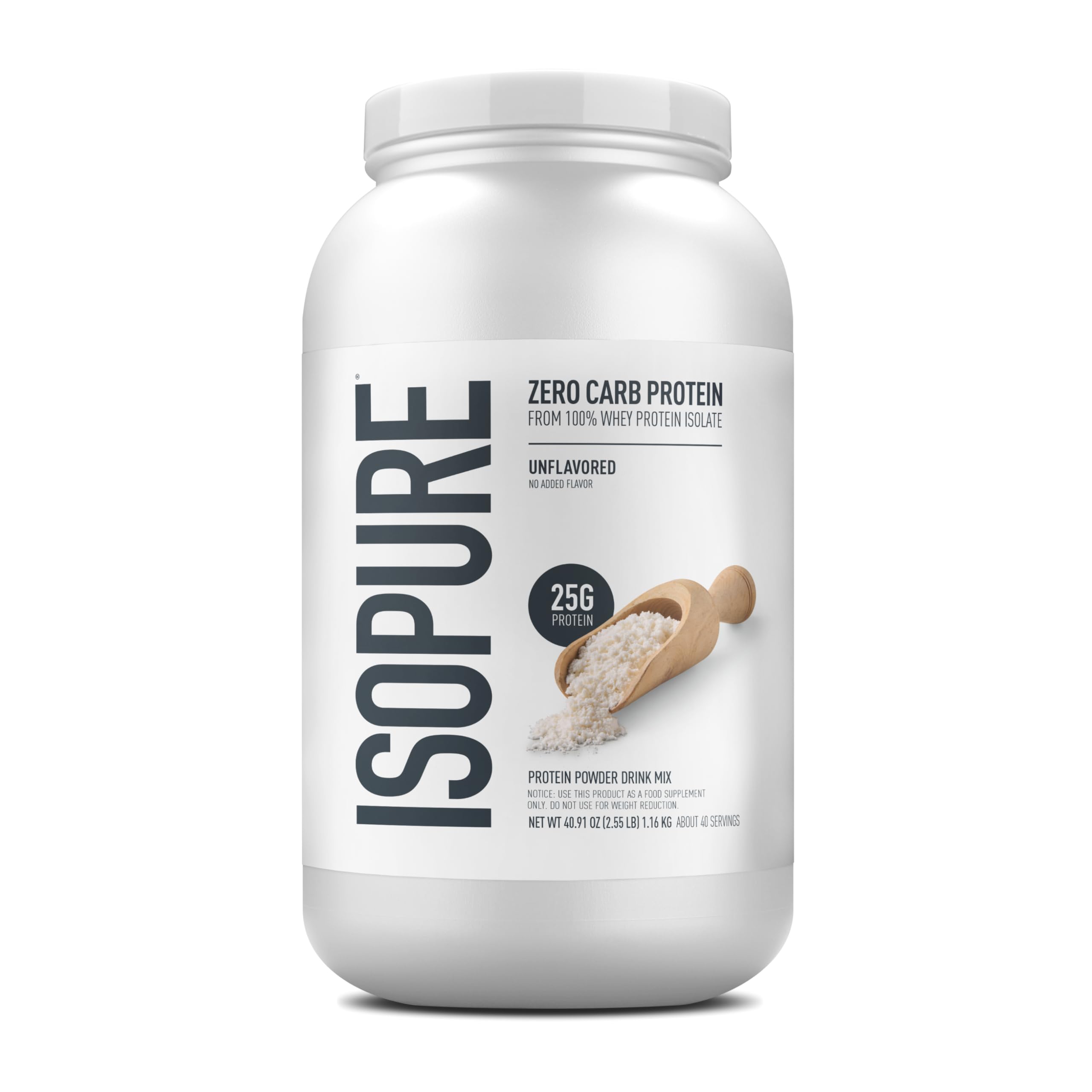
Isopure Zero Carb Unflavored

Isopure Zero Carb Unflavored

Unflavored mixing

Our Score 8.8/10
Check Price

Worth Noting

  • Clumps in hot liquid
  • Highest upfront price here
Sugar
0g
Protein Type
Whey isolate
Added Nutrients
20 vitamins and minerals
Protein Per Serving
0.88 oz
Read the full review

Unflavored protein isn't a shake, it's an ingredient, and that's the job Isopure Zero Carb is hired for: 25g of whey isolate you can stir into oatmeal, soup, or a tomato sauce without turning dinner into a vanilla dessert. Nothing flavored in this set can do that.

It isn't quite nothing, either. In water it reads as dilute milk powder, with a faint chalky finish that comes from the 20 vitamins and minerals blended in; in food the taste disappears entirely. If your sensitive stomach is really a reaction to sweeteners rather than dairy, this is the cleanest route here — no sugar, no sweetener, no flavoring at all.

Mixing is where it asks for patience. Cold liquid and a blender are fine; hot coffee or broth is where it seizes into lumps that won't stir out, so loosen it in a spoonful of cold water first and then add the hot liquid. Once you've got that habit, it's the most flexible powder here — half a scoop in a sauce, a full one in a smoothie, and nothing in the dish tastes like protein.

Bottom line: Our pick if sweeteners are the trigger — unflavored, unsweetened whey isolate that disappears into real food, provided you mix it cold first.

#8

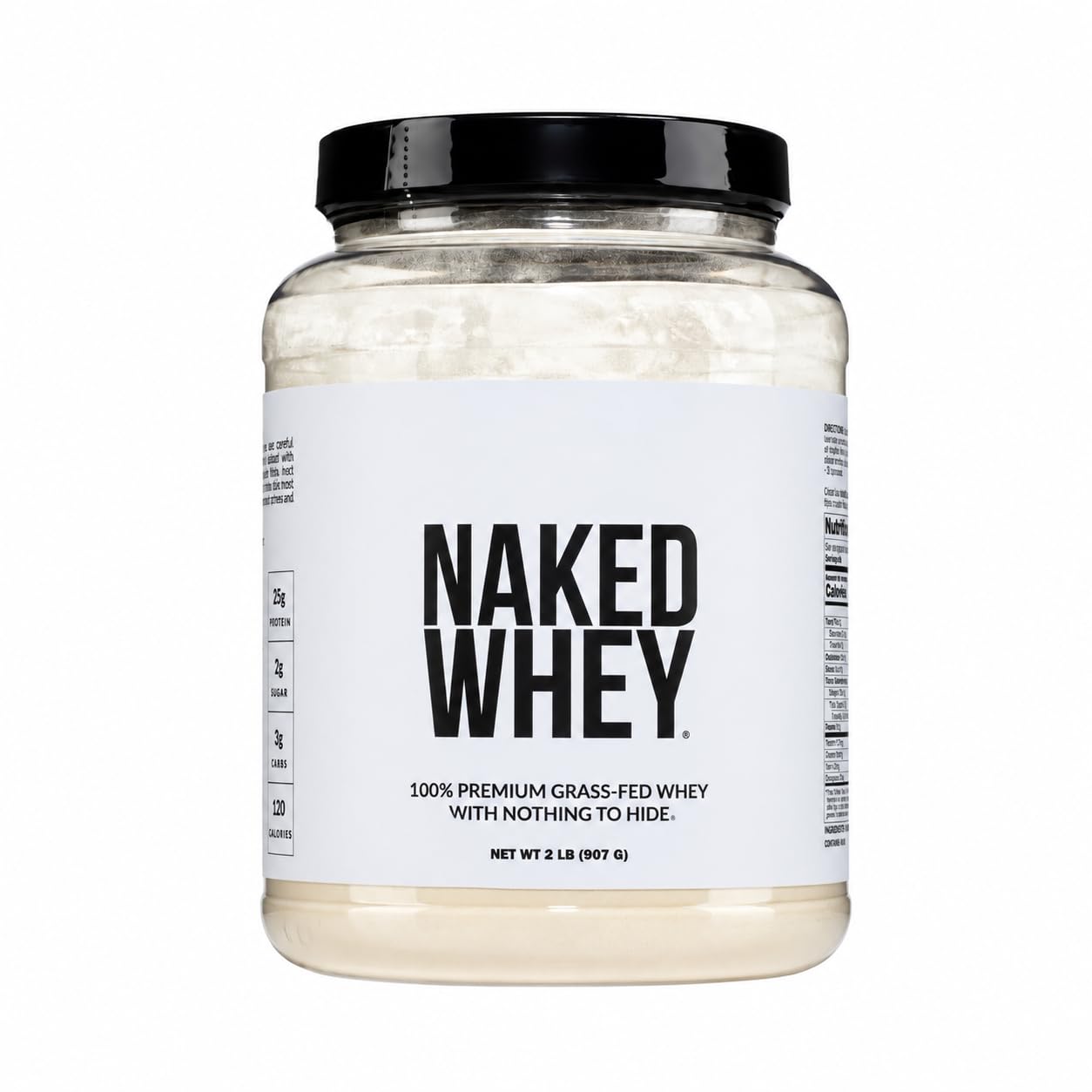
Naked Whey

Naked Whey

Minimal ingredients

Our Score 8.6/10
Check Price

Worth Noting

  • Foams and clumps in a shaker
  • Plain dairy taste needs mix-ins
Sugar
0.07 oz
Ingredients
Grass-fed whey only
Certification
NSF Certified
Protein Per Serving
0.88 oz
Read the full review

One ingredient: grass-fed whey. No sweetener, no flavoring, no lecithin, no gum. If you've been working backwards from a reaction and want the shortest possible list of suspects, this is the shortest list on the page, and it's NSF certified and cold processed on top of that.

The trade-off arrives the second you shake it. It foams into a head that takes minutes to settle and clings in clumps to the sides of a bottle; in a blender with a banana it comes out smooth and properly creamy. We gave up on the shaker version after two tries.

Unflavored here means dairy-forward — milk with the sweetness taken out — so it wants fruit, cocoa, or coffee alongside it. Digestively it behaves like a plain whey: fine for plenty of people, heavy for some, with no enzymes, sweetener, or flavor system layered on to complicate the picture either way.

Buy it if you want protein with nothing added and you're willing to blend it. Skip it if convenience is the whole point, because a powder that needs a blender and a ripe banana is not the one you'll reach for on a busy Tuesday.

Bottom line: We recommend it only if you'll blend it: one ingredient, nothing added, and the closest thing here to plain protein with no extras to react to.

How We Tested Protein Powders for Sensitive Stomachs

I built the shortlist by reading ingredient panels first, filtering out lactose-heavy whey concentrates, sugar alcohols, and long lists of gums and added fibers unless the formula gave a clear reason for them. I compared protein sources—whey isolate, hydrolyzed whey, pea and rice blends, egg white—and noted grams of protein per scoop, added digestive enzymes, and whether the powder was flavored or unflavored. From that pool, I tested 14 powders over ten weeks, giving each one enough everyday use to show whether it agreed with me.

Each powder went into my normal routine: a morning smoothie with frozen banana and spinach, a post-workout shake in a shaker bottle with water, and—for the unflavored options—a scoop stirred into oatmeal or broth. To check mixability and clumping, I shook each in a bottle for ten seconds and poured it through a fine strainer; I also blended the flavored ones to see if they turned foamy or left grit behind. Texture and taste got the same attention: I noted whether a shake was chalky, slick, or gritty, and whether the flavor held up plain or needed fruit to mask it.

Digestibility was the real test. I kept a two-hour symptom log after every serving—bloating, gas, cramping, urgency—and dropped any powder that repeatedly caused trouble, no matter how good it tasted. I also tracked effectiveness in plainer terms: whether I stayed full until lunch and whether my workouts felt normal. At the end, I divided the cost per tub by the servings I actually got, not the label's count, to judge value. The powders that made the final list were the ones I could use daily without thinking about my stomach.

How to Choose a Protein Powder for a Sensitive Stomach

Start With the Protein Source

Lactose is the usual culprit behind a shake that ends badly, and how the whey was filtered decides how much of it you get. Concentrate keeps more milk sugar and fat; isolate strips most of it out; a hydrolyzed isolate breaks the protein into smaller pieces on top of that. If dairy itself is the problem rather than lactose, no whey will help and a plant blend is the answer.

Our order of preference for a touchy stomach: hydrolyzed isolate, then isolate, then plant, then concentrate. Dymatize ISO100 sits in the first group, and it's the reason we send most people there before they start experimenting with dairy-free alternatives.

Read the Sweetener Line

Sugar alcohols, stevia, and monk fruit are the three you'll meet, and a sensitive gut can object to any of them. Erythritol and maltitol are the ones most likely to leave you gassy; stevia is more of an aftertaste problem than a stomach one. A short ingredient list simply gives you fewer suspects to work through.

If two sweetened powders have already gone badly, try an unflavored one before you conclude that powder isn't for you. Isopure Zero Carb is the purest version of that test in this set.

Treat Enzymes and Probiotics as a Tiebreaker

Added lactase, protease, and probiotic blends genuinely help some people, and one pick here includes them. They don't cancel out a protein source your gut dislikes, though: a concentrate with enzymes is still a concentrate. Use them to separate two formulas you'd otherwise be happy with, not as a fix for a reaction you already know you have.

Compare Servings, Not Tub Size

Servings are the only number that compares fairly across brands. A 2 lb tub at 25g a scoop works out to roughly 30 servings; a formula that asks for two scoops per serving halves that, so the container that looks bigger can be the worse buy. Multiply scoops by servings before you commit.

Watch the scoop size too. A 30g scoop of a plant blend delivers less protein than a 30g scoop of isolate, which is why protein-per-serving and servings-per-container belong side by side rather than one at a time.

Frequently Asked Questions

Final Verdict

If you want one recommendation, it's Dymatize ISO100: a hydrolyzed whey isolate that mixes in a bottle of water and lands easily, which is exactly what most sensitive stomachs are looking for. Switch to Sunwarrior Warrior Blend if dairy is the problem rather than lactose, and to Ascent if you want the shortest ingredient list on a whey.

Those three decisions cover almost everyone reading this. The rest of the list is for narrower cases — a protein target that needs 28g a scoop, a gut that cramps fast rather than often, or a budget that rules out the isolates.