Nutrition & Supplements

Best Muscle Recovery Supplements of 2026

Soreness after a hard workout is normal; needing a chemistry degree to choose a recovery supplement shouldn't be. The good ones take the edge off next-day stiffness and make it easier to get back under the bar or onto the pavement, but the category has a credibility problem: chalky flavors, clumps that never dissolve, and horse-size capsules. Over the past four months, I've worked through 16 recovery powders, capsules, and gummies after leg days, long runs, and morning-after soreness that makes stairs feel personal. The right formula should support recovery without wrecking your stomach, shaker bottle, or routine.

It also shouldn't leave you guessing whether you're getting a meaningful dose of creatine or just a dusting for the label. My shelf has a few clear favorites, and the ones that earned a spot got the basics right: a sensible dose, a texture and taste I could live with, and a price per serving that didn't feel like a penalty. The picks below are the recovery supplements I'd restock, and the testing notes explain why.

#1

Nutricost Creatine Monohydrate

Top Pick
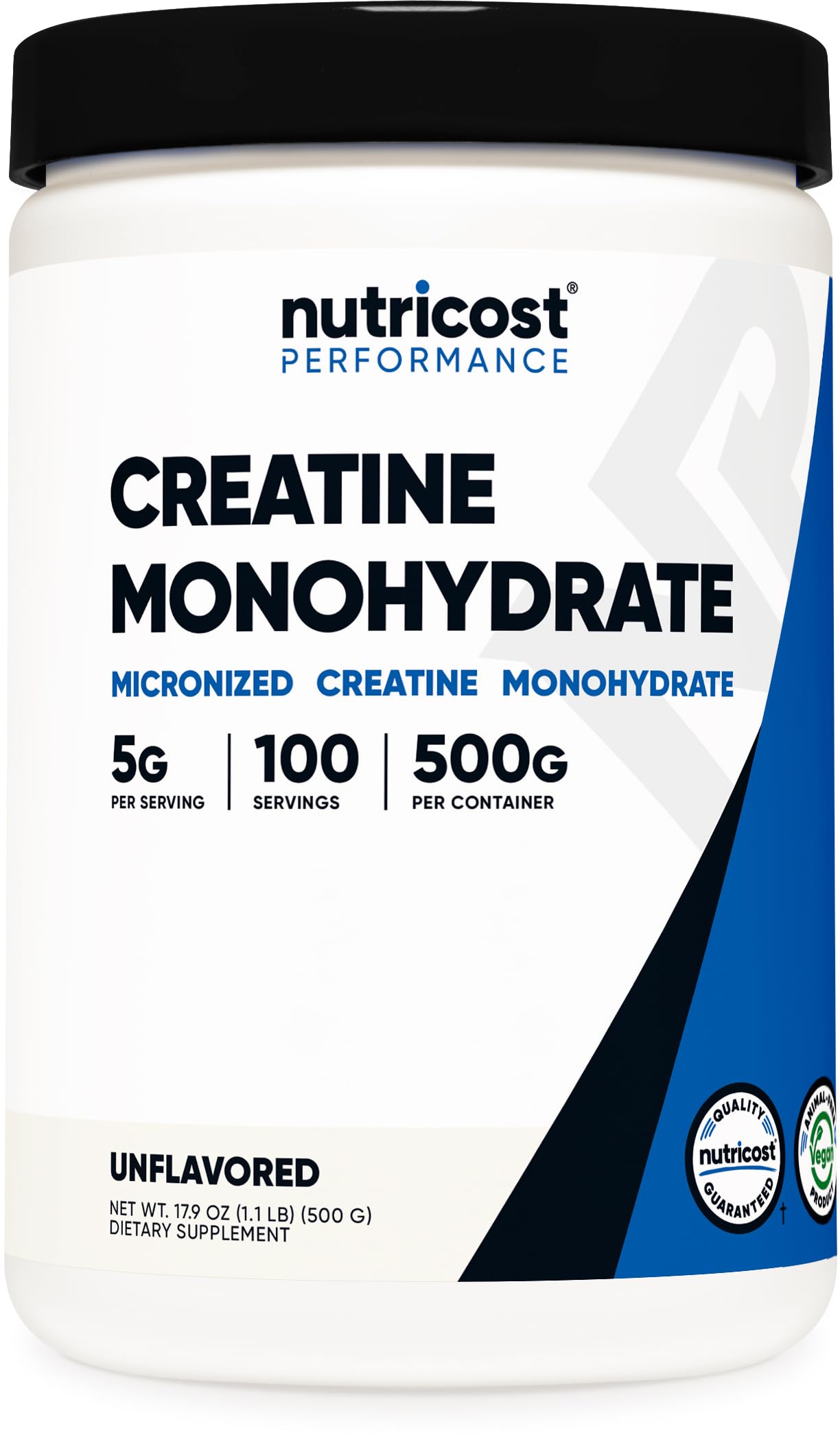
Nutricost Creatine Monohydrate

Everyday recovery

Our Score 9.4/10
Check Price

Worth Noting

  • No third-party sport certification
  • Faintly bitter when mixed with plain water
Form
Micronized powder
Flavor
Unflavored
Creatine Per Serving
0.18 oz
Servings Per Container
100
Read the full review

A hundred servings of five grams each is the whole pitch: a tub that lasts months, a scoop in the bag, and nothing in the powder but micronized creatine monohydrate. It is unflavored, so it goes into whatever you already drink — water, juice, a protein shake, coffee.

We point most people here first because the dose does the work and everything else is decoration. Five grams a day is the amount the strength and recovery research keeps coming back to, and this is the cheapest way to get it in this group. Creatine is not a pre-workout jolt; it builds in your muscles over weeks and helps you repeat hard efforts and bounce back from them, which is what most of us mean by recovery.

In a glass it behaves like creatine: stir it into water and some sinks and stays there as grit. Shake it, or stir it into something with body, and the texture mostly disappears. Unflavored does not mean tasteless either — in plain water there is a faint bitter, salty edge that vanishes the moment it is in a shake or coffee.

Two things it does not offer are sport certification and a precise scoop. If you compete under a testing program, the first gap matters and Thorne closes it. For everyone else, a slightly rounded scoop of monohydrate is not worth a premium.

Bottom line: Our default creatine: five grams a day, 100 servings a tub, and the lowest cost per serving in this group.

#2

Thorne Creatine

Thorne Creatine

Tested athletes

Our Score 9.4/10
Check Price

Worth Noting

  • The most expensive creatine here
Form
Micronized powder
Certification
NSF Certified for Sport
Servings Per Container
90
Read the full review

NSF Certified for Sport is the whole reason to look at this tub. The mark means batches are screened against the substances most athletic organizations ban, and for anyone who competes under a testing protocol, that screening is the difference between a creatine you can take and one you cannot.

The powder is very fine and disappears into coffee or a shake with a stir rather than a soak, and it has almost no taste of its own to argue with. Ninety servings is a long run at one scoop a day, and there is nothing in the tub but micronized monohydrate.

What you pay for is the testing, not a better molecule. This is the most expensive creatine here, and it does the same job as the budget tubs for anyone whose sport does not test. If yours does, the premium is small next to a failed test.

Bottom line: If your sport tests, this is the tub: NSF Certified for Sport screening and a fine powder, at a premium worth paying in that situation.

#3

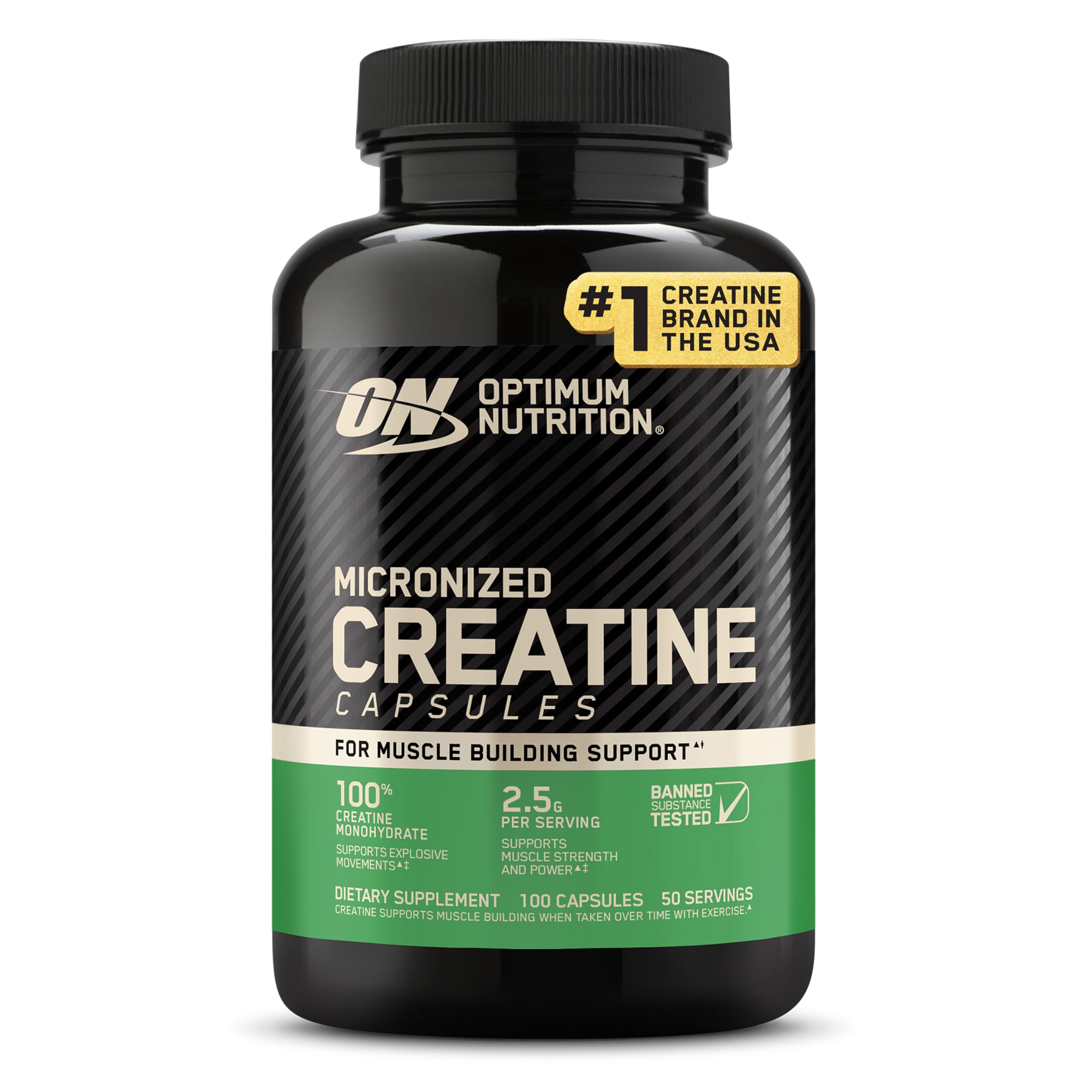
Optimum Nutrition Creatine Capsules

Optimum Nutrition Creatine Capsules

Travel and gym bag

Our Score 9.4/10
Check Price

Worth Noting

  • Large capsules, four at a time
Serving Size
2 capsules
Capsule Count
100
Third-party Program
Informed Choice
Creatine Per Serving
0.09 oz
Read the full review

There is a version of this habit a shaker does not fit: an early flight, a lunchtime session with no locker room, a gym bag that already smells like a gym bag. Two capsules and a mouthful of water handle it.

We keep these in the travel kit for exactly that. Each two-capsule serving is 2.5 grams, so a full five-gram day runs to four capsules, and a hundred capsules works out to twenty-five full days. That arithmetic is the whole purchase — the creatine itself is the same monohydrate as everything else on this page.

The real cost is the format. Per gram these run well above any powder here, and what you are buying is the version that travels: nothing to mix, nothing to clean, nothing to forget at home. Set that against the tub you leave on the counter because it needs a shaker, and the trade often goes the capsules' way.

Bottom line: For the days when a shaker is not happening, these capsules are the creatine that comes along: no scoop, no mixing, nothing to clean.

#4

Core Power 26g Shake

Core Power 26g Shake

Post-workout drink

Our Score 9.4/10
Check Price

Worth Noting

  • Bulky bottles to store and chill
Form
Ready-to-drink
Pack Size
12 bottles
Bottle Size
14 fl oz
Protein Per Bottle
0.92 oz
Read the full review

Fifteen minutes after a hard session, nobody wants to rinse a shaker. A cold bottle of this — 26 grams of complete protein from ultra-filtered milk, plus electrolytes and fluid — covers the post-workout window with nothing to measure, mix or clean.

Vanilla is the one we keep buying: creamy without being syrupy, closer to melted ice cream than to the sweet, chalky drinks most of us have grimaced through. It is lactose free, which is why it goes down easily for people who gave up on dairy-based shakes years ago.

It is shelf stable, so a bottle can live in the gym bag or the desk drawer until the day you need it, and 26 grams of complete protein with all nine essential amino acids is a real contribution to a daily total rather than a token sprinkle. It does not do creatine's job; the two are complements, not substitutes.

Where it earns its place is compliance. This is the recovery product that actually gets drunk on days when cooking is unthinkable and a shaker is optimistic, and a bottle in the bag beats a tub on the counter. We keep a case in the office for exactly those days.

Bottom line: Twenty-six grams of complete protein, electrolytes and no mixing — this is the recovery drink for the ten minutes after training when a shaker is too much to ask.

#5

Sports Research Creatine Capsules

Sports Research Creatine Capsules

Certified capsules

Our Score 9.4/10
Check Price

Worth Noting

  • Costs more per gram than powder
Serving Size
4 capsules
Capsule Count
120
Certification
Informed Sport
Creatine Per Serving
0.18 oz
Read the full review

Four capsules is what buys a full five-gram dose here, and that is the number to check before buying any capsule creatine. The other capsule pick in this group stops at 2.5 grams a serving, which quietly doubles the pills you need to reach a useful daily amount.

The label is the reason it is on this page: Informed Sport tested for banned substances, Non-GMO Project Verified, and third-party tested for purity. That combination is rare in capsule form at any price, and it is the part of the bottle that cannot be checked by taste.

Where it lands for us is narrow but useful — someone who wants a full dose and a certified label without touching a shaker. It asks four capsules at a time, and on a normal week at home a tub does the same job for less. If your shaker already lives on the counter, this is the one to skip.

Bottom line: A full five-gram dose in capsules with Informed Sport testing — the pick for lifters who want a certified label and never touch a shaker.

#6

Nature's Bounty Magnesium Glycinate

Nature's Bounty Magnesium Glycinate

Budget magnesium

Our Score 9.4/10
Check Price

Worth Noting

  • Large capsules for some to swallow
  • Less magnesium per serving than the complex picks
Form
Magnesium glycinate
Serving Size
2 capsules
Capsule Count
120
Magnesium Per Serving
240 mg
Read the full review

This is the least expensive magnesium here, and it does not read like a compromise: 240 mg of magnesium glycinate across two capsules, vegetarian, non-GMO, gluten free and lactose free.

Glycinate is the form to want for a nightly habit — the one that tends to sit easily rather than send you to the bathroom — and two capsules before bed is an easy routine to keep. We have had no trouble taking it consistently, which is more than can be said for the powders that need mixing first.

What you give up is breadth. This is glycinate only, with no malate or citrate, and the formula is as plain as it gets: one mineral, no extras. For most people that is the point — a nightly magnesium is about relaxation and cramps, not a tour of the mineral's forms.

We name it for anyone buying a first magnesium, or keeping a second bottle somewhere they sleep. It is simple, gentle for most stomachs, and the least expensive way into the habit; pay more only when you specifically want the extra forms.

Bottom line: The simple, inexpensive way into nightly magnesium: 240 mg of glycinate, easy to keep up, and enough for most people's cramps and sleep.

#7

MuscleTech Platinum Creatine

MuscleTech Platinum Creatine

Easy mixing

Our Score 9.2/10
Check Price

Worth Noting

  • Fewer servings per tub than the top pick
Form
Micronized powder
Third-party Testing
HPLC-tested
Creatine Per Serving
0.18 oz
Servings Per Container
80
Read the full review

Creatine's reputation for grit is earned — half of it settles at the bottom of the glass while you drink the water above. This tub mostly sidesteps that. The powder is fine, and it stirs into cold water or a shake without the clumps you have to chase around the shaker.

Eighty servings at five grams a scoop, micronized, with no fillers or added sugar. The label leads with numbers about pounds of muscle and percentage strength gains; we ignore all of it and look at the five grams of monohydrate, which is the part that does anything.

What tips it for us is consistency. This is the powder we hand to someone who tried creatine once, hated the texture and gave up — it goes into a shaker and comes out drinkable, every time, without a technique lecture. That reliability is worth more day to day than any claim printed above the scoop.

Bottom line: For anyone who gave up on gritty powder, this is the one to try: five grams a scoop, no fillers, close in price to the budget tubs.

#8

BioEmblem Magnesium Complex

BioEmblem Magnesium Complex

Cramps and sleep

Our Score 9.2/10
Check Price

Worth Noting

  • Pricier than single-form magnesium
Capsule Count
90
Magnesium Forms
Glycinate, malate, citrate
Third-party Tested
Yes
Magnesium Per Serving
300 mg
Read the full review

Magnesium does not build muscle, and it is worth saying plainly: what it does is the unglamorous half of recovery. It is involved in muscle contraction and relaxation, and it is the mineral people reach for when a calf seizes at two in the morning or a late session leaves them wired instead of sleepy.

This one bundles three forms — glycinate, malate and citrate — at 300 mg a serving. Glycinate is the one most people tolerate best; citrate carries the laxative reputation, which is either the point or the problem depending on why you are taking it.

For cramping and wrecked sleep after heavy training, this is the magnesium we suggest first, and cramp relief is the most consistent thing about it. What it does not do is repair muscle — it is an add-on to protein and creatine, not a replacement for either. If your digestion is sensitive, start with one capsule and build up.

Bottom line: Our pick when cramps and poor sleep are what is slowing recovery: three magnesium forms at 300 mg, as an add-on rather than a muscle builder.

How We Tested These Recovery Supplements

We started by building a shortlist from recovery powders, capsules, and gummies that disclosed full ingredient amounts, named the form and dose of creatine where applicable, and carried third-party testing or clear quality documentation. From there we filtered by format, serving size, price per serving, and whether the product made sense for everyday use rather than a single mega-dose. I tested 16 products over four months, keeping a powder tub on the kitchen counter and capsules in my gym bag for post-leg-day sessions, long weekend runs, and the morning-after stair test.

Every powder got the same shaker treatment: 8 ounces of water, 10 seconds of shaking, then a five-minute sit to see whether it clumped, foamed, or settled into grit. I tasted each chilled and at room temperature, noting chalkiness, sweetness, aftertaste, and whether the texture made a second sip feel like a chore. For capsules, I compared pill size with a standard multivitamin and tracked how easily each went down with water; for gummies, I noted chew texture and whether they stuck to my teeth.

For the next 12 hours and into the following morning, I logged bloating, cramping, bathroom urgency, and any other side effects, along with soreness and whether normal training felt harder than it should. We compared cost per serving against the amount of active ingredients delivered, not just the label's front panel. By the end, the products that stayed on the shelf were the ones that mixed cleanly, went down easily, tasted decent enough to repeat, and made the next day feel more manageable.

How to Choose Muscle Recovery Supplements

Decide which part of recovery you are buying

Creatine, protein and magnesium are not three versions of the same thing. Creatine helps your muscles regenerate the energy they burn in hard efforts, and it has the deepest evidence behind strength and repeat performance. Protein supplies the material muscles rebuild with, and a bottle carrying 26 grams of complete protein is an easy way to close a daily gap. Magnesium is about relaxation, cramps and sleep.

If you buy one thing, buy creatine. If you struggle to eat enough protein after training, add a ready-to-drink bottle. If cramping and broken sleep are what is slowing you down, magnesium is the missing piece, and it works alongside the other two rather than instead of them.

Powder, capsules or a bottle

Powder is the cheapest way to buy creatine and the fussiest to take; a shaker solves most of it. Capsules cost more per gram and often hide a half dose inside the serving size, so check the grams rather than the pill count — a full five grams can mean four capsules. Ready-to-drink shakes cost the most per serving and are the most likely to be consumed when you are tired.

Match the format to your worst day rather than your best one. Someone who trains at home with a shaker on the counter should buy powder; someone who trains at lunch and eats at a desk should buy capsules or a bottle.

What the certification actually tells you

NSF Certified for Sport and Informed Sport both mean a batch was screened against substances banned in sport, and Informed Choice runs a comparable batch-testing program. Third-party tested on its own does not say what was tested or against which list. If you compete under a testing protocol, restrict yourself to the named certifications; Thorne and Sports Research carry them here.

If nobody tests you, certification is a nice extra rather than a reason to pay a premium, and the money is better spent on more protein.

Mixing, taste and your stomach

Creatine monohydrate is gritty by nature. Micronizing makes the particles finer but does not make them dissolve, so a shaker or a warm drink beats a spoon in a cold glass. Unflavored is not the same as tasteless either; in plain water there is often a faint bitter or salty note that vanishes in a shake or coffee.

On the magnesium side, glycinate is the gentlest form and citrate the one most likely to loosen your bowels. Whatever you choose, start below the full serving for a week and step up once your stomach has settled.

Frequently Asked Questions

Final Verdict

Start with creatine: five grams every day, from Nutricost's tub, which is the cheapest way to do it and the supplement here that does the most for recovery relative to what it costs. Add a Core Power bottle for the days when eating properly is not happening, and magnesium if cramping and broken sleep are what is actually slowing you down — BioEmblem's three-form complex is the one we reach for, with Nature's Bounty the simpler, cheaper route.

Thorne is the exception worth paying for, and only if your sport tests. Everyone else can put that money into protein and sleep, which do more for soreness than any label on this page.