Nutrition & Supplements

Best Low-Sugar Vegan Protein Bars of 2026

Plant protein bars usually fall into two camps: the ones that taste like a candy bar and carry fifteen grams of sugar, and the ones that eat like compressed sawdust. "Low sugar" almost always means the second. What a good bar actually fixes is the 3 p.m. gap — something that holds you until dinner without feeling like a punishment. My team and I spent four months with 14 of them, and the ones worth rebuying got texture right before they worried about flavor.

Texture is where vegan bars live or die: pea and brown rice protein go gritty fast, and the binders holding a low-sugar bar together can turn it to glue. The other thing first-timers miss is that low sugar doesn't mean low impact — a bar can list three grams and still be mostly tapioca starch and sugar alcohols that leave you bloated by mid-morning. We ate each one cold, at room temperature, and in a hurry; the ones worth keeping are below.

#1

ALOHA Peanut Butter Cup Bar

Top Pick
ALOHA Peanut Butter Cup Bar

Everyday clean snacking

Our Score 8.8/10
Check Price

Worth Noting

  • Chocolate coating flakes and crumbles easily
  • Costs more per bar than the budget pick
Fiber
0.35 oz
Protein
0.49 oz
Sweeteners
No stevia or erythritol
Total Sugar
0.18 oz
Read the full review

What sold us on ALOHA's Peanut Butter Cup bar is a list of things that aren't in it. No stevia, no erythritol, no maltitol, and the bar is USDA organic besides. Sugar alcohols are how a lot of plant bars reach a low sugar number, and they're also why so many of them finish with a cooling, faintly chemical edge. This one finishes like a peanut butter cup, which is not a sentence we get to write often in this category.

That would be decoration if the numbers weren't there. Each bar carries 14 g of organic plant protein, 10 g of fiber and 5 g of sugar at around 200 calories, so it's a genuinely filling snack rather than a token one. It's the bar we hand to people who tell us they've given up on vegan protein bars, and the one that goes into a gym bag or a desk drawer without a second thought. Peanut butter cup is also the flavor that behaves most like dessert, which is why it's the box we keep buying.

Five grams of sugar is the high end of this group — No Cow and IQBAR both land at 1 to 2 g — and that's the honest trade for sweetness that doesn't come out of a sugar alcohol. If 2 g is a hard ceiling for you, shop further down this guide. If you want a bar that tastes like a treat and still fits a low-sugar day, this is the one.

Bottom line: If you want a low-sugar vegan bar you'll actually finish the box of, start here: real chocolate and peanut butter flavor, 14 g protein, and no stevia or erythritol anywhere in it.
#2

Mezcla Variety Pack

Mezcla Variety Pack

Crispy puff texture

Our Score 8.6/10
Check Price

Worth Noting

  • Assortment may not match the pictured flavors
Fiber
0.11 oz
Protein
10-11 g
Calories
160
Total Sugar
5-8 g
Read the full review

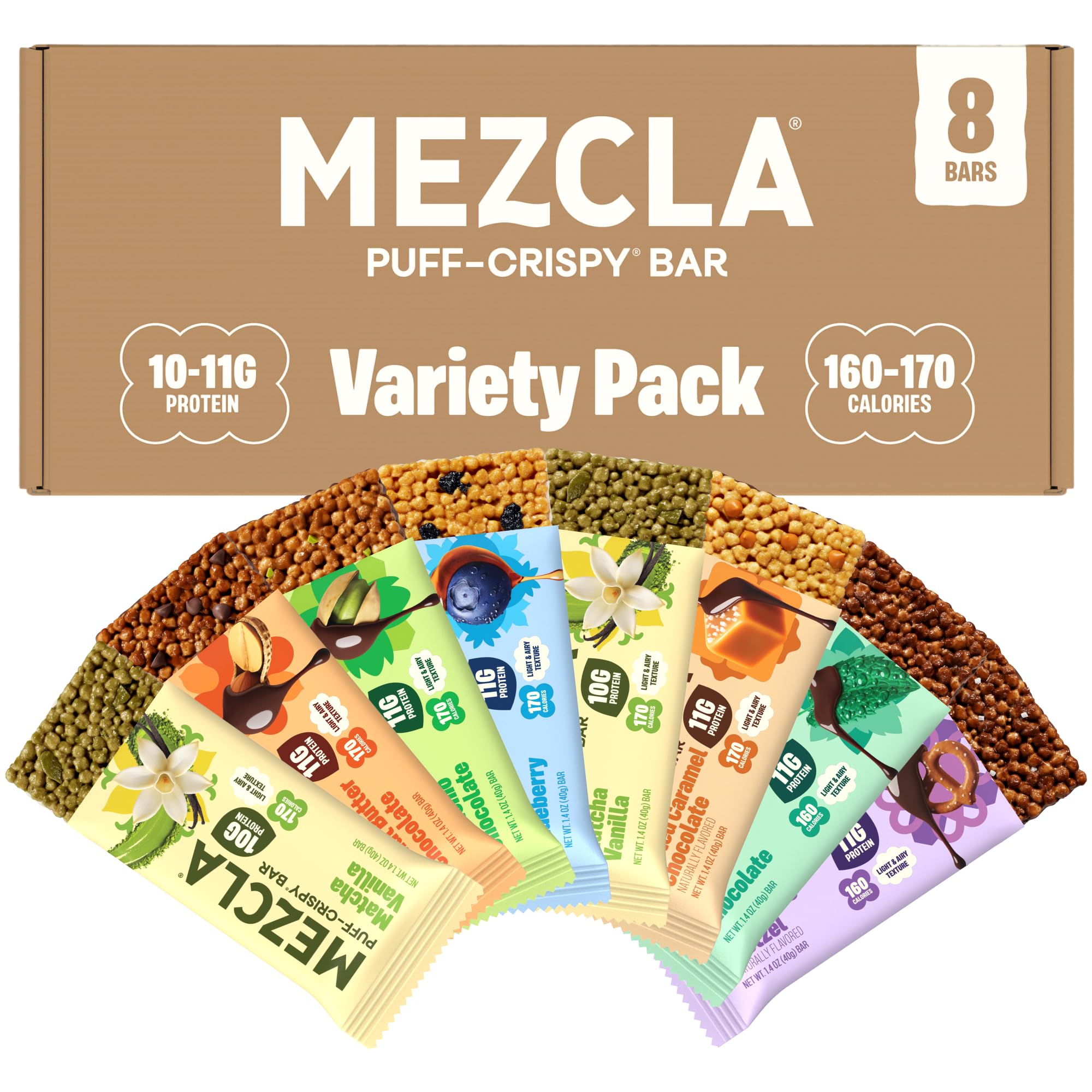
Mezcla's variety pack is eight thin, puffed bars — closer to a rice-krispie treat than to the dense chews that dominate this guide — at 160 calories and 10 to 11 g of pea protein apiece. The texture is the whole reason to look at them: a real snap, light in the hand, and easy to eat when you don't want something heavy sitting in your stomach before a workout.

Protein is on the low side for this set, and the sugar range is the widest here: the bars run 5 to 8 g depending on the flavor, so how low-sugar your snack is depends on which one you pull out of the box. The flavors themselves are strong and unusual — matcha, Mexican hot chocolate, maple blueberry — though the assortment doesn't always match what's pictured on the box.

So this isn't the pick for a strict sugar ceiling or a 20 g protein target. What it is: the bar to hand someone who's bored of dense, sticky protein bars and wants a snack that eats like a rice treat. That's a real job, and Mezcla does it better than anything else here.

Bottom line: Pick Mezcla when you want crunch from a plant bar — puffed, light, and closer to a rice treat than anything else in this guide.

#3

No Cow Chunky Peanut Butter

No Cow Chunky Peanut Butter

High-protein recovery

Our Score 8.4/10
Check Price

Worth Noting

  • One flavor per twelve-bar box
  • Pricier per bar than most here
Count
12 bars
Fiber
0.49 oz
Protein
0.71 oz
Total Sugar
0.04 oz
Read the full review

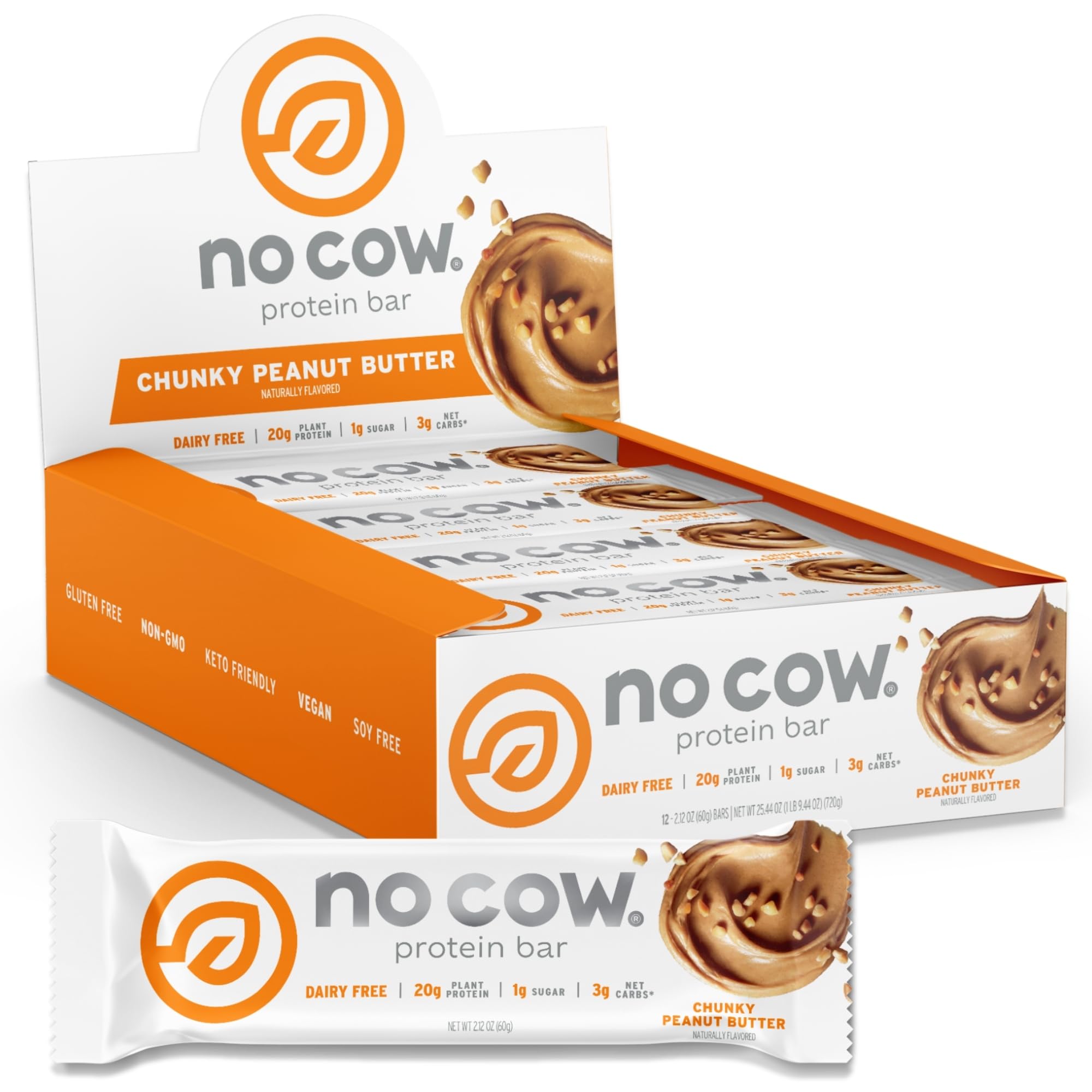
Twenty grams of protein, one gram of sugar, fourteen grams of fiber. Laid against the rest of this set, No Cow's Chunky Peanut Butter bar wins the arithmetic comfortably — nothing else here gets close on protein without handing sugar back. It's certified vegan, gluten-free, soy-free and dairy-free, and the peanut flavor comes with actual peanut pieces rather than a flavoring.

The chew is dense, closer to nougat than to a crisp bar, with the faint chalkiness plant protein tends to bring. Each bar is 2.12 oz, the heaviest in this guide, and it eats like it: you'll want a drink alongside, and it's happiest after a workout rather than inhaled between meetings.

Where it earns its place is satiety. Fourteen grams of fiber and 20 g of protein is a combination that holds off lunch, and it does it without the sugar load of a traditional bar. If your training week is the reason you're buying protein bars at all, this is the one to point at. If you want something to eat for pleasure at three in the afternoon, ALOHA has the better answer.

Bottom line: The bar for people who read the protein number first: 20 g of plant protein and 1 g of sugar in a dense chew that genuinely holds you until the next meal.

#4

Misfits Variety Pack

Misfits Variety Pack

Dessert-like treats

Our Score 8.4/10
Check Price

Worth Noting

  • Only chocolate-based flavors
  • Five-bar pack is small for the price
Count
5 bars
Fiber
3-5 g
Protein
14-15 g
Total Sugar
Under 1 g
Read the full review

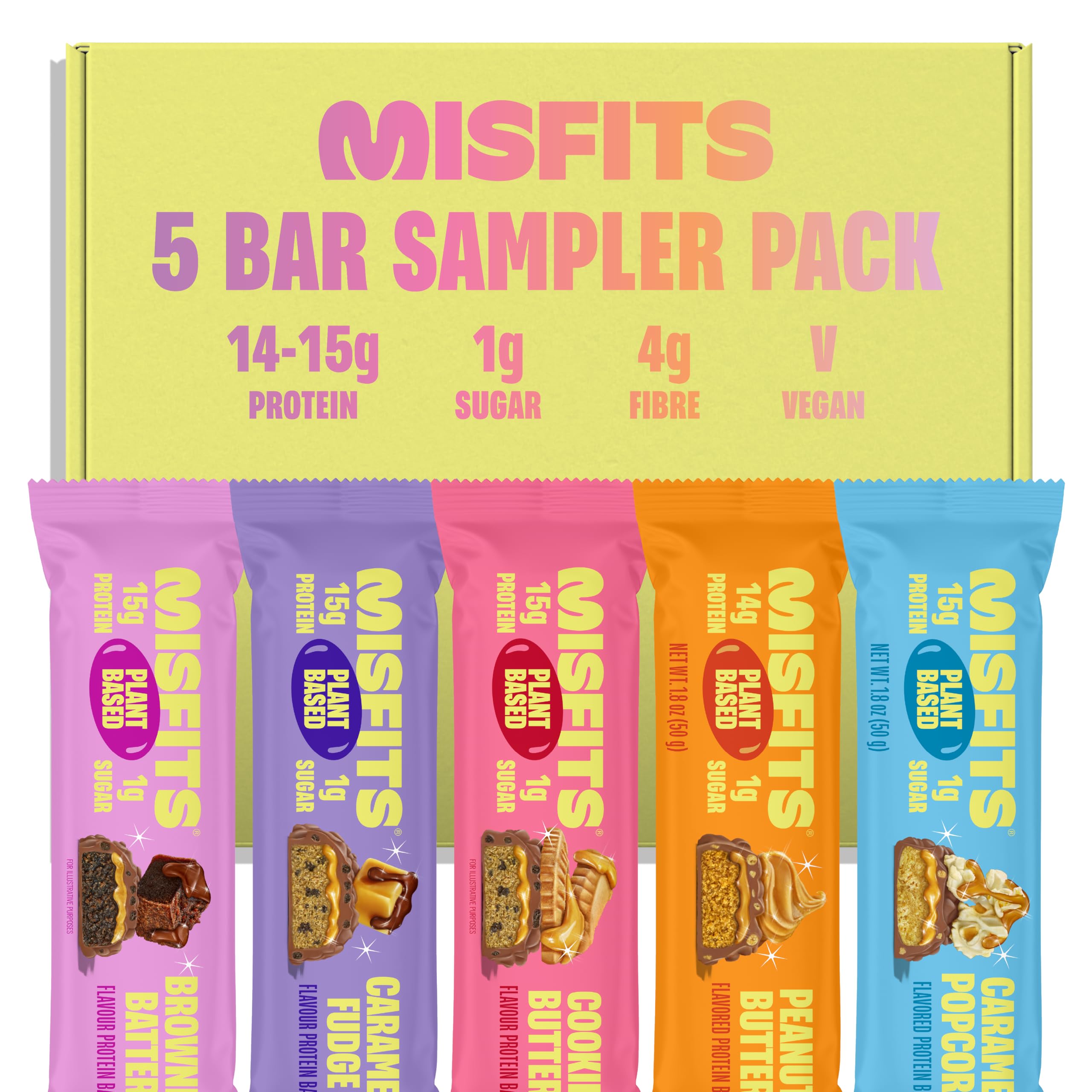
Misfits is the closest thing to a candy bar in this guide, and it gets there on almost no sugar at all — under a gram per bar, with 14 to 15 g of plant protein and 190 calories from a pea and soy blend. The bars are triple-layered and coated in chocolate, which is the entire appeal: if you've tried a low-sugar vegan bar that tasted like pressed powder, this is the rebuttal.

Texture is where it divides people. The chew is tacky and clings to your teeth in a way a crisp bar never does, and that stickiness is also what makes it feel indulgent rather than worthy. Buy the five-bar pack as a trial rather than a restock — the full boxes are where the value sits, and you'll want to know your flavor before you commit to a case.

Bottom line: For the chocolate craving a chalky protein bar can't touch: under 1 g of sugar, 14 to 15 g of plant protein, and a chew that reads like candy.

#5

Simply Protein Crispy Variety Pack

Simply Protein Crispy Variety Pack

Light crispy crunch

Our Score 8.4/10
Check Price

Worth Noting

  • Lemon coconut flavor is hit or miss
Fiber
0.25 oz
Protein
0.46 oz
Calories
150-170
Total Sugar
0.07 oz
Read the full review

Most plant bars here are dense, and Simply Protein's are the exception — puffed rather than pressed, so they crunch like a rice treat instead of chewing like nougat. At 150 to 170 calories with 13 g of protein, 2 g of sugar and 7 g of fiber, they're the lightest bar in this guide that still does a job. We went through this box faster than any other in the set, which is its own kind of review.

The pack splits three ways — four Dark Chocolate Almond, four Lemon Coconut, four Peanut Butter Chocolate — and lemon coconut is the polarizing one: it's either the best flavor in the box or it tastes like almost nothing. Seven grams of fiber means the bars sit between meals better than their weight suggests. They're not the highest-protein option here, and they cost about what the midrange picks do, but as a light snack they're the ones we reach for first.

Bottom line: The one to buy if you gave up on protein bars because of the texture: light, crispy, 13 g protein and 2 g of sugar.

#6

YuBi Variety Pack

YuBi Variety Pack

Calorie counting

Our Score 8.4/10
Check Price

Worth Noting

  • Sweetened with maltitol, which can upset digestion
Count
12 bars
Protein
0.35 oz
Calories
100
Sweetener
Maltitol
Read the full review

A hundred calories and 10 g of protein puts YuBi in a slot almost nothing else here fills: a bar small enough to eat when you're peckish rather than actually hungry. It's chocolate-coated, vegan, gluten- and dairy-free, and made with Rainforest Alliance chocolate — a lot of small pleasures for a bar this size.

There's no gram figure for sugar in the product details, only the claim of low sugar, so if you're counting grams that's the number to confirm before you order a twelve-pack. Calories are what the brand leads with, and the four-flavor box is a reasonable way to find your favorite without committing to a case of one.

Small bars come with a catch: 10 g of protein is the low end of this set, and this is a snack rather than recovery fuel. Where we did find value is in the portion — a 100-calorie bar fits into a day where a 220-calorie bar doesn't, and the chocolate coating makes it feel like more than it is.

Our hesitation is the sweetener, and it's worth reading the label before you buy. Otherwise this is the bar for a desk drawer, a handbag, or a walk in the morning — the one you eat because it's nice, not because it's a workout.

Bottom line: A small, chocolate-coated bar for the times you want 100 calories and 10 g of protein rather than a meal.

#7

IQBAR Sampler Variety Pack

IQBAR Sampler Variety Pack

Trying flavors

Our Score 8.0/10
Check Price

Worth Noting

  • One bar per flavor, so favorites run out first
Count
7 bars
Fiber
8-9 g
Protein
0.42 oz
Total Sugar
1-2 g
Read the full review

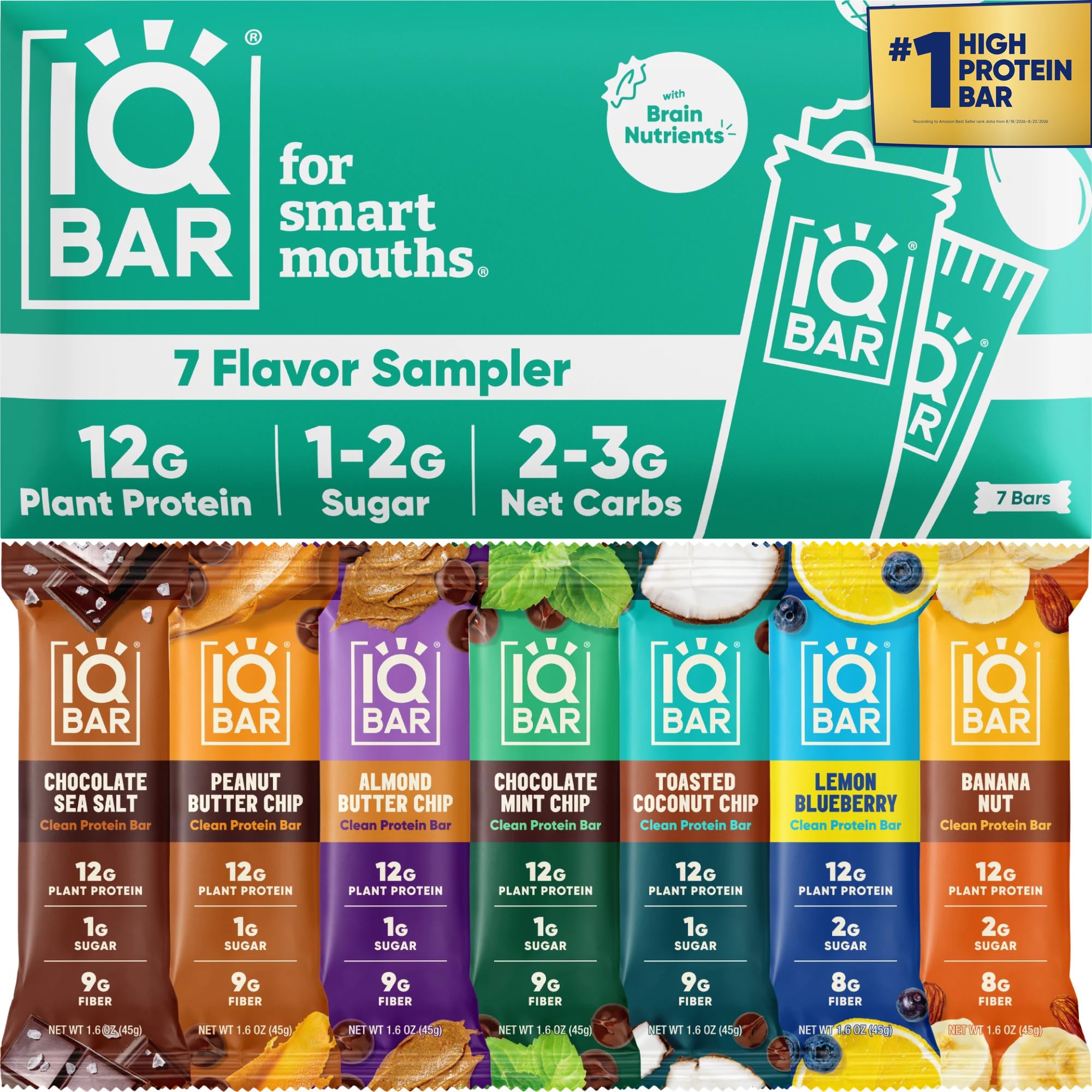
A seven-bar sampler is how we like to meet a new protein bar: one of each flavor, no twelve-count commitment to something you might not finish. IQBAR's pack covers Chocolate Sea Salt, Peanut Butter Chip, Almond Butter Chip, Chocolate Mint Chip, Toasted Coconut, Lemon Blueberry and Banana Nut, at 12 g of plant protein, 8 to 9 g of fiber and just 1 to 2 g of sugar. We think that's the smartest way to shop this category, full stop.

The flavors split tasters more sharply than any bar here. Lemon blueberry is the standout and the one most likely to earn a full box; banana nut is the one to skip if you're buying singles. The chew runs soft and slightly pasty, which is the part of this bar we liked least, and the lion's mane and MCTs in the blend are a nice story more than something you can taste. What you're really buying is information — seven chances to find a flavor worth reordering — plus a Clean Label Project certification that's unusual in this aisle.

Bottom line: Buy this one to find out whether a plant bar this low in sugar actually suits you — seven flavors, one bar each, and no twelve-count gamble.

How We Found the Bars Worth Finishing the Box

We started by gathering every low-sugar vegan bar we could find on grocery shelves and at the larger online retailers, then cut anything that led with tapioca syrup, listed under 10 grams of protein, or leaned on maltitol for its sweetness — that last filter alone removed a surprising number of contenders. Fourteen bars made the cut, spanning the price range and a wide spread of protein sources, and we tested them over four months.

They rode in gym bags, desk drawers, jacket pockets, and a carry-on. We ate them at 7 a.m. before a run, at 3 p.m. between back-to-back meetings, and once at a rest stop on a six-hour drive. Each bar got eaten at least twice: once straight from the fridge, where most people store them, and once at room temperature after a few hours in a bag. We counted chews before a bite stopped fighting back, noted whether crumbs ended up in our laps, and checked whether a bar left a chalky film on the teeth.

Flavor got scored twice — on the first bite and again on the third bar from the same box, since plenty of these taste great once and wear thin by Friday. We compared the sugar number on the panel to how sweet the bar actually ate, and paid attention to where that sweetness came from; a few came back up as bloating an hour later. To judge protein, we tracked whether a bar carried us from breakfast to lunch without a snack, and we did the math on grams of protein per dollar. The final test was the simplest: which boxes we finished and which went stale.

How to Choose a Low-Sugar Vegan Protein Bar

Read the sugar and the sweetener together

A low sugar number on the front of a box tells you almost nothing about how the bar will taste, because most bars get there with sugar alcohols — erythritol, maltitol and the like — which deliver sweetness without the grams and sometimes with a cooling aftertaste or a rumbling stomach. If you want sweetness from real ingredients instead, expect to land nearer 5 g of sugar than 1 g, and decide which of those two you actually care about before you shop.

Our rule of thumb: 5 g of total sugar or less is a genuinely low-sugar bar, and anything sitting at 1 to 2 g is worth flipping over to see what is doing the sweetening. If sugar alcohols bother you, ALOHA's bars are the ones in this group that state outright they contain none.

Match the protein to the job

Ten to thirteen grams of protein is a snack. Twenty grams paired with a heavy fiber load is closer to a meal bridge, and that's what to buy if the bar is standing in for a shake after training. Calories split the same way: the 100-calorie bars here belong in a desk drawer, while a 200-calorie bar with 14 g of fiber will hold you until dinner.

Decide which of those you're buying before you compare labels. A bar that is wrong for the job is a bar that sits in the cupboard until it goes stale.

Texture is why boxes go unfinished

Every bar here is low in sugar and plant-based; what separates them is how they feel in your mouth. Crispy, puffed bars like Simply Protein and Mezcla suit anyone who finds dense bars claggy. Dense chews like No Cow and ALOHA satisfy for longer but bring the chalkiness plant protein is known for. Chocolate-coated bars like Misfits read as dessert and stick to your teeth.

Buy a five- or seven-bar sampler before a twelve-count. You'll pay more per bar, but less than you'd spend on a box you throw away.

Check that 'plant' means vegan

'Plant protein' is a statement about the protein source, not about the whole bar. Milk chocolate, whey, honey and dairy-derived flavorings all turn up in bars marketed on their plant protein, and a product sitting on a shelf under high protein says nothing about being vegan.

Look for the word vegan, or a certified vegan mark, on the package itself. That's the difference between a bar that fits your diet and one that merely leans in that direction.

Do the per-bar math

Sample packs almost always cost more per bar than full boxes, and full boxes of the premium bars here run higher per bar than the budget one. That's not a reason to skip the sampler — it's the least expensive way to avoid twelve bars you don't like.

On a per-bar basis, YuBi is the cheapest here and No Cow and Misfits are the priciest. Buy the small pack to pick a flavor, then the full box to live on it.

Frequently Asked Questions

Final Verdict

ALOHA's Peanut Butter Cup bar is the one to buy first: 14 g of organic plant protein, 10 g of fiber, 5 g of sugar, and a flavor that doesn't taste like a compromise. It's the bar we hand people who assume vegan protein bars are punishment.

If the protein number matters more than the taste — a post-lift bar rather than a 3 p.m. treat — No Cow gives you 20 g with a single gram of sugar. And if you'd rather audition seven flavors than commit to one, IQBAR's sampler is the sensible way to shop.