Nutrition & Supplements

Best Clean Protein Powder of 2026

A protein powder can have a spotless ingredient label and still ruin your morning smoothie. The tell is in the first sip: a chalky film on your teeth, a gritty layer at the bottom of the shaker, or a sweetener that lingers like candy you didn't ask for. Clean protein powder should fix that — fewer fillers, gums, and artificial flavors, and a texture that disappears into water, milk, or a blender full of frozen fruit. It should also taste like something you'd finish on purpose, not choke down for the macros.

I've been through enough tubs to know that 'clean' on the front label doesn't guarantee a clean-tasting shake. Over four months, our team worked through 15 powders — shaking them in water, blending them with fruit, and stirring them into coffee and oats — and the differences in mixability, texture, and aftertaste were obvious. The best ones dissolved without a fight, delivered real protein per scoop, and cost a fair amount per serving rather than per tub. The picks below are the ones we kept reaching for after testing was done.

#1

Beverly International UMP Protein

Top Pick
Beverly International UMP Protein

Staying full longer

Our Score 9.6/10
Check Price

Worth Noting

  • Sweetener is not named on the listing
Lactose
Almost none
Container
32.8 oz
Protein Blend
Whey and casein
Protein Per Serving
0.71 oz
Read the full review

Beverly has been selling this tub in roughly this form for a long time, and the spec sheet explains why it has stayed: a blend of whey and casein, 20 grams of protein, low carbs, and almost no lactose. No clean-label theatrics and no flavor-of-the-month ingredients.

The blend is the reason it works as a meal. Casein digests slowly, whey quickly, and the combination keeps you full in a way a straight isolate does not. The chocolate is smooth, genuinely chocolate, and free of the chalky finish that shows up in cheaper blends.

It is also the calmest whey here on the stomach, which is a strange thing to be able to say about a product this old-school — almost no lactose, and a texture that does not sit heavily. It mixes in water without lumps, which matters when you are drinking it at a desk rather than at a kitchen counter.

Our verdict: for the shake that replaces breakfast rather than follows a workout, this is the one. Twenty grams a scoop is the wrong number if you are chasing protein density and exactly right if you want to stop thinking about food until lunch. Mixed with less water than the label calls for, it eats like chocolate pudding — the fastest way we have found to finish a tub.

Bottom line: For a shake that has to hold you until the next meal, this whey-and-casein blend is the calmest, best-tasting option here.

#2

Transparent Labs Grass-Fed Whey Isolate

Transparent Labs Grass-Fed Whey Isolate

Clean daily whey

Our Score 9.4/10
Check Price

Worth Noting

  • Premium price against the other whey picks
Protein Source
Grass-fed whey isolate
Protein Per Serving
0.99 oz
Artificial Sweeteners
None
Servings Per Container
30
Read the full review

Twenty-eight grams of protein a scoop is more than any other pick here delivers, and it arrives without artificial sweeteners, food dyes, or preservatives — stevia handles the sweetening. That is the whole argument for putting it first: a powder marketed on what it leaves out usually asks you to give up protein density or flavor to get there, and this one does not. The milk chocolate sits on the cocoa side rather than the candy side, which is what we want before a morning session rather than after dessert.

Mixing is clean. It dissolves fully in a shaker with water and stays thin, closer to chocolate milk than to the milkshake texture a lot of chocolate whey turns into. The one behavior worth knowing is foam: run it through a blender and it whips up a head that needs a minute to settle, so pour and wait rather than filling the glass to the brim. A shaker sidesteps the issue completely.

Digestion is where a daily whey usually earns or loses its place, and this is one of the calmer picks in the group on that front — noticeably lighter than the concentrate-based tubs here. Thirty servings makes it about a month of weekday shakes, and the flavor does not wear out over that stretch, which is more than we can say for some of the cheaper chocolate powders.

Bottom line: We recommend it to anyone who wants the most protein per scoop without artificial sweeteners, dyes, or preservatives, and the milk chocolate earns its place on taste.

#3

Ascent 100% Whey Protein

Ascent 100% Whey Protein

Value clean whey

Our Score 9.2/10
Check Price

Worth Noting

Package
2 lb collapsible bag
Sweetener
Stevia
Certification
Informed Choice
Protein Per Serving
0.88 oz
Read the full review

The packaging is the first thing you notice. Ascent ships its whey in a collapsible bag instead of a tub, which sounds like a minor detail until you are fitting it into a cabinet that already holds a blender and a jar of oats — the bag flattens into whatever gap is left, and it is the pick here for a small kitchen.

Inside is a native whey isolate blend, 25 grams of protein a scoop, lightly sweetened with stevia and free of artificial flavors and sweeteners. The Informed Choice certification on the label is the part we care about most: it is third-party testing for banned substances, and it is the clearest version of that paperwork in this group. Vanilla bean is mild enough to disappear into overnight oats or a berry smoothie without turning either one into dessert.

In a shaker it behaves — 25 grams dissolves in water with no gritty tail, and the texture stays light rather than coating the glass. What it is not is a treat: no added sugar and stevia means it reads clean rather than rich. That is the right trade for a powder you will drink five days a week, and it is why this is the whey we name when someone wants our top pick's ingredients without the premium.

Bottom line: Our value pick: a native whey isolate with stevia, no artificial flavors, and a sport certification, for households that go through a bag a month.

#4

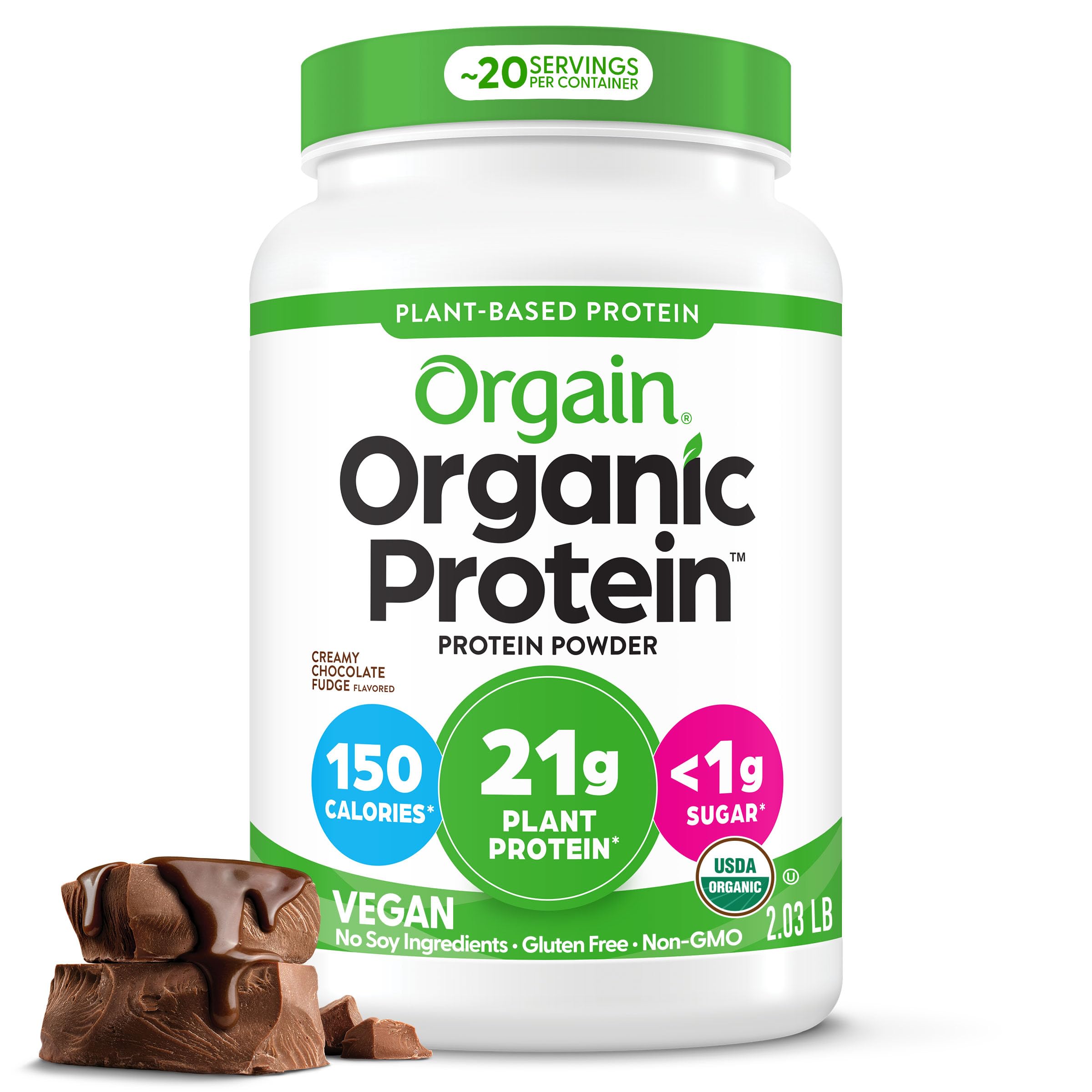
Orgain Organic Vegan Protein

Orgain Organic Vegan Protein

Plant on a budget

Our Score 9.0/10
Check Price

Worth Noting

  • Lower protein per scoop than any whey here
Added Sugar
0 g
Certification
USDA Organic
Protein Sources
Pea, brown rice, chia
Protein Per Serving
0.74 oz
Read the full review

Organic plant protein at the lowest price in this group is the headline. Twenty-one grams comes from organic pea, brown rice, and chia — a trio that covers all nine essential amino acids between them — with zero grams of added sugar and none of the erythritol, carrageenan, soy, or dairy that send people looking for a cleaner plant powder in the first place.

The texture is the catch, and the fix is worth knowing before you order. Shaken in water, this is gritty enough that you feel it going down. Blended with almond milk it turns creamy, the chocolate reads properly, and the whole thing starts to taste like the shake on the label. That is not a small distinction; it is the difference between a tub you finish and one that migrates to the back of the pantry. No blender, no plant pick.

Where it earns its place is the everyday math: a real organic certification, a chocolate flavor that does not taste like a sweetener delivery system, and a budget price that makes a daily habit easy to sustain. It is the plant powder we hand to someone trying one for the first time, and the one that forgives being made in a hurry with whatever milk is in the fridge.

Bottom line: For a first plant powder or a household on a budget, this organic pea-and-rice blend is the easy yes — just plan on a blender.

#5

Jocko Fuel Whey Protein

Jocko Fuel Whey Protein

Meal replacement shakes

Our Score 9.0/10
Check Price

Worth Noting

  • Bloating can still occur despite the enzymes
Extras
Digestive enzymes and probiotics
Sweeteners
Allulose, monk fruit, reb-M
Protein Sources
Whey concentrate, isolate, casein, egg
Servings Per Container
28
Read the full review

Four protein sources in one scoop — whey concentrate, whey isolate, micellar casein, and egg — is a different design from anything else here. The point is not a bigger protein number; it is a slower release of amino acids, which is why this is the pick for the shake that stands in for a meal rather than the one you drink straight after a lift.

We are just as taken with the sweetener work. Jocko uses allulose, monk fruit, and reb-M instead of sucralose, and the vanilla milkshake flavor tastes sweet without the chemical aftertaste that gives cheap powders away. Digestive enzymes and probiotics are in the tub as well, and while that is the kind of addition that usually reads as marketing, it is a fair answer to the main reason people abandon whey.

It stays smooth mixed with water alone, which a casein-heavy blend does not always manage, and in milk it thickens into something closer to a dessert. Twenty-eight servings a tub; used as a meal replacement, that is roughly a month of breakfasts.

Bottom line: Choose it when the shake stands in for a meal: four protein sources, digestive enzymes, and no sucralose, in a flavor that tastes like a milkshake.

#6

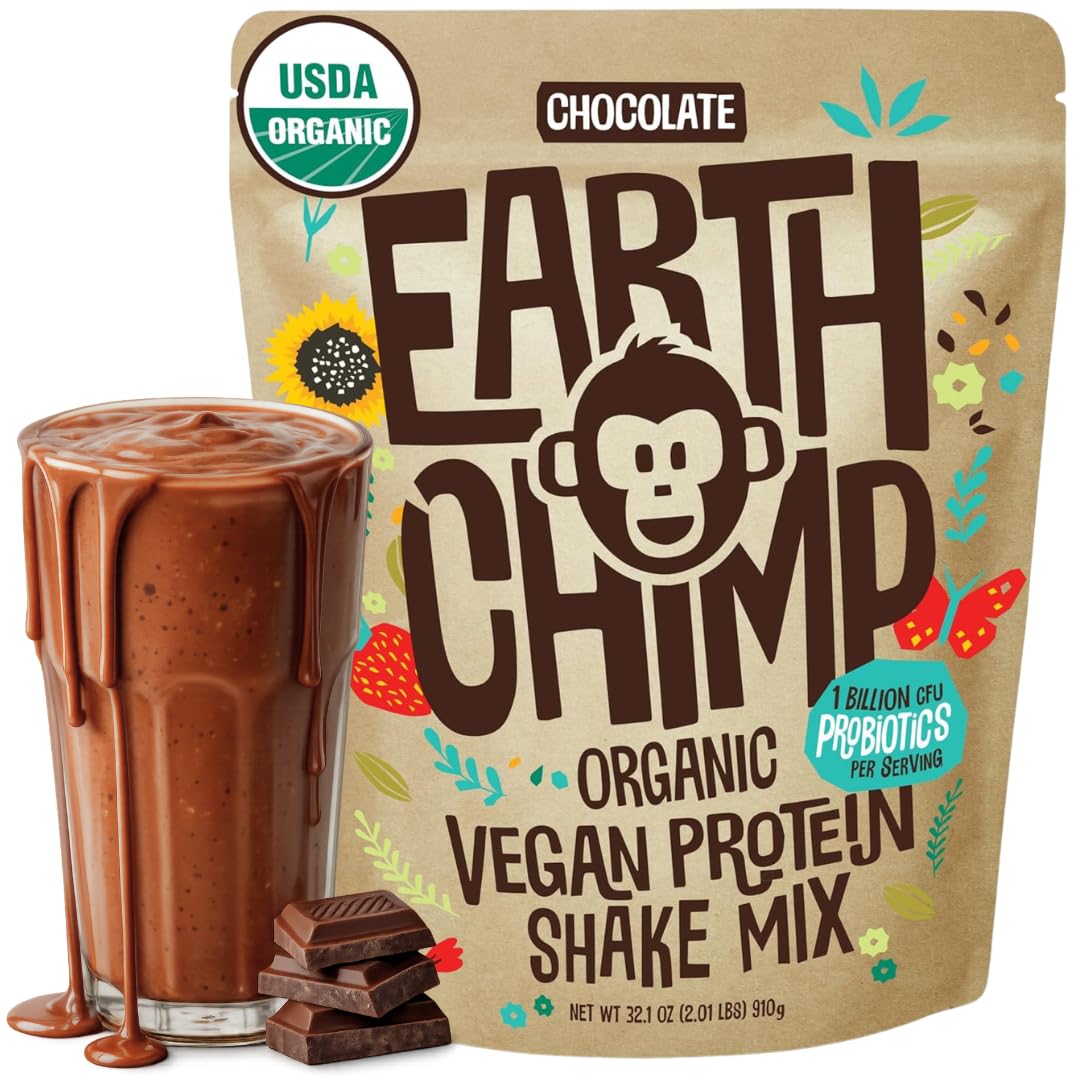
EarthChimp Organic Vegan Protein

EarthChimp Organic Vegan Protein

Stevia-free vegan shakes

Our Score 9.0/10
Check Price

Worth Noting

  • Lowest protein per scoop in this set
Sweetener
Monk fruit and dates
Certification
USDA Organic
Fiber Per Serving
0.14 oz
Protein Per Serving
0.71 oz
Read the full review

Most chocolate vegan powders lean on stevia, and anyone who has poured half a tub down the sink knows why that matters. EarthChimp sweetens with monk fruit and dates instead, and the chocolate comes from organic cocoa rather than flavoring, which is why it drinks like cocoa and not like a supplement.

Twenty grams of plant protein, 4 grams of fiber, 120 calories a serving, all nine essential amino acids, and a billion CFU of probiotics. The panel is written in plain English — cocoa, dates, banana, baobab, cinnamon, turmeric — with no erythritol, sugar alcohols, carrageenan, or artificial sweeteners, and it carries USDA Organic certification.

In the glass it is rich and dark, and smooth enough that the plant grit does not announce itself the way it does in cheaper pea blends. It blends better than it shakes, so plan on a blender rather than a bottle, and give it a full thirty seconds rather than the ten you would give a whey isolate.

As a daily vegan option, this is the one we point to for anyone who has given up on plant powders before: the sweetness is round rather than sharp, the texture survives a blender, and the fiber and probiotics make it a breakfast rather than a protein hit. It costs more than the Orgain tub and it is the better drink.

Bottom line: The plant pick for anyone who has given up on stevia-sweetened vegan powders: monk fruit, real cocoa, and a texture that survives a blender.

#7

Levels Whey Protein

Levels Whey Protein

Short ingredient lists

Our Score 8.8/10
Check Price

Worth Noting

  • Whey concentrate carries more lactose than isolate
Sweetener
Monk fruit extract
Protein Source
Grass-fed whey concentrate
Ingredient Count
6
Protein Per Serving
0.85 oz
Read the full review

Six ingredients is the entire pitch, and in a category where clean often means swapping four unpronounceable things for three others, that is persuasive. Levels builds its vanilla on grass-fed whey concentrate, real Madagascar vanilla, and monk fruit, with no added sugar, no fillers, and no artificial flavors or sweeteners — 24 grams of protein and 5.4 grams of BCAAs a scoop. We think monk fruit is the smarter sweetener call: it lands rounder and sweeter than stevia, without the herbal edge that turns people off natural powders.

Concentrate rather than isolate is the choice that defines this one. You get more of what milk brings besides protein, and the trade is a heavier glass and more lactose than an isolate — the thing to weigh if dairy has ever sat badly with you. Otherwise it mixes cleanly in a shaker with water or milk, and the vanilla is mild enough to vanish into a smoothie with berries. Nothing about it tastes like a compromise, which is not something we can say for every short-label powder here.

Bottom line: Pick this when the ingredient list is the whole reason you are shopping: six items, monk fruit instead of stevia, and grass-fed whey concentrate.

#8

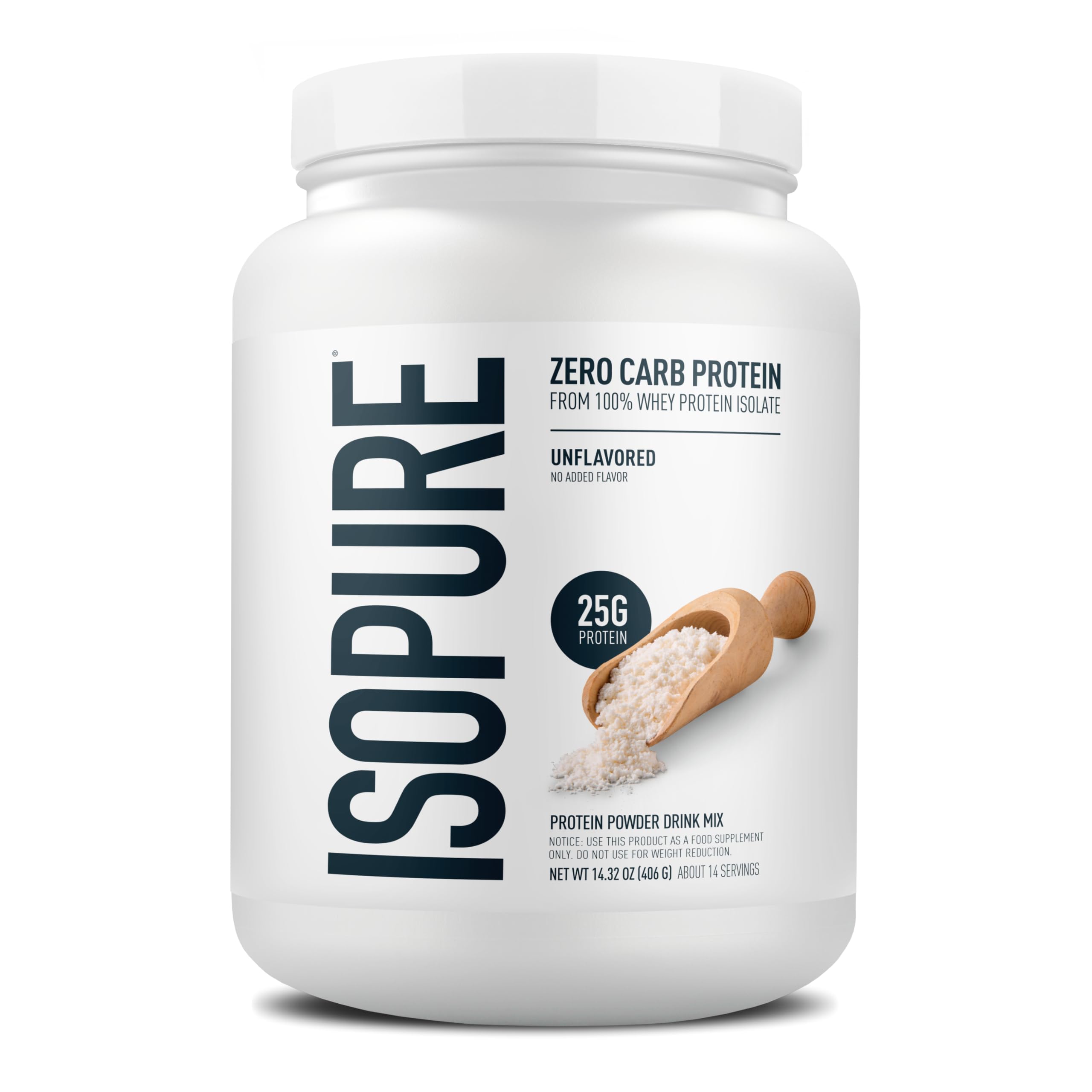
Isopure Zero Carb Unflavored

Isopure Zero Carb Unflavored

Cooking and coffee

Our Score 8.8/10
Check Price

Worth Noting

  • Smallest tub here at one pound
  • Noticeable milky smell in the bag
Flavor
Unflavored
Package
1 lb bag
Carbohydrates
Low or zero
Protein Per Serving
0.88 oz
Read the full review

This is not a shake, and judging it as one misses the point. Isopure's zero-carb unflavored isolate is an ingredient: 25 grams of protein with nothing to taste, so it goes into coffee, soup, oatmeal, or a smoothie that already has a flavor of its own and does not need vanilla arguing with it.

We rate it the most useful tub here for anyone who cooks. It stirs into cold liquid cleanly and leaves no sweetness behind, so a scoop in tomato soup or a berry smoothie does not turn either one into dessert. Heat is the exception: dumped straight into hot coffee it clumps into something like cottage cheese, and stirring harder does not rescue it. Whisk it into a spoonful of cold water or milk first, then add the hot liquid, and the problem disappears.

Bottom line: Buy the unflavored bag if you want protein, not a drink — it disappears into coffee, soup, and smoothies without adding sweetness.

How We Tested Clean Protein Powders

We started by reading ingredient panels, not marketing copy. To make the cut, a powder had to list its protein source clearly, keep the additive list short, and carry a third-party testing seal or published certificate of analysis. We also filtered by protein type — whey isolate, casein, pea, and blended plant proteins — so the lineup covered different diets and tolerances. From there, we priced each one per serving, not per tub, because a big container of mediocre powder is still a bad deal.

Testing ran for four months across 15 powders. Each one got the same first test: two scoops in a shaker bottle with eight ounces of water, shaken for ten seconds, then poured through a fine mesh strainer to see what clumped or clung to the sides. We noted whether the powder sank or floated, whether it left a gritty film on the cup, and whether a chalky layer settled at the bottom after five minutes. Then we repeated the process with oat milk and blended each powder into a smoothie with frozen banana and spinach to check for blendability and texture.

Taste was judged plain first, then in coffee and overnight oats, because a powder that only works under peanut butter is limited. We tracked grams of protein per scoop and how long each shake kept us full through a morning — effectiveness, in practical terms. Clumping was the most common failure: some powders turned into paste on the shaker's lid, others left a sandy residue. We also noted how easy each tub was to open, reseal, and scoop without burying the scoop, since buying a powder you dread using is its own kind of waste.

How to Choose the Right Clean Protein Powder

Start With the Sweetener Line

Almost every powder here is low in sugar; the difference is what makes it sweet. Sucralose and acesulfame potassium are the cheap route and the usual reason someone goes looking for a cleaner tub. Stevia and monk fruit are the natural substitutes, and they behave differently: stevia can finish bitter or licorice-like, while monk fruit reads rounder and sweeter. Jocko splits the difference with allulose and monk fruit; Levels leans on monk fruit alone.

If you have disliked a natural-sweetened powder before, the sweetener is usually why. Taste before committing to a large tub, or buy unflavored and sweeten it yourself — Isopure's plain isolate exists for exactly that.

Match the Protein Source to Your Stomach and Your Goal

Isolates are filtered harder, so they carry more protein per scoop and less lactose, which makes them the safer bet if dairy has ever sat badly. Concentrates keep more of what milk brings besides protein and often taste fuller; Levels builds its vanilla on one. Casein blends, like Jocko's four-source mix and Beverly's whey-casein, digest slowly and suit a shake that replaces a meal rather than follows a workout.

Plant blends need complementary sources. Pea and brown rice together cover amino acids neither covers alone, which is why Orgain and EarthChimp both pair them instead of relying on a single plant.

Compare Protein Per Scoop, Then Per Tub

Twenty-one grams and 28 grams are not the same purchase even at similar prices, and tub size hides it. Multiply protein per scoop by servings per container to see the protein you are actually buying, and do that before comparing two tubs. A one-pound bag of unflavored isolate is the right amount for testing a habit and the wrong amount for maintaining one.

The cheapest tub is rarely the cheapest gram of protein. A 30-serving tub at 28 grams is a month of weekday shakes; a 20-gram scoop means you may want a second one, and that changes the math.

Expect Clean Formulas to Mix Differently

Emulsifiers and gums are what let a cheap powder dissolve in two shakes, so the shorter the panel, the more work you may have to do. Unflavored whey clumps in hot liquid unless you whisk it into something cold first. Plant proteins stay gritty in a bottle and turn creamy in a blender. Neither is a defect; it is the cost of a shorter ingredient list, and knowing it in advance is the difference between a powder you finish and one you abandon.

Frequently Asked Questions

Final Verdict

Transparent Labs is the powder we recommend to most people: 28 grams of protein a scoop, no artificial sweeteners, dyes, or preservatives, and a chocolate flavor that holds up mixed with plain water. If that premium is more than you want to spend on a daily habit, Ascent delivers the same standard of labeling for less, in a bag that stores better.

And if dairy is off the table, Orgain's chocolate is the plant pick — provided you own a blender.