Cardio Machines

Best Treadmills of 2026

A treadmill is a commitment: it claims floor space, hums through the floorboards, and if the deck feels flimsy at speed, it becomes an expensive place to hang laundry. The right one makes a 20-minute walk or a tempo run as easy as stepping into the next room, with a stable deck and an incline that changes smoothly.

I've learned that the specs that sell a treadmill—top speed, horsepower—matter less than how it feels at minute 30. Over eight months, we tested seven treadmills in basements, spare rooms, and garages, folding and unfolding them, cranking the incline up and down, and comparing what each offered for the money. We timed assembly, listened for noise, and checked whether the belt stayed planted after weeks of daily use.

The ones that rose to the top had sturdy decks, intuitive controls, and a folded footprint that did not swallow the room. They felt solid underfoot without becoming a two-person project to move—a balance the picks below share.

#1

3G Cardio Pro Runner X

Top Pick
3G Cardio Pro Runner X

Distance running

Our Score 9.2/10
Check Price

Worth Noting

  • The most expensive pick here
  • 216 pounds with a six-foot footprint
Warranty
Lifetime motor and frame
Top Speed
12 MPH
Running Surface
58 x 20.5 in
Weight Capacity
350 lb
Read the full review

A lifetime warranty on the motor and frame is what a manufacturer offers when it expects the machine to stay in the room for a decade, and it's the main reason the Pro Runner X is here. Parts are covered for five years, labor for one, and nothing the treadmill does sits behind a subscription.

The hardware backs it up: a 3-hp motor that takes the belt from a standstill to 12 mph in about 18 seconds, a 15 percent incline, a 58-by-20.5-inch deck and a 350-pound rating. The step-up height is a low 6.5 inches for a machine this size, which is easier on the knees both when you mount and when you step off mid-interval.

We point runners here — the ones doing intervals, hill work or long steady miles indoors rather than on a road. The trade is bulk and money: 216 pounds, a footprint over six feet deep, and the highest price in this guide. Walkers don't need it. Anyone training for something probably does, and the warranty is as much of what you're buying as the motor.

Bottom line: The pick for anyone training rather than exercising — 12 mph, a 20.5-inch deck, and a lifetime motor warranty that outlasts everything else here.

#2

ProForm Carbon TL

ProForm Carbon TL

All-around home use

Our Score 8.8/10
Check Price

Worth Noting

  • iFIT coaching needs a paid membership
  • 18-inch belt is tight for tall runners
Incline
0–10%, automatic
Top Speed
10 MPH
Running Surface
55 x 18 in
Weight Capacity
300 lb
Read the full review

Line the ProForm Carbon TL up beside the NordicTrack T5 and the spec sheets look like photocopies: 10 mph at the top, a 10 percent incline, a 55-by-18-inch belt, the same iFIT app waiting on your phone. The difference is in the frame. The Carbon TL carries about 36 pounds more of it, and that mass is what you feel when the pace goes up — the deck stays planted and quiet underfoot instead of flexing away from your stride.

That's why it's our pick for most homes. The ProShox deck takes a heel strike without turning mushy, the motor stays composed when you jump from a walk to a jog, and the QuickSpeed and QuickIncline buttons let you change pace with one tap instead of holding a plus sign down mid-stride. When you're finished it folds on a hydraulic bar that keeps the deck from slamming, then rolls out of the way.

What you're not getting is a screen. The 5-inch LCD is basic and there's no touchscreen, so the Carbon TL works best as a treadmill plus your own tablet on the shelf. The auto-adjust coaching that makes iFIT interesting needs the paid membership once the 30-day trial runs out, and that subscription is a real cost to fold into the budget.

Two things to weigh before you order: 10 percent is the incline ceiling here, where the Sunny and both WELLFITs reach 15, and an 18-inch belt leaves a tall runner with a long stride very little margin at speed. For walking, jogging and the occasional hard interval, neither has gotten in our way.

Bottom line: For most homes this is the treadmill to buy: a stable, quiet 55-inch deck, one-touch speed and incline, and a folding frame with no weak spot that changes the decision.

#3

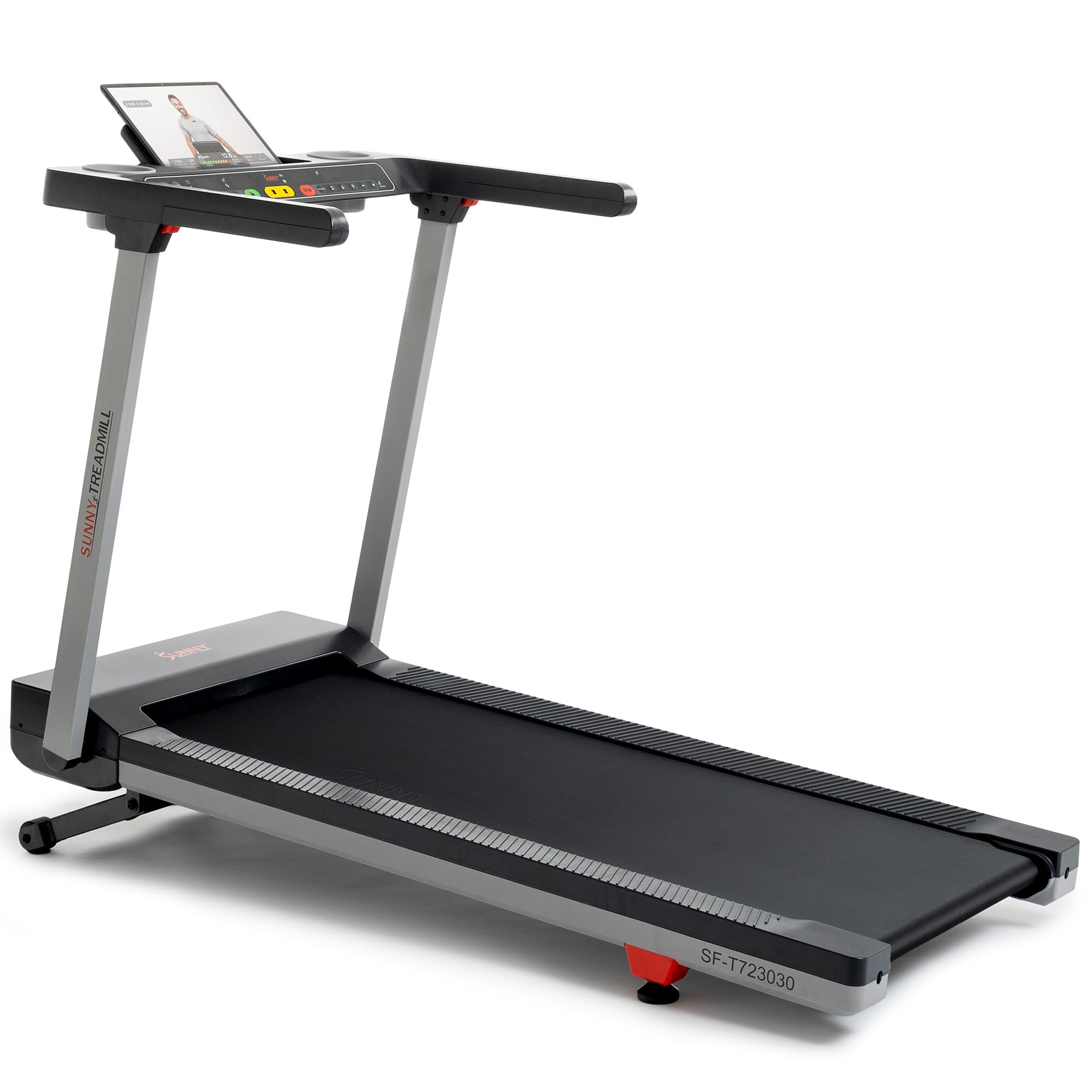
Sunny Auto Incline Treadmill

Sunny Auto Incline Treadmill

Tight rooms

Our Score 8.8/10
Check Price

Worth Noting

  • About 130 pounds, so moving it takes two
  • Can develop a belt squeak over time
Incline
0–15%, automatic
Assembly
Fully assembled
Warranty
3 years frame, 180 days parts
Running Surface
20 x 53 in
Read the full review

Nothing about the Sunny requires a second person or a free Saturday. It arrives fully assembled: raise the handlebar, lock it, and you're walking. Folded, the deck stands about 11 inches deep against a wall, which makes it the only machine here that folds flat enough to stand in a closet.

The running surface is a real one — 20 inches wide by 53 long — with a 2.5-hp brushless motor that runs to 10 mph and a 15 percent automatic incline you nudge with buttons rather than reset with a pin. Twenty-four programs, Bluetooth and USB charging round it out, and none of it sits behind a subscription.

We think it's the right answer for a small room or a shared space, with two caveats that come from the same place. At roughly 130 pounds it folds easily but moves hard, so decide where it lives before it arrives. And the noise story splits: plenty of these run quiet, and plenty develop a squeak that tracks the belt. If it sits over someone else's ceiling, put a mat down and check belt tracking in the first month.

Bottom line: The one we point to for tight rooms: it arrives assembled, folds to about 11 inches, and gives you a 20-inch deck and 15 percent auto incline without a subscription.

#4

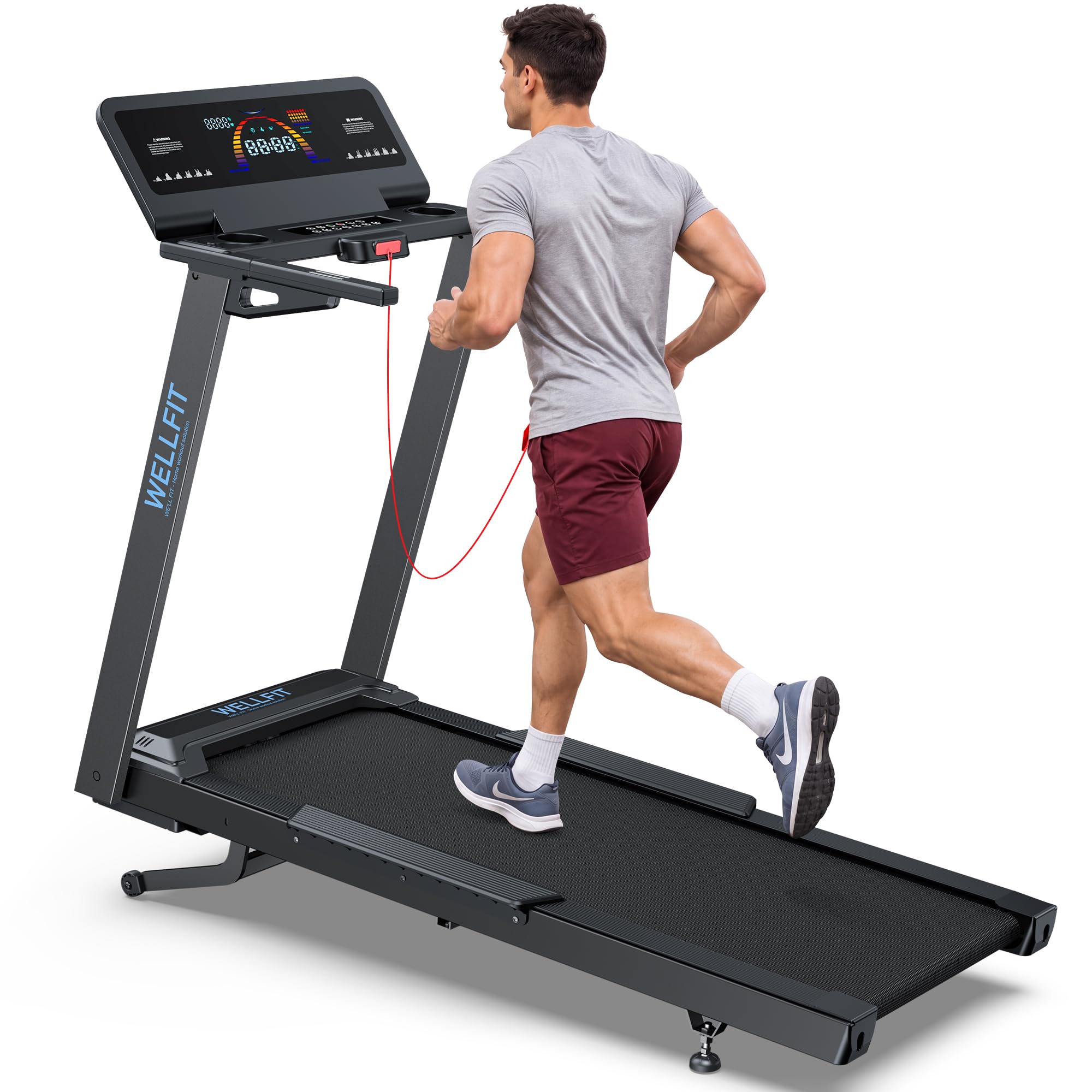
WELLFIT TM029 Treadmill

WELLFIT TM029 Treadmill

Larger runners

Our Score 8.8/10
Check Price

Worth Noting

  • Starts at 1 mph, so no slow walking pace
Incline
0–15%, automatic
Warranty
3 years
Running Surface
55 x 20 in
Weight Capacity
500 lb
Read the full review

Twenty inches wide, 55 long, rated to 500 pounds and driven by a 4.5-hp brushless motor — this is the machine we point bigger runners toward after they've been squeezed by 18-inch belts and 300-pound limits. A 6-foot-4 frame with a long stride is the case it was built for, and nothing about the deck or the motor asks that person to compromise.

Everything else is present and unfussy: 15 percent automatic incline, 12 preset programs, handrail pulse sensors, Bluetooth audio and a plain LED console that stays legible from a jog. It folds to about 38 inches deep, rolls on wheels, and carries a three-year warranty, which is longer than the iFIT machines offer on anything but the frame.

One number catches people out. The belt starts at 1 mph, so there's no slow shuffle for a warm-up or for coming back from a knee injury — the Sunny will crawl along at 0.6 where this one won't. Everyone else gets a big, quiet, stable machine that asks for nothing monthly.

Bottom line: We recommend it to bigger and taller runners: a 20-by-55 belt, a 500-pound rating and a quiet 4.5-hp motor for less than the premium machines ask.

#5

WELLFIT WFTM007 Treadmill

WELLFIT WFTM007 Treadmill

Incline walking

Our Score 8.8/10
Check Price

Worth Noting

  • 43-inch deck is short for real running
  • No stand for a tablet
Incline
0–15%, automatic
Top Speed
8.8 MPH
Running Surface
43 x 17 in
Weight Capacity
400 lb
Read the full review

The deck is 43 inches long and 17 wide, and that's the first thing to know: this is a treadmill for walking and incline walking, with enough speed on tap — 8.8 mph — for a light jog. If your cardio is a five-mile run, the belt will feel short and you'll spend the session steering.

For everyone else we think it's a lot of machine for the money: a 4-hp brushless motor, 0 to 15 percent automatic incline, a 400-pound rating, handrail heart-rate sensors and Bluetooth. It arrives 95 percent built, with a handful of screws between the box and your first walk, and the 103-pound frame folds and rolls into a corner. A two-year warranty is generous at this end of the range.

Where it stumbles is the console furniture. The display is a plain LED and there's no proper stand for a tablet, so entertainment is a phone propped wherever it fits. In a spare room where the machine is for walking, that's easy enough to live with.

Bottom line: We like it as a walking machine with real incline: 15 percent automatic, a 400-pound rating and a nearly assembled frame at the entry price.

#6

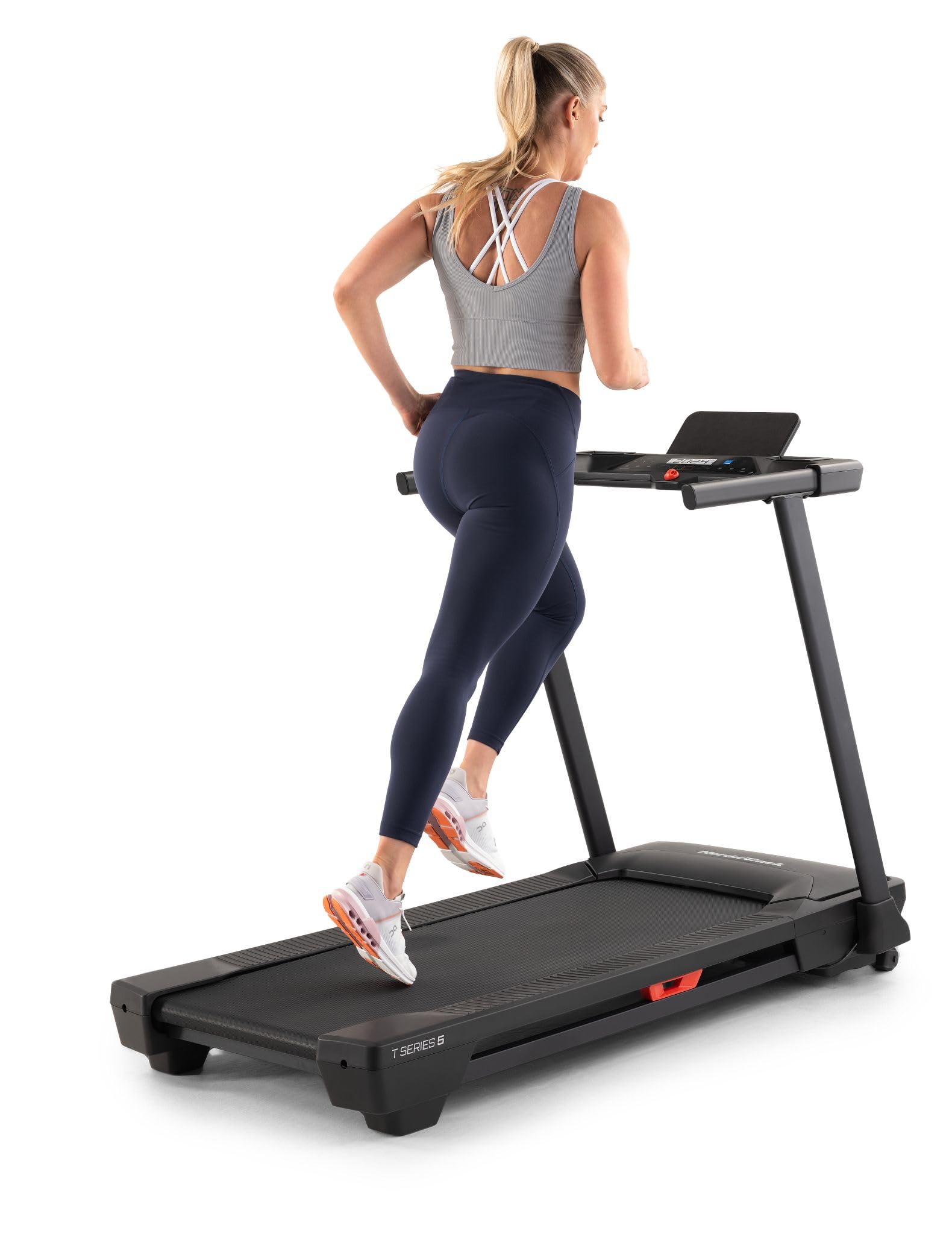
NordicTrack T Series T5

NordicTrack T Series T5

Guided iFIT workouts

Our Score 8.6/10
Check Price

Worth Noting

  • iFIT coaching needs a paid membership
  • Long-term reliability trails the rest of this group
Incline
0–10%
Machine Weight
130 lb
Running Surface
55 x 18 in
Weight Capacity
300 lb
Read the full review

The T Series T5 is the machine most shoppers end up comparing everything else to, and as a first treadmill it makes sense: 10 mph, 10 percent incline, a 55-by-18-inch belt, and iFIT trainers who will change your speed and incline for you if you let them. At 130 pounds it's also the lightest full-size machine on this list, which is the difference between one person walking it into a spare room and waiting for a friend to help.

The money goes to the ecosystem rather than the hardware. The motor is 2.6 hp and the console is a 5-inch LCD with a shelf for your own device, so the 10,000-workout iFIT library is the reason to choose it, and the membership is the cost of keeping it. Assembly runs a couple of hours and is genuinely easier with two people; the deck folds and there are transport wheels for shifting it.

It isn't our top pick because the reliability picture is the shakiest in this group, and the one-year motor and parts coverage is the part of the warranty that will actually matter. If you're buying for guided workouts and want the lightest thing you can move on your own, that's still a trade worth considering.

Bottom line: Buy it for iFIT's trainer-led workouts and the lightest full-size frame here; go in knowing motor and parts coverage is a single year.

How We Tested These Treadmills

We began by researching treadmills sold for home use and filtered for the things that separate a daily-use machine from a temporary one: a stable deck, a motor that can handle regular running, an incline that adjusts automatically, and a frame that folds or rolls out of the way. We also compared footprint, folded dimensions, and listed weight against the reality of a spare room or garage, then narrowed the field to seven models.

For eight months, I lived with those seven treadmills one at a time in a basement and a spare room, using them for morning walks, after-work runs, interval sessions, and weekend long runs. I timed solo assembly and noted which machines needed two people to lift or move; I measured the floor space each took up and how easily it folded.

At walking and running speeds, I listened for motor whine and belt slap and took decibel readings at my usual workout volume. I ran the incline from flat to its top setting mid-workout, noting whether the deck stayed solid and whether the transition was smooth or jerky, and I reached for controls mid-stride to see whether speed and incline buttons were where my hands expected them. I checked belt tracking, motor temperature, and squeaks after each week, and compared what each treadmill offered for the money.

How to Choose a Home Treadmill

Start With the Belt, Not the Console

The running surface decides more about daily use than any screen does. Width is the first number to check: 18 inches is the home standard and fine for walking, while runners who drift toward the edges want 20. Length matters more as speed climbs — 55 inches is the usual full-size home deck, 58 gives a long stride room, and anything near 43 is a walking surface.

Measure the longest stride you take at your fastest pace and add a few inches of margin at each end. And read the listing carefully: compact tends to describe the folded footprint, not a smaller belt, so the two numbers can sit in the same ad pointing different directions.

Motors, Speed, and the Weight Rating

Horsepower on home treadmills is quoted at peak, so treat 2.5 to 3.0 hp as the working range for jogging and 4.0 and up as comfortable for sustained running. Top speed matters less than shoppers expect — most home runners never pass 7 mph — but the weight rating matters a lot. A machine rated well above your body weight feels steadier and works less hard, and the ratings in this group run from 300 to 500 pounds. Buy headroom, not the minimum.

Incline: Automatic Is Worth Paying For

Manual incline means stopping, stepping off and resetting a pin or a ramp, which is why most people set it once and never touch it again. Automatic incline changes under your feet, mid-interval, from a button or a trainer's cue. Ten percent adds real intensity to a walk; 15 percent is what the Sunny, both WELLFITs and the 3G offer, and it's the difference between a flat jog and an actual climbing session.

Where It Goes: Footprint, Folding, and Noise

Measure the floor, then add two feet of clearance behind the deck and a foot on each side. That's the space you need, not the folded figure. Folding is worth having, but it doesn't make a machine portable: the Sunny folds to about 11 inches deep and still weighs roughly 130 pounds, while the 3G folds too at 216.

On noise, belt-driven treadmills hum rather than clatter, and a dense mat under the machine does more for the room below than any spec. If the treadmill shares a wall with a bedroom, walk on it in the store or run it for ten minutes at home before you commit to the corner.

Assembly, Subscriptions, and What It Costs to Own

Three levels of setup show up here: fully assembled (the Sunny), a handful of screws (both WELLFITs), and a couple of hours with two people and real tools (the ProForm and NordicTrack). Then there's the subscription question. The iFIT machines run without a membership, but the auto-adjust coaching that makes them interesting needs the paid plan once the trial ends; the 3G, Sunny and both WELLFITs ask for nothing monthly.

Frequently Asked Questions

Final Verdict

Our pick is the ProForm Carbon TL. It has the deck, the motor and the folding frame most homes need, and it's the machine here whose day-to-day record gives us the least to explain away.

Step up to the WELLFIT TM029 if you're larger or taller than an 18-inch belt comfortably serves; the 20-by-55 surface and 500-pound rating are worth the extra money. And if you're training for something rather than exercising, the 3G Cardio's lifetime motor warranty is the reason to spend.