Cardio Machines

Best Under Desk Treadmills of 2026

Standing desks were supposed to fix the sitting problem, and for a while they did. Then my feet started aching by 3 p.m. and I caught myself leaning on the desk instead of standing at it. A walking pad solves that in a way a standing desk can't: you keep typing, keep your calls, and log a couple of slow miles before lunch. It's the difference between holding a posture and actually moving. You do give up speed and stride, but almost nobody buying one of these wants to run.

I've had one under my desk for two years, and the gaps between models show up fast — how loud the belt is while you're on a call, whether the wheels are usable, whether it slides under the couch when the workday ends. We put eight of them through six months of real workdays. One thing to measure before you buy: the clearance under whatever you plan to store it beneath, not just your desk. The picks that follow earned their spot.

#1

Wilpkracy Walking Pad

Top Pick
Wilpkracy Walking Pad

Budget incline

Our Score 9.6/10
Check Price

Worth Noting

  • 3.7 mph top speed is walking-only
Incline
5% manual
Max Speed
3.7 mph
Deck Height
10.5 cm
Weight Capacity
264.6 lb
Read the full review

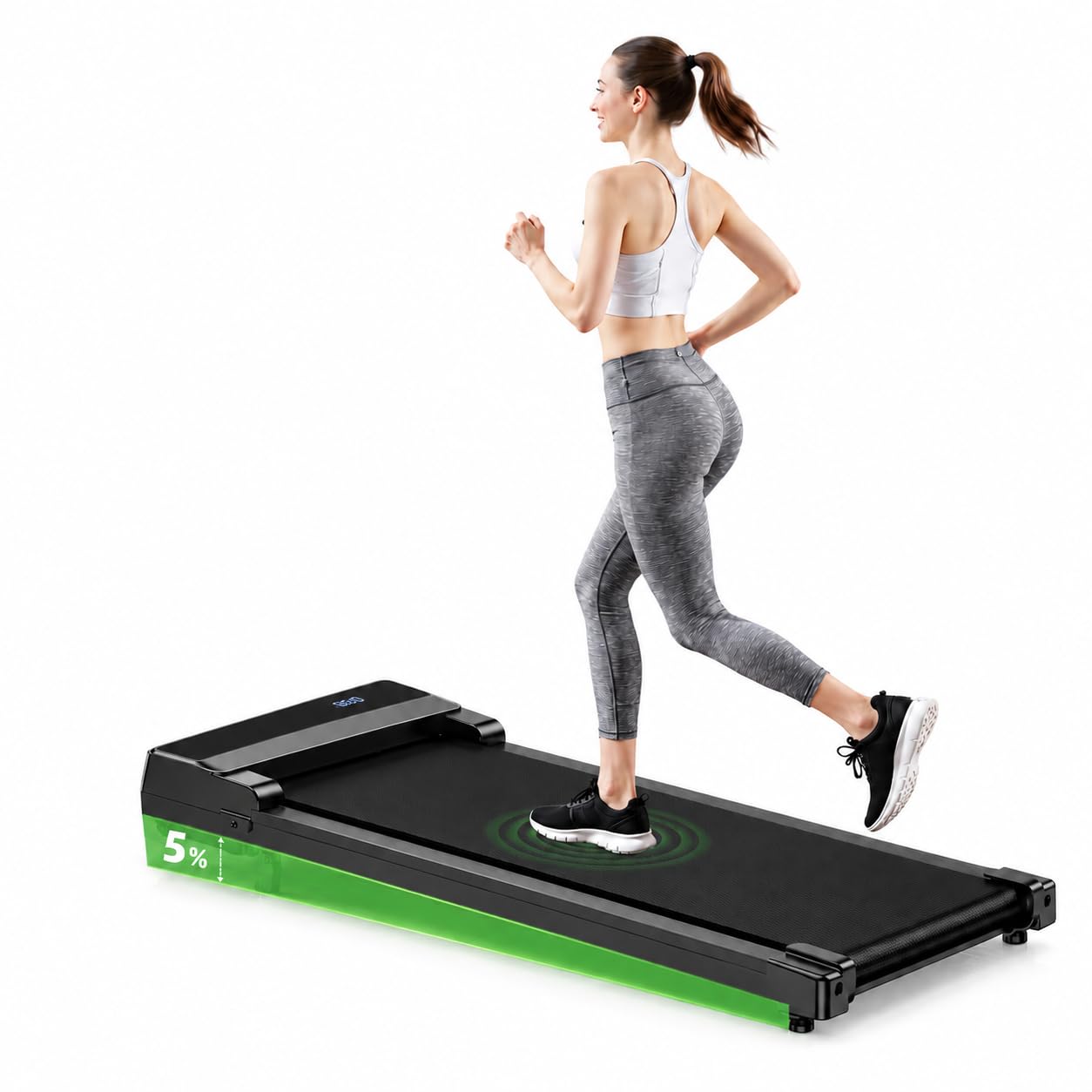
A 5% incline is not a stair climber, but it makes a flat half-hour feel more purposeful. The Wilpkracy gets there with a manual ramp you set before you start, so the incline is a decision, not a button you press mid-walk. That suits someone who plans a session and leaves it alone.

The rest of the package is tuned for small spaces. It is 10.5 cm tall, which is low enough to slide under a desk, and 17 kg is manageable with the built-in wheels. The speed range is tuned for walking, and the 120 kg capacity covers many users but not the heaviest. The five-layer belt and shock absorption are welcome at this end of the set.

We recommend it for a cramped office or apartment where you want a little hill work without giving up floor space. The manual incline is the right match for a set-and-forget session; if you want to change grade while walking, look at an automatic incline like the Trailviber. The deck stays low and the controls stay simple, which is the point of a budget walking pad.

The remote is straightforward, and the low deck makes it easy to step on from a standing desk. For a first walking pad in a small room, that combination is easy to justify.

Bottom line: We like the Wilpkracy for small spaces and budget-minded walkers who want a touch of incline; its 5% manual ramp and low deck are the draw, but the pace stays walking-only.

#2

WELLFIT TM037PRO

WELLFIT TM037PRO

Jogging

Our Score 9.6/10
Check Price

Worth Noting

  • 57-pound body is hard to move daily
Incline
12% auto
Max Speed
7.6 mph
Item Weight
57 lb
Weight Capacity
375 lb
Read the full review

The Wellfit is not a flat little pad that hides under a desk; it is a folding treadmill with handrails, a 7.6-mph top speed, and a 12% automatic incline. That makes it the most versatile machine in this group, and also the one that needs the most space.

We recommend it for someone who wants desk walks, incline sessions, and a light jog from one machine. The 3.5-hp motor and 40 x 16-inch belt give it room beyond walking, and the auto incline changes grade without stopping. The 375-pound capacity is generous, and the body feels stable because it is not trying to be ultralight.

The handrails are the catch for under-desk use. They help on incline work, but they need clearance under a standing desk; this is a machine to check against your desk height before ordering. If you mostly want flat walking in a tight office, the Vhorilix is easier; if you want one machine for more, the Wellfit earns its space.

For a home office with room to leave a treadmill out, this is the pick that does the most. It folds to 5.5 inches for storage, but the rails are the part that decides whether it fits your desk.

Bottom line: Our choice for a do-more machine is the Wellfit: it walks, inclines, and jogs up to 7.6 mph, with a 12% automatic incline that goes beyond a basic pad.

#3

Buztrio Walking Pad

Buztrio Walking Pad

Simple setup

Our Score 9.6/10
Check Price

Worth Noting

  • 265-pound capacity limits heavier walkers
Warranty
1 year
Max Speed
4 mph
Deck Height
4.1 in
Weight Capacity
265 lb
Read the full review

The Buztrio arrives assembled, and that is more useful than it sounds. When a walking pad shows up in a box, the last thing you want is a half-hour of bolts before your first walk. The 4.1-inch deck and transport wheels make it similarly easy to live with.

The 2.5-hp motor and 4-mph ceiling are built for walking, not running. The 41-inch deck is on the short side; taller walkers should check their stride before committing.

What we like is the simplicity. The remote handles speed, the deck stays low, and the belt is easy to step onto from a standing desk. It does one job without fuss.

We recommend it as a low-fuss second pad for a spare desk or a simple first walking pad. It is slim, ready out of the box, and easy to move, and that is enough for a lot of home offices.

Bottom line: The Buztrio is our low-fuss pick for a spare desk or a simple first walking pad: slim, assembled on arrival, and easy to move.

#4

Trailviber X01

Trailviber X01

Heavy users

Our Score 9.4/10
Check Price

Worth Noting

  • 4 mph top speed limits running
Incline
12% auto
Belt Size
41 x 16.5 in
Item Weight
44 lb
Weight Capacity
450 lb
Read the full review

The Trailviber starts with the two numbers that matter for anyone who has felt a walking pad flex underfoot: a 450-pound capacity and a 12% automatic incline. At 44 pounds, it is heavier than the slim pads here, and that weight is why we recommend it for heavier walkers or anyone who wants the deck to feel settled at a brisk pace.

The incline is the feature that earns its keep. Nine levels up to 12% let you turn a flat half-hour into something closer to a hill walk without stopping to move a ramp. The 41 x 16.5-inch belt gives a little more room for a natural stride, and the 2.5-hp motor keeps the belt moving smoothly. The Bluetooth speaker and RGB display are extras we didn't need, but they make the pad feel less utilitarian.

What we like most is the three-year warranty. It is among the longest here and takes some of the risk out of a motorized purchase. The trade-off is height: at 6 inches, it sits higher than the slimmest pads, so check the gap under your desk before you buy. The 44-pound body also wants a dedicated spot rather than a daily lift onto a shelf.

If you're near the top of the weight range or you know you'll use incline, the Trailviber is the safer-feeling choice. For a pure flat walk in a tight desk, the Vhorilix is easier to live with.

Bottom line: For heavier walkers or anyone who wants automatic incline, we choose the Trailviber; its 450-pound build and three-year warranty make the extra weight worthwhile.

#5

Chaoke Walking Pad

Chaoke Walking Pad

Programmed walks

Our Score 9.2/10
Check Price

Worth Noting

  • Short 95 x 38 cm belt for tall strides
Incline
9%
Programs
12
Max Speed
6.2 mph
Weight Capacity
330 lb
Read the full review

The Chaoke is aimed at walkers who like a plan: 12 HIIT programs, a 9% incline, and a 6.2-mph ceiling. That is more structure than most under-desk pads offer, and it pushes the machine beyond simple step counting.

The 2.75-hp motor and 330-pound capacity put it in the sturdier half of this set. The 95 x 38 cm belt gives a defined walking surface, and the machine arrives assembled. The 9% incline adds challenge for walking or a light jog; the 6.2-mph top speed is enough for a slow run, and the belt is sized for a compact footprint.

We recommend it for someone who wants programmed incline sessions and a faster pace without a bulky treadmill. The 12 presets are the differentiator: if you like following a structure, they give you a reason to step on; if you just want to walk while answering email, a simpler pad is easier. The 330-pound capacity is a plus for shared use.

For a compact home office where the pad doubles as a light jogging machine, the Chaoke is a strong spec-led choice. It has the most workout structure here, and that is the reason to pick it.

Bottom line: We recommend the Chaoke when you want a 9% incline and a faster walking ceiling in a compact frame; its 12 programs and 330-pound capacity are the draw.

#6

Vhorilix Walking Pad

Vhorilix Walking Pad

Desk walking

Our Score 9.0/10
Check Price

Worth Noting

  • 4 mph top speed rules out jogging
Max Speed
4 mph
Deck Height
4.33 in
Item Weight
36.4 lb
Weight Capacity
264 lb
Read the full review

At 4.33 inches tall, the Vhorilix is the pad that disappears under a standing desk. The 36.4-pound body helps: we can slide it out for a meeting, step on, and push it back without clearing floor space. It arrives assembled, so the first session starts with plugging in the cord and finding the remote rather than hunting for an Allen wrench.

We recommend it as the default because it gets the desk-walking basics right. The 2.5-hp motor is tuned for steady walking, and the belt feels planted at the pace most people use while typing. The 264-pound capacity is fine for many users but not for everyone; heavier walkers should look at the Trailviber. The low deck is the part we appreciate most, because a pad that sits high under a desk can force you to hunch or shorten your stride.

Two small details make daily use easier. The remote takes two AAA batteries, so keep a pair nearby; a dead remote is the sort of thing that stops a habit. The belt and frame have a simple, uncluttered look that fits a home office better than a gym machine, and the transport wheels mean you don't have to lift it to move it across a room.

For a normal standing-desk routine, this is the one we reach for first. It keeps the walking part simple and the footprint small, and that is what most people need on a Tuesday afternoon.

Bottom line: The Vhorilix is our default under-desk treadmill: slim, light, quiet, and ready to use without assembly, with a walking-only ceiling that suits most desks.

#7

Cybergoing T10

Cybergoing T10

Compact incline

Our Score 9.0/10
Check Price

Worth Noting

  • Remote pairing can be inconsistent
Incline
7% fixed manual
Belt Size
15 x 36 in
Item Weight
36.4 lb
Weight Capacity
300 lb
Read the full review

The Cybergoing T10 is one of the few pads here with a built-in slope. It is a fixed 7% manual incline, so you set it before you start and leave it alone. That makes it a different purchase from an auto-incline machine: you choose the hill once, then walk.

We recommend it for a compact setup that needs a higher weight limit. The 300-pound capacity is above the basic pads, and the 36.4-pound body is still light enough to wheel away. The 15 x 36-inch belt is the number to check: it is shorter than the big incline decks, so tall walkers may want more length. The Bosch motor and 4-mph ceiling keep it in walking territory.

The app and remote add convenience, and the fixed incline gives you a reason to use it beyond flat steps. The short deck is the main compromise; otherwise this is a neat bridge between a flat walking pad and a full incline treadmill.

For a small office where the pad stays in one place, the Cybergoing makes sense. It gives you incline and capacity without the bulk of the running-oriented machines.

Bottom line: The Cybergoing is our pick for a compact setup that needs a fixed incline and a higher weight limit; the 7% ramp and 300-pound capacity justify the step up.

#8

UREVO CyberPad

UREVO CyberPad

Steep incline

Our Score 8.6/10
Check Price

Worth Noting

  • 242-pound capacity is low for heavier users
Incline
14% auto
Max Speed
4 mph
Item Weight
63 lb
Weight Capacity
242 lb
Read the full review

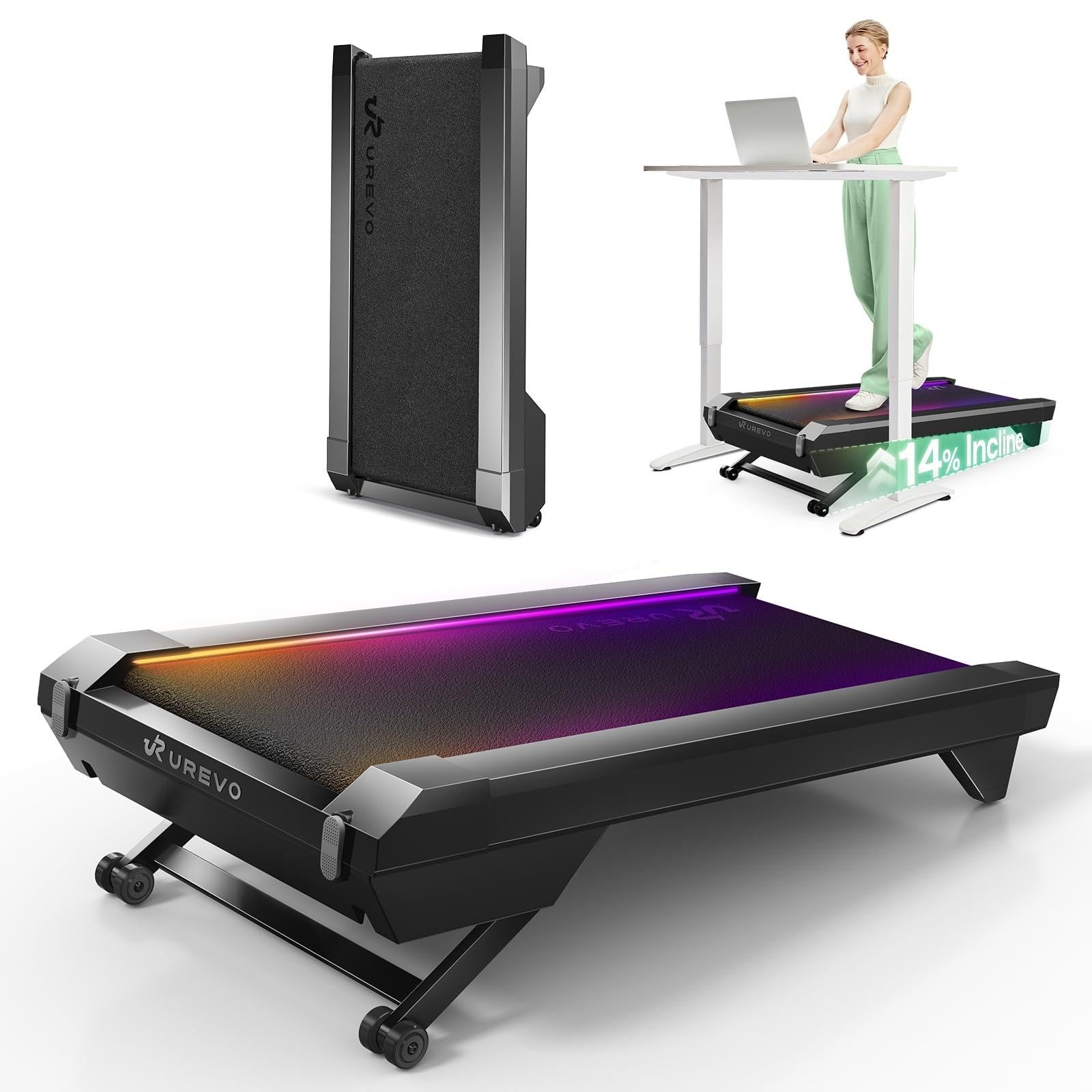
The UREVO CyberPad makes its case with the steepest automatic incline here: 14%, adjusted in steps from the controller or app. It also weighs 63 pounds, which tells you what kind of purchase this is. This is a walking pad that stays in one place, not one you tuck under a bed every evening.

The 14% ramp is genuinely useful if you want to turn a flat walk into a harder session without stopping. The 2.5-hp motor and 4-mph ceiling keep the pace walking-only, and the long 46.8-inch deck gives you room to stride. The app adds tracking and guided sessions, but the incline is the reason to choose this one over the lighter auto-incline pads.

The 4-mph ceiling also means it is not a jogging machine despite the premium build. The app is useful, but you can run the pad from the controller and ignore it. What matters is whether the incline is worth the footprint to you.

We recommend it for someone who wants the steepest automatic incline and a long walking surface. The CyberPad is a specialist, not the default.

Bottom line: The UREVO CyberPad is for the walker who wants the steepest automatic incline and a long deck; its 14% ramp is the reason to choose it over the lighter auto-incline pads.

How We Tested Every Walking Pad on This List

We started by pulling every under-desk treadmill we could find from brands we already trust for motors and belts, then filtered by the numbers that decide whether one actually works in a home: belt length and width, top speed, deck height, unit weight, and price. Anything that demanded a permanent floor footprint got cut. That left eight models, which we ran for six months.

Each one went under a real desk and into a real workday, with standing desks raised to 42 inches, chairs pushed aside, and video calls taken while walking. We timed setup from box to first step and noted whether the instructions assumed a second person. Every unit got weighed on a bathroom scale, then carried up a flight of stairs, because a pad that's heavier than it looks is one you'll stop dragging out. Noise was measured with a decibel app at seated head height, at 2 mph and again at top speed, with a call running.

Compact is a claim, so we measured: deck height against a 4-inch gap under a couch, belt length against a tester's stride, footprint against the space beside a desk. Through the six months we tracked belt drift, deck flex under a heavier tester at top speed, and whether the remote still paired in month five. Value got scored last, once we knew which ones we still wanted to step onto in month six.

How to Choose Under Desk Treadmills

Start With the Space Under the Desk

Measure from the floor to the underside of your desk while wearing the shoes you plan to walk in. A 4.1-inch pad such as the Buztrio leaves more room than a 6-inch model like the Trailviber, and a pad with handrails needs clearance for them too. The Wellfit folds slim for storage, but you still need space for the rails while it runs.

Compact in a product title usually describes the storage footprint, not the walking footprint. Check the belt length before you buy if you have a long stride; a short deck can make you shorten your step without realizing it. The Cybergoing's 36-inch belt is fine for many walkers but tight for taller ones.

Choose Manual, Fixed, or Automatic Incline

Manual incline is a ramp you set before you start. The Wilpkracy's 5% ramp and the Cybergoing's fixed 7% incline suit someone who picks a grade for the session and leaves it alone; they are not for changing pace mid-walk. Automatic incline, as on the Trailviber and UREVO CyberPad, lets you adjust while walking, and it is the feature to pay for if incline is a core part of your routine.

More incline is not automatically better. A steep ramp can make a short deck feel awkward and push you toward the front of the pad. Match the incline to the walking you will do: a little slope for daily steps, or a steeper automatic ramp for focused sessions.

Match the Speed Ceiling to Walking, Not Ambition

Most under-desk walking happens between a stroll and a brisk walk. A 4-mph pad like the Vhorilix covers that well and keeps the machine simple. If you want a light jog, the Chaoke's 6.2-mph ceiling and the Wellfit's 7.6-mph ceiling give you more room, but they also bring more weight, more cost, and more machine to store.

The trap is assuming a quiet pad stays quiet at every speed. Noise usually rises with pace, and a motor that is inaudible at a slow walk can become noticeable on a call at the top of its range. If quiet matters, prioritize a pad with a walking-focused motor and use it at the pace you actually work.

Read Weight and Capacity as Two Different Numbers

Product weight tells you how hard the pad is to move; user capacity tells you who can safely walk on it. The 36.4-pound Vhorilix is easy to slide away, while the 63-pound UREVO CyberPad wants a permanent spot. A heavier pad often feels more stable, but that stability only helps if you have the floor space to leave it out.

Check the capacity against the heaviest person who will use it, not just the buyer. The Trailviber's 450-pound limit is the highest here; the Vhorilix and Buztrio are closer to 265 pounds. If two people share the desk, size for the larger one.

Plan for Controls, Belt Care, and Support

A remote is the main control on most walking pads, and a lost or unpaired remote can make the machine feel broken. The Cybergoing pairs through the side power switch, so read that step before assuming a fault. Apps add tracking, but they are secondary to a responsive remote and a clear display.

Belt tracking and lubrication are the maintenance tasks that decide whether a pad stays smooth. Check the belt for drift weekly, follow the manual for lubrication, and keep the included wrench handy. A longer warranty helps: the Trailviber's three-year coverage is among the longest in this set.

Frequently Asked Questions

Final Verdict

The Vhorilix is the under-desk treadmill we recommend for most people. It is slim enough to disappear under a standing desk, light enough to move without help, and quiet enough for a normal workday. It gives up incline and jogging speed, but most desk walkers never need either.

If you are a heavier walker or you want automatic incline, the Trailviber is the better buy; its 450-pound capacity and three-year warranty justify the extra weight. For the steepest automatic incline in a pad that stays put, the UREVO CyberPad is the specialist choice.