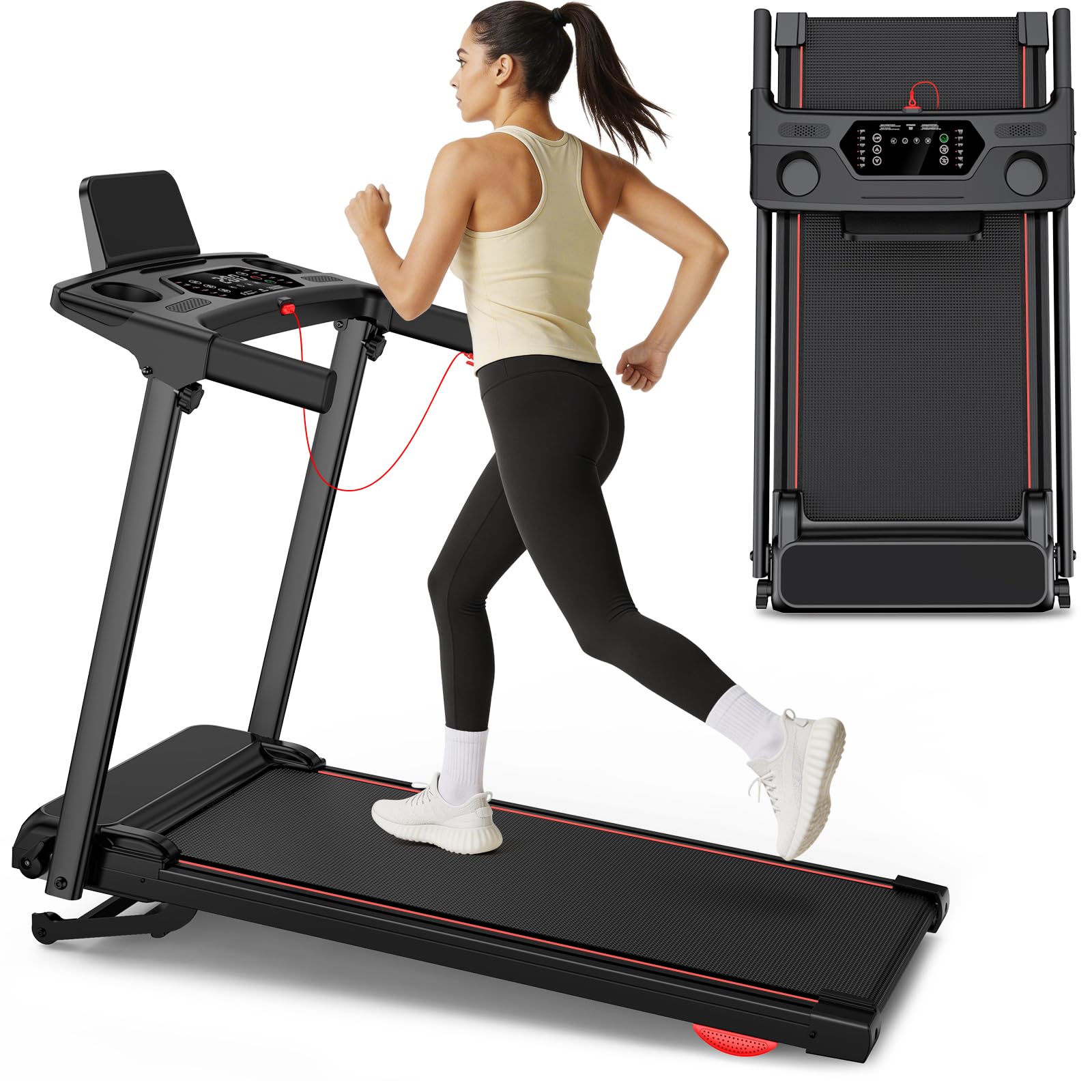
Cardio Machines

Best Folding Treadmill for Small Spaces with Incline of 2026

A folding treadmill is a negotiation. Shrink the footprint and something else usually gives — stability, incline range, motor power, deck length — and the trick is finding a machine whose compromises land where you can actually live with them. What it buys you is the thing that keeps most people from owning a treadmill at all: a real workout in a room that also has to be a living room, a guest room, or the only clear stretch of floor you've got.

We've spent the past eight months living with six of these — folding them, rolling them, running on them before breakfast and walking on them after work — and the differences come down to details the product listings bury. Folded dimensions get all the attention, but you also need clearance to unfold the thing, and the deck on a folding model is often shorter than what you'd find at a gym, so taller runners should check the running surface before they check the footprint. The quietest machines weren't the priciest ones, which was its own lesson. The picks below are the ones we'd genuinely keep in a small space.

#1

TOPUTURE TP6

Top Pick
TOPUTURE TP6

Taller users

Our Score 9.6/10
Check Price

Worth Noting

  • 56-pound frame and 50-inch fold need storage space
  • 12% incline is below the steepest here
Incline
1%, 6%, 12%
Top Speed
7.5 mph
Folded Size
50 x 25 x 5 in
Running Area
40 x 16 in
Read the full review

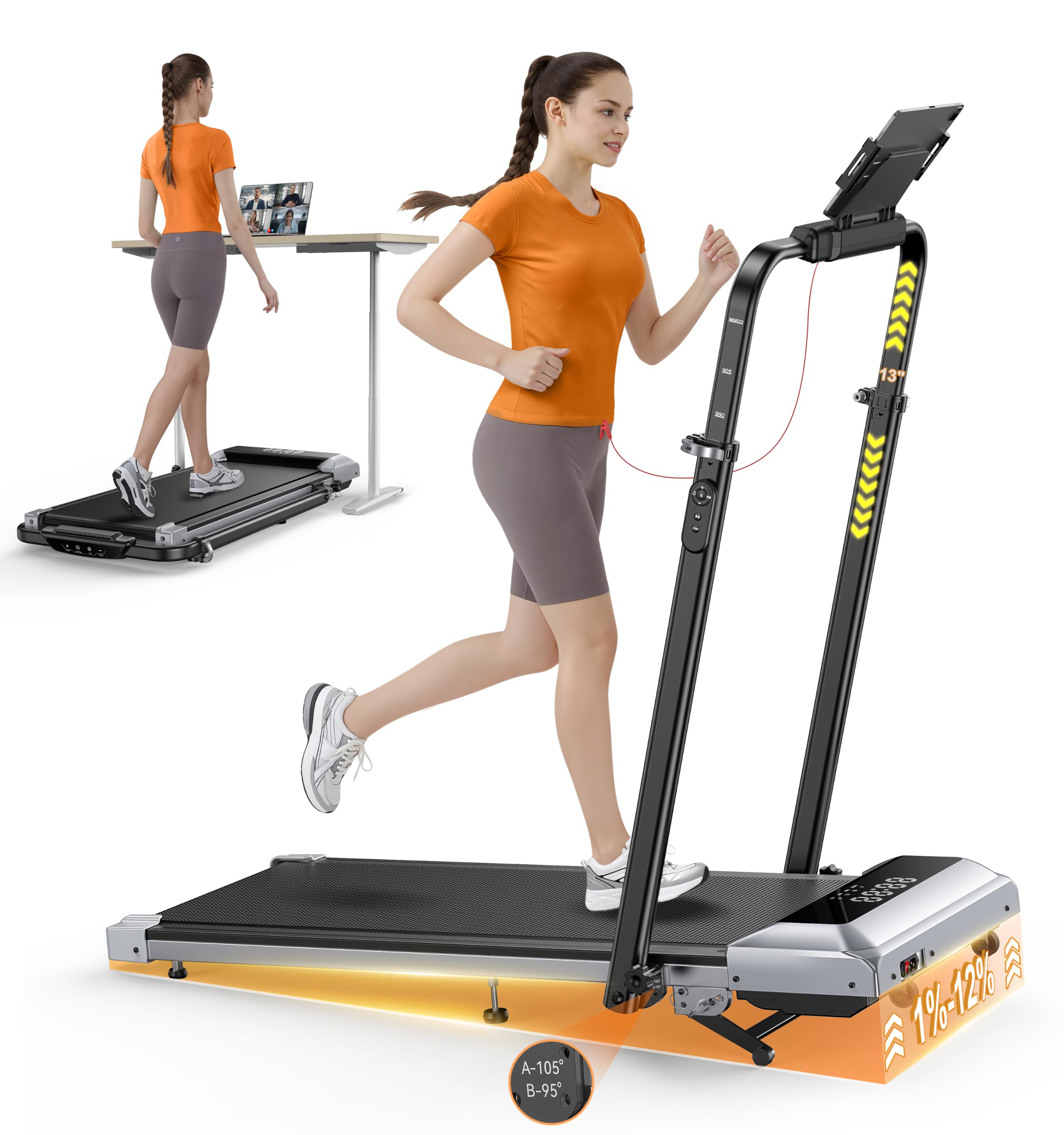
The handlebar on the TP6 adjusts, and that one detail changes who can use it comfortably. A fixed bar can leave taller users hunched or balancing on their fingertips; here you can raise it to match your stride. The deck is 40 x 16 inches, and the top speed is 7.5 mph, so it works for brisk walking and actual jogging rather than just slow steps. We also like the six-in-one framing: it can serve as an under-desk walker, a handled treadmill, or a hill-walk machine depending on how you set it up.

What we appreciate most is the way the TP6 combines three incline levels with a 40-inch deck: the 1%, 6%, and 12% settings give you useful variety, and the 2.5HP motor stays quiet enough for apartment use. The trade-off is weight and footprint. At 56 pounds and a 50-inch folded length, it is not the machine you tuck under a low bed; it wants a closet, a spare wall, or a dedicated corner. The adjustable handle and larger deck are worth that space if you are tall or want to jog, but if storage is the priority, the CURSOR is easier to live with.

The 4.8 rating is the strongest in this group, and the feature set explains it: app control, a tablet holder, and a 300-pound capacity are all here. The TP6 is the one we point taller users to first, with the CURSOR as the smaller, lighter alternative. If you have the floor space, the adjustable handle is the feature you will notice every single session.

Bottom line: For taller walkers and joggers, we think the TP6 is the pick: the handlebar adjusts, the deck runs 40 inches, and 7.5 mph gives you room to move.
#2

Vyrqenoxi J20BC

Vyrqenoxi J20BC

Tight storage

Our Score 9.2/10
Check Price

Worth Noting

  • 220-pound weight limit
  • 35 x 14.4-inch deck is short
Folded Size
40.5 x 18 x 4.7 in
Item Weight
40.8 lb
Running Area
35 x 14.4 in
Weight Capacity
220 lb
Read the full review

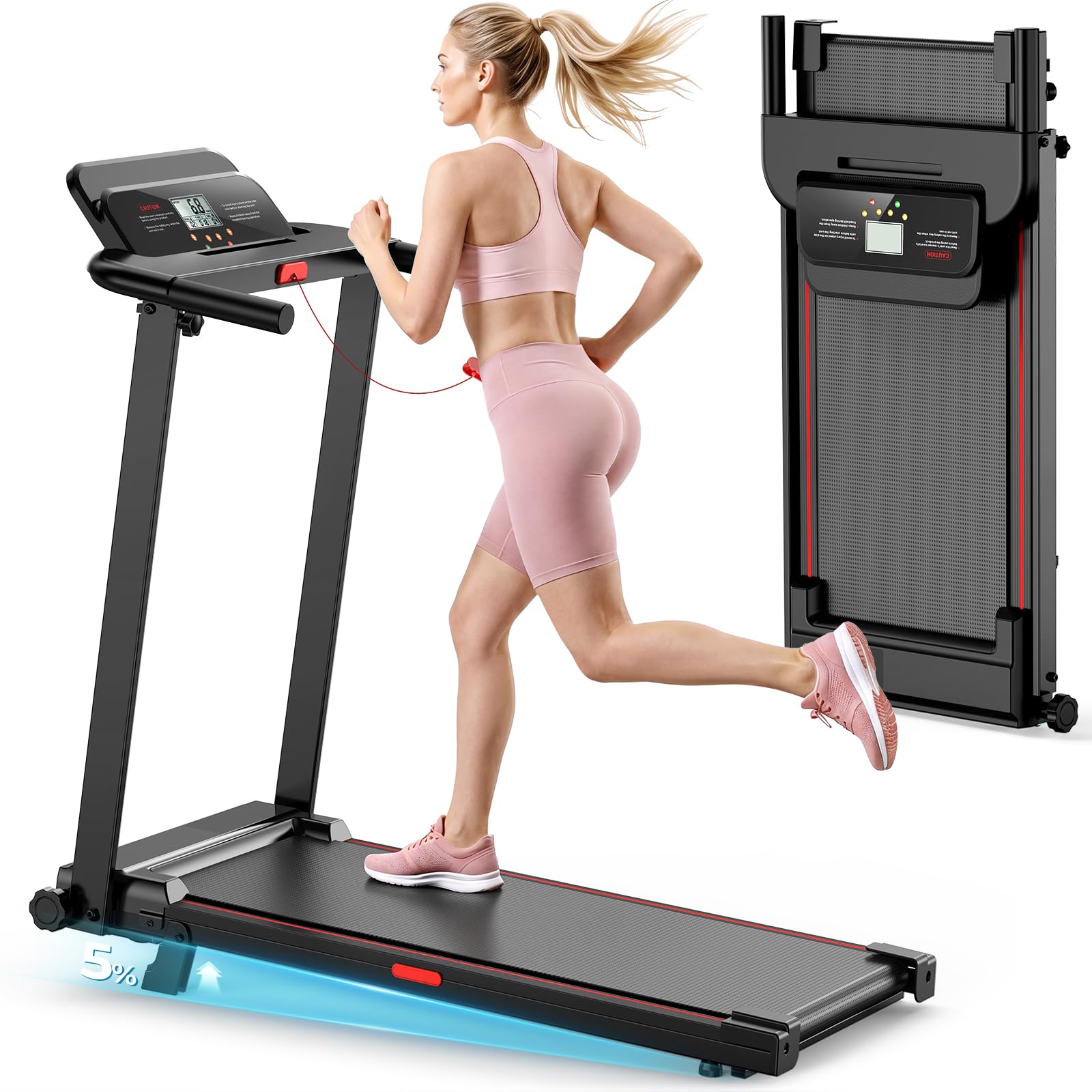
The 4.7-inch folded height and 40.5-inch folded length make the J20BC the easiest machine here to tuck away. At 40.8 pounds, it is light enough to lift onto a shelf or roll into a closet, and the 35 x 14.4-inch deck is sized for walking rather than running. The incline is modest—enough to add a little resistance, not enough to feel like a hill workout—and the top speed is 6.2 mph. We like it as a true apartment treadmill: small, quiet enough for daily use, and easy to put away.

The catch is capacity. The maximum user weight is 100 kg, or about 220 pounds, which is the lowest here. If you are near that limit, the frame will feel less secure, and the short deck will crowd a long stride. The 12 preset programs and LCD display are basic but useful, and the safety handlebar gives you something to hold when you raise the incline. This is not a heavy runner's machine, but it is not trying to be.

What we came back to is the storage math. A treadmill that folds to 40.5 inches long can live in a hall closet or under a bed in a way that a 50-inch-long machine cannot. The J20BC gives up deck length and weight capacity for that convenience, and for a lighter walker in a studio apartment, that is the right trade. If you can trade some storage compactness for a longer deck, the Acezoe has a 40-inch belt.

Bottom line: For the tightest storage, the J20BC folds to 4.7 inches and weighs about 41 pounds; just check the 220-pound capacity and short deck before you buy.

#3

Acezoe P11-WN

Acezoe P11-WN

Wide-deck value

Our Score 9.2/10
Check Price

Worth Noting

  • 51.8 pounds and 51.2-inch fold need space
  • 10% incline is shallower than the steepest here
Incline
10% manual
Folded Size
51.2 x 22 x 5.3 in
Running Area
40 x 16 in
Weight Capacity
300 lb
Read the full review

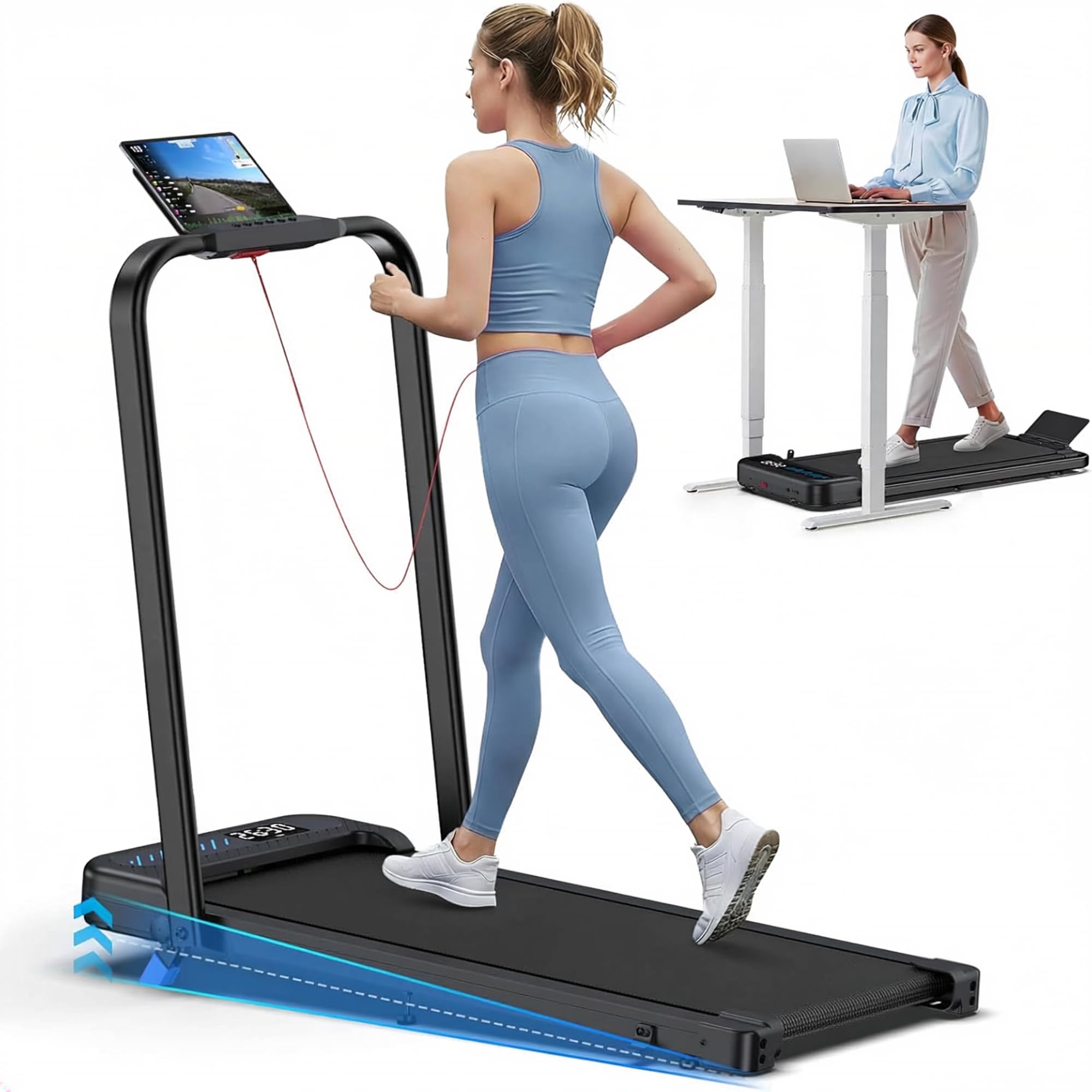
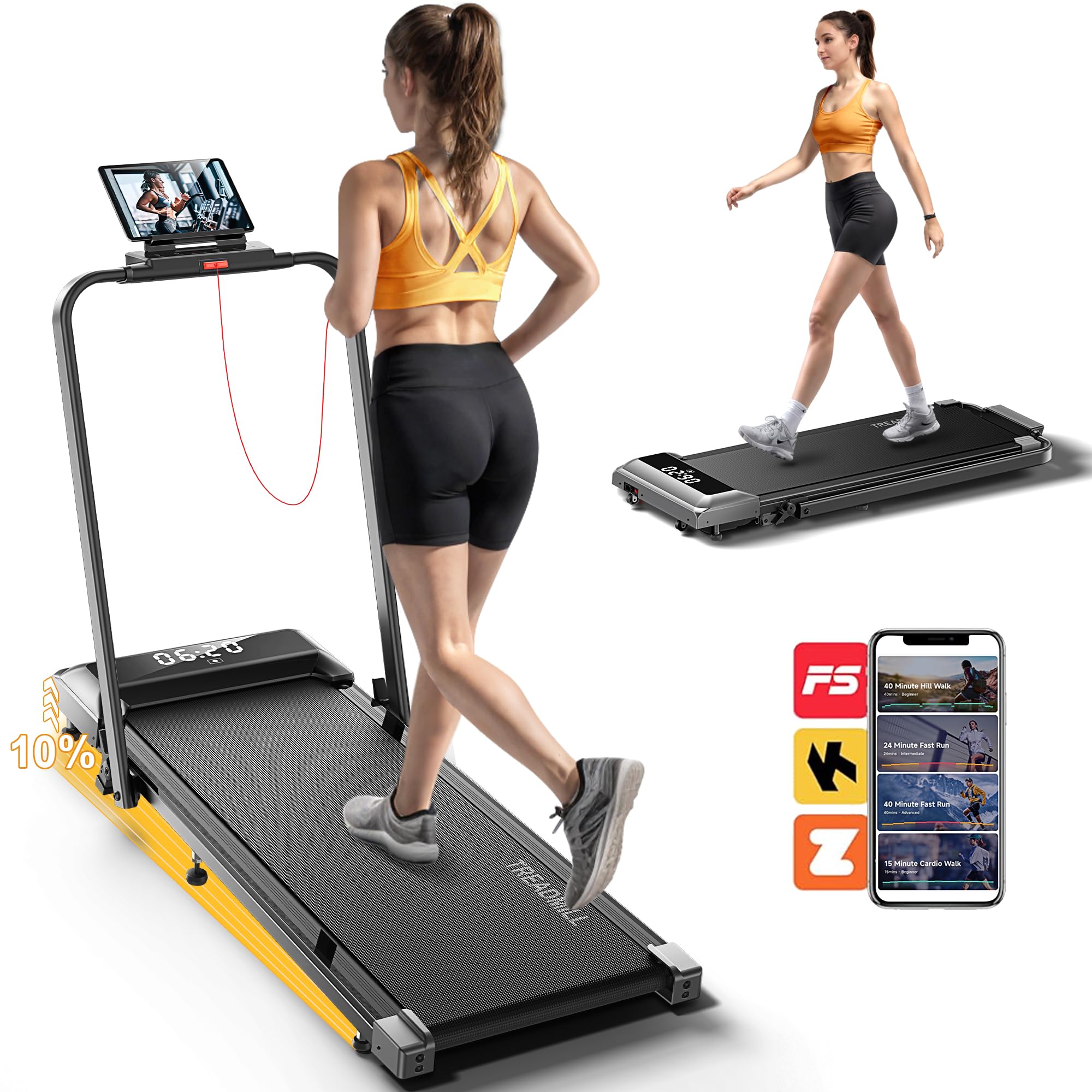
A 40 x 16-inch deck is the feature that makes the P11-WN worth a look. That is more room than the CURSOR or YPOO offer, and it makes a difference if you have a longer stride or like to swing your arms without clipping the sides. The 10% manual incline adds a useful hill without the complexity of a powered system, and the 2.5HP motor runs to 6.2 mph for walking and light jogging. The seven-layer belt and silicone shock absorbers are aimed at comfort, and the 300-pound capacity is adequate for most homes.

The app and remote are handy, and the 4.6 rating is one of the stronger ones in this group. The cost is weight: at 51.8 pounds and 51.2 inches folded, it is not the treadmill you casually lift onto a shelf. It rolls, but it wants a dedicated spot under a bed or against a wall. The 10% incline is also shallower than the CURSOR's 15%, so hill severity is the trade-off for the wider deck.

Setup is straightforward, and the 5.3-inch folded height is slim enough for under-bed storage despite the length. The white finish suits a bedroom or office better than the usual black gym machine. The 16 programs give you some structure, and the safety key and remote cover the basics. The belt is 40 inches, but the frame is 51.2 inches long, so measure the gap before you commit.

For us, the P11-WN is the wide-deck pick to beat in this group. It gives you more room underfoot than the CURSOR or YPOO, and the 10% incline is enough for daily hill walks. If you are tall or want a longer deck without paying for auto incline, this is the one. If you need the steepest hill or the smallest fold, choose the CURSOR instead.

Bottom line: The P11-WN is our wide-deck value pick: a 40 x 16-inch belt, a 10% manual incline, and a 4.6 rating for buyers who want more room underfoot.

#4

WELLFIT WFTM037

WELLFIT WFTM037

Heavy users

Our Score 9.0/10
Check Price

Worth Noting

  • Handlebar sits low for taller users
  • Short power cord limits placement
Incline
Up to 10%
Folded Size
49.21 x 21.25 x 6.1 in
Running Area
36 x 16 in
Weight Capacity
350 lb
Read the full review

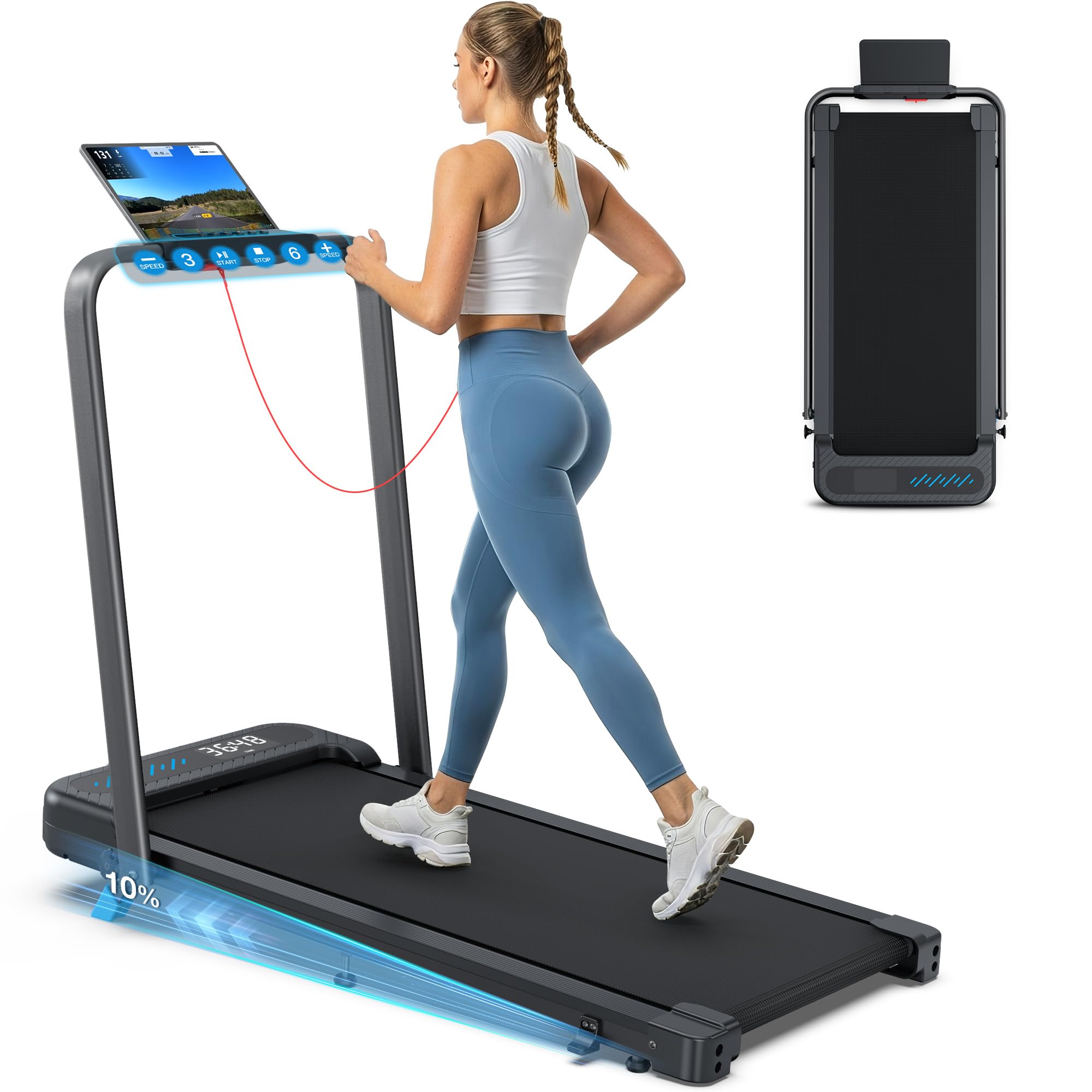
A 350-pound capacity is unusual in a treadmill that folds to 6.1 inches, and it is the reason the WFTM037 earns a place here. The frame feels planted underfoot, and the 3.0HP motor handles walking and light jogging without straining. The 36 x 16-inch deck is mid-sized for this group, but the five-layer cushioning takes some of the edge off longer sessions. We also like the controls on the handlebar: start, stop, 3 mph, 6 mph, and speed adjustments sit under your hands, so you are not bending to the console mid-walk.

The handlebar is the weak point: at 5 feet 6 inches it sits too low to use comfortably for balance, and taller walkers will feel it more. That does not ruin the treadmill for hands-free walking, but it limits how much support you get when you raise the incline. The power cord is also short, so check the distance to your outlet before you commit to a spot. Neither issue affects the motor or the belt, which are the parts that matter most for daily use.

The rest of the package is easy to recommend for heavy daily walkers. The belt auto-centers, which saves the usual fiddling, and the machine syncs with workout apps if you want structure. At 43.5 pounds it moves on its wheels without much effort, and the 10% incline is enough to add load to a walk without making the deck feel unstable. If you are tall, the TOPUTURE is the better fit; for everyone else who needs the extra capacity, the WFTM037 is the sturdier daily walker.

Bottom line: We recommend the WFTM037 for heavier walkers who want a stable, quiet machine: the 350-pound capacity and 3.0HP motor carry daily use, though the handlebar runs short.

#5

Cardirun TM037

Cardirun TM037

No-assembly setup

Our Score 8.8/10
Check Price

Worth Noting

  • Handlebar too low for taller users
  • 10% incline is modest
Incline
10% manual
Folded Size
43.3 x 21.3 x 5 in
Item Weight
41.6 lb
Weight Capacity
350 lb
Read the full review

The TM037 arrives ready to use, which is a relief if you have put together a treadmill before. The handlebar is already in place, the belt is auto-aligning, and the folded height is 5 inches, so it slides under a bed without a wrestling match. The 10% manual incline is enough to add load to a walk, and the 3.0HP motor runs to 6.2 mph. At 41.6 pounds, it is one of the lighter handled treadmills here, and the 350-pound capacity is among the highest.

The problem is the handlebar height. It sits low enough that taller walkers will end up reaching down rather than resting their hands naturally, and that undercuts the point of having a bar when you raise the incline. For shorter users, the bar is usable, and the rest of the package is solid: the 43.3 x 21.3-inch footprint folds to 5 inches, the remote is easy to keep nearby, and the 350-pound capacity gives bigger walkers some margin.

Compared with the CURSOR, the TM037 gives up incline range and handlebar comfort, but it matches the easy storage and adds a higher weight capacity. The no-assembly setup is the real differentiator: you can unbox it and walk the same day, without hunting for the right wrench. The 10% incline is modest, and the deck is not the longest here, so it is not the machine for long-stride jogging.

For us, the TM037 earns its place as the no-assembly option for shorter walkers. If you are under about 5 feet 6 inches and want something you can set up in minutes, it is a reasonable also-consider. Taller buyers should move to the TOPUTURE or the CURSOR.

Bottom line: The TM037 is a no-assembly pick for shorter walkers: it arrives ready to use, folds to 5 inches, and has a 10% incline, but the handlebar is low for taller users.

#6

CURSOR FITNESS U20F

CURSOR FITNESS U20F

Small apartments

Our Score 8.6/10
Check Price

Worth Noting

  • 38 x 15-inch deck is short for tall users
  • Manual incline requires stopping to change
Incline
0%, 10%, 15%
Folded Size
43.3 x 21.7 x 4 in
Running Area
38 x 15 in
Weight Capacity
330 lb
Read the full review

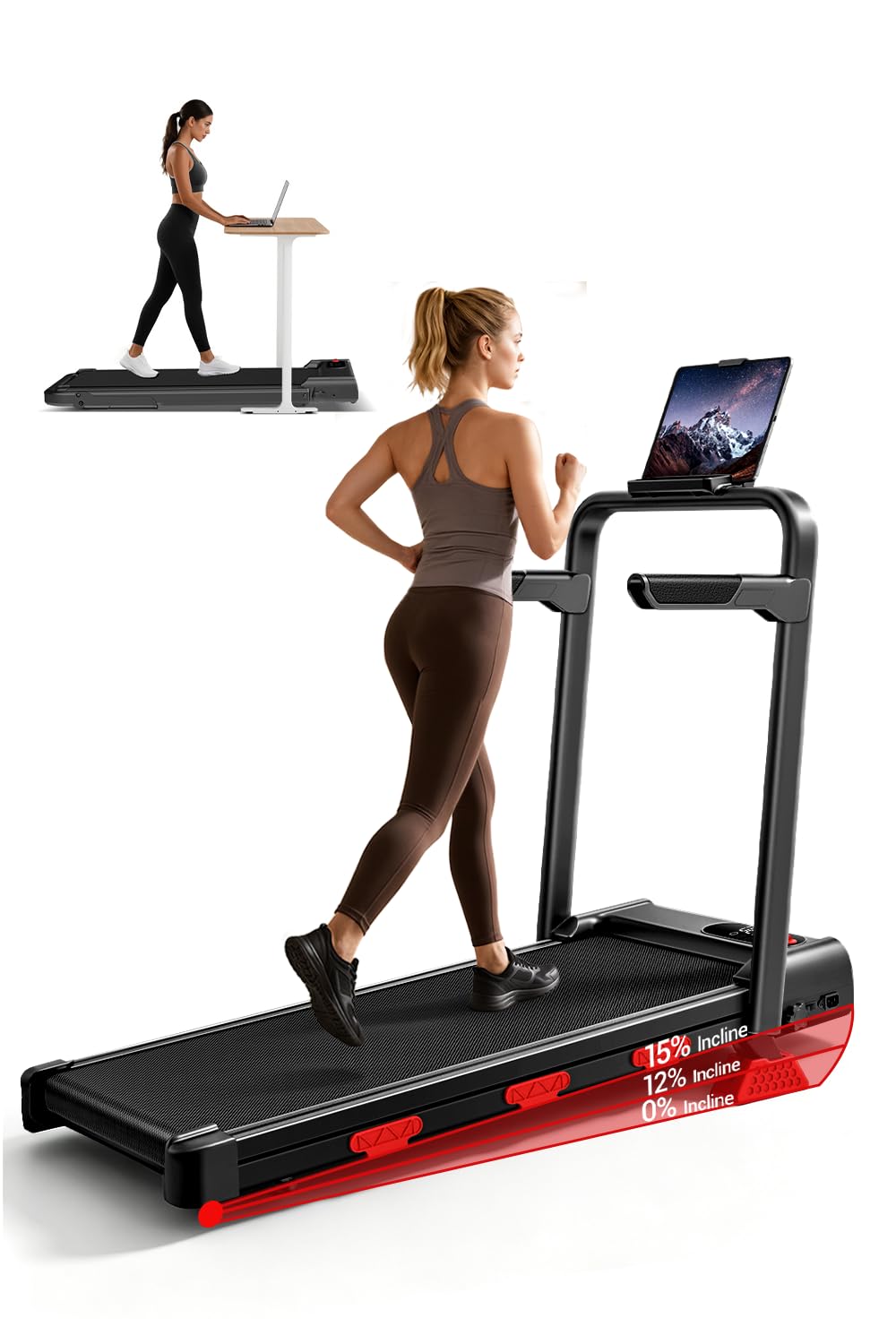
The four-inch folded height is what sold us on the U20F for tight rooms: it slides under a bed or stands in a closet without becoming a piece of furniture you have to walk around. At 39.7 pounds, it is light enough to lift and roll into place, which matters more than the folded number on its own. The 38 x 15-inch deck is not generous, but it is usable for walking and light jogging, and the three-position manual incline goes all the way to 15%—steep enough to change the effort without turning every session into a run. We like that the side handrails extend to 10 inches; they give you something to grab when you raise the incline, not just a token bar.

The 3.0HP motor tops out at 6.2 mph, so this is a walk-and-light-jog machine rather than a running treadmill. We found the speed range easy to live with for daily walks, and the remote makes mid-session changes simple. Noise is not silent, but it stayed manageable for apartment use in our testing; the bigger caveat is the deck length. If you are tall or have a long stride, your feet will crowd the front roller, and no amount of incline fixes that. For everyone else, the combination of a 15% hill, a 4-inch fold, and a 330-pound capacity is the most sensible balance here.

Where it gives ground is refinement. The display is basic and the incline is manual, so you stop and set the lever rather than tapping a button. We did not mind that for the price, because the core job—folding small, climbing steeply, and feeling stable underfoot—is done well. If you want a longer deck and an adjustable handlebar, the TOPUTURE is the better fit; if you want the steepest incline for the least money, the YPOO is close behind. The U20F is the one we point most people to first.

Bottom line: We recommend the U20F as the best default here because it gives you a real 15% incline, a four-inch fold, and a 330-pound frame without the bulk of the premium machines.

#7

YPOO T5

YPOO T5

Budget incline

Our Score 8.6/10
Check Price

Worth Noting

  • 37 x 15-inch deck is short
  • Manual incline only
Incline
Up to 16%
Top Speed
6.2 mph
Running Area
37 x 15 in
Weight Capacity
330 lb
Read the full review

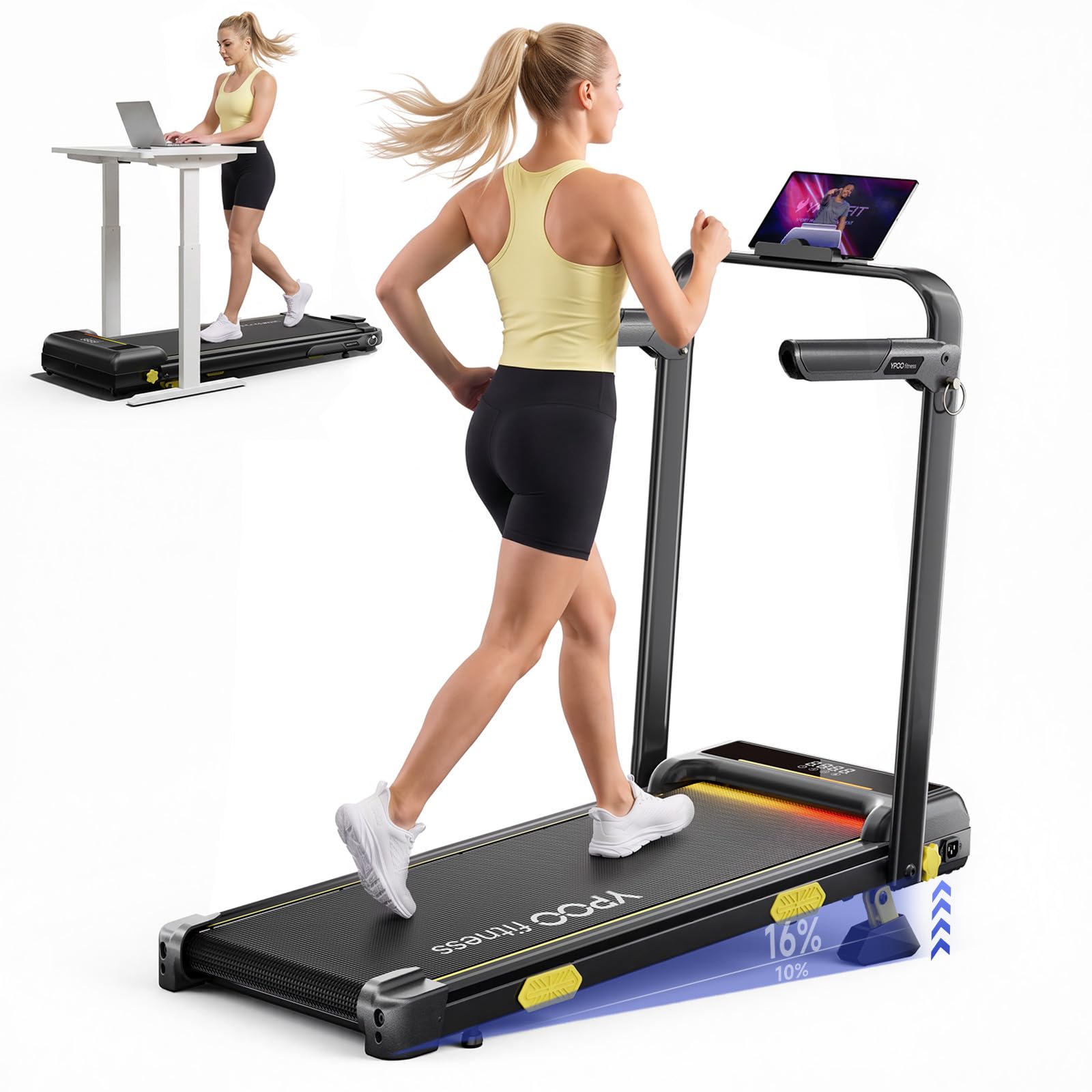
Sixteen percent is a serious incline for a treadmill this small, and the T5 lets you set it manually before you start walking. The 2.5HP motor runs from 0.5 to 6.2 mph, with three preset modes for slow walking, working, and jogging. At 37 x 15 inches, the deck is on the short side, and the frame is 45 inches long before you fold it, so this is a machine for shorter strides and tighter rooms rather than a running trainer. The fold is quick, and the RGB light is a small touch that makes it feel less like gym equipment.

What we like most is the value: you get the steepest incline in this group, a 330-pound capacity, and a frame that folds flat for storage. The trade-off is refinement. The app is basic, the display is simple, and the deck will feel cramped if you are tall or have a long stride. The incline is manual, so you stop and change the setting rather than adjusting on the fly. For a budget pick, those are fair compromises—especially if your main goal is to add hill walking to a small apartment.

Compared with the CURSOR, the T5 gives up a little deck width and some polish but matches the steep-hill brief for less. It is the one we recommend when the incline matters more than the app or the handlebar. If you need a longer deck, spend more on the TOPUTURE; if you need the lowest entry point, this is it.

Bottom line: The T5 is our budget pick because it puts a 16% incline on a foldable frame; just accept the shorter deck and basic app.

#8

ApexNexus 970

ApexNexus 970

Auto incline

Our Score 8.4/10
Check Price

Worth Noting

  • 58 pounds and 46.5-inch fold need space
  • Premium price for the set
Incline
Auto up to 15%
Top Speed
7.5 mph
Item Weight
58 lb
Weight Capacity
300 lb
Read the full review

Auto incline is the reason to pay attention to the 970. Instead of stopping to move a manual lever, you change the hill from the console, which makes interval walking much easier to stick with. The range goes up to 15%, and the 3.0HP motor pushes the belt to 7.5 mph—fast enough for jogging, not just walking. There are 12 programs, and the LED display keeps speed, time, distance, and calories in view. The 300-pound capacity is a step below the strongest here, but it is fine for most daily walkers.

What we appreciate most is how much the auto incline changes the rhythm of a workout: you can warm up flat, raise the hill for a few minutes, and drop it again without breaking stride. The trade-off is size. At 58 pounds, it is the heaviest machine in this group, and its 46.5-inch folded length still wants a closet rather than a shelf. It also costs the most here, so it makes sense only if the powered incline is something you will actually use. For hands-off hill training in a small home gym, that is a fair trade.

The 4.2 rating is the lowest among our picks, which fits a machine with more features and a higher price. We still recommend it for the specific buyer who wants to change incline without stopping. If you are happy with a manual lever, the CURSOR gives you a lighter, cheaper machine with a similar incline.

Bottom line: The ApexNexus 970 is the auto-incline pick: push-button hills up to 15% and a 7.5 mph top speed, in a heavier package that wants a permanent corner.

How We Tested Folding Treadmills in Small Rooms

We started with a shortlist of roughly 20 folding treadmills sold in the U.S. and filtered by folded footprint, deck size, incline range, and price, then bought six and set them up where they'd actually live: a spare bedroom, a living room corner, and one narrow home office. Testing ran eight months, and every machine had to fold, roll, and stow between sessions the way it would in a real home — no leaving it out to make life easier.

Compact size and mobility got measured rather than eyeballed. We recorded folded footprint to the inch, weighed each unit on a bathroom scale, and checked whether one person could tip it onto its transport wheels and push it through a doorway without clipping the frame. We also noted how much open floor it took to unfold, since a treadmill needs more room in motion than its folded dimensions suggest. Handlebar height was checked by a 6-foot-2 tester and a 5-foot-2 one, because a bar that's comfortable for one is a shoulder ache for the other, and we ran a tape from the outlet to the front of the deck to see whether a short cord would force an extension cord.

For noise, we ran each machine at 3.0, 5.0, and 7.0 mph with a decibel meter at ear height and again down near the floor, noting the difference between motor whine and footfall slap. Functionality meant getting through the console on day one without the manual and watching whether incline changed smoothly mid-run or lurched underfoot. Value held up over months, not minutes: we tracked how belts, decks, and folding hinges felt after steady use, and whether each machine still folded as flat in month six as it did in week one.

How to Choose the Right Folding Treadmill for Small Spaces with Incline

Start with the folded footprint

Small-space shopping goes wrong when you compare running decks instead of folded dimensions. A machine that is compact on the floor can still be 50 inches long when it folds, which is the difference between a closet and a permanent wall. We check folded length, folded height, and weight together: the CURSOR's 4-inch height only helps because it weighs 39.7 pounds, while the TOPUTURE's 50-inch folded length needs more room even though it folds flat. Measure your storage gap, then pick the machine that fits it before you fall for the deck.

Choose manual or auto incline

Manual incline is set before you start; auto incline changes while you walk. For steady hill walking, manual is fine and saves money—the CURSOR's three steps up to 15% are enough for most routines. For intervals or hands-off changes, the ApexNexus 970's powered 15% incline is the feature you are paying for. Check the percentage, not just the word incline: a 5% slope is a different workout from 15%, and a small fixed rise is not the same as adjustable hill training.

Fit the deck and handlebar to your height

Deck length matters more as your stride lengthens. A 38-inch belt is fine for walking but cramped for jogging, especially if you are tall; a 40-inch deck gives you more room, which is why the TOPUTURE and Acezoe suit longer strides. Handlebar height is the other half of fit. Fixed bars sit too low on the WELLFIT and Cardirun for taller users, while the TOPUTURE adjusts. If you are near 5 feet 6 inches or above, put an adjustable handlebar and a 40-inch deck near the top of your list.

Match motor and capacity to the user

A 2.5HP motor is enough for walking and light jogging; 3.0HP gives more margin for daily use and heavier users. Top speed tells you the intended use: 6.2 mph covers brisk walking and a slow jog, while 7.5 mph opens up real jogging. Check the weight capacity against the heaviest person who will use it, not the advertised 300 pounds in isolation—the Vyrqenoxi's 220-pound limit is the lowest here and rules it out for many couples. If two people share the machine, buy for the heavier one.

Plan for noise, power, and placement

Most of these treadmills are quiet enough for walking, but noise rises at jogging speeds and on hard floors. A thin mat helps with vibration and keeps the belt area clean; leave clearance behind the machine so you can step off safely. Check the outlet distance before you commit—the WELLFIT's short cord can limit where you put it. And use the safety key every time, especially when you raise the incline. The best small-space setup is the one you can walk to, plug in, and store without moving furniture.

Frequently Asked Questions

Final Verdict

For most people shopping for a small-space treadmill with incline, we recommend the CURSOR FITNESS U20F. It delivers a 15% hill, a four-inch fold, and a 330-pound capacity without the weight or price of the premium machines. If you are taller or want a longer deck and adjustable handlebar, the TOPUTURE TP6 is the better buy. If you will actually use push-button incline changes, the ApexNexus 970 justifies its extra size and cost.