Cardio Machines

Best Cushioned Treadmills of 2026

The night I finally quit my gym, it wasn't motivation that failed me — it was a frozen sidewalk and a bus that never came. A treadmill fixes that, but it drags in its own set of problems: a machine heavy enough to dent a floor, loud enough to wake the apartment below, and big enough to eat a whole corner of a room. Cushioning is the part shoppers ask about last and feel first — too soft and the belt drags underfoot, too firm and your knees remind you about it by mile three.

I've run on everything from bargain folding decks to the hulking machines at a commercial gym, and our team has now spent eight months living with seven treadmills in basements, spare bedrooms, and one very patient living room. What separates a good one isn't the spec sheet — it's whether assembly takes an evening or a weekend, whether the incline actually holds at 10 percent, and whether the thing still feels solid after the novelty wears off. Here's what held up.

#1

WELLFIT WFTM032

Top Pick
WELLFIT WFTM032

Small rooms

Our Score 9.2/10
Check Price

Worth Noting

  • One year of cover on the whole machine
Incline
0 to 10%, automatic
Running Area
44" x 17"
Folded Height
5.7"
Weight Capacity
400 lb
Read the full review

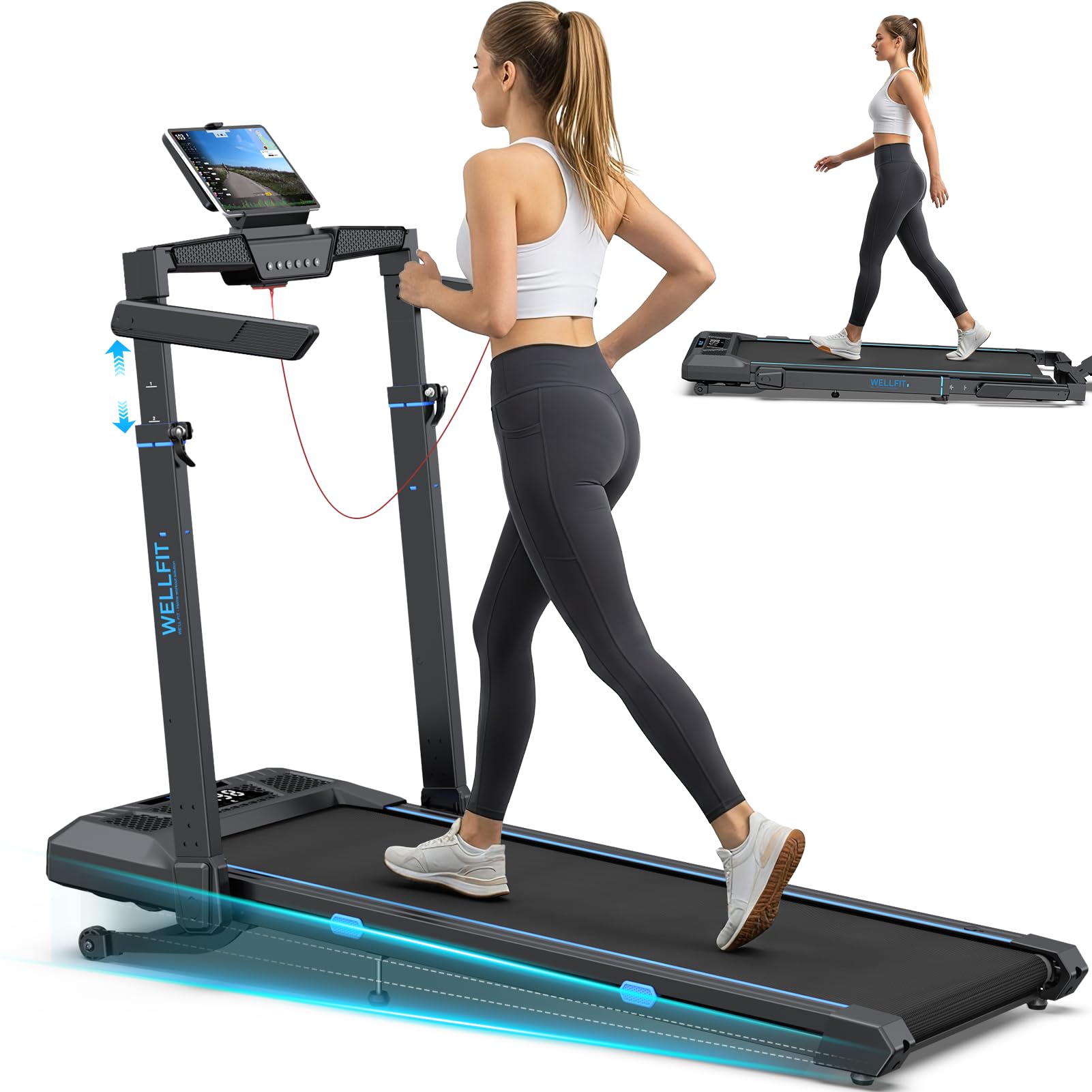
Five handrail heights, from 30.5 to 41 inches, is the feature nothing else here offers, and it decides whether a shared machine actually works. Drop the bars for a shorter walker and the arms stay useful instead of forcing a hunched grip; raise them and a taller user is not stooping to reach the console. Two people of different heights can use the same treadmill without either of them compromising.

That detail is why we point apartment walkers here. It is a compact machine — 44-by-17-inch belt, 10% of automatic incline, a 3.5 HP motor and a 400-pound capacity, the highest in this group — and it folds to about six inches, so the realistic home for it is behind the sofa or under a bed rather than in a dedicated gym corner. We like that it does not pretend to be a piece of furniture.

It is not a running treadmill, whatever the 8.6 mph figure implies. Forty-four inches of belt is a walking and light-jogging surface, and the honest use is a brisk incline walk while the kettle boils or a podcast finishes.

A remote ships alongside the app control, and for walking pace it is the more useful of the two — you change speed without breaking stride to reach for a console that is a little low for taller users anyway.

Bottom line: We point small-apartment walkers to the WFTM032: it folds to a few inches, the handrails adjust to your height, and its belt is honestly sized for walking.

#2

ProForm Carbon TLX

ProForm Carbon TLX

Running at home

Our Score 8.8/10
Check Price

Worth Noting

  • Guided iFIT workouts need a paid membership
  • Incline ramps slowly, so set it before you settle in
Motor
3.0 HP
Incline
0 to 12%, automatic
Running Deck
60" x 20"
Frame Warranty
10 years
Read the full review

Sixty inches by twenty is the number that settles this one for us. Most of the compact machines here give you 44 or 45 inches of belt, which is comfortable right up until you lengthen your stride and start reaching for the front roller. ProForm puts a full 60-inch belt on a 221-pound frame, and that pairing — long deck, heavy frame — is where joint-friendly running actually comes from, because nothing flexes underneath you at pace.

The ProShox layer under the deck is the part ProForm advertises, and it reads as a genuinely soft landing under the heel that firms toward the toe. That progression is what keeps a cushioned deck from feeling like sand when you push off, and it is the difference between a machine you run on and a machine you walk on nervously. Three horsepower and a 12 mph ceiling are more than most homes need, but the reserve shows up in how little the belt slows when you land.

Folding is worth understanding before you buy. The deck tilts up to a 35-inch height, but the folded footprint is still 70 inches deep, so it saves height in a small room rather than floor space — this is a machine that wants a wall, not a cupboard. What we do like is the warranty split: ten years on the frame, with parts and labor covered for a year, is the longest frame coverage in this group.

The 7-inch screen is the least interesting thing about it, and that suits us. You are buying this one for the deck, and the deck is the part that will still matter in year eight.

Bottom line: We recommend the Carbon TLX to anyone who wants to run indoors: it pairs the longest deck here with cushioning that stays firm at pace and a 10-year frame warranty.

#3

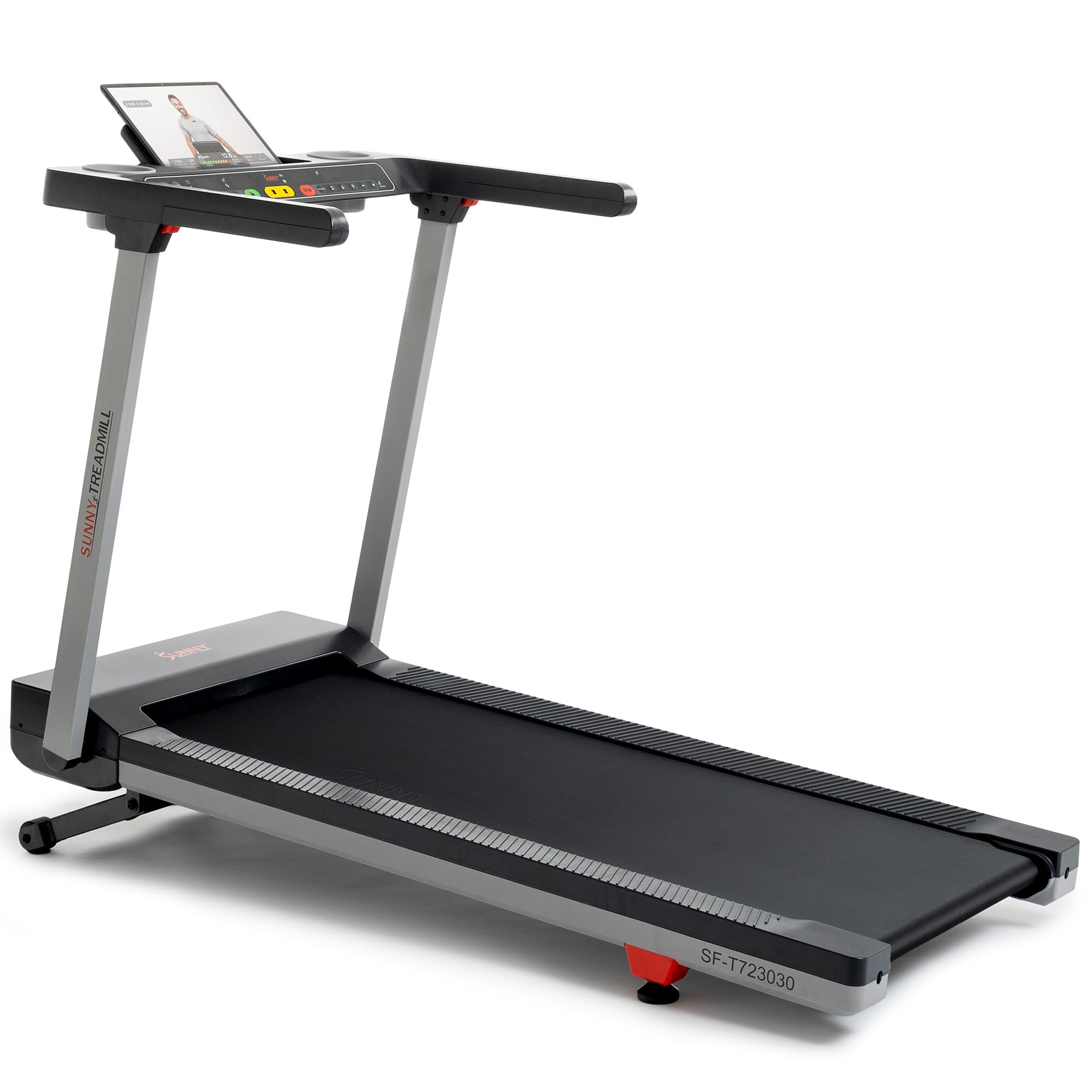
Sunny SF-T723030

Sunny SF-T723030

No-fuss setup

Our Score 8.8/10
Check Price

Worth Noting

  • Parts and labor cover ends at 180 days
  • At 130 pounds it takes two people to move
Motor
2.5 HP brushless
Incline
15%, automatic
Assembly
Fully assembled
Running Surface
20" x 53"
Read the full review

Setup on the SF-T723030 is raising the handlebar, locking it, and finding a socket. Sunny ships it fully assembled, so there is no bolt bag, no hex key, and no second person holding a console steady while you thread a screw. For anyone who has abandoned a flat-pack treadmill halfway through, that alone is worth a serious look.

That changes who this is for. If assembly is the reason the last machine never got used, this one removes the excuse — and the one-click fold means it goes upright against a wall in seconds rather than requiring a decision first. We also like that it holds a 20-by-53-inch running surface, which is long enough for a jog with a normal stride on a machine that never needed a second pair of hands.

A 2.5 HP brushless motor runs to 10 mph with 15% of automatic incline across 24 programs, and the belt stays smooth through a jogging pace. The fold drops flat to about 11 inches, which is an under-something shape rather than a standing-in-the-corner one, so think about where it lives when it is not in use.

The 20-inch belt is the same width as the Carbon TLX's, and that is not something the rest of the machines at this end of the group can say.

Bottom line: If assembling a treadmill is why the last one stayed in its box, this Sunny arrives built, and we think it is the easiest machine here to live with.

#4

Sunny SF-X7210

Sunny SF-X7210

Incline hiking

Our Score 8.8/10
Check Price

Worth Noting

  • One-year frame cover, 180 days on parts
  • 192 pounds, so plan where it lives
Deck
20" x 51"
Motor
2.5 HP
Incline Range
45% up, 3% down
Weight Capacity
300 lb
Read the full review

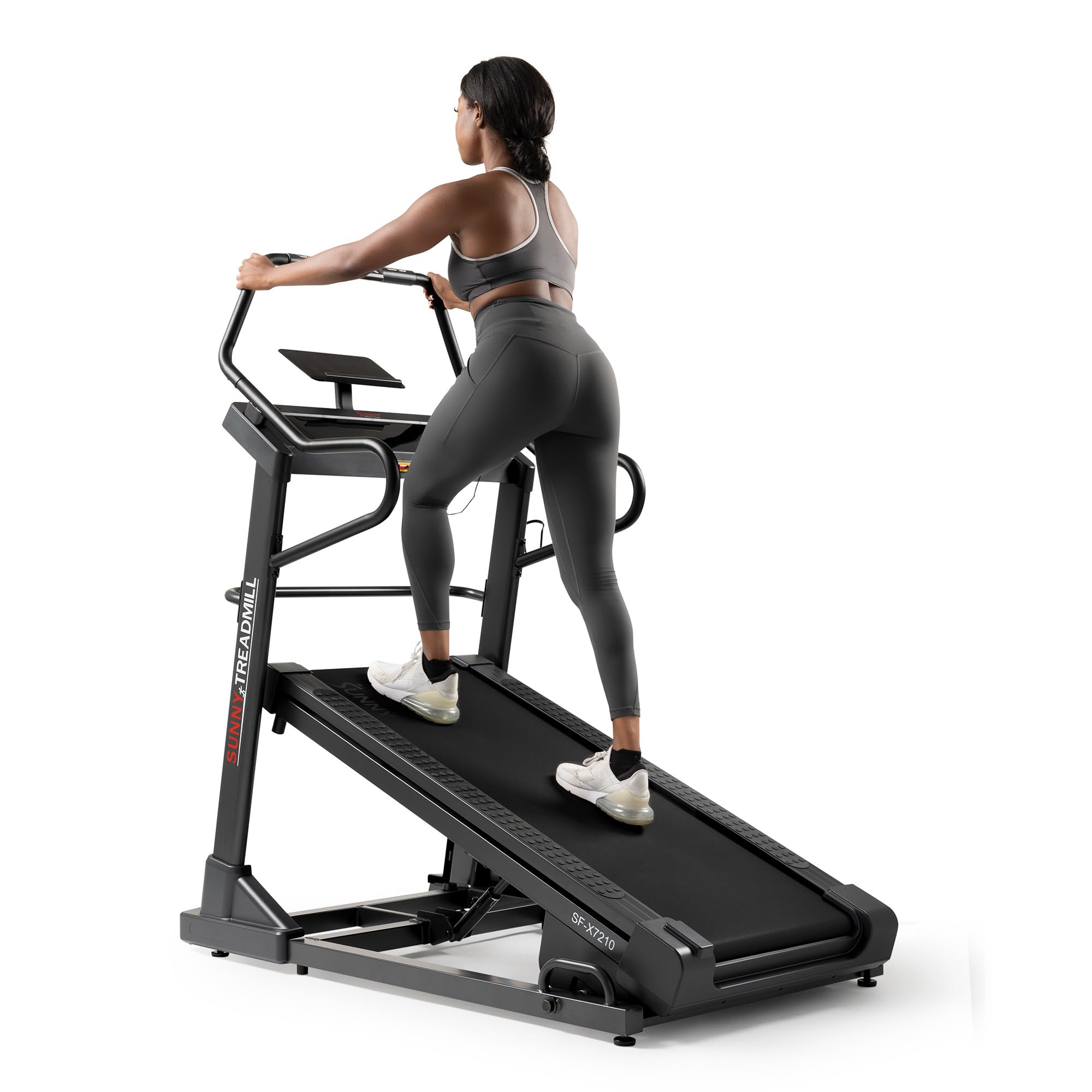
This is the one for the person who wants to climb, not run. Sunny's deck rises to a 45% incline and tips to a 3% decline, which makes it a hiking machine wearing a treadmill's clothes, and the handrail layout is what holds the idea together — high, mid and low grips, so at the steep settings your hands land somewhere useful instead of dangling.

The 20-by-51-inch deck uses dual shock absorption, and at walking pace the extra width matters more than the cushioning: you drift sideways on a climb, and 20 inches gives you somewhere to drift. Sunny builds this as a walking and hiking machine — its own listing quotes a 0.3 to 5 mph working range — so treat the higher speed figure as headroom rather than an invitation to sprint. The multi-grip rails also mean you can hold on at the top of the ramp without stooping.

It costs more than anything else here by a wide margin, and it wants a room of its own: the frame stands 65 inches tall before the deck climbs, so check your ceiling as well as your floor. The coverage is thin for the money too, with one year on the structure and 180 days on the rest.

The decline is the detail we did not expect to matter as much as it does. Walking downhill uses different muscles than walking flat, and nothing else in this group offers it at all.

Bottom line: For walkers who want climbing rather than running, this is the one machine here that turns a session into a hike, as long as the room and the budget stretch.

#5

BORGUSI CTM5103

BORGUSI CTM5103

Value auto incline

Our Score 8.8/10
Check Price

Worth Noting

  • Incline can fail to engage on some units
Motor
3.0 HP
Incline
15%, automatic
Running Belt
45.3" x 17.5"
Weight Capacity
300 lb
Read the full review

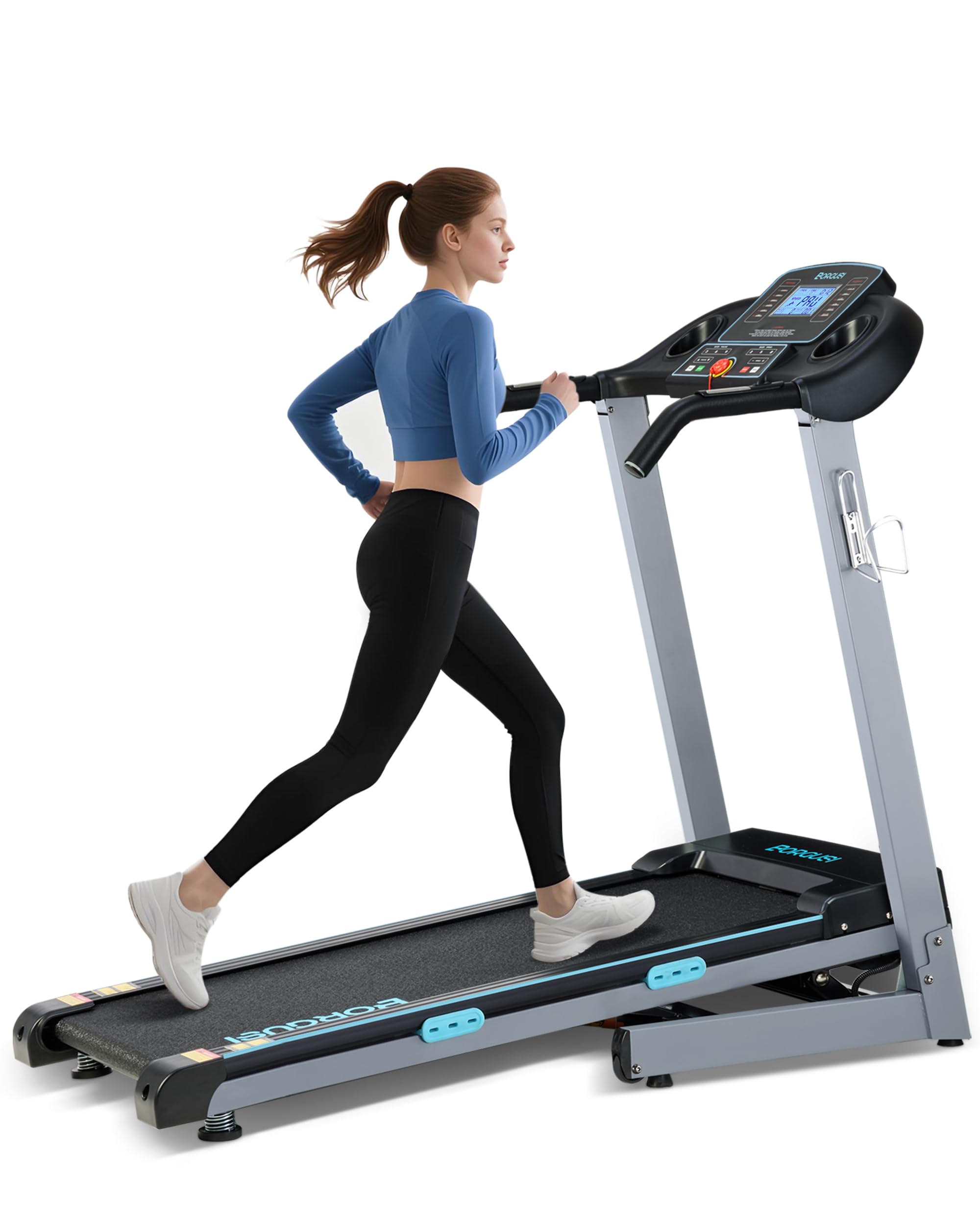
Set this beside the premium pick here and the BORGUSI looks like a lot of treadmill for the money. The double deck is the part that surprised us: two layers run under the belt rather than one, and the landing feels soft without the deck wallowing when you push through the toe-off.

The rest of the package is sensible rather than flashy — 3.0 HP, 8.5 mph, 15% of automatic incline with one-touch controls, a 300-pound capacity and 15 preset programs. It arrives 90% built, and the screws left over are for the console and handrails: about twenty minutes with the included tools, and one person can manage it without help.

Our take is that this is the machine for someone who wants the incline and the cushioning without paying premium money, and who jogs rather than sprints. The belt is the honest limit at 45.3 inches long and 17.5 wide — comfortable for a normal walking stride and a light jog, tight if you are tall and lengthening out.

The Bluetooth speaker is a gimmick and the console is plain, and neither matters, because the deck is what you are buying. That is a good trade at this end of the market.

Bottom line: Our value pick: it brings automatic incline and a double-layer cushioned deck to the budget end of this group, and the trade is a belt that suits jogging more than running.

#6

Ateedge CTM5315A

Ateedge CTM5315A

Budget incline

Our Score 8.0/10
Check Price

Worth Noting

  • Incline can stick at the highest setting
Motor
3.0 HP
Incline
20%, automatic
Running Belt
18.5" x 45.5"
Weight Capacity
350 lb
Read the full review

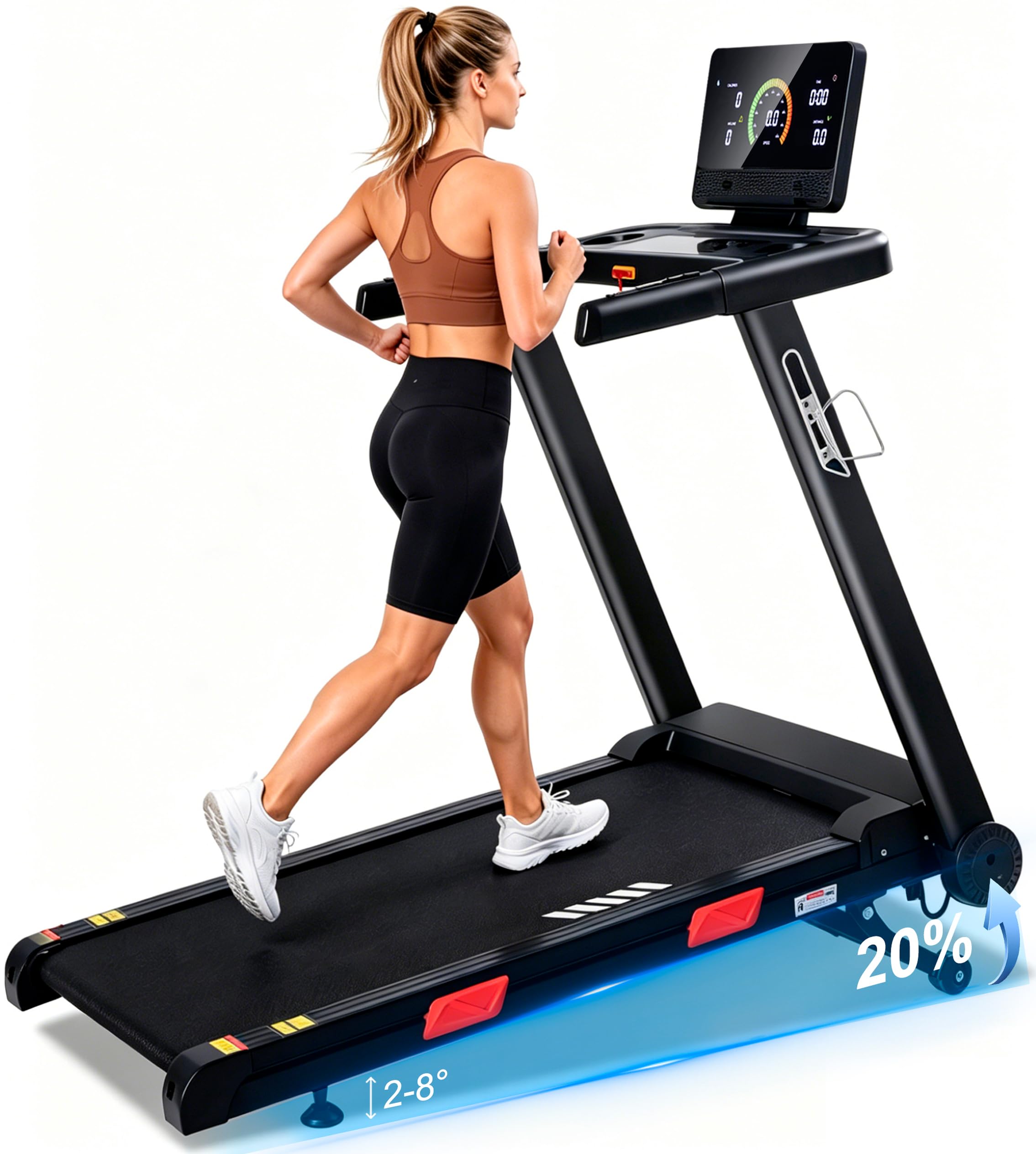
Twenty percent of automatic incline is the reason to look at the Ateedge at all. Only the big Sunny here climbs steeper, and that machine weighs more than twice as much and takes up a different category of floor space. If the hill is what keeps you on a treadmill, this is the cheapest way to get a serious one.

The rest of the spec sheet is tidy: 3.0 HP, a 10 mph ceiling, an 18.5-by-45.5-inch belt, 350 pounds of capacity, 36 preset programs and a plain LCD with speed and incline buttons on the handles. At 94 pounds it is light enough for one person to reposition, and the transport wheels mean that actually happens.

We see it as the incline-first budget pick — the machine for someone whose workouts live between 4 and 6 mph and who wants the gradient to do the work. The belt is the honest limit: 45.5 inches is fine for walking with room to spare and crowded once you push the pace or you are tall.

The cushioning is described as shock absorption rather than a named deck system, and at walking pace that is enough. If joint comfort is the whole reason you are shopping, the bigger decks above are the better spend; if you want a hill and a small footprint, this is the one.

Bottom line: Buy the Ateedge if a 20% climb is the feature you want most and you are happy walking or jogging on a 45-inch belt rather than running.

How We Tested the Best Cushioned Treadmills

We started with a shortlist of about 30 treadmills from brands we've had decent luck with, then cut anything that couldn't carry a 300-pound runner, anything with a belt narrower than 20 inches, and anything whose folded footprint wouldn't clear a standard doorway. That left seven machines, from compact folding models to full-size decks, and we've had them running for roughly eight months of real use rather than a week of first impressions.

Assembly came first: two of us unboxed each one, timed the build solo, and noted where the instructions stalled or the hardware fought back. Then we ran them — morning walks, after-dinner jogs, and at least a few all-out interval sessions apiece, with the incline pushed from flat to the top of each machine's range. We checked whether the deck returned to zero smoothly and whether it held the same grade an hour in, and we measured noise with a decibel meter at walking and running speeds, then had someone stand in the room below to confirm what the numbers suggested.

Sturdiness got tested honestly: top speed on every machine, eyes on the belt for slip and the frame for wobble, and a running log of anything that loosened, rattled, or threw an error code over those eight months. We weighed each treadmill, measured its footprint folded and deployed, and pushed it across a rug to see how hard it was to reposition alone. Value came last, and we compared what each machine actually delivered against what it asked of your floor space and your wallet — a couple of the smaller, cheaper models beat their fancier neighbors on that count.

How to Choose Cushioned Treadmills

Cushioning Is a Deck, Not a Label

Every machine here claims cushioning, and each one means something slightly different: an elastomer layer under the deck, a second deck beneath the belt, silicone pads at the corners, or just a thicker belt. What matters is whether the give sits under the deck where it can absorb a landing, and whether the frame is heavy enough that it isn't flexing anyway.

A hundred-pound machine can carry excellent cushioning and still feel unsettled at a jog. Read the machine weight before the marketing copy, and treat a heavy frame as part of the cushioning rather than a shipping inconvenience.

Match the Belt to Your Stride

Belt length decides whether you walk or run, and it is usually buried furthest down the listing. Our rule of thumb: under 50 inches is a walking deck, 50 to 55 inches takes a jog, and 55 and up is where a run fits without your feet reaching for the front roller.

Width matters too. Seventeen inches is fine at a stroll and cramped at 6 mph; 20 inches gives you room to drift without clipping the rail. Watch the word compact, which describes the machine's footprint, not the belt on it — a 44-inch belt is still 44 inches on a treadmill that folds flat.

Motor, Speed and Incline

Two and a half to three horsepower is normal for a home treadmill and enough for steady running; more buys headroom rather than speed you will use. The figure worth reading beside it is the belt, because a 10 mph motor over a 45-inch deck is a promise the deck cannot keep.

On incline, automatic is worth paying for if you use it — reaching down to crank a manual setting mid-session kills the habit. Ten to 15% covers most homes; 45% is a hiking tool rather than a running feature.

Space, Folding and the Route In

Measure three things before ordering: the footprint in use, the folded depth, and the narrowest doorway on the way to the spot. Folding is widely misunderstood — the Carbon TLX tilts to a 35-inch height but still occupies 70 inches of depth, so it saves height, not floor.

Weight decides whether you will ever move it again. Eighty pounds is a one-person shuffle; 220 pounds is a two-person lift. If the machine inclines steeply, check ceiling height as well as floor space before it comes inside.

What You Pay After the Sale

Three costs outlive the purchase: assembly, cover and subscription. Assembly ranges from nothing on the Sunny SF-T723030, which arrives built, to an evening with two people and a hex key.

Cover is split, so read both halves — a 10-year frame alongside one year on parts tells you what the maker expects to replace and what you will buy. The guided-workout apps are optional, but if automatic speed and incline changes are the draw, price a year of membership into the decision first.

Frequently Asked Questions

Final Verdict

Buy the ProForm Carbon TLX. It is the one machine here that combines a genuinely long deck, a heavy frame and cushioning that stays firm through push-off, and its 10-year frame warranty is the strongest statement of intent in the group.

If assembly is what stands between you and a treadmill, the fully built Sunny SF-T723030 is the better buy. If the room is small, the WELLFIT folds to almost nothing — and if you want to climb rather than run, the Sunny SF-X7210 is the only one that goes there.