Accessories

Best Balance Boards of 2026

A balance board looks like a simple plank on a pivot until you stand on one and feel your ankles, knees, and core start negotiating. The right board turns that into a daily habit — a few minutes while the coffee brews, a standing break during work calls, a fun challenge for kids — while a bad one feels tippy in the wrong way, slides on hardwood, or punishes bare feet. I've spent six months with 12 different boards, and the keepers share a stable pivot, a grippy surface, and a size that fits your stance.

Sturdiness shows up before you step on: press a foot on the edge and see if the deck flexes or the base shifts. I tried each board barefoot and in socks on carpet and hardwood, and the slick ones revealed themselves fast. Size matters more than you'd think; a narrow deck forces your feet together, while an oversized one feels awkward for smaller users. The best boards made me forget I was testing and just want to keep going.

#1

Indo Board Original

Top Pick
Indo Board Original

Surf and skate

Our Score 9.8/10
Check Price

Worth Noting

  • Premium price for a simple setup
Material
Maple wood
Deck Size
30 x 18 in
Weight Limit
350 lb
Deck Thickness
0.5 in
Read the full review

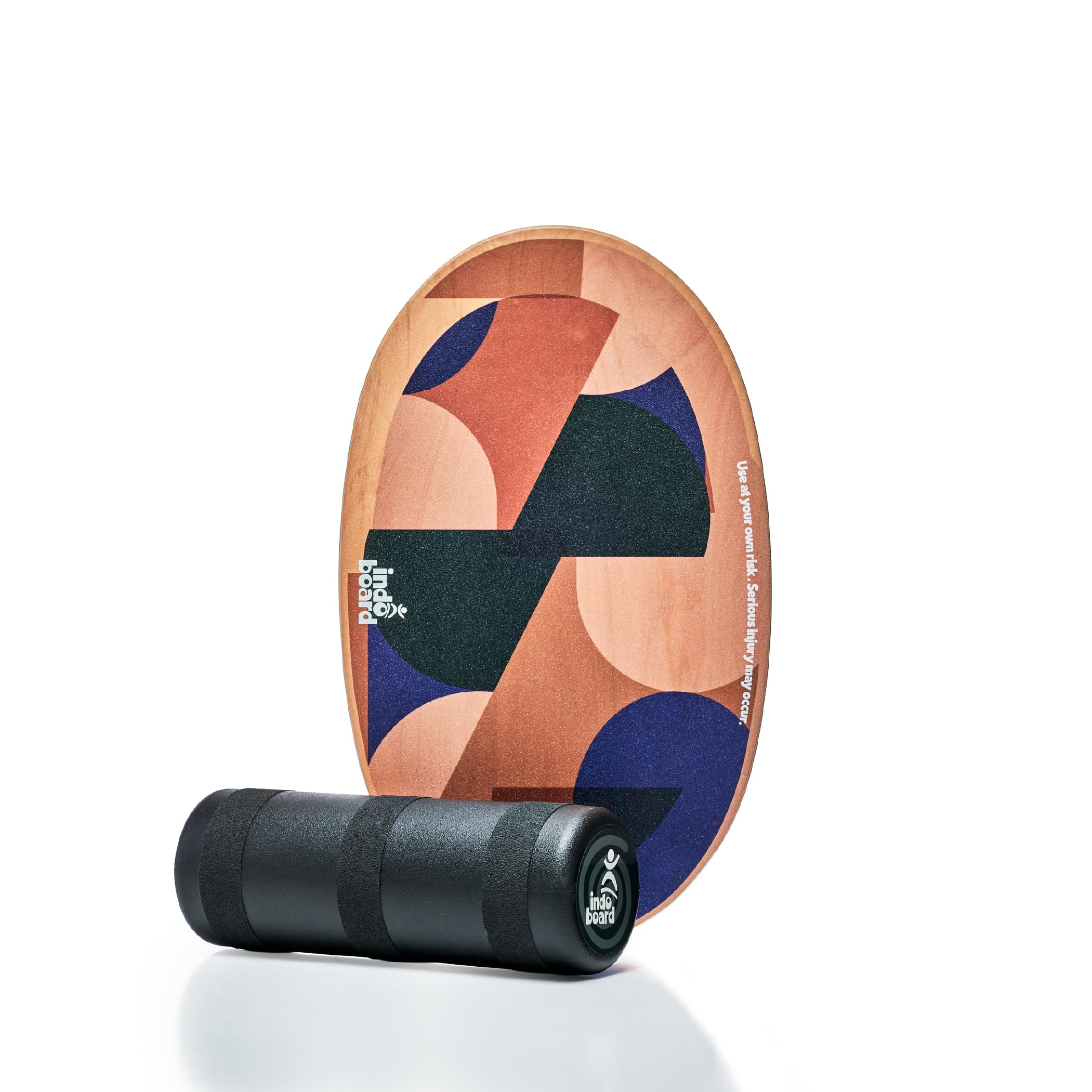
A 30-by-18-inch maple deck and a free-rolling cylinder give the Indo Board the feel of real board-sport equipment. There are no stops or modes: you stand on the deck and keep the roller under control. The 350-pound limit and half-inch-thick deck make it feel solid, and the maple finish looks good enough to leave out.

That simplicity is the appeal for surfers, skaters, and snowboarders who want to train the same balance reactions they use on a board. It is also the reason it is not our first recommendation for a beginner. The roller moves freely, and the first sessions can be humbling; expect to spend time near a wall or counter before you feel stable.

It is the board we choose when board-sport carryover is the goal and you do not mind earning it. For a family board or a first balance trainer, the Sportneer is more forgiving. For pure surf-skate feel, this is the classic board-sport pick here, and it is the one that most rewards practice: the deck is big enough to move your feet, and the roller responds to small shifts.

Bottom line: If your goal is surf or skate training, the Indo Board is the classic we recommend: a big maple deck and a roller that rewards practice, though it is not the easiest first board.
#2

Sportneer Balance Board

Sportneer Balance Board

All-around training

Our Score 9.6/10
Check Price

Worth Noting

  • Costs more than basic wobble boards
Included
Board, roller, ball
Deck Size
31.5 x 14.17 in
Difficulty
7 modes with adjustable stops
Weight Limit
450 lb
Read the full review

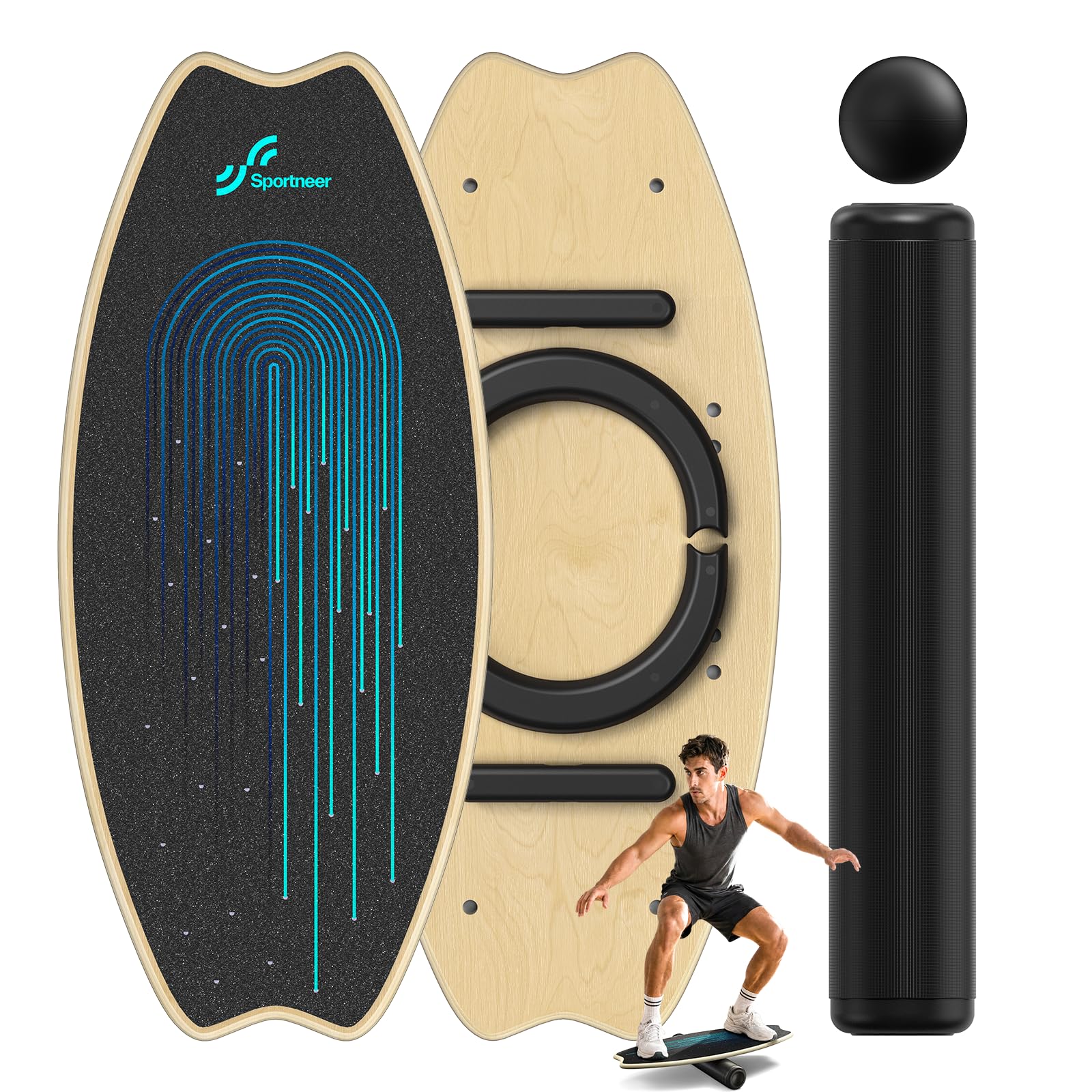
A roller, a ball, and two adjustable stops come in the box, and that combination is why this set earns our top spot. For most homes, it is the most useful board here because it can be a gentle beginner roller one day and a much harder 360 challenge the next. The stops change the rolling distance in seconds, so you can start short and lengthen as you get comfortable. The deck is 31.5 by 14.17 inches and built from birch, with a 450-pound limit. The matte surface is comfortable under bare feet and still grippy with shoes.

The range without a second purchase is what we appreciate most. A fixed wobble board can feel too easy after a few weeks; a bare roller can feel intimidating on day one. This set sits between those poles. The ball is the advanced setting, and it is genuinely hard—expect to spend time on the roller first. The board is wide enough for a shoulder-width stance, and the birch deck feels solid underfoot. It is not a compact travel board: at 10.6 pounds and over 31 inches long, it wants a dedicated spot in the room.

If you want one board for a teenager learning to surf and an adult working on ankle stability, this is the one we reach for first. It does not make the roller easy, but it gives you a way to earn the harder settings instead of guessing where to start.

Bottom line: We recommend the Sportneer as the best all-around balance board for most people: the roller, ball, and adjustable stops let you start easy and keep progressing without buying another board.

#3

Revbalance 101 v2

Revbalance 101 v2

Premium adjustability

Our Score 9.6/10
Check Price

Worth Noting

  • High price relative to the rest of this set
Weight
6.8 lb
Adjustment
Magnetic stops, tool-free
Construction
Handcrafted in USA
Weight Limit
400 lb
Read the full review

Magnetic stops that adjust without tools are the reason the 101 v2 can justify its premium price. They change the rolling distance in seconds, so you can shorten the roll for a cautious first session and lengthen it once you feel stable. The 400-pound limit and 6.8-pound build give it a substantial feel, and the DuraSoft traction surface is comfortable barefoot or with shoes. The deck is handcrafted in the USA, and the finish looks more like furniture than gym equipment.

We recommend it to people who will use a board often and want the adjustment to be part of the routine, not a wrench-and-bolt chore. The magnetic system is the smoothest we have used in this set; it is the detail that separates it from the cheaper roller boards. It is still a roller board, so it demands more balance than a fixed wobble board, and the free-rolling action is not the place to start if you are rehabbing an ankle.

What it gives up is range: the Sportneer includes a ball and more configurations. If you want the best adjustment mechanism here and a deck that feels good underfoot, this is the premium choice. If you want the widest spread of training modes, the Sportneer is the better fit.

Bottom line: The 101 v2 is the premium pick for anyone who wants tool-free difficulty changes and a comfortable deck; we recommend it if you will use it often and want the board to last.

#4

Gentle Monster Wooden Wobble Board

Gentle Monster Wooden Wobble Board

Kids and families

Our Score 9.4/10
Check Price

Worth Noting

  • Can arrive with chipped or dented edges
Material
Natural wood
Deck Length
35 in
Weight Limit
480 lb
Recommended Age
3+ years
Read the full review

At 35 inches long, this wooden rocker reads as play furniture first and balance board second—and that is the point. Kids can rock it, flip it into a bridge, slide toys down it, or use it as a step; adults can stand on it for a gentle balance challenge. It is rated to 480 pounds, so a parent can join without worrying about the deck. The natural wood finish is the nicest here, and it looks at home in a playroom.

We like it for families with young children who want an open-ended toy that also builds balance, not for someone looking for a serious fitness trainer. The curve is gentle, so it is easy for a toddler to climb and still useful for an older kid's balance practice. It is also a good gift for a grandchild because it does not need batteries or setup.

The board is not adjustable, and the rocker motion is mild; if you want a harder challenge, the Sportneer or Indo Board are better. It is a toy that grows with a child, not a training tool that will satisfy a teenager chasing a workout.

For a first balance toy that doubles as a slide and a reading nook, this is the one we choose. It is not a fitness trainer, but it is the board that will get the most unplanned use in a house with young kids.

Bottom line: The Gentle Monster is the family board we recommend for kids who want a rocker, slide, and balance toy; it is long, good-looking, and sturdy, though the finish can arrive marked.

#5

StrongTek Wooden Balance Board

StrongTek Wooden Balance Board

Rehab and therapy

Our Score 9.2/10
Check Price

Worth Noting

  • Narrow deck limits wide stances
Height
3 in
Surface
Textured non-slip
Deck Size
17.5 x 13.5 in
Weight Limit
350 lb
Read the full review

A rocker base rather than a roller is exactly why the StrongTek works for rehab and controlled balance work. The 17.5-by-13.5-inch deck sits 3 inches high, with a textured top and rubber pads underneath. It supports up to 350 pounds. The motion is predictable, so you can focus on ankle, knee, and hip control rather than catching a runaway roller.

It is the board we point to for people coming back from injury or doing physical-therapy-style exercises at home. The textured surface is secure under bare feet, and the rubber pads keep it from skating across the floor. It is also easy to keep near a standing desk for short movement breaks. The deck is compact enough to keep beside a desk, and the rocker motion is easy to step into.

What it does not do is roller or 360 training; if you want sport-specific challenge, this is not the board. For a slow start, it is the one we point to first, and its price is easier to justify than the premium rehab-style boards.

Bottom line: We recommend the StrongTek for rehab and controlled balance work: the rocker base and grippy surface make it easier to use than a roller board, and it costs less than the premium picks here.

#6

Amazon Basics Wood Wobble Board

Amazon Basics Wood Wobble Board

Budget balance work

Our Score 9.2/10
Check Price

Worth Noting

  • 265-pound limit is the lowest here
Height
3.15 in
Material
Solid wood
Deck Size
15.75 x 15.75 in
Weight Limit
265 lb
Read the full review

The lowest price in this set buys a simple wooden wobble board, and it covers the basics better than that suggests. The 15.75-inch square deck has a sandpaper-like non-slip top and a fixed wobble base. It is small enough to tuck away, and the wood deck feels solid for the price.

It is the board we choose for short balance sessions and standing-desk movement, not for hard athletic training. The fixed base is simple: no adjustment, no roller to chase. The grip is the catch: the top is secure underfoot, but the board can slide on smooth flooring, so put a mat under it. That is a setup fix, not a reason to skip the board.

The balance challenge is mild for experienced users; if you want progression, the Sportneer or Revbalance are better. For a first board, a desk fidget, or a second board for a kid, it does the job. It is not the board we choose for a serious daily workout, but it is the one we recommend when the budget is tight.

Bottom line: The Amazon Basics board is the budget pick we recommend for simple balance work and standing-desk movement; it is not the most refined board here, but it covers the basics for the least money.

#7

NALANDA Wobble Balance Board

NALANDA Wobble Balance Board

Standing desk wobble

Our Score 9.2/10
Check Price

Worth Noting

  • Texture can be uncomfortable for sensitive feet
Surface
Textured TPE
Diameter
16.34 in
Rotation
360°
Weight Limit
660 lb
Read the full review

Bumpy TPE covers the deck, and it is the first thing you notice underfoot. The 16.34-inch round board rotates 360 degrees and tilts through a 24.5-degree section angle, with two handles cut into the edge. It supports up to 660 pounds, the highest limit here. The plastic base feels stable on tile and carpet.

It is our pick for standing-desk movement and shared family use, where a stable wobble and a high weight limit matter more than a hard athletic challenge. The handles are genuinely useful for getting on and off and for carrying it between rooms. The textured surface adds grip and a massage-like feel, and it is easy to wipe clean.

The 24.5-degree tilt is stable enough for desk use, and the 360 rotation keeps your hips moving without demanding constant saves. It is a wobble board, not a roller, so it will not replicate surf training. For a standing desk and a family room, it is the easiest board here to share.

Bottom line: The NALANDA is our pick for a standing desk or a shared family board: the 360-degree wobble and high weight limit make it stable and durable, as long as you like a textured surface.

#8

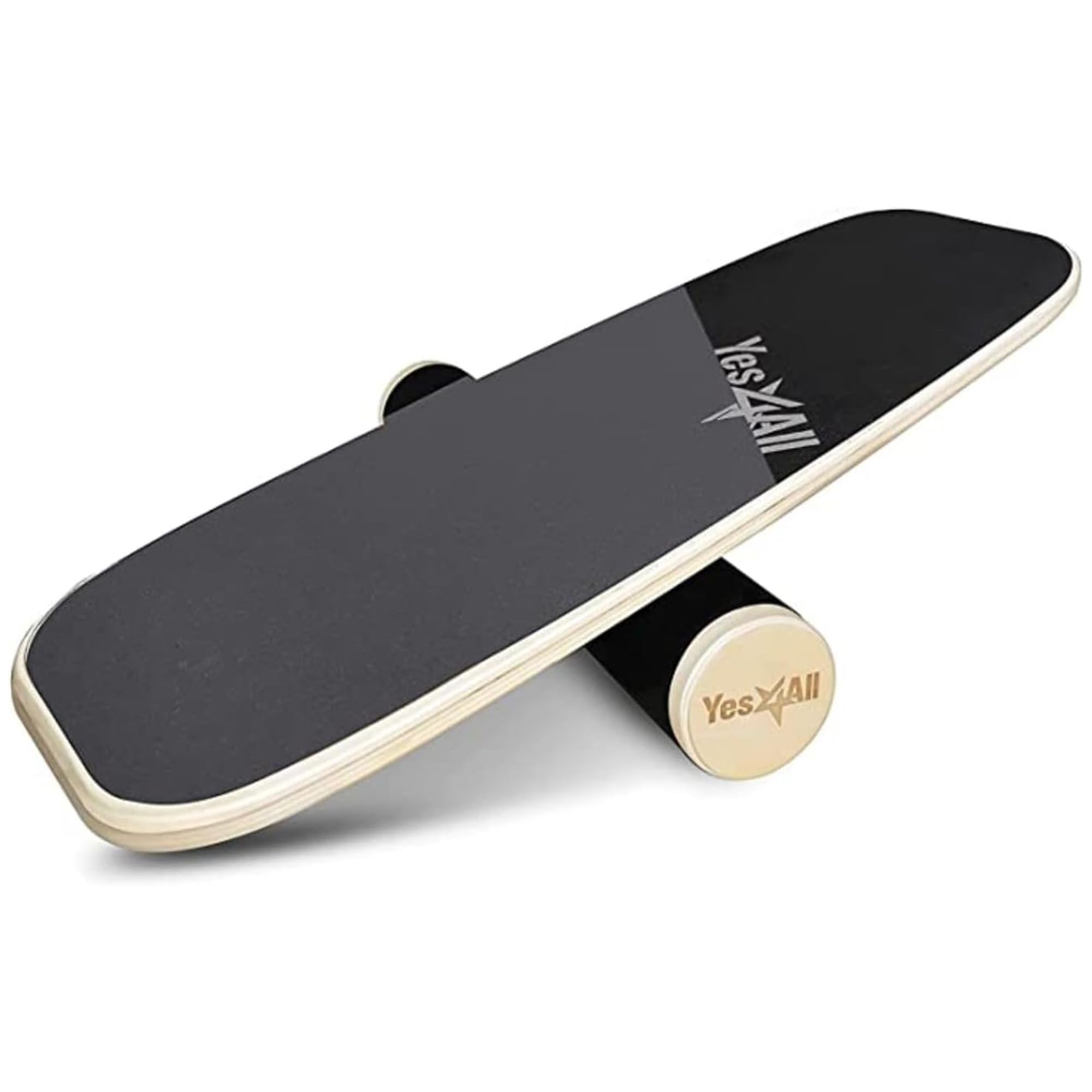
Yes4All Wooden Balance Board Trainer

Yes4All Wooden Balance Board Trainer

Budget roller training

Our Score 9.2/10
Check Price

Worth Noting

  • Roller surface can wear with heavy use
Deck Size
29.53 x 11.22 in
Construction
15-ply wood
Weight Limit
300 lb
Rolling Distances
11, 16, 22 in
Read the full review

Three rolling distances—11, 16, and 22 inches—come from two removable stoppers, and that is the feature that makes this a good first roller board. You can start with a short roll and lengthen it as you get comfortable. The 15-ply deck supports 300 pounds, and the emery surface is grippy underfoot. It is a simple, no-frills setup, but the wood feels solid and the stoppers are easy to move.

It makes sense for casual training, living-room sessions, and anyone who wants to try roller balance without spending much. The board is wide enough for a comfortable stance, and the roller is easy to store. It is not as refined as the Sportneer or Revbalance, but the low price makes the experiment low-risk.

The deck is sturdy enough for regular practice, and the adjustable stoppers stay put when you move them. It is a board you can learn on without feeling like you have committed to a specialist trainer.

For a first roller board or a budget second board, it earns its place; for daily hard use, we point to the Sportneer or Revbalance. The adjustable stoppers are the reason to choose it over a fixed wobble board, and the deck is sturdy enough for regular practice.

Bottom line: The Yes4All roller board is a good low-cost way to try roller training, with adjustable stops that make progression simple; we recommend it for casual use, not daily abuse.

How We Tested Balance Boards

We started with a shortlist of 30 boards sold by major retailers and specialty balance-training shops, then filtered by deck material, pivot type, footprint, and price to land on 12 that represent the range of what shoppers actually buy. For six months, those boards lived in my living room, home office, and garage gym — not a lab. I used them barefoot and in socks on hardwood and carpet, during work calls, PT-style balance drills, and rowdy kid sessions.

To judge sturdiness, I pressed a foot on each edge before stepping on and noted whether the deck flexed or the base skated. Stability got a simple test: I stood centered, shifted weight forward and side to side, and marked the point where the board tipped from challenging to sketchy. Grip was a barefoot-and-socks test on both floors — I noted slipping, hot spots, and whether the surface felt tacky or slick. For comfort, I did ten-minute sessions and paid attention to foot fatigue, arch pressure, and how easy it was to step off.

Size came down to a tape measure and a stance check: I measured each deck, then asked a 5-foot-2 tester and a 6-foot-1 tester to stand naturally and see if their feet fit without hanging off. Durability got six months of daily abuse — dropped in a garage, scuffed by sneakers, left out between sessions — and I checked for fraying grip, cracked decks, and loose pivots. To assess value, I compared build quality and adjustability against price, not just the sticker. And fun? That was the easiest metric: which boards got picked up without a prompt, by me, my partner, and the kids.

How to Choose Balance Boards

Start With the Motion, Not the Modes

A fixed wobble board pivots on a base and is the easiest place to start; a rocker board tilts in a controlled arc and suits rehab; a roller board is the hardest and the most sport-specific. Adjustable stops make a roller more forgiving, but they do not turn it into a rocker. If you are new or coming back from injury, choose a rocker or wobble board first. If you are training for surf, skate, or snow, a roller is worth the learning curve. We treat the roller as the enthusiast's tool, not the default first board.

Fit the Deck to Your Stance and Weight

Deck size changes how much foot room and forgiveness you get. A 15- to 16-inch board is compact and easy to store; a 30-inch roller deck gives you room to shift your feet, but it needs more floor space. Check the weight limit against the heaviest person who will use it, not just the buyer. The Amazon Basics board tops out at 265 pounds, while the NALANDA is rated to 660; that difference matters if the board will be shared. A wider deck can feel more stable, but it also needs more room around it.

Treat Grip and Floor Setup as Part of the Purchase

Grip is where a balance board can feel brilliant or sketchy. Sandpaper-like decks hold bare feet but can be rough on skin; bumpy TPE adds traction and a massage-like feel but can be uncomfortable through socks; rubber pads under the board protect floors and reduce sliding. If you will use it on hardwood or tile, plan on a mat, especially with lighter plastic boards. A board that slides is not a training challenge; it is a setup problem. We put more weight on a secure floor setup than on a fancy surface.

Match the Board to the Job

Rehab and controlled ankle work call for a rocker board like the StrongTek. Standing-desk movement is better served by a stable wobble board with a high weight limit, such as the NALANDA. Kids and families get more from a long, open-ended wooden board than from a roller. Board-sport training is the one case where a free-rolling deck earns its steep learning curve. Buy for the job you will do most weeks, not the one you imagine trying once.

Frequently Asked Questions

Final Verdict

The Sportneer is the board we recommend to most people because it covers the widest range of balance work: roller, ball, and adjustable stops in one set, with a 450-pound limit and a grippy deck. If you want the best tool-free adjustment here and do not mind paying for it, the Revbalance 101 v2 is the premium alternative. Choose the Indo Board only if surf or skate training is the main goal; its learning curve is steeper.