Accessories

Best Anti-Chafing Balms for Runners of 2026

The moment I understood anti-chafing balm was mile 15 of a July long run, when my soaked shorts started to feel like sandpaper and the shower afterward made me yelp. Chafing isn't a toughness problem; it's friction plus moisture, and it compounds every mile. A good balm doesn't numb the skin or perfume it — it lays down a slick, breathable barrier so fabric glides instead of sanding you raw. The wrong one leaves you greasy, stains your favorite shorts, and wears off before your first walk break.

Over the past four months, my team and I put 14 balms through marathon-training mileage — sticks, creams, and salves — and the differences showed up fast. The balms that feel silkiest going on are often the ones that vanish by mile six, while the slightly tackier ones keep working. Apply before you feel anything, too; once skin is angry, you're managing pain instead of preventing it. The picks below are the ones that earned a permanent spot in my race-day bag.

#1

Chamois Butt'r Original Anti-Chafe Cream

Top Pick
Chamois Butt'r Original Anti-Chafe Cream

Long runs

Our Score 9.4/10
Check Price

Worth Noting

  • Needs two hands and does not travel light
Form
Cream
Size
8 oz tube
Scent
Unscented
Cleanup
Rinses from skin and clothing
Read the full review

Eight ounces is roughly five times what most of the sticks here hold, and that changes the way you use it. We spread it across both inner thighs, the bra line, and the tops of the toes in one pass instead of rationing dabs onto two or three hotspots. It comes out of the tube as a light cream rather than a waxy balm, absorbs quickly, and leaves nothing you can feel through shorts.

That volume is only half of why it is our overall pick. The other half is that the barrier holds: this is the one we hand someone training for a first marathon, because it stays put through a long, humid effort without needing a second application at the turnaround. It is unscented, made without parabens, phthalates, or artificial fragrance, and it rinses out of shorts in the wash instead of leaving a greasy ghost behind.

Where it gives ground is application. Cream means fingers, and fingers mean a two-handed job that is awkward in a port-a-potty line or on a curb before a 6 a.m. start. We take the tube for anything long and for getting ready at home, and leave it behind when the whole point is a quick swipe on the way out the door.

Bottom line: Our pick for most runners: a large tube of light cream that covers thighs, bra line, and feet in one pass, stays put through a long sweaty run, and rinses out of your shorts.
#2

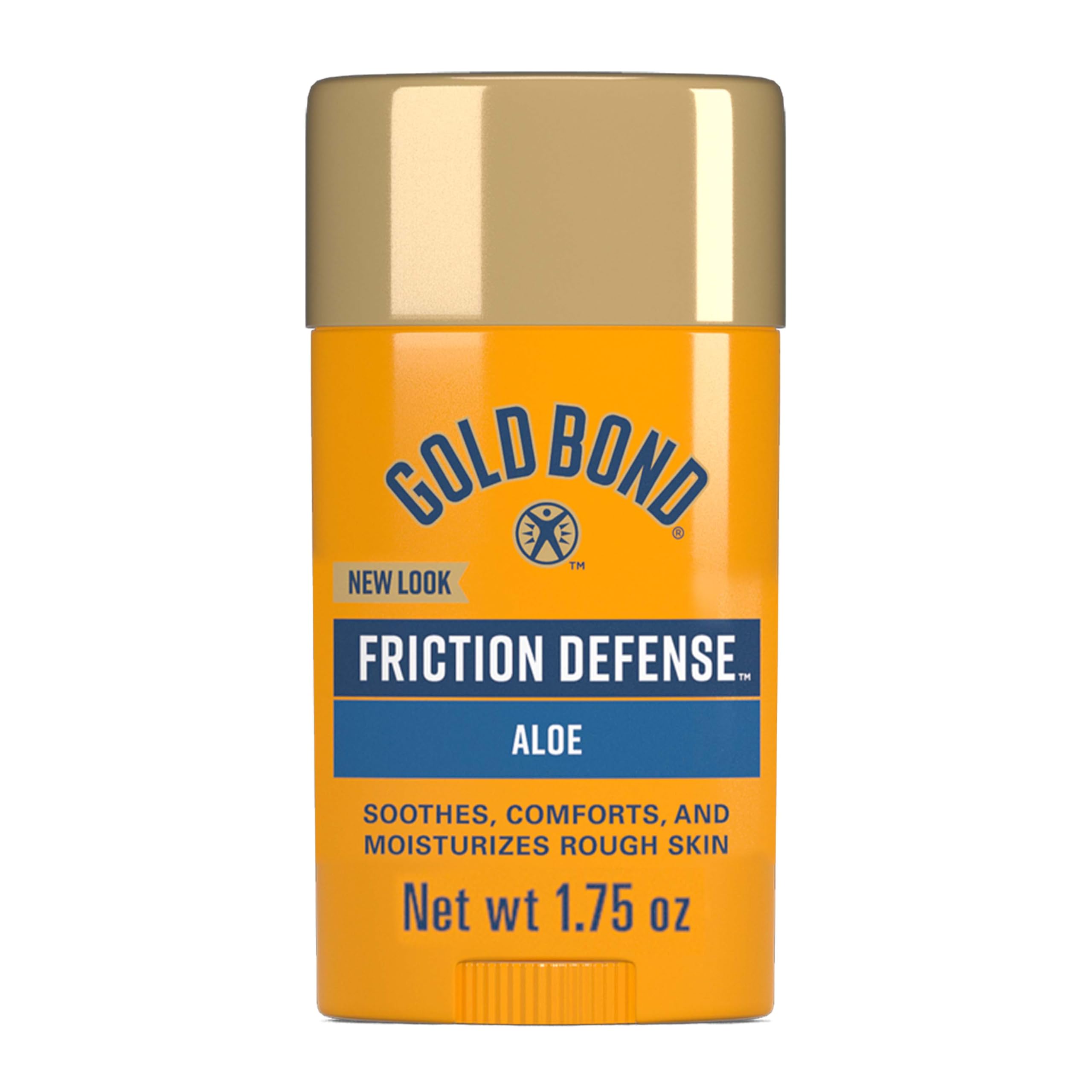
Gold Bond Friction Defense Stick

Gold Bond Friction Defense Stick

Everyday training

Our Score 9.4/10
Check Price

Worth Noting

  • Fades sooner than the creams on long runs
Form
Stick
Size
1.75 oz
Scent
Unscented
Key Ingredient
Aloe
Read the full review

This is the least expensive product on this list, and it is the one we suggest to anyone who is not yet sure a chafe balm is worth the fuss. It is a 1.75-ounce stick with aloe that swipes on like deodorant, dries without a greasy film, and is unscented, which matters when you are applying it somewhere you would rather not smell like citrus afterward.

For a morning run or a day of walking around, it holds its own against sticks that cost several times more, and the formula is gentle enough that people with sensitive skin reach for it as a default. We keep one in a gym bag and one in the car, which is a luxury the pricier picks do not really allow.

The place it gives ground is duration. The layer feels thinner on the skin, and on a long, humid effort it fades before the richer creams here do, so we treat it as the stick for anything up to about an hour and reach for something heavier when the run is going long. For the money, that is a fair trade to make while you work out what your skin likes.

Bottom line: The cheapest way into a chafe stick: unscented, non-greasy, and gentle enough for sensitive skin, with a thinner barrier that fades on long humid runs.

#3

Squirrel's Nut Butter Anti-Chafing Stick

Squirrel's Nut Butter Anti-Chafing Stick

Natural formulas

Our Score 9.4/10
Check Price

Worth Noting

  • Scent is stronger than the unscented picks
Form
Balm stick
Size
1.7 oz
Key Ingredients
Coconut oil, cocoa butter, beeswax, vitamin E
Read the full review

Five ingredients, four of them familiar: coconut oil, cocoa butter, beeswax, and vitamin E. That short list is the entire pitch, and it is why the stick turns up with ultrarunners and triathletes, with no petroleum, nothing tested on animals, and a formula mild enough to be called child-safe.

As a stick it is the easiest thing here to apply mid-effort: 1.7 ounces, twist up, swipe, no fingers involved. The beeswax gives it a firmer set than the softer balms on this list, so it keeps its shape in a warm pack instead of turning into something you have to scoop out.

It also goes on thicker than the cream-style products. We like that for feet, where a swipe over the toes before a long run is what built its reputation, and less for anyone who wants to forget they are wearing anything at all. Give it a minute to warm against your skin and it settles into something closer to a soft film.

The hesitation is value. A stick this size costs more per ounce than the much larger tubes here, so you are paying for the ingredient list and the format rather than for volume, and it is the pick we hand someone who cares as much about what is in the product as about whether it works. For a long trail day in warm weather, the firmer balm is worth the premium.

Bottom line: The natural option: coconut oil, cocoa butter, and beeswax in a firm stick that holds up in warm weather and on long efforts, with a scent and a price that will not suit everyone.

#4

Monistat Chafing Relief Powder Gel

Monistat Chafing Relief Powder Gel

Hot, humid days

Our Score 9.4/10
Check Price

Worth Noting

  • Fades faster than a balm on long sweaty runs
  • Small tube if you use it daily
Form
Powder gel
Size
1.5 oz
Scent
Fragrance-free
Finish
Dries clear
Read the full review

The name on the tube is the first surprise. This is a feminine-care brand's chafe gel, shelved with the anti-chafing products and bought by runners, cyclists, and, improbably, makeup artists who use it as a face primer. What it actually is, is a gel that dries down to a powder finish and then disappears.

That finish is the reason to try it. Most balms leave something you can feel on your skin; this one leaves it dry and faintly silky, with no transfer to clothes, and it is fragrance-free and cleared for underarms, under breasts, the bikini line, and inner thighs. On a humid day it is the least claustrophobic texture here.

We reach for it when the forecast is oppressive, and on skin that is already warm and sensitive, because there is no film to drag against a seam. Worn under a dress or a singlet in July, the powder finish is the most comfortable thing on this list to forget about.

Give it a moment to set before you dress and it will not mark your clothes; pull shorts on immediately and you will lose some of it to the fabric. Applied and left to dry, it does the thing that made it a makeup-primer favorite in the first place, which is vanish completely.

Bottom line: A gel that dries down to a powder finish so you forget it is there: the pick if you hate the feel of balm and want comfort in heat, less so for long distances.

#5

Body Glide Original Anti Chafe Balm

Body Glide Original Anti Chafe Balm

Race day

Our Score 9.2/10
Check Price

Worth Noting

  • Small stick for the price
Form
Balm stick
Size
1.5 oz
Cleanup
Washes off with soap
Oil Content
No petroleum or oil
Read the full review

The stick is why this one lives in our race vests. At 1.5 ounces it is about the size of a deodorant, it twists up and swipes on dry, and it needs neither a mirror nor a private room, which matters more on race morning than anything printed on the label. We use it on feet and nipples as readily as on thighs.

Body Glide has been the default running balm since the 1990s for a reason: no petroleum, no oil, and it washes off with soap in the shower. It also handles the spots that quietly ruin a run, from hot spots on the toes to the seam under a sports bra and the inside of an arm that swings against a shirt.

The formula is meant to stay slightly tacky, and that is where it divides people. In high humidity a thick swipe can read as drag rather than glide, especially under loose shorts that ride up; a thinner layer on dry skin, given a minute before you dress, behaves far better. Big areas also take more passes than they do with a cream, because a stick lays down a stripe rather than a coat.

Bottom line: The stick we keep in the race bag: it swipes on dry, handles feet and nipples as easily as thighs, and washes off with soap, though you get a small stick for the money.

#6

2Toms SportShield Anti-Chafe Roll-On

2Toms SportShield Anti-Chafe Roll-On

Heavy sweaters

Our Score 9.2/10
Check Price

Worth Noting

  • Bottle can leak in a gym bag
Form
Roll-on gel
Size
1.5 oz
Scent
Unscented
Water Resistance
Waterproof
Read the full review

If you have watched a balm give out at mile 15, the appeal of a waterproof roll-on is obvious. SportShield goes on wetter than a stick and dries to a thin, nearly invisible coating that shrugs off sweat longer than the waxier balms here, and it is the one we pack for a hot, humid long run.

The format does the work: a 1.5-ounce roll-on you drag over the skin like deodorant, no fingers and no mirror. It is unscented and cleared for the whole map, including underarms, between the thighs, the groin, nipples, and the tops of the feet, and you do not need much per application, so a bottle goes further than its size suggests.

We rate it at the top of this set for sweat resistance, and the trade-off is feel. It is slick for the first few seconds before it sets, and a heavy hand leaves a sheen that some of us notice under tight shorts. Applied thin and given a minute, it is the closest thing here to wearing nothing at all.

Bottom line: A roll-on that behaves like a liquid bandage: waterproof, unscented, and still working late in a long run, which makes it our pick for heavy sweaters.

#7

Megababe Thigh Rescue Anti-Chafe Stick

Megababe Thigh Rescue Anti-Chafe Stick

Daily wear

Our Score 9.2/10
Check Price

Worth Noting

  • Scented, so not the pick for reactive skin
  • Softens and slumps in a hot car
Form
Balm stick
Size
2.12 fl oz
Scent
Citrus
Key Ingredients
Aloe, pomegranate, grapeseed oil
Read the full review

The scent hits first, orange oil and ginger, closer to a body product than to a piece of running kit, and it is the reason we reach for this one on a hot morning rather than a plain balm. Under it sits a 2.12-ounce stick of aloe, pomegranate seed extract, and grapeseed oil that glides on soft instead of waxy.

It is the most pleasant stick here to use on intact skin: dermatologist and gynecologist tested, free of aluminum and parabens, and shaped like a deodorant, so it goes exactly where you point it. For a day in a dress or shorts, one swipe down each inner thigh is the whole routine, and it leaves nothing on your hands.

As running kit, though, we file it under short efforts. The barrier is comfortable and genuinely good in heat and humidity, but it is the product here most likely to want a top-up after an hour or two of sweat, and we have had better luck with it on 5Ks, commutes, and long days on our feet than on a Sunday long run. That is less a flaw than a description of what it is built for: comfort you can wear all day rather than a coating that survives a marathon.

Where it earns its place beyond the run is the odd spots, meaning bra straps, the backs of arms in a sleeveless top, and the waistband of a skirt on a walking commute, the places a tube of cream never gets applied because it is too much trouble.

Bottom line: The stick we toss in a tote for daily wear: it smells like citrus, glides on soft, and rescues thighs on hot commutes, though long runs want a top-up.

#8

TRISLIDE Anti-Chafe Continuous Spray

TRISLIDE Anti-Chafe Continuous Spray

Hard-to-reach spots

Our Score 9.2/10
Check Price

Worth Noting

  • Overspray leaves hard floors slippery
  • Costs more per ounce than the creams here
Form
Continuous spray
Size
4 oz
Scent
Fragrance-free
Water Resistance
Waterproof and sweat-proof
Read the full review

A spray solves something no stick can: the middle of your back, the backs of your arms, the spots you would rather not reach with fingers that are already slick. Two passes cover a thigh or a shoulder blade, and because nothing but the mist touches your skin, the bottle can be passed around at a relay without anyone sharing a stick.

It is also the most convincingly waterproof product here. The coating is built to survive sweat and water, which is why triathletes started using it to slide into wetsuits, and it is fragrance-free, quick-drying, and comes off with soap and water. On a rainy race morning, that is the version of protection we want.

The trade-offs are about control. A spray drifts, so you get a fine mist where you aimed and a little where you did not, and it goes on wet enough that you want a moment before pulling on shorts. A stick puts product exactly where you press it; a spray asks you to aim and then wait.

Bottom line: A spray that reaches the middle of your back and survives a soaking: fragrance-free, waterproof, and the fastest application here, though it drifts where you aim.

How We Tested 14 Anti-Chafing Balms on Real Miles

We built the shortlist by reading ingredient panels and a few hundred runner reviews from training forums and specialty running shops, then filtering out anything heavy on fragrance or drying alcohol. We deliberately kept a mix of formats — twist-up sticks, squeeze tubes, and tubs — because the format determines where a balm can actually go on your body, and we held the field to a similar price band so the comparison stayed fair.

Fourteen balms went through four months of training with me and three other runners, from humid July long runs to rainy tempo days on the treadmill and a fall half marathon. We applied each one to inner thighs, underarms, the bra line, and between toes, then noted the mile at which friction first came back. To judge relief rather than prevention, we also dabbed each balm onto already-raw skin and rated the sting and how quickly the burn settled.

Application got its own round of awkward tests. Two minutes after applying, we pulled running shorts on over each balm to see whether fabric stuck or slid, then sat on a wooden chair and checked for grease marks afterward. Every tube rode in a hip belt for a 10-mile run and spent a week loose in a gym bag in a hot car, where we checked caps and seams for leakage. Staining was judged the honest way: white cotton shorts, one full laundry cycle, and a close look at the fabric.

Longevity was less glamorous. We weighed every stick and tube at the start and end of testing, logged how many applications each container delivered, and retired anything that turned grainy or separated mid-test.

How to Choose an Anti-Chafing Balm for Runners

Start With the Format You Will Actually Use

Sticks get used because they are fast, hands-free, and small enough to live in a race vest. Creams from a tube cover more skin per application, which matters if you chafe across a wide area or want protection on your feet, but they need fingers and a private moment. Gels dry to a powder finish for anyone who hates the feel of a layer, and sprays reach the middle of your back and anything you would rather not touch.

Choose by where you apply and where you will be standing when you do it. A port-a-potty line or a car park before dawn rules out a cream; a long run at home rewards one.

Match Staying Power to Your Longest Run

A 5K and a marathon make different demands of the same product. Short efforts forgive a light barrier; long, humid ones need something that resists sweat for hours, which usually means a waterproof formula or a cream with more body to it. If you know you sweat heavily, plan on a top-up rather than expecting one application to cover a three-hour effort.

Test anything new on a training run, never on race morning, and carry a stick in your vest for the halfway point. Reapplying at mile 18 is normal, not a failure of the product.

Check What It Does to Your Kit

These products end up on the inside of shorts, bra bands, and singlets, so how they behave in the wash matters as much as how they feel. Formulas that rinse out with soap are the safer bet for light-colored or technical clothing; the oil-based balms are the ones to try on an old pair of shorts first.

Wash workout clothes promptly rather than leaving them in the hamper, and check the inside of a waistband after the first wearing before you trust a product against your favorite kit.

Scent, Skin, and the Spots Everyone Misses

Unscented is the safer default for the places chafe actually happens: under a bra band, between the thighs, anywhere skin is warm and thin. A scented balm is a pleasure on intact skin and a sting on skin that is already irritated, so save the citrus for days when nothing is raw.

Whatever you buy, cover the spots people forget: the tops of the toes, the seam under a sports bra, the inside of the arm that swings against a shirt, and the waistband of a hydration pack.

Frequently Asked Questions

Final Verdict

Chamois Butt'r Original is what we hand most runners. It covers the widest area in one go, holds through a long humid effort without a second application, and rinses out of shorts instead of leaving a greasy mark, which is the whole job in three parts.

If you need something you can swipe on one-handed at a start line, take Body Glide instead; nothing here travels better in a race vest. And if you sweat through everything, the 2Toms roll-on is the one that outlasts it.