Strength & Weights

Best Lifting Chalk of 2026

Chalk doesn't make your hands sticky — it makes them dry, and dry skin grips steel. That's the entire trick, and it's why a bar that feels locked into your hands on the first set of deadlifts can start sliding by the fifth. The right chalk buys you friction on the heaviest pulls of a session; the wrong one leaves a white cloud settling on the gym floor and a bar that still wants to rotate out of your fingers.

I lift four mornings a week in a garage gym that turns into a sauna by July, so I've been fussy about chalk for years. Over the past four months, my team and I worked through 14 options — blocks, loose powders, and liquids — running each one through the same pulling sessions. What separates them isn't cosmetic: a coarse block that crumbles into dust wastes your money and coats the inside of your bag, and a powder that clumps in humid air is no better. Below are the ones that still had my grip locked in on the last set, not just the first.

#1

SPORTMEDIQ Liquid Chalk

Top Pick
SPORTMEDIQ Liquid Chalk

Frequent liquid users

Our Score 9.4/10
Check Price

Worth Noting

  • Wears off during long sessions
Size
8.5 oz
Scent
Light fresh fragrance
Format
Liquid
Read the full review

Eight and a half ounces is a lot of liquid chalk, and that is the whole argument for this bottle: it is the largest one here, it dries in seconds, and it suits people who chalk up before every pulling set rather than once a session. The gel is thick enough to coat properly instead of soaking straight into the skin, and the light fragrance keeps it from smelling like a janitor's cupboard.

We found the grip convincing, the kind that stops a deadlift turning into a forearm lottery, and two small drops covered both hands. Thick gel does mean the bottle can be slow to give up its contents when it is cold or nearly full; store it upright and warm it between your palms before squeezing and the problem mostly disappears. The scent is meant to be light and it is, though it is definitely present.

The bottle is the practical argument overall: a big container means fewer reorders and one less thing to remember, and it still fits a side pocket of a gym bag. If you want something smaller to test whether you even like liquid chalk, EVMT is the cheaper way in, and you can graduate to this size once you know the format works for you.

Bottom line: Buy this one if you chalk up several times a week and want a single bottle to see you through; the grip is strong and the bottle is big.

#2

Rage Fitness Gym Chalk

Rage Fitness Gym Chalk

Home gym stockpile

Our Score 9.4/10
Check Price

Worth Noting

  • Less tacky on the bar than liquid chalk
Size
1 lb
Chalk
Pure magnesium carbonate
Blocks
8 x 2 oz
Format
Block
Read the full review

A pound of chalk arrives as eight individually wrapped two-ounce blocks, and the packaging is the point: nothing dusts until you open a block, so seven can sit in a cupboard while one lives in your gym bag. Blocks are also tidier at the point of use than loose powder, because you rub chalk onto your hands rather than digging into a bag and hoping for the right amount.

The chalk itself is pure magnesium carbonate, pigment-free, and firm from compression when it arrives. Break one up inside its wrapper and it loosens into the texture most lifters want; leave it whole and it loads onto the hands slowly, which is fine for a quick top-up and frustrating before a heavy set.

At a pound, this is the most chalk for the money in our set, and for a home gym that is the deciding argument: you can be generous, break off a fresh block when one gets gritty, and stop thinking about running out mid-program. What it is not is the tackiest chalk here, and that difference shows up on the bar rather than in the box.

Bottom line: Our pick for a home gym: a pound of pure magnesium carbonate in wrapped blocks that keep dust down and cost little per session.

#3

Primo Chalk Bucket

Primo Chalk Bucket

Dry, sensitive hands

Our Score 9.4/10
Check Price

Worth Noting

  • Premium price for a pound of chalk
Size
1 lb
Format
Loose powder
Formula
Blended with essential oils
Container
Resealable bucket
Read the full review

The first thing you notice is the feel. This powder is finer and softer than the blocks and bags here, and it goes onto the hands almost like a liquid, settling into the creases rather than sitting on top of them. It arrives in a small resealable bucket, with the chalk bagged inside, so it stays usable between sessions instead of drying into a brick.

We think it is the nicest chalk to put on in this group. The blend includes essential oils, and the difference turns up after the session — hands feel conditioned rather than cracked and tight, which is not something we expected to notice from chalk at all. The fragrance is noticeable and pleasant, closer to a grooming product than a gym consumable, and the grip is solid rather than aggressive.

It is a loose powder, so it clouds when you dig into the bucket and it is the wrong thing to carry into a shared gym where a wrapped block or a bottle is tidier. At a home rack with the bucket on a shelf, none of that matters. Buy it for your hands, not for your gym bag.

Bottom line: Worth the premium if chalk usually leaves your hands cracked and tight; the fine powder and oils feel unlike anything else here.

#4

SPRI Chalk Blocks

SPRI Chalk Blocks

Multi-bag stocking

Our Score 9.4/10
Check Price

Worth Noting

  • Blocks crumble instead of coating hands
  • Light, low-density chalk
Size
4 x 2 oz blocks
Chalk
Magnesium carbonate, pigment free
Format
Block
Total Weight
8 oz
Read the full review

Four blocks, each individually wrapped, is a practical way to buy chalk: one goes in the gym bag, one in the car, one by the rack, and one stays sealed for later. The chalk is pigment-free magnesium carbonate, so there is nothing exotic in it, and the separate wrappers mean one soft block does not spoil the rest.

The blocks themselves are the compromise. They run light and loose rather than dense, so they shed powder quickly and come off on the hands without absorbing much moisture — you load more of it to get the same dry coating. Load generously and it does the job on a bar; expect to get through the four-pack faster than you would a denser box.

The appeal is distribution. Four separate blocks cost less than buying two smaller packs, and they let you keep chalk in several places at once without decanting anything. If you want density and a firmer block, the Rage box is better chalk; if you want chalk wherever you train, this is the tidier way to arrange it.

Bottom line: Four wrapped blocks that let you stash chalk in several bags, provided you do not mind a block that crumbles as you use it.

#5

EVMT Liquid Chalk

EVMT Liquid Chalk

Gym-friendly lifting

Our Score 9.2/10
Check Price

Worth Noting

  • Lid can separate from the bottle
  • Small bottle runs out fast
Size
2 oz / 50 ml
Format
Liquid
Container
Squeeze bottle
Drying Time
10–15 seconds
Read the full review

Walk into most commercial gyms with a block of chalk and someone will ask you to put it away; walk in with this bottle and nobody looks twice. EVMT's liquid chalk is the one we reach for when we're training somewhere with a chalk policy, and it takes the top spot here because it does the job without the dust argument. It goes on as a thick white gel, dries to a dry, faintly chalky film in about ten to fifteen seconds, and holds a knurled bar through a working set of deadlifts.

A pea-sized drop covers both hands. Work it into the fingers and the base of the thumb rather than smearing your palms, because that is where a bar actually sits and where the coating wears off first. There is no cloud, nothing drifting onto the platform, and it rinses away with soap and water at the end of the session instead of leaving you with gray palms on the drive home.

Staying power is where liquid chalk separates from powder. On a heavy single it holds well; across a long session of pulling movements it wears through and needs a second coat between exercises, which is the price of keeping your hands clean. At a home rack a block still gives more friction for longer, and we say so below. In a shared gym this is the trade you make, and it is a good one.

Bottom line: The bottle we hand anyone lifting in a commercial gym: fast-drying grip, no dust, and a price that makes trying it easy.

#6

321 STRONG Gym Chalk

321 STRONG Gym Chalk

Budget home setup

Our Score 9.2/10
Check Price

Worth Noting

  • Zip bag can split and spill
Size
3.53 oz
Scent
Unscented
Format
Loose powder
Container
Zip-top bag
Read the full review

This is the least expensive chalk in our set by a wide margin, and it does the job: a 100 g zip-top bag of fine, unscented magnesium carbonate that turns a slippery bar into a grippy one. If you want to find out whether chalk helps your lifting without spending much, this bag is the way to do it.

Use it out of a tub. Pinching powder from a bag is fiddly, and because the powder is fine it takes a couple of grabs to load the hands properly; decanting it into a lidded container solves the dosing and most of the mess in one move. Once it is on, it is unremarkable in the best way — dry hands, better friction, no scent fighting your gym bag.

None of that changes the value. A home lifter who decants on day one gets a lot of lifting out of very little money, and the powder itself holds up against anything midrange here. It is the pick when you want chalk rather than packaging, and it is the one we would hand a beginner setting up a first home rack.

Bottom line: The cheapest way into loose chalk, and a good one, as long as you decant it into a tub before it ends up in your bag.

#7

Friction Labs Magic Chalk Ball

Friction Labs Magic Chalk Ball

Chalk bag refills

Our Score 9.2/10
Check Price

Worth Noting

  • Fine chalk settles on the floor
Size
2.2 oz / 62 g
Cover
Cotton sock
Format
Chalk ball
Refillable
Yes
Read the full review

Compared with a block, a chalk ball is about dosing. You squeeze and rub, and the cotton sock meters out fine powder instead of letting you overload your palms and shed the excess onto the floor. Friction Labs' version arrives pre-filled, with a drawstring top that opens for refills, and the chalk inside is fine and consistent from the first squeeze to the last.

It sticks well. A couple of squeezes coats the hands, pull-ups and deadlifts both feel secure, and there is no dust bowl to manage — just a sock you work between your palms until the coating feels right. The fine grind is what makes that work, and it is also the reason this is a chalk you apply over a bag or a bin rather than over a carpet.

The drawstring hardware is the weak point: the plastic piece is the first thing to fail, and once the sock opens up the ball empties itself into whatever it is sitting in. Keep it inside a container rather than loose in a duffel and that risk mostly goes away. It remains the tidiest way we have found to carry chalk to a climbing wall or a home rack.

Bottom line: A refillable sock for anyone who wants chalk in a bag without carrying a block; the powder is fine and the dose is controlled.

#8

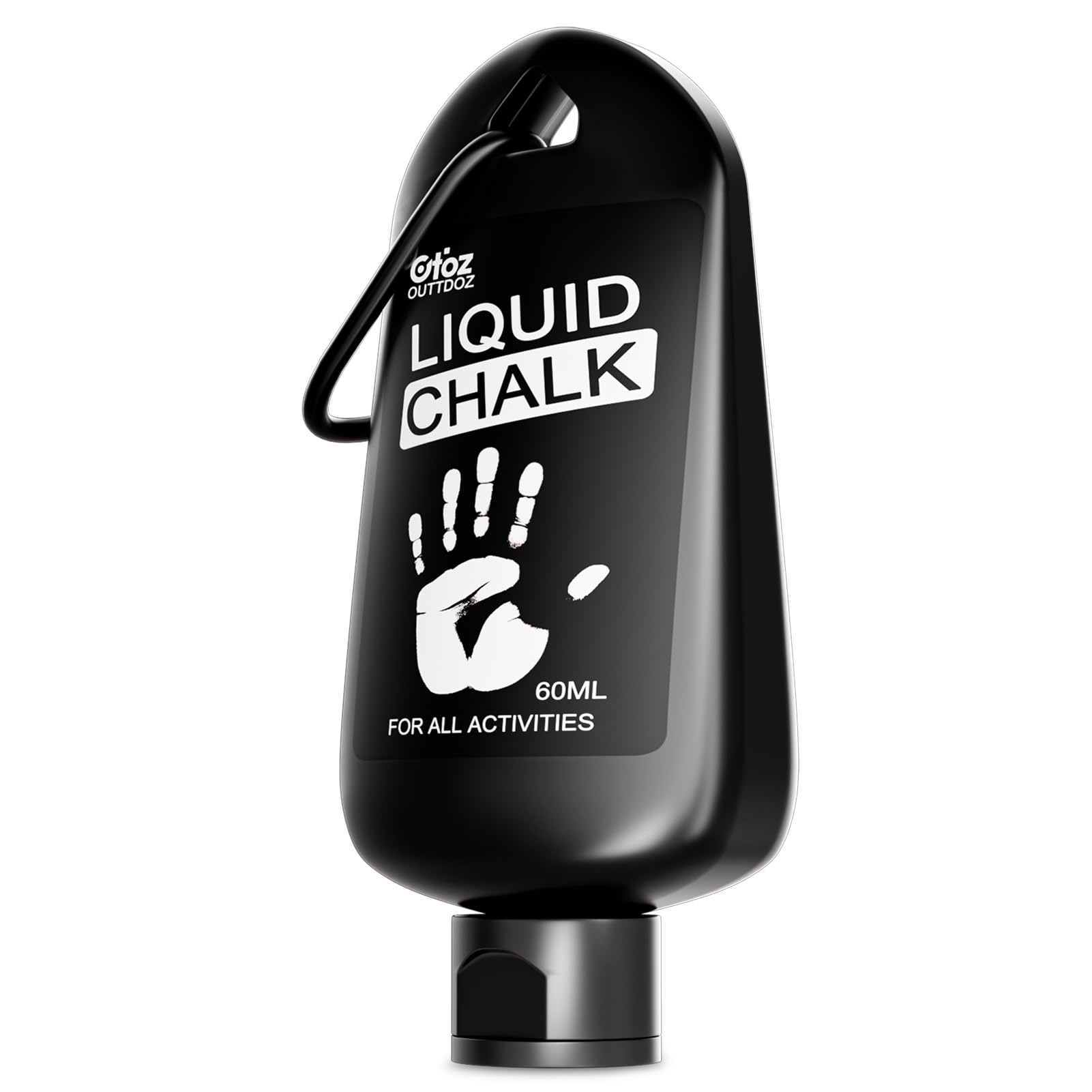
OUTTDOZ Liquid Chalk

OUTTDOZ Liquid Chalk

Gym bag travel

Our Score 9.2/10
Check Price

Worth Noting

  • Small bottle empties quickly
Clip
Carabiner included
Size
2 oz / 60 ml
Scent
Lemon
Format
Liquid
Read the full review

The carabiner is a small thing that changes how often you use it. This 2 oz bottle clips to a bag strap or a belt loop, so it is with you at the pull-up bar instead of somewhere under a towel at the bottom of your bag. It is also the smallest bottle here, which cuts both ways.

We found the grip good for calisthenics and lighter pulling work. It dries quickly, leaves hands dry rather than sticky, and the lemon scent keeps it from smelling like a chemistry set in a hot gym bag. A little goes a long way on the hands, so the bottle lasts longer than its size suggests — but not forever if you are using it every session.

That is the honest boundary. It is the bottle for a gym bag, a travel week, and a bar you do not own, not for a home rack where you chalk up five times a session; there, the bigger SPORTMEDIQ bottle makes more sense. For everyone else it is the cheapest way to keep liquid chalk within reach.

Bottom line: Clipped to a gym bag, this is the bottle that is there when you need a quick coat before pull-ups, and it costs very little.

#9

Z Athletic Chalk Ball

Z Athletic Chalk Ball

Gymnastics and bars

Our Score 9.2/10
Check Price

Worth Noting

  • Sock seams can split and spill
  • Needs a second coat on long sessions
Size
2 oz
Cover
100% cotton
Format
Chalk ball
Construction
Chalk core in cotton cover
Read the full review

A two-ounce ball of chalk in a cotton sock is the least messy way to keep chalk in a gym bag: no block to crumble, no bag of powder to split, just squeeze and rub. Z Athletic's version is the cheapest ball here, and it is the one we leave by the home rack for quick top-ups between sets.

One or two squeezes coats the hands, and it washes off with water, which matters when you are going straight from the bar to a steering wheel. The cotton cover is soft enough to apply with and holds the chalk in until you squeeze, so the dose stays under your control rather than ending up on the floor.

The sock is the part that gives out. The seams split with hard use, and once they do the ball dumps its contents into your bag; at this price, replacing one is a shrug rather than a decision. Until it splits, it is the neatest chalk carrier we have used for gymnastics bars, kettlebells, and pull-ups.

Bottom line: A cheap, tidy ball for a chalk bag or a home rack, best for lighter grip work where a split sock is a shrug rather than a disaster.

#10

Cramer Gym Chalk Block

Cramer Gym Chalk Block

Small gym bags

Our Score 9.2/10
Check Price

Worth Noting

  • Only 4 oz in the pack
Size
2 x 2 oz blocks
Chalk
Magnesium carbonate
Format
Block
Block Dimensions
3.54 x 3.54 x 1.77 in
Read the full review

Two blocks, each about three and a half inches square and under two inches thick, arrive in a small box. That flat shape is genuinely useful: a block slides into a side pocket or a shoe bag without bulking anything out, and the pair means you can keep one at home and one in the car without splitting a single crumbly block in half.

The blocks hold together well while they are fresh, which keeps dust down, and they break into a usable texture when you want more coverage on the hands. Store them somewhere dry — a few weeks in a humid garage and they start to fall apart on their own, which is the one piece of maintenance this format asks of you.

The format is what sells it: low dust, no bag of powder, and a block small enough to leave in a car without turning the interior white. For a small bag and occasional lifting, it is a tidy answer, and the pair of blocks covers two locations neatly. A busy home gym is better served by the Rage box.

Bottom line: Two flat blocks that slot into a gym bag pocket, best for occasional lifters who do not want a pound of chalk sitting around.

How We Tested Lifting Chalk, From Heavy Pulls to Gym Bags

We pulled together every chalk we could find in stock — pressed blocks, loose powder, and liquid — then narrowed to 14 options that spanned the price range and weren't built on the same filler-heavy recipe. Those 14 went through four months of my four-day-a-week lifting schedule: deadlift and row days in a garage gym, pull-up and kettlebell work at a commercial gym, and a run of humid summer mornings that made the garage feel like a sauna.

Each session followed the same routine: apply the way the maker directs, then count how many sets the grip actually lasted before it needed a second coat. We noted whether a block held its shape or crumbled away in the tub, whether powder came out in a controlled puff or a drifting cloud, and whether a liquid dried in half a minute or left a tacky film that grabbed every bit of dust on the knurling.

Containment got its own test — every container rode in a gym bag in a car trunk for a week to see if the lid sealed or chalk sifted into the lining. We also watched what came off on the bar, the flooring, and our shirts, and how easily it washed out. Finally, we tracked how long each one lasted, since a cheap block that vanishes in three sessions costs more per pull than a denser one that holds up for months.

How to Choose the Right Lifting Chalk

Start With What Your Gym Allows

Most commercial gyms object to airborne dust rather than to chalk itself, so a block or a bag of powder can earn you a warning while a bottle of liquid passes without comment. That single constraint settles the format for a lot of lifters: in a shared weight room, buy liquid; in a garage, buy powder and get more friction for less money.

The trap is stocking up before you know the policy. A pound of loose chalk is excellent value at home and useless if the front desk asks you to put it away, and a gym that bans powder usually bans it in every powder form, ball included.

Match the Format to How You Lift

Blocks and loose powder give the strongest, longest-lasting coating, which is why they suit heavy singles and low-rep work: load up once and the bar stays put through the set. Liquid dries into a thinner film, holds a working set fine, but wears through a long session, so plan a second application between pulling exercises.

Application decides how well any of them perform. With liquid, a pea-sized drop worked into the fingers and the base of the thumb beats a puddle smeared across the palm. With a block, rub the chalk onto your hands rather than crushing it into dust — the coating is what grips, not the cloud.

Dust, Storage, and Keeping It Usable

Blocks are the tidiest format until you break one. Keep unused blocks wrapped, break off what you need over a container, and store the rest sealed; a block left loose in a gym bag becomes grit within a week. Loose powder wants a lidded tub you can pinch from, and a chalk ball belongs inside a chalk bag rather than loose among your clothes.

Humidity is the quiet enemy of block chalk. Sealed storage keeps a block firm for months, while a damp garage turns it crumbly long before you have used it up.

Skin, Scent, and Additives

Plain magnesium carbonate does one job: it absorbs moisture and adds friction. That is also why it dries hands out over a long session. Blends with added oils, like Primo's, leave skin feeling less punished, and scented formulas make a gym bag smell better — both are preferences, not performance.

Density matters more than how fine a powder looks. A soft block that crumbles into dust can absorb less than a firmer one, so judge chalk by how it coats the hands rather than by how it feels in the box.

Frequently Asked Questions

Final Verdict

EVMT's liquid chalk is the bottle we point most lifters to. It dries in seconds, holds a knurled bar through a working set, and keeps you on the right side of a gym's chalk policy — the three things that decide whether chalk actually gets used.

If you train at home, the Rage Fitness box is the better buy: a pound of pure magnesium carbonate in wrapped blocks, more friction on a heavy single, and less spent per session. And if chalk normally leaves your hands cracked and tight, Primo's oil-blended powder is worth the step up.