Strength & Weights

Best Dip Belts of 2026

A dip belt is deceptively simple gear — a strap around your hips, a chain, a clip, and a plate or two hanging off the front. Nothing about that should cost more than dinner out, yet the difference between a good one and a bad one shows up around rep eight, when a chain starts digging into your thigh or a plate swings between your knees. I've been adding weight to my pull-ups for years, and over the past three months my team and I ran 14 dip belts through our regular training to see which ones hold their shape.

Two things surprise most first-time buyers. Chain length matters more than strap thickness — too short and the plate rides into your ribs, too long and it swings, so a chain you can clip or loop shorter is worth the extra few dollars. And a wide strap sitting on your hip bones beats a plush one that rides up onto your waist. Below are the ones we'd load up again, from basic webbing to leather built for a decade.

#1

AQF Dip Belt

Top Pick
AQF Dip Belt

First dip belt

Our Score 9.6/10
Check Price

Worth Noting

  • No published weight rating
Fit
One size
Chain
36 inches, 5-gauge steel
Weight
1.76 lb
Material
Neoprene
Read the full review

If you are still finding out whether weighted dips are going to stick, the AQF is the belt to buy while you decide. It is the least expensive one we recommend, and nothing about the way it works gets in your way.

The body is polypropylene with a contoured, neoprene-backed panel, so it curves around your hips instead of digging in flat. We also like how little material there is: 800 grams, rolls up small, and gets out of a gym bag without an argument. The chain is 36 inches of 5-gauge steel on two locking carabiners, and it feeds a pair of plates without a fight.

Where it asks something of you is the padding. The panel is thin by design, and we preferred it that way, because a thick pad bunches when you cinch a belt down hard. The trade shows up as you add plates: past a couple of them you will feel the chain against your hips more than you would with the DMoose.

Bottom line: If you want a first dip belt that will not hold you back, this is the one we hand over — cheap, light, and shaped to sit on your hips rather than above them.
#2

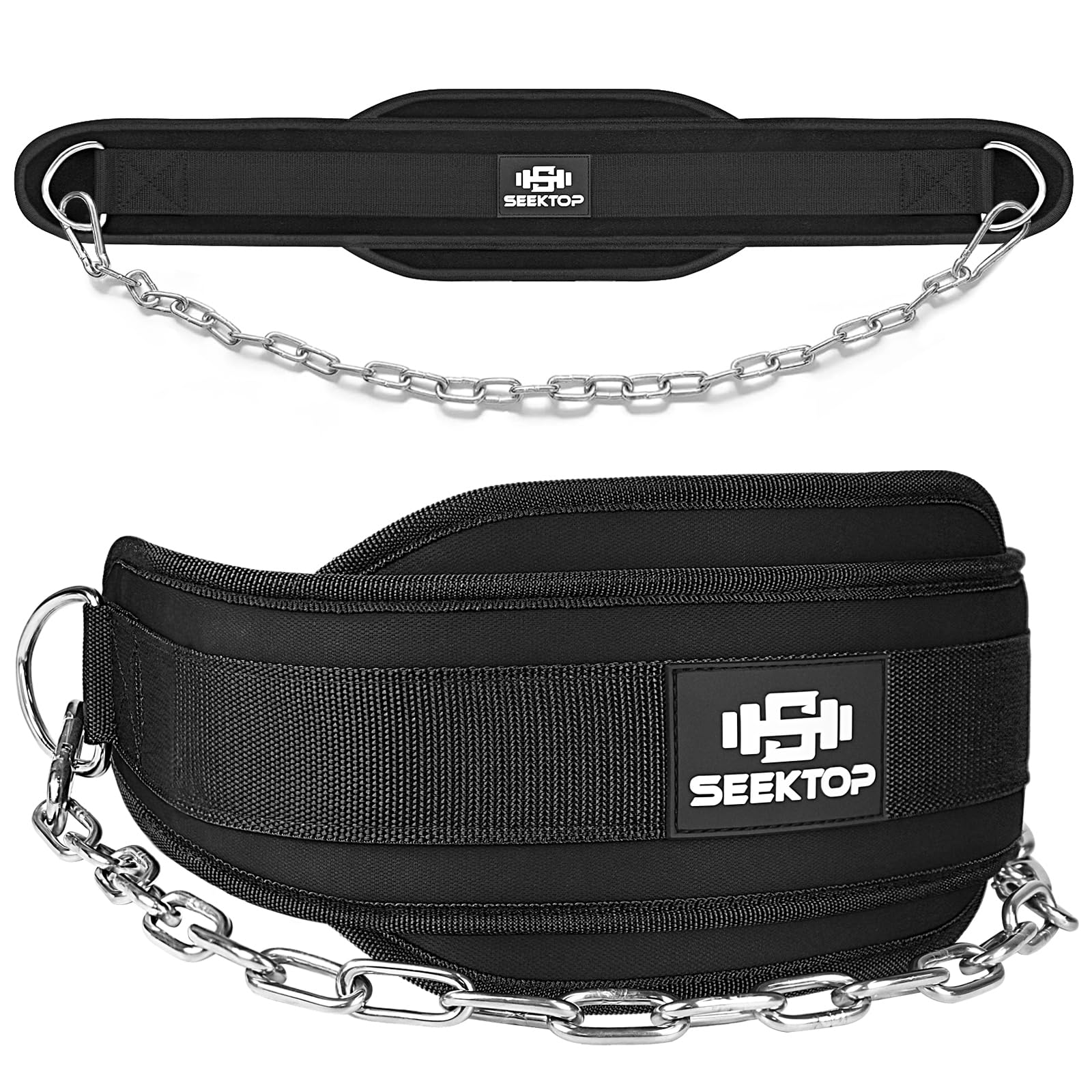
Seektop Dip Belt

Seektop Dip Belt

Long-chain loading

Our Score 9.4/10
Check Price

Worth Noting

  • Long chain can hang low for shorter lifters
Chain
38 in x 5mm steel
Closure
Hook and loop
Padding
8mm neoprene
Stated Capacity
350 lb
Read the full review

Thirty-eight inches of chain sounds like a footnote until you have tried to thread a second 45 onto a short one. That extra reach is the first reason the Seektop made this list.

Nothing else about it reads as a budget belt. The padding is 8mm neoprene — enough to soften the edge of a plate without turning the belt into a cushion you have to fight closed — and the chain is 5mm steel on two carabiners. Seektop rates it to 350 pounds, and at 1.6 pounds it packs down without complaint.

What convinced us is that the length does not cost you anything else. Short-chain belts usually compromise by pulling the plates up into your thighs; this one lets them hang clear, and the hook-and-loop closure cinches hard enough that the belt does not creep. The trade runs the other way if you are short: the extra chain can hang low between your legs.

Bottom line: Our pick for anyone who has fought a short chain: the extra reach makes loading two plates easy, and the padding and 350-pound rating do not feel like corners were cut.

#3

Gymreapers Dip Belt

Gymreapers Dip Belt

Lower back support

Our Score 9.4/10
Check Price

Worth Noting

  • Chain links can arrive with rough, unfinished ends
Size
One size
Chain
38 inches steel
Closure
Hook and loop
Back Panel
Contoured padding
Read the full review

Gymreapers runs its padded section further up the lower back than the other chain belts here, and that is the detail that stayed with us. It wears more like a light support belt than a strap around the hips, which is why it is our pick for anyone whose dips come with a grumbling back.

The rest of the build holds up. The chain is 38 inches, so a second plate goes on without a wrestling match, and the padding is dense without being bulky enough to bunch when you cinch it. One size is genuinely one size here, with enough overlap in the closure to fine-tune where it lands on your hips.

It is not the last word on hardware — the belt is the best-made part of the package — and 38 inches still leaves a tall lifter wanting more slack for a third plate. If what you want from a chain belt is back support, this is where to look; if you want the strongest possible anchor, the Dark Iron's strap is the more convincing design.

Bottom line: We point lifters with a temperamental lower back to the Gymreapers first, because no other chain belt here supports the spine this well.

#4

Rip Toned Dip Belt

Rip Toned Dip Belt

Midrange all-rounder

Our Score 9.4/10
Check Price

Worth Noting

  • 200-plus pound rating is the lowest stated here
Chain
36 inches steel
Weight
1.92 lb
Material
Neoprene
Stated Capacity
200+ pounds
Read the full review

Rip Toned's belt sits in the middle of this group on price, and it earns the spot by behaving the same on rep one as it does on rep fifty — no slipping, no hardware to fiddle with, no padding that compresses away after a set.

The hardware is what we noticed first. The D-rings are welded rather than folded webbing, and the 36-inch chain clips to them with carabiners, so the load hangs evenly on both sides instead of dragging toward one hip. That even hang is the difference between finishing a set of dips and cutting it short.

The outer material is a canvas-type fabric over the padding rather than leather or neoprene mesh, and it does not dig into the hips or pinch at the sides the way stiffer belts can. The chain runs short for stacking three plates, but for the two-plate work most people actually do, it is fine.

Bottom line: We think it is the sensible middle of this roundup — welded D-rings, an even hang, and a mid-tier price that makes it easy to justify.

#5

Harbinger Dip Belt

Harbinger Dip Belt

No-frills durability

Our Score 9.4/10
Check Price

Worth Noting

  • 30-inch chain is the shortest in this group
Chain
30 inches steel
Closure
Hook
Material
Polypropylene
Belt Dimensions
32 x 5 inches
Read the full review

The Harbinger is the plainest belt here, and that is a compliment to its construction: a five-inch polypropylene body, contoured at the edges, with steel grommets punched through it and a chain threaded through those grommets.

Those grommets are the interesting part. The chain does not hang from a stitched loop or a riveted plate — it passes through steel that goes through the belt, so the load is not pulling on a seam at all. That is why the belt itself holds up so well: there is no stitching at the anchor point to give out first.

We rate the build as highly as anything in this group. The belt holds its shape rather than curling at the edges, the grommets show no sign of pulling, and the whole thing weighs two pounds — heavy enough to feel solid, light enough to carry.

There is no cushion here, either. The polypropylene is the padding, so a heavy plate feels like a heavy plate rather than disappearing into foam. That is a fair trade for the simplicity, but if you want the weight to soften against your hips, the DMoose is the better call.

Bottom line: We rate the construction above almost everything here; buy it if a stiff, unpadded belt that will not fray at the anchor suits you better than cushioning.

#6

MAXRANK Dip Belt

MAXRANK Dip Belt

Maximum stated capacity

Our Score 9.4/10
Check Price

Worth Noting

  • Belt can shift on the hips mid-set
Chain
37 in x 5mm iron
Closure
Carabiner
Padding
3.2 centimeters
Stated Capacity
550 lb
Read the full review

MAXRANK rates this belt to 550 pounds, far more than any dip or pull-up workout is going to ask of it. The number is the headline; the question is whether the rest of the belt is built to match.

Mostly, it is. The chain is 37 inches of 5mm iron on two locking carabiners, the high-stress areas are double-stitched, and the neoprene padding is 3.2 centimeters thick — more than most belts here. For budget money, that is a lot of hardware.

In practice the 37 inches loads much like the Seektop's 38: two plates clear your thighs and clip back without a fight. The real difference between the two is not the chain at all — it is how much padding you want between the plates and your hips.

Where it lands for us is straightforward. It is the most stated capacity and the thickest padding you will get at this price, and the padding does real work on high-volume sets. Wear it if you want the hardware to feel overbuilt.

Bottom line: Budget money buys the most capacity and the thickest padding here; the belt itself is the plainest part of the package, and we are fine with that trade.

#7

Dark Iron Fitness Dip Belt

Dark Iron Fitness Dip Belt

Heavy weighted dips

Our Score 9.2/10
Check Price

Worth Noting

  • Stated 270-pound capacity is on the low side
Strap
40 inches
Closure
Buckle
Material
Leather
Stated Capacity
270 lb
Read the full review

Every other belt in this roundup hangs your plates from a chain and two carabiners. The Dark Iron does not. A 40-inch strap runs through the plates and fastens at the front, and the body of the belt is leather with a padded liner rather than neoprene mesh.

That single difference is what put it at the top of this list. Loading is where dip belts get awkward — a chain with no slack left when you reach for a second plate, a carabiner that lets the weight swing out on the descent. Pulled through and buckled down, the plates sit tight against the front of your hips and stay there, so your setup stops being part of the workout.

Comfort was the surprise. At 1.2 pounds it is lighter than the leather suggests, and the padding inside is thick enough that a 45 does not find your hip bones on the way down. The padded run across the lower back is wide, too, which is a bonus if you also plan to use it for belt squats.

Two things to know before you order. Dark Iron rates it to 270 pounds, toward the lower end of the stated figures here — in practice that is still well beyond what dip and pull-up work asks for, but read the number if you chase very heavy singles. And it is sold in sizes rather than as one-size-fits-all, so match it to your waist measurement instead of assuming.

Bottom line: We recommend the Dark Iron Fitness for anyone loading serious weight: it holds plates tighter against the hips than any chain belt here, and the leather build is the most convincing in this set.

#8

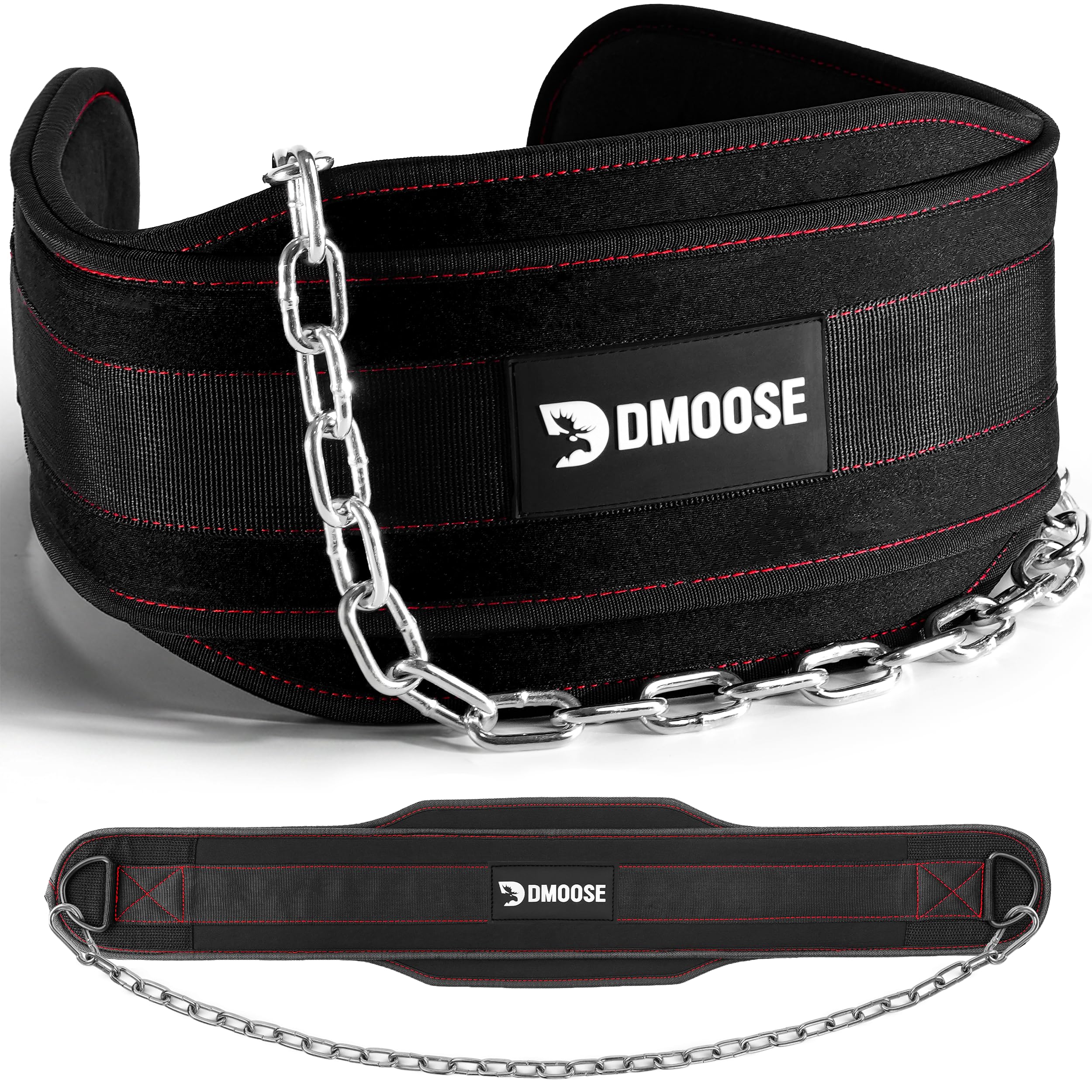
DMoose Dip Belt

DMoose Dip Belt

Cushioned hip comfort

Our Score 9.2/10
Check Price

Worth Noting

  • Stiff carabiners are awkward to open
Chain
36 inches steel
Weight
12.6 oz
Material
Neoprene
Stated Capacity
350 lb
Read the full review

The DMoose is the most generously padded belt in this group. The neoprene is thick enough that you notice it before you notice the weight, and that is the whole reason it is here.

Under load it does what the padding promises: pressure spreads across the hips and lower back instead of concentrating in two spots, and plates hold steady against your body rather than swinging out. There is a 350-pound rating behind the chain, and at 12.64 ounces the belt is light enough that you forget it between sets.

The chain is 36 inches, which is plenty for two plates fed flat. If your gym's Olympic plates have no handle grips, though, they will sit close against you instead of hanging clear, and that gets old on high-rep sets.

One thing to watch: the anchor where the chain meets the belt takes the entire load, and it can tear once you push into genuinely heavy territory. Below that line this is the plushest, most forgiving belt here, and the one we suggest for lifters whose hips are the limiting factor rather than their triceps.

Bottom line: Buy it if comfort is what keeps stopping you from adding weight — the padding here is the plushest we tested, as long as your loads stay moderate.

How We Picked and Tested the Dip Belts

We started by pulling every dip belt we could find from strength-gear retailers and brand sites — roughly 40 in all — and cut the list down by strap material, chain gauge and link size, hardware (welded D-rings and carabiners versus a bare chain threaded through webbing), stated weight rating, and price. Belts with a permanently sewn-in chain, or a run of reviews mentioning pulled stitching, didn't make the cut. That left 14, all bought at retail so nothing arrived hand-picked by a brand.

Testing ran three months, split between a garage rack and a commercial gym floor. Every belt went through the same rotation: dips on a dip station, weighted pull-ups, and the unglamorous walk from the plate tree to the bar with 45 pounds swinging between the knees. We noted where the strap settled — hip bones or waist — whether it rolled or dug in during a working set, and whether the chain clanged against the floor between sets.

Durability got checked weekly: stitching at the strap-to-D-ring junction, fraying on webbing edges, chain links starting to open, carabiner gates that stopped snapping shut. We loaded each belt progressively up to and past its stated capacity to see what stretched or bent first. We also timed getting in and out of each one, threaded chains through a single plate and through three, and measured usable chain length, since a belt you can shorten with one clip is a different animal from one that hangs a plate at shin height. Fit was tested across team members from roughly 130 to 250 pounds, and value came down to hardware and stitching rather than how much padding a belt carried.

How to Choose Dip Belts

Chain length decides how your set feels

A dip belt works by hanging the plates between your legs, so chain length sets how far down they sit. Too short and the plates ride up into your thighs and groin, which forces a wider stance and cuts your range. Thirty-six inches is the practical floor for two plates; 38 gives you margin for thicker bumper plates or a third one. If you load full-size Olympic plates without handle grips, go long. This is the one dimension where a belt that measures fine on paper still frustrates people in the gym.

Look at the anchor, not the padding

Every belt here concentrates the load at one or two points where the chain meets the belt, and that is the junction that fails first. Steel grommets, as on the Harbinger, pass the chain through metal rather than a stitched loop, so there is no seam to tear out. Stitched webbing and leather both work, but check that junction before you load it. Padding is comfort; the anchor is the part that keeps a plate off your foot.

Fit, slip, and closure type

Dip belts sit on your hips, not your waist, so measure across the hip bones rather than trusting your pants size. Most belts here are one size with a long hook-and-loop closure, which gives plenty of adjustment but depends on the belt staying tight. A buckle and front strap, as on the Dark Iron, clamps the plates against your body instead of letting them swing. If a belt rides up on the descent, sit it lower and cinch harder before deciding it is the wrong size.

What the load rating actually tells you

Stated capacities here run from 200-plus to 550 pounds, and every one of them sits well above what dip and pull-up work involves. Treat the figure as a claim about the hardware rather than a measured limit, and weight it below how the chain attaches and how the belt fits. Material matters more: polypropylene handles sweat and holds its shape, neoprene is softer against the hips, and leather is the firmest and heaviest of the three.

Frequently Asked Questions

Final Verdict

The Dark Iron Fitness is the belt we point most lifters to. Its strap-and-buckle loading keeps plates tighter against the hips than any chain belt here, and the leather and padding are the best-supported combination in this group.

If that is more than you want to spend on a first belt, the AQF does the job for far less. And if you specifically want a chain belt, the Seektop's 38 inches gives you the most loading room of the ones we recommend.