Shoes & Apparel

Best Compression Socks of 2026

The first compression sock I bought felt like a wrestling match with a tourniquet, and by lunch it had rolled under my heel. That is the real tension in this category: you want meaningful compression to ease swelling after a long day on your feet, but you also need a sock that slides on without a fight, stays put, and feels comfortable enough to forget. Over four months, we wore 16 pairs through commutes, desk days, workouts, and long shifts, and the gaps in fit, sizing, and all-day function were obvious.

Here is what I wish I had known sooner: calf circumference matters more than shoe size, and a pair that fits your foot can still be too tight at the top. We washed each pair repeatedly to check durability, wore them under sneakers and clogs to see where seams bunched, and noted whether the compression felt steady by evening or faded by noon. The picks below earned their place on quality, comfort, and staying power, not just a strong first squeeze.

#1

ACTINPUT Copper Socks

Top Pick
ACTINPUT Copper Socks

Budget starter pack

Our Score 9.2/10
Check Price

Worth Noting

  • Sizing runs small in the foot
For
Nurses, running, flying
Style
Knee-high
Fabric
Copper-infused
Pack Size
4 pairs
Read the full review

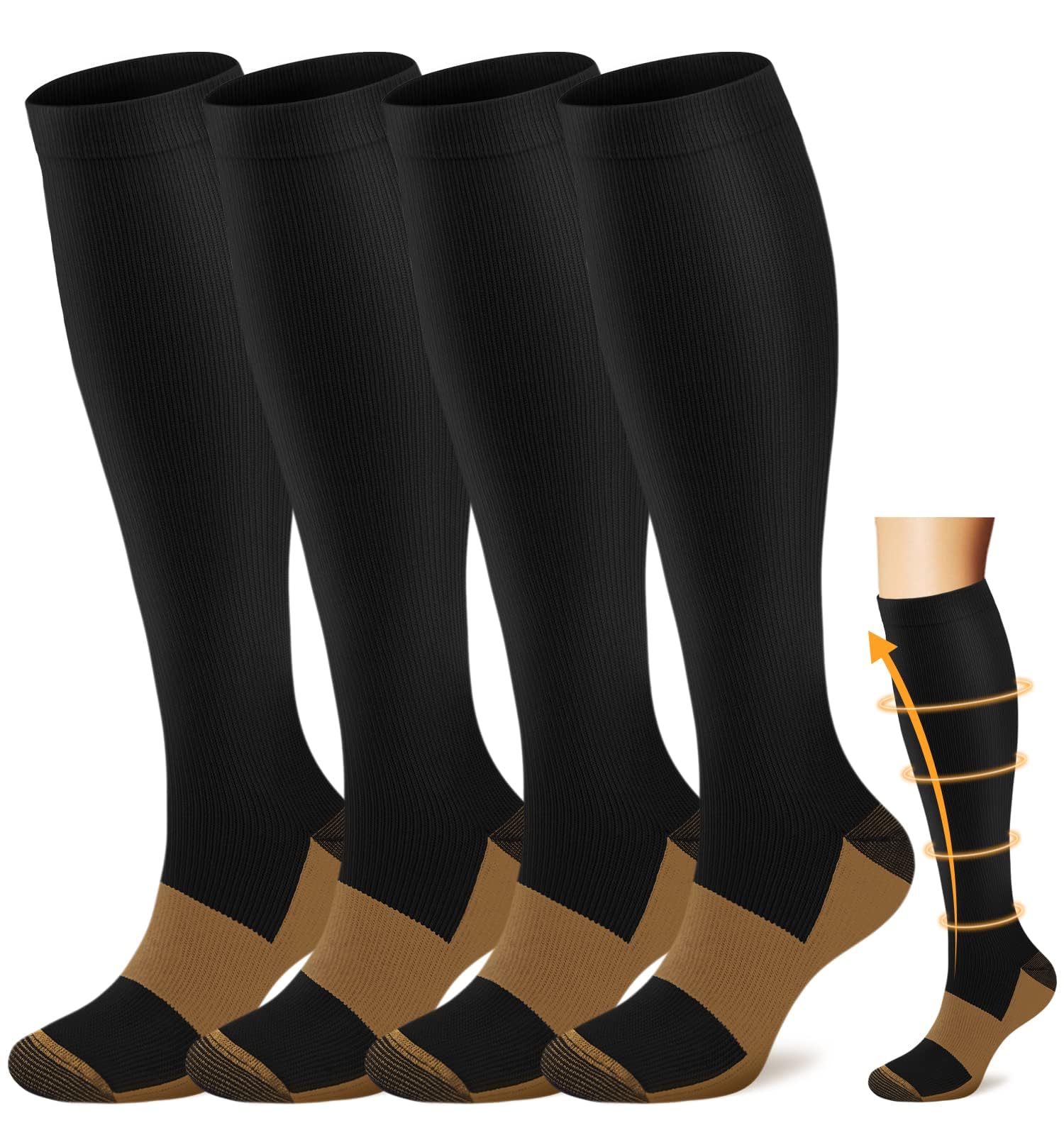
The ACTINPUT pack is the least expensive way into compression here, and it does not ask you to commit to a firm 20-30 mmHg regimen. The four-pair set is aimed at nurses, runners, flyers, and anyone who wants a lighter everyday sock.

The compression feels gentle rather than medical, with a soft foot and a toe box that does not squeeze. We found them easy to pull on and off, which makes them a good choice for a first pair or a backup set. The copper-infused fabric is the marketing hook; the practical hook is the low commitment.

The colors are bright, and the four-pack gives you enough pairs to keep one in your bag and one in the wash. They are not the pair for significant swelling; the 20-30 options above are better for that.

The four-pack is what makes them useful: keep one pair at work, one in the gym bag, and one in the wash, and you still have a spare. That is a sensible way to test compression without committing to a firm regimen.

Bottom line: The ACTINPUT pack is our budget pick for easing into compression: light enough to wear all day, easy to pull on, and a low-risk way to find out what works.

#2

CHARMKING 8-Pair Socks

CHARMKING 8-Pair Socks

Easy everyday wear

Our Score 9.0/10
Check Price

Worth Noting

  • Toe and heel can wear through with washing
For
Women and men
Style
Knee-high
Pack Size
8 pairs
Compression
15-20 mmHg
Read the full review

Eight pairs arrive in the CHARMKING pack, enough to keep one in the wash, one in a travel bag, and one in the drawer without rationing. The sock is built for everyday wear, with a 15-20 mmHg rating and a knee-high cut.

We think that is the right level for desk days, short flights, and anyone who finds 20-30 mmHg too aggressive. The socks stay up without rolling, and they pull on without the tug-of-war firm compression can demand. We noticed the fit stays put through a long day, which matters more than a fancy label.

The colors are a genuine plus: they look less clinical than a drugstore compression sock, and the pack makes it easy to assign a pair to work, travel, and home. If you need firm support for swelling, this is not the pair; the FITRELL or SB SOX are the better match.

Bottom line: If you want a drawer full of easy-on everyday socks, we think the CHARMKING eight-pack is the one to grab; it is gentler than the 20-30 options but stays put.

#3

fenglaoda 8-Pair Socks

fenglaoda 8-Pair Socks

Roomy toe box

Our Score 9.0/10
Check Price

Worth Noting

  • Compression can feel lighter than rated
  • Top band can slip on some calves
For
Men and women
Style
Knee-high
Pack Size
8 pairs
Compression
20-30 mmHg
Read the full review

The fenglaoda socks have a roomy toe box and a soft knit, two details that matter when you are wearing compression for hours. The eight-pair pack comes in a 20-30 mmHg rating and a knee-high cut.

The eight-pair count is the practical part: you can rotate them through the week and keep a spare in a travel bag. The footbed feels padded without bulk, and the toe room is the reason they are comfortable for hours.

We recommend them for wider feet and anyone who hates a pinching toe, with the caveat that this is a gentler 20-30 sock. If you need firm support for swelling, the FITRELL or SB SOX are the better match. The roomy toe box is worth seeking out if your regular socks always crowd your toes.

Bottom line: We like the fenglaoda pack for its roomy toe box and easy pull-on feel, though we treat it as a gentler 20-30 sock rather than a firm medical-style one.

#4

Dickies Light Compression Socks

Dickies Light Compression Socks

Light daily support

Our Score 9.0/10
Check Price

Worth Noting

  • Toe seam can feel rigid
  • Sizing can run large
Style
Over-the-calf
Pack Size
2, 4, or 6 pairs
Department
Men's
Compression
Light
Read the full review

Dickies calls these light compression, and that word does real work: these are closer to a snug over-the-calf sock than a firm medical pair. The cushioned sole and soft knit make them comfortable for a long day, and the men's sizing goes up to XXL.

The easy pull-on feel is the reason we keep them around for long drives and desk days. The cushioning underfoot is noticeable without making the sock feel bulky, and the over-the-calf length stays put on a moderate calf.

We recommend them for anyone who finds 20-30 mmHg too much, or who wants a little support without a medical look. They are not the pair for significant swelling; for that, choose FITRELL or SB SOX. The light hold is the point: it is the sock you can wear when firm compression is too much.

Bottom line: The Dickies socks are our pick when firm compression feels like too much: soft, cushioned, and easy to pull on, with light support for long days rather than serious swelling.

#5

COOLOVER Copper Socks

COOLOVER Copper Socks

Colorful desk days

Our Score 9.0/10
Check Price

Worth Noting

  • Fit can run tight
For
Women and men
Style
Knee-high
Fabric
Copper-infused
Pack Size
6 pairs
Read the full review

The COOLOVER set comes in six pairs with bright patterns and a knee-high cut, which makes it look less like a medical supply than the solid black options here.

The compression is mild to moderate, and the fabric feels soft against the skin. We found them comfortable for desk days and light travel, with a fit that stays in place on a moderate calf. The colors are the fun part: stripes and bright solids are easier to build into a work outfit than a beige medical sock.

We like the six-pair rotation for work and travel, but these are not the pair we choose when swelling is the main problem; the FITRELL or SB SOX do that job better. The patterns are the reason to pick them, not the pressure.

Our advice is to buy them as the everyday pair that happens to be compression, not as your only recovery sock. The six-pair set lets you keep one at work, one in the gym bag, and one in the wash, so the prints get used rather than saved.

Bottom line: We recommend COOLOVER when you want compression socks that look less clinical: the colors are the draw, and the mild compression suits desk days and light travel.

#6

FITRELL 20-30 mmHg Socks

FITRELL 20-30 mmHg Socks

All-day firm support

Our Score 8.8/10
Check Price

Worth Noting

  • Durability can vary after washing
  • Top band can feel snug on larger calves
Style
Knee-high
Sizing
Unisex
Pack Size
3 pairs
Compression
20-30 mmHg
Read the full review

Firm compression usually comes with a fight. The FITRELL 20-30 mmHg socks are the exception in this group: we pulled them on without the wrestle we expected, and the three-pair pack makes rotation easy. That combination made them our default.

The 20-30 mmHg rating is the main reason they earn the top spot. It is firm enough for a long travel day or the end of a shift when legs feel heavy, yet the foot stays comfortable rather than pinched. We wore them through busy days and liked that the compression felt even from ankle to calf, not just tight at the band. The reinforced toe and heel are welcome details; they are the first places compression socks tend to wear.

The unisex sizing is broad, so measure the widest part of your calf before choosing; a letter size alone is a weak guide here. The three-pair set is the practical part: one in the wash, one in the drawer, one in your travel bag. For a first pair that has to handle a flight, a long shift, and a workout week, this is the one we point people toward.

Bottom line: We recommend the FITRELL 20-30 mmHg socks as the best all-around pair here: firm enough for travel and swelling, comfortable enough for a full day, and sold in a practical three-pack.

#7

SB SOX 20-30 mmHg Socks

SB SOX 20-30 mmHg Socks

Travel and swelling

Our Score 8.8/10
Check Price

Worth Noting

  • Hand wash only
Care
Hand wash only
Material
80% nylon, 20% spandex
Pack Size
2 pairs
Compression
20-30 mmHg
Read the full review

The size chart is the first thing we look at with SB SOX, and it is better than most: calf circumference and shoe size together, with instructions to upsize when your shoe size sits above the range. That is the right way to fit a compression sock, and it explains why the same letter size can behave differently across brands.

The 20-30 mmHg support is serious without feeling punishing to us. The heel and toe are cushioned, which makes a long travel day more comfortable, and the compression feels graduated rather than tight at the ankle only. We found them a reassuring pair for swollen legs and long sits, provided you take the sizing chart seriously.

They take more effort to pull on than a 15-20 mmHg pair, and the top band needs to sit cleanly below the knee or it will feel fussy. We still reach for them when support matters more than speed. The cushioned foot is what keeps them in the travel bag.

Bottom line: We reach for the SB SOX pair when travel and swelling are the priority: the 20-30 mmHg support is serious, and the sizing chart is unusually thorough, but hand washing is the trade-off.

#8

Physix Gear 20-30 mmHg Socks

Physix Gear 20-30 mmHg Socks

Running recovery

Our Score 8.8/10
Check Price

Worth Noting

  • Runs big and long for shorter legs
For
Running and travel
Style
Knee-high
Department
Unisex adult
Compression
20-30 mmHg
Read the full review

The Physix Gear socks are built for the 20-30 mmHg end of the compression spectrum, with a knee-high cut and a firm calf hold. They are aimed at runners, nurses, travel, and anyone who wants support through a long day on their feet.

We think they are the best running-focused pick here because the firmness feels supportive rather than restrictive after a workout. The leg relief is the standout: our legs felt less heavy after hard runs, and the sock stayed in place instead of bunching at the ankle. That is the test that matters when you are wearing compression through movement, not just sitting in it.

They are not the pair we choose for a desk day; the 20-30 hold is more squeeze than you need if you are sitting still. We reach for them for runs and recovery, not all-day office wear.

Bottom line: Runners who want firm support after hard miles should start with Physix Gear; we found the 20-30 mmHg hold reassuring, provided you size carefully because the fit runs big.

How We Tested Compression Socks

We started by comparing size charts, compression ratings, fabric blends, care instructions, and customer reviews, then narrowed the field to 16 pairs. Over four months, we wore them on desk days, commutes, weekend walks and runs, and long shifts on hard floors. We measured each tester's ankle and widest calf point before matching them to the manufacturer's chart, because shoe size alone told us almost nothing. Pairs that pinched at the top, slid down, or bunched under the arch were flagged early.

Ease of use got checked at the worst moment: first thing in the morning, with no warm-up and no help. We noted whether a pair went over the heel cleanly, whether the cuff needed constant tugging, and how easy it was to peel off at night. Comfort was judged over full days, not minutes, including seams under toes, heat across the top of the foot, and whether the sock felt soggy after a workout. For compression, we tracked how our legs felt from morning to evening, especially after standing for hours or sitting through meetings, and whether swelling had eased by the time we took the socks off.

Staying power and durability took longer. We checked whether cuffs rolled, socks migrated down the calf, or fabric bunched inside shoes after a full day. Every pair went through repeated machine washes and air-drying, and we compared the elastic snap, pilling, and toe seams afterward. Quality showed up in the small stuff: a clean cuff, a flat toe seam, and a fabric that recovered rather than stretched out. We also noted sizing inconsistencies between colors and styles from the same line, since a pair that fit in one shade did not always match another.

How to Choose Compression Socks

Start With the Compression Level

The mmHg rating is the first fork in the road. A 15-20 mmHg sock is gentle enough for a desk day, a short flight, or a first pair; 20-30 mmHg is firmer and better suited to long travel, swelling, or recovery, but it takes more effort to pull on. Firmer is not automatically better. If you want one pair for all-day wear, start at 15-20. If you need support for a specific trip or a heavy-legged day, choose 20-30 and expect a break-in period.

Measure the Calf, Not Just the Shoe

Compression is only as good as the fit at the widest part of your calf. Use a cloth tape there, then check the sock's own size chart; a letter size alone is not enough. The SB SOX chart pairs calf circumference with shoe size and tells you to upsize when your shoe size sits above the range. Unisex sizing can be broad, so if you are between sizes, choose the larger one or a brand with a wider calf range. Too tight is not more effective.

Decide How Much Fight You Want

Firm socks can be a hassle to put on. A 20-30 mmHg pair may need a good tug, especially around the heel, while a 15-20 mmHg pair or a light compression sock slides on more easily. If you have limited hand strength, arthritis, or a caregiver helping you, ease of use matters as much as the rating. Look for a roomy toe box, a heel that seats without bunching, and a top band that stays up without digging in. A sock you avoid wearing is not support.

Check Length and Staying Power

Knee-high means the band should sit below the knee, not roll behind it. Length varies enough that short legs can end up with a sock that climbs too high, while taller buyers may find a pair that stops short. The top band and the calf fit decide whether the sock stays up; a sock that slides down turns into an ankle band and loses the point. If you are between lengths, look for a size chart that gives calf and foot measurements.

Plan for Care and Rotation

Compression fabric wears at the toe, heel, and top band. A multi-pack helps because you can rotate pairs and wash less often, but check the care label first: some 20-30 mmHg socks are hand wash only, while others go in the machine. We treat compression socks as a rotation, not a lifetime purchase, and we replace pairs when the elastic feels tired or the toe thins. If you want one pair for travel, buy two so one can dry.

Frequently Asked Questions

Final Verdict

We recommend the FITRELL 20-30 mmHg socks as the best default for most buyers. They hit the balance that matters: firm enough support for travel and swelling, comfortable enough for a long day, and a three-pack that makes rotation realistic. If you want a gentler everyday sock, the CHARMKING eight-pack is the easier choice; if travel and swelling are the main event, the SB SOX pair is worth the hand-wash routine.