Recovery

Best Kinesiology Tape of 2026

Kinesiology tape works on a fairly simple idea: stretch the elastic and stick it down, and it lifts the skin a fraction away from the tissue beneath, which is what turns a cranky knee into something you can run on and a stiff shoulder into something you can reach over your head with. The concept isn't what separates a good roll from a bad one. The adhesive is. Cheap tape lifts at the corners an hour into a workout, itches by day two, and comes off in one wince-inducing pull that takes a layer of skin with it. The right one stays put through sweat and showers, gives you support without locking the joint up, and peels away clean when you're done.

I've been taping a temperamental knee on and off for years, and my team has now put 15 rolls through three months of real wear. The thing nobody tells a first-time buyer: the tape is only as good as the application, so round your corners, anchor the last inch at zero tension, and start on clean, dry skin. Every roll below holds up when you do that, and a few hold up even when you don't.

#1

KT Tape Pro Synthetic

Top Pick
KT Tape Pro Synthetic

All-around daily wear

Our Score 9.2/10
Check Price

Worth Noting

  • Priciest precut pack here per strip
Format
20 precut strips, 10 in x 2 in
Material
100% polyester (synthetic)
Stated Wear
4-7 days
Water Resistance
Water resistant
Read the full review

Four to seven days is the wear window KT Tape states for the Pro strips, and the synthetic build is what pays for it: polyester fibers rather than cotton, so sweat dries out of the fabric instead of soaking in. That's the difference we noticed first in testing — this is tape you stop thinking about between sessions. Put it on before a run and it's still working when you next look down.

The precut format is the other reason this is the pack we hand people first. The corners arrive rounded, which matters more than it sounds: a square corner is what lifts first, and once one goes the rest follows. Ten inches is generous across a knee or a shoulder and halves neatly for a wrist or an elbow, so a 20-strip pack covers about ten knee applications or twenty small ones.

Adhesion is where this tape asks something of you. It holds best on clean, dry, lotion-free skin and wants a few seconds of friction after it goes on — rub the strip and the heat helps the adhesive set. Applied in a hurry over sunscreen, or straight across the crease behind a knee, the edges lift within a day. Two minutes of prep is the whole difference between those outcomes.

Per strip, this is the priciest precut pack here, and it's the one place we hesitated. What you're buying is fewer applications: tape a shoulder or a knee most days and the longer wear window more than covers the gap. Tape once every couple of weeks and the cheaper packs make more sense, because you're paying for durability you won't use.

Bottom line: We recommend it to anyone taping several times a week: the synthetic fabric has the longest stated wear window here, and the precut strips turn application into a two-minute job.
#2

Kinesio Tex Gold FP

Kinesio Tex Gold FP

Custom taping shapes

Our Score 9.2/10
Check Price

Worth Noting

  • Needs scissors and a flat surface
  • Edges roll without firm pressing
Size
2 in x 16.4 ft
Format
Single uncut roll
Material
100% polyester
Read the full review

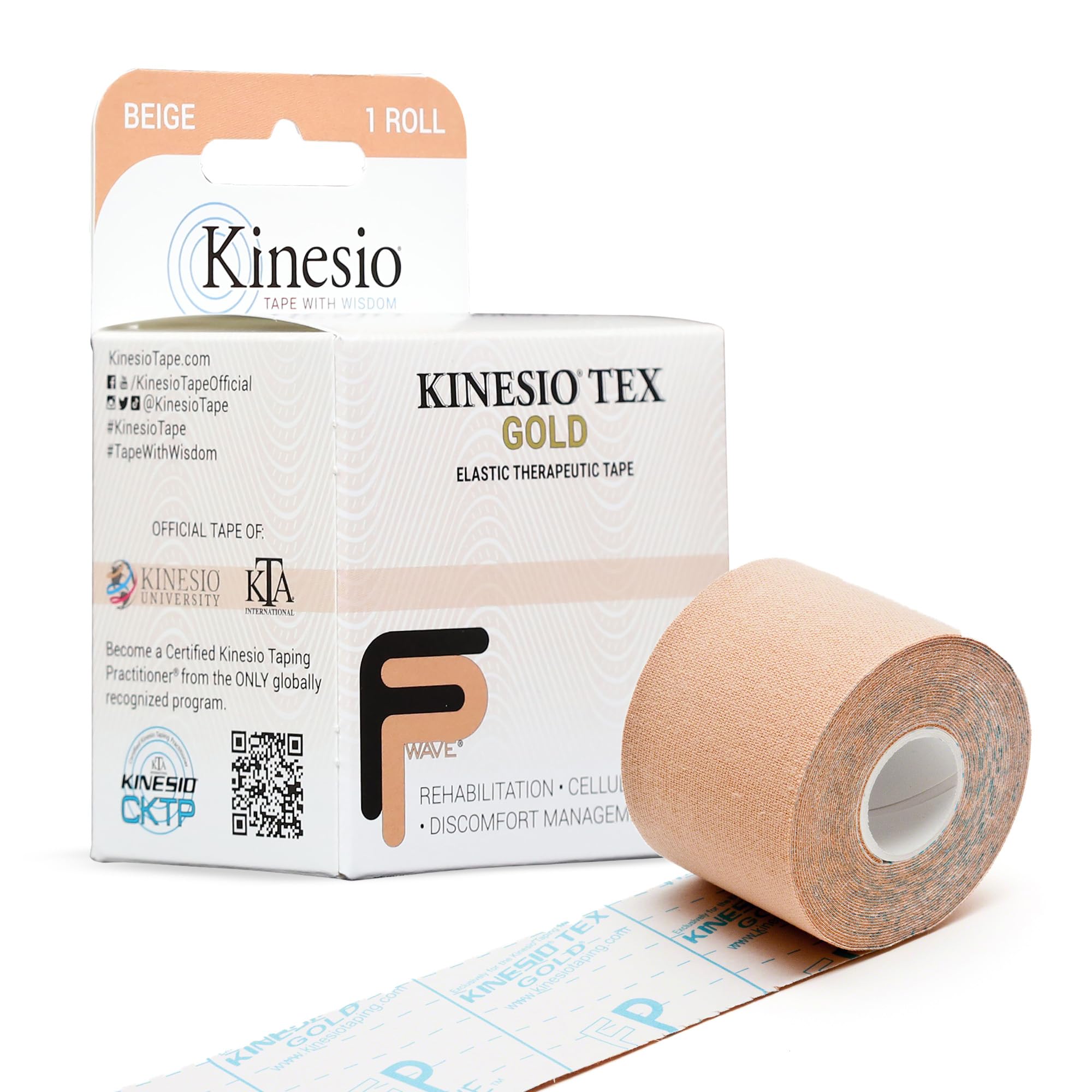
One uncut roll, 16.4 feet of it, no perforations: Kinesio is the tape you buy when you already know what shape you need. If your taping is a straight strip across a knee, precut is faster and cheaper. If it's a Y for a shoulder, a fan for a hamstring, or something curved around an elbow, this is the format that lets you cut it.

We kept reaching for this roll whenever a shape mattered. The polyester stretches evenly and takes a corner without bunching, and the length gives you room to redo an application two or three times while you work out the tension. This is also the original kinesiology tape — the skin-lifting idea the whole category borrows from — and it behaves like the reference version: thin, quiet under a shirt, comfortable enough to forget.

The friction is the format itself. Scissors, a flat surface, and a couple of wasted attempts before the length is right make this poor tape for a gym bag. Edges need firm pressing or they roll, and a piece worn for days can leave a red outline on sensitive skin. Set against that, 16.4 feet is roughly nineteen ten-inch strips, which is a lot of taping for the money.

Bottom line: For anyone who cuts custom shapes, this is the roll we point to: thin, even-stretching tape that behaves like the clinic original and works out cheaper per inch than the top pick.

#3

GJUMP Kinesiology Tape

GJUMP Kinesiology Tape

Everyday precut value

Our Score 9.0/10
Check Price

Worth Noting

  • Stated three-day wear is the ceiling
Format
40 precut strips, 2 rolls
Material
Cotton with wave-pattern adhesive
Stated Wear
3 days
Read the full review

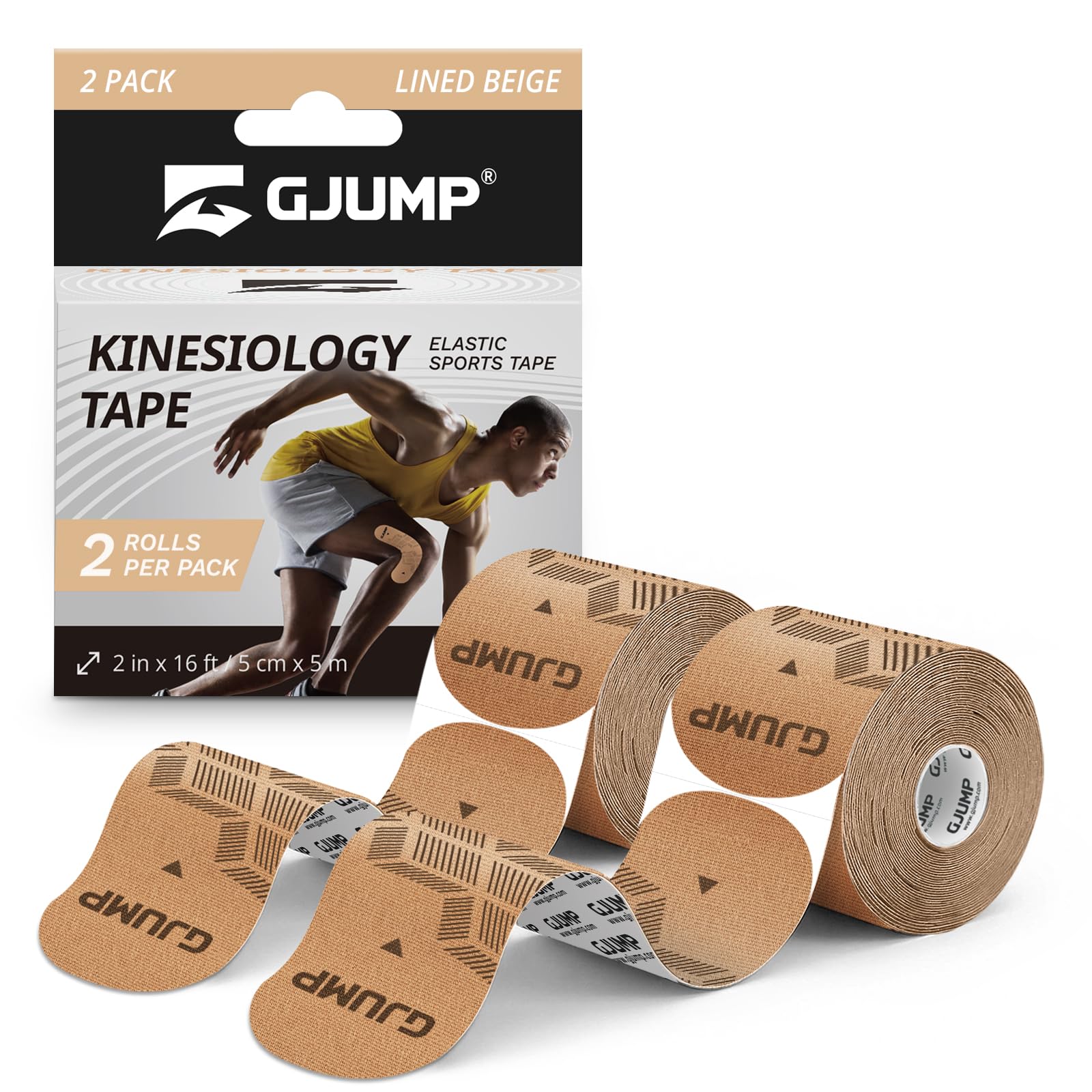
Forty strips in two rolls, rounded at the corners and ready to apply — GJUMP's pack changes how freely you use tape. With a 20-strip pack you ration: you leave a strip on a day longer than you should rather than pull it off and start again. Forty strips is enough to be careless with, and that's a real advantage while you're still learning where a strip should sit.

The cotton fabric holds better than its stated three-day wear suggests. In our testing it handled sweat and a shower without curling at the corners, and the stretch is generous enough to tape a shoulder without feeling like a rubber band. The rounded edges also fray less than cut ones over a couple of days of wear, which is the failure mode that makes people give up on cheap tape.

Three days is the honest limit — past that, edges lift, though replacing a strip costs one of forty rather than one of twenty. For anyone taping most days, that arithmetic strongly favors this pack, and the easy-on application means you'll actually use it. It's the one here we'd hand to someone who tapes a knee before every run.

Bottom line: Buy it if you tape most days and want to stop rationing: forty precut strips that hold through workouts for roughly what a twenty-strip pack costs.

#4

THERABAND Kinesiology Tape

THERABAND Kinesiology Tape

First-time self-taping

Our Score 8.8/10
Check Price

Worth Noting

  • Strips run long for wrists and ankles
Size
2 in x 10 in strips
Format
20 precut strips on a roll
Material
98% cotton, 2% spandex
Stretch Guide
Printed stretch indicators
Read the full review

Printed marks along the backing are why this one earns a place. THERABAND prints stretch indicators on the tape itself, so you can see what a light pull looks like before you commit to it — and if you've never taped yourself, that single feature removes the biggest source of doubt. This is the pack we hand to a first-timer.

The rest is well judged too. Twenty precut strips, ten inches by two, black and grey, on a roll that keeps them tidy. The fabric is 98% cotton with 2% spandex and latex-free, and the adhesive is stated to hold up to five days, which is the longest claim here after the synthetic KT Tape. Across a knee or a shoulder the length is right.

Two caveats. The strips are long for a wrist, an elbow, or an arch, so you'll cut them down and lose the offcut. And skin is the thing to watch: if you've reacted to bandages or sports tape before, test a short strip on your forearm for a day before committing to a knee. Cotton breathes well, but breathability tells you nothing about whether an adhesive suits you.

Bottom line: The beginners' pick, plainly: printed stretch marks take the guesswork out of tension, and the strips are ready to apply straight out of the pack.

#5

Hampton Adams Kinesiology Tape

Hampton Adams Kinesiology Tape

Home and gym bag

Our Score 8.8/10
Check Price

Worth Noting

  • Uncut rolls mean scissors every time
Format
2 uncut rolls
Adhesive
Latex-free
Material
Breathable cotton blend
Water Resistance
Water-resistant
Read the full review

One roll at home and one in the gym bag: that's the split this two-pack suits, and it's a more practical unit than a single roll for anyone who tapes away from the bathroom mirror. The fabric is a breathable cotton blend with a latex-free adhesive, and it's water-resistant enough to survive a shower between sessions.

We found the hold solid across big flat areas — a thigh, a calf, the arch of a foot — and it's the tape we reach for when we want one long continuous piece down the back of a leg. The stretch runs a touch firmer than the synthetics, which suits larger muscle groups and gives a more braced feeling before a run. Two rolls also mean you can keep one unopened while the other lives in a bag.

Removal is where it gives ground. The adhesive grips hard and leaves a sticky film behind, so peel along the skin rather than straight up, and keep baby oil or olive oil within reach instead of pulling it off dry — on sensitive skin that grip can take a layer with it. If your skin is tough and your taping is on big areas, two rolls for one outlay is a fair trade.

Bottom line: Two rolls for one modest outlay makes this the value pick for home and gym-bag use, provided you're ready for a careful, oil-assisted removal.

#6

OK TAPE Kinesiology Tape Pro

OK TAPE Kinesiology Tape Pro

Low-cost uncut rolls

Our Score 8.8/10
Check Price

Worth Noting

  • No precut strips; scissors every time
  • Grip drops on oily or folding skin
Size
2 in x 16.4 ft each
Format
2 uncut rolls
Stretch Guide
Printed stretch patterns
Read the full review

Two 16.4-foot rolls for roughly the price of a single precut pack is the whole case for this one, and it's a strong case if you tape often. The catch is format: no precut strips, so scissors are part of every application, and your first few cuts will be the wrong length. At this price, the wrong length costs you very little.

The Pro version adds printed patterns along the backing that show how far to stretch the tape for a given application. That sounds like a gimmick and isn't: tension is the thing beginners get wrong, and having a mark to pull to removes the guesswork for the first week or two. The fabric stretches easily, cuts cleanly with kitchen scissors, and held through showers in our testing without rolling at the ends.

Adhesion is the variable worth knowing about. On clean, dry skin it stays put; over lotion, or across a joint that folds and unfolds all day, it lets go sooner than the synthetic tapes. Set against what you pay, we think that's an easy trade for a first roll or for tape you use in volume — the printed guides do the job a taping session would.

Bottom line: Choose it if you want uncut tape on a budget: two long rolls and printed stretch guides, with enough spare tape to botch a few applications while you learn.

#7

Care Science Copper Tape

Care Science Copper Tape

Bulk precut strips

Our Score 8.8/10
Check Price

Worth Noting

  • Leaves a sticky film on removal
  • Rough on reactive skin
Format
40 precut strips, 2 rolls
Adhesive
Wave-pattern adhesive
Water Resistance
Water-resistant
Read the full review

Copper-infused fabric is what the packaging leads with; water resistance is what actually shows up on a sweaty afternoon. Forty precut strips across two rolls, a wavy adhesive pattern, and a price that sits in the middle of this group rather than the top. The copper label is marketing — what earns the pack a place is the adhesive underneath it.

That adhesive behaves well. The strips arrive rounded, which removes the step that most often goes wrong with a roll, and the elastic fabric moves with a knee through a full bend without bunching. A strip worn through a workout and a shower came out the other side still flat, which is more than we can say for some of the cotton tapes here.

Against the other forty-strip pack here, the difference is the glue: this one grabs harder and shrugs off water better, and it is harsher coming off. Removal takes a slow peel along the skin and a little oil to break the film down, and reactive skin should be patch tested rather than trusted.

So it earns its place as the bulk precut option for one specific buyer: someone taping the same knee or shoulder daily who wants a long run of strips in a single order and doesn't mind a deliberate removal routine. Gentle it is not, and it isn't trying to be.

Bottom line: Buy it if you tape one joint every day and want water-resistant precut strips in bulk, and accept that removal needs patience and oil.

How We Tested the Best Kinesiology Tape

We built the shortlist from rolls that keep turning up in physical therapy clinics and on running-store shelves, then filtered by stretch ratio, adhesive type, roll dimensions, and cost per foot. Fifteen made the cut, and we wore them for three months.

Each roll got assigned a body part and a person: knees before morning runs, shoulders after long desk days, a lower back through a weekend of yard work, an ankle through pick-up basketball. Testers wore each one for the full number of days the maker claimed, showered in it, sweated in it, and slept in it.

Every morning we ran a thumb along the edges to see what had lifted overnight, and we checked for redness and itching at the 24-hour mark and again after removal; two testers with reactive skin wore each roll on a forearm for a full day as a control. We watched whether the backing peeled away without folding back on itself, whether the roll tore cleanly by hand, and whether the tape felt supportive in motion or merely tight.

Pain relief we logged as tester reports rather than clinical results — some rolls visibly changed how long someone could stay on a run, others did nothing. Durability came down to whether the tape sprang back after removal or stayed stretched out, and value to cost per foot divided by the days it actually held.

How to Choose the Right Kinesiology Tape

Precut strips or an uncut roll

Precut strips are the right default for most people: corners already rounded, no scissors, and a fixed length that stops you guessing. Ten inches covers a knee or a shoulder, and you can halve it for a wrist, an elbow, or an arch.

Go uncut when the shape matters — a Y-strip for a shoulder, a fan for a hamstring, one long piece down the back of a leg. A 16.4-foot roll holds about as much tape as a 20-strip pack, so it's only the better buy if you genuinely cut shapes rather than strips.

How long you need it to stay on

Wear windows differ more than the packaging suggests: cotton tapes are typically stated at one to three days, synthetic ones at four to seven, with water-resistant cotton blends landing around five. Treat those as claims you'll find out about, not promises.

Application decides more than the tape does. Skin has to be clean, dry, and free of lotion or sunscreen, corners need rounding, and the strip needs a few seconds of friction after it goes on — rub it, and the heat helps the adhesive set. Skip those steps and every tape here lifts at the edges within a day.

Skin sensitivity and removal

Adhesive reactions are the most common complaint in this category, and no tape is immune — some of the most popular ones here are the ones that irritate people most often, and a brand's hypoallergenic label is a claim rather than a guarantee.

If you've reacted to bandages or sports tape before, put a short strip on your forearm for a day before you tape a knee. Peel along the skin rather than straight up, do it slowly, and use baby oil or olive oil to break the adhesive down instead of pulling.

Stretch guides and self-application

Tension is the part beginners get wrong: too much stretch and the tape fights your range of motion, too little and it does nothing. Printed stretch indicators take that guesswork out, and two picks here carry them.

If you're taping a shoulder or your lower back on your own, the honest answer is that an extra pair of hands beats any guide. Book one session with a physical therapist or trainer, watch where their hands go, then buy the format that matches what they used.

What a pack actually costs to use

The sticker price tells you very little. A knee application usually takes two strips, so a 20-strip pack is roughly ten applications and a 40-strip pack is roughly twenty. A 16.4-foot roll is about nineteen 10-inch strips if you cut carefully, and noticeably fewer if you don't.

Buy a small pack before a big one. The most expensive mistake in this category is a bulk box of tape your skin can't tolerate, and the second most expensive is buying uncut rolls when you only ever tape straight strips.

Frequently Asked Questions

Final Verdict

If we were buying one pack for a household, it would be KT Tape's Pro strips. The synthetic fabric backs the longest stated wear window here, the precut strips remove the scissors step, and it behaves predictably on clean, dry skin — which is most of what you want from tape you'll reapply every week.

Choose the Kinesio roll instead if you cut custom shapes, THERABAND if you've never taped yourself and want printed guidance, or GJUMP's forty-strip pack if you tape daily and want to stop rationing.