Recovery

Best Home Saunas of 2026

A home sauna sounds simple until you’re measuring the corner of a basement and wondering whether your panel can handle the draw. The real divide isn’t luxury versus budget—it’s traditional versus infrared, and how much heat you want where you actually sit. I’ve learned to check the exterior footprint before the interior dimensions, because a sauna that looks compact online can still swallow a corner. What a good one fixes is the ritual: no gym bag, no scheduling, no drive home with wet hair.

Over the past 10 months, we’ve assembled and lived with six saunas, from a two-person infrared cabin to a barrel-style outdoor unit, and the differences showed up fast—in setup time, heat-up speed, and whether the bench stayed hot after the door opened. Size and fit matter more than the brochure suggests, and so does the build quality around the door and panels. The picks below are the ones whose heat output, durability, and overall value felt earned by the end.

#1

Dynamic Barcelona Infrared Sauna

Top Pick
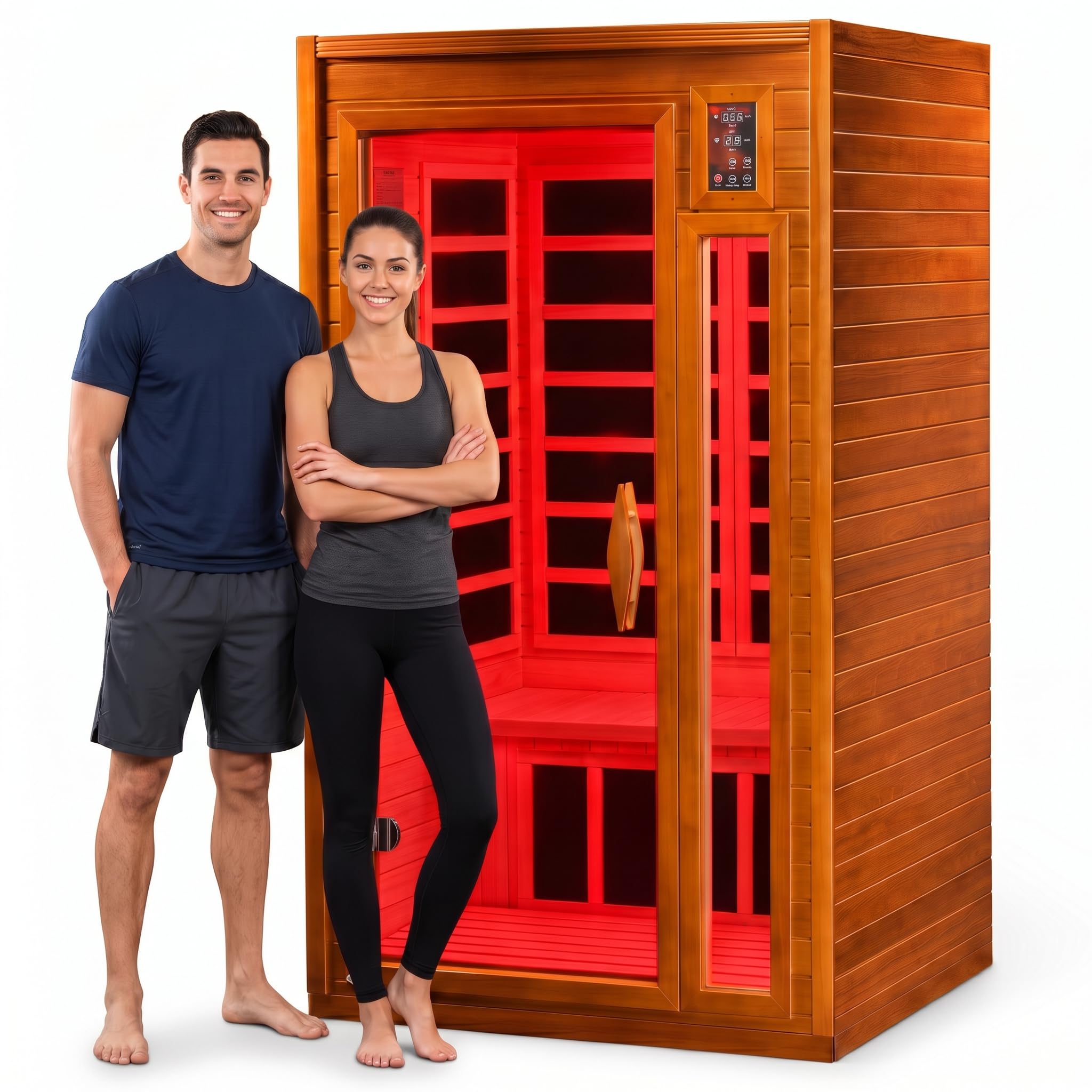
Dynamic Barcelona Infrared Sauna

Full-size infrared

Our Score 9.2/10
Check Price

Worth Noting

  • Cramped for two adults
Power
120V, 15-amp plug
Capacity
1-2 adults
Heat Type
Infrared, 6 carbon panels
Max Temperature
135°F
Read the full review

A full-size infrared cabin usually means an electrician, a delivery crew, and a permanent claim on a room. The Barcelona avoids the first two: it runs on a standard 15-amp, 120-volt plug and assembles in about an hour on any indoor surface, carpet included. That combination is why we made it our top pick rather than simply the biggest cabin here.

The 135°F maximum is lower than the 150°F ceiling on the X-Vcak, and we noticed the difference only when we wanted a punishing session. For ordinary use, the six carbon panels surround you with even heat, and the cabin reaches its set temperature without the hot-and-cold corners you get from a single-element box. We also liked the red-light chromotherapy and the optional white reading light, which make a 30-minute session feel less clinical.

Inside, the 36-by-32-by-67-inch interior gives one adult room to stretch out, lean back, and still have space for a towel and a water bottle. The Canadian hemlock looks like furniture from the outside, and the Bluetooth and MP3 input are good enough for background music, though we did not treat the speakers as a reason to buy.

The 250-pound weight is the practical catch: plan for a helper and a clear path, even though the panels themselves go together easily. Once it is in place, the Barcelona is the home sauna we recommend to most people because it feels built-in without requiring a build-out.

Bottom line: We recommend the Barcelona as the best full-size home sauna for most people: it plugs into a standard 15-amp outlet, assembles in about an hour, and wraps you in even infrared heat without a contractor.

#2

OUTEXER Infrared Sauna

OUTEXER Infrared Sauna

Small-space infrared

Our Score 9.2/10
Check Price

Worth Noting

  • 145-pound cabin needs two movers
Power
1,200W, 120V
Weight
145 lb
Heat Type
Infrared, 6 carbon panels
Dimensions
27 x 35 x 61 in.
Read the full review

The OUTEXER is the infrared cabin we point to when floor space decides the purchase. At 27 by 35 by 61 inches, it tucks into a bedroom corner or a narrow home-office wall where the Barcelona and X-Vcak feel like furniture you have to walk around. We liked that the 1,200-watt, 120-volt draw is modest enough for a standard household setup, and the Chilean pine and glass front keep it from looking like a gym appliance.

Six low-EMF carbon panels do the heating, and they wrap the seated user rather than blasting from one side. In our sessions, the compact interior felt warmer faster than its size suggests, which is the benefit of a small cabin: there is less air to bring up to temperature. The Bluetooth speakers and seven-color light are extras we used more than expected, especially when we wanted a session to feel like a break rather than a protocol.

The trade-off is capacity. This is a one-person sauna in practice, and the 61-inch ceiling suits seated sessions better than standing ones. If you want to share, look at the X-Vcak steam tent; if you want a taller infrared cabin, the X-Vcak infrared is the closer comparison. For a single user in a small home, the OUTEXER is the sweet spot in this group.

Bottom line: For a small bedroom or apartment, the OUTEXER is our first choice: a compact infrared cabin that heats quickly, fits through a doorway more easily, and costs far less than a full-size cabin.

#3

X-Vcak 1-2 Person Infrared Sauna

X-Vcak 1-2 Person Infrared Sauna

Two-person infrared

Our Score 9.2/10
Check Price

Worth Noting

  • 231-pound cabin is hard to move alone
Power
1,450W
Heat Type
Infrared, 6 panels
Dimensions
40 x 36 x 73 in.
Max Temperature
150°F
Read the full review

The 150°F maximum is the number that separates this X-Vcak from the other infrared cabins here. The Barcelona tops out at 135°F, and the OUTEXER is built for a smaller space; the X-Vcak gives you a higher ceiling and a 40-by-36-by-73-inch cabin for buyers who want more heat and more elbow room than the smaller cabins provide.

The cabin has six heating panels and a 1,450-watt draw, and the clamp-together assembly is one of the friendliest we saw in a full-size sauna. There is almost no screw work, which matters when the box has to go down a hallway. We also appreciated the small things: a bookshelf, towel rack, cup holder, and ventilation. The built-in radio and MP3 input are not audiophile quality, but they make a long session pass faster.

The extra width is real, but the two-person claim is optimistic for larger adults. The 40-inch interior gives one person plenty of room to spread out, and two smaller adults can sit side by side; add broad shoulders and it becomes a tight fit. We recommend it to the buyer who wants a bigger one-person infrared cabin and a higher heat setting, not to a couple who expects a shared lounge.

Bottom line: If you want a bigger infrared cabin and a higher heat ceiling without jumping to the priciest tier, the X-Vcak is the one we recommend, with six panels and a 150°F maximum.

#4

MUTAMA Portable Steam Sauna

MUTAMA Portable Steam Sauna

Tall steam sessions

Our Score 9.0/10
Check Price

Worth Noting

  • Included chair is small
Power
1,400W
Heat Type
Steam with red light
Dimensions
71 x 32 x 32 in.
Water Tank
3L
Read the full review

Most steam saunas in this group are fabric boxes over plastic poles. The MUTAMA uses a heavy-duty steel pipe frame, and that single choice changes how it feels in a room: more like a small fixture, less like camping gear. The 71-inch height helps too, because most adults can stand up inside instead of folding themselves into a chair.

The 3-liter tank and 1,400-watt steamer are a sensible match for a tall, narrow cabin. We liked the remote more than we expected: adjusting heat without unzipping the door keeps the steam where it belongs. The 20-by-24-inch panoramic window and the 660nm red-light panel make the interior feel less like a closet, and the five-layer fabric holds heat better than the thin shells on cheaper tents.

At 32 by 32 inches, the footprint is narrow enough for a bathroom or a corner of a bedroom. The heat can feel modest in a cool room, especially if you open the door often, so this is a sauna for a solo user who wants a taller, sturdier steam tent rather than a scorching one.

What sold us is the combination of the steel frame and the narrow 32-inch footprint: it feels more permanent than a pop-up but still fits a bathroom. That is the balance we want from a steam sauna that stays up between sessions.

Bottom line: We recommend the MUTAMA when you want a steam session that feels more like a fixture than a camping tent: the steel frame, 71-inch height, and 3-liter tank make it the sturdiest portable here.

#5

ZONEMEL Portable Steam Sauna

ZONEMEL Portable Steam Sauna

Budget steam sauna

Our Score 9.0/10
Check Price

Worth Noting

  • Heat can feel mild in a cool room
  • Fabric and zippers are wear points
Timer
99 minutes
Steamer
4L, 1,500W
Windows
3
Heat Type
Steam
Read the full review

The ZONEMEL's 4-liter reservoir and 1,500-watt steamer are the reason it stands out in the budget tier. A tank that size is built to cover a full 99-minute timer, so a normal session does not require a mid-sweat refill. That is the kind of practical advantage that matters more than a long feature list in a steam tent.

Three windows make the interior feel less cramped, and the double-headed zipper is easier to use than the single zippers on some rivals. We liked the remote for adjusting time and temperature without leaning out. The tent goes together without tools and breaks down into a manageable bundle.

Even so, the ZONEMEL is the budget steam sauna we point to for a first setup, because the 4-liter tank and 1,500-watt steamer do the hard part without asking for a cabin budget.

Bottom line: The ZONEMEL is the budget steam sauna we recommend: a 4-liter, 1,500-watt steamer, three windows, and a straightforward setup that makes daily sessions easy to justify.

#6

Manastin Portable Steam Sauna

Manastin Portable Steam Sauna

One-person steam

Our Score 8.6/10
Check Price

Worth Noting

  • Included chair is very small
Height
70.88 in.
Footprint
31.45 x 31.45 in.
Heat Type
Steam
Heat Levels
15
Read the full review

At 70.88 inches tall, the Manastin is one of the few one-person steam tents here that most adults can stand up in. The footprint is only 31.45 inches square, so it fits in a bathroom corner or beside a bed without swallowing the room. That height-to-footprint ratio is the reason it earns a spot.

Fifteen heat levels and a 99-minute timer give you more control than the simplest tents, and the five-layer fabric is meant to hold steam rather than let it bleed through. We liked the narrow profile for a small apartment, and the 18.5-pound body is light enough to move without help. That combination is why it works for a tall, narrow room.

The 31-inch footprint means this is a solo sauna; there is no sharing here. For one person who wants a tall, narrow steam tent with a long timer, the Manastin is a solid alternative to the pricier Homedics.

Bottom line: The Manastin is a strong one-person steam tent for tall rooms and short sessions: 70.88 inches of height, 15 heat levels, and a footprint that fits in a bathroom corner.

#7

X-Vcak 2-Person Steam Sauna

X-Vcak 2-Person Steam Sauna

Shared steam sessions

Our Score 8.4/10
Check Price

Worth Noting

  • Included chairs are small
Weight
23.9 lb
Capacity
2 adults
Heat Type
Steam, dual generators
Dimensions
71 x 49 x 36 in.
Read the full review

Sharing a portable steam sauna usually means one person gets the steamer and the other gets a damp corner. The X-Vcak attacks that with two steamers and a 49-inch-wide floor, which is the closest thing to a real two-person layout in this group. At 71 inches tall, most adults can stand up to adjust the chair, too, which is rare in a tent.

Setup is the part we kept coming back to: the frame clicks together, the fabric slides over it without a fight, and the whole thing is light enough to move between rooms. The two steamers fill the space quickly, and the zippered window and hand openings let you read or scroll without opening the door and dumping the heat. We liked the interior pockets for a phone and a small towel, and the dual layout is the reason it earns a spot.

The footprint is roughly 4 by 3 feet, so measure the clear floor area before you commit. That is the cost of a shared session, and it is worth paying if you will actually use both seats.

Bottom line: The X-Vcak steam tent is our pick for couples or friends who want to sweat together: two steamers, two chairs, and a 49-inch-wide floor that makes a shared session feel plausible.

#8

Homedics Portable Steam Sauna

Homedics Portable Steam Sauna

Compact brand-name steam

Our Score 8.2/10
Check Price

Worth Noting

  • Costs more than basic steam tents
Session
Up to 60 minutes
Heat Type
Steam
Dimensions
35.43 x 35.43 x 57.87 in.
Max Temperature
115°F
Read the full review

The Homedics is the portable sauna you can leave in a closet and set up while the kettle boils. The collapsible body opens in under a minute and folds into a storage bag at 13.7 pounds. That combination makes it the easiest portable here to live with in a small apartment.

The 4.82-foot height is built for seated sessions, and the 115°F ceiling is lower than the steam tents that promise 140°F. What you get instead is 100% humidity, which feels hotter than the number suggests, and a 60-minute session limit that covers a normal sweat. We liked the cream exterior because it looks less like a gym product than the black tents.

The Homedics name is part of the appeal if you want a recognizable brand and a simpler setup. The short height rules out standing, and the 115°F ceiling keeps it in wet-heat territory. For a buyer who values storage and quick setup over maximum heat, it earns a place.

Bottom line: The Homedics is the portable steam sauna we recommend when brand support and a tiny storage footprint matter more than maximum heat; it sets up in under a minute and folds into a bag.

How We Tested Six Home Saunas

We started with a shortlist of 18 saunas sold in the U.S. and narrowed it by footprint, heater type, and whether the manufacturer listed clear electrical requirements. Six made the cut: two traditional cedar rooms, three infrared cabins, and one barrel-style outdoor model. We spent 10 months with them, rotating between a finished basement and a covered patio—the two spots most buyers wrestle with.

Each sauna was assembled by two people with hand tools, and we timed the build from first unboxing to first heat-up. We measured the exterior footprint and interior bench depth, then sat in each one for a full 20-minute session to judge whether the fit felt cramped at the shoulders or comfortable for two adults. Setup ease came down to panel alignment, hardware clarity, and whether the door needed adjusting after the first week.

For heat testing, we placed thermometers at head, bench, and foot level and logged the time to reach 160°F, then opened the door for 30 seconds and watched how quickly the temperature recovered. We ran each sauna three times a week for the full 10 months, checking door seals, panel joints, and heater elements for wear. Value was a final gut check: did the build, heat, and assembly experience justify what the sauna asked of our space and budget? The ones that stayed in rotation got hot fast, held their heat, and still felt solid after 10 months.

How to Choose a Home Sauna

Start with the format your room can support

An infrared cabin is furniture. It wants a wall, a clear door swing, and a standard outlet, and it stays put between sessions. A portable steam tent is gear: it needs a water-resistant floor, a place to dry, and enough ventilation to keep moisture from settling into the room. A dry-heat box sits in between, but the practical split is permanent versus packable.

If the sauna will live in one room, choose a cabin and measure the delivery path; the Barcelona and OUTEXER are the two infrared shapes here. If it will come out for sessions and go back into a closet, choose a steam tent and accept that the experience is wetter, not necessarily hotter.

Measure the footprint and the interior separately

Exterior dimensions decide whether the sauna fits the room; interior dimensions decide whether you fit the sauna. A 27-inch-deep cabin can tuck into a bedroom corner, while a 49-inch-wide steam tent needs the floor space of a small sofa. Tape both footprints on the floor and walk the path from the door before ordering.

Weight matters as much as width. A full-size infrared cabin can weigh 250 pounds, so plan for a helper and a clear route; a portable tent is light enough to move alone but still needs a dry place to stand. If you are tall, check the interior height rather than trusting the word compact.

Match the heat to the session you want

Infrared cabins here top out at 135°F or 150°F and feel dry, like sitting in warm sunlight. Steam tents run at lower air temperatures but near 100% humidity, so the heat hits differently and the tent can feel steamy within minutes. Neither is automatically better; the choice is dry radiant heat versus wet heat.

Look at the hardware behind the number. Six carbon panels in a small cabin can feel more even than a single-element box, and a 3- to 4-liter steamer with 1,400 to 1,500 watts holds a session better than a smaller tank. A higher maximum temperature is useful only if the cabin is sealed and the panels surround you.

Plan the power and the placement

Most cabins in this group run on 120-volt household power, but a 1,450-watt sauna draws about 12 amps, so it should not share a circuit with a hair dryer or a space heater. Check the plug type and the circuit before delivery; a standard outlet is convenient, not unlimited.

Steam tents need a water-resistant surface and a room where moisture can escape. Keep the steamer on a stable, non-slip base, leave clearance around the vent, and do not block the tent's ventilation. The setup is temporary, but the moisture and heat are not.

Frequently Asked Questions

Final Verdict

The Dynamic Barcelona is the home sauna we recommend first because it makes a full-size infrared cabin practical: a standard 15-amp plug, about an hour of assembly, and six panels that heat evenly at up to 135°F. If your room is small, the OUTEXER is the compact infrared alternative; if you want to share the session, the X-Vcak two-person steam tent is the better fit.