Nutrition & Supplements

Best Protein Powders for Pregnancy of 2026

Reading a protein powder label during pregnancy is its own special kind of exhausting — you're squinting at added herbal blends, sugar alcohols, and caffeine, wondering which line item your OB would flag. The protein part is simple: pregnancy asks for roughly 25 extra grams a day. Finding a scoop clean enough to feel good about and mild enough to actually keep down when your stomach has opinions is the real work, and the right tub closes that gap without handing you an ingredient list to negotiate.

I've choked down my share of chalky, stevia-bitter scoops, and over the past five months my team and I blended 12 different powders into water, milk, smoothies, and oatmeal at all hours. The surprise: mixability outranks flavor. A powder that clumps in the shaker is one you quietly stop using by week two, no matter how good the vanilla sounds. The picks below all cleared that bar, and each one suits a slightly different kind of morning.

#1

Gold Standard Whey

Top Pick
Gold Standard Whey

Taste and mixing

Our Score 9.2/10
Check Price

Worth Noting

  • Flavored and sweetened, so the panel is longer
BCAAs
0.19 oz
Testing
Banned-substance tested
Container Size
2 lb
Protein Per Serving
0.85 oz
Read the full review

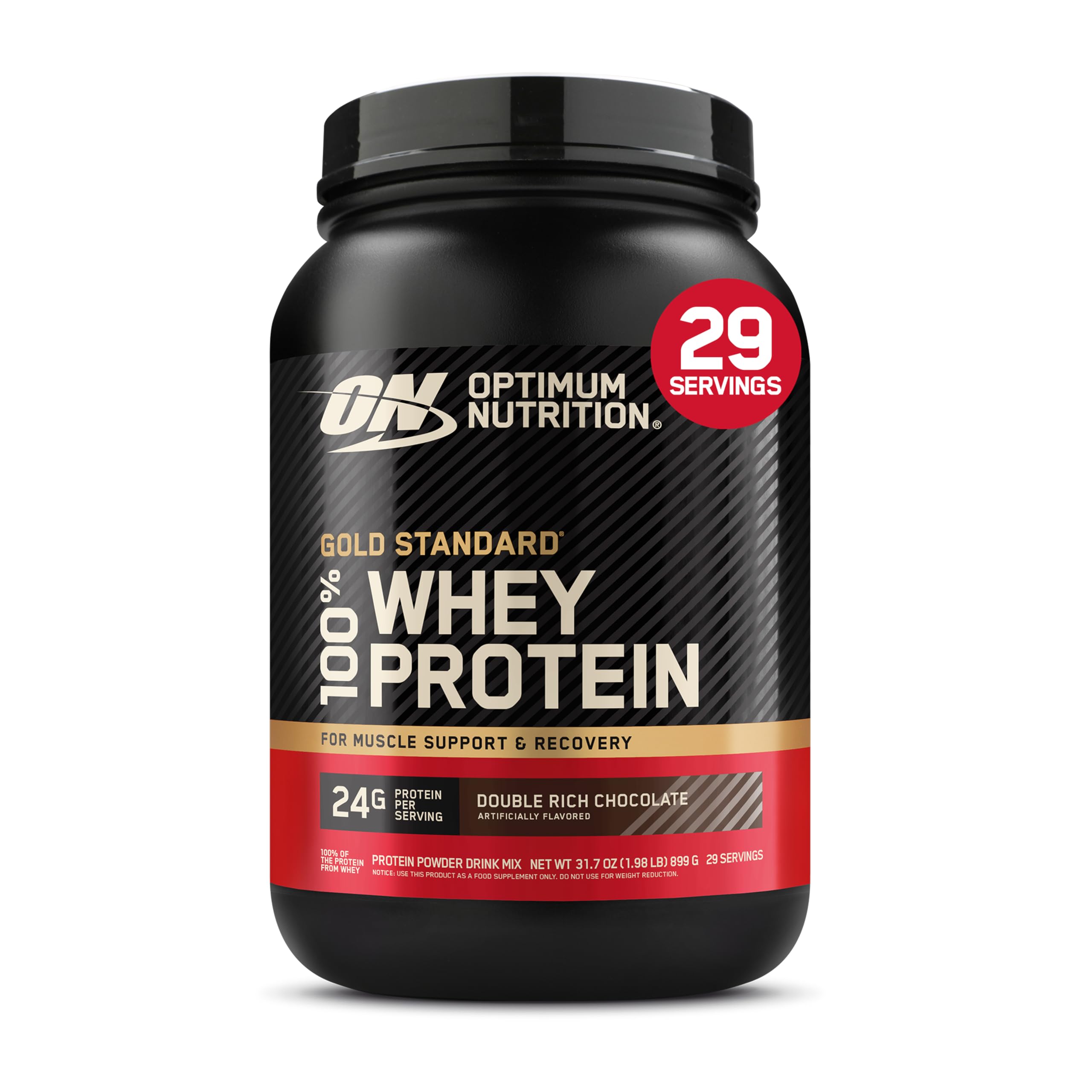
There is a version of pregnancy where the clean, unflavored scoop gets drunk every single morning, and then there is the first trimester. On the days when the smell of the shaker decides how the afternoon goes, the powder that matters is the one you will actually finish, and for us that was Gold Standard's Double Rich Chocolate.

It is instantized, so 6 to 8 ounces of water and a short, hard shake gets you a drink with no grit at the bottom, and the chocolate reads like cocoa rather than candy. A scoop carries 24 grams of protein, 5.5 grams of BCAAs and 11 grams of EAAs. It is also banned-substance tested, which is the assurance we look for in a category where most label claims are self-reported.

That combination earns it a place, and it is the one we point at first when someone tells us they cannot stand protein powder. It is a whey isolate and concentrate blend, so if dairy has started sitting badly, start with a smaller tub or a plant pick rather than working it out with two pounds.

Bottom line: We keep this one for the mornings when only a chocolate shake stays down — instantized, banned-substance tested, and the easiest of these to actually finish.
#2

Premier Protein Powder

Premier Protein Powder

Big single servings

Our Score 9.2/10
Check Price

Worth Noting

  • Seventeen servings per tub goes quickly
  • Clumps unless you shake it hard
Protein Source
100% whey
Sugar Per Serving
0.04 oz
Protein Per Serving
1.06 oz
Servings Per Container
17
Read the full review

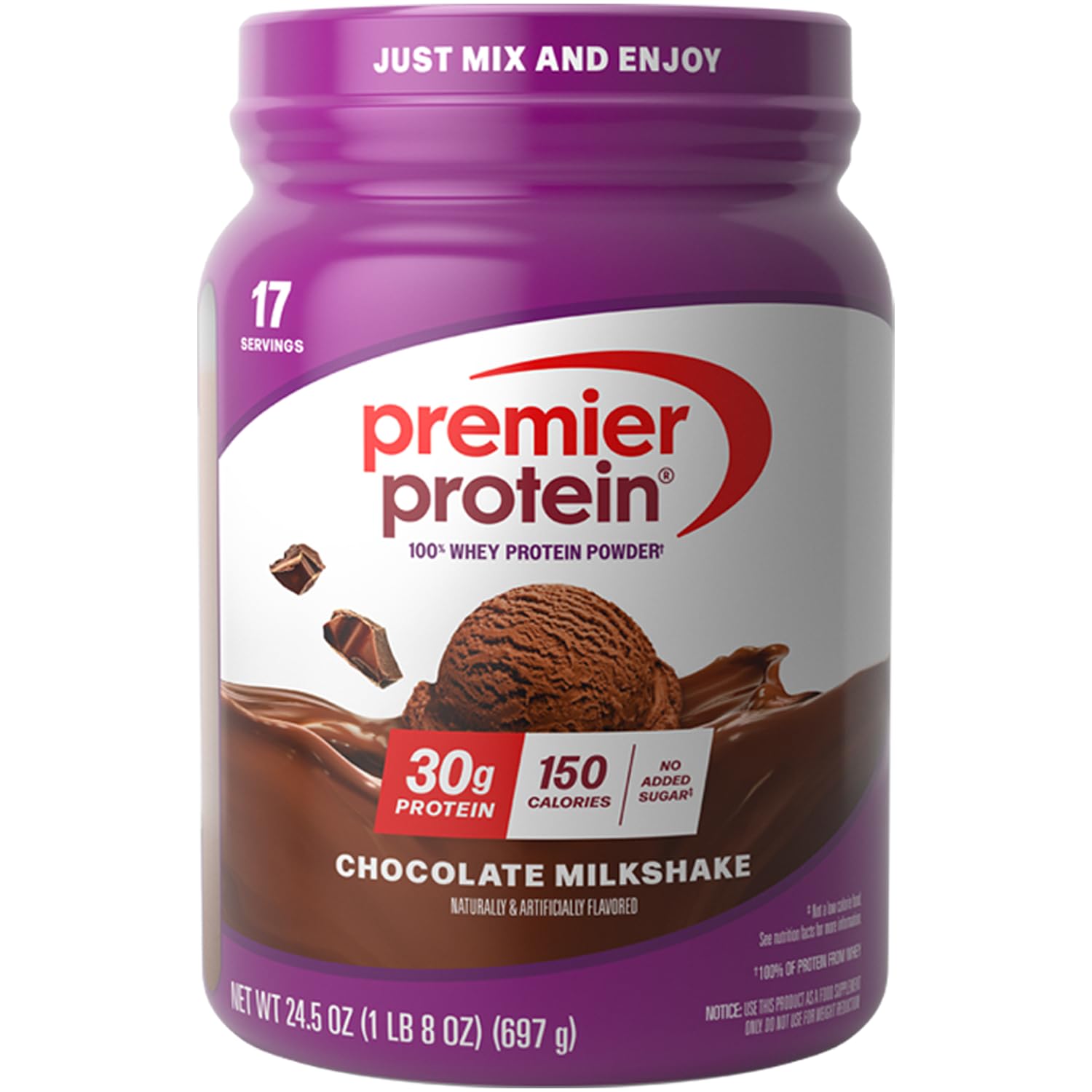
Thirty grams of protein for 150 calories and one gram of sugar is the entire argument for this one, and it is a good argument on the days when you are behind at four in the afternoon and one drink has to close the gap. No other flavored whey here packs that much into a single serving.

Get the chocolate. It is sweet, closer to chocolate milk than to dark cocoa, and it carries the 30 grams without the metallic edge that high-protein powders often get. All of the protein comes from whey with the full essential amino acid set, there is no soy in it, and it is gluten-free.

Mixing is the catch, and it is the pickiest of the flavored whey options in this group — a lazy shake leaves lumps clinging to the bottom of the cup. The tub also arrives part-full, which is normal for the size of container and not a short weight.

Bottom line: We reach for this when one drink has to cover a lot of ground: 30 grams of protein, 150 calories and a single gram of sugar.

#3

Sprout Living Pumpkin Seed Protein

Sprout Living Pumpkin Seed Protein

Gentle plant protein

Our Score 9.2/10
Check Price

Worth Noting

  • A one-pound bag at 20 grams a scoop runs out fast
  • Costs more per serving than the whey picks
Ingredients
Organic pumpkin seeds
Certification
USDA Organic
Container Size
1 lb
Protein Per Serving
0.71 oz
Read the full review

The ingredient line reads organic pumpkin seeds and stops — no sweetener, no flavor, no gum, no natural flavoring. That is why we point anyone who wants protein from food rather than from a formula at this bag: there is nothing in it to reconcile with a prenatal, and nothing in it to explain.

A scoop gives 20 grams of protein with all nine essential amino acids, which is unusual to get from a single seed, and the minerals that come with it — iron, magnesium, zinc, omega fatty acids — are in the seed rather than added back in a factory. It tastes nutty and unsweetened, so it goes into oats and soup without arguing with anything, and it turns gritty if you only stir it; blend it or give it a minute to sit. Cold-pressed and USDA Organic, it is also the simplest label here by a wide margin.

Bottom line: We point anyone who wants protein from food rather than a formula here: organic pumpkin seed and nothing else, with iron and magnesium along for the ride.

#4

Muscle Milk Genuine

Muscle Milk Genuine

High-protein days

Our Score 9.2/10
Check Price

Worth Noting

  • Adds vitamins A, C and D on top of a prenatal
  • Twelve servings per tub, two scoops a serving
Certification
NSF Certified for Sport
Sugar Per Serving
0.07 oz
Protein Per Serving
1.13 oz
Servings Per Container
12
Read the full review

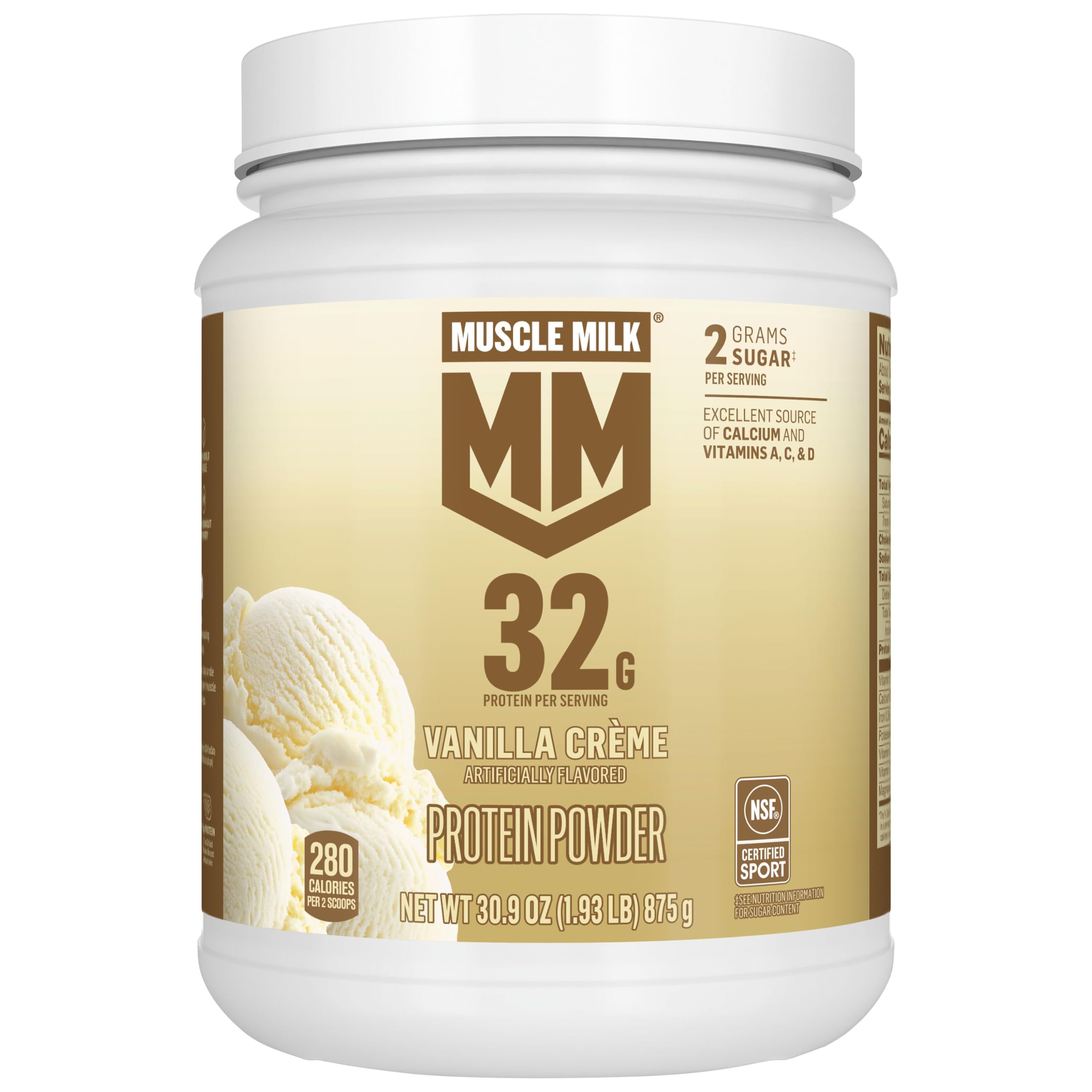
The fortified line is the first thing to look at here: calcium plus vitamins A, C and D, added on top of 32 grams of protein and 2 grams of sugar. A prenatal already covers those vitamins, and stacking a second source — vitamin A especially — is worth a sentence with your provider before this becomes a daily habit rather than an occasional rescue.

Set the vitamins aside and the numbers are strong. Thirty-two grams of protein per serving, NSF Certified for Sport, and it dissolves in water in a shaker without much drama. The vanilla is mild enough to take fruit, which is how we would use it.

Our call: this is the one for the weeks when solid food is unappealing and a single drink has to carry a lot. Keep the canister for those weeks and keep a plainer powder for the ordinary ones.

Bottom line: Our pick for the weeks when one drink has to stand in for a meal — 32 grams of protein and NSF certification, with the added vitamins to check against your prenatal first.

#5

Sunwarrior Warrior Blend

Sunwarrior Warrior Blend

Plant-based daily use

Our Score 9.0/10
Check Price

Worth Noting

  • Costs more per tub than the other plant picks
Flavor
Vanilla
Container Size
1.76 lb
Protein Source
Plant-based blend
Servings Per Container
32
Read the full review

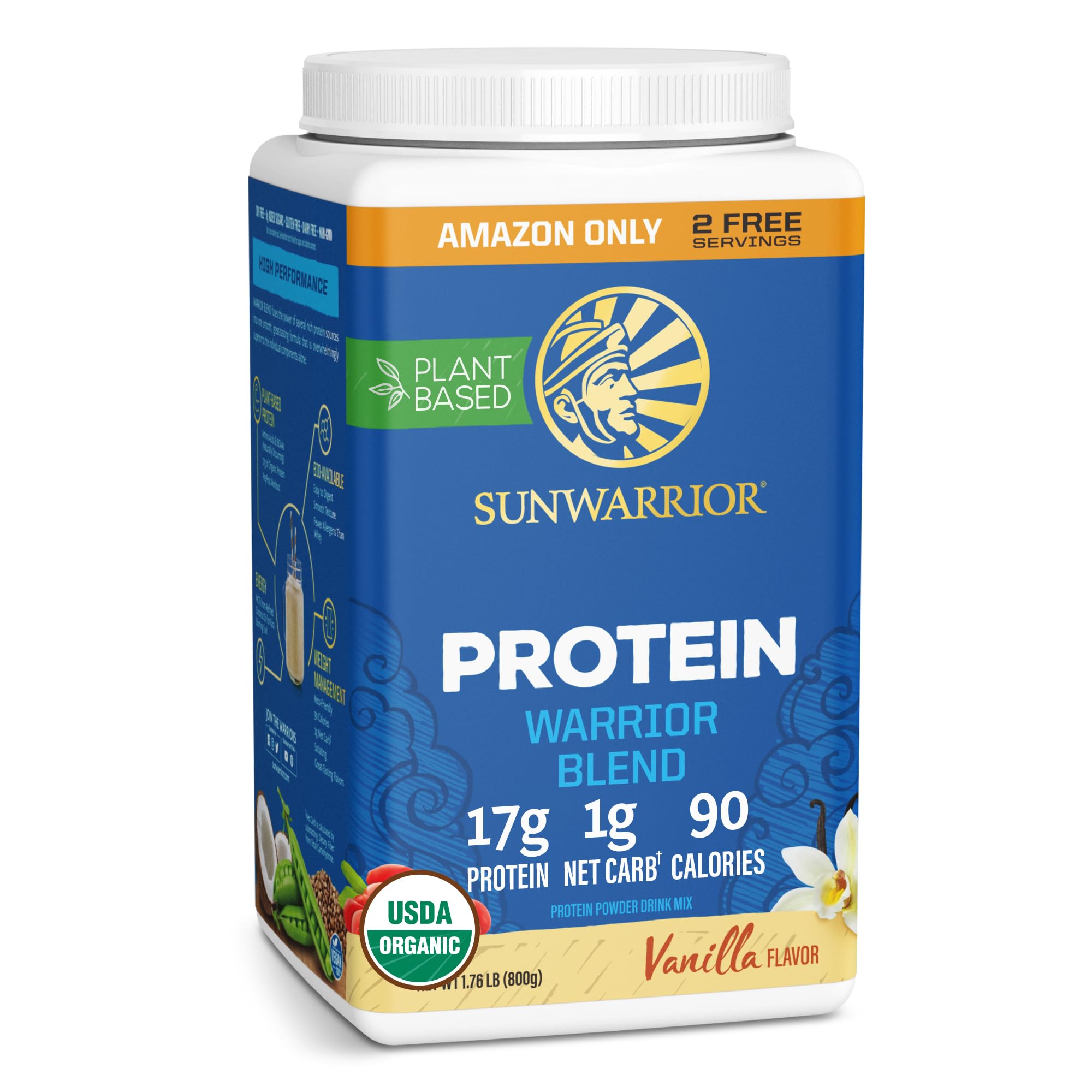
Thirty-two servings out of one tub is the highest stated count in this set, and for a plant powder that is rare enough that we checked it twice. Warrior Blend combines several plant proteins to land close to whey's amino acid profile, which is the work a plant powder has to do before it is worth a daily scoop.

It is the plant option here we hand to someone who has been burned before. In a smoothie with almond milk it blends clean and it is the plant powder in this group that sat easiest for us — no chalky film, no aftertaste that follows you to the car. It is not grit-free, because plant blends rarely are, but it is the closest of them.

The label is short and free of synthetics and fillers, so there is less to reconcile with a prenatal, and the vanilla is mild enough to disappear under fruit. Spread across 32 servings it also works out cheaper per drink than the smaller plant bags, even though the tub is the priciest of them at checkout.

Bottom line: The plant powder we hand to anyone put off by gritty vegan shakes: 32 servings, a clean label, and no chalky film left in the glass.

#6

Orgain Organic Protein

Orgain Organic Protein

Budget plant option

Our Score 9.0/10
Check Price

Worth Noting

  • Sweetener aftertaste that not every drinker tolerates
Certification
USDA Organic
Protein Source
Organic pea, brown rice, chia
Sugar Per Serving
0.04 oz
Protein Per Serving
0.74 oz
Read the full review

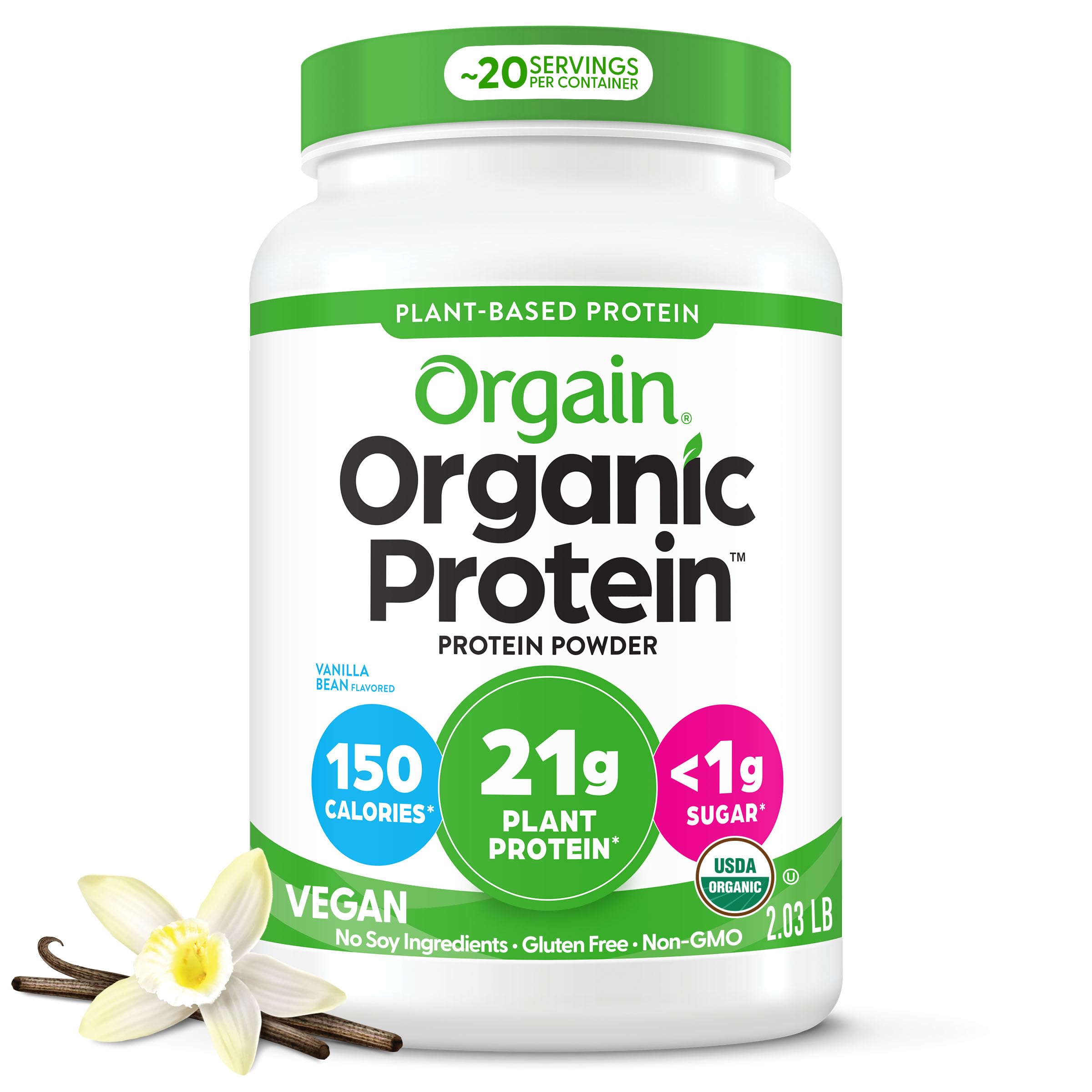
It is the cheapest route into an organic plant protein here, and the panel is the reason to consider it: organic pea, brown rice and chia for a complete amino acid profile, 21 grams of protein and a single gram of sugar, with no erythritol, no carrageenan, no soy and no dairy.

It blends — in a blender it comes out thick and creamy, and in a shaker it needs more liquid than you think. Texture is where this one splits people down the middle, and we got a smooth shake with almond milk and a slightly grainy one with water. The tub also arrives looking half empty, which is settling in a large container rather than a shortage; the net weight on the label is what you paid for.

Digestion deserves its own note, because plant protein plus chia fiber is a lot for a gut that has already been rearranged. Half a scoop for the first week is the sensible way in, and it is how we would start anyone who has not used a pea-based powder before.

Where it earns its place is the combination nobody else here offers: certified organic, dairy-free, no sugar alcohols, and the lowest tub price of the plant picks. That is not a glamorous set of reasons, but it is the set that survives a nine-month habit.

Bottom line: Our budget pick for plant-based: certified organic, dairy-free, no sugar alcohols, and a short panel — as long as you are blending it rather than stirring it.

#7

Levels Whey

Levels Whey

Clean flavored whey

Our Score 8.8/10
Check Price

Worth Noting

  • The most expensive tub in this set
  • Chocolate reads more cocoa than candy
BCAAs
0.19 oz
Sweetener
Monk fruit extract
Protein Source
Grass-fed whey concentrate
Protein Per Serving
0.85 oz
Read the full review

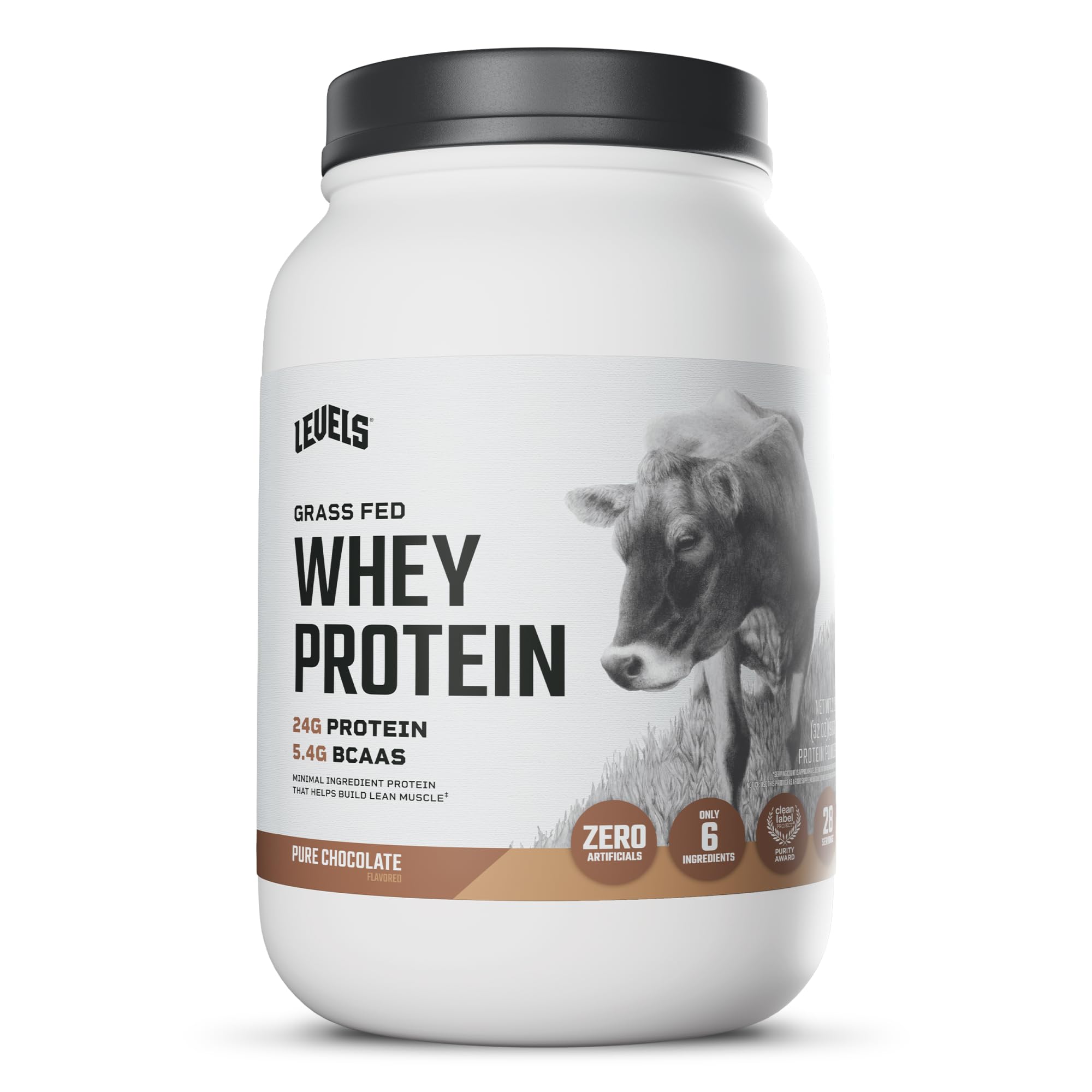
Monk fruit instead of sucralose is the reason this one made the cut. Levels sweetens its chocolate whey with monk fruit extract, flavors it with cold-pressed cacao, and builds it on grass-fed whey concentrate with no added sugar, no fillers and no artificial flavors or sweeteners. It is the shortest route here to a chocolate shake that does not read like a supplement.

It mixes readily with water or milk and comes out thin rather than creamy, which suits a shaker you are drinking on the way somewhere. A scoop carries 24 grams of protein and 5.4 grams of BCAAs. The chocolate is subtle, though, and if you want a dessert shake this is not the one.

Digestion is the split. It is a whey concentrate, the form people most often find heavy, so starting with half a scoop is the sensible way in if dairy has been unpredictable lately.

Where that leaves it: monk fruit and cocoa are doing work that sucralose and flavoring do in most tubs, and that is the whole pitch. Naked Whey gets you a shorter panel; Gold Standard gets you a better milkshake. Levels is deliberately neither, and that is a narrower place to stand than it sounds.

Bottom line: We recommend it for the specific shopper who wants a sweetened chocolate whey with nothing artificial — monk fruit, cocoa, and grass-fed concentrate.

#8

Naked Whey

Naked Whey

Everyday clean scoop

Our Score 8.6/10
Check Price

Worth Noting

  • Costs more per serving than most of this set
  • Unsweetened, so it will not satisfy a sweet craving
Ingredients
Grass-fed whey, one ingredient
Certification
NSF Certified
Protein Per Serving
0.88 oz
Servings Per Container
15
Read the full review

The ingredient list on the Naked Whey bag is one word long: whey. Grass-fed, cold-processed, and with no sweetener, no flavoring, no gums and no vitamin premix riding along. For anyone who has spent a prenatal appointment going through labels, that is the whole appeal — there is nothing here to hold up and ask about, because there is nothing here.

A scoop carries 25 grams of protein, 2 grams of sugar, 3 grams of carbs and 5.9 grams of BCAAs, and the bag is NSF Certified, which means an outside body screened the batch rather than the seller certifying itself. That combination is why this is the one we keep on the counter for nine months: the protein number holds up against everything else here, and the panel is the shortest.

What you accept is texture. Straight from a shaker it foams and leaves lumps, so plan on a blender — the same one you are probably already using for smoothies, oats and soup, where an unflavored powder disappears without changing the taste of anything. Because it tastes of almost nothing, it is also the bag we reach for on the weeks when aversions shift, since there is no flavor to go off.

Bottom line: If ingredient-list anxiety is why you are reading this, we point you here: one ingredient, NSF-certified, and nothing to cross-check against your prenatal label.

How We Tested the Best Protein Powders for Pregnancy

We built the shortlist from the labels themselves. Anything with a proprietary blend, added herbal ingredients, caffeine, or a sugar alcohol sitting near the top of the ingredient list came off the table, and we gave preference to powders with third-party testing and a clearly stated protein-per-scoop number. That filtering left us with 12 containers, which we used for five months.

Testing happened where the powder actually lives: a rushed shaker cup before a 7 a.m. commute, that 3 p.m. window when nausea tends to hit, and stirred into oatmeal on slower weekend mornings. Each tester logged how the powder smelled, whether 20 seconds of shaking dissolved it or left a gritty film on the cup, and whether the sweetness read as clean or left a stevia aftertaste that hung around. We made every one in both water and milk, since texture shifts between the two, and noted which ones thickened into something closer to pudding than a drink.

Stomach sensitivity got its own column. Testers recorded how they felt 30 to 60 minutes after drinking a scoop and whether it sat heavy or settled fine, which told us more about digestibility than any claim on the label. We counted the real scoops in each tub to see if the stated serving count held up, priced every powder per 20 grams of protein, and tracked whether it kept us full until the next meal — the effectiveness question, in practice. Powders that only worked in a blender, or that needed half a banana to be drinkable, lost ground.

How to Choose a Protein Powder for Pregnancy

Read the ingredient panel before the protein number

Supplements do not work like drugs — powders reach shelves without a pre-market safety review, which leaves the panel and any third-party mark as the only outside checks you get. NSF Certified for Sport, which Naked Whey and Muscle Milk both carry, means a certifier screened the batch; USDA Organic, which Orgain and Sprout Living carry, verifies how the ingredients were grown.

Our rule is blunt: if the panel lists an energy blend, an herb you do not recognize, or a vitamin premix you cannot total against your prenatal, put it back and take one of the simpler tubs.

Decide whey or plant by what your gut is doing

Whey is a complete protein and mixes thinner; concentrates carry more lactose, while isolates are filtered harder. Plant powders reach complete protein either by combining sources, as Orgain does with pea, brown rice and chia, or by leaning on one seed, the way Sprout Living uses pumpkin.

If dairy has started sitting badly, do not find that out with a two-pound tub. Start with half a scoop of a plant pick and give it a week before you judge it.

Check what has been added on top of the protein

Fortification sounds like a bonus and behaves like a second supplement. A prenatal already covers vitamins A, C and D, and Muscle Milk adds all three — worth comparing line by line with your prenatal label rather than assuming more is better. Fat-soluble vitamins are the ones to watch, because they accumulate rather than flush.

Bring both labels to an appointment if you are unsure. It is a two-minute question with an answer you can act on for the rest of the pregnancy.

Pick a sweetener and flavor you can live with for months

Flavored, sweetened powders are easier to drink in theory and harder in a week when your taste turns. Monk fruit, which Levels uses, lands differently for different people than the sweetener in a mainstream chocolate whey, and an unflavored powder sidesteps the question by going into food instead of a glass.

Buy the smallest tub on offer first. A one-pound bag or a twelve-serving canister is enough to find out whether you can face the stuff daily, and it costs you the least to be wrong.

Do the per-serving math, not the tub math

A low-priced tub can cost more per gram than an expensive one with more servings. Sunwarrior's 32 servings goes further per dollar than the smaller plant bags even though it costs more at checkout, and Muscle Milk's twelve-serving canister is the shortest run here.

Divide the tub by its servings, then check the scoop size — a 20-gram scoop used twice a day is a different purchase from a 32-gram one used once.

Frequently Asked Questions

Final Verdict

If you want one answer, it is Naked Whey: a single ingredient, NSF certification, 25 grams of protein a scoop, and nothing on the panel to reconcile with your prenatal. What you give up is convenience, because it needs a blender, and money per serving.

Keep Gold Standard on hand for the mornings when only a chocolate shake stays down, and choose Sunwarrior if you want an organic plant blend that mixes clean and sits easily. Orgain is the budget route into organic and dairy-free, as long as you plan to blend it rather than stir it.