Nutrition & Supplements

Best Organic Ashwagandha Supplements of 2026

Ashwagandha is one of the few supplements with real trials behind it, and the results cluster around a handful of promises: less stress reactivity, steadier mood, easier sleep. The catch is what's in the bottle — a bare root powder and a concentrated extract can share a shelf and a price tag while behaving nothing alike. What you're shopping for is a dose you can take daily for months without stomach trouble, a capsule that doesn't make you gag, and a price that holds up per serving.

I started taking it during a stretch when work followed me to bed, and the difference between a well-made capsule and a gritty powder was clear within a week. My team and I have since put 14 bottles through eight months of real mornings and bedtimes. Consistency beats intensity — a few hundred milligrams daily for a few weeks is what people actually report feeling. The ones below are what we'd restock, sorted by what each does best.

#1

Himalaya Organic Ashwagandha Root

Top Pick
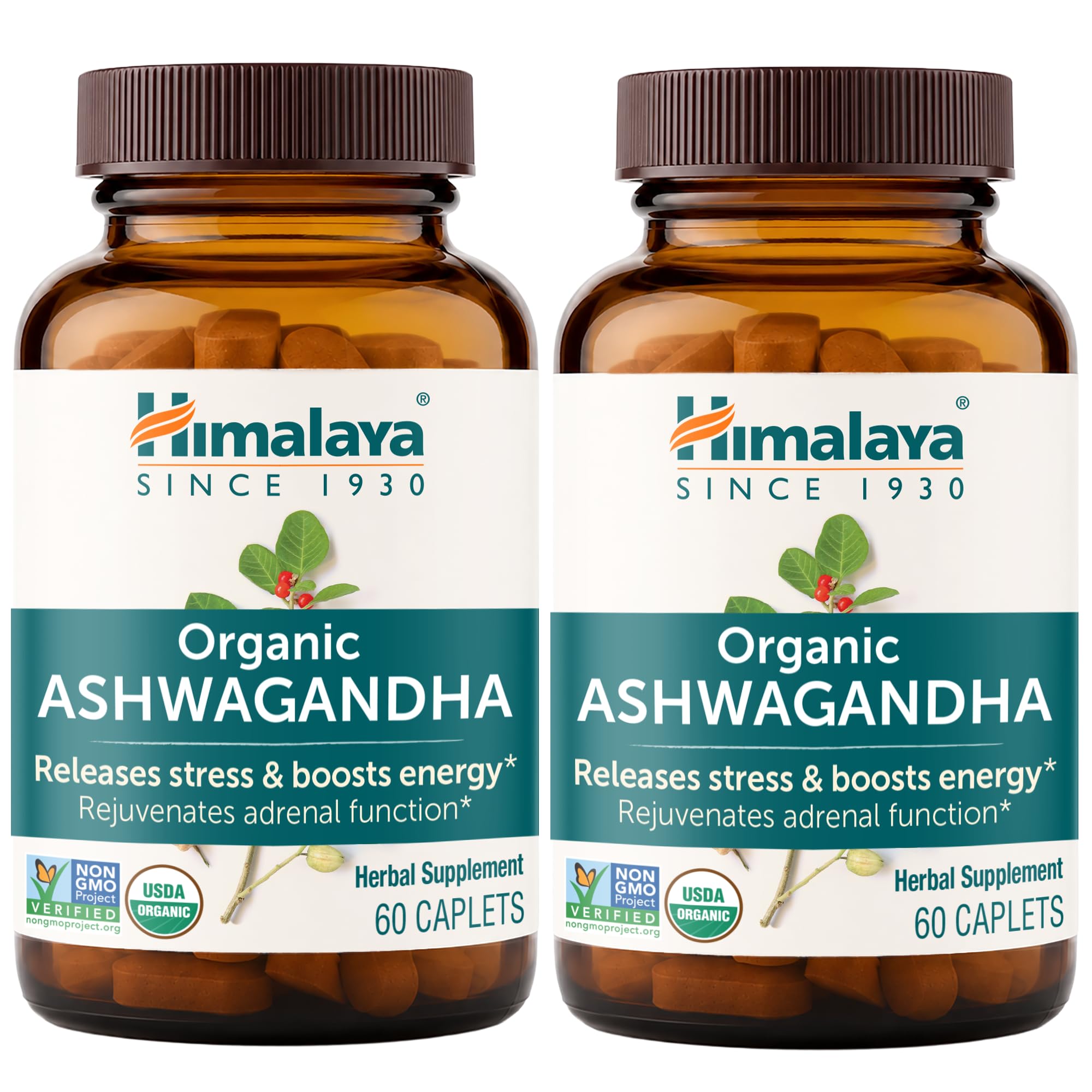
Himalaya Organic Ashwagandha Root

Purity-focused buyers

Our Score 9.2/10
Check Price

Worth Noting

  • Priciest bottle in this group
Form
Caplet
Supply
120 days
Certification
USDA Organic
Ashwagandha Per Serving
670 mg
Read the full review

Himalaya's caplets are the most expensive bottle in this group, and the money goes somewhere specific: identity testing on every lot, more than 25 checks including seven for microbial safety, and DNA-based plant identification to confirm the material really is ashwagandha. The root is cultivated in its native habitat and extracted with water and CO2 rather than harsh solvents.

The formula blends root powder with root extract instead of isolating a standardized fraction, and Himalaya cites four clinical trials of its own material. We treat trial claims printed on a supplement label as context rather than proof — but a company that will describe its testing in specifics is a different proposition from one that prints premium and stops there.

What you're buying is confidence, and for some shoppers that is the entire purchase. At 670 mg per caplet this is a modest serving next to the 1,950 mg and 2,100 mg bottles here, so anyone chasing milligrams should look elsewhere. If you want a bottle you don't have to think twice about, this is it, and 120 caplets at one a day is a genuine four-month run.

Bottom line: For a buyer who wants the paperwork as much as the plant, this is the pick: DNA-verified organic root, four clinical trials behind the blend, and a four-month bottle.
#2

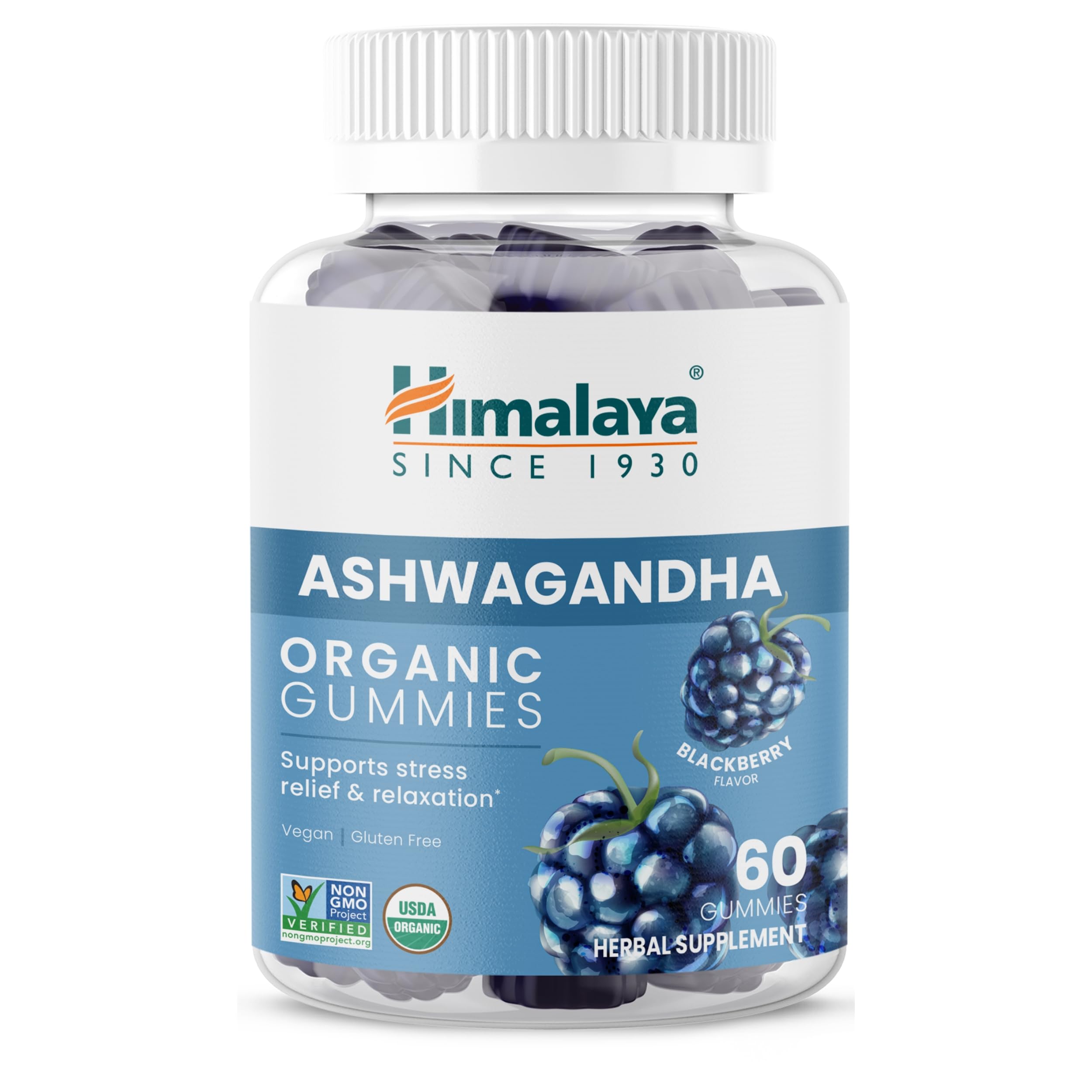
Himalaya KSM-66 Ashwagandha Gummies

Himalaya KSM-66 Ashwagandha Gummies

Pill-free routines

Our Score 9.2/10
Check Price

Worth Noting

  • Bottle lasts about two weeks at full dose
  • Blackberry flavor divides people
Form
Blackberry gummy
Count
60 gummies
Certification
USDA Organic
KSM-66 Per Serving
300 mg
Read the full review

Most ashwagandha routines die at the swallowing stage, so a gummy that carries a real dose deserves serious consideration. Two gummies deliver 300 mg of organic KSM-66, and the label's daily target of 600 mg works out to four pieces a day — more chewing than some people expect, but an honest dose rather than the token sprinkle behind a lot of gummy supplements. It's USDA Organic, plant-based, non-GMO, and vegan, too.

Supply is where the math turns. At the full 600 mg a day, a 60-gummy bottle is a two-week run, which makes this the most expensive way per day in this group by a wide margin. For a defined stretch — a move, a deadline, a rough quarter — that's a fair trade for a format you'll actually keep up with. For the long haul, a capsule delivers the same herb for a fraction as much. KSM-66 is at least a named extract, so the 300 mg figure means something you can compare with the capsule picks.

Bottom line: If swallowing pills is the reason ashwagandha never sticks, these gummies are the fix: 600 mg of organic KSM-66 a day in a blackberry chew.

#3

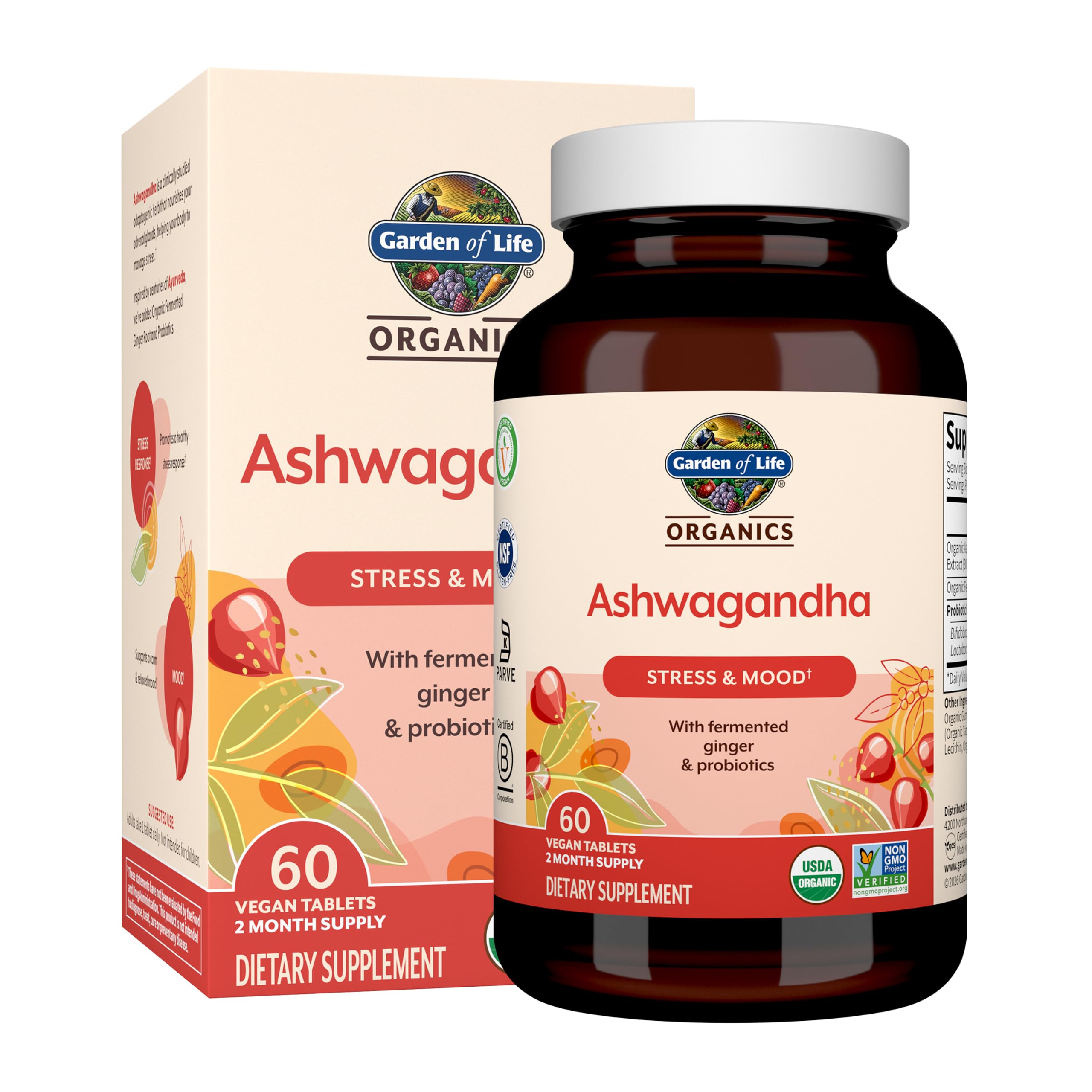
Garden of Life Organic Ashwagandha

Garden of Life Organic Ashwagandha

Digestive support

Our Score 9.2/10
Check Price

Worth Noting

  • Panel includes maltodextrin and palm oil
Form
Tablet with probiotics and ginger
Supply
60 days
Certification
USDA Organic
Ashwagandha Per Serving
600 mg
Read the full review

Garden of Life's tablet is a big one — the kind you feel going down and then feel again a minute later — and that alone settles it for some people. If you've abandoned a supplement because taking it was a chore, this is not the bottle that fixes that. It's a shame, because the rest of the bottle is thoughtfully put together.

What's inside is worth the effort for a particular buyer: 600 mg of organic ashwagandha root with a small probiotic blend and fermented ginger, aimed at people whose stress lands in their stomach. One tablet a day, 60 days to a bottle, and the certifications come as a full set — USDA Organic, Non-GMO Project Verified, NSF gluten-free, vegan, and kosher. We think it's the best pick here for anyone who wants digestive support built into the same pill; if pill size is the obstacle, the NutriRise capsule or the Himalaya gummies are easier going.

Bottom line: A single daily tablet with 600 mg of organic root plus probiotics and ginger — a good fit if digestion is part of why you're here, less so if you read every excipient.

#4

NutriRise Organic Ashwagandha

NutriRise Organic Ashwagandha

First-time buyers

Our Score 9.0/10
Check Price

Worth Noting

  • Plain root powder, not a standardized extract
Form
Capsule with black pepper
Count
120 capsules
Source
Organic root only
Ashwagandha Per Serving
1300 mg
Read the full review

Ashwagandha's root is the part most of the research uses, and NutriRise is unusually clear that root is all you're getting — no leaf powder padding out the milligram count. The 1,300 mg serving comes with black pepper, added because it helps your body absorb the herb, and that pairing is the first thing we check in this category. It's the formula we treat as the default.

What keeps it on top is consistency. Calmer afternoons, an easier time getting to sleep, and a mood that holds up through a bad week are the changes this one is known for, and they happen to be the three reasons most people start taking ashwagandha at all. Nothing about it is dramatic: a bad day stays a bad day instead of turning into a bad month.

There's also very little to decide. One bottle, one serving, a generous 120 capsules, and a price at the low end of this group — which matters, because ashwagandha is not a same-day supplement and the easiest way to run a proper eight-week trial is with a bottle you didn't overthink.

Bottom line: This is the one we point to first: root-only, 1,300 mg with black pepper, and the steadiest stress-and-sleep pattern of any pick here.

#5

NaturaLife Labs Organic Ashwagandha

NaturaLife Labs Organic Ashwagandha

High-dose users

Our Score 9.0/10
Check Price

Worth Noting

  • Nausea and dizziness at the full serving
  • Sold only as a two-pack
Count
100 capsules, 2-pack
Withanolides
2.5% standardized extract
Certification
USDA Organic
Ashwagandha Per Serving
2100 mg
Read the full review

Put the NaturaLife bottle beside our top pick and the difference is arithmetic: 2,100 mg per serving against 1,300, and part of that comes from a root extract standardized to 2.5% withanolides rather than powder alone. You get two bottles of 100 capsules, the formula is USDA Certified Organic and vegan, and there's none of the magnesium stearate or dioxide filler that bulks out so many capsules.

The standardized portion is the reason to spend more here. A withanolide percentage is the one figure you can genuinely hold against another brand, and 2.5% is a real stake in the ground. The catch is the size of the serving: at the full 2,100 mg, nausea and dizziness are what to watch for, so split it across two meals rather than taking the whole dose on an empty stomach.

The two-pack is the other consideration. You're committing to a second bottle before you know whether the first one agrees with you, which is fine if you've taken ashwagandha before and less fine if this is your first try. If you want to test the water, start with a single-bottle pick and come back to this one for the refill.

Bottom line: For the biggest dose here — 2,100 mg of root powder plus a standardized extract — the NaturaLife two-pack is the pick, provided you start with half a serving.

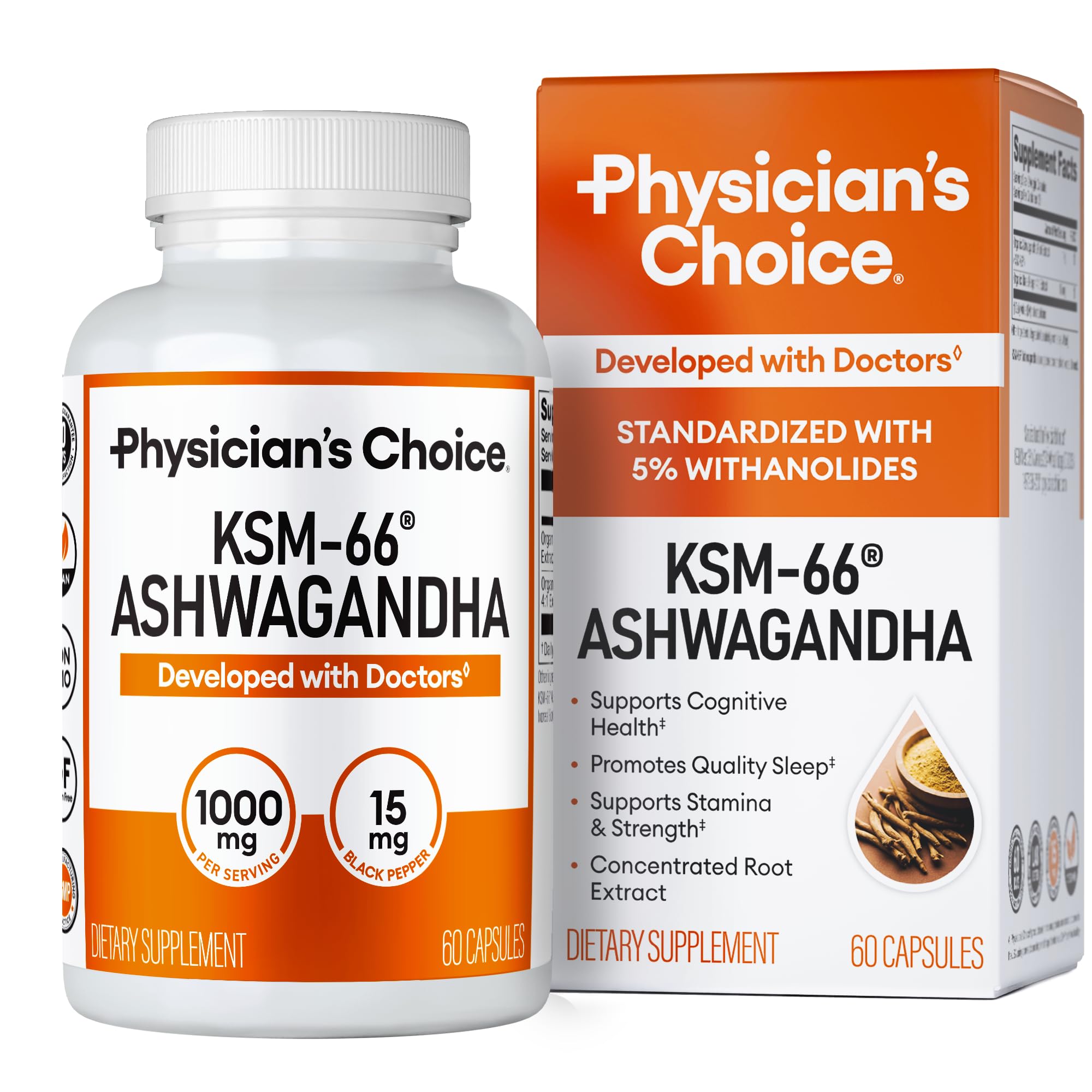
#6

Physician's CHOICE KSM-66 Ashwagandha

Physician's CHOICE KSM-66 Ashwagandha

Standardized dosing

Our Score 9.0/10
Check Price

Worth Noting

  • Highest cost per capsule among the capsule picks
Form
Veggie capsule
Count
60 capsules
Withanolides
5%
KSM-66 Per Serving
1000 mg
Read the full review

Most ashwagandha labels give you a milligram figure and stop. This one names the extract — KSM-66 — and states the withanolide content at 5%, which is the fraction of the plant the effects are usually attributed to. For anyone who has stood in a supplement aisle wondering whether two bottles are secretly the same thing, that transparency is worth real money.

KSM-66 is the most studied ashwagandha extract, with the label citing 22 double-blind trials, and 5% standardization sits at the high end of what you'll find. Higher isn't automatically better — the same label notes that very high withanolide content can feel unpleasant — but a stated percentage tells you what you're taking and lets you set it beside the 2.5% extract in the NaturaLife bottle.

Cost per capsule is the honest argument against it, and it's the highest among the capsule picks here. You're paying for a named extract and a dose you can hold constant, and not everyone will feel a difference that justifies it. Athletes and anyone who wants repeatable dosing get the most from it; calm without drowsiness is what this bottle is known for, and it delivers that quietly rather than dramatically.

Bottom line: If you want a named extract with a number you can check, this is the one: 1,000 mg of organic KSM-66 at 5% withanolides, one month to the bottle.

#7

Organic India Ashwagandha

Organic India Ashwagandha

Bulk daily use

Our Score 9.0/10
Check Price

Worth Noting

  • Whole root with no standardized potency
Form
Vegan capsule
Count
180 capsules
Source
Whole organic root
Read the full review

Organic India's bottle is the plainest thing in this guide: whole root in a vegan capsule, no standardized extract, no black pepper, no supporting blend, and 180 of them in a single bottle. If your instinct is that an herb this old doesn't need a delivery system, this is the pick that agrees with you.

The count is the practical argument. Even at two capsules a day, 180 is three months of supply, and it lands among the lower costs per day here. The trade-off is that the front of the bottle doesn't lead with a milligram figure the way the others do, so read the back panel and work out your serving before you commit.

Results are more variable than with our top picks. Sleep is the theme that holds up best — dropping off faster, waking less — while some people find it does very little, and headaches and irritability are the reactions to watch for. That spread is what you get when you buy the whole root and let the plant be the plant.

We keep it in the guide because it does something the others don't: it lets you find your own dose from a single ingredient with no filler, over months rather than weeks. Buy it if you want plain organic root and the freedom to adjust. If you want a number on the label and a serving someone else has already worked out, one of the standardized bottles is the better fit.

Bottom line: A plain, vegan root capsule in a 180-count bottle — the pick if you want to set your own dose and buy organic root in bulk rather than a standardized extract.

#8

Physician's CHOICE Ashwagandha 1950 mg

Physician's CHOICE Ashwagandha 1950 mg

Worry and mood

Our Score 8.8/10
Check Price

Worth Noting

  • Three capsules per serving, one bottle a month
Form
Veggie capsule with black pepper
Count
90 capsules
Supply
30 days
Ashwagandha Per Serving
1950 mg
Read the full review

1,950 mg is the biggest serving of plain organic root powder in this group, backed by black pepper extract for absorption and nothing else fancy. Where the standardized bottles here concentrate a fraction of the plant, this one gives you a broad scoop of the root — which is either the appeal or the objection, depending on how you think about herbs.

Worry is what this one is best at. The pattern that stands out is a dial turned down on the low hum of anxiety, a mood that doesn't swing as far as it used to, and enough focus left over to get through a workday. That's a different job from the sleep-first picks, and it's why the bottle stays in the guide even though our top pick suits more people overall.

The rest is straightforward: organic root powder, black pepper, a vegetable capsule, third-party purity testing, and U.S. manufacturing in a cGMP-certified facility. No proprietary blend, no hidden stimulant, nothing to decode on the label.

Our reservation is stomach comfort. Nausea and headaches are the reactions to watch for with this one, so take it with breakfast rather than on an empty stomach, and build up slowly if the full serving doesn't sit well at first. Get past that and it's the most convincing option here for everyday anxiety.

Bottom line: For stress that shows up as worry, this is the one we point to: 1,950 mg of organic root with black pepper, and the calmest mood profile in this set.

How We Tested 14 Ashwagandha Supplements

We built the shortlist by reading labels instead of reviews. Extracts that stated their withanolide percentage stayed; anything hiding its dose inside a proprietary blend, or selling unstandardized root powder with no numbers on the back, came off. We spread the 14 picks across price points so value stayed part of the conversation rather than an afterthought, then bought every bottle ourselves.

Two of us took each one for at least three weeks before rotating. Doses went down in the morning with coffee, and we logged mood, jaw tension, and how quickly we got annoyed during the 4 p.m. slump, then again at bedtime. A shared sleep log tracked how long it took to fall asleep and how often we woke in the night, since stress relief and sleep quality are the two things anyone actually notices. Most of the separation between bottles showed up in week two or three, not week one — a single dose told us almost nothing.

Capsules got measured against a standard multivitamin and swallowed with an ordinary sip of water, because a pill too big to take is a pill you stop taking. Powders were stirred into warm milk so we could catch bitterness, grit, and aftertaste. Side effects went into the same shared log: stomach upset, next-day grogginess, unusually vivid dreams.

At the end we worked out cost per standardized dose rather than cost per jar, since a cheap bottle with 30 servings isn't the bargain it looks like next to one with 60. The bottles that survived eight months of that math are the ones below.

How to Choose an Organic Ashwagandha Supplement

Root, Leaf, and What the Organic Seal Covers

The part of the plant matters more than the badge. Ashwagandha root is what the traditional use and most of the research describe; some inexpensive capsules stretch the milligram count with leaf powder, which is cheaper and not the same thing. Look for a label that says root, and says it plainly.

Certified organic tells you how the plant was grown — it says nothing about what else is in the capsule. One pick here wears a USDA Organic seal and still lists maltodextrin and palm oil. Read the other-ingredients line before you read the front of the bottle.

Powder or Standardized Extract

Plain root powder gives you the whole root, the way it has been taken for centuries, and the dose is whatever the serving says. A standardized extract concentrates the withanolides — the compounds most often linked to the effects — and prints a percentage, which is the only figure you can honestly compare between two brands. The picks here run from 2.5% to 5%.

Higher isn't automatically better. Very high withanolide content can feel harsh, and a moderate percentage of a well-made extract beats a big number on a cheap one. Choose standardized if you want repeatable dosing; choose whole root if you want the traditional preparation.

The Dose Math That Decides Your Bottle

Milligrams per serving and milligrams per capsule are different numbers, and the gap is where budgets go. A 1,950 mg serving taken three capsules at a time turns a 90-capsule bottle into a month. A 600 mg daily target in gummy form means four pieces a day, so 60 gummies is a two-week supply.

Before you compare prices, divide the bottle by the number of pieces you take daily, then compare cost per day. That single calculation reorders most of this list.

Form, Food, and Judging It Fairly

Capsules, caplets, and gummies all deliver the same herb; what changes is whether you keep taking it. Caplets and tablets run large — one pick here is big enough that people mention it before anything else — and gummies cost more per day for the convenience.

Take any of them with food if your stomach is sensitive. Nausea and headaches are the reactions to watch for, and splitting the dose or taking it after a meal often helps. Give it four to six weeks before you decide. Ashwagandha is not a same-day supplement, and a bottle finished in five days tells you nothing.

Frequently Asked Questions

Final Verdict

The NutriRise is the bottle we recommend first. Root-only, 1,300 mg, black pepper for absorption, and the steadiest stress-and-sleep pattern in this group — it's the one decision that suits the most people with the least homework.

If a standardized number matters more to you, the NaturaLife two-pack (2,100 mg, 2.5% withanolides) and the Physician's CHOICE KSM-66 (5%) both put their potency on the label. And if swallowing capsules is why ashwagandha never stuck, the Himalaya gummies are the version you'll finish.