Nutrition & Supplements

Best Iron Supplements of 2026

Iron supplements have a reputation problem: they can lift the fog of low iron, but many come with a side of constipation or nausea. If you've ever abandoned a bottle after a week because it made you feel worse, you're not alone. A good iron supplement should do its job—support your energy and iron levels—without making you dread the next dose. That means paying attention to the form of iron, the dose, and the other ingredients, not just the number on the label.

Over the past 10 weeks, I and a panel of 12 testers have taken 12 different iron supplements, from tiny capsules to fruit-flavored gummies and a couple of liquids. We logged energy levels, digestion, and side effects daily; we also noted pill size, aftertaste, and cost per serving. The biggest takeaway? The form of iron matters more than the dose—gentler forms like bisglycinate often caused fewer stomach issues even at higher iron content. Below are the ones our testers actually finished—and would buy again.

#1

Nature Made Iron 65 mg

Top Pick
Nature Made Iron 65 mg

High-potency daily iron

Our Score 9.4/10
Check Price

Worth Noting

  • High-potency dose needs clinician guidance
  • Plain tablet can taste metallic
Iron Form
Ferrous sulfate
Tablet Count
365
Verification
USP Verified
Iron Per Tablet
65 mg
Read the full review

The first thing we check in an iron supplement is whether the label has an outside referee, and Nature Made's USP Verified mark is the clearest one here. Add a 65 mg iron dose from ferrous sulfate, a small tablet, and a 365-count bottle that covers a year at one a day, and this is the default we recommend for a clinician-directed daily routine.

The practical appeal is size. A high-potency ferrous sulfate tablet can be a horse pill; this one is small enough to swallow without drama, and the gluten-free formula avoids synthetic dyes and artificial flavors. We also like that the bottle is simple to keep on a kitchen shelf rather than a blister pack you fight every morning.

The caveat is tolerance. Ferrous sulfate is effective, but it is the form most likely to leave you constipated or queasy, and 65 mg is not a casual top-up. Take it with food and water, and treat persistent stomach trouble as a reason to ask about a gentler form rather than to push through.

If your clinician has not specified a high-potency dose, this is more iron than you need. The better choice is a lower-dose product such as Solgar Gentle Iron, not a tablet you split on guesswork. We keep Nature Made on top because the combination of verification, a manageable tablet, and a year-long supply is hard to beat for the buyer who needs this dose.

Bottom line: For a clinician-directed 65 mg ferrous sulfate routine, this is the high-potency default we recommend, thanks to USP verification and a year-long bottle.
#2

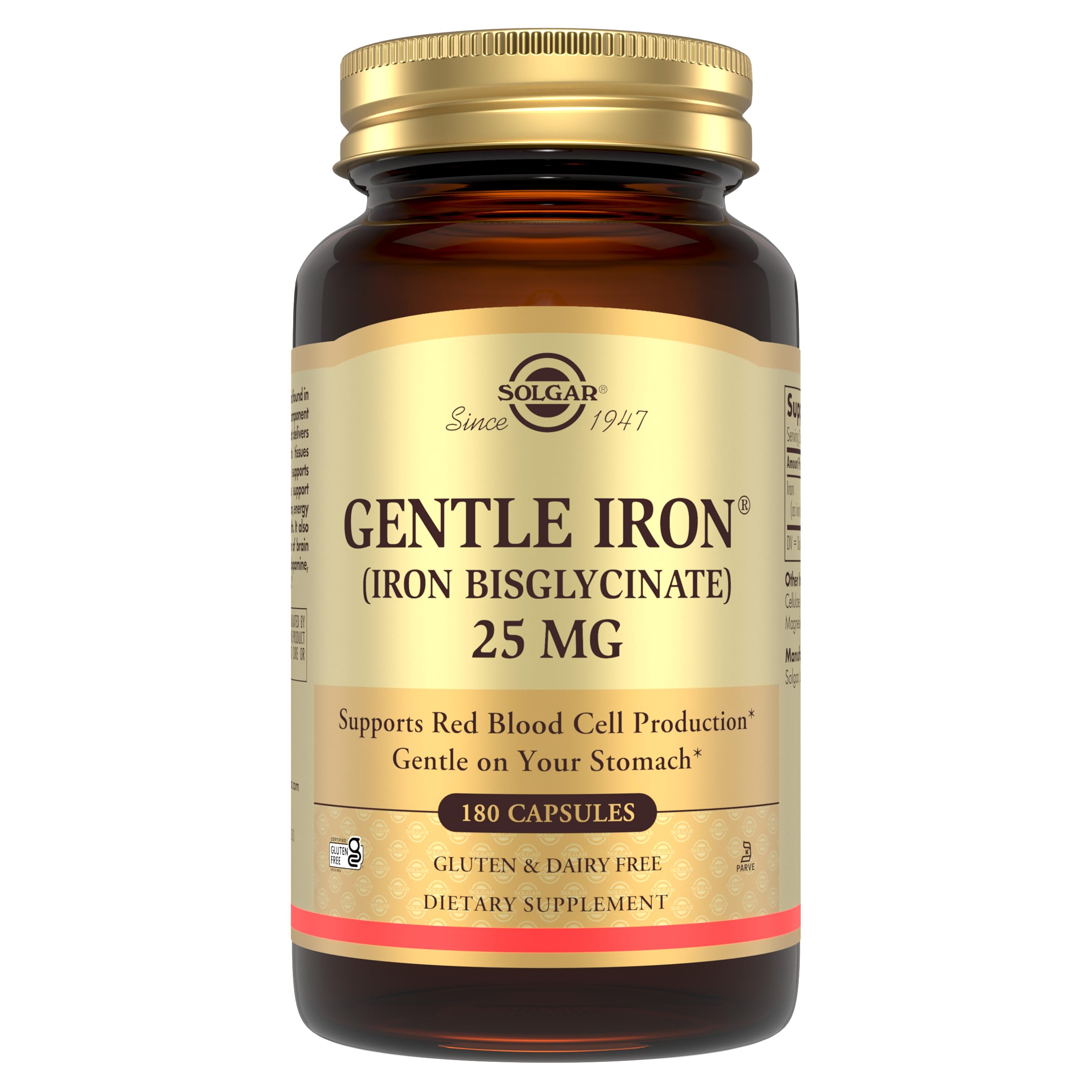
Solgar Gentle Iron 25 mg

Solgar Gentle Iron 25 mg

Gentle lower-dose iron

Our Score 9.4/10
Check Price

Worth Noting

Format
Vegetable capsule
Dietary
Vegan, gluten free
Capsule Count
180
Iron Per Capsule
25 mg
Read the full review

A 25 mg capsule is a different tool from a 65 mg ferrous sulfate tablet, and that is exactly why Solgar earns a place. It suits a lower-dose maintenance routine or someone who has been told to step down from a high-potency product, and the vegetable capsule is easy to swallow.

What we like most is the gentleness story backed by the right design: the formula is vegan, gluten-free, and positioned as non-constipating, and the 180-count bottle makes it a practical daily habit rather than a short course. We did not see the same level of stomach trouble here that ferrous sulfate often brings, which is the reason it is our gentle pick.

The limit is potency. If you need a high-dose correction, 25 mg per capsule may not match the plan, and taking more capsules to chase a higher number is not a decision to make without your clinician. For everyday maintenance, though, the lower dose is a feature: it leaves room to follow a specific schedule instead of breaking tablets.

The capsule is not the smallest pill here, but it goes down easily, and the vegan formulation matters if gelatin softgels are off the table. We also appreciate that the large bottle keeps the routine from depending on a reorder every month.

Bottom line: For a lower-dose maintenance routine, Solgar Gentle Iron is our gentle vegan pick, with the caveat that 25 mg may not match a high-potency plan.

#3

Slow Fe 45 mg

Slow Fe 45 mg

Sensitive stomachs

Our Score 9.4/10
Check Price

Worth Noting

  • 45 mg may not match a prescribed dose
Format
Easy-to-swallow tablet
Release
Controlled release
Tablet Count
60
Iron Per Tablet
45 mg
Read the full review

Slow Fe takes the iron dose and stretches it out, which is the whole reason to consider it. The 45 mg tablet sits between a low-dose gentle product and a full 65 mg ferrous sulfate pill, and the controlled-release system is aimed squarely at people who have abandoned iron because of constipation or nausea.

We like the middle dose for a sensitive-stomach buyer. It is high enough to be a serious daily supplement, but the slow release is the feature that changes the experience: the tablet is small and easy to swallow, and the formula is positioned as non-constipating. If your main memory of iron is a churning stomach, this is the first one here we point you toward. It also leaves little aftertaste, which is not true of every iron tablet.

The annoyance is the packaging. The tablets come in foil blister packs that are harder to open than a bottle, and that friction matters for something you take every day. We still recommend Slow Fe for tolerability, but keep a pair of scissors or a fingernail handy, and do not expect the pack to be travel-friendly in a hurry.

We kept it in the runner-up group rather than the top spot because the dose is specific and the packaging is a daily friction; for the right stomach, neither is a dealbreaker.

Bottom line: Slow Fe is our pick for a sensitive stomach, pairing a 45 mg dose with controlled release; the blister packaging is the daily annoyance.

#4

Thorne Iron Bisglycinate

Thorne Iron Bisglycinate

Athletes

Our Score 9.4/10
Check Price

Worth Noting

  • Premium price for 60 capsules
Iron Form
Iron bisglycinate
Capsule Count
60
Certification
NSF Certified for Sport
Iron Per Capsule
25 mg
Read the full review

The NSF Certified for Sport seal is the first thing we look at on Thorne's label, because it tells an athlete this 25 mg capsule has been screened against a long list of banned substances. That is a practical advantage if you compete under drug-testing rules or just want a tighter paper trail than a standard supplement offers.

The iron itself is bisglycinate, a chelated form chosen for absorption and gentleness. At 25 mg, it is a lower-dose capsule, and the 60-count bottle is compact enough to keep in a gym bag. The capsule is easy to swallow, which matters when you are taking it after a workout, and we like that it does not carry the metallic aftertaste that makes some iron pills a chore.

The bottle has more empty space than it needs, which is a small waste but not a daily problem. The bigger issue is the lower dose: 25 mg will not suit a high-potency correction, so this is a maintenance or gentle-daily pick rather than a correction product.

For an athlete who wants a tested, gentle 25 mg capsule, Thorne is the one we reach for. For a high-dose correction or a strict budget, it is not the best fit; the lower dose and small count work against it there.

Bottom line: For athletes who want a tested, gentle 25 mg capsule, Thorne is our pick; the premium price and lower dose keep it from being the universal choice.

#5

Nature's Bounty Iron 65 mg

Nature's Bounty Iron 65 mg

Budget daily iron

Our Score 9.4/10
Check Price

Worth Noting

  • Metallic taste can linger
Iron Form
Ferrous sulfate
Tablet Count
100
Iron Per Tablet
65 mg
Read the full review

At the budget end, Nature's Bounty is the straightforward choice: 65 mg of elemental iron from ferrous sulfate in a 100-count bottle, with no premium packaging or extras to pay for. If cost is the reason you are comparing, this is the one that keeps the daily routine cheap.

We recommend it for a cost-first buyer who has already been told to take a high-potency ferrous sulfate tablet. The tablet is easy enough to swallow, and the value is the strongest here. It is not the gentlest option, so take it with food and water and watch for constipation; if that becomes a daily problem, a slow-release or bisglycinate product is the better move.

The tablet is plain and small, and the 100-count bottle is easy to keep in a cabinet. We did not find any extras here—no vitamin C, no slow release—but that is the point of a budget pick. You are paying for the mineral, not for a delivery system.

It is the value pick, and it earns that label. The bottle is compact for 100 tablets, and the routine is as simple as iron gets: one tablet, a glass of water, and a meal.

Bottom line: Nature's Bounty is our budget pick for a high-potency ferrous sulfate routine, as long as you can handle a plain tablet and its metallic edge.

#6

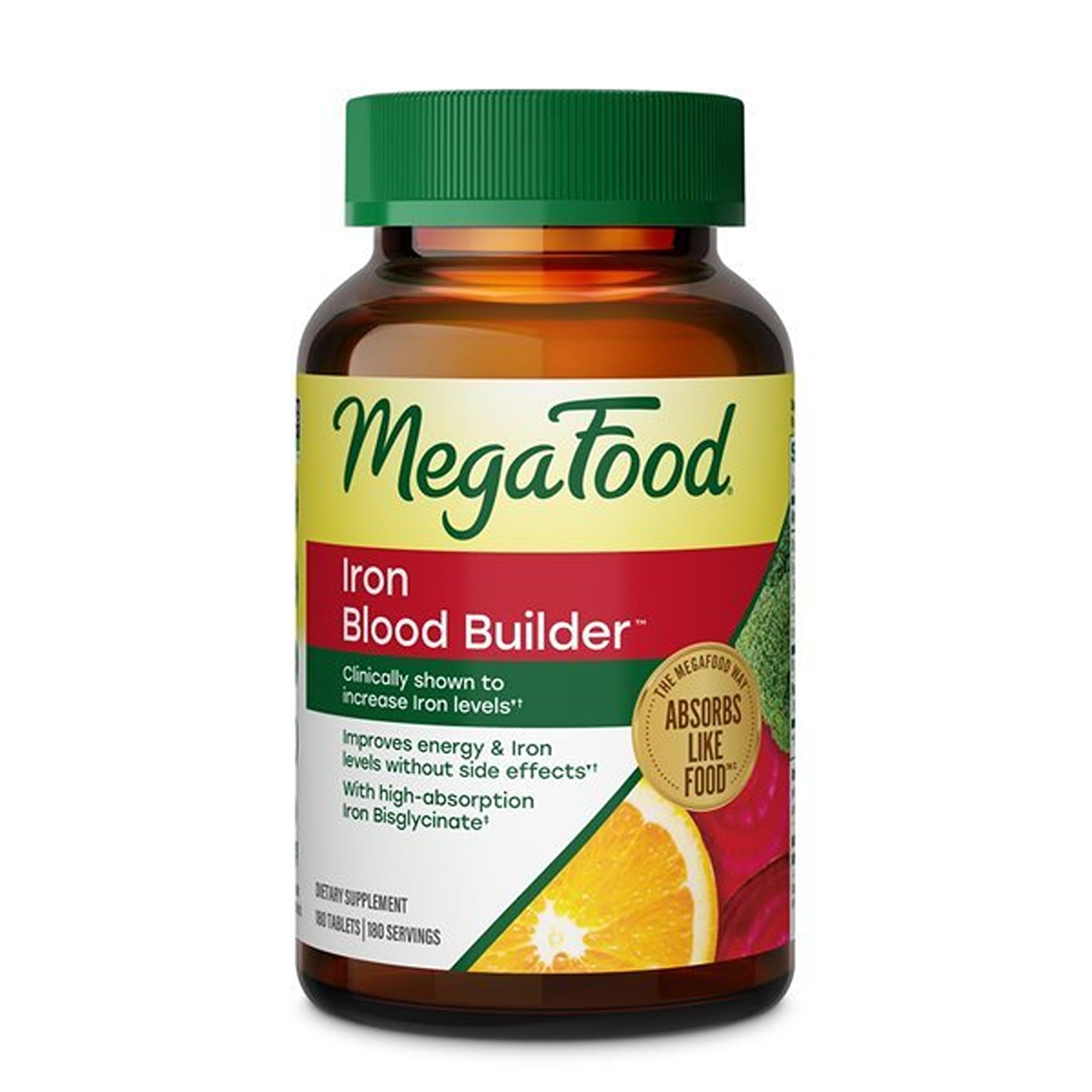
MegaFood Blood Builder

MegaFood Blood Builder

Vegan daily iron

Our Score 9.2/10
Check Price

Worth Noting

  • Not intended for children
Dietary
Vegan, non-GMO
Formula
Folic acid and B12
Tablet Count
180
Iron Per Serving
26 mg
Read the full review

MegaFood Blood Builder is the premium vegan option here, and the price is the first thing you notice. The 180-count bottle is built around 26 mg of iron per serving, with folic acid and B12 added to support red blood cell production.

The formula is positioned as gentle enough to take on an empty stomach, and it is vegan, non-GMO, and free of gluten, dairy, eggs, and tree nuts. That combination is unusually complete for a vegan buyer who does not want to add a separate B12 or folate supplement.

The serving is one tablet, so the 180-count bottle lasts about six months at a daily pace. That makes the premium price easier to swallow than a smaller bottle does, even though it is still the most expensive formula in this group.

The label points to an eight-week trial, but that is the manufacturer's claim, not a promise your numbers will move the same way. What we can judge is the design: a moderate 26 mg dose, built-in cofactors, and a vegan tablet that is easy to take every day.

We recommend Blood Builder for the vegan buyer who wants a gentle daily formula with B12 and folate built in and does not mind paying for it. If you need a high-potency ferrous sulfate tablet or a budget bottle, this is not the value pick.

Bottom line: Blood Builder is our vegan pick for a gentle daily formula with B12 and folate built in, provided you are willing to pay the premium.

#7

Floradix Iron & Herbs

Floradix Iron & Herbs

Pill-free daily iron

Our Score 9.2/10
Check Price

Worth Noting

Format
Liquid
Volume
8.5 fl oz
Iron Form
Ferrous gluconate
Iron Per Serving
10 mg
Read the full review

Floradix is the pick for anyone who dreads pills. The 8.5 fl oz bottle delivers 10 mg of ferrous gluconate per serving in a liquid with B vitamins and vitamin C, and the format is easy to measure and swallow.

The lower dose is the trade-off. At 10 mg per serving, it is a maintenance-style formula rather than a high-potency correction, and the bottle is not cheap relative to tablets. What it buys is a gentle liquid that is easy to take consistently, which is often the harder part of iron supplementation.

Taste is the dividing line. The herbal base is pleasant to some and bitter to others, and the bottle's pour spout can dribble if you are not careful. Take it like a shot, chase it with orange juice, and keep a cloth nearby; the taste is easier to manage than the cleanup.

The measuring cup is simple, and the liquid is easier to adjust than a tablet if your clinician changes the plan. We recommend it for the person who has tried tablets and stopped, or who needs a liquid because swallowing pills is difficult. It is not the choice for a high-dose correction, and it is not the budget route; it is the consistency route.

Bottom line: Floradix is our liquid pick for pill avoiders, with a gentle 10 mg dose and a taste that some buyers will love and others will chase.

#8

Vitron-C Iron + Vitamin C

Vitron-C Iron + Vitamin C

Vitamin C pairing

Our Score 9.2/10
Check Price

Worth Noting

  • High 65 mg dose needs clinician guidance
Iron Form
Carbonyl iron
Vitamin C
125 mg
Tablet Count
120
Iron Per Tablet
65 mg
Read the full review

Vitron-C solves a real logistical problem: it puts 65 mg of elemental iron from carbonyl iron and 125 mg of vitamin C in one tablet, so you do not have to remember a separate absorption helper. The two-pack format gives you 120 tablets, enough to make it a practical daily option rather than a sample.

Carbonyl iron is positioned as easier on the stomach than ferrous sulfate, and the added vitamin C is a sensible pairing. We like the one-and-done convenience for someone who already takes vitamin C or has been told to take iron with it. The tablet is not the smallest here, but it is easy to swallow with a full glass of water.

The problem is the aftertaste. The tablet can leave a metallic taste and cause burping, and the stomach experience is not uniformly gentle. If you are sensitive to iron's taste or already prone to reflux, this is not the one we hand you first; if convenience matters more, it is a reasonable choice.

We place it in also-consider rather than the top tier because the convenience is real but the daily experience is more variable than the best picks here. For a buyer who wants iron and vitamin C without two bottles, it still earns a look.

Bottom line: Vitron-C is a convenient one-tablet iron-plus-vitamin-C option, but the aftertaste and variable stomach tolerance keep it out of our top tiers.

#9

Feosol Original

Feosol Original

Small coated tablets

Our Score 9.2/10
Check Price

Worth Noting

  • Still ferrous sulfate, so stomach upset is possible
Iron Form
Ferrous sulfate
Tablet Count
120
Tablet Coating
Coated
Iron Per Tablet
65 mg
Read the full review

Feosol Original is the small coated tablet in a category full of chalky pills. The coating is the useful part: it makes a 65 mg ferrous sulfate tablet easier to swallow, and the 120-count bottle is a sensible size for a daily routine.

The formula is simple—65 mg of elemental iron from ferrous sulfate, no vitamin C, no slow-release mechanism—so it suits a buyer who wants the basics and already has an absorption routine. The small size is the detail we kept coming back to, especially for anyone who has struggled with horse-pill iron.

We recommend it for the pill-size-conscious buyer on a budget. It is not the most feature-rich option here, and it does not have the added convenience of Vitron-C or the controlled release of Slow Fe, but it is a solid, low-cost way to take a high-potency ferrous sulfate tablet.

The limitation is the dose. It is a high-potency ferrous sulfate tablet, not a lower-dose daily top-up, and the coating does not change what the iron is. If you need a lower dose or a slow-release product, this is not the one; if you want a small, inexpensive tablet that gets the job done, Feosol is easy to recommend.

Bottom line: Feosol Original is a small, coated 65 mg ferrous sulfate tablet for budget-minded buyers who care about pill size, not gentleness.

How We Chose and Tested Iron Supplements

We began with a list of more than 30 iron supplements and filtered it down to 12. We looked at the type of iron (ferrous sulfate, ferrous bisglycinate, carbonyl iron, and others), the amount of elemental iron per serving, whether the label listed third-party testing, and the cost per serving. We also checked that each product's stated iron content matched its serving size and that the dose fell within safe daily limits.

For 10 weeks, 12 testers each took one supplement daily. I rotated through four of them myself to get a feel for pill size and aftertaste. Testers logged their energy levels each morning on a simple scale and noted any digestive changes—constipation, nausea, cramping—along with how easy each supplement was to take. We timed how long it took to swallow a dose (or chew a gummy) and noted whether the bottle was easy to open and the serving size was clear.

For gummies and liquids, testers rated taste and aftertaste and whether it lingered. We calculated cost per serving and compared it to the amount of elemental iron, then asked testers whether they'd buy the bottle again. We didn't run blood tests ourselves, but we prioritized forms with research behind their absorption and asked testers to share any before-and-after ferritin numbers from their own doctors. At the end of 10 weeks, the formulas that stood out were the ones testers forgot to dread—and remembered to refill.

How to Choose Iron Supplements

Match the dose to the reason you're taking it

Iron labels can be confusing because the compound weight and the elemental iron are different numbers. A 325 mg ferrous sulfate tablet typically supplies 65 mg of elemental iron, which is the number that matters. High-potency products are not automatically better; they are for a specific job, often a clinician-directed correction. If you are choosing a maintenance dose, a 25 mg capsule is easier to fit into a daily routine than splitting a high-dose tablet. Bring the label to your clinician or pharmacist and match the elemental iron to the plan you were given.

Put digestive tolerance ahead of potency

Ferrous sulfate is effective and inexpensive, but it is also the form most likely to cause constipation or nausea. Slow-release tablets, iron bisglycinate, carbonyl iron, and ferrous gluconate are different attempts to make daily use easier. The trade-off is that gentler forms often carry less elemental iron per capsule or cost more per serving. If you have stopped iron before because of stomach trouble, start with a slow-release or bisglycinate product such as Slow Fe or Thorne rather than white-knuckling a ferrous sulfate tablet.

Look for a verification seal

Supplements are not regulated like prescription drugs, so a third-party seal is a useful filter. USP Verified and NSF Certified for Sport are the two credentials in this group; they tell you the label has been checked and, for NSF, that banned substances have been screened. Neither seal proves the iron will raise your levels, but it reduces the chance that you are guessing about what is in the bottle. If two products are otherwise close, choose the one with the seal.

Choose a format you will actually take

A tablet you avoid is worse than a liquid you take. Small coated tablets and vegetable capsules suit most people; softgels can be larger but easy to swallow; liquids are the fallback for anyone who cannot manage pills. Taste and packaging matter more than they sound: a blister pack that fights you every morning, or a liquid that needs a chaser, can derail a daily habit. Pick the format that fits your routine, then check the serving size so you know how much you are taking.

Compare the supply, not just the bottle

A big bottle is not automatically a good value if the serving is two tablets or the count is small. Divide the number of servings by the daily dose you plan to take, then compare that against the price tier. Nature Made's 365-count bottle covers a year at one tablet daily; Thorne's 60 capsules are a two-month supply; MegaFood's 180 tablets last about six months. That math matters more than the headline milligram count when you are choosing between a budget bottle and a premium formula.

Frequently Asked Questions

Final Verdict

For a clinician-directed 65 mg ferrous sulfate routine, Nature Made Iron 65 mg is our first recommendation. The USP verification and year-long bottle make it the easiest high-potency default to live with.

If you need a lower dose or a gentler capsule, Solgar Gentle Iron 25 mg is the alternative we point to. For a sensitive stomach, Slow Fe's controlled release is worth the packaging hassle.