Cardio Machines

Best Treadmills for Marathon Training of 2026

A treadmill that feels solid during a 20-minute warm-up can turn into a rattling, belt-slipping nuisance by mile 16 of a long run. A 40-mile training week asks a machine to hold pace for two hours at a stretch, and a wobble you barely noticed in week one becomes the reason you cut a run short in week eight. The difference comes down to a deck, belt, and frame that stay composed when your stride gets sloppy.

My team and I spent the past 10 months running on six treadmills through a full marathon block. Shoppers fixate on peak horsepower, but continuous duty rating and belt tracking tell you more about whether a machine survives a training cycle; cushioning is a Goldilocks call — too soft feels like running in sand.

We also paid attention to what you notice at 6 a.m. in a spare room: motor and footfall noise, frame rock when you pick up the pace, and whether folding it away takes one person or two. Below are stripped-down workhorses and consoles with incline, Bluetooth, and heart rate built in.

#1

3G Cardio Pro Runner X

Top Pick
3G Cardio Pro Runner X

All-around marathon training

Our Score 9.2/10
Check Price

Worth Noting

  • Belt tracking can need adjustment
Motor
3.0 hp
Incline
15%
Running Deck
58 x 20.5 in
Weight Capacity
350 lb
Read the full review

The Pro Runner X is the rare folding treadmill that does not ask you to give up running speed. It has a 3.0 HP motor, a 12 mph top speed, and a 58-inch deck, so it can handle marathon-pace long runs and faster intervals without feeling like a compromise. We also like the 15% incline and the 350-pound weight limit; those are serious numbers for a machine that folds to a 40 by 35 inch footprint.

What sold us is the balance. The Elite Runner X below has a wider, longer deck and a 4.0 HP motor, but it is a permanent, 366-pound installation. The Pro Runner X weighs 216 pounds and still feels planted at speed, which matters if the treadmill has to share a room. The 12 mph ceiling gives you headroom for strides and fast finishes, and the 15% incline covers hill repeats without making you feel like you are running on a ramp.

The console is more utilitarian than the rest of the machine—there is no big touchscreen or subscription pitch—but we count that as a feature for a training tool. The lifetime motor and frame warranty, plus five years on parts and one year on labor, is the kind of coverage that matters over a marathon block.

Bottom line: We recommend the 3G Cardio Pro Runner X as the best all-around marathon-training treadmill: 12 mph, a 58-inch deck, and a folding frame in one package.

#2

3G Cardio Elite Runner X

3G Cardio Elite Runner X

Dedicated running room

Our Score 9.0/10
Check Price

Worth Noting

  • Does not fold
  • 366-pound frame is hard to reposition
Motor
4.0 hp
Incline
15%
Running Deck
62 x 22 in
Weight Capacity
400 lb
Read the full review

The Elite Runner X opens with a 22-inch-wide, 62-inch-long deck, and that extra real estate is the whole point. At marathon pace, a long stride has room to land and push off without clipping the rails, and the 4.0 HP motor has enough headroom for 10 mph repeats. The 400-pound weight capacity and 15% incline round out a machine that feels closer to a club treadmill than a folding home model. The 7.5-inch step-up height is a nice detail, too—it is lower than most running decks, so getting on and off is easier and you gain ceiling clearance.

We choose it when the treadmill gets a dedicated room. The 84 by 35.5 inch footprint is the largest here, so measure the space before you commit. The reward is stability: the frame is built to stay quiet and planted at speed, and the residential warranty covers the motor and frame for life, with 10 years on parts and two years on labor. That is coverage that suits a machine this heavy.

Bottom line: For a dedicated room and the most stable running surface here, the 3G Cardio Elite Runner X is the commercial-grade choice.

#3

WELLFIT TM029

WELLFIT TM029

Heavy runners

Our Score 8.8/10
Check Price

Worth Noting

  • 10 mph top speed limits fast intervals
Motor
4.5 hp
Incline
15%
Running Deck
55 x 20 in
Weight Capacity
500 lb
Read the full review

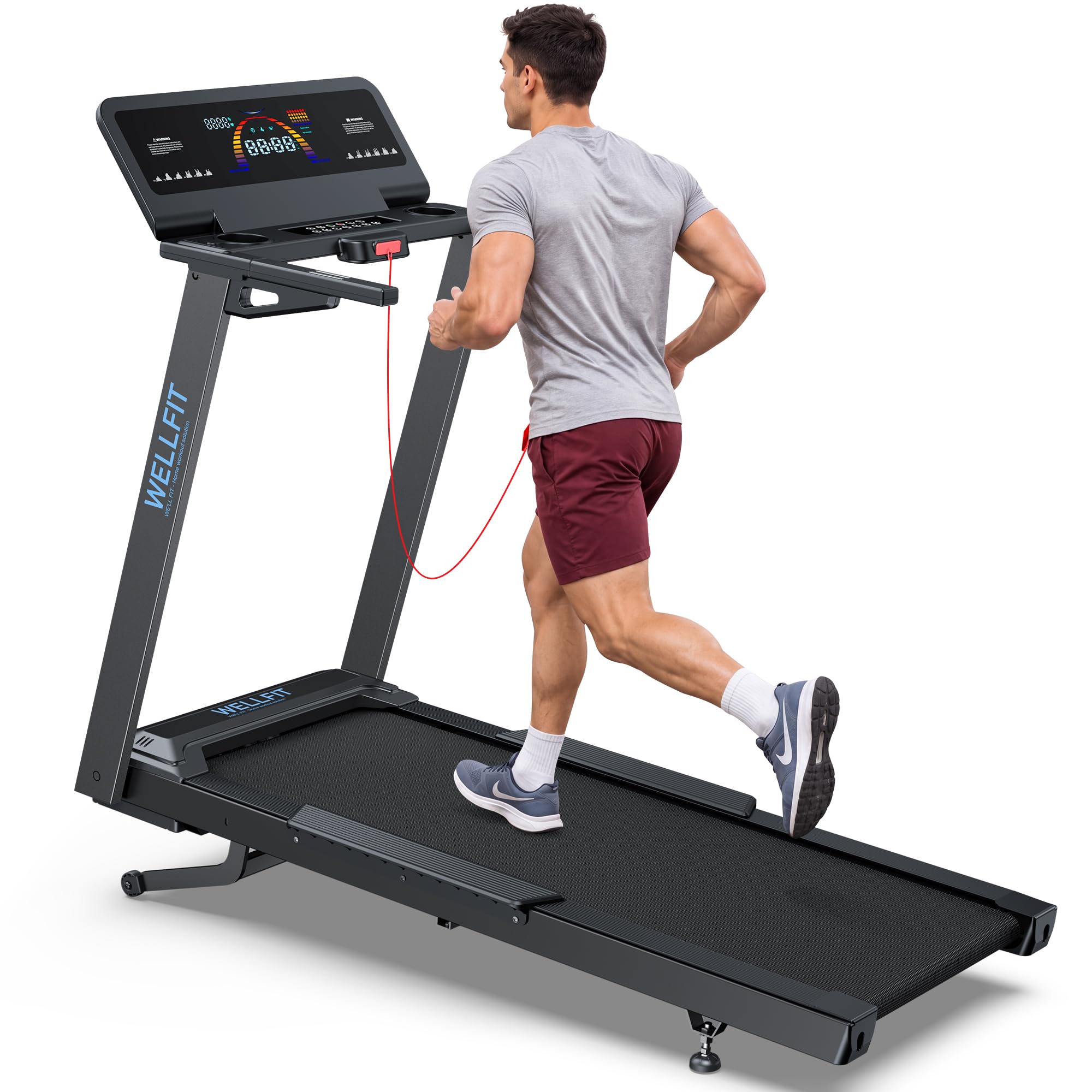
The 500-pound weight capacity is the first thing we check on a home treadmill, because it tells you how much frame and motor you are actually getting. The WELLFIT TM029 backs that rating with a 4.5 HP motor and a 20 by 55 inch deck, which is a lot of running machine for the midrange price. It also has a 15% incline and a three-year warranty, two things we are glad to see at this level.

We like it best for heavier and taller runners. The 55-inch belt gives a long stride room, and the 500-pound rating means a 250- or 300-pound runner is not asking the frame to work at its limit. The 4.5 HP motor is the strongest here, and the treadmill runs quietly enough for a shared room. At 120 pounds, it is also the easiest of these to move, which is a real advantage if you need to shift it for floor space.

The trade-off is top speed. The TM029 tops out at 10 mph, so it covers marathon pace and most tempo work, but it does not give you the 12 mph headroom of the 3G or THERUN picks for fast intervals. The console is also busier than it needs to be, with a lot of readouts competing for attention. Neither is a dealbreaker for the runner who wants a sturdy, high-capacity machine without a premium price.

Bottom line: The WELLFIT TM029 is the value pick for heavier or taller runners who want a 500-pound capacity and a 55-inch deck without a premium price.

#4

THERUN T15

THERUN T15

Hill repeats

Our Score 8.6/10
Check Price

Worth Noting

  • 300-pound capacity is the lowest here
  • One-year warranty is short
Motor
3.5 hp
Incline
20%
Running Deck
55 x 20 in
Weight Capacity
300 lb
Read the full review

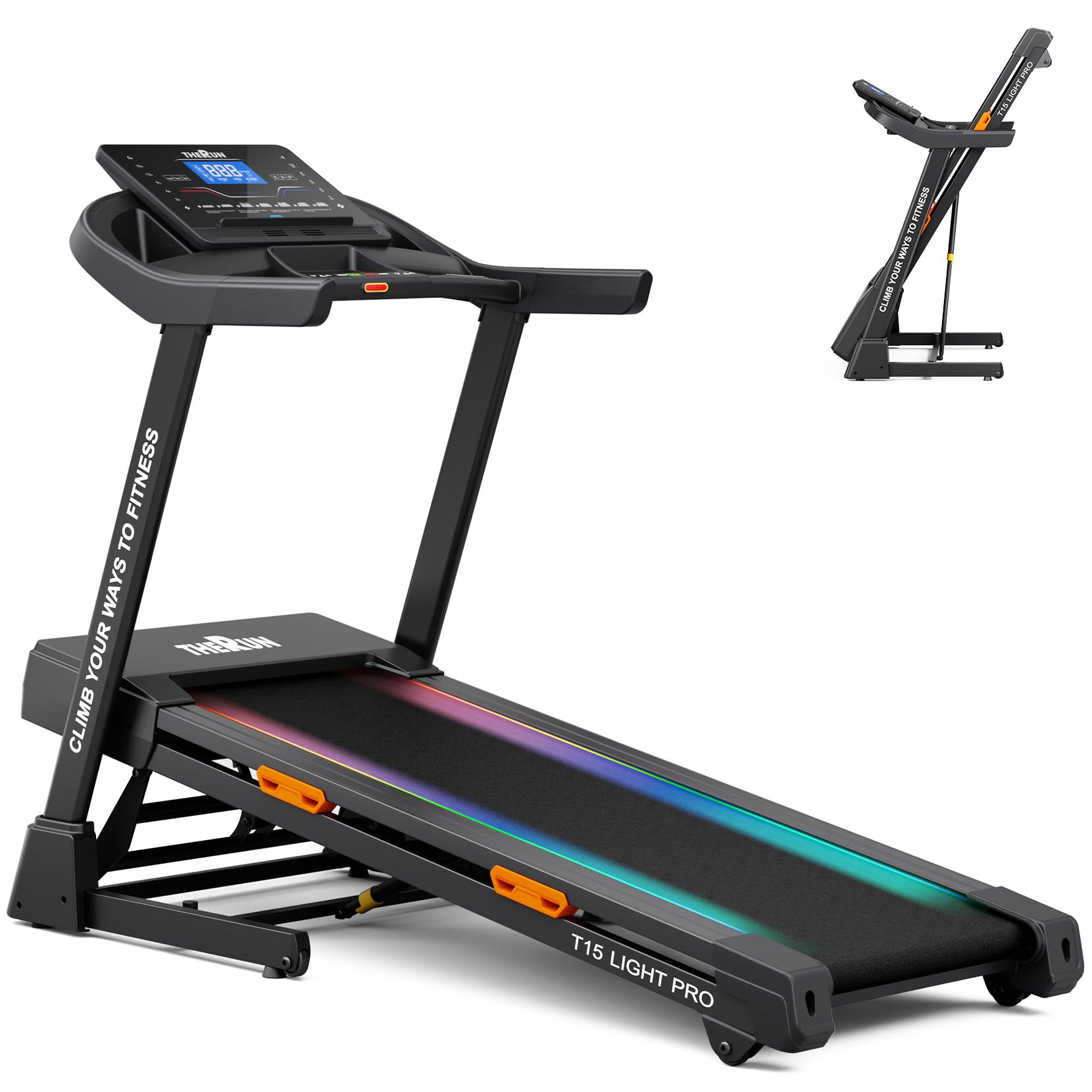
A 20% incline is the reason to look at the THERUN T15. Most home treadmills stop at 10 or 15%, which is enough for general hill work, but the extra grade gives you room to progress without maxing out the machine. The T15 also has a 12 mph top speed, a 3.5 HP motor, and a 55 by 20 inch deck, so it is not a one-trick incline machine.

We appreciate the app connection. The treadmill pairs with Zwift, FitShow, and Kinomap, so you can run virtual routes or follow a structured workout without being locked into one subscription. The console adds a cooling fan and wireless charging, which are small conveniences that matter on a long run. The LED strip that changes color with your pace is pure theater, but it makes the machine feel less like a gym castoff.

This is the lightest-duty machine here, so it fits a lighter runner who wants steep hill repeats and virtual training more than a forever machine. If you are a heavier runner or you want the longest coverage, the 3G Cardio and WELLFIT picks are the safer bet.

Bottom line: The THERUN T15 is the hill-work pick: a 20% incline, 12 mph top speed, and a 55-inch deck for runners who want steep grades and virtual training.

How We Tested Six Treadmills Through a Full Marathon Block

We began with a shortlist of about 20 treadmills and narrowed it to six by reading spec sheets closely: continuous motor rating instead of peak horsepower, a running deck of at least 20 by 55 inches, weight capacity, incline range, and whether one person could fold and roll the thing. We spread the six across budget and premium builds so value could be judged against what each machine actually delivered, then bought every unit at retail.

Each treadmill lived where home treadmills actually live — a garage, a basement, a spare bedroom — for 10 months. Two testers ran on every unit, one around 150 pounds and one around 210, so we could feel how the same deck behaved under different loads. The schedule mirrored a real marathon block: 14- to 20-mile long runs on weekends, interval sessions at 5K to half-marathon pace midweek, and easy 30-minute shakeouts before work.

We marked belt position against the frame with tape before each long run and checked it after, which is how belt drift showed up. Every month we re-tightened bolts, listened for new rattles, and felt the motor housing for heat. For noise, we logged decibels at 6 and 10 mph and had someone stand in the room below. We changed incline and speed mid-run from both the console and the remote, watching for lag, and read the display from a full stride away. Deck cushioning got judged at mile 12, not mile one, when tired legs notice it.

How to Choose a Treadmill for Marathon Training

Start With the Deck, Not the Screen

The deck is where marathon training succeeds or fails. A 55-inch belt is the practical minimum for sustained running; 58 to 62 inches gives a long stride room to land and push off without clipping the rails. Width matters too: 20 inches is comfortable for most runners, while 22 inches is the widest here. The 3G Cardio Pro Runner X and Elite Runner X show the difference—the Pro's 58-inch deck is enough for most, and the Elite's 62-inch deck is the one for a long, powerful stride.

Match Motor Power to the Work

We treat 3.0 HP as the floor for marathon training. That is enough for steady 6-to-9 mph long runs, but a 4.0 or 4.5 HP motor gives more headroom for 10-to-12 mph intervals and heavier runners. Top speed is a separate question: 10 mph covers marathon pace and most tempo work, while 12 mph gives you room for strides and fast finishes. The WELLFIT's 4.5 HP motor is the strongest here, but its 10 mph ceiling is the trade-off.

Use Incline as a Training Tool

Incline is a training tool, not a checklist item. Ten percent is enough for walk-run hill work, 15% covers most hill repeats, and 20% is for runners who want steep grades without maxing out the machine. The THERUN T15's 20% range is the widest here; the 3G and WELLFIT models stop at 15%, which is still plenty for marathon-specific strength work. If you mostly run flat, do not pay extra for a steeper incline.

Measure the Fold, the Weight, and the Doorway

A folding treadmill is easier to live with, but the fold does not make it light. The 3G Cardio Pro Runner X folds to a 40 by 35 inch footprint and weighs 216 pounds; the Elite Runner X does not fold and weighs 366 pounds. Measure the room, the doorway, and the path you need to move it, not just the folded size. Leave clear space behind the deck for a safe step-off, and check ceiling height with the deck inclined.

Cushioning, Noise, and Warranty

Cushioning should take the edge off without making the deck feel mushy. We look for a firm, controlled ride at speed, because a soft deck can feel sluggish when you are trying to hold marathon pace. Noise is the other long-run factor: a quiet motor and a well-tracked belt make early runs less disruptive. Finally, read the warranty by component. Lifetime motor and frame coverage is meaningful; a one-year overall warranty is a shorter safety net.

Frequently Asked Questions

Final Verdict

For most home marathoners, the 3G Cardio Pro Runner X is the pick. It has the 12 mph ceiling, 58-inch deck, and 15% incline to handle a full training block, and it folds when the room needs to do something else. The lifetime motor and frame warranty makes it the most sensible expensive purchase here.

If the treadmill gets a dedicated room, the 3G Cardio Elite Runner X is the more stable commercial-grade alternative, with a 22-inch-wide deck and a 4.0 HP motor. If you are a heavier runner or want the highest capacity, the WELLFIT TM029 is the better value. The THERUN T15 is the hill-work specialist. Match the machine to the room and the runner, and the rest of the decision is simple.