Cardio Machines

Best Treadmills for Tall Runners of 2026

Most treadmills are designed around a five-foot-eight stride. If you're six-two or taller, that usually means a belt that ends before your foot lands, a console you have to duck under, and handrails that hit your thighs mid-stride. I'm 6'4", and I've spent years making do with gym treadmills that felt two sizes too small. What a tall runner needs isn't just a longer deck—it's a machine that stays solid when you open up your stride, runs quietly enough for a basement, and doesn't punish you at assembly.

Over the past eight months, my team and I tested seven treadmills built for longer legs, logging easy miles, tempo intervals, and steep incline walks. We compared belt length and width against our actual stride, checked how much the frame flexed at speed, and listened for motor whine and footfall slap. The best ones shared a long deck, a stable belt, and controls you can reach without breaking form. Below are the picks that earned a spot, starting with the machines that best fit a longer stride.

#1

3G Cardio Pro Runner X

Top Pick
3G Cardio Pro Runner X

Small home gyms

Our Score 9.2/10
Check Price

Worth Noting

  • 216-pound frame still takes two people
Motor
3.0 HP
Folded Size
40" x 35" x 65"
Running Deck
58" x 20.5"
Max User Weight
350 lb
Read the full review

Folding treadmills usually ask you to give up deck length, and the Pro Runner X mostly refuses. It drops to a 40-inch footprint and keeps a 58-inch by 20.5-inch running surface: third-longest here, behind two machines that do not fold at all.

We think it is the pick for anyone whose treadmill has to share a room. The 6.5-inch step-up is the lowest in this set, so a tall runner in a low-ceilinged room has one more inch of headroom than the Elite gives, and the fold drops the deck with the transport wheels taking it from there. Underneath the convenience sits a 3.0 HP motor, a 350-pound user rating, 12 mph and a powered 15% incline, so a tall runner is not trading the workout away for the storage.

The trade-off is the motor and the price. Three horsepower is adequate for steady running at a tall runner's weight, but it is matched by the Horizon and outgunned by 3G's own Elite, and the folding mechanism is what the premium money buys. This is a machine to choose with your floor plan in mind rather than your training plan. Where the Elite Runner X buys four more inches of belt and a 400-pound rating, this buys back the garage.

Bottom line: For a long-stride runner with limited floor space, this folding 3G is the compromise that does not feel like one.

#2

3G Cardio Elite Runner X

3G Cardio Elite Runner X

Long-stride running

Our Score 9.0/10
Check Price

Worth Noting

  • Does not fold; needs a permanent spot
  • Plain console with no touchscreen or apps
Motor
4.0 HP
Running Deck
62" x 22"
Max User Weight
400 lb
Deck Step-Up Height
7.5 in
Read the full review

Twenty-two inches wide and 62 inches long: that is the whole argument for the Elite Runner X, and it holds up the moment you stand on it. A tall runner's feet stop landing where the belt ends, and the extra width means you are not steering between the rails at pace. Nothing else in this set offers that much running surface.

The rest of the machine is built around the deck. A 4.0 HP motor and a 400-pound user rating mean a heavy runner can push without the belt bogging down, and the 15% incline is powered, so hill intervals do not require a stop. We paid close attention to the 7.5-inch step-up height, because a low deck buys ceiling clearance, and in a basement that matters to a tall runner almost as much as belt length.

What it is not is flexible. The frame does not fold, the machine runs around 366 pounds, and once placed it stays placed, so settle the room before the truck arrives. The console is deliberately plain, with LED readouts and no touchscreen or subscription, which leaves a tablet to do the entertaining. And it is the most expensive machine here by a wide margin, with the money going into deck, motor and warranty rather than features.

That warranty is part of the case: lifetime coverage on the motor and frame, ten years on parts and two on labor for home use. Against the Horizon it wins on width, motor and weight rating; against the Pro Runner X from the same company it wins on length and loses on storage. When deck room is the thing standing between you and a real training week, this is the one that stops the compromise.

Bottom line: We recommend it as the default for tall runners: the longest, widest deck here, with the motor and weight rating to keep a heavy stride feeling solid.

#3

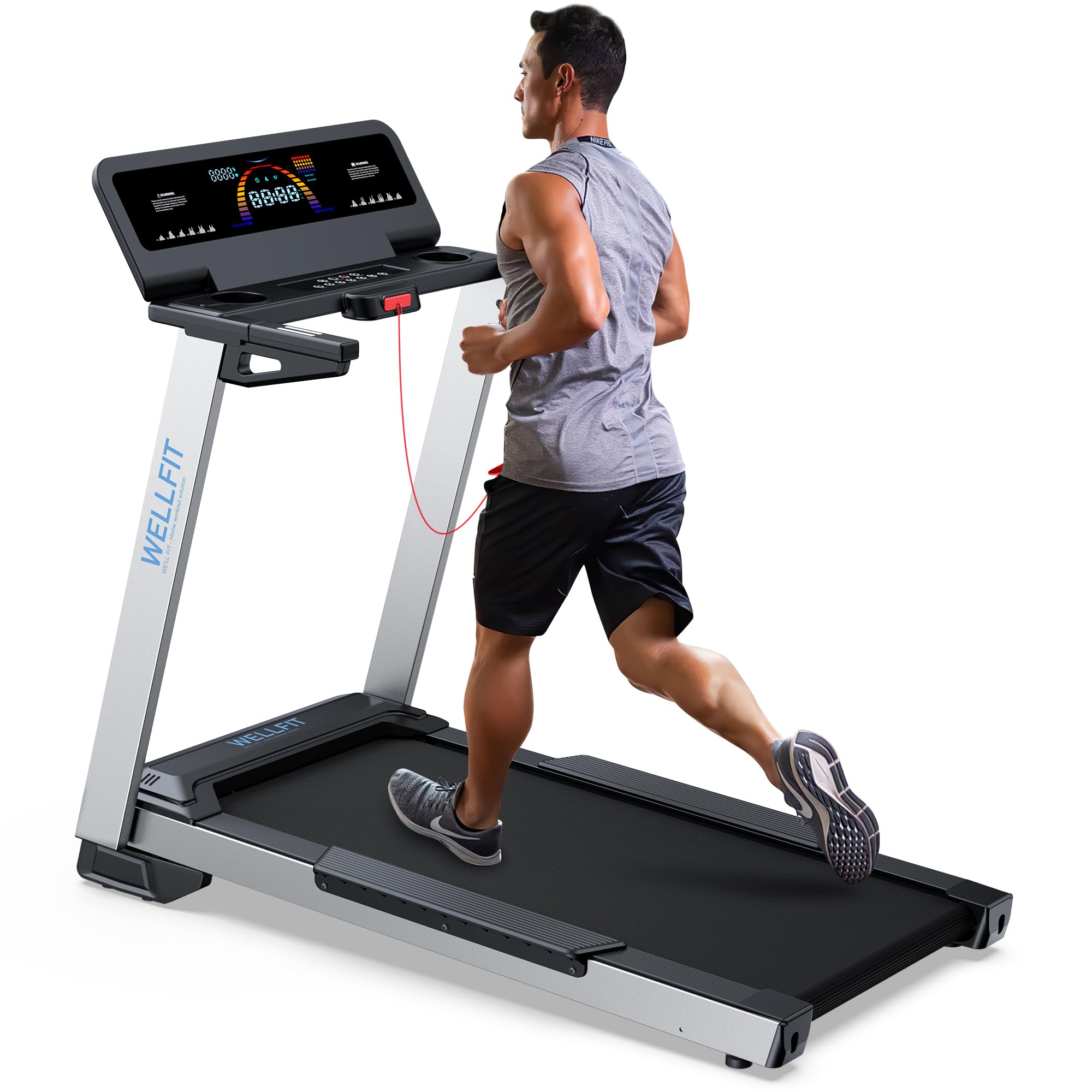
WELLFIT TM029

WELLFIT TM029

Heavy runners

Our Score 8.8/10
Check Price

Worth Noting

  • 10 mph top speed rules out sprint training
Motor
4.5 HP
Incline
15%, automatic
Running Deck
55" x 20"
Max User Weight
500 lb
Read the full review

Five hundred pounds is the highest user rating in this set, and it is the first thing we check on the WELLFIT TM029. That is capacity for a big, tall runner to land hard without the frame complaining, and it comes with a 4.5 HP brushless motor at midrange money.

The belt is 55 inches long and 20 inches wide, which is where the honest limits start. At 6-foot-4 you use most of that length at a jog and all of it when you open up: comfortable, not generous. The 10 mph ceiling tells the same story, because this is a machine for steady running and hill work rather than sprint intervals. Within those limits it does a lot. The 15% incline is automatic, the belt is quiet enough for an early run, nothing requires a subscription, and at about 120 pounds it is light enough for two people to shift without planning a morning around it.

Compared with our top pick you give up seven inches of deck and the ceiling-friendly low step-up; compared with the Horizon you gain capacity and automatic incline for similar money. A heavier runner should take that trade every time. The display is a plain LED panel and the app is basic, but mid-run we never wanted more from either.

Bottom line: If you are tall and heavy and want to spend midrange money, this is the one we point you to: 500 pounds of capacity and a wide, quiet belt.

#4

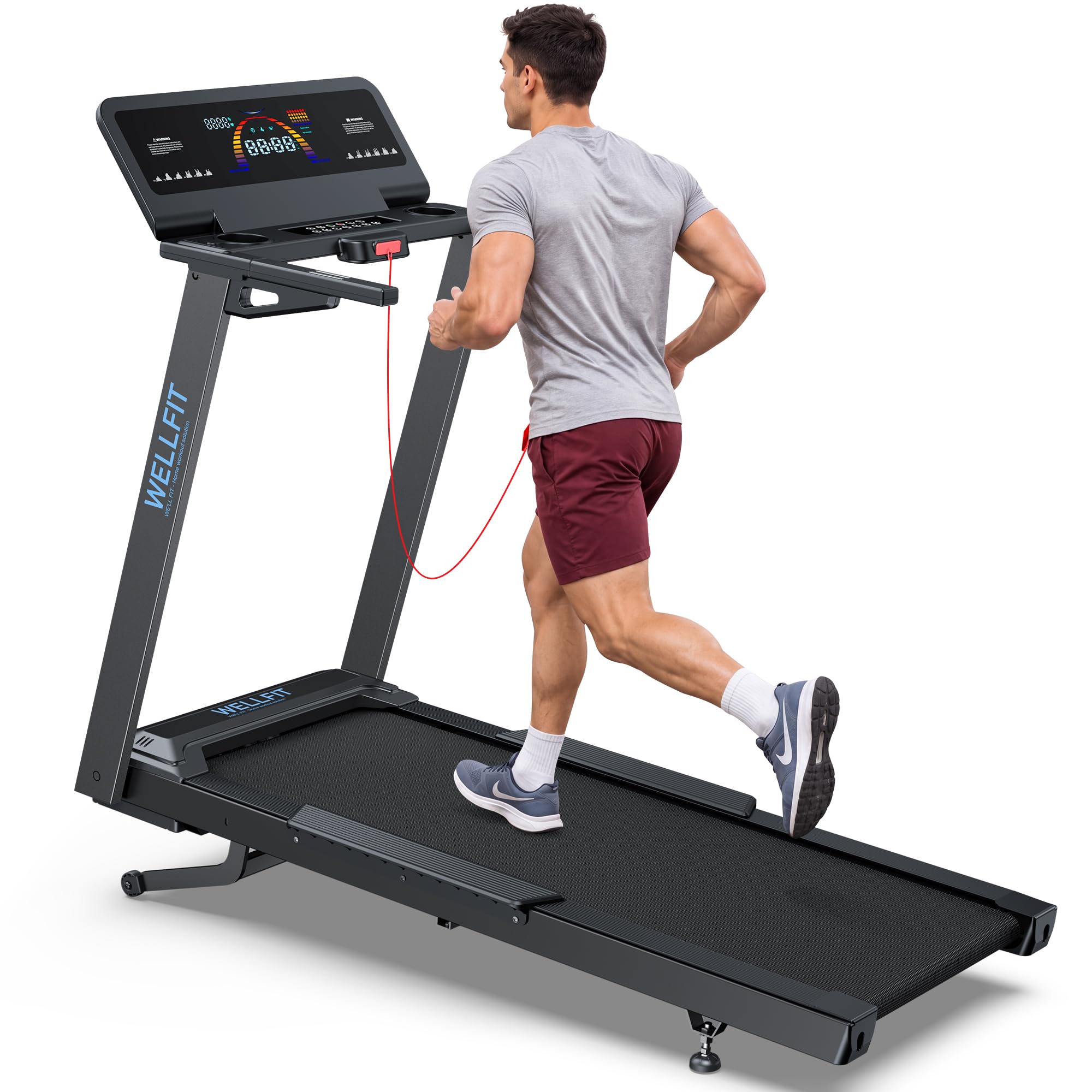
WELLFIT T24-1

WELLFIT T24-1

Budget apartments

Our Score 8.6/10
Check Price

Worth Noting

  • 45-inch deck is short for a tall running stride
  • Manual incline tops out at 5%
Motor
4.0 HP
Incline
5%, manual
Running Deck
45" x 20"
Max User Weight
450 lb
Read the full review

Twenty inches of belt width at the lowest price here is the T24-1's pitch, and for a tall runner that width counts: your feet stay off the rails and the stance does not feel cramped. The catch sits right next to it, because the belt is 45 inches long.

Forty-five inches is plenty for walking and a slow jog. Open up to a real running pace and a long stride starts looking for deck that is not there, which is the exact problem a tall runner is trying to solve. Read that against the price and the shape of the machine becomes clear: it is a second treadmill, a desk-side or apartment one for the days you cannot get outside, not the machine you train on.

Within that brief it is hard to beat. The 4.0 HP brushless motor is quiet and rated to 450 pounds, the belt feels stable underfoot, setup is quick, and the LED console is easy to read at a glance. A tall walker who wants to keep moving through the workday gets a lot for very little money, and a household where one person runs and another walks can keep both happy without buying two expensive treadmills.

Bottom line: A genuinely useful budget machine for a tall walker or light jogger, provided a 45-inch deck and a manual incline do not bother you.

#5

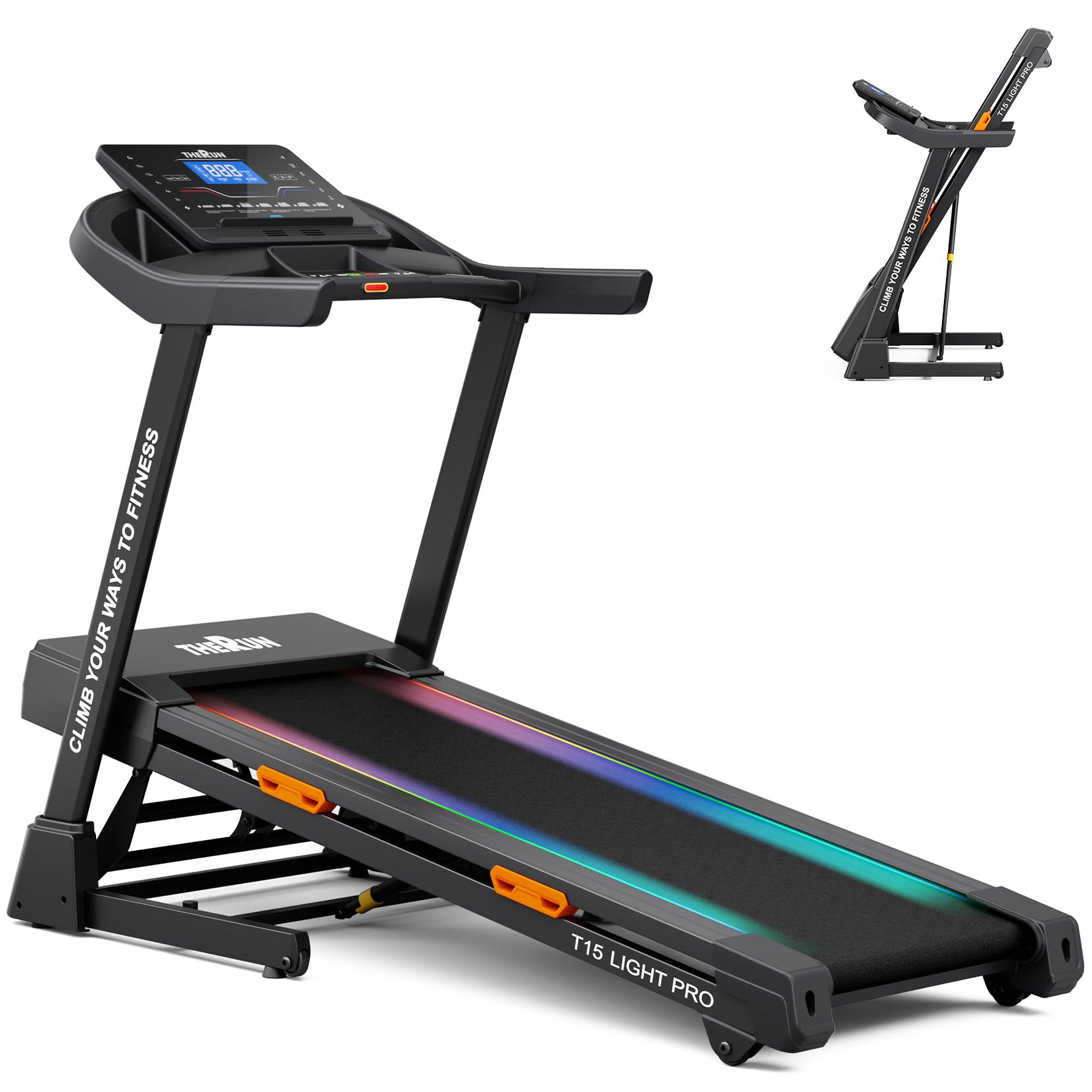
THERUN T15

THERUN T15

Incline training

Our Score 8.6/10
Check Price

Worth Noting

  • 300-pound user limit is the lowest here
  • 55-inch belt is short for a tall stride at speed
Motor
3.5 HP
Incline
20%, automatic
Running Deck
55" x 20"
Max User Weight
300 lb
Read the full review

Twenty percent is the steepest automatic incline in this set, and on the THERUN T15 it is the feature that earns the machine its place. Incline is the simplest way to make a short run hurt, and having it move under you without breaking stride changes what a home session can be.

The rest of the spec sheet is respectable for midrange money: a 3.5 HP motor, 12 mph, a 55-inch by 20-inch belt, and a console with a fan, speakers and wireless charging, plus pairing with Zwift, FitShow and Kinomap if you like structured sessions. It folds, it weighs about 158 pounds, and the belt runs quiet enough for an apartment floor.

The 300-pound user rating is the tightest here, and it is the number to be honest about, because a tall runner above that weight should be looking at the WELLFIT or the Horizon whatever the incline offers. Fifty-five inches of belt is a jogging deck as well, not a generous one for a long stride. Inside those limits it is a lot of treadmill for the money, and the hill work is the reason to pick it over the other midrange machines.

Bottom line: We rate it the incline pick: 20% automatic hill work on a 55-inch belt, though its 300-pound limit rules out bigger runners.

#6

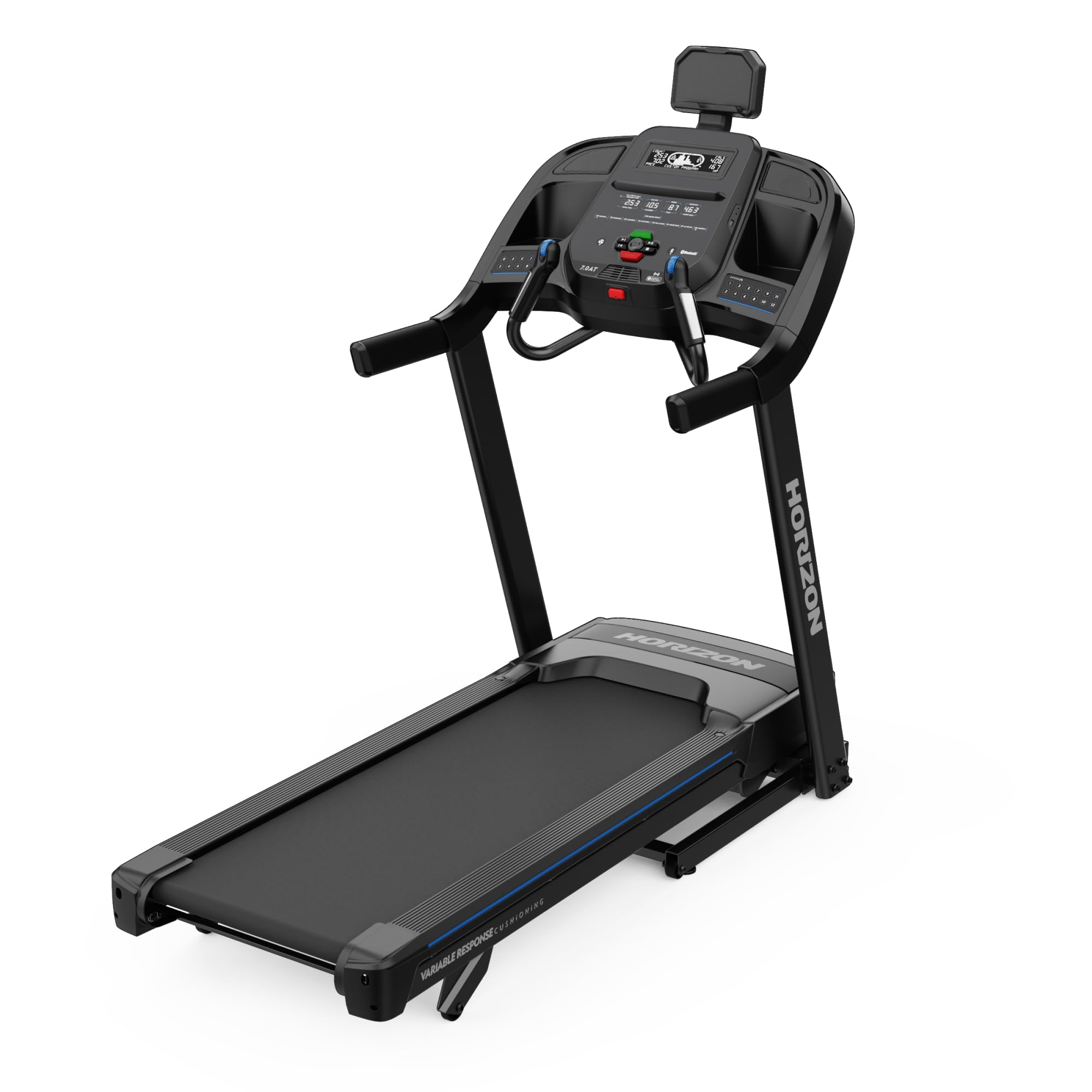
Horizon Fitness 7.0AT

Horizon Fitness 7.0AT

Deck on a budget

Our Score 8.2/10
Check Price

Worth Noting

  • 325-pound user limit excludes heavier runners
Motor
3.0 HP
Top Speed
12 mph
Running Deck
60" x 20"
Max User Weight
325 lb
Read the full review

Sixty inches of running surface for midrange money is why the Horizon 7.0AT is here. Only our top pick gives you a longer belt, and the Horizon does it at a price that puts a genuinely runnable deck within reach of most homes.

We think it is the best balance of deck and cost in this set, with one caveat worth hearing before you order. The 3.0 HP motor and 325-pound rating are enough for a tall runner of average build at a steady pace, and the three-zone cushioning is soft enough that long efforts do not beat up your knees. Reliability is where the record is uneven, though: some units stop dead within weeks of arriving, and early motor or belt faults are the pattern to watch. The lifetime motor and frame warranty is the backstop, so buy somewhere with easy returns and keep the receipt close for the first month.

The running experience is well sorted otherwise. QuickDial controls sit on the handles so speed and incline change without breaking stride, the deck runs to 12 mph and a 15% incline, and the folding frame with transport wheels lets a spare room do double duty. It pairs with the usual training apps for structured sessions. For a tall runner logging steady miles rather than racing, that is a lot of treadmill.

Bottom line: Our pick for a tall runner who wants a long deck without premium money: 60 inches of belt, 12 mph, and motor coverage that lasts.

How We Tested Treadmills for Tall Runners

We started by pulling specs for treadmills with decks long enough for a taller stride and motors rated for continuous running, then filtered out models with low user-weight capacities or vague warranty language. That left seven machines, which we assembled and lived with for eight months.

I timed assembly solo in a garage, noting whether the instructions matched the hardware and whether one person could walk the deck into place. Once running, we used each treadmill for easy recovery jogs, 5K-paced intervals, and 10% incline hikes—sometimes with a taller tester, sometimes with a shorter household member, because a stable belt should feel secure for both.

At 6 mph and 9 mph, we listened for motor whine and footfall slap and checked whether the machine shook the floor. We ran the incline through its full range, watching whether the belt tracked straight and whether the deck stayed balanced when we shifted weight side to side. Over eight months, we noted belt slippage, console wobble, and any service calls, since reliability and durability matter more than a long feature list.

Value came down to what held up after repeated use: a sturdy frame, consistent incline, and controls that stayed responsive. We also weighed machine footprint and user capacity against the space and the runner—a heavy treadmill is reassuring until it has to fit through a doorway.

How to Choose Treadmills for Tall Runners

Start with deck length, then width

For a running stride, 58 inches of belt is the practical floor and 60 or more feels comfortable. Our top pick's 62 inches is the most room in this set, and the Horizon's 60 inches is the value version of the same idea. Width matters too: 20 inches is standard, 22 is generous, and anything under 19 will feel tight if you are broad as well as tall.

Measure rather than guess. At your easy pace, note where your back foot leaves the ground and how far forward you land, then add a few inches of margin. And read the listing carefully: some quote the machine's overall length rather than the belt, so check that the figure is the running surface and not the frame around it.

Match the motor and weight rating to you

Motor figures are quoted at peak, so a 3.0 HP machine is not automatically weaker than a 4.0 HP one for steady running. What matters is whether the user rating covers you with room to spare. A 350-pound rating for a 250-pound runner leaves margin for the impact of running; a 300-pound rating at 280 pounds does not, and the THERUN's 300 pounds is the tightest here.

Top speed tells you what the machine was built for. Twelve mph is a runner's deck, 10 mph is steady running and hill work, and 8.8 mph is a walk-and-jog machine however the marketing reads. If you are tall and heavy, spend on capacity before speed: the WELLFIT TM029's 500-pound rating is the highest in this set.

Decide whether the incline needs to move by itself

Manual incline is a pin or a knob you set before you start. It is fine for a fixed hill session and useless for intervals, because changing grade means stepping off — the T24-1's 5% manual incline is exactly that. Automatic incline lets you change the grade mid-run, and the range runs from 15% on most of this set to 20% on the THERUN.

Incline is the most effective way to add intensity without adding speed, which matters on a machine with a 10 mph ceiling. If you will never touch it, do not pay for it; if you run indoors all winter, it is the feature that keeps a flat belt interesting.

Plan the room before the delivery

A running treadmill is a heavy, awkward object, and the ends of this set show the range: the WELLFIT TM029 is about 120 pounds and moves with two people, while the Elite Runner X runs around 366 pounds and is effectively permanent once placed. Non-folding machines need a level floor and a doorway wide enough to take the frame.

Folding models such as the Pro Runner X drop to a 40-inch depth and can live against a wall, which is the difference between owning one and not in a small house. Measure the delivery path — hallway, stair turn, doorway — before you order, because a 366-pound crate does not turn around in a landing.

Frequently Asked Questions

Final Verdict

The 3G Cardio Elite Runner X is the machine we point tall runners to, because 62 inches of belt and 22 inches of width solve the problem the search is actually about, and the 400-pound rating keeps the deck solid under a heavy stride. It is premium money for deck, motor and warranty rather than features, and that is the right trade here.

If the budget is tighter, the Horizon 7.0AT gives you 60 inches for far less and is the value answer, provided you buy where returns are easy. If you are tall and heavy, the WELLFIT TM029's 500-pound rating is worth more than the deck length you give up.