Cardio Machines

Best Treadmills for Heavy People of 2026

The number that matters most on a treadmill isn't top speed — it's how the deck behaves when a heavier body lands on it. Belts slip at the front roller, decks flex, motors bog down the moment you add incline, and the whole frame slowly walks itself toward the wall behind you. The right machine under a 260-pound stride feels steady, quiet, and roomy enough that you never shorten your step just to stay on it.

Weight ratings are the spec nobody reads and everybody needs, and belt length starts mattering more the heavier the runner gets, because a short deck turns a natural stride into a shuffle. My team spent the past year with seven treadmills, walking and running on them morning and night. Only a few never once had us thinking about the frame underneath, and those are the ones below.

#1

3G Cardio Pro Runner X

Top Pick
3G Cardio Pro Runner X

Fast, long runs

Our Score 9.2/10
Check Price

Worth Noting

  • Highest price tier in this roundup
  • 216-pound machine needs help on delivery day
Motor
3.0 HP
Incline
0-15%
Max User Weight
350 lb
Running Surface
20.5" x 58"
Read the full review

Lifetime coverage on the frame and drive motor, five years on parts, one on labor: that's the warranty on the Pro Runner X, and it's the least exciting and most telling thing about the machine. A company doesn't underwrite parts it expects to replace, and it's the reason we take this one seriously at its price.

The hardware backs it up. A 3.0 HP motor takes the belt to 12 mph, the deck measures 20.5 by 58 inches, and incline runs to 15%, so a heavier runner gets room for a full stride and a motor with headroom at 7 or 8 mph rather than one pinned at its ceiling. Step-up height is 6.5 inches, low enough that getting on doesn't feel like climbing, which matters when you do it several times a session.

The 216-pound frame is what makes it feel close to a gym machine: it stays planted, and it folds, so a full-size deck doesn't have to live in the middle of the room. Nothing here needs a subscription either — Bluetooth and your own tablet do the job if you want company while you run.

If you walk at 4 mph and want an incline button, cheaper picks here do that job well. The Pro Runner X is for the miles you otherwise do at a gym, and for the buyer who wants the warranty to outlast the novelty.

Bottom line: For a heavy runner who actually runs intervals and tempo work, this is the machine we point to: 12 mph, a 15% incline, and a lifetime warranty on the frame and motor.
#2

FOUSAE 5-in-1 Folding Treadmill

FOUSAE 5-in-1 Folding Treadmill

Desk walking

Our Score 9.0/10
Check Price

Worth Noting

  • 7.5 mph cap rules out running
  • Short belt keeps you near the center
Motor
3.0 HP
Incline
Manual, up to 10%
Top Speed
7.5 mph
Max User Weight
400 lb
Read the full review

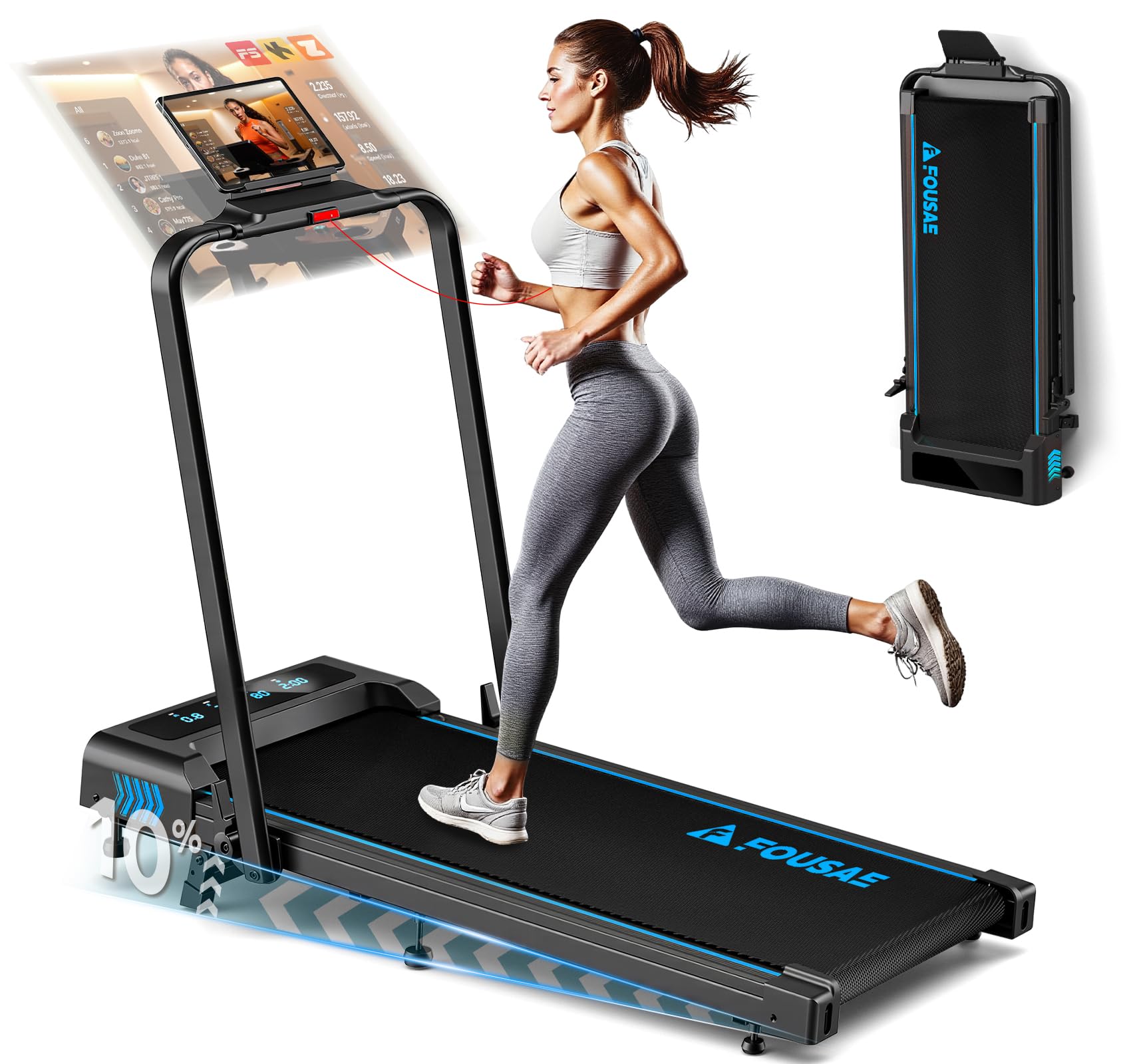
It weighs 42 pounds, folds to under five inches tall, and is rated for 400 pounds — an odd combination that is exactly the point. We think of this as a walking pad with a handle rather than a treadmill with a console, and for a heavier buyer who wants to add walking to a working day, that's the more useful object.

What it does: 0.6 to 7.5 mph, a 3.0 HP brushless motor, a manual incline up to 10%, a handle that folds out of the way, a magnetic remote, and 12 preset programs on a full-width LED. The deck sits low enough to step onto without thinking about it, and the whole thing tucks under furniture between sessions.

The limits are real. At 7.5 mph the ceiling is a brisk walk or a gentle jog, and the belt is short enough that you settle into the middle of it rather than stretching out. Running is not the use case here, whatever the speed range suggests, and a heavy runner should be looking at the full-size machines above.

For a heavy walker in a small apartment it earns its place, though: 400 pounds of rating, a motor that holds a steady walking pace, and an incline that turns flat walking into work. The remote is the detail we appreciate most, since you can drop the pace mid-call without reaching down to the console.

Bottom line: A 400-pound rating in something you can slide under the sofa: this is the pick for a heavier user who wants to walk while working, not run.

#3

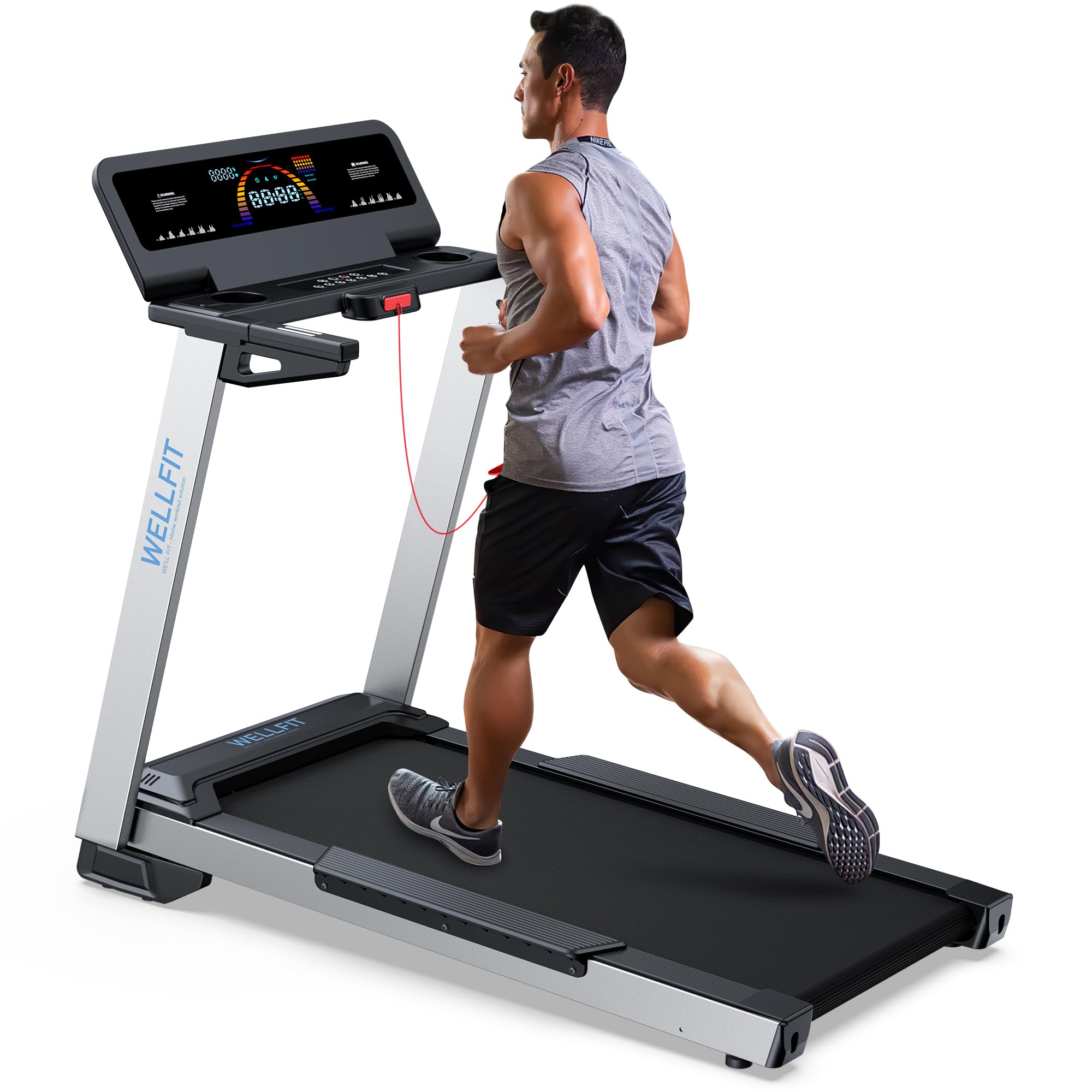
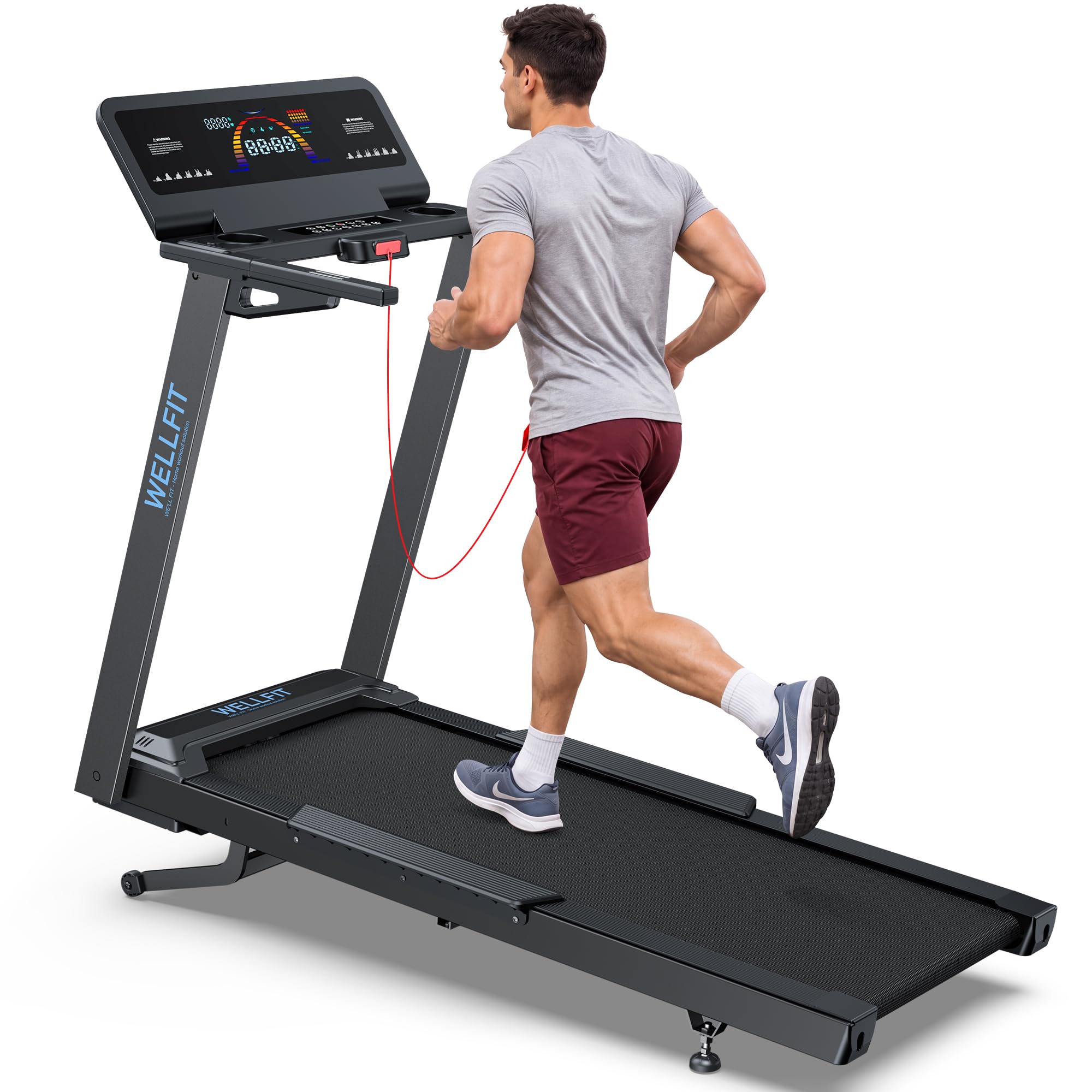
WELLFIT Auto Incline Treadmill

WELLFIT Auto Incline Treadmill

Heavy runners

Our Score 8.8/10
Check Price

Worth Noting

  • 120-pound frame takes two people to move
Motor
4.5 HP
Incline
0-15%, motorized
Max User Weight
500 lb
Running Surface
20" x 55"
Read the full review

The rating is where most treadmills quietly disqualify a heavier buyer, so 500 pounds is the first thing we checked and the reason this one leads our list. What backs it up matters as much: a 20-by-55-inch belt that gives a long stride somewhere to land, a 4.5 HP brushless motor, and a 15% incline you change from the console instead of stepping off to move a pin.

A 120-pound frame is why we're comfortable recommending this for running as well as walking. Frame weight is what keeps a deck from rocking and the whole machine from creeping across the floor when someone heavy picks up speed, and it's also why setup is a two-person job — plan for that before the box arrives rather than on the afternoon it does.

The console is plain in the way we like: 12 preset programs, handrail pulse sensors, a Bluetooth speaker, and an optional app, with nothing that expires. Speed, time, distance, calories, and steps are all on the LED, and the 3.5-inch side rails give you somewhere to plant a foot if you need to stop mid-interval.

Where it gives ground to the premium machines here is at the very top of the range: 10 mph rather than 12, and a three-year warranty rather than lifetime frame and motor coverage. For most homes that's a fair trade. If your week includes structured speedwork at 8 mph and up, read the 3G Cardio entry next.

Bottom line: If you want one treadmill that handles a heavy walker and a heavy runner without flinching, this is the one we recommend: 500 pounds of rating, a long deck, and a motor with headroom.

#4

WELLFIT T24 Treadmill

WELLFIT T24 Treadmill

Budget heavy-duty

Our Score 8.6/10
Check Price

Worth Noting

  • 45-inch deck is short for tall runners
  • Fixed handrails sit low for tall users
Motor
4.0 HP
Incline
Manual, up to 5%
Max User Weight
450 lb
Running Surface
20" x 45"
Read the full review

A 20-inch belt on the least expensive full-size machine in this group is the detail that earns this one a place. The T24 is rated for 450 pounds, runs a 4 HP brushless motor up to 10 mph, and gives you the same belt width as our top pick — the dimension a heavier runner actually feels, because a narrow belt pushes your stance inward and shortens your stride.

We rank it above any 300-pound-rated machine with a famous badge on the motor cover. The rating is the one specification you can't add later, and the alloy steel frame and 3.5-inch side rails here are built around it. Assembly is about as easy as this gets: it arrives nearly complete, and the tools come in the box.

The incline is the compromise. It's manual, with two positions and a top end around 5%, so hill work means stepping off to move it rather than tapping a button. If your routine is flat walking or steady jogging, that costs you little; if you want to train on gradient, our top pick hands you motorized incline for a step up in money.

It also doesn't fold, so it holds its floor space permanently — a fair trade when you have a corner to spare and a poor one in a studio apartment. What you get in return is a 94-pound frame that stays where you put it and a console simple enough to run without the manual.

Bottom line: The value pick for a heavier user: 450 pounds of capacity and a full-width belt for the least money here, with a steel frame sturdy enough for daily running.

#5

Ateedge Auto Incline Treadmill

Ateedge Auto Incline Treadmill

Small-space incline

Our Score 8.4/10
Check Price

Worth Noting

  • 18-inch belt is narrow for a wide stance
  • 42.5-inch deck rules out fast running
Motor
3.0 HP
Incline
0-15%, motorized
Max User Weight
350 lb
Running Surface
18" x 42.5"
Read the full review

Forty-two and a half inches of belt is the number to sit with before you buy this one. It's the shortest running surface in this roundup, and on a treadmill the deck decides whether you're walking comfortably or managing your foot placement the whole time.

Everything else is generous for the money, and the handgrip controls were the first thing we noticed: 15 levels of motorized incline reaching 15%, a 3.0 HP motor with a 10 mph top speed, 36 preset programs, and up and down buttons where your hands already are. It folds to roughly 35 by 27.5 by 48 inches and weighs 90 pounds, so one person can shift it between rooms.

For walking at 3 to 4.5 mph on a steep grade, the short deck is a non-issue, and the incline is the reason to pick this machine: gradient walking asks more of your legs at the same speed, and a button beats stepping off to move a pin. Jogging at 6 mph and up, you feel the end of the deck sooner than you want to. A heavy runner belongs on the WELLFIT or the 3G Cardio instead.

The 350-pound rating matches the two premium machines here, and the shock-absorbing deck — eight internal and six external cushions — is a real comfort at walking pace. For a small room and a walking habit, this is a sensible midrange buy.

Bottom line: A midrange way to get motorized 15% incline and a 350-pound rating, provided you mostly walk and the room you have is small.

#6

Horizon 7.4AT

Horizon 7.4AT

Tall, broad users

Our Score 8.2/10
Check Price

Worth Noting

  • 318 pounds, the heaviest machine here
  • 76-by-37-inch footprint wants a permanent spot
Motor
3.5 HP
Top Speed
12 mph
Max User Weight
350 lb
Running Surface
22" x 60"
Read the full review

Most home treadmills stop at a 20-inch belt; this one gives you 22, along with 60 inches of length, which adds up to the largest running surface in this roundup. It's the specification we care about most on a machine this size, because width is what keeps a heavier runner from shortening their stride to stay centered on the belt.

It's also the most responsive treadmill here for intervals: a 3.5 HP RapidSync drive, quick-dial controls for speed and incline, and a top speed of 12 mph. If you alternate hard efforts with recovery, the dials are the feature you'll use every session — you can change pace without breaking rhythm or hunting along a button row.

What you get for the footprint is gym behavior: a 3.5 CHP continuous-duty motor that holds speed under load, variable-response cushioning that changes support along the deck, and app connectivity that works with training services you may already pay for rather than locking you into one.

Warranty coverage is among the strongest here — lifetime on the frame and motor, five years on parts, two on labor — and the 350-pound user rating covers most of the buyers this guide is written for. What you're paying for is the deck, and it's the biggest one in this group by a clear margin.

Bottom line: Buy this if your stride is long or your shoulders are broad: the 22-by-60-inch deck is the biggest here, and the rest of the machine is quick enough to use it.

How We Tested the Best Treadmills for Heavy People

We started by pulling every treadmill we could find with a stated user weight capacity of at least 300 pounds, then cut anything whose warranty quietly excluded heavier users — a startling number do, in the fine print. From there we filtered by continuous horsepower, belt dimensions, and price, and landed on seven machines spanning budget and premium. Each one lived in a real home for the better part of a year, not a showroom floor.

Our testers ranged from roughly 220 to 290 pounds, and every machine got the same schedule: a 45-minute incline walk in the morning and interval running at night. We taped a mark on each belt to see whether it drifted to one side, gripped the belt at the front roller while it ran to feel for slip, measured the deck against where our feet actually landed, and put a hand on the motor housing afterward to check how hot it got. Speed and incline controls had to be reachable mid-run without breaking stride.

Noise got checked with a decibel app at the console and from the next room with a TV on, since a machine you can hear through the floor is a machine nobody uses. We assembled each one solo, timed it, and dragged it across carpet and hardwood to see whether it stayed put. At the twelve-month mark we re-checked belt tracking, listened for new rattles, and reread each warranty to see what a heavy user is genuinely covered for — which is where value either holds up or falls apart.

How to Choose Treadmills for Heavy People

Start with the rating, then ask what supports it

Shop the maximum user weight first, and leave headroom — at least 50 pounds above the heaviest person in the house, because a running stride loads a deck well beyond body weight. A 300-pound rating is a general-population figure, and it's where several familiar budget models sit. Above 350 pounds the frame, deck, and motor are built to a different standard, and you feel it in the machine's own weight: the picks here run from about 80 pounds to 318.

Deck width first, then length

Width is what a heavy user feels within a minute. An 18-inch belt has you holding a narrow line, 20 inches is comfortable for most builds, and the Horizon's 22 is genuinely roomy. Length matters as soon as you jog: from 55 inches up, a long stride lands without clipping the front roller, while a 42-inch deck is a walking surface. If you're tall, spend the budget on length before width.

Motor, speed, and how the incline is adjusted

Horsepower figures on budget listings are often peak rather than continuous, so read them as a ceiling rather than a promise. A 3.0 HP motor holds a walk and a steady jog; 4.0 HP and above gives a heavier runner headroom and quicker recovery between intervals. Motorized incline is worth paying for if you walk hills — it's the difference between tapping a button and stepping off to move a pin, which is what the manual machines here ask of you.

Space, delivery, and the warranty clause that matters

Measure the unfolded footprint and leave clearance behind the deck for a stumble. Above 200 pounds, pay for room-of-choice delivery when you order; wrestling a boxed treadmill upstairs afterwards is how a good purchase turns into a bad week. Then read the warranty on the frame and motor specifically — coverage here runs from one year to lifetime, and that clause tells you which parts the maker expects to replace.

Frequently Asked Questions

Final Verdict

For most heavy buyers, the WELLFIT auto-incline treadmill is the machine to buy: 500 pounds of rating, the longest deck in the midrange, and a motor with enough headroom that you can run rather than just walk on it.

Choose the 3G Cardio Pro Runner X if you do structured speedwork and want lifetime frame and motor coverage behind a 12 mph belt, or the WELLFIT T24 if budget settles it and a manual incline is a fair trade. Whatever you pick, buy 350 pounds or more of rating — it's the one specification that can't be upgraded later.