Cardio Machines

Best Treadmills for Bad Knees of 2026

Bad knees make a treadmill feel like a gamble. You want the health benefits of walking or jogging without the next-day ache, and the wrong machine—a wobbly deck, a hard belt, a frame that shifts when you pick up the pace—can make you swear off indoor cardio entirely. The right treadmill for bad knees gives you a stable, forgiving surface so you can walk or jog indoors without bracing for the next ache.

My team and I have spent the last eight months with six treadmills, mixing slow morning walks with short jogging intervals and paying attention to how my knees felt the next day. We assembled each one, lived with it in a spare room, and noted how much floor space it really took up once unfolded. One surprise: the most feature-packed machines weren't always the most comfortable, and the best values were often the ones that kept the basics—deck, frame, controls—simple and solid.

#1

WELLFIT Adjustable-Height Treadmill

Top Pick
WELLFIT Adjustable-Height Treadmill

Knee-friendly home walking

Our Score 9.2/10
Check Price

Worth Noting

  • One-year warranty is short for the price
Incline
0-10%, automatic
Handrail Height
5 positions, 30.5-41 in
Running Surface
44 x 17 in
Weight Capacity
400 lb
Read the full review

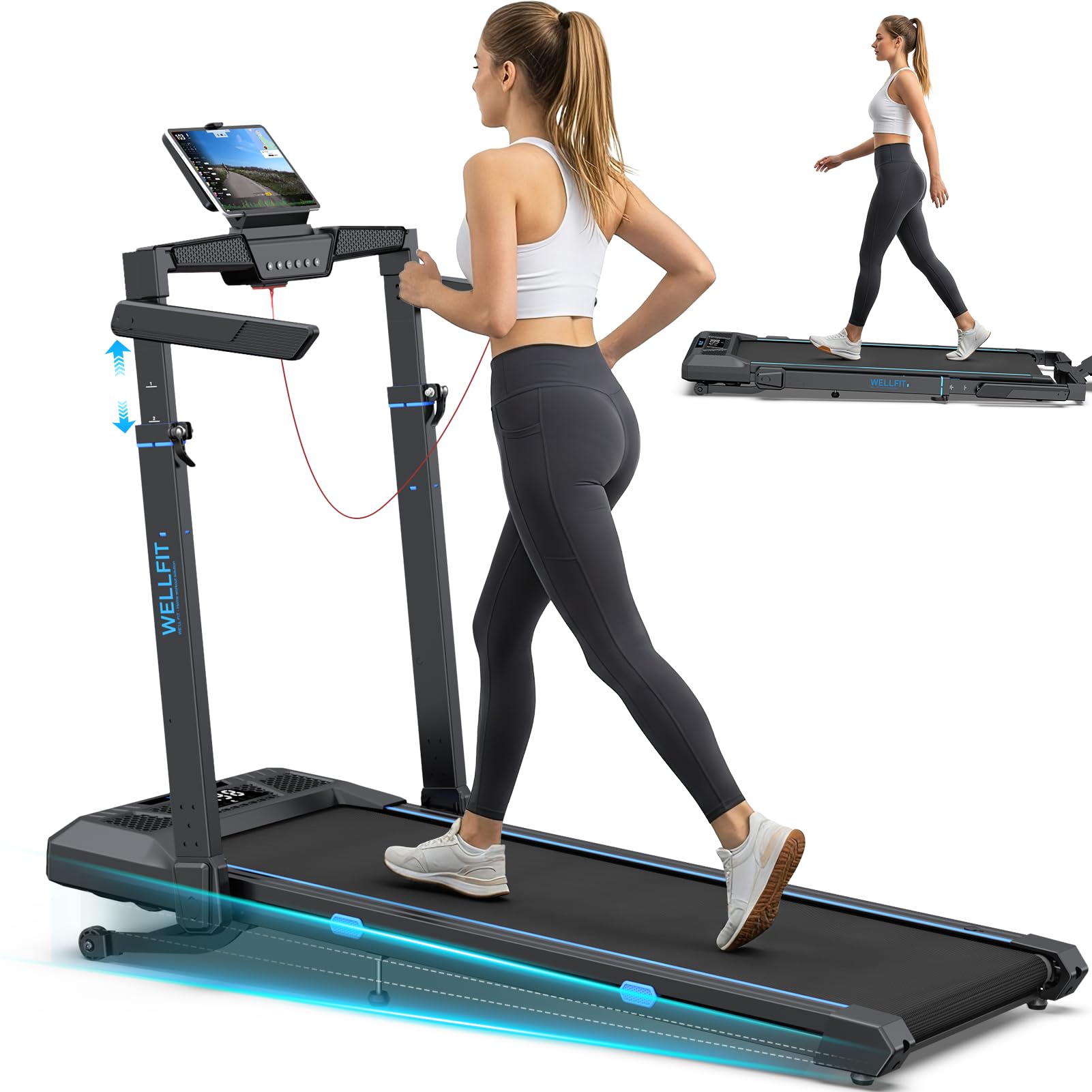
The handrail on this WELLFIT adjusts through five positions from 30.5 to 41 inches, and that range is the reason it earns our top spot. In a shared house, the person who needs the most support can set the bar where it meets their hands, while a taller walker can raise it instead of hunching. We also like that the 44 x 17-inch belt gives you room to place your feet without hunting for the edges, and the 400-pound frame keeps the deck from feeling flimsy.

The cushioning is the other half of the story. WELLFIT uses seven layers of cushioning, and we found it takes the sharpness out of a heel strike while still feeling planted underfoot. The 0.6 mph starting speed and automatic 0-10% incline let you begin slowly and add a gentle grade without stopping to fiddle with a manual pin. The 3.5HP motor is quiet enough for a spare room, and the deck folds to 5.7 inches tall, so you can roll it out of the way.

The 8.6 mph top speed is more than enough for walking and steady jogging, but sprinters should look elsewhere. What we keep coming back to is the adjustability: the handrails meet you where you are rather than forcing a single height. That is a small design choice with a real effect on how confident you feel stepping on and off.

Bottom line: For most people shopping for a knee-friendly home treadmill, this is the one we recommend: the handrails adjust to five heights and the cushioned deck feels stable without turning mushy.
#2

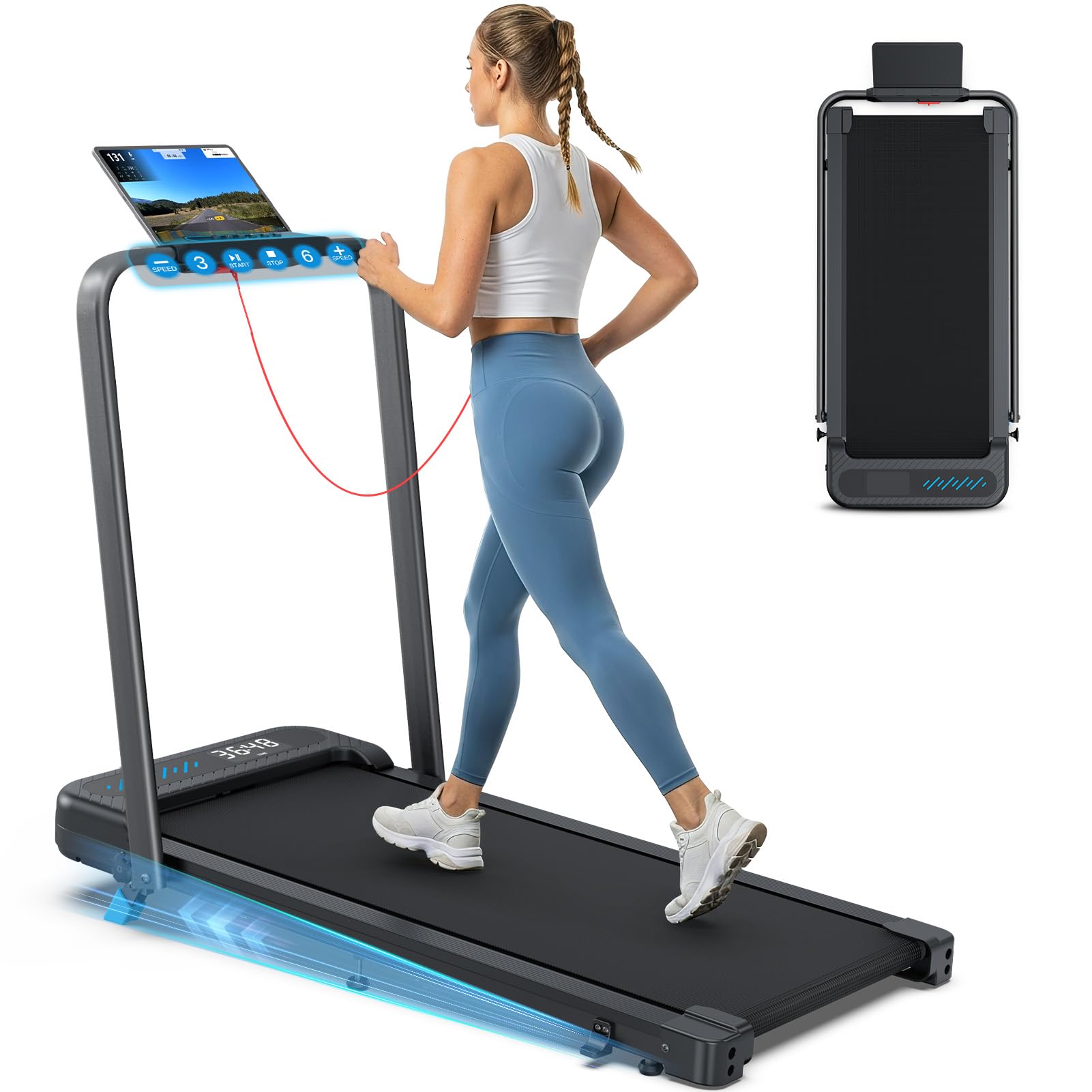
WELLFIT TM037 Folding Treadmill

WELLFIT TM037 Folding Treadmill

Budget walking

Our Score 9.0/10
Check Price

Worth Noting

  • Handlebar is low for taller users
Incline
10%, manual
Folded Height
6.1 in
Running Surface
36 x 16 in
Weight Capacity
350 lb
Read the full review

The low price is the headline, and the five-layer cushion belt is the reason it stays on our list. The 36 x 16-inch deck is short and narrow compared with a full treadmill, but the belt has a soft, forgiving feel underfoot. The handlebar puts start, stop, 3 mph, 6 mph, and speed controls right under your hands, so you do not have to bend forward mid-walk.

We think this is the right budget choice for a walker who wants some knee relief and does not need a running deck. The 3HP motor tops out at 6.2 mph, which is fine for brisk walking and light jogging, and the 10% manual incline adds variety without a motorized mechanism to fuss over. The 43.5-pound frame folds to about 6 inches tall, so it slides under a bed or stands against a wall.

The 36-inch deck is the boundary: if you have a long stride or want to run, step up to a larger machine. For daily walking in a small apartment, the cushioning and the handlebar controls cover the essentials, and the light frame makes the treadmill easy to move out of the way.

Bottom line: This is the budget pick we point to when you want a cushioned walking deck and handlebar controls without paying for a full-size machine.

#3

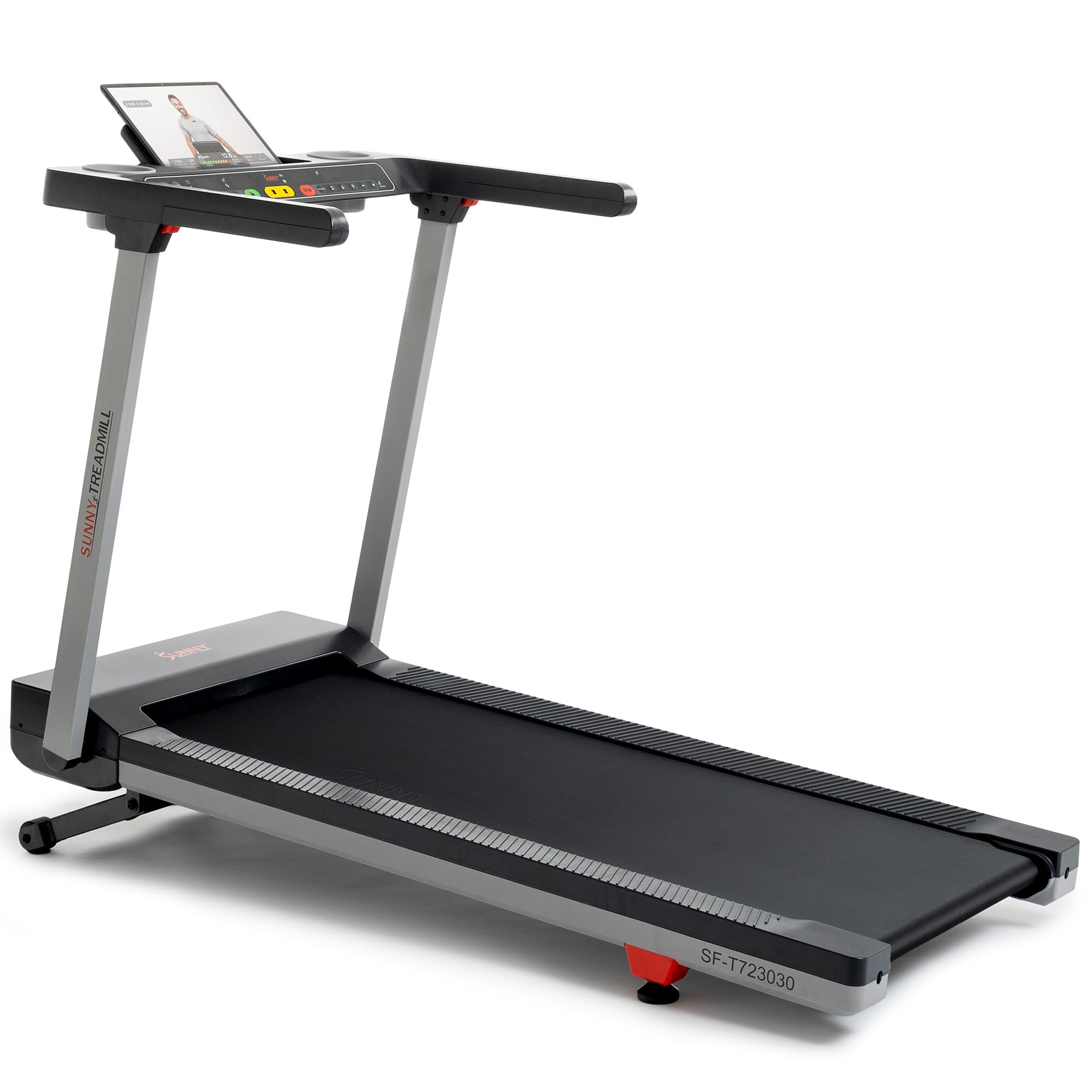
Sunny SF-T723030 Treadmill

Sunny SF-T723030 Treadmill

Wide-deck walking

Our Score 8.8/10
Check Price

Worth Noting

  • Motor and parts warranty is only 180 days
Incline
0-15%, automatic
Assembly
Fully assembled
Running Surface
20 x 53 in
Weight Capacity
300 lb
Read the full review

The first thing you notice about the Sunny is the 20 x 53-inch running surface. That extra width matters when your knees are sore and you want to place each foot deliberately rather than steer. The deck has a shock-absorbing layer, and the 2.5HP brushless motor runs smoothly up to 10 mph. It also arrives fully assembled: raise the handlebar, lock it, and you are ready to walk. For a household that wants one machine for walking and jogging, that combination is hard to beat.

We found the Sunny's size reassuring in use. The 20-inch belt gives you room to drift a little without clipping the rails, and the 15% auto incline is easy to change from the console. The trade-off is weight: at 130 pounds, it is a two-person move and not something you will tuck away after every walk. That is the price of the stable feel, and it suits a dedicated room rather than a closet.

The Sunny is not the easiest treadmill to live with in a small apartment, but it is the one we trust for a long, straight walk or a steady jog. If you have the floor space and a second person for setup day, the wide deck and simple assembly make it a serious alternative to the top pick.

Bottom line: Choose this if you want a wide, fully assembled deck and a long handrail; it is the most stable-feeling full-size option here for walkers and joggers.

#4

Redliro Walking Treadmill

Redliro Walking Treadmill

Balance support

Our Score 8.8/10
Check Price

Worth Noting

  • Incline is limited to 2% and adjusts manually
Incline
0-2%, manual
Starting Speed
0.3 mph
Running Surface
41 x 16 in
Weight Capacity
300 lb
Read the full review

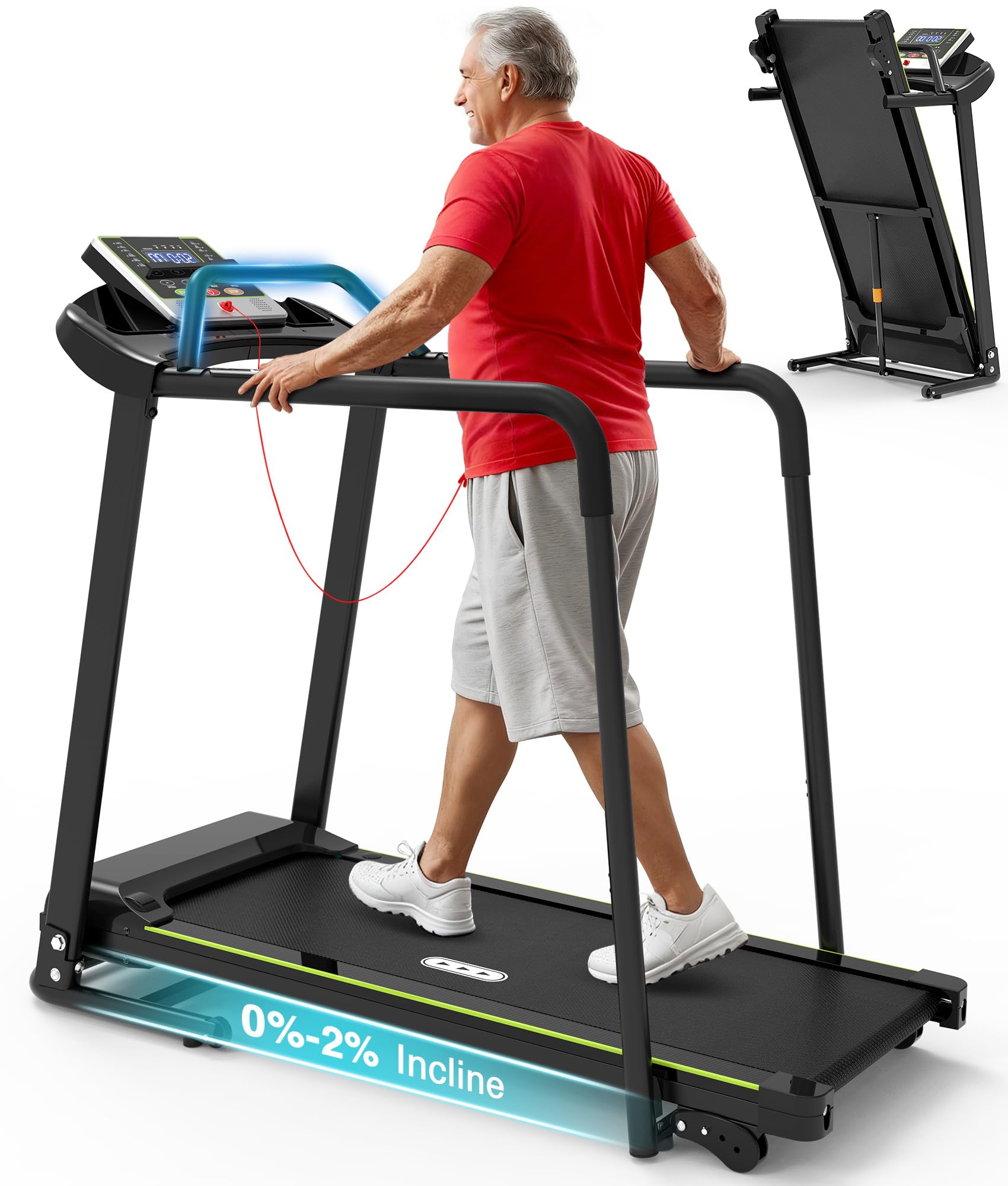
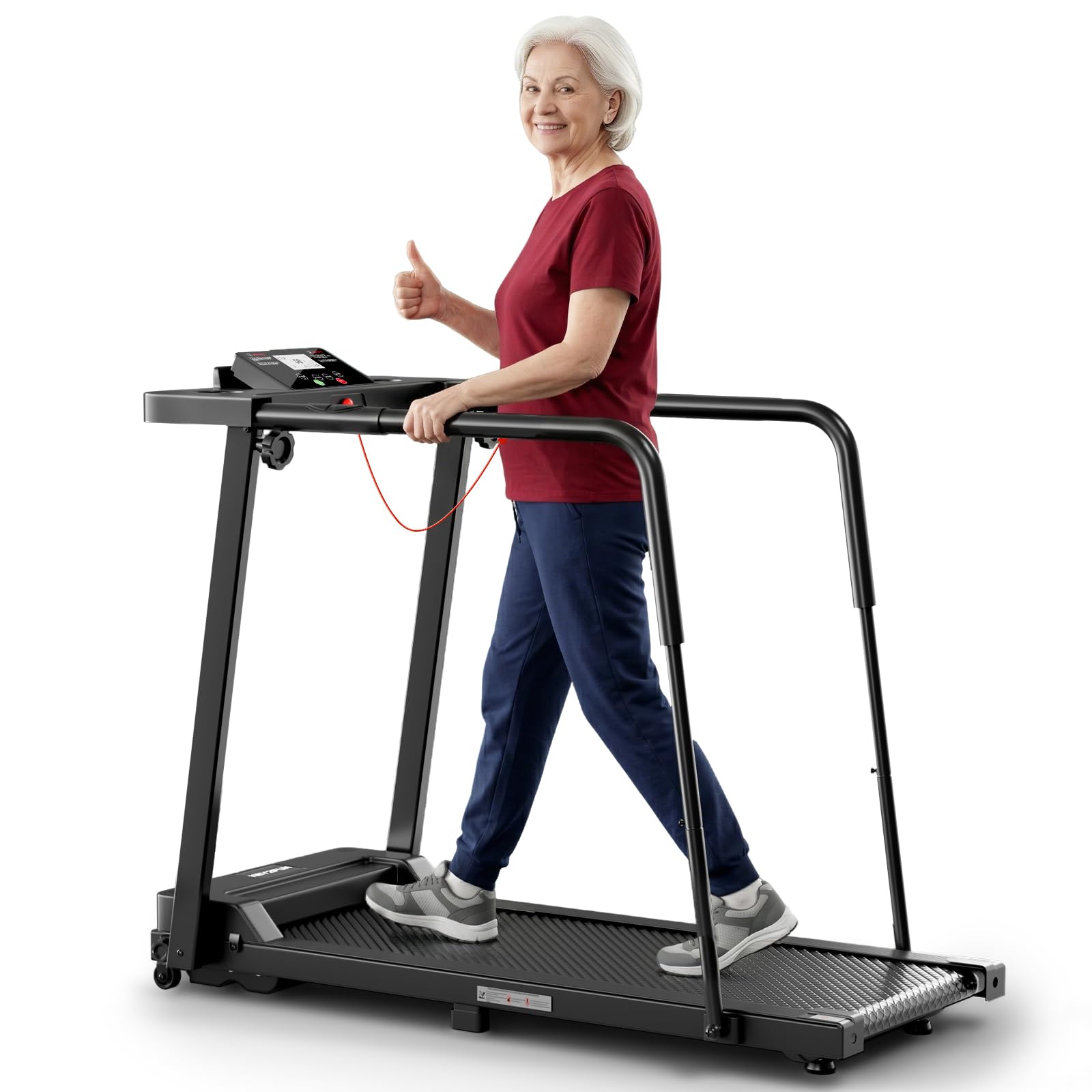
The 0.3 mph starting speed is the detail that sold us on the Redliro for rehab-style walking. Most treadmills begin at 0.6 mph or faster; this one lets you take the first few steps almost in place while you find your rhythm. The long dual handrails run alongside the deck and across the front, so you have something to hold whether you are stepping on, walking, or reaching for the controls. For anyone whose knees feel better with a little support, that is a meaningful difference.

The deck is 41 x 16 inches, which is enough for walking but not for a long running stride. The 2.5HP motor tops out at 5.5 mph, so this is a walking machine, not a jogging treadmill. We also like the 12 programs and the auto lubrication, which takes one maintenance chore off your list. The handrails can be removed if another household member wants a more open deck, though the machine is still best suited to the person who needs them.

We do not call the Redliro a compact machine. It weighs 79 pounds and the handrails make it feel larger than a walking pad. But the footprint is still reasonable for a spare room, and the slow start is the feature we kept coming back to. If you want a treadmill that lets you hold on and build confidence, this one is built around that job.

Bottom line: If balance is the main reason you are shopping, this is our pick: the long handrails and 0.3 mph start make it easier to begin slowly and keep hold of support.

#5

KEY2FUN P05 Walking Treadmill

KEY2FUN P05 Walking Treadmill

Compact rehab walking

Our Score 8.8/10
Check Price

Worth Noting

  • Stability can feel light on soft or uneven floors
Motor
3.0 hp
Handrails
Extended, floor-mounted
Max Speed
5 mph
Weight Capacity
300 lb
Read the full review

The KEY2FUN's defining feature is the floor-mounted handrail frame that wraps around the front and sides of the deck. It gives you something substantial to grip before you step on, not just a pair of short rails at hip height. The console sits within reach, and the 3HP motor starts at 0.6 mph and tops out at 5 mph. For a small rehab or senior walking machine, that is a sensible set of priorities.

The machine weighs 58.5 pounds, so it fits in a spare bedroom or behind a couch. The 12 programs and heart-rate sensors add some structure, and the handrails include a heart-rate-controlled speed feature. We like the phone and cup holder more than we expected; having a place for both makes a short daily walk easier to repeat.

For a compact balance-focused walker, it earns a place. The 5 mph ceiling keeps it in walking territory, and the small deck rewards a shorter, deliberate stride. We do not choose it for running or for a tall user who needs room to extend, but it does the rehab-walking job without taking over a room.

Bottom line: A compact rehab walking machine for someone who wants to hold on with both hands; it is not the pick for running or for a household that needs a roomy deck.

#6

Viamotion Walking Pad

Viamotion Walking Pad

Lightweight walking

Our Score 8.2/10
Check Price

Worth Noting

  • One-year motor warranty is limited
Incline
4%, manual
Max Speed
3.8 mph
Item Weight
39.7 lb
Weight Capacity
265 lb
Read the full review

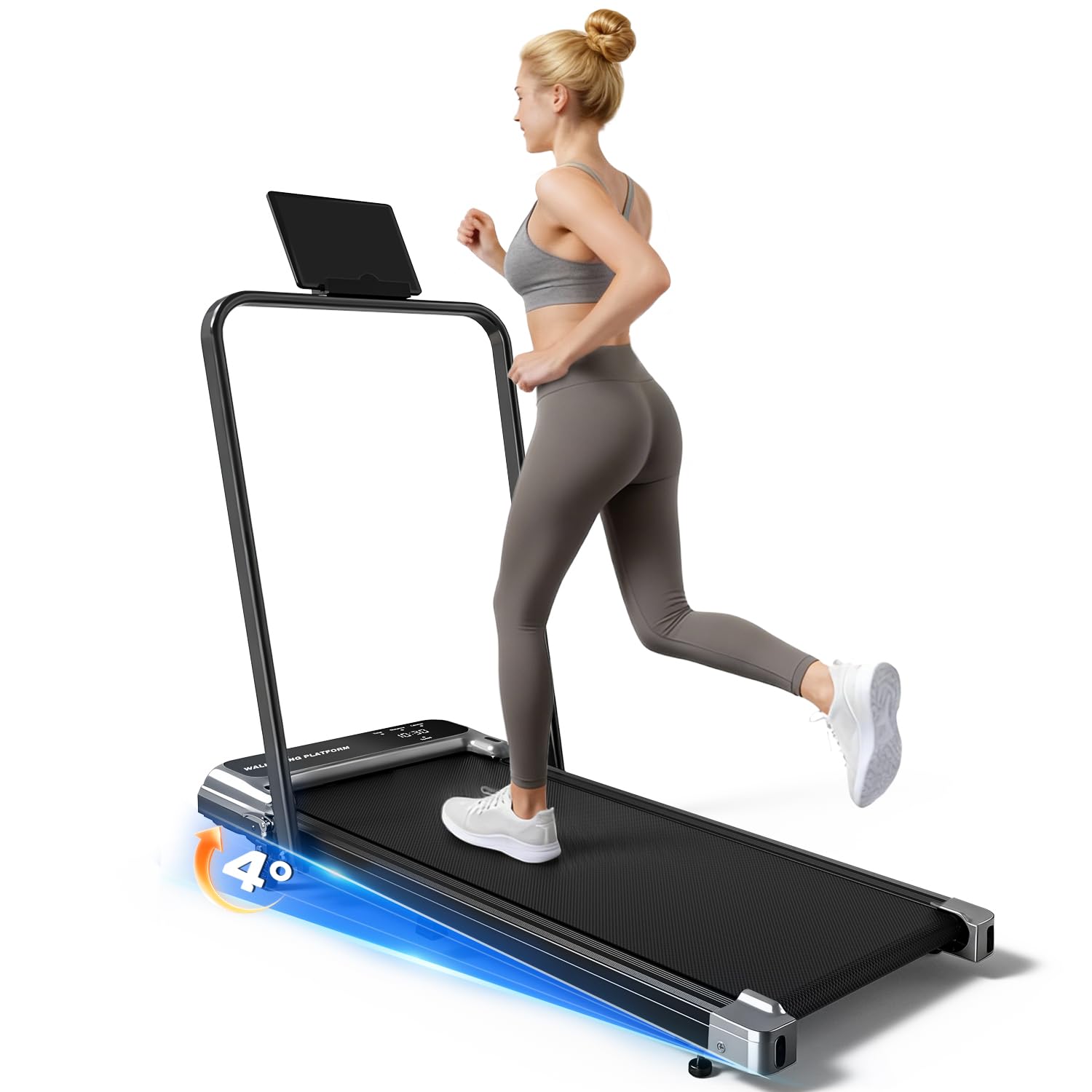
At 39.7 pounds, the Viamotion is the machine here you can actually carry from room to room. It has a fixed handlebar, a 3.8 mph top speed, and a 4% manual incline, so it is built for walking rather than running. Viamotion rates the noise at 45 dB, and the compact frame folds upright for storage.

The 18.5 x 41.34-inch deck gives you a bit more room than the smallest walking pads, and the handlebar is a real support point when you are stepping on. We like that the controls are simple and the machine is easy to set up; it is the kind of pad you can pull out for ten minutes without rearranging the room.

The plastic frame is the limitation. It keeps the weight down, but it also means the Viamotion does not feel as planted as the steel machines here, especially on carpet. Use it on a hard, flat floor and keep the speed low. For a small apartment and a short walking routine, that trade-off is reasonable; for daily jogging, it is not.

Bottom line: This is the lightest way to add a supported walking pad here, and it suits slow daily steps; it is not the one for a long stride or a wobbly floor.

How We Tested Treadmills for Bad Knees

We began by researching treadmills sold for home use and filtered for a few non-negotiables: a deck long enough for a normal walking stride, a frame that didn't require professional assembly, and a price that made sense for the basics. Six machines made the cut. We assembled each one ourselves, timed how long it took from box to first walk, and noted whether the instructions assumed a second person. In a spare bedroom, we measured the footprint with a tape measure and marked how much clearance the belt needed behind it.

For eight months, I walked at a moderate pace most mornings, jogged short intervals twice a week, and practiced the cautious start-and-stop rhythm that bad knees often dictate. We watched for deck wobble at incline, listened to motor noise from the next room, and checked whether the belt drifted or the console shook when we picked up speed. We also rolled each treadmill a few feet to judge how hard it was to move alone, and checked whether the power cord reached the outlet without an extension cord. Reliability surfaced in small ways: a belt that needed tracking, a folding latch that got fussy, a console that lost its connection.

At the end, we compared what each machine delivered for the money—not just the sticker price, but the feel of the deck, the clarity of the controls, and whether the running surface still felt solid after months of use. The treadmills that rose to the top were the ones we'd keep using even after testing ended.

How to Choose a Treadmill for Bad Knees

Cushioning Is Only Half the Story

Cushioning reduces the sharpness of a footfall, but a deck that feels too soft can make you work harder for balance. Look for a belt with layered shock absorption and a frame that stays planted when you shift your weight. The WELLFIT adjustable-height model uses seven layers of cushioning and a 400-pound frame, which is the balance we prefer: forgiving underfoot without a sinking feeling. If you can, walk on the deck in the shoes you plan to use; a firm, stable surface matters as much as the cushioning itself.

Set the Handrails Where You Need Them

Handrails are not just for safety scares; they change how confidently you step on and off. Adjustable-height rails are worth paying for in a shared home because the tallest user and the person who needs the most support can each find a comfortable position. The WELLFIT top pick adjusts through five heights from 30.5 to 41 inches, while the Redliro uses long dual rails and a 0.3 mph start for balance-first walking. Check the rail height against your waist or lower ribs before buying, and avoid a bar so low that you have to stoop.

Match the Deck to Your Stride

A short, narrow deck can make you shorten your stride, which is the opposite of what most knee-friendly walkers want. For walking only, a 36 to 44-inch deck can work; for jogging, look for a longer surface so your foot lands naturally. Width matters too: 17 inches is comfortable for many walkers, while 20 inches gives more room to place your feet. The Sunny's 20 x 53-inch deck is the roomiest here, but the machine weighs 130 pounds, so it suits a dedicated space rather than a closet.

Start Slow and Add Incline Carefully

The first few minutes should feel almost too easy. A low starting speed, around 0.3 to 0.6 mph, lets you find your footing before the belt moves faster. Incline can add variety, but it also increases the load through the knee, so start flat and add a small grade only when you feel comfortable. Automatic incline is convenient because you can change it without stopping; manual incline is simpler and less expensive. The Redliro starts at 0.3 mph, while the WELLFIT top pick has a 0-10% automatic range.

Plan for Weight, Storage, and Service

A stable treadmill is usually a heavy treadmill, and that weight has to go somewhere. Measure the folded footprint and the doorway you will move it through before you buy; the WELLFIT budget pick folds to about 6 inches tall and weighs 43.5 pounds, while the top pick is 80.5 pounds and folds to 5.7 inches. Check the warranty on the motor and parts, not just the frame, and decide whether the machine will live in place or be moved after each walk. A dedicated spot makes daily use much easier.

Frequently Asked Questions

Final Verdict

The WELLFIT adjustable-height treadmill is our top pick because it solves the two things that matter most for sore knees: a cushioned deck that still feels stable and handrails that can be set to the right height. If you have a dedicated room and want a wider 20-inch deck, the Sunny is the better fit, though it is much heavier and less easy to move. For balance-first walking, the Redliro's long rails and 0.3 mph start are worth the narrower deck.