Cardio Machines

Best Smart Treadmills of 2026

The fantasy of a smart treadmill is simple: press start, queue up a class, and run without weather or gym crowds. The reality is a 300-pound box, a footprint that can swallow a spare room, and a motor loud enough to wake the neighbors. That gap between promise and daily life is what I focused on, because the right smart treadmill should make home running quieter, easier, and more consistent—not just add another screen to your house.

Over the past six months, my team and I logged miles on seven smart treadmills, from compact folding models to full-size training decks. We assembled each one ourselves, timed the process, and lived with them in a spare bedroom, a basement, and a garage gym—settings where noise, footprint, and ride quality matter as much as top speed. We watched how quickly speed and incline changed, whether the console stayed connected, and how the deck felt at a sprint. The picks below are the ones that made daily running feel less like a chore and more like a habit.

#1

SYTIRY Smart Treadmill

Top Pick
SYTIRY Smart Treadmill

Screen-led workouts

Our Score 9.4/10
Check Price

Worth Noting

  • Manual three-position incline
  • 44-inch deck is short for running
Display
10" HD touchscreen
Incline
Manual, 3 positions
Running Surface
44" x 17"
Motor And Top Speed
4.5 HP, 9 mph
Read the full review

Ten inches of HD touchscreen is built into the console, it runs on Wi-Fi, and it plays video while you walk. That's the pitch, and for a specific buyer — the one who can't face 30 minutes staring at a wall — it's a more useful feature than any app integration on this list.

We like that the screen is part of the machine rather than a tablet balanced on the handrails: no charging cable, no wobble, no propping. Bluetooth and USB are there too, so you can stream from your own phone when the built-in apps run dry. The hardware underneath is stout — a claimed 4.5 HP motor, a 9 mph top speed, and a 450-pound weight capacity that's the highest here, which matters if you've struggled to find a home treadmill rated high enough for two people to share.

Then the deck: 44 inches long and 17 wide. That's a walking and slow-jogging surface, and 9 mph on 44 inches is optimistic, because a running stride simply runs out of belt. The incline is manual with three positions, an odd match for a machine built to keep you entertained, since every hill means stopping and stepping off. Both compromises land on the same buyer: the walker who wants the time to pass.

The caution is the electronics. There's a lot of them here for the money, and this is a newer design without the years behind it that the Horizon or the Sunny has. If the screen is what gets you onto the machine every day, that's a trade worth making; if you want something to outlast your tablet, buy simpler.

Bottom line: Buy it for the screen: a 10-inch touchscreen and Wi-Fi streaming make long walks pass faster, and the deck suits walking far better than running.
#2

Azomabox Fitkol NB2

Azomabox Fitkol NB2

Heart-rate training

Our Score 9.4/10
Check Price

Worth Noting

  • Lowest incline ceiling of the auto-incline picks
Incline
Automatic, up to 10%
Running Surface
20" x 54"
Weight Capacity
440 lb
Motor And Top Speed
5.0 HP, 9.6 mph
Read the full review

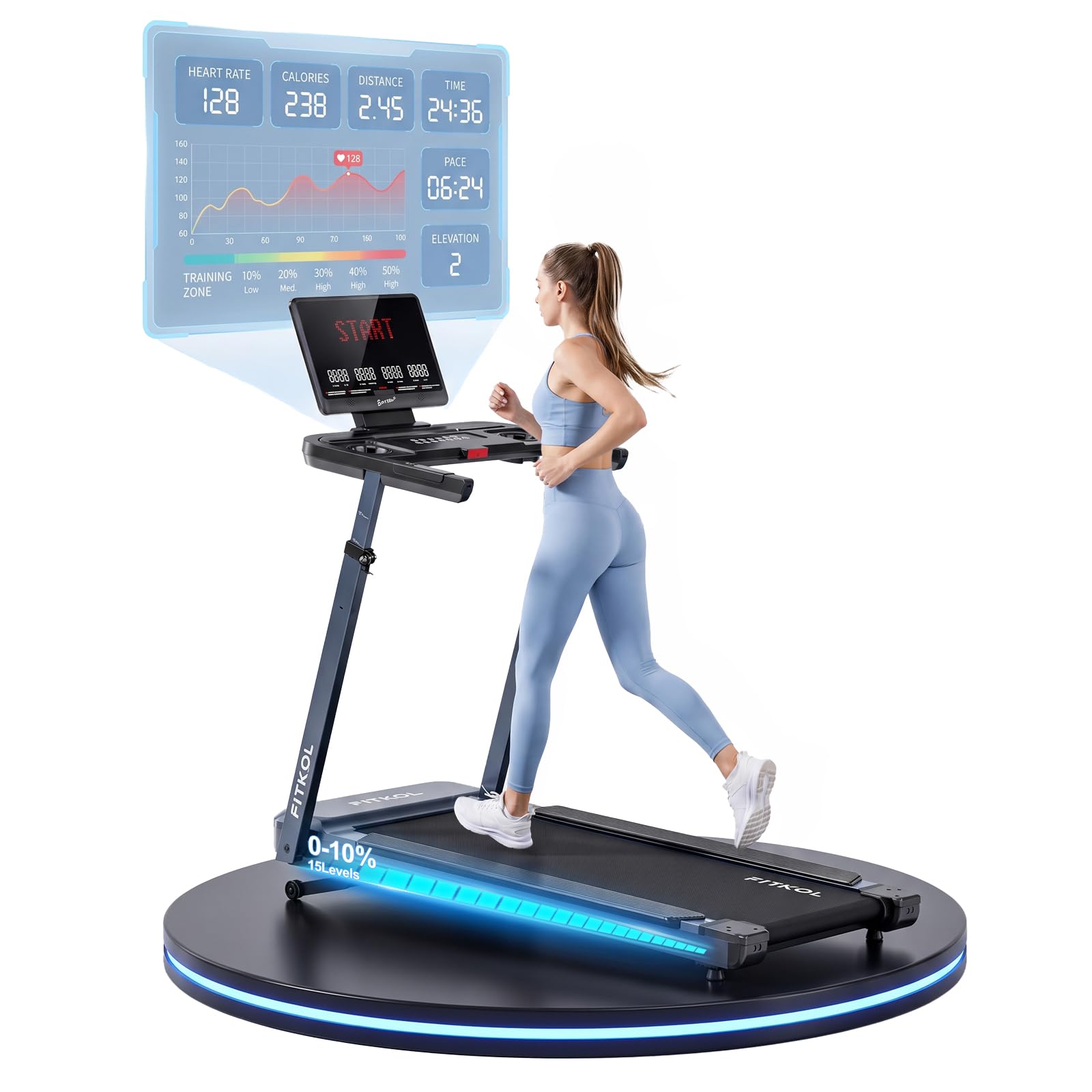
This is the only treadmill here that reads your heart rate and changes the machine for you, nudging speed and incline in small steps to hold you in a zone rather than following a fixed program. The coaching is included for life, with no membership to renew and nothing to cancel.

The hardware is serious: a 5.0 HP brushless motor, a 9.6 mph top speed, a 440-pound capacity second only to the SYTIRY, and a 20-by-54-inch deck wide enough that you're not aiming your feet. We like that combination for a household of mixed sizes — the deck and the capacity mean the tallest, heaviest user isn't the reason to upgrade in a year.

Where it gives ground is incline. Ten percent is the lowest of the automatic-incline machines here, against 15% on the Horizon, the MERACH, and the JELENS. And because the whole proposition is the adaptive software, you're trusting a newer brand's algorithms and its two-year warranty rather than a long service record. Stock has been intermittent, so check availability before you plan around it.

One practical note: heart-rate-driven control is only as good as the reading it gets, and grip sensors get unreliable once you're sweating. If adaptive training is why you're buying, budget for a chest strap — it's the difference between the feature working and the machine guessing.

Bottom line: If you want a treadmill that adjusts itself to your heart rate without a monthly bill, this is the one to beat — just accept the 10% incline ceiling.

#3

FOUSAE 5-in-1 Treadmill

FOUSAE 5-in-1 Treadmill

Desk-side walking

Our Score 9.0/10
Check Price

Worth Noting

  • Manual 10% incline
  • Compact deck suits walking and short jogs
Incline
Manual, up to 10%
Unit Weight
41.9 lb
Weight Capacity
400 lb
Motor And Top Speed
3.0 HP, 7.5 mph
Read the full review

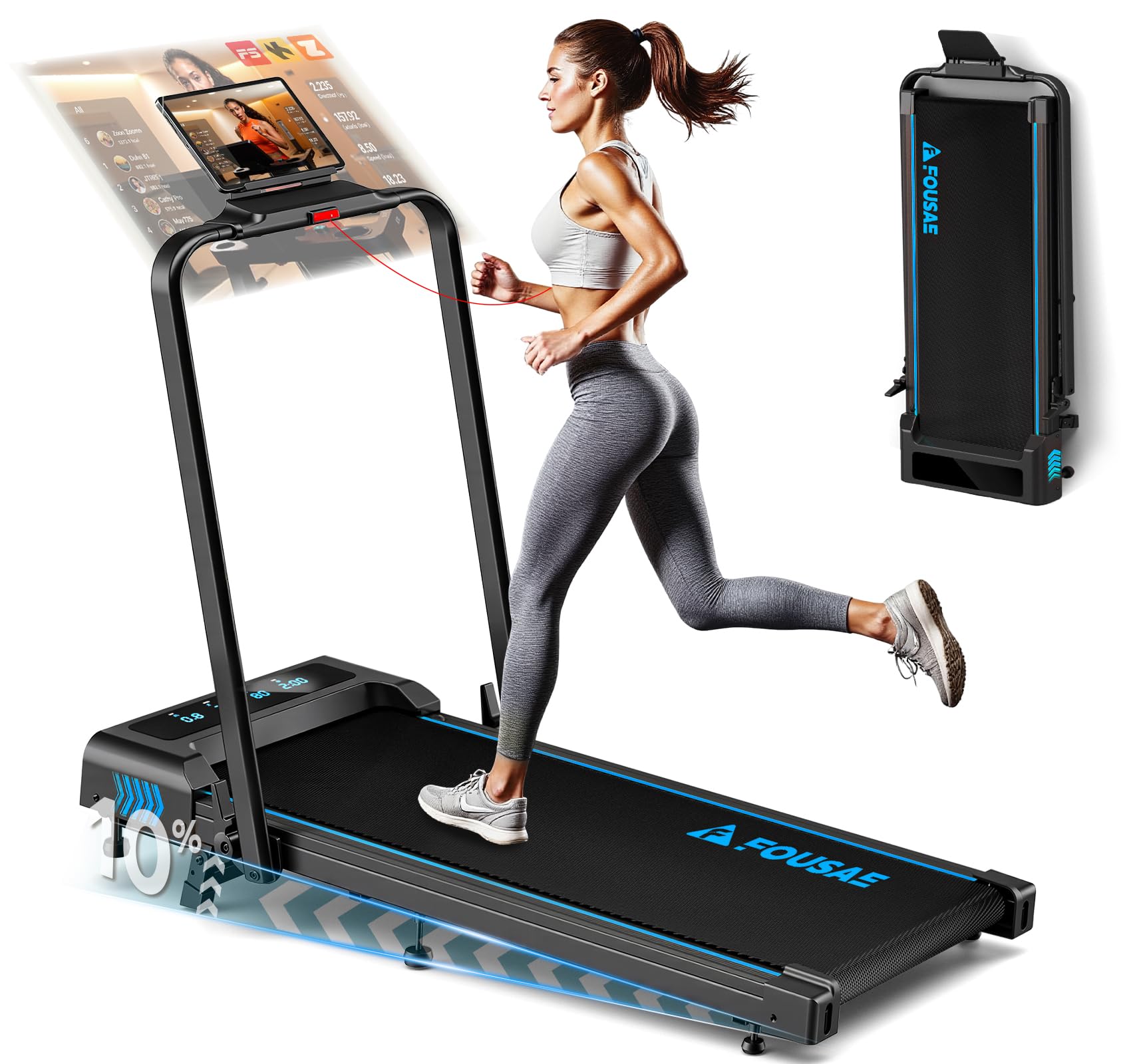
Think of this as a walking pad that grew a handlebar. The deck is flat and low, the handle folds down when you want to push it under a desk, and the whole unit weighs 41.9 pounds — light enough to stand against a wall between uses and easy for one person to move.

It earns a place because of what it does for the money: a 3.0 HP brushless motor, a 400-pound capacity, and 7.5 mph, which is a genuine jog rather than the 4 mph crawl most pads manage. Twelve HIIT programs and a remote give you something to follow when you don't want to think, and the app connection adds virtual routes and challenges.

Two honest limits. The incline is manual — 10%, set by hand before you start — and the deck is compact, so a long stride runs out of room. This is the machine for walking through meetings and jogging a mile at lunch, not for training for a 10K, and no amount of program variety changes that.

The detail we like most is small: the remote works whether the handle is up or folded down, so you're not bending to the deck to change speed mid-call. On a machine built for multitasking, that matters more than the top speed.

Bottom line: A budget hybrid we like for desk-side walking and short jogs — among the cheapest machines here and it folds flatter, though it isn't built for real running.

#4

MERACH T12

MERACH T12

Small-space jogging

Our Score 8.6/10
Check Price

Worth Noting

  • 42.5-inch belt and 7.5 mph cap
Incline
Automatic, up to 15%
Folded Size
49.2" x 25.6" x 27.6"
Running Surface
42.5" x 16.5"
Motor And Top Speed
2.5 HP, 7.5 mph
Read the full review

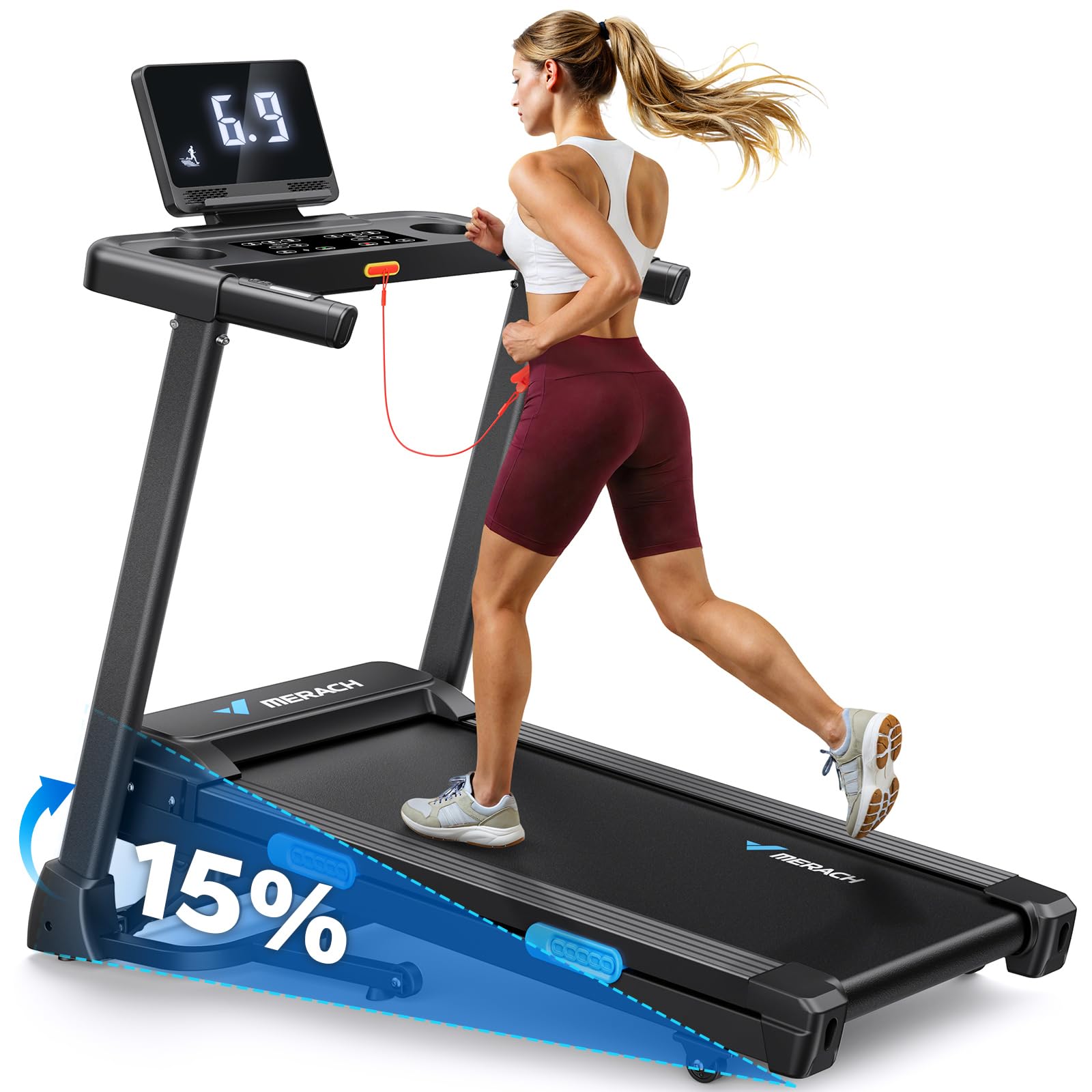
The 15% automatic incline is the surprise on a machine this small. A couple of the compact treadmills here make you set the grade by hand; the T12 moves it for you, and the MERACH app raises and lowers it as a scenic route climbs. That combination — hills you didn't ask for, on a deck that disappears afterward — is unusual at any price.

Folded, it's 49.2 by 25.6 by 27.6 inches. The deck drops down instead of standing the console up, so the whole thing ends up roughly waist-high and can stand in a closet or behind a sofa. We think that's the right shape for this buyer: someone in an apartment who wants the machine gone between sessions, not someone building a home gym.

The rest is sensible. A 2.5 HP brushless motor, 7.5 mph, a 42.5-inch belt, 12 preset programs, a 15.1-inch display, and a 300-pound capacity — walking and light jogging territory. It's around 46 pounds, so one person can shift it without waiting for help, and the under-40 dB claim holds for walking and less so for a jog, as with every machine here.

The limit is stride. If you're tall or you like to open up, 42.5 inches feels like running in a hallway, and the 7.5 mph cap will feel the same. For daily walks and twenty-minute jogs it does what much bigger machines do, and then it disappears into the furniture.

Bottom line: For a small apartment and a walk-to-jog routine, this is our pick: it folds flat, climbs to 15% on its own, and undercuts the other mid-range machines here.

#5

JELENS Auto Incline Treadmill

JELENS Auto Incline Treadmill

Budget hill walking

Our Score 8.4/10
Check Price

Worth Noting

  • 43.31-inch belt limits stride
  • Low console height
Incline
Automatic, up to 15%
Unit Weight
79.8 lb
Running Surface
15.75" x 43.31"
Motor And Top Speed
3.0 HP, 7.5 mph
Read the full review

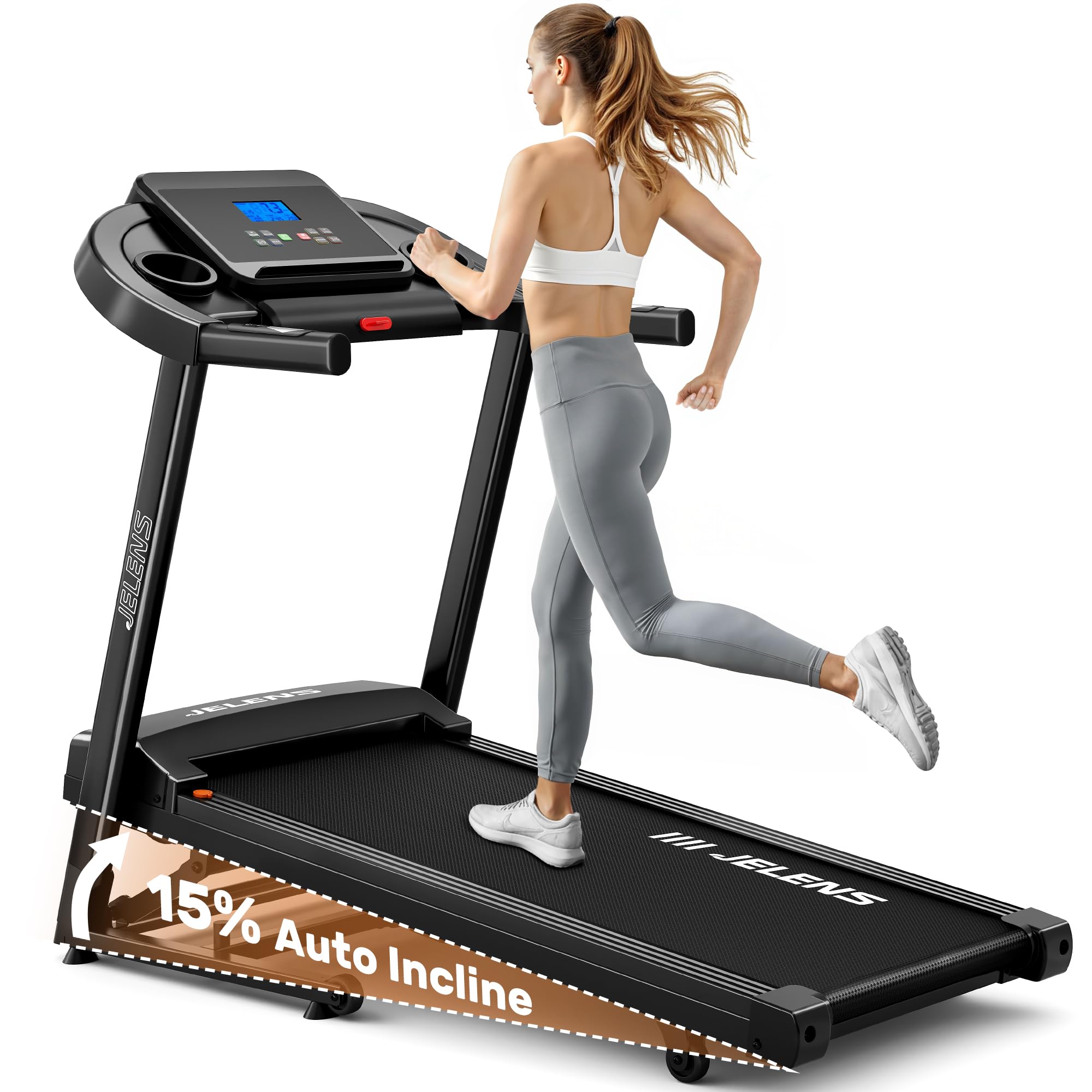
Automatic incline is normally the first thing a budget treadmill drops, and this one keeps it: 15% that moves on its own, on the cheapest machine here that offers hills. That's the reason it's on the list, and it's not a small one — programmed incline is the difference between a daily walk and a daily walk with a grade.

The rest of the package is honest for the money. A 3.0 HP brushless motor, a 7.5 mph ceiling, a 330-pound capacity, and a hydraulic fold that lets the deck down gently instead of slamming. Setup is quick by treadmill standards — this is not an hour-long frame build — and at 79.8 pounds it's manageable for one person to shift.

The belt is 43.31 inches long and 15.75 wide, among the shortest here, and it defines the machine: walking and slow jogging, with a stride that stays compact. Push toward the 7.5 mph ceiling and you'll feel how little belt is left in front of you. A long-legged runner will hate it within a week.

The console sits low — the whole unit is 37.57 inches tall — so you look down at the readout rather than straight ahead, and there's no screen beyond the basics. That's where the money went instead: motor and incline. For a small room and a daily half hour with hills, that's the right trade.

Bottom line: The budget pick: 15% automatic incline and a brushless motor for less than any other machine here with hills, as long as your stride fits a 43-inch belt.

#6

Horizon 7.4AT

Horizon 7.4AT

Distance running

Our Score 8.2/10
Check Price

Worth Noting

  • 318 pounds and 76 inches long
  • Belt can drift and need re-tracking
Incline
Up to 15%
Connectivity
Bluetooth, USB, training apps
Running Surface
22" x 60"
Motor And Top Speed
3.5 CHP, 12 mph
Read the full review

Twenty-two inches wide and 60 long is a gym deck, and it's the first thing that separates the 7.4AT from everything else here. It also explains the 318-pound weight and the 76-inch length: this is a treadmill that takes a room rather than borrowing a corner of one. If you run — really run, with intervals and long slow miles — that's the trade you want to make.

The numbers back it up: a 3.5 CHP continuous-duty drive, a 12 mph top speed, a 15% incline, and a 350-pound capacity. We also rate the controls. QuickDial paddles on the handrails let you swing speed and incline without breaking stride, which matters most mid-interval, when you're not steady enough for a small console button. Bluetooth pairs with third-party apps like Zwift and Peloton, so the training platform is your choice rather than the manufacturer's.

Two things to plan for. Assembly is a couple of hours and it wants two people, and the box is heavy enough that where it lands is where it stays. The belt can also drift to one side over months of use and need re-tracking, which is ordinary treadmill maintenance but worth knowing before it happens rather than after.

The warranty is the rest of the argument: lifetime on the frame and motor, five years on parts, two on labor. On a machine that costs this much, that coverage is a real part of what you're buying.

Bottom line: If you actually run — intervals, hills, long slow miles — this is the treadmill we recommend; everyone else can save the money and the floor space.

#7

Sunny Premium Smart Treadmill

Sunny Premium Smart Treadmill

Walking and jogging

Our Score 8.0/10
Check Price

Worth Noting

  • Narrow 16.5-inch belt at jogging pace
  • 8 mph ceiling limits distance runners
Incline
12 levels, up to 12% automatic
Connectivity
Bluetooth, SunnyFit app
Running Surface
48.8" x 16.5"
Motor And Top Speed
2.0 HP, 8 mph
Read the full review

The ten seconds that sold us on this machine happen after the workout. The deck drops on a hydraulic strut, the frame stands upright at 54.75 inches, and the whole thing rolls into a corner on its wheels. Folded, it's 40.25 inches long and 28 wide — short enough to fit through a standard doorway and narrow enough to live behind one. In a spare room or a living room that has to do double duty, that's the difference between a treadmill you use and a treadmill you resent.

What earns it the top spot is automatic incline at a sensible price. Twelve levels up to 12% move on their own, driven by the free SunnyFit app as a trainer's route climbs, with quick speed buttons at 2, 4, 6, and 8 mph for the days you want to run the session yourself. We think automatic incline is the most useful smart feature a home treadmill can have, because the alternative — stopping the belt, stepping off, and pulling a pin — is why manual machines end up flat forever.

The belt is the compromise: 48.8 inches long and 16.5 inches wide, with a 2.0 HP motor and an 8 mph ceiling. That's a walking and jogging deck, not a runner's deck. A long stride will find both ends of it, and if someone in the house is training for a half marathon, this isn't their machine — the Horizon below is.

Two details we appreciated in daily use: the console tilts over a shelf that holds a tablet at eye level, and the machine stays quiet enough at walking pace to follow the TV. Before you buy, look at the warranty split — three years on the frame but only 180 days on everything else, so a belt or motor repair in year two is on you.

Bottom line: For most homes, this is the smart treadmill we point to: automatic incline that follows app workouts, a fold-down frame, and a walking-to-jogging deck at a mid-range price.

#8

UREVO Strol 2E Pro

UREVO Strol 2E Pro

Working while walking

Our Score 8.0/10
Check Price

Worth Noting

  • 6.2 mph top speed
  • Manual 12% incline
Incline
Manual, up to 12%
Top Speed
6.2 mph
Unit Weight
44 lb
Weight Capacity
265 lb
Read the full review

If your treadmill is really a standing-desk accessory, start here. It comes out of the box ready to walk on — no assembly, no bolts, nothing to unfold — and the whole unit is 44 pounds and 4.2 inches thick at the deck, with front wheels for dragging it out of the way.

The smart part is auto-speed. The AI Power Burn mode adjusts the belt as you walk, meant to keep you moving without reaching for the remote, and the app adds virtual trails and step tracking to chase a daily goal. The 12% incline is manual, so it's a set-and-leave feature rather than something a program changes under you mid-walk.

The ceiling is the thing to be clear about: 6.2 mph in running mode and a 265-pound capacity. That's brisk walking and a slow jog, and nothing faster. The remote is your main control, so if it starts skipping inputs the machine becomes a lot less convenient — worth knowing before you build a routine around it.

At walking pace it's quiet enough to take a call on, which is the whole reason a pad like this exists. The safety handle is the other detail we rate: it gives you something to grab without turning the thing into a treadmill you have to store upright.

Bottom line: For walking while you work, this is the pick: light, quiet, and ready out of the box — but 6.2 mph is the ceiling, so don't buy it to run.

How We Chose and Tested Smart Treadmills

We started with a shortlist of more than 20 smart treadmills from brands with solid service records and recent customer reviews, then filtered by footprint, incline range, weight, and whether the machine offered a physical remote or app-only controls. That left seven models we could reasonably live with for six months. Each arrived flat-packed, so we timed unboxing, assembly, and first power-on, and noted whether delivery included room-of-choice placement or stopped at the threshold.

We set up each treadmill in a real home—a spare bedroom, a finished basement, and a garage gym—and used them at least three times a week. Sessions started with walking and incline intervals, then moved to steady runs and sprint work; we changed speed and incline by console buttons, remote, and app to see how quickly each responded. At every pace, we measured sound from the deck and from a room away, and one tester ran on a second-floor apartment floor to judge thump. We also shifted each machine on a mat and lifted the deck to check whether one person could move it alone.

Over the six months, we tracked belt tracking, console glitches, and whether anything needed recalibration after heavy use. We checked the welds, side rails, and deck at top speed for wobble, and noted how easy it was to adjust the belt and clean under the machine. By the end, the models that stood out were the ones that stayed quiet, held their connection, and felt solid underfoot—not just the ones with the longest feature list.

How to Choose a Smart Treadmill

Match the Deck to How You Move

Deck length decides what a treadmill is for. Under about 45 inches you're walking and taking short jogs; 48 to 52 inches covers jogging for most people; 55 and up is where a running stride fits. Width matters just as much once the belt speeds up — 16.5 inches is common on home machines and feels narrow at 7 mph, while the Horizon's 22 inches feels like a gym floor.

If you're over six feet, assume you need 55 inches and shop from there. If you mostly walk, a shorter deck buys you a smaller footprint and a lower price, and there's no sense paying for belt you'll never use.

Automatic Incline Earns Its Keep

A manual incline means stopping the belt, stepping off, and moving a pin, which is why manual machines tend to live at flat forever. Automatic incline lets an app or a preset raise the deck mid-session, and it's the feature that turns a walk into training. Twelve to 15% is plenty at home; beyond that you're paying for a stair climber with a belt.

If a machine offers automatic incline and little else, that's usually the better buy over a feature-stuffed model with a lever on the side. Hills are the one smart feature you'll feel in your legs every session.

Know What Smart Means on Each Machine

There are three versions here. App-driven machines pair over Bluetooth and put the workout on your phone or tablet, which you probably already own. A built-in screen does the same job without the tablet but ties the experience to that panel. Adaptive machines read your heart rate and change speed and incline themselves.

Before buying, ask two questions: does the app need a paid membership, and does the console still control speed and incline when the connection drops? A treadmill that turns into a brick without Wi-Fi is a treadmill you'll stop using.

Folding, Weight, and Noise

Folded dimensions are usually quoted in the most flattering orientation, so check the number against the gap you actually have: one machine here stands under 28 inches tall folded, another is nearly 55. Weight decides who moves it — 42 to 46 pounds is a one-person lift, around 80 pounds wants two people, and 318 pounds is a decision about which room it enters and never leaves.

Noise is the other apartment question. Every machine here is quiet at walking pace and louder under a jog, and a mat under the deck does more for the room below than any decibel claim in a listing.

Motor, Speed, and Capacity

Horsepower isn't standardized: peak figures sell better than continuous ones, so treat 2.0 to 2.5 HP as a walking-and-jogging drive and 3.0 HP and up as the start of running territory. The Horizon's 3.5 CHP is the most conservative rating in this group, which is part of why we trust it. Match top speed to your plans — 6 to 7.5 mph for walking and easy jogs, 9 to 10 for most runners, 12 for serious training.

Then check capacity against the heaviest person who'll use the machine, with margin left over. A motor working near its limit is a motor that runs hot and loud.

Frequently Asked Questions

Final Verdict

The Sunny Premium Smart Treadmill is the one we recommend for most homes: automatic incline that follows a workout, a frame that folds into a corner, and a walking-to-jogging deck at a mid-range price. Spend more only if you run — the Horizon 7.4AT's 22-by-60-inch deck and 3.5 CHP motor are the difference between jogging and training.

If floor space is the binding constraint, the MERACH T12 folds flatter than anything else here and still climbs to 15% on its own.