Accessories

Best Knee Sleeves for Olympic Lifting of 2026

A knee sleeve has a narrow job: stay put through a deep squat, keep steady compression when you catch a clean, and still let you bend without fighting the fabric. The wrong pair rolls behind the knee or goes slack after a few washes; the right pair gives you support without restriction and feels the same on rep one as rep twenty. I train four mornings a week, and over the past six months my team and I have put 11 pairs through squats, cleans, and snatches to find the ones that hold up.

Sizing is where most people get this wrong: height and body weight tell you little, but the tape measure around your knee does. A too-loose sleeve slides down at the bottom of a squat; a too-tight one can feel restrictive before your first set. We watched comfort over a full session, seam quality, and whether the fabric bounced back after washing—because a sleeve that only feels good for a month isn't a good value. The picks below stayed supportive from first session to last.

#1

Stoic Black Label 7mm Knee Sleeves

Top Pick
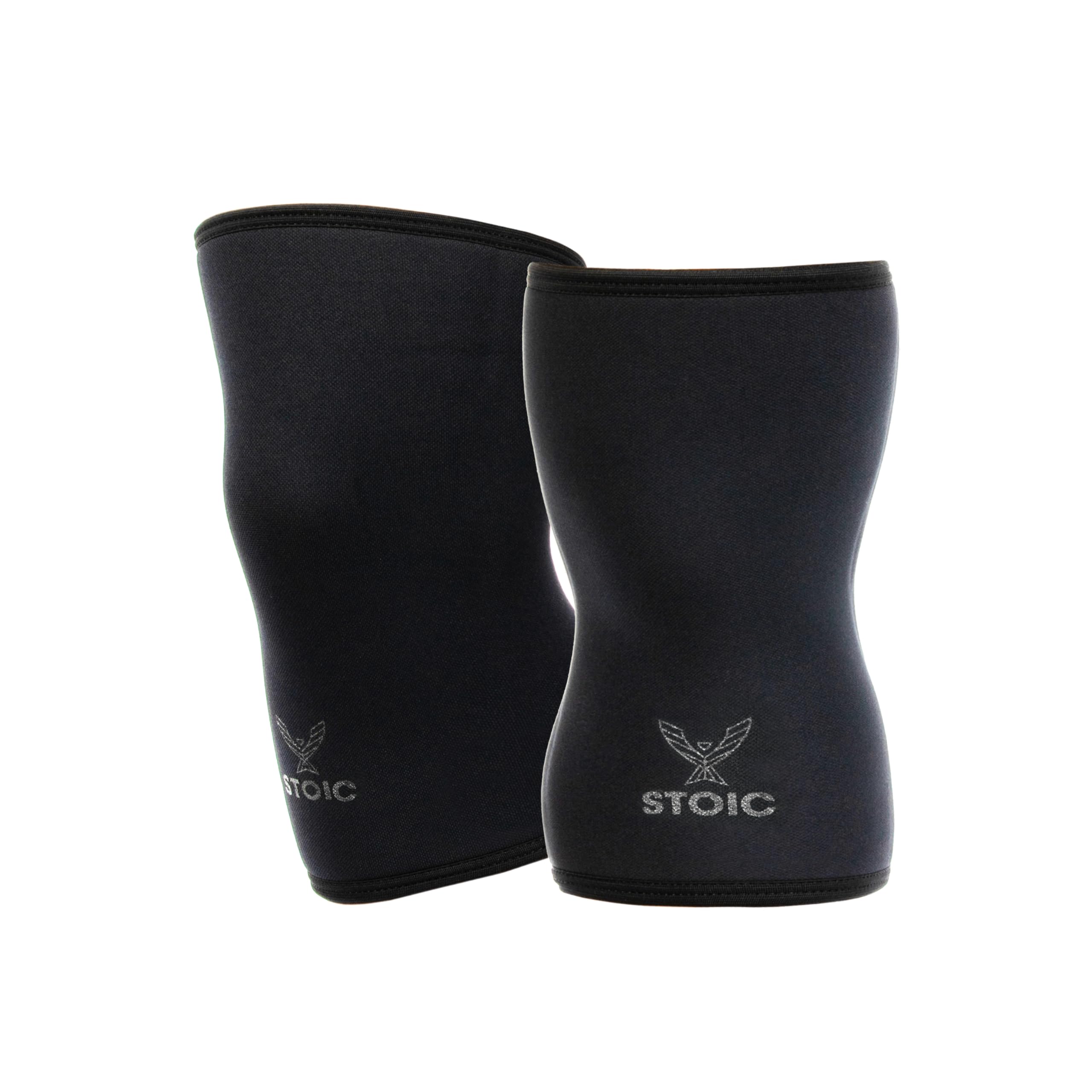
Stoic Black Label 7mm Knee Sleeves

Long-term training

Our Score 9.4/10
Check Price

Worth Noting

  • Tight fit takes real effort to pull on
  • Hand wash only
Care
Hand wash only
Sizes
XX-Small to XX-Large
Approval
USPA, USAPL, IPL, GPC, SPF, USS
Thickness
7mm
Read the full review

A single blind-stitch seam with no bulky overlay is the detail that separates the Black Label from everything else here. Most sleeves fold fabric over the join and stitch through it, which adds a ridge that rubs and a layer that can peel away; Stoic's seam sits flush against the neoprene, and a patented anti-slip interior keeps the sleeve from migrating down the thigh.

At the top of this group's price range, it also has the strongest durability picture in the set. The dense 7mm neoprene holds its shape, the cuffs stay smooth, and the sleeve is cut long enough to cover the knee properly without creeping up. We think the reason to pay more here comes down to one thing: you're buying the seam.

Two things to know before you order. These fit tight by design, so expect real resistance the first few times you pull them on, and don't size up to dodge it — a loose 7mm sleeve does nothing for you. They're also hand wash only, which is the price of that construction. Sizes run from XX-Small to XX-Large across seven colors, and the federation list on the label covers USPA, USAPL, IPL, GPC, SPF and USS.

Bottom line: The premium pick: a 7mm sleeve built around a seam that won't rub or peel, approved across six federations.

#2

Rehband 5mm Knee Sleeves

Rehband 5mm Knee Sleeves

Mobility work

Our Score 9.4/10
Check Price

Worth Noting

  • Less compression under maximal loads than 7mm
Material
SBR neoprene
Thickness
5mm
Construction
Patented 4-panel design
Read the full review

Five millimeters makes these the outlier in this group, and it changes who they're for. Where the 7mm pairs feel like armor you put on for a purpose, the Rehband is the sleeve you forget about — easy to pull on, comfortable for a full session, warm without being rigid.

The patented four-panel construction is the design detail we appreciate most. Panels are cut and joined so the sleeve follows the shape of the knee instead of squeezing a plain tube of neoprene around it, and the SBR material is finished in Europe with edges that sit flat rather than rolling. It's a nicer object than most of the sleeves here.

That's also the trade: a 5mm sleeve gives noticeably less than a 7mm one under a genuine max squat, so if you're chasing kilos on the platform these aren't your pair. What they're for is the rest of the week — metcons, tempo work, warm-ups, and anyone who finds a thick sleeve claustrophobic. One practical note: check whether you're ordering one sleeve or two before you check out.

Bottom line: The sleeve for the rest of the training week: 5mm, four-panel, and comfortable enough to forget you're wearing it.

#3

DMoose 7mm Knee Sleeves

DMoose 7mm Knee Sleeves

IPL competition

Our Score 9.4/10
Check Price

Worth Noting

  • Cuff elastic can slacken with frequent use
  • Durability unproven over a long training block
Approval
IPL approved
Included
Two sleeves
Material
Neoprene
Thickness
7mm
Read the full review

These are the newest pair here, and that's the honest reason they sit lower than their specifications suggest. IPL approval at a mid-range price is a real draw if you compete in that federation and don't want to pay what the approved 7mm picks above cost.

The shape works. The neoprene is stretchy enough to pull on without a wrestling match, the fit stays put through a set of squats, and it doesn't dig in at the top and bottom edges the way a stiffer 7mm can. For us these are the pair to look at if you want the compression of a thick sleeve and the manners of a thinner one.

Sizing follows their own chart rather than a generic one, so measure the thigh and don't assume your usual size carries over. Treat the cuffs gently when you pull them on — that's where a stretchy sleeve gives up first.

Bottom line: A stretchy, IPL-approved 7mm sleeve for lifters who want thick-sleeve compression without the fight to pull it on.

#4

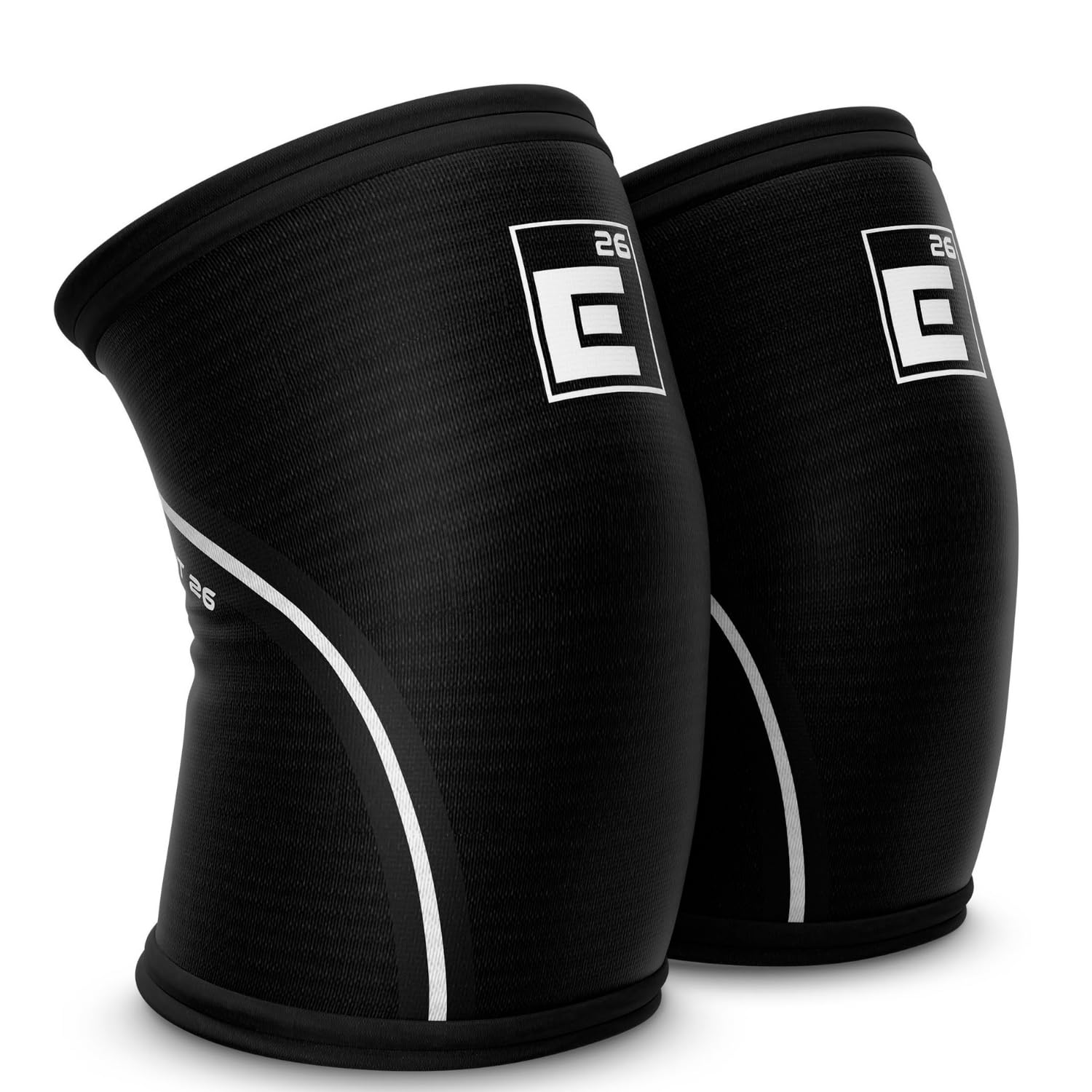
Element 26 6mm Knee Sleeves

Element 26 6mm Knee Sleeves

Olympic lifting

Our Score 9.2/10
Check Price

Worth Noting

  • Runs snug; a sizing miss is unforgiving
Included
Two sleeves and gym bag
Thickness
6mm
Sizing Basis
Measure 4 inches above kneecap
Read the full review

Six millimeters is what earns these the top spot for Olympic lifting. The 7mm sleeves in this group are denser and stiffer, and stiffness works against you when you're sitting down into a snatch or a clean; the 5mm Rehband gives up more support than most lifters want under a heavy bar. Element 26's pitch is 7mm-level compression with 5mm-level give, and what we noticed under the bar is that we weren't peeling them down between sets to get our depth back — the support is there without the fight.

The contoured cut is the other half of the reason. A sleeve that bunches behind the knee is worse than a bare knee at the bottom of a front squat, and this shape stays flat across the back of the joint while the top and bottom edges stay where you put them. We watched the top edge through a session of cleans and it never rolled, which is the entire job.

Fit is the one place to slow down. The four sizes are built around a measurement taken 4 inches above the kneecap rather than your trouser size, and these arrive snug enough that a wrong size announces itself on the first rep. A pair and a gym bag come in the box, and the 6mm neoprene warms quickly — the third set feels different from the first.

Bottom line: The best all-around sleeve here for Olympic lifting: 6mm that supports the knee without stealing the depth you need at the bottom.

#5

Gymreapers 7mm Knee Sleeves

Gymreapers 7mm Knee Sleeves

Competition lifts

Our Score 9.2/10
Check Price

Worth Noting

  • Sizing runs small for thicker calves
Approval
IPF approved
Included
Two sleeves and gym bag
Material
Neoprene
Thickness
7mm
Read the full review

IPF approval is what puts these at the front of the 7mm group. If you're entering a meet, the sleeve on your knee has to be a legal one, and this is the pair in this guide that carries the stamp — which matters more than it sounds, because 7mm is exactly where several raw federations draw the line.

The approval alone wouldn't keep them here. These are dense, they warm the joint fast, and the compression is the kind you feel on the way down rather than after. The included gym bag is a small thing we ended up appreciating: a sleeve that lives in a bag gets worn, and one that lives in a drawer doesn't.

What we make of them overall is that this is the sleeve for a heavy, short session where the knee needs to feel like equipment rather than clothing. The rear seam is the part to keep an eye on — ours held up, but that stitch is where neoprene sleeves eventually give, and pulling them on by the cuff instead of the body shortens the odds.

Bottom line: Our choice for competition and max-load days: 7mm neoprene, IPF approval, and compression that lasts from the walk-out to the last rep.

#6

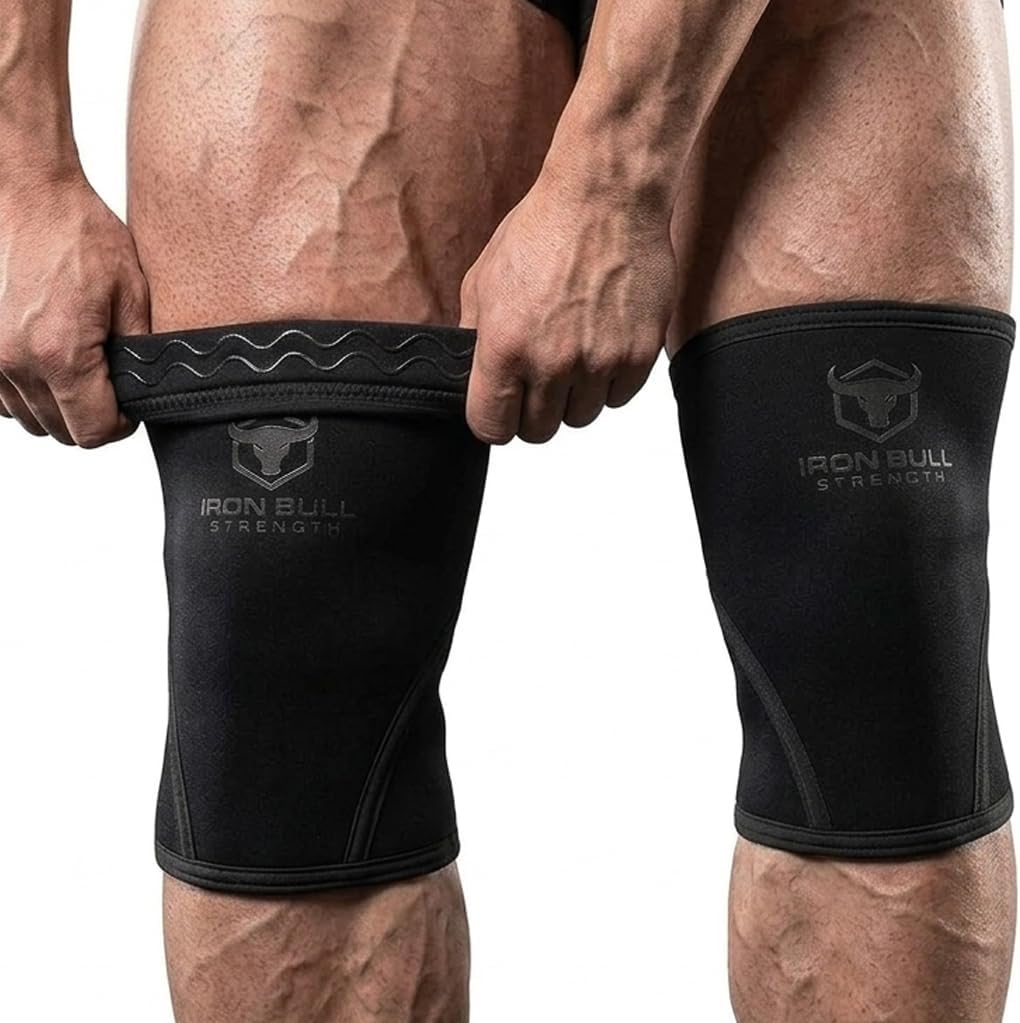
Iron Bull Strength 7mm Knee Sleeves

Iron Bull Strength 7mm Knee Sleeves

Staying put

Our Score 9.2/10
Check Price

Worth Noting

  • Inner foam can tear at the top edge
Interior
Anti-slip silicone grip
Material
Neoprene and silicone
Thickness
7mm
Read the full review

A ring of silicone bonded to the inside is the Iron Bull signature, and it's the reason these don't slide. A sleeve that creeps down mid-set costs you the position you just fought for, and the grip here holds through the whole range — it's the detail that sold us on this pair over the other 7mm options.

The rest is straightforward 7mm work: dense neoprene, warmth that builds across a session, and compression that's firmer than the 5mm and 6mm sleeves here. These are built for the barbell rather than the treadmill, and it shows in how little they give at the top of a squat.

Sizing is the usual trouble spot with a thick pull-on sleeve, and these are no exception. Measure the thigh and take the chart seriously rather than ordering your usual size, because neoprene at this thickness has very little forgiveness in it.

Where they land for us: the pair to choose if your last sleeves kept sliding down and you train somewhere cold, where the warmth does as much of the work as the compression. If you want a softer, more forgiving sleeve against the skin, the Element 26 is the friendlier wear.

Bottom line: The pair for lifters whose sleeves keep sliding: a silicone grip inside and dense 7mm compression that stays where you put it.

#7

RockTape Assassins 7mm Knee Sleeves

RockTape Assassins 7mm Knee Sleeves

Budget 7mm

Our Score 9.2/10
Check Price

Worth Noting

  • Seams can fail under heavy use
Included
Two sleeves
Material
SBR neoprene
Thickness
7mm (5mm also available)
Read the full review

Two thicknesses in the same sleeve is unusual and genuinely useful: the Assassins come in 5mm and 7mm, and for lifting we think the 7mm is the one worth having. They're sold as a pair, which shouldn't need saying and does — plenty of listings sell you a single sleeve and let you find out at checkout.

Sizing runs off a thigh measurement, and the largest size is cut for 15.5 inches and above, so a bigger leg has somewhere to go. The SBR neoprene has a smooth, slightly slick feel that goes on without a wrestling match and then stays put once it's seated, which is a nicer balance than most thick sleeves manage.

The cosmetic caveat is real: the printed logos wear away fast once you start squatting in them, and that's a shame on a sleeve that otherwise looks the part. Buy a plainer colorway if the branding matters to you. For training, it doesn't change anything.

Bottom line: The value pick of the group: two thicknesses in one sleeve, sold as a pair, with the grip and warmth for a full session.

#8

Nordic Lifting 7mm Knee Sleeves

Nordic Lifting 7mm Knee Sleeves

First pair

Our Score 8.8/10
Check Price

Worth Noting

  • Between-size fit is hard to get right
Included
Two sleeves
Material
Neoprene
Thickness
7mm
Read the full review

Sizing decides whether these work, so start there. Use the chart rather than your usual size, and if you land between two, work out what you want the sleeve for: the smaller one gives more compression out of the hole, the larger is easier to keep on for an entire session.

Past that, there's a lot to like for the money. The 7mm neoprene provides real support through squats and leg press, the sleeve stays where you put it instead of sliding down mid-set, and the warmth builds the way a thick sleeve should. It's the pair we point to when the budget is the deciding factor and you still want proper 7mm neoprene.

Comfort is better than the thickness suggests: nothing pinching behind the knee, and nothing you're in a hurry to take off between sets. That's a bigger deal than it sounds, because a sleeve you resent wearing stops being worn.

Where they sit for us is the pair that gets a newer lifter into a proper thick sleeve without much deliberation, and the one we suggest to anyone who isn't yet sure sleeves are for them. If you train five days a week and want the same pair in three years, spend more.

Bottom line: A capable 7mm sleeve at the budget end, as long as you buy from the size chart rather than your usual size.

How We Tested Knee Sleeves for Olympic Lifting

We started by comparing sizing charts, thickness, seam construction, and material specs across more than two dozen styles, then narrowed the field to 11 pairs that covered a range of fits and price points. I measured the circumference around the center of my kneecap and followed each sizing chart, noting where the guidance was clear and where it was vague. Every pair stayed in rotation for six months, not a single workout.

Each sleeve went through the same training block: heavy squat days, clean and snatch sessions, and accessory work, plus at least one week of back-to-back training to see how they handled sweat and repeated use. I noted whether the top edge rolled down during a set, whether fabric bunched behind the knee at the bottom of a squat, and whether my knees felt stable in a full receiving position without the sleeve fighting me. Comfort was judged over a full 90-minute session, not just a few reps.

For durability, I washed each pair according to its care label after every three sessions and checked seams, stretch, and odor over the six months. Quality came down to small things: flat seams that didn't rub, edges that held their shape, and fabric that snapped back instead of bagging out. To judge value, I compared how each pair performed against its price and how often I reached for it. Sizing accuracy counted too—if a sleeve only worked after going up or down a size, that went against it.

How to Choose Knee Sleeves for Olympic Lifting

Thickness Is a Trade-Off, Not a Ranking

Thickness decides everything else. A 7mm sleeve gives the most compression and holds the most heat, and it sits at the cap several raw federations set for competition; the cost is stiffness, and stiffness is felt most at the bottom of a snatch or a clean. A 5mm sleeve moves with you and suits high-volume sessions and anyone who feels restricted by a thick tube.

Six millimeters is the compromise we suggest for a lifter who wants one pair for both heavy squatting and everyday training, which is where the Element 26 earns its place at the top of this guide. Go thicker only if the bar is the point of the session.

Measure Your Thigh, Not Your Jeans

Take a tape measure 4 inches above the kneecap and buy from that number. A new sleeve should feel tight going on and simply snug once it's in place — if it rolls at the top or spins, it's too big, and if your foot goes numb mid-session, it's too small.

Between two sizes, take the smaller one for lifting and the larger if you want the sleeves on for an entire workout. Charts are not interchangeable across brands, so check the specific maker's chart before you order rather than carrying a size over.

A Sleeve That Slides Ruins the Set

Two design features keep a sleeve where you put it: a contoured cut that follows the knee rather than a straight tube, and a silicone or rubber grip inside the cuff. The Iron Bull pair leans on the second, the Element 26 on the first, and both beat a plain tube of neoprene over a long session.

Length matters as well. A longer sleeve covers more of the joint but leaves more material to bunch behind the knee when you sit down, and most lifters notice bunching before they notice anything else about a pair.

The Seam Is Where These Fail

Neoprene rarely wears out; the join does. Look for a flat or blind stitch rather than a folded overlay, because a ridge of fabric over the seam is the part that rubs, peels and eventually splits. Stoic builds the Black Label around a patented single blind stitch for exactly this reason, and it's a large part of why that pair sits at the top of the price range.

Double-stitched or reinforced joins are the other thing worth checking. If a new pair arrives with loose thread at the back of the knee, send it back before you train in it.

Buy to Your Federation, If You Compete

Approval is not universal. The Gymreapers pair is IPF approved, Stoic lists USPA, USAPL, IPL, GPC, SPF and USS, and the DMoose is IPL approved. Check your own rulebook, because a sleeve that's legal in one federation can be a throwaway in another.

If you never plan to step on a platform, this is the one place to keep your money in your pocket. The approved sleeves cost more for a stamp you'll never use, and the same neoprene without it does the same job in the gym.

Frequently Asked Questions

Final Verdict

Our pick is the Element 26 6mm. It supports the knee without shortening the bottom position, which is the balance Olympic lifting actually needs, and it's the pair we keep reaching for on days that mix heavy singles with volume.

Buy the Gymreapers instead if you compete or want the maximum a sleeve can give under a max attempt — IPF approval and dense 7mm compression is the strongest combination in this group for that job. If your week is more metcon than max effort, the Rehband 5mm is the more comfortable answer.