Accessories

Best Ankle Wraps of 2026

An ankle wrap has one job: hold the joint steady without making you feel like you're wearing a cast. The wrong one slides down inside your shoe, digs into your heel, or offers just enough support to feel reassuring and not enough to actually help. I've kept a few in my gym bag for years, and the difference between a wrap you'll actually wear and one that ends up in a drawer comes down to fit, comfort, and how quickly you can get it on. The right one gives you a little confidence back on stairs and uneven ground without bulk that fights your shoes.

Over the past five months, my team and I tested 15 ankle wraps across sizes, materials, and support levels. We wore them on morning walks, at the gym, on weekend hikes, and through long days on our feet, noting which stayed put, eased discomfort, and held up after washing. Sizing is where most people get tripped up: too loose and it won't support you, too tight and it's miserable. The picks below got that balance right.

#1

McDavid Lace-Up Ankle Brace

Top Pick
McDavid Lace-Up Ankle Brace

High-impact court sports

Our Score 9.0/10
Check Price

Worth Noting

  • Hard to get over a swollen ankle
  • Laces and stitching fatigue with heavy use
Care
Hand wash
Size
Medium
Support
Rigid side stabilizers
Bilateral Fit
Left or right
Read the full review

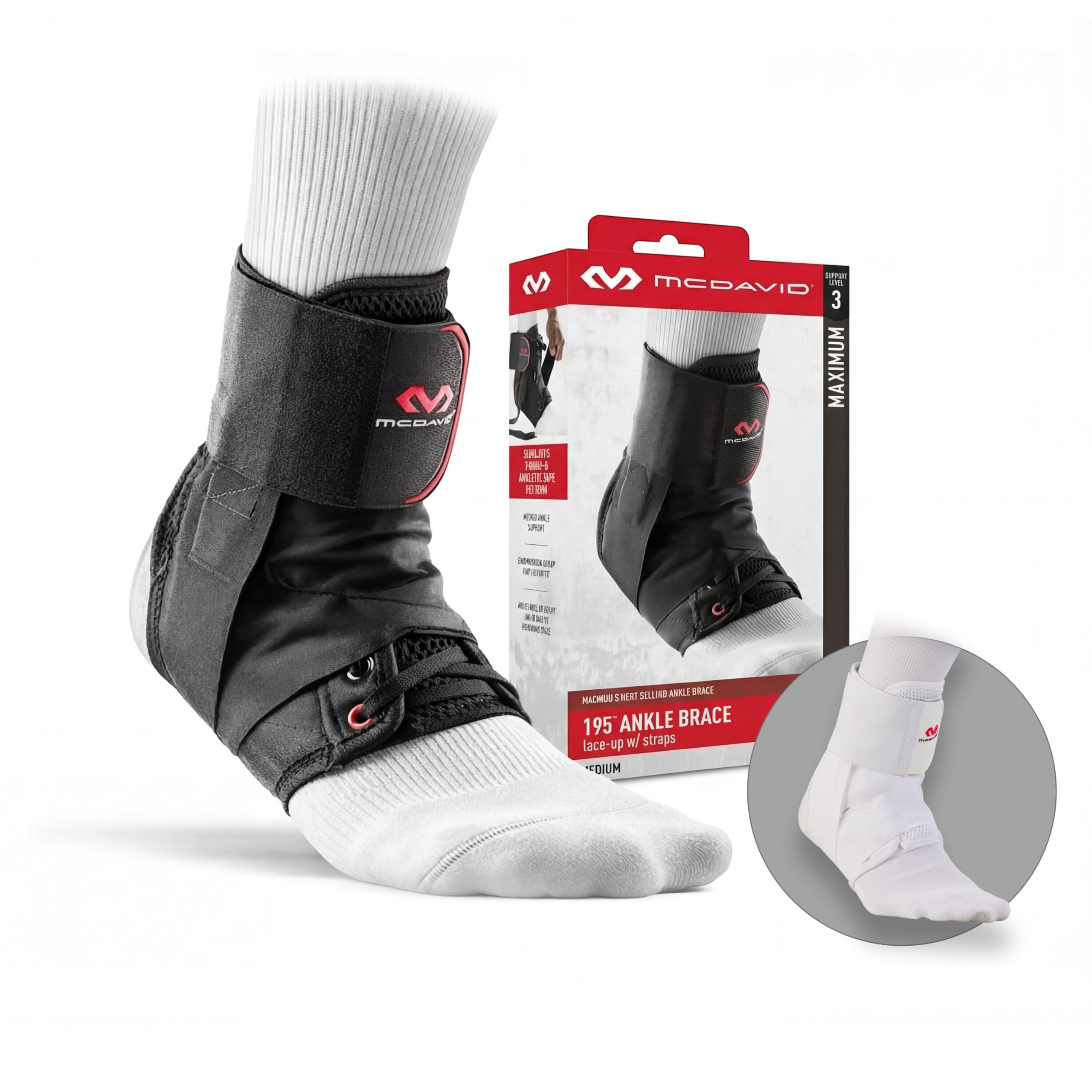
Two rigid stays up either side of the ankle are what separate the McDavid from our top pick. The ASO tightens the whole joint; this one puts a stiffened panel against each ankle bone, so a hard inversion meets something solid before the ligaments do. We noticed it most in lateral movement, where the brace seems to catch the ankle a beat earlier than a strap-only design.

The rest is conventional lace-up work done well. The lacing sets the fit, the figure-8 cross straps cinch it down, and the heel sits deep in the shell, which is why it slides under a low-cut court shoe without complaint. The medium suited a regular-width foot here, but the size range tops out quickly, so run a tape around your ankle instead of trusting your shoe size.

It's a piece of equipment rather than something to wear around the house: the shell and the stays want a job to do, and it's happiest in the hour you're actually on court. That focus is the point — it gives you the firmest restraint in this group when you ask for it, and nothing more than that.

Bottom line: We reach for the McDavid when an ankle needs physical restraint on a court — rigid stays, a real heel lock, and a fit that rewards patience.
#2

Med Spec ASO Ankle Stabilizer

Med Spec ASO Ankle Stabilizer

Sports and sprains

Our Score 8.8/10
Check Price

Worth Noting

  • Lacing takes two hands and some practice
Care
Machine wash
Size
Medium
Closure
Lace-up
Bilateral Fit
Left or right
Read the full review

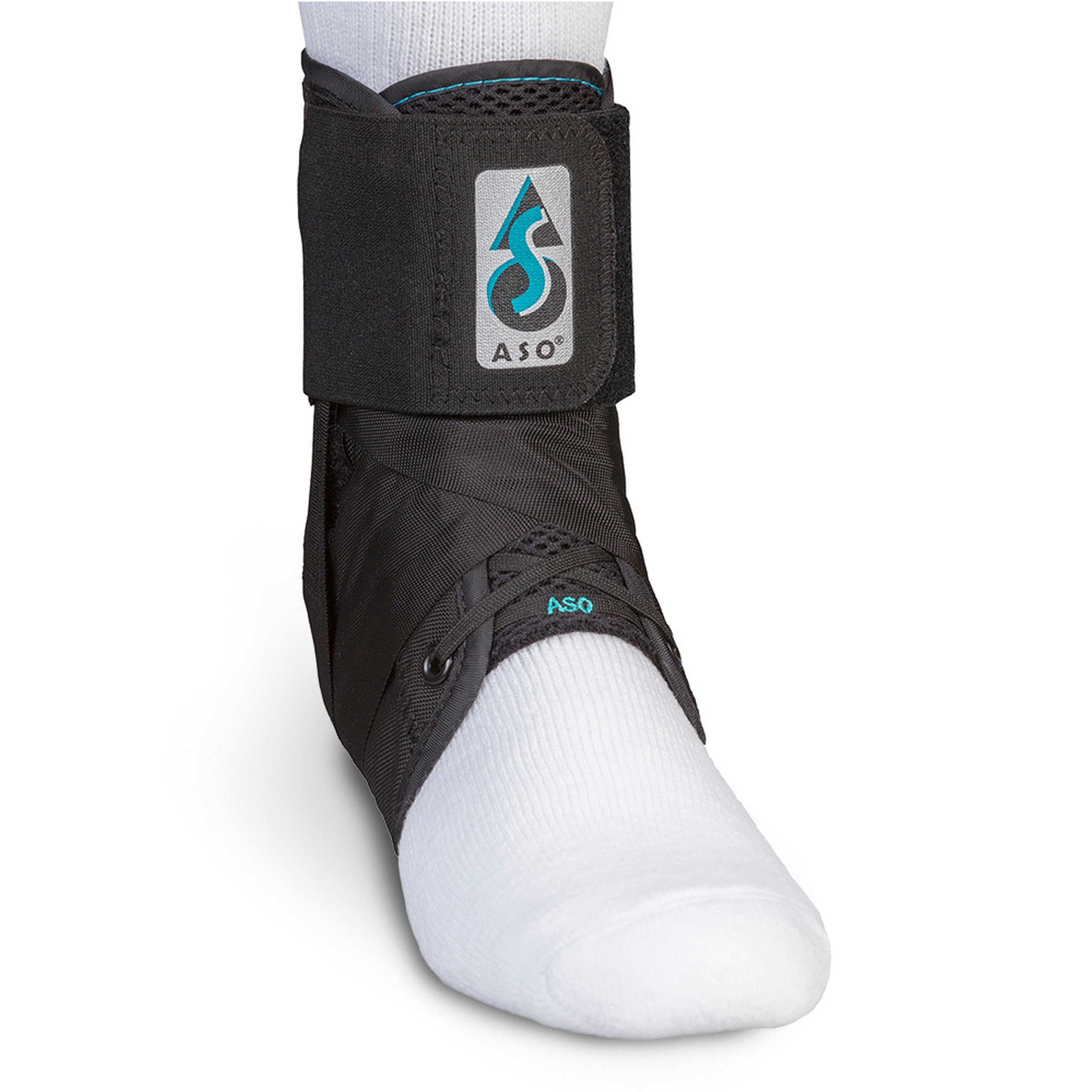
The ASO is what we hand someone whose ankle has actually given way. Two figure-8 straps cross the instep, pull the heel back into the shell, and hold it there — that heel lock is the part that resists the inward roll behind most sprains. The shell is firm nylon over CoolFlex padding, and it's shaped to sit inside a shoe rather than over one.

That strap geometry is why it's our top pick. We wore it under a running shoe and a low-cut court shoe, and the difference from an elastic wrap shows up the moment you cut sideways: the ankle stops short of the end of its range instead of being merely squeezed. Push-off felt normal, and after a few minutes we stopped registering the brace at all.

Sizing is where to slow down. The medium covers a wide band of feet and runs generous at the smaller end, so measure your ankle circumference and your heel-to-instep length rather than ordering from your shoe size. Between sizes, take the smaller one.

Two details we came to appreciate: it's bilateral, so one brace covers whichever ankle you roll, and it's the only pick here that goes in the washing machine — which matters more than it sounds after a couple of sweaty weeks. Med Spec backs it with a six-month limited warranty.

Bottom line: If your ankle rolls, this is the brace we tell people to buy: the figure-8 straps hold the heel and the whole thing disappears inside a shoe.

#3

Bodyprox Ankle Support Brace

Bodyprox Ankle Support Brace

Budget daily support

Our Score 8.6/10
Check Price

Worth Noting

  • One size, so fit is a compromise at either end
  • Straps and edges fray with daily wear
Care
Hand wash
Size
One size
Closure
Hook & loop
Fits Arch Circumference
7.8 to 11 in.
Read the full review

An open heel is the detail that defines the Bodyprox. It's a neoprene band with a hook-and-loop closure that wraps the arch and sits above the ankle while leaving the heel free, so the foot still flexes the way it wants to. That makes it feel less like a brace and more like a stout sock with a strap — and it's why this wrap suits a stiff, aching ankle rather than a joint that keeps giving way.

Speed is the other thing in its favor. We could put it on one-handed, seated, over a sock, which isn't true of anything else in this group that offers real compression. The neoprene holds warmth into an arch that's stiff first thing in the morning, and on long walks over uneven ground it took the edge off without restricting how the foot rolled. The strap lets you nudge the pressure mid-walk without unwrapping anything. The flip side is that heat: on a hot day you'll know it's there, so hand wash it and let it air dry.

Bottom line: For a stiff, aching ankle rather than an unstable one, this one-size wrap is the easiest thing here to put on and the least expensive to try.

#4

Candy Li Ankle Brace

Candy Li Ankle Brace

Everyday light support

Our Score 8.6/10
Check Price

Worth Noting

  • Too generous for very small ankles
  • Hook-and-loop can pull away with hard use
Care
Hand wash
Closure
Hook & loop
Material
Nylon with spandex
Read the full review

Speed is the whole pitch here. This is a nylon wrap with a hook-and-loop strap and a silicone strip inside to stop it sliding down, and it goes on over a sock in a couple of seconds — no lacing, no re-wrapping, no guessing where the tension should sit.

We kept reaching for it on ordinary days rather than dramatic ones: a long shift on your feet, a mild tweak from a run, an ankle that stiffens on a flight. Because the strap closes on itself, you can tighten or ease it mid-activity without taking anything off, which is the difference between this and a bandage you have to re-roll.

Be honest about the support level. It's moderate compression with a little structure, and it isn't the brace for a significant sprain or a joint that rolls without warning. What it does well is stay put and stay thin — it fits under a normal shoe with a normal sock, and it's the one we leave in a gym bag because there's nothing to thread and nothing to lose.

Bottom line: A thin, adjustable wrap that goes over a sock in seconds — our pick for a mild tweak or a long day on your feet.

#5

Sleeve Stars Ankle Brace

Sleeve Stars Ankle Brace

Slim compression wear

Our Score 8.6/10
Check Price

Worth Noting

  • Compresses without blocking a hard roll
Size
M, 10 to 12 in.
Design
Sleeve with adjustable strap
Weight
2.4 oz
Read the full review

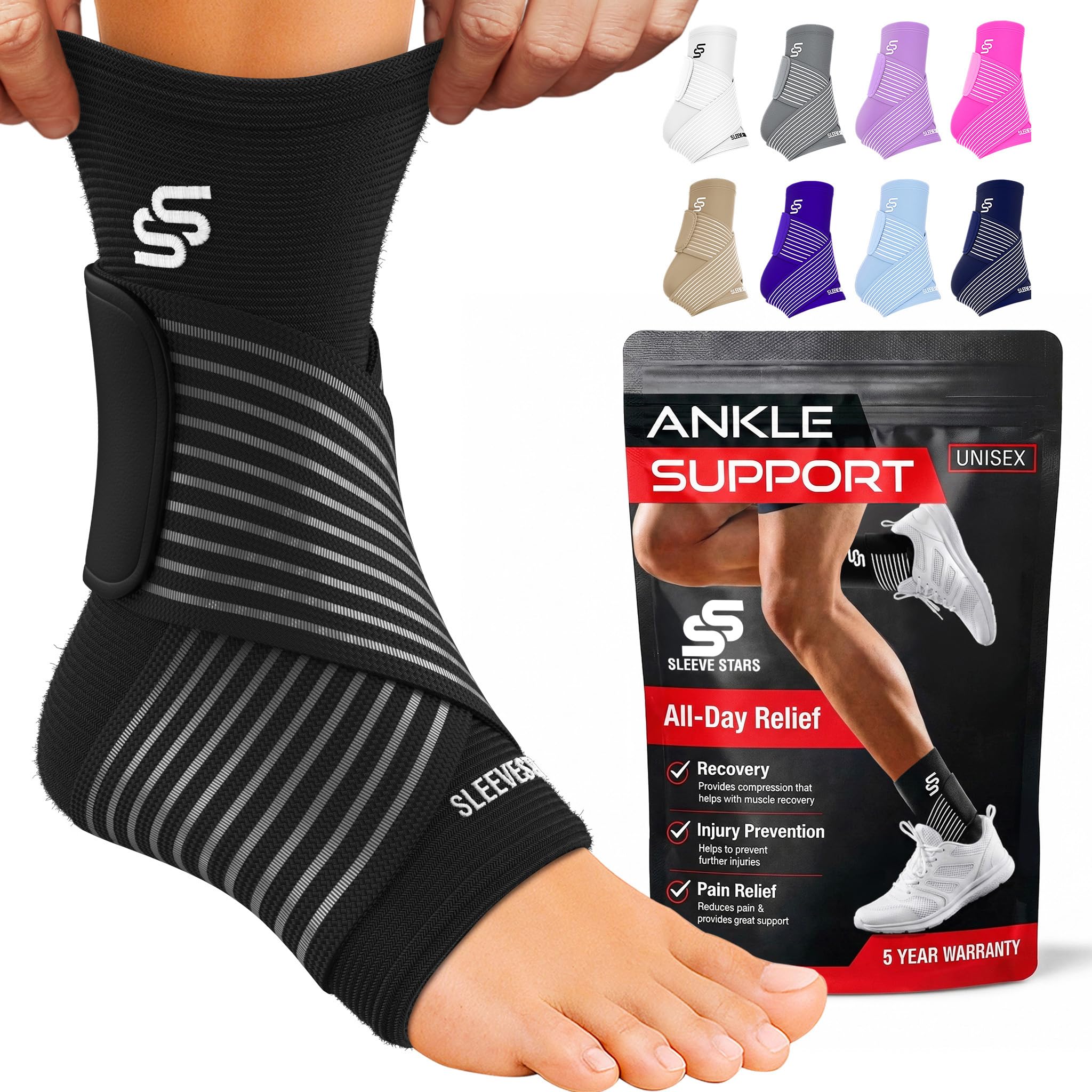
Buy the Sleeve Stars by measurement and nothing else. Sizing runs small against shoe size, so ignore the number on your sneaker, use the arch and ankle circumference in the chart, and take the larger option if you land between two. Get that right and the rest is straightforward.

What arrives is a knit sleeve you pull on like a sock, plus a separate strap that wraps over the top for extra compression. That strap is the reason it stayed in the set: it lets you dial pressure without fighting a whole wrap, and it adds a level of hold the plain neoprene bands can't manage. The knit is breathable enough to forget about, and it's slim under a shoe.

One detail worth knowing: the branding printed on the inside can rub on bare skin, so plan on a thin sock underneath. Worn that way, over a full day, it became the one we forgot we had on — which is the highest compliment a wrap can get.

Bottom line: Buy it for the two-in-one idea: a sleeve you can pull on plus a strap that adds compression, provided you order by measurement.

How We Put Ankle Wraps Through Their Paces

We started by gathering wraps recommended by physical therapists, sport-medicine clinicians, and repeat customer reviews, then narrowed the list by size range, strap design, material, and care instructions. We ended up with 15 wraps and used them for five months, rotating them through morning dog walks, gym sessions, weekend hikes, and long days on our feet.

Each wrap had to prove it could stay centered on the ankle, hold tension through stairs and uneven pavement, and fit inside sneakers and boots without bunching. We noted whether edges rolled, seams rubbed, heat built up under socks, or straps loosened mid-walk, and we timed how long it took to put each one on and adjust it one-handed. We also measured ankle circumference and tried every wrap over bare skin and a sock to see how the size range handled narrow, average, and wide ankles.

To judge pain relief and effectiveness, testers with old sprains and fresh tweaks rated how stairs, uneven ground, and a full day on their feet felt with each wrap versus without it. For quality and durability, we washed each wrap according to its care label and checked stitching, elastic, and hook-and-loop closures after repeated use. The ones that scored highest were the ones we forgot we were wearing until we needed them.

How to Choose an Ankle Wrap

Decide Between Restraint and Compression

Everything here falls into one of three designs, and the design decides what the wrap can do. A lace-up brace with figure-8 straps, like the Med Spec ASO or the McDavid, holds the heel and physically resists the inward roll. A neoprene band like the Bodyprox or the Candy Li compresses and warms but will not stop a joint that gives way. The Sleeve Stars sits between them, with a knit body and a strap that adds pressure.

Pick from your symptom rather than the label on the box. If your ankle has rolled before and you want it not to roll again, buy the restraint. If it aches, swells, or stiffens after a day on your feet, buy the compression — you'll wear it more often, and it will cost you less.

Measure Instead of Ordering Your Shoe Size

Sizing is the most common way to get this purchase wrong, and it's the one dimension where these products behave differently from each other: the lace-ups run generous and the knit sleeve runs small. Shoe size tells you nothing about ankle circumference, arch girth, or how much swelling you're carrying.

Run a tape around your ankle just above the ankle bones and around the arch of your foot, then compare with the maker's chart. Between sizes, take the smaller lace-up and the larger sleeve. If you're buying for a fresh sprain, measure the swollen ankle, not the good one.

Think About Getting It On

A brace you dread putting on is a brace that stays in the drawer. A wrap or sleeve goes on in seconds, seated, with one hand. A lace-up takes two hands and a bit of practice, and it's hardest over an ankle that is stiff and puffy first thing in the morning — exactly when you're most likely to be putting it on.

That's the trap: people buy the stiffest brace they can find for a fresh injury and then can't get it over their foot. If the ankle is still swollen, start with a wrap and move to a lace-up when you're back to sport.

Check the Shoe and the Upkeep

Bulk is the quiet dealbreaker. All of these are meant to sit inside a shoe, but a lace-up with side stays fills volume, and a neoprene band adds a layer where the shoe already fits closely. Try the brace with the shoe you actually wear — cleats, cycling shoes, and slim dress shoes are where it goes wrong, and a thinner sock or looser laces usually fixes it.

On care, only the ASO can go in a machine; the rest ask for hand washing, and anything with hook-and-loop will collect lint if it's tossed in a bag loose. Close the straps before washing and let the brace air dry.

Frequently Asked Questions

Final Verdict

Buy the Med Spec ASO if your ankle has a history of rolling. Nothing else here holds the heel and resists inversion as firmly, and it still disappears inside a shoe. Choose the McDavid if you want rigid side panels for a cutting sport, the Bodyprox if what you need is warmth and compression you can pull on one-handed, or the Candy Li if you want something thin enough to forget you're wearing. The Sleeve Stars is the middle path — compression plus a strap, as long as you order it by measurement.